
Game review
Hell Deck
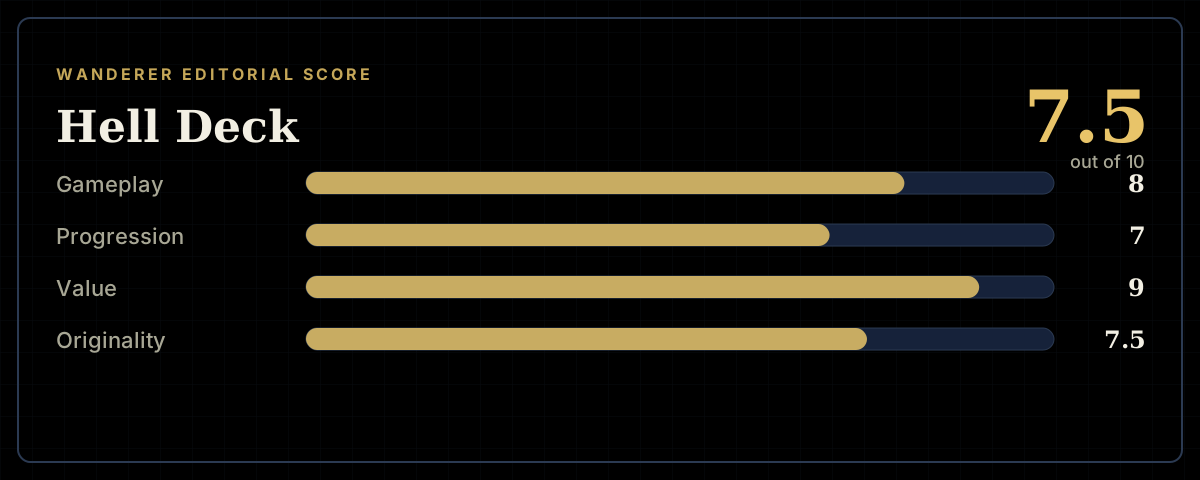
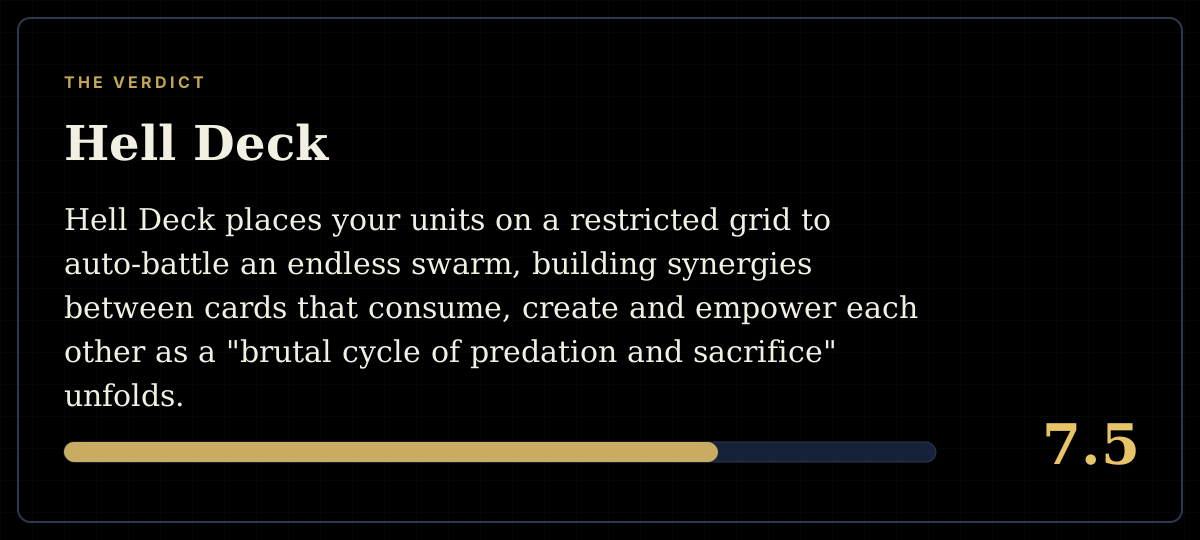
7.5 / 10
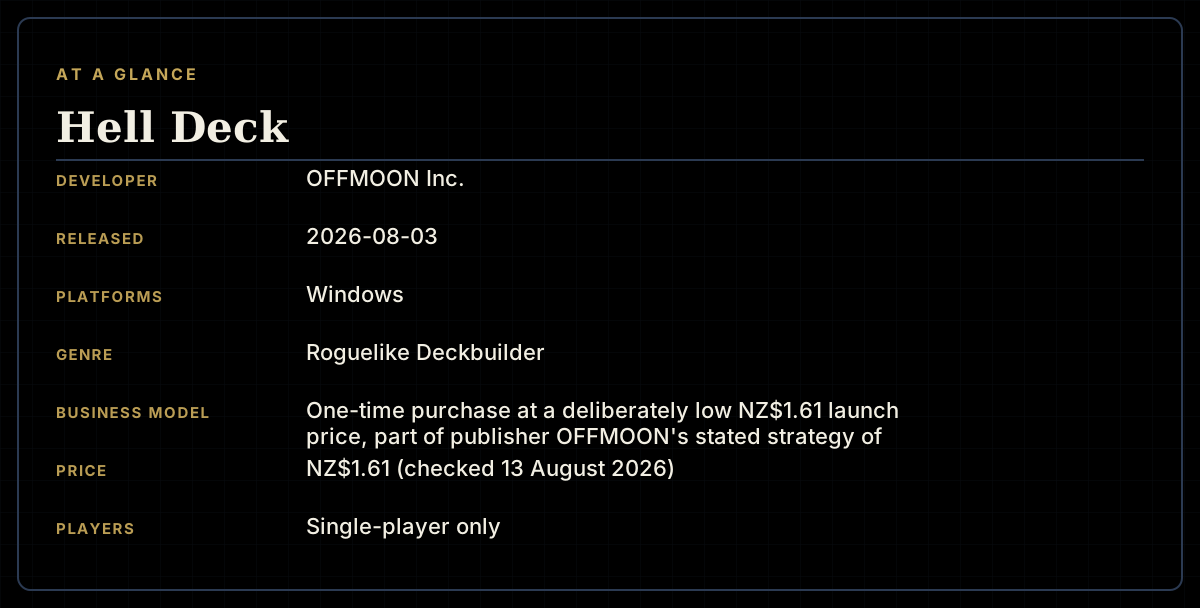
- Developer
- OFFMOON Inc.
- Publisher
- OFFMOON Inc.
- Released
- 3 August 2026
- Platforms
- Windows
- Genre
- Roguelike Deckbuilder
- Monetisation
- One-time purchase at a deliberately low NZ$1.61 launch price, part of publisher OFFMOON's stated strategy of pricing its initial lineup near $1 USD. No microtransactions listed.
- Players
- Single-player only
The short version
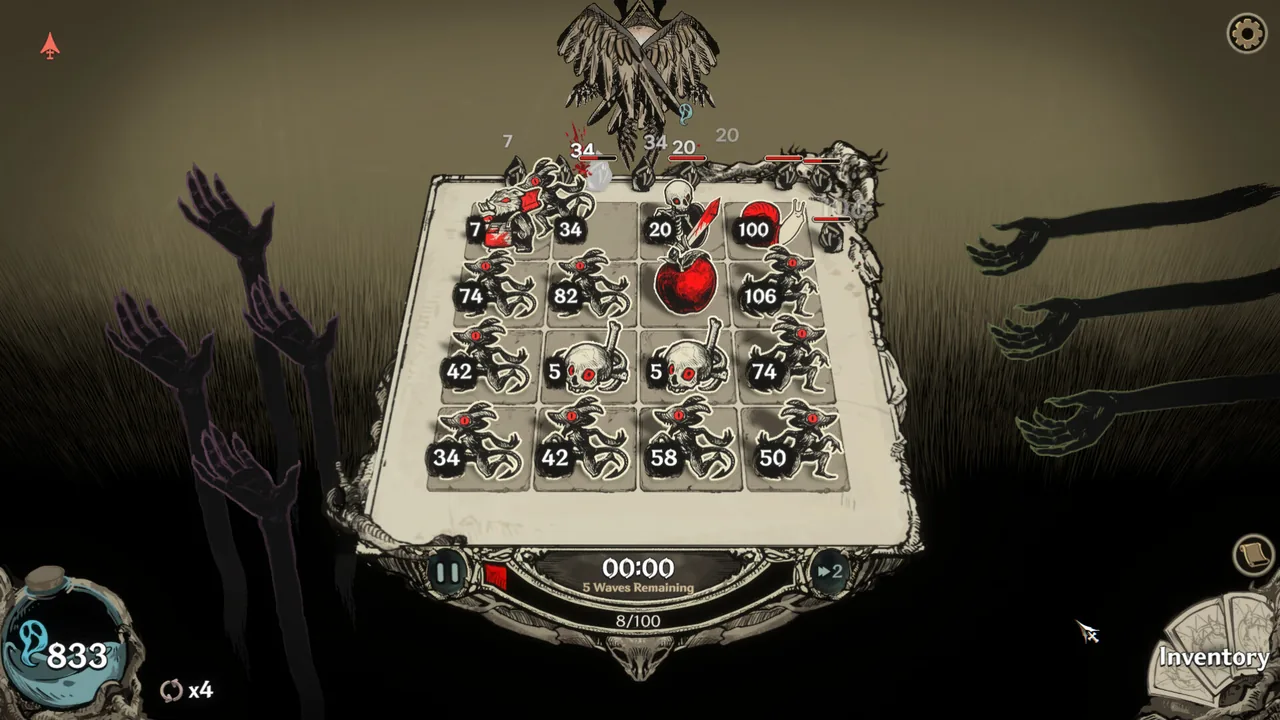
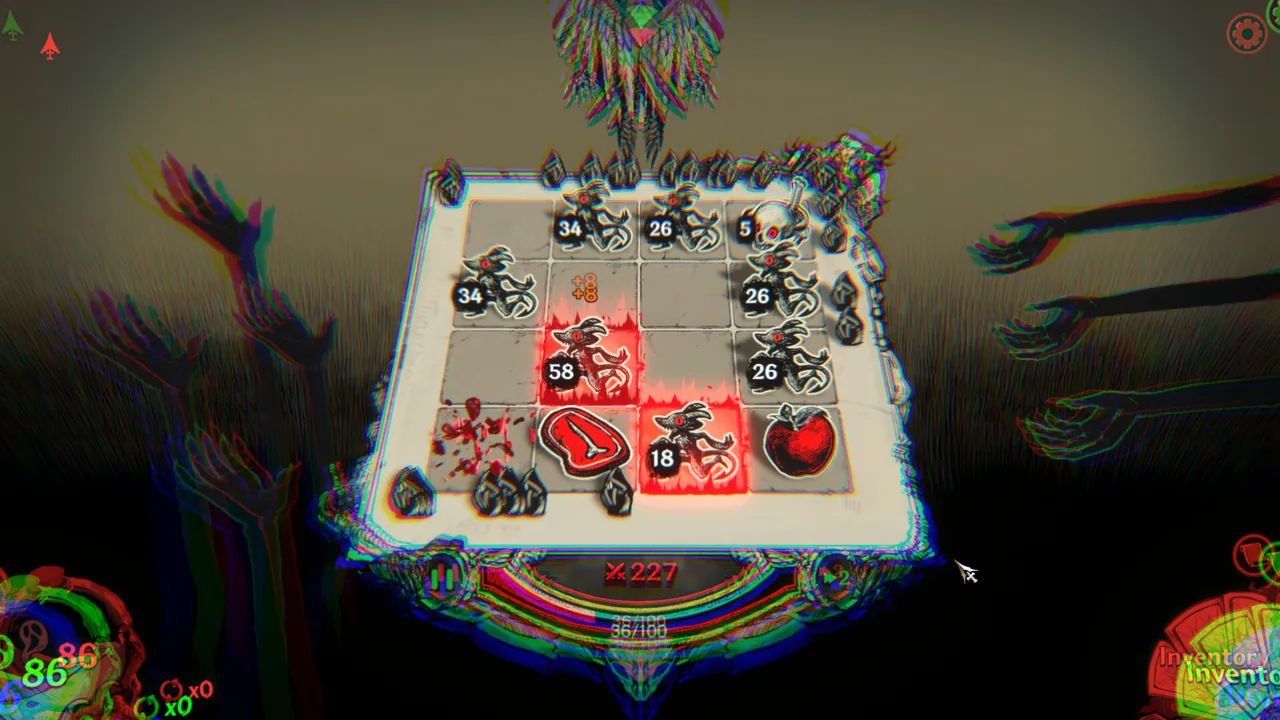
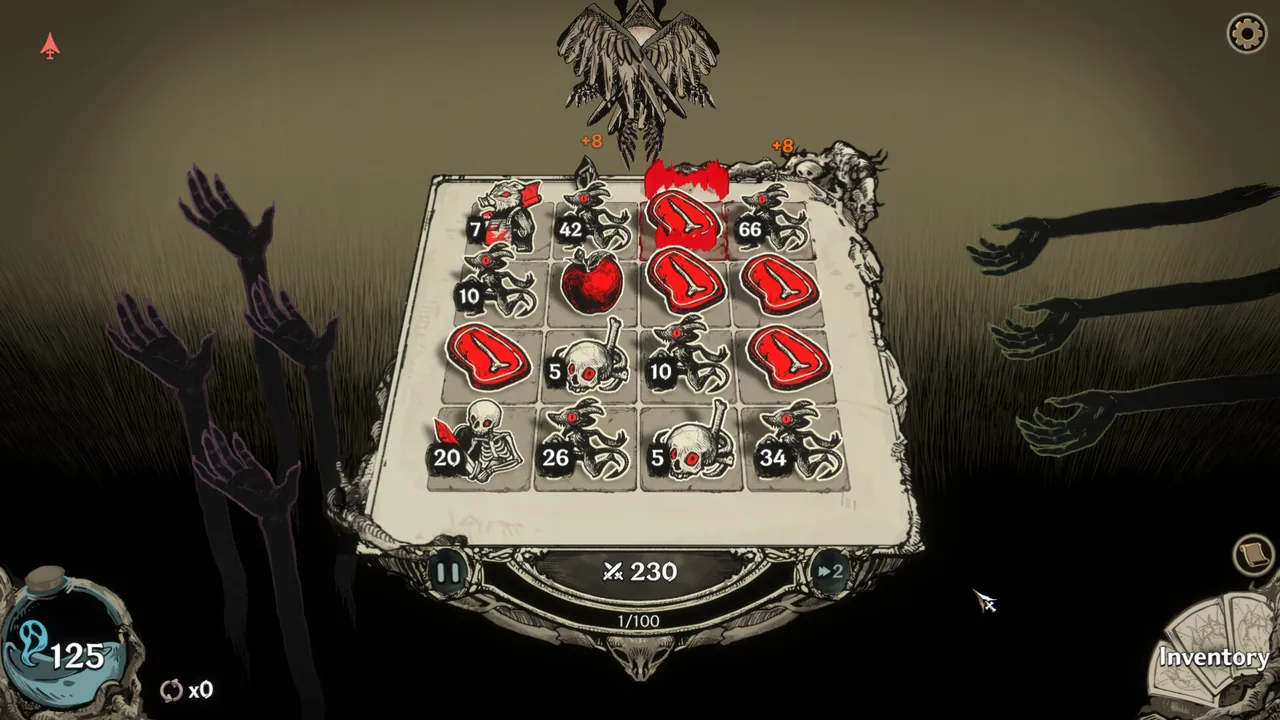
Hell Deck places your units on a restricted grid to auto-battle an endless swarm, building synergies between cards that consume, create and empower each other as a "brutal cycle of predation and sacrifice" unfolds. Released 3 August 2026 by OFFMOON -- a new Steam-focused publishing arm of Superfast, the holding company behind Korean mobile hit-maker 111 Percent (Random Dice, Lucky Defense) -- it launched at a deliberately disarming NZ$1.61 and opened to Very Positive, 92.6% of 54 reviews, with reviewers repeatedly stunned by how much game is packed into that price.
The small available negative sample raises a real, specific concern about the mid-to-late game rather than the price or presentation: "after the first 2 chapters it doesn't feel like you have any real control over anything anymore," reads one review, a fair worry for a genre that lives or dies on the player feeling like their deckbuilding decisions matter as the run scales up.
Biggest strengths
- An unusually deep synergy system for the price, with cards that consume, create and loop into each other in ways reviewers describe as continually surprising across multiple runs
- A genuinely novel genre fusion -- roguelike deckbuilding layered onto grid-based tower defense -- that reviewers compare favourably to both Slay the Spire and Bloons without feeling like a shallow mashup of either
- Deliberately, transparently cheap: publisher OFFMOON's stated strategy is pricing its entire initial lineup near $1, confirmed by trade coverage of the launch, with several reviewers independently estimating the game would be a fair purchase at $10-15
Biggest weaknesses
- A specific, credible complaint that player agency drops off after the first two chapters, with the run increasingly playing itself rather than rewarding ongoing deckbuilding decisions
- A thin available negative-review sample (2 of 54 total) limits how much critical counterweight this review can draw on beyond that one detailed structural concern
- As a new low-price publishing venture rather than an established studio's flagship release, Hell Deck's scope is intentionally tight -- reviewers describe it as short and focused rather than a long-tail campaign, which some buyers may want flagged going in
Who it's for: Fans of roguelike deckbuilders (Slay the Spire) and tower-defense-adjacent auto-battlers (Bloons) who want to see the two genres combined, and anyone curious about a new low-price publishing experiment from an established mobile studio. Not for anyone who wants a long, meaty campaign -- reviewers describe this as tightly scoped -- or who is put off by a swarm-defense loop that some reviewers say loses player agency as runs escalate.
Our recommendation: About as close to a risk-free purchase as Steam offers -- NZ$1.61 for a genuinely well-regarded synergy-driven roguelike that multiple reviewers say would be a fair buy at ten times the price. Go in expecting a tight, focused experience rather than a sprawling campaign, and be aware of a real, specific complaint that player control diminishes in the later chapters.
7.5 / 10
Hell Deck's price tag does a lot of the initial talking: NZ$1.61, less than the cost of a coffee, for a "dark roguelike deckbuilder defense game" about building "a bizarre, twisted ecosystem through a brutal cycle of predation and sacrifice" to defend hell from an invading holy swarm. Units land on a restricted grid, auto-battle the enemy horde, and gain range, attack speed and special abilities as you draft and combine cards between waves. Released 3 August 2026, it comes from OFFMOON, a new publishing arm of Superfast -- the holding company behind 111 Percent, the Korean mobile studio responsible for hits like Random Dice and Lucky Defense -- deliberately priced near $1 USD as the opening move of what trade coverage (Games Press, Inven Global) describes as a planned lineup of 14-plus games this year alone. Ten days after launch, Hell Deck sits at Very Positive, 92.6% of 54 reviews.
More game than the price suggests, repeatedly
The single most common reaction in Hell Deck's reviews is genuine surprise at how much is actually here for the asking price. "Could easily be a $10+ game so also an insane value find," reads one review, describing a trial session that "turned into a 4 hour session." Another goes further still: "Holy [expletive] this game is so good on so many layers I would buy this for $15 easily. It's way deeper than it feels for the first run or two." A third, more measured but reaching the same conclusion, credits the specific genre fusion directly: "this game found a way to combine a roguelike with a deckbuilder with a tower defense playstyle and I didn't know that was even possible." Reviewers repeatedly reach for the same comparison points -- Slay the Spire for the deckbuilding, Bloons for the tower-defense structure -- and consistently conclude the combination works rather than diluting either half: "if you like Slay the Spire type games... and tower defense games, you will love this game," reads one, while another calls it "a bloons meets slay the spire" in four words that land precisely.
The card synergy system draws specific, detailed praise from players clearly paying close attention to it: "love the synergy involved with each card, some cards consume others, some create others and you can create ridiculously long loops which just hit right in the spot," reads one review, adding that "card upgrades which change the synergy of each card completely" keep even familiar cards feeling fresh across runs. That's the kind of specific mechanical praise that's hard to fake, and it lines up with a healthy achievement curve -- early goals sitting above 90% completion, harder late-game challenges tapering gradually down to fractions of a percent, rather than the steep cliffs that usually signal a game losing its audience early.
Where the story is genuinely useful: the publisher, not just the game
One reviewer speculated, in hedged terms ("from what I understand"), that Hell Deck came from "a renowned Korean mobile game studio... attempt[ing] to break into the PC game market via Steam" -- and that speculation checks out against independent trade reporting. OFFMOON is confirmed, via coverage from Games Press and Inven Global, as a new Steam-focused publishing subsidiary of Superfast, the holding company behind 111 Percent -- the mobile studio known for Random Dice and Lucky Defense. The reported strategy is deliberate: price an entire opening lineup near $1 to lower the usual barrier to entry against indie games typically priced $5-20, with up to 50 titles planned by year's end. That context matters for evaluating Hell Deck fairly -- it's not simply an underpriced indie game hoping to be noticed, it's the visible first move of an established mobile publisher's stated low-price Steam strategy, and reviewers independently noting "no microtransactions to be found here" is a genuinely relevant, positive data point given the parent studio's mobile pedigree.
A real complaint about control, not just polish
The available critical feedback is thin -- just two English-language negative reviews among 54 total -- but one of them raises a specific, structural concern worth taking seriously rather than dismissing for its rarity. "Could be good but after the first 2 chapters it doesn't feel like you have any real control over anything anymore," reads the review. That's a meaningful complaint for this specific genre combination: a roguelike deckbuilder's appeal rests on the player's ongoing decisions continuing to matter as a run escalates, and a report that agency drops off partway through is worth flagging directly, even against an overwhelmingly positive score. The second available negative review is shorter and less specific -- "kind of overrated if you ask me" -- a fair but unelaborated dissent that this review can't expand on further.
7.5 out of 10. Hell Deck is a genuinely well-built synergy-driven roguelike deckbuilder that punches far above its NZ$1.61 price, backed by a real, verifiable story about a mobile-games publisher testing a deliberately low-barrier Steam strategy -- and, notably, doing so without the microtransactions its parent studio's mobile background might have suggested. A specific complaint about diminishing player control in later chapters is worth knowing going in, but set against a Very Positive reception and reviewers repeatedly insisting they'd have paid far more, this is about as close to a no-risk recommendation as this lane gets.
Pros and cons
Pros
- An unusually deep synergy system for the price, with cards that consume, create and loop into each other in ways reviewers describe as continually surprising across multiple runs
- A genuinely novel genre fusion -- roguelike deckbuilding layered onto grid-based tower defense -- that reviewers compare favourably to both Slay the Spire and Bloons without feeling like a shallow mashup of either
- Deliberately, transparently cheap: publisher OFFMOON's stated strategy is pricing its entire initial lineup near $1, confirmed by trade coverage of the launch, with several reviewers independently estimating the game would be a fair purchase at $10-15
- No microtransactions on a title from a publisher whose parent studio built its reputation on mobile games, a genuinely notable choice reviewers specifically call out as a pleasant surprise
- A healthy, gradually-declining achievement curve consistent with a well-paced difficulty ramp for most of the game's content
Cons
- A specific, credible complaint that player agency drops off after the first two chapters, with the run increasingly playing itself rather than rewarding ongoing deckbuilding decisions
- A thin available negative-review sample (2 of 54 total) limits how much critical counterweight this review can draw on beyond that one detailed structural concern
- As a new low-price publishing venture rather than an established studio's flagship release, Hell Deck's scope is intentionally tight -- reviewers describe it as short and focused rather than a long-tail campaign, which some buyers may want flagged going in
Screenshots
-
Hell DeckImage: OFFMOON Inc. via Steam -
Hell DeckImage: OFFMOON Inc. via Steam -
Hell DeckImage: OFFMOON Inc. via Steam -
How the review scores each part of the gameWanderer Editorial -
The essentialsWanderer Editorial -
The short versionWanderer Editorial