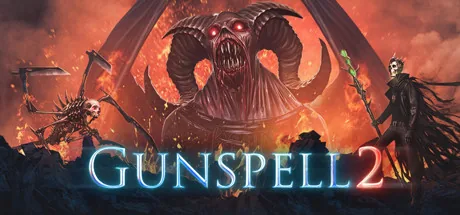
Game review
Gunspell 2 – Match 3 Puzzle RPG
5.5 / 10
- Developer
- Ino-Co Plus
- Publisher
- AKPublish
- Released
- 11 December 2020
- Platforms
- Windows, iOS, Android
- Genre
- Puzzle RPG
- Monetisation
- Free to play, with in-app purchases for premium currency, heroes and item crates
- Players
- Real-time PvP Arena, cross-platform between Steam and mobile; solo Adventure and story modes for players who'd rather not queue
The short version
Gunspell 2 takes a genuinely uncommon idea — a hexagonal match-3 board where the tiles you clear are also your mana, your damage and your spell fuel — and builds a real-time PvP RPG around it that mostly works on the board itself. Heroes have distinct kits, matches turn into legible tactical decisions, and the arena ladder clearly has players still climbing it years after launch.
Everything around that core is where the game loses points. Its own players describe the PvP as fighting bots more often than people, the pacing drags once animations and effect chains stack up, hero and premium-currency systems are explained thinly if at all, and the free-to-play economy pushes hard enough that "could be decent without the pay-to-win" is close to a consensus complaint on its Steam page.
Biggest strengths
- The hexagonal board is a real mechanical idea, not a reskin — the same tiles you match are your mana, your direct damage and your spell fuel, so board reading is a genuine skill
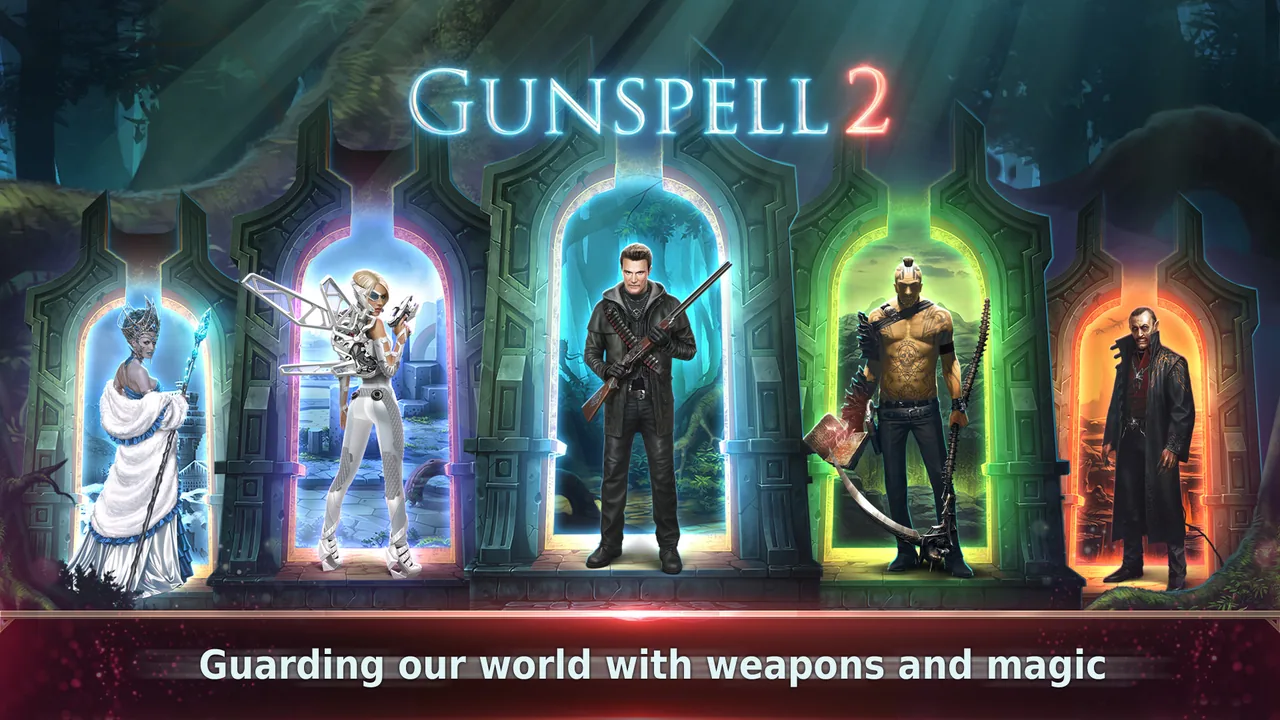
- A wide hero roster (Naga, Succubus, Witch, Vampire, Lich, Demoness, Sorceress, Angel, Imp and more) gives real build variety rather than palette swaps
- Actual real-time PvP against other players, cross-platform between Steam and mobile, not just AI opponents dressed up as people
Biggest weaknesses
- Multiple long-time players describe PvP opponents as feeling scripted or bot-like rather than human, which undercuts the game's own headline feature
- "Could be a decent game without pay-to-win elements" is close to a recurring line in its own Steam reviews, and premium currency and crate purchases sit close to the core loop
- Hero acquisition, premium systems and several mechanics (a specific "icicle" status one reviewer singled out for dragging out fights) are thinly explained or not explained at all
Who it's for: Match-3 fans curious about a genuine RPG twist on the format, and free-to-play grinders who don't mind a mobile-shaped economy attached to a PC release.
Our recommendation: Worth a free try for the board mechanic alone. Go in expecting a mobile free-to-play pacing and economy, not a premium PC puzzle game, and stop before the purchase menu starts to feel load-bearing.
5.5 / 10
Match-3 is one of the most over-farmed shapes in free-to-play games, which makes it worth paying attention when a studio tries to bolt something more ambitious onto it. Gunspell 2 swaps the usual square grid for a hexagonal board, ties every tile you clear directly to a stat on your character sheet, and puts the whole thing behind real-time PvP against other players instead of a scripted AI ladder. That's a real idea. What it's wrapped in is a much more familiar free-to-play mobile shell, and the tension between the two is the whole story of this game.
A board that's also a character sheet
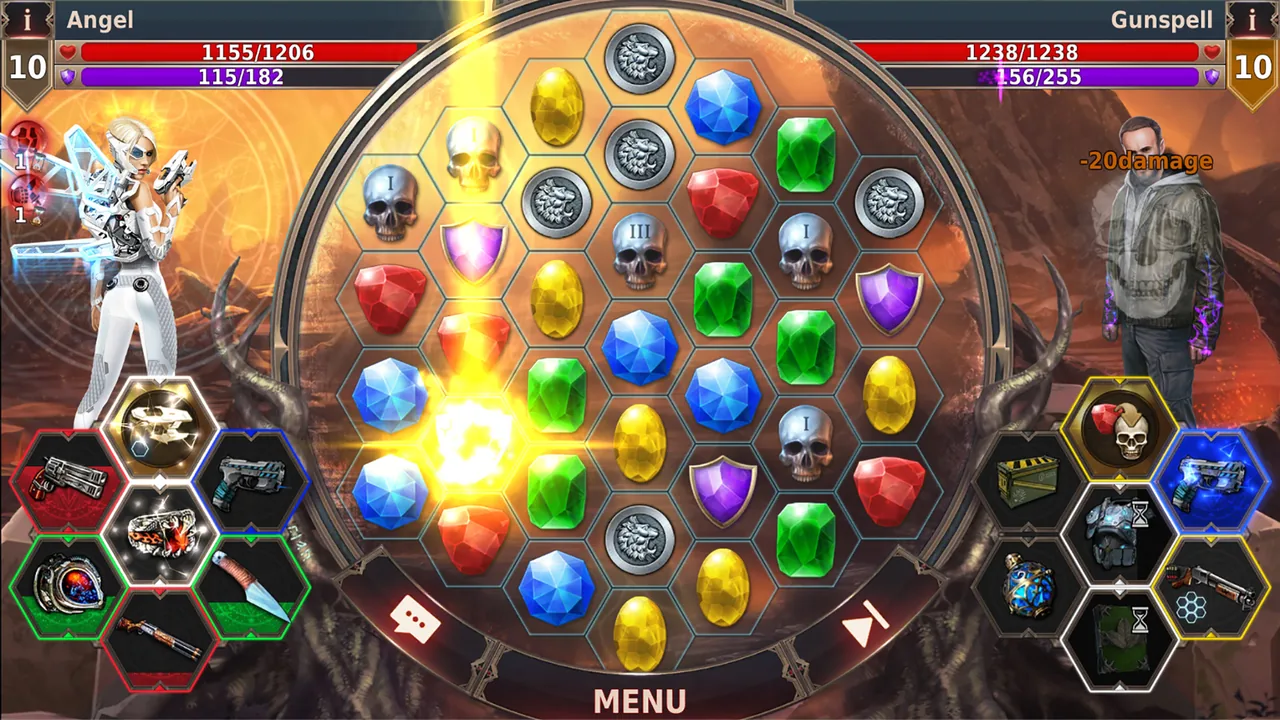
The mechanical hook is straightforward to describe and genuinely interesting to play around. Matches happen on a hexagonal field of skulls, gems and jewels rather than a square grid: skulls deal direct damage when cleared, and jewels of matching colours charge the spells and items tied to that colour. A four-in-a-row, a cross shape or an angled match all produce different bonus effects on top of the base clear, so the board itself is a small tactical puzzle on every turn — not just "find any match," but "find the match that charges the ability I need before my opponent's turn comes back around." That's a meaningfully deeper hook than most match-3 RPGs bother with, and it's the reason player reviews that are otherwise critical of the game still call the core idea "cool" or say the sequel improved on the original Gunspell's combat feel.
Where it costs the game points is pacing. Once a fight has a few buffs, debuffs and combo chains stacked on the board, animations and effect resolution slow the game down noticeably, and more than one reviewer flags a specific status effect — an "icicle" mechanic that extends fights by forcing repeated stalling turns — as actively unpleasant rather than tactically interesting. A board that's smart in short fights can turn into a slog in long ones, and Adventure-mode story runs are reported to string together twenty to forty battles in a row, which is enough repetition for that slowdown to really show.
Heroes, guns and spells
Progression runs through a roster of heroes with distinct kits — Naga, Succubus, Witch, Vampire, Lich, Demoness, Sorceress, Angel, Imp and more are all tracked separately in Steam's own achievement data, each unlocked by actually playing them rather than just being cosmetic skins on one moveset. Global achievement stats put ownership or mastery of most individual heroes at roughly 10–23% of the tracked player base, which reads as a roster people are genuinely working through rather than ignoring in favour of one best pick. Guns, spells and gear items slot in alongside heroes and are charged through the same colour-matching system, so a run's identity is built from which combination of hero, weapon and spell colours you're leaning on — a real deckbuilding-adjacent layer sitting on top of the board.
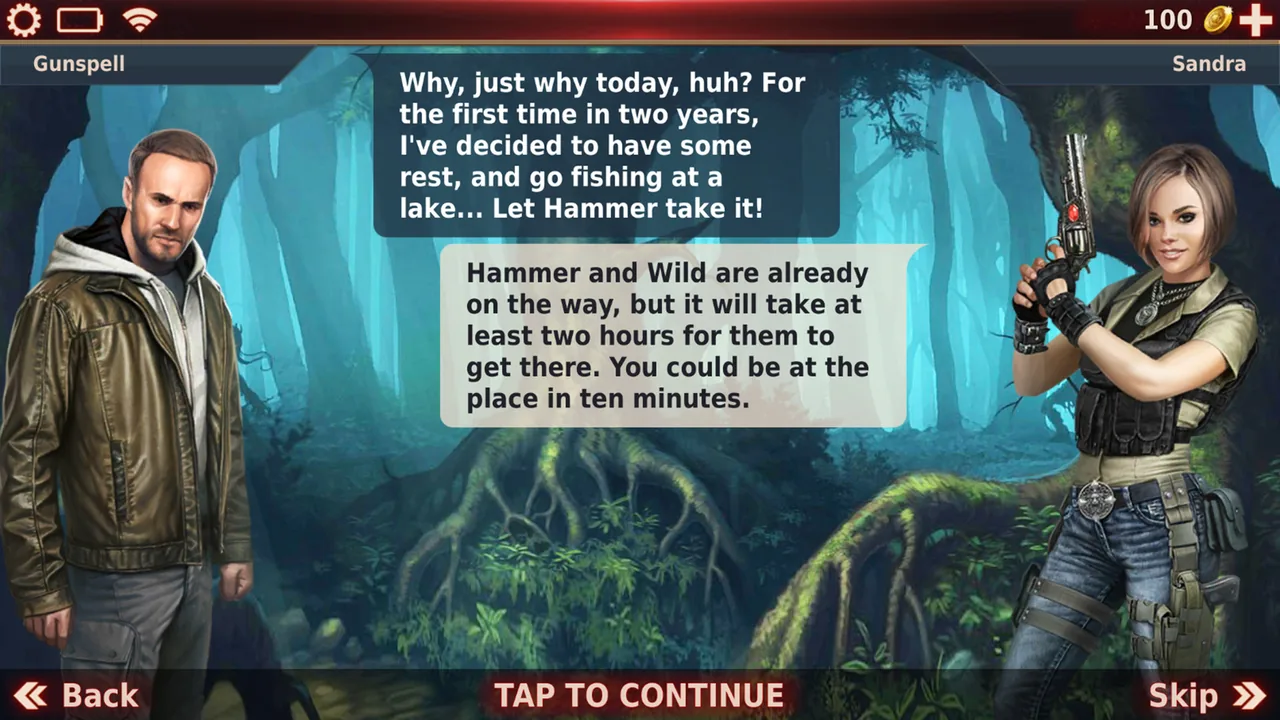
The complaint that comes up again and again in player reviews is that none of this is well explained. Several reviewers, including ones with thousands of hours logged, say the game never clearly lays out how to unlock specific heroes, what a given premium system actually does, or why certain currencies exist at all. For a game this systems-heavy, leaving players to reverse-engineer its own economy is a real interface failure, not a minor one.
PvP, and who's actually on the other side of it
The headline feature is real-time PvP, cross-platform between the Steam release and the mobile versions, and Steam's global achievement percentages suggest a ladder that's still being climbed years after launch: over half of tracked players have reached Arena Rank 3, roughly three in ten have hit Rank 5, and about one in seven has cracked the Top League bracket. That's evidence of a persistent, working competitive mode rather than a launch-week feature nobody returned to.
The recurring criticism is about who — or what — you're actually fighting. More than one reviewer independently describes opponents as feeling "robotic," scripted, or simply not convincingly human, to the point of wondering aloud whether they were facing a real player at all. Whether that's genuinely bot-filled matchmaking, aggressive AI mimicking player behaviour, or just a symptom of thin telegraphing in the UI is hard to say from the outside — but when your core sell is real-time PvP against people, players openly doubting that they're playing people is a serious dent in the pitch.
The free-to-play tax
Gunspell 2 is free, and its systems are built the way mobile free-to-play games are built: premium currency, hero and item crates, and a purchase menu sitting close enough to the core loop that "could be a decent game without pay-to-win elements" shows up close to verbatim in its own Steam reviews. That's not an unusual complaint for the genre, but it lands harder here because the underlying board game is good enough to make the economy feel like an obstacle rather than a reasonable toll. Players who stick to free progression can and do reach real milestones — the achievement spread above proves that much — but the game doesn't make that path feel like the intended one so much as the slow one.
A sequel worth the number
Gunspell 2 follows Gunspell: Steam Edition, the developer's 2014 original, and player sentiment that's played both generally credits the sequel with smoother, more intense combat animations and a larger hero roster, even from reviewers who are otherwise unimpressed with where the series has ended up. That's a genuine improvement worth noting rather than a footnote — Ino-Co Plus clearly learned something building the first game and applied it here. What it hasn't fixed is the harder problem: making a system this dense feel taught rather than discovered, and making its economy feel optional rather than load-bearing.
Final verdict
Gunspell 2's hexagonal board is the rare match-3 RPG idea that actually earns the "RPG" half of its name — tiles that are simultaneously damage, mana and spell fuel make for real tactical reads, and a hero roster with this much individual identity is more than the genre usually bothers to build. It deserves credit for that, and for a PvP ladder that global achievement data shows is still genuinely active years after release.
It loses most of that ground back to pacing that drags once fights get complicated, tutorialisation that leaves core systems unexplained, PvP opponents its own players aren't confident are human, and a free-to-play economy that a meaningful share of its Steam reviews single out by name as the game's biggest problem. Mixed is the right word for where that nets out — there's a good puzzle-RPG in here, but it's asking a lot of patience to find it.
Price and monetisation checked 11 August 2026.
Players who'd rather their progression came without a premium-currency menu attached to it may find Wanderer a calmer place to spend that same puzzle-RPG instinct.
Pros and cons
Pros
- The hexagonal board is a real mechanical idea, not a reskin — the same tiles you match are your mana, your direct damage and your spell fuel, so board reading is a genuine skill
- A wide hero roster (Naga, Succubus, Witch, Vampire, Lich, Demoness, Sorceress, Angel, Imp and more) gives real build variety rather than palette swaps
- Actual real-time PvP against other players, cross-platform between Steam and mobile, not just AI opponents dressed up as people
- Global achievement data shows a real ladder in use years on — over half of tracked players have reached Arena Rank 3, and roughly one in seven has cracked the Top League
- Fully playable solo through Adventure and story modes for anyone who wants the puzzle-RPG loop without ever touching the arena
Cons
- Multiple long-time players describe PvP opponents as feeling scripted or bot-like rather than human, which undercuts the game's own headline feature
- "Could be a decent game without pay-to-win elements" is close to a recurring line in its own Steam reviews, and premium currency and crate purchases sit close to the core loop
- Hero acquisition, premium systems and several mechanics (a specific "icicle" status one reviewer singled out for dragging out fights) are thinly explained or not explained at all
- Battle pacing slows once buff, debuff and combo chains stack up; several reviewers who put in dozens or hundreds of hours still call the mid-to-late game a grind rather than a challenge
- Steam user sentiment sits at Mixed, roughly an even split of positive and negative, which is a soft result for a title six years past launch
Screenshots
-
Gunspell 2 – Match 3 Puzzle RPGImage: AKPublish via Steam -
Gunspell 2 – Match 3 Puzzle RPGImage: AKPublish via Steam -
Gunspell 2 – Match 3 Puzzle RPGImage: AKPublish via Steam -
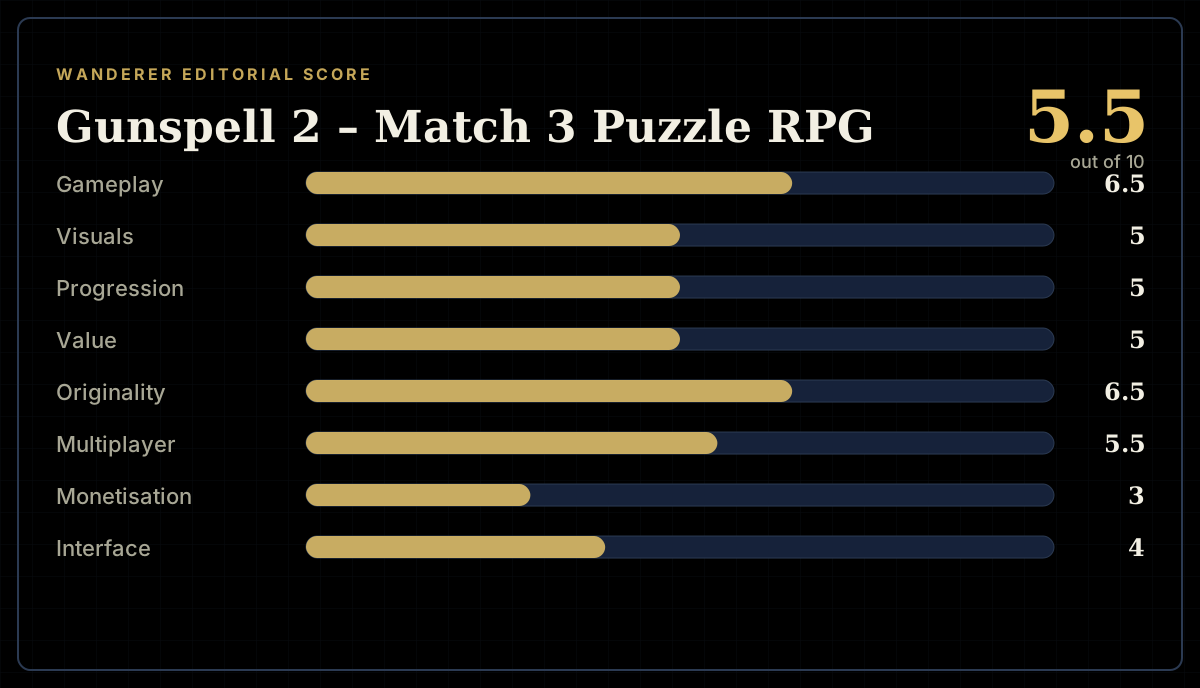
How the review scores each part of the gameWanderer Editorial -
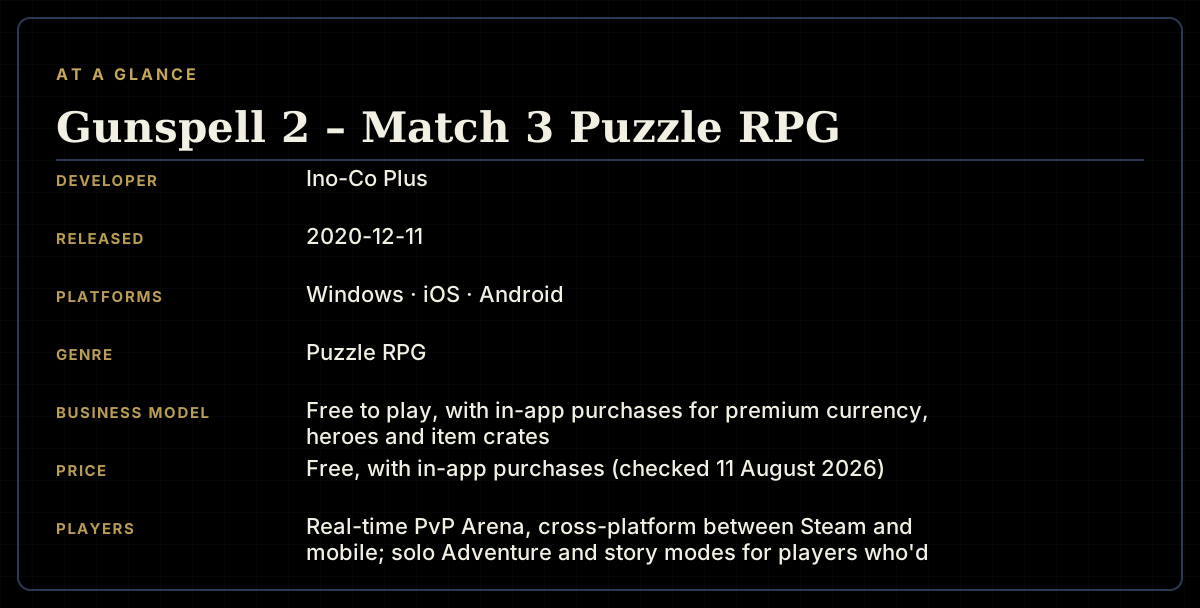
The game at a glanceWanderer Editorial -
The short versionWanderer Editorial