Game review
Guild of Dungeoneering
6 / 10
- Developer
- Gambrinous
- Publisher
- Versus Evil
- Released
- 14 July 2015
- Platforms
- Windows, macOS
- Genre
- Card-Based Dungeon Crawler
- Monetisation
- One-time premium purchase; the Ultimate Edition update was a free relaunch for existing owners. No in-app purchases
- Players
- Single-player only; no online, co-op or PvP modes
The short version
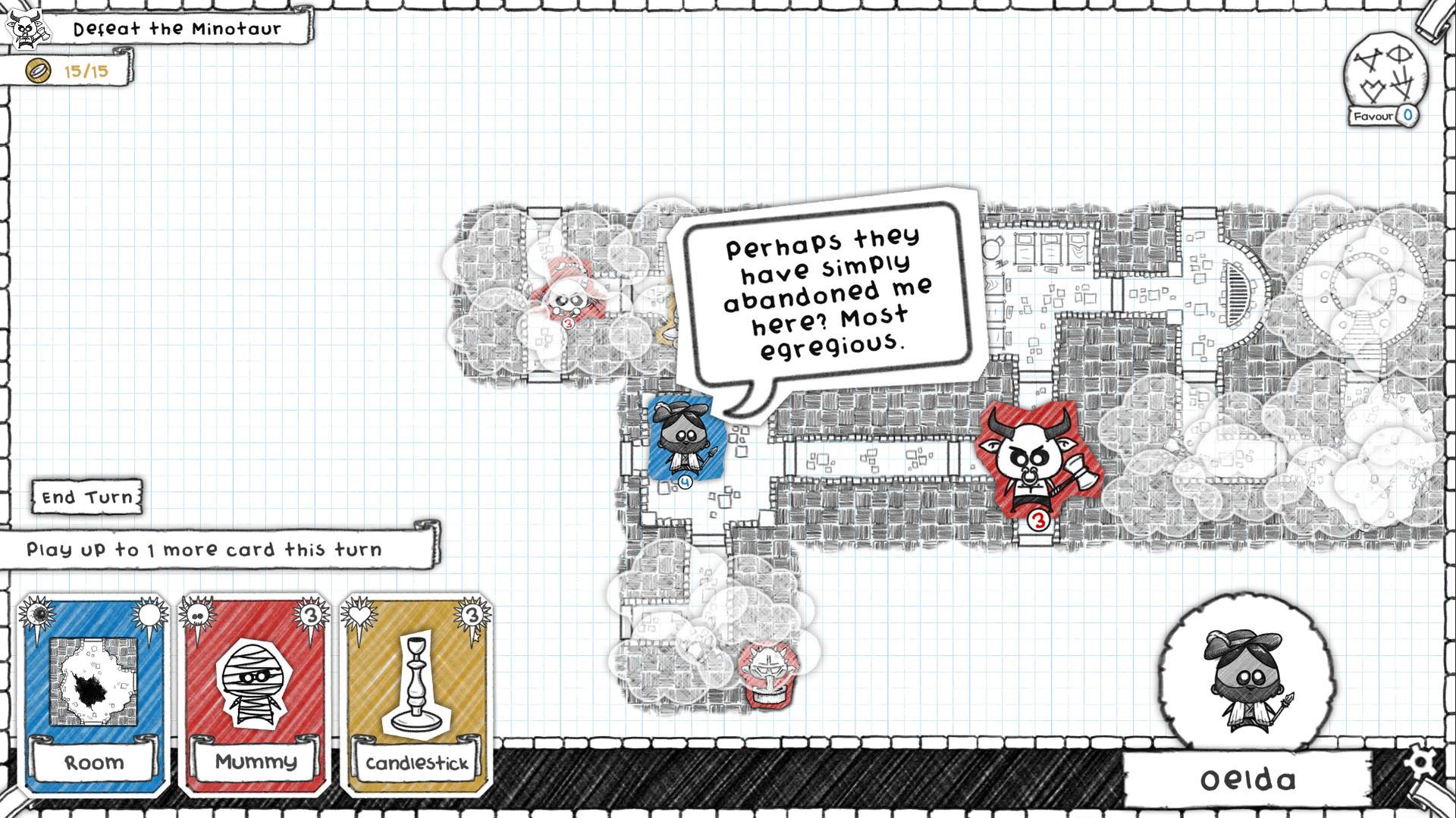
Guild of Dungeoneering's central hook is genuinely clever: rather than controlling a hero directly, players build the dungeon around them, laying tiles to guide where a semi-autonomous adventurer wanders and fights. Combined with distinct character classes and a dry, sarcastic narrator mocking every success and failure, it's an idea reviewers consistently find charming in its first several hours.
What a large, consistent share of reviewers describe — both at launch in 2015 and, notably, in reviews posted as recently as 2025 — is a core gameplay loop that reveals its full depth quickly and then repeats without meaningfully evolving. A full "Ultimate Edition" relaunch six years after release specifically aimed to address community feedback, and at least one reviewer credits it with real balance improvements — but reviews posted well after that relaunch independently make the same repetitiveness complaint the original launch reviews did, suggesting the core structural issue was never fully resolved.
Biggest strengths
- A genuinely inventive structural idea — building the dungeon layout to guide a semi-autonomous hero rather than controlling them directly — that reviewers consistently single out as unlike anything else in the genre
- Distinct, well-differentiated character classes that multiple reviewers praise as extremely well executed, each meaningfully changing how a run plays
- Consistently praised dark humor, anchored by a narrator/bard character who mocks the player regardless of outcome
Biggest weaknesses
- A large, consistent share of reviewers — from the original 2015 launch through reviews posted as recently as 2025 — describe the same pattern: the core loop reveals everything it has to offer within the first several hours and then repeats without meaningfully evolving
- Multiple independent reviewers report that character progress and gear largely reset between missions, which several describe as a mismatch with what the game's marketing and trailers implied about persistent hero-building
- One detailed reviewer explicitly argues the game is misleadingly labeled — describing it as "not a dungeon crawler, neither... an RPG" but closer to a straightforward deck-building card game, worth knowing before buying based on the store page's framing
Who it's for: Fans of quirky, humor-driven card games who want short, bite-sized sessions and don't need deep long-term progression. Less suited to players expecting the persistent hero-building RPG experience the name and marketing suggest, or anyone sensitive to RNG-driven difficulty spikes.
Our recommendation: Worth a look on sale for the humor and the inventive core idea, but temper expectations for long-term depth — several reviewers who stuck with it for dozens of hours, across a decade of the game's history, describe the same eventual burnout.
6 / 10
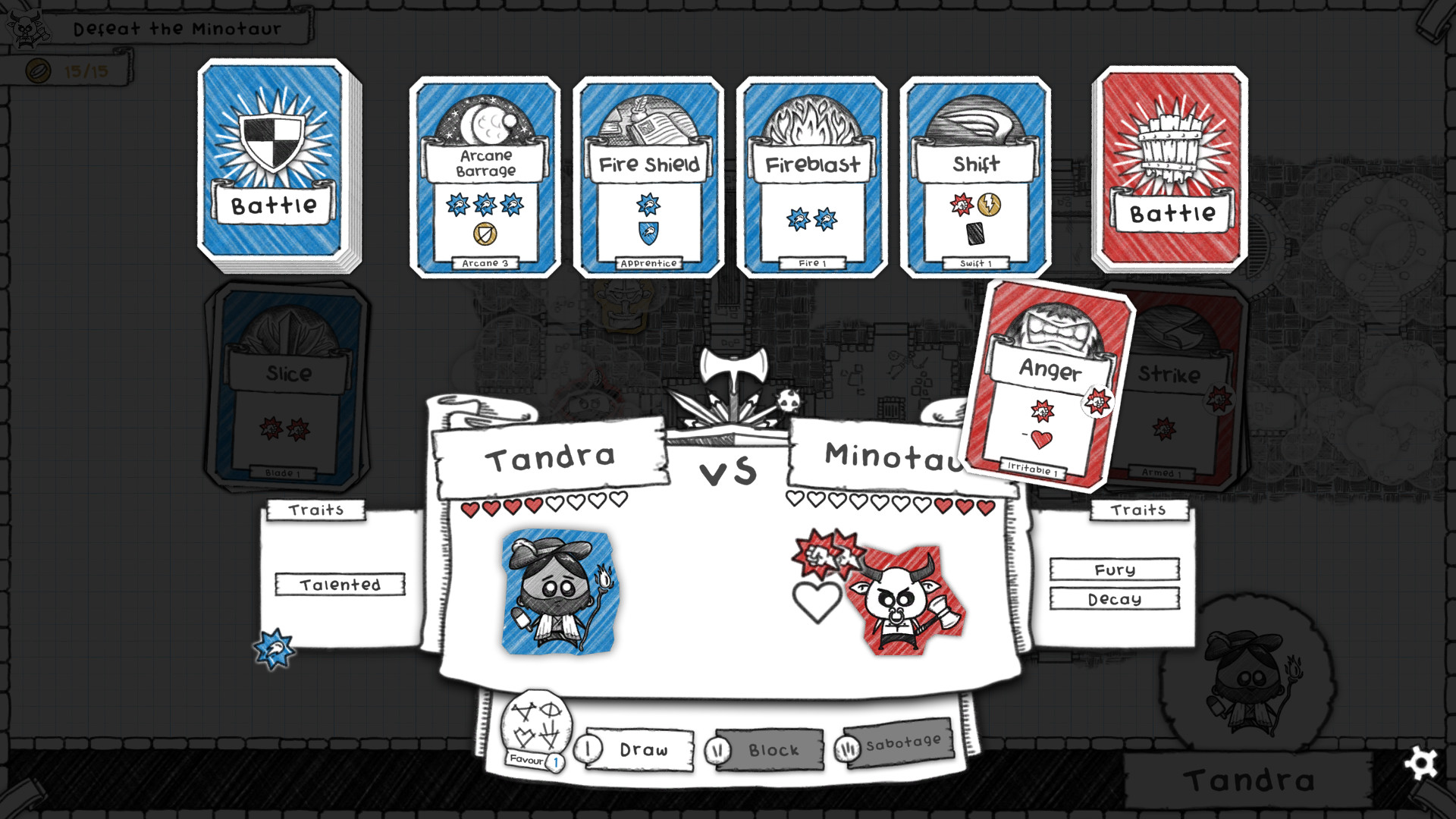
Guild of Dungeoneering inverts the usual dungeon-crawler premise in a genuinely clever way: rather than directly controlling a hero, the player draws the dungeon's layout tile by tile, nudging a semi-autonomous adventurer toward the encounters and rewards they want while combat itself plays out as a card-based, rock-paper-scissors-adjacent duel. It's a distinctive enough idea that reviewers across a full decade consistently describe their first several hours as genuinely delightful — and just as consistently describe those same hours as, unfortunately, close to everything the game has to offer.
A clever hook, and a label that oversells it
The praise this game earns is specific: reviewers single out its class variety as "extremely well done," each playing distinctly enough that unlocking a new one feels genuinely exciting rather than cosmetic, and a dry, sarcastic bard narrator who mocks the player's dungeoneers regardless of outcome draws consistent, fond mentions. One detailed review, ultimately positive after real deliberation, makes a point worth flagging directly: "despite the misleading name and description, gameplay-wise this game is not a dungeon crawler, neither is it a RPG. It is more like a twist on a deck-building card game." That's not a complaint about quality so much as a genre-labeling mismatch worth knowing before buying based on the store page's framing — going in expecting an RPG's persistent character investment sets up a different, more disappointed experience than going in expecting a card game with a clever board-building layer on top.
A repetitiveness complaint that outlasted a full relaunch
The single most consistent thread across this game's decade of reviews is structural: the core loop reveals its full depth within the first several hours and then repeats without meaningfully evolving. The most-upvoted review in the game's entire history describes exactly this arc — excitement giving way to the realization "I already saw everything the game had to offer" — and multiple independent reviewers separately flag that character progress and gear reset between missions, a specific mismatch with what trailers and marketing implied about persistent hero-building.
What makes this worth taking especially seriously is that it isn't just a 2015 launch-week complaint. Six years later, in November 2021, the developer shipped a full "Ultimate Edition" relaunch — a substantial, free update for existing owners specifically responding to years of community feedback, and at least one reviewer posted right after launch credits it directly: "After the Ultimate Edition update, I can finally say with confidence that this game is a relatively well-balanced, well-thought out distilled experience." But reviews posted well after that relaunch, including as recently as December 2024 and July 2025, independently make the same original complaint: "Just started a fresh playthrough hoping the game had been improved, and it's disappointing. The gameplay loop of this game is still very basic and repetitive," reads one; "it has a decent idea that wears itself out after a few iterations of play," reads another, independently, eight months later. Six years of real, substantial development attention appears to have improved balance without resolving the underlying structural repetition reviewers keep describing.
RNG that can feel more like bad luck than fair difficulty
A separate, recurring complaint concerns how much of the game's difficulty rests on card draws and tile-layout randomness rather than player decision-making. Multiple reviewers describe specific situations — a dungeon that doesn't offer the tiles needed to complete its goal in time, or an unlucky early draw that dooms an otherwise well-played run — as feeling less like fair challenge and more like arbitrary bad luck with limited ways to mitigate it. One reviewer coins a memorable term for this: "impossiBS," describing difficulty that isn't rooted in skill, rule knowledge, or reasonable randomness, but in situations that are simply unwinnable regardless of play quality.
What the completion data shows
Steam's achievement data offers a useful, independent read on how the repetitiveness complaint plays out across the wider playerbase. Early milestones sit healthily around 75-78% of tracked players, but the curve falls off sharply from there — deep-collection and perfect-run achievements sit under 1.5%, and completing the in-game "Guildopedia" card catalogue sits at just 1.3%. That's consistent with a game a large majority of buyers enjoy for a limited stretch before moving on, rather than one with a long, evenly-paced tail keeping players engaged deep into its content — independent, if indirect, confirmation of the burnout pattern so many reviewers describe directly.
A later balance change some longtime players resent
Not every post-launch change has been universally welcomed. At least one reviewer, writing in 2023 after years with the game, specifically objects to a later update that capped how much gold a player can earn per dungeon run, arguing it undercuts the core appeal of risking deeper, more dangerous dungeons for proportionally bigger rewards: "Who wants to go dungeoneering with a CAP on the amount of gold you can get?" This is a smaller, more specific complaint than the broader repetitiveness thread, but it's a useful reminder that "still receiving updates" doesn't automatically mean every change lands well with a game's existing community.
Where it lands
Guild of Dungeoneering's central idea remains genuinely clever, and its class variety, art and dry humor earn real, specific praise across a decade of reviews. But the game's own history tells an honest, slightly deflating story: a structural repetitiveness complaint that recurred consistently at launch, persisted through years of development, and — despite a real, substantial relaunch specifically aimed at addressing community concerns — still shows up independently in reviews written nearly four years after that relaunch shipped. It's worth trying for the hook and the humor, especially on sale, but go in expecting a short, clever novelty rather than the long-term RPG depth its name and marketing suggest.
Pros and cons
Pros
- A genuinely inventive structural idea — building the dungeon layout to guide a semi-autonomous hero rather than controlling them directly — that reviewers consistently single out as unlike anything else in the genre
- Distinct, well-differentiated character classes that multiple reviewers praise as extremely well executed, each meaningfully changing how a run plays
- Consistently praised dark humor, anchored by a narrator/bard character who mocks the player regardless of outcome
- A real, substantial six-years-later relaunch ("Ultimate Edition," free to existing owners) that at least one reviewer credits with meaningfully improved balance and RNG mitigation
- Continued active support well past launch, including a Hardcore Mode added in 2022 and a 10th-anniversary celebration in 2025
Cons
- A large, consistent share of reviewers — from the original 2015 launch through reviews posted as recently as 2025 — describe the same pattern: the core loop reveals everything it has to offer within the first several hours and then repeats without meaningfully evolving
- Multiple independent reviewers report that character progress and gear largely reset between missions, which several describe as a mismatch with what the game's marketing and trailers implied about persistent hero-building
- One detailed reviewer explicitly argues the game is misleadingly labeled — describing it as "not a dungeon crawler, neither... an RPG" but closer to a straightforward deck-building card game, worth knowing before buying based on the store page's framing
- RNG plays a heavy role in card draws and tile layouts, and several reviewers describe specific situations where a run becomes effectively unwinnable through no fault of the player's own decisions, rather than a fair difficulty spike
- Only one hero can be active at a time with no cross-character interaction, which some reviewers say limits the kind of team-building depth the class variety otherwise promises
Screenshots
-
Guild of DungeoneeringImage: Versus Evil via Steam -
Guild of DungeoneeringImage: Versus Evil via Steam -
Guild of DungeoneeringImage: Versus Evil via Steam -
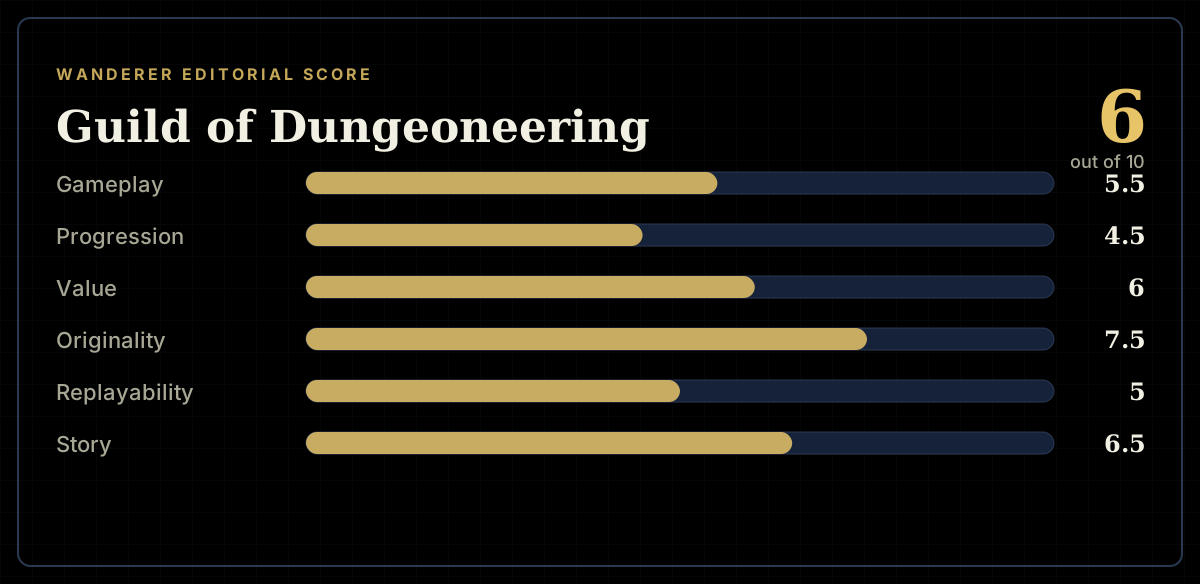
How the review scores each part of the gameWanderer Editorial -
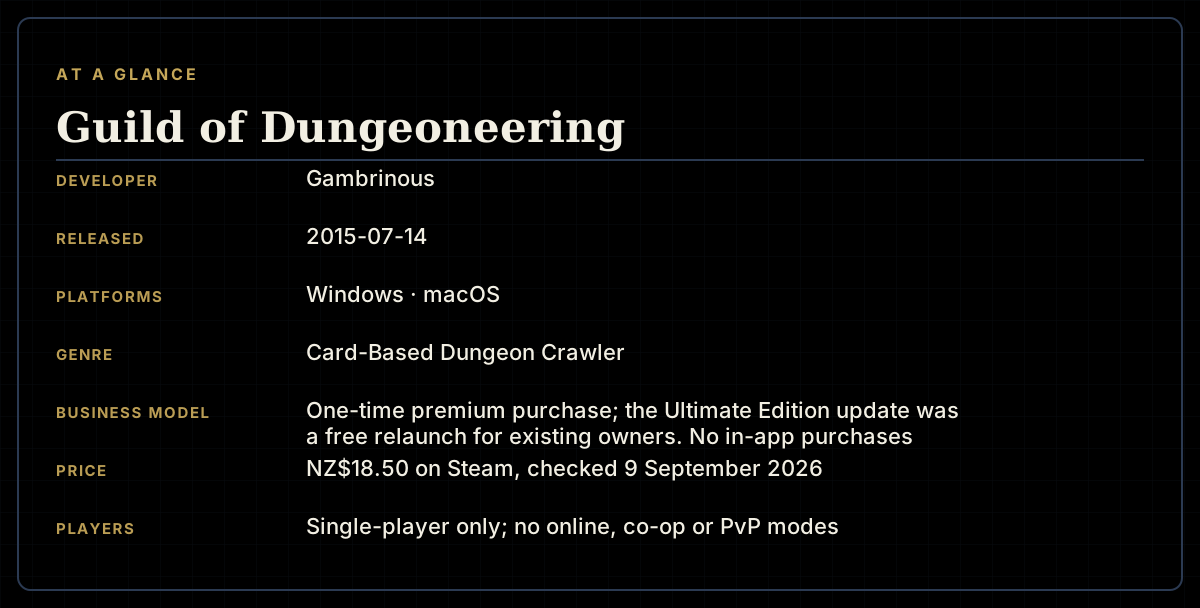
The specsWanderer Editorial -
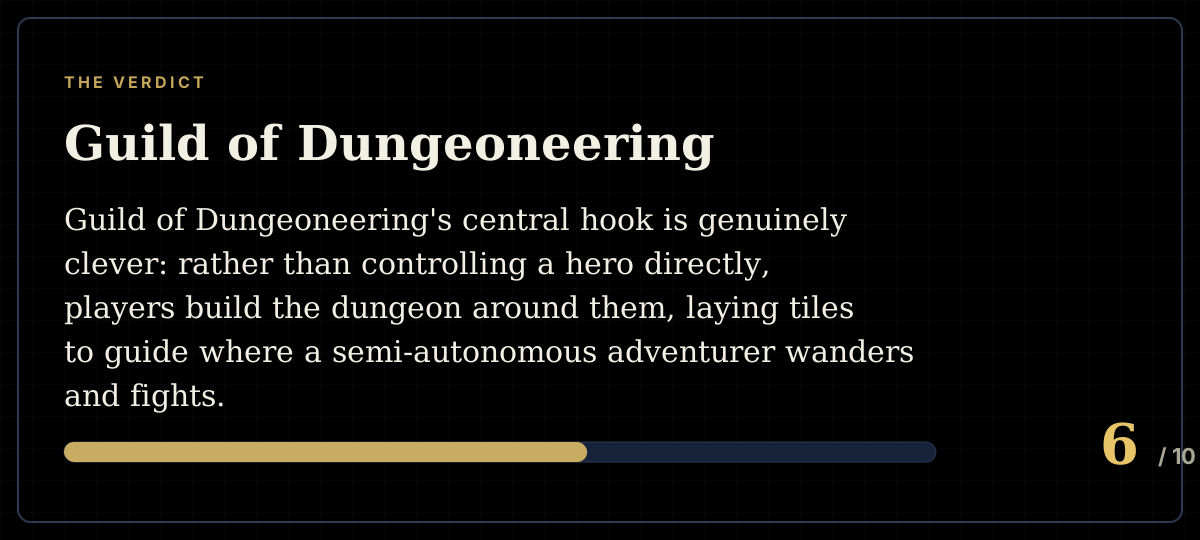
The short versionWanderer Editorial