
Game review
Grim Quest - Old School RPG
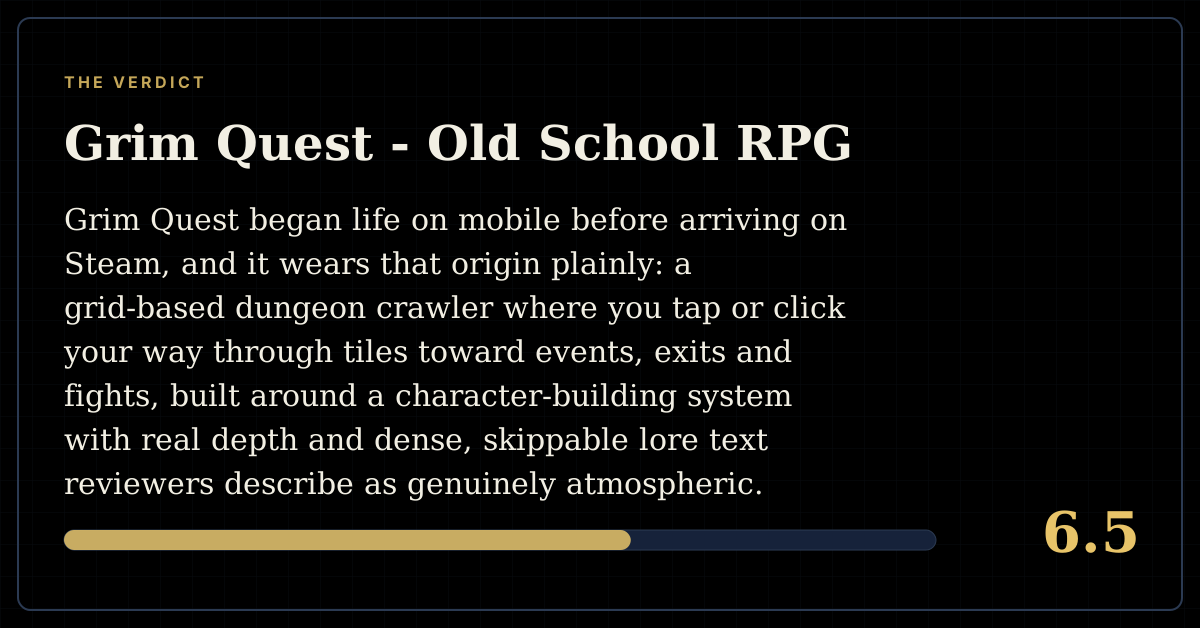
6.5 / 10
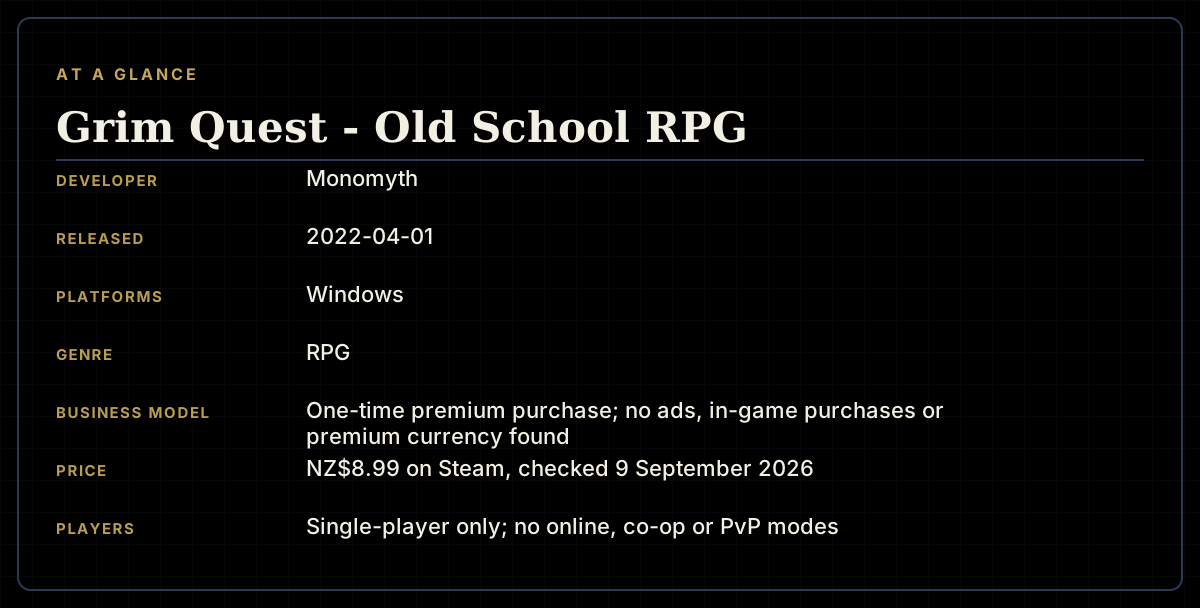
- Developer
- Monomyth
- Publisher
- Monomyth
- Released
- 1 April 2022
- Platforms
- Windows
- Genre
- RPG
- Monetisation
- One-time premium purchase; no ads, in-game purchases or premium currency found
- Players
- Single-player only; no online, co-op or PvP modes
The short version
Grim Quest began life on mobile before arriving on Steam, and it wears that origin plainly: a grid-based dungeon crawler where you tap or click your way through tiles toward events, exits and fights, built around a character-building system with real depth and dense, skippable lore text reviewers describe as genuinely atmospheric. One reviewer specifically notes it plays like a tabletop gamebook translated faithfully to a screen, and the character and combat customisation earns consistent, specific praise for letting players build genuinely different characters run to run.
What holds it back is exactly what you'd expect from a mobile-first design carried over: balance reviewers say still leans toward systems that would have driven monetisation on the original platform, translation rough enough to notice, and static combat presentation that felt thin for years. The most serious specific complaint is the ending itself, which multiple detailed reviews who finished the full story call a genuine letdown after an otherwise well-built campaign. Monomyth's own support record is unusually long for a game this size — real patches through 2023, a long quiet stretch, then a substantial 2026 revival that directly answered the game's longest-standing combat-feel complaints.
Biggest strengths
- Genuinely deep character-building and combat customisation that reviewers say produces real run-to-run variety, consistently cited as the game's strongest system
- Dense, atmospheric, entirely skippable lore writing that multiple reviewers praise for world-building depth well beyond what a game this cheap typically offers
- An unusually long, real support record for a small release — active patching through 2023, followed by a substantial 2026 update cycle that added full localisation and a series of combat animation overhauls directly answering long-standing "feels static" complaints
Biggest weaknesses
- Balance carries over mobile-era design choices reviewers say still favour certain systems (spells over physical skills, RNG-driven shop inventory) in ways that read as tuned around a since-removed monetisation loop rather than PC-native balance
- Dungeon exploration itself draws specific criticism as repetitive and shallow — an open field of tiles to click through in efficient order rather than a space with real navigational choices
- Translation and text quality show rough edges reviewers directly attribute to the game's mobile origins
Who it's for: Fans of gamebook-style dungeon crawlers who want real character-building depth and dense lore over slick presentation, especially players coming from the mobile version who want an ad-free, more polished experience. Less suited to anyone wanting tactical dungeon exploration rather than tile-clicking, or a satisfying narrative payoff.
Our recommendation: A cheap, genuinely engaging build-focused RPG worth trying, especially now that its 2026 update has addressed years-old combat-feel complaints, but go in with tempered expectations for the story's conclusion.
6.5 / 10
Grim Quest doesn't hide where it came from. Originally a mobile release, it arrived on Steam in April 2022 as a grid-based dungeon crawler: choose a character type and animal companion, click through tiles on a dungeon floor toward events, treasure, exits or fights, and build a character through an ability and equipment system with real depth underneath a simple presentation. One reviewer, comparing it to a solo tabletop campaign, calls it "part solo tabletop campaign, part choose-your-own-adventure" — a fair description of a game whose real appeal is dense lore text and meaningful build decisions rather than flashy combat. That description is also, honestly, most of why this review exists: reviewers consistently describe getting pulled in far deeper than they expected from something this unassuming.
Real depth in the build, real thinness in the dungeon
The character-building system draws the most consistent, specific praise. Reviewers describe genuinely different playthroughs built around different ability and equipment choices, with one detailed review specifically crediting an "interesting leveling system that keeps the player wanting to always go the next mile." Set against that is a specific complaint about the dungeon layer itself: one detailed critical review describes the exploration as "just an empty field" of clickable tiles with no corridors, no backtracking and no real navigational choices, arguing there's no actual strategy to how you move through a floor beyond efficiency. Both things can be true — a genuinely engaging character system wrapped around a simple, low-friction traversal layer that some players find meditative and others find hollow.
Where the mobile roots still show
Several reviewers connect specific balance complaints directly to the game's mobile origins. Physical combat skills are described as consistently inferior to a narrower set of spells, and shop inventory is randomly generated in a way one reviewer says reinforces leaning into magic over skill-based builds — the kind of imbalance that, on the original mobile version, likely nudged players toward paid shortcuts. One reviewer who'd struggled with "obnoxious unskippable video ads" on mobile specifically bought the Steam version to escape them, and still describes the underlying balance and UI as carrying obvious mobile-version influence even without the ads themselves. Translation quality draws separate, related criticism, with more than one review noting rough English phrasing consistent with a game not originally built for this market.
An ending multiple finishers call a letdown
The single most pointed complaint from reviewers who completed the full campaign is the ending itself. More than one detailed review, after logging significant playtime and finishing the main storyline, specifically calls the conclusion "a complete dodge" and "wholly unsatisfying," with one noting that endgame dungeons offer no narrative payoff for the effort of completing them. This is a different, more serious complaint than the mobile-carryover issues above — it's not a rough edge players can route around, it's the story's own resolution falling short of the atmosphere and world-building the rest of the game spends its runtime earning.
A support record that goes quiet, then comes back strong
Monomyth's patch history is unusually long for a release this size. The game shipped with a dense, near-weekly patch cadence through its first few months in 2022, hit a "1.0.0 stable release" that June, and continued regular updates through most of 2023. Support then went quiet for roughly two and a quarter years — no visible updates between December 2023 and March 2026 — before returning with a substantial 2026 update cycle: a full localisation pass, and a specific, named series of combat animation improvements (enemy attack telegraphs, hit reactions, visual casting effects) that directly answers years of reviewer complaints about combat feeling static and app-like. A prequel was announced in 2023, though this review couldn't independently confirm whether it has since been released. Whatever the reason for the quiet stretch, the developer's return with updates targeted specifically at the game's most-cited weaknesses is a good sign for a small release that easily could have been abandoned instead.
A small, specific accessibility win worth naming
One detail worth calling out on its own: a reviewer who says they usually skip text-heavy intros and dialogue specifically because screen readers rarely handle games well describes being surprised that Grim Quest supports NVDA "to a point," letting them actually engage with the game's dense lore text rather than skipping past it. That's a small, specific, unprompted piece of praise rather than a marketed feature, and it's the kind of detail this fleet doesn't see mentioned often. It doesn't change the overall balance of this review, but a text-heavy game that's made a real effort to be readable by assistive technology, even partially, deserves the credit stated plainly rather than folded silently into general praise for the writing.
Where it lands
Grim Quest earns real, specific praise for character-building depth and atmospheric writing that punch well above its price, and a support record that outlasted a two-year silence to specifically address its most common complaints is a genuinely good sign for buyers today. Its mobile-era balance carryover, thin dungeon traversal and a widely criticised ending are real, documented flaws rather than nitpicks, though. A 6.5 reflects a cheap, engaging build-focused RPG that's earned its long tail of support without ever quite resolving the tensions its mobile origins built in from the start. For nine dollars, and with the 2026 combat update now live, it's a fair bet for anyone who wants a dense, character-driven dungeon crawler and can make peace with an ending that doesn't match everything leading up to it.
Pros and cons
Pros
- Genuinely deep character-building and combat customisation that reviewers say produces real run-to-run variety, consistently cited as the game's strongest system
- Dense, atmospheric, entirely skippable lore writing that multiple reviewers praise for world-building depth well beyond what a game this cheap typically offers
- An unusually long, real support record for a small release — active patching through 2023, followed by a substantial 2026 update cycle that added full localisation and a series of combat animation overhauls directly answering long-standing "feels static" complaints
- Cheap even at full price, and one reviewer specifically credits its screen-reader compatibility as unexpectedly solid for a game this size, a genuine accessibility positive worth naming directly
Cons
- Balance carries over mobile-era design choices reviewers say still favour certain systems (spells over physical skills, RNG-driven shop inventory) in ways that read as tuned around a since-removed monetisation loop rather than PC-native balance
- Dungeon exploration itself draws specific criticism as repetitive and shallow — an open field of tiles to click through in efficient order rather than a space with real navigational choices
- Translation and text quality show rough edges reviewers directly attribute to the game's mobile origins
- The story's ending is called an outright disappointment by multiple detailed reviews who completed the full campaign, undercutting the atmosphere built up over the rest of the game
- Crashes are reported by a minority of reviewers, inconsistent enough not to affect everyone but frequent enough to be a repeated, specific complaint
Screenshots
-
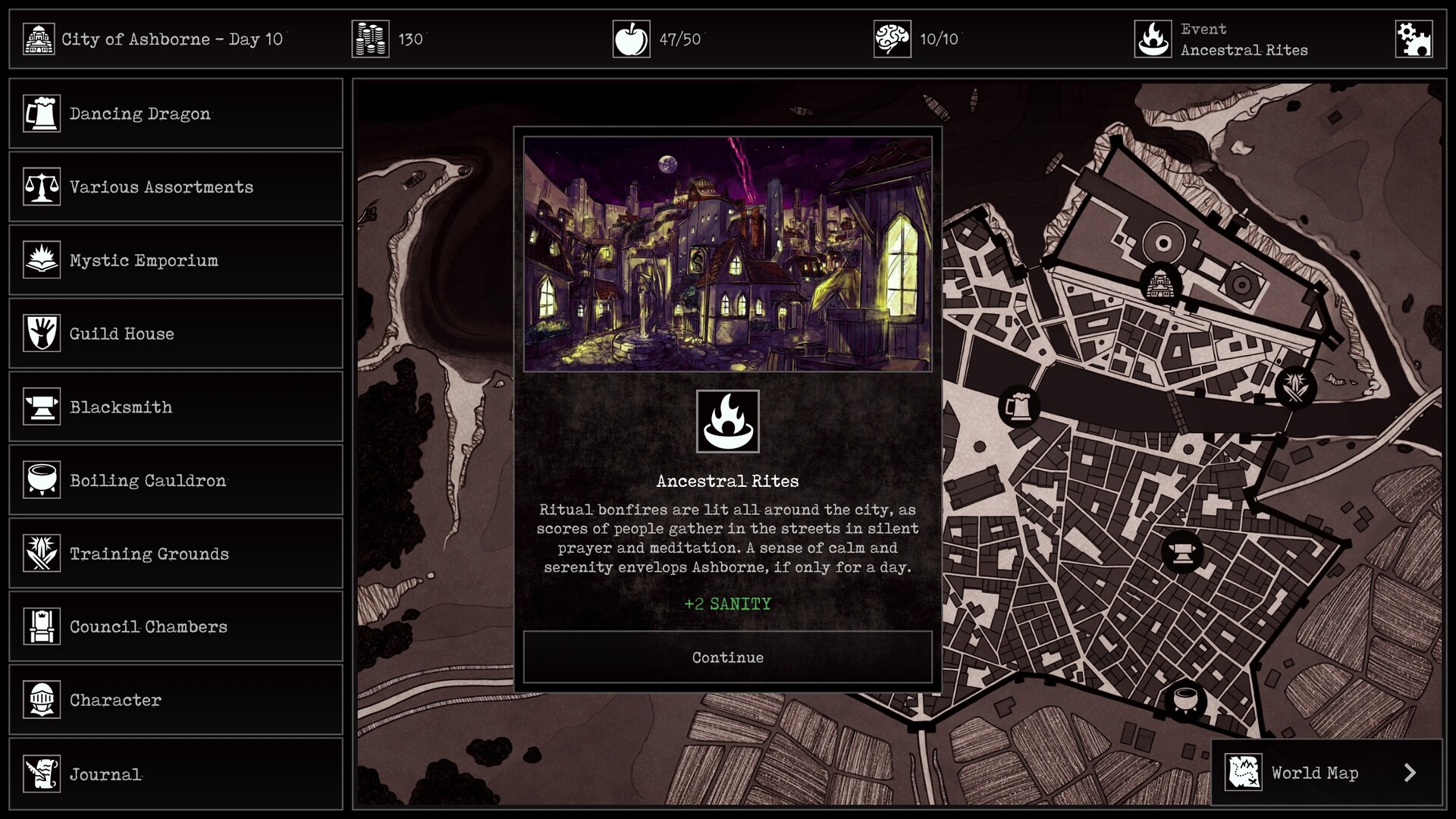
Grim Quest - Old School RPGImage: Monomyth via Steam -
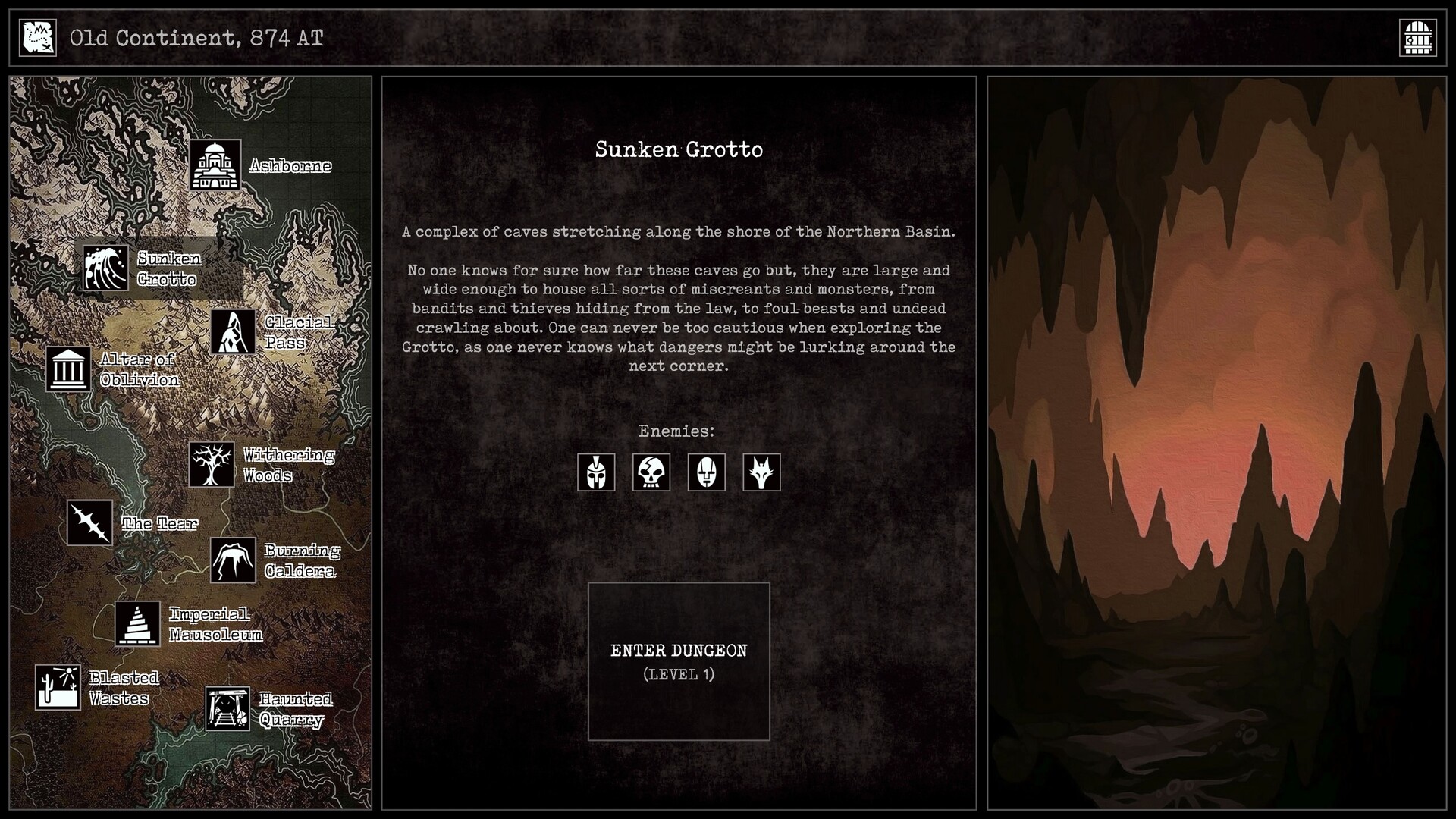
Grim Quest - Old School RPGImage: Monomyth via Steam -
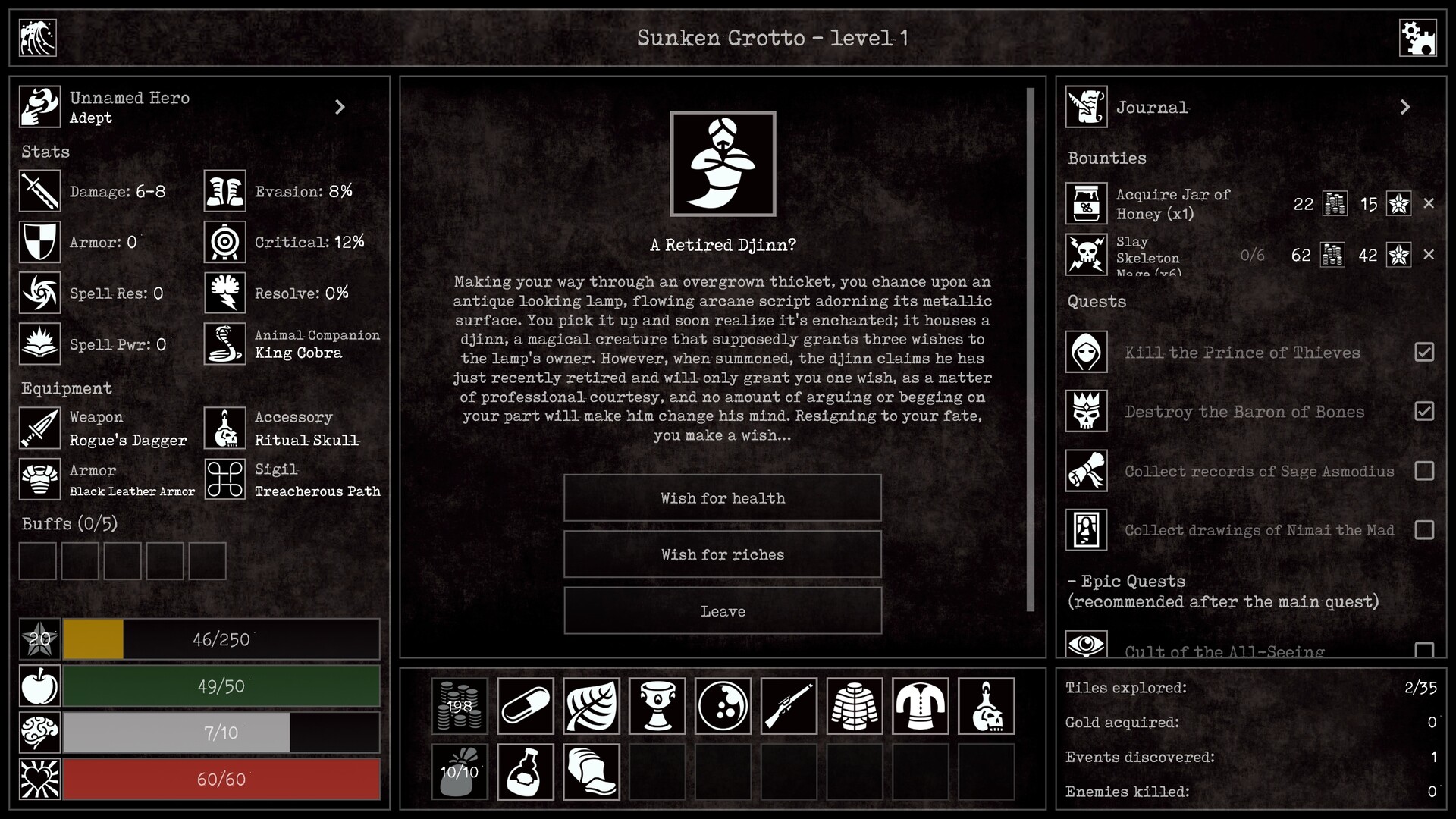
Grim Quest - Old School RPGImage: Monomyth via Steam -
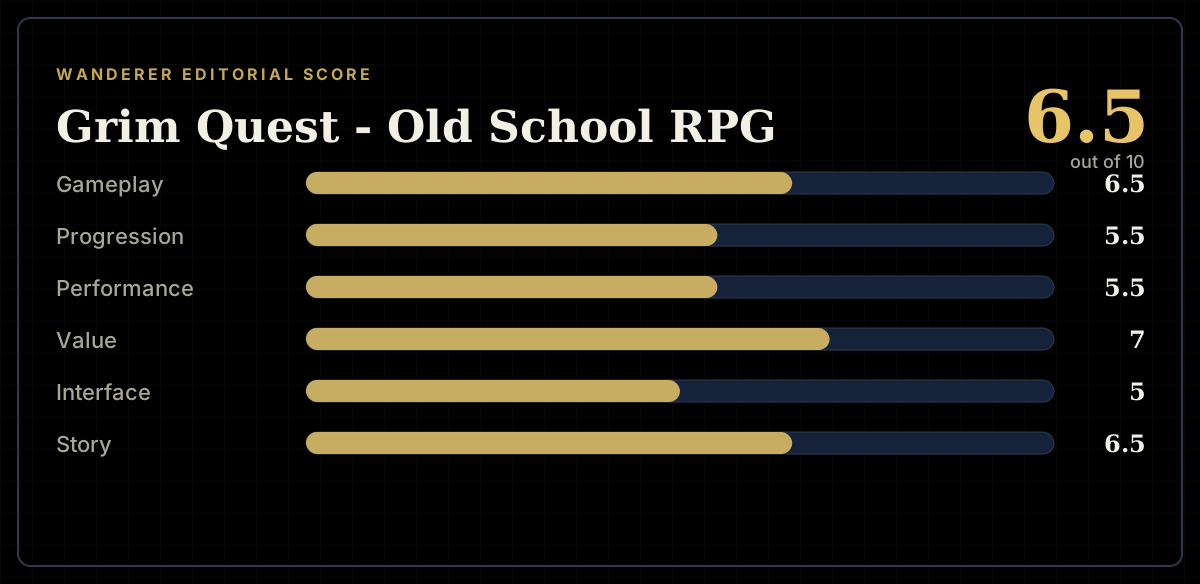
How the review scores each part of the gameWanderer Editorial -
The specsWanderer Editorial -
The short versionWanderer Editorial