Game review
Grim Fandango Remastered
7.5 / 10
- Developer
- Double Fine Productions
- Publisher
- Double Fine Productions
- Released
- 27 January 2015
- Platforms
- Windows, macOS, Linux
- Genre
- Point-and-Click Adventure
- Monetisation
- One-time premium purchase; no DLC, no in-app purchases
- Players
- Single-player only; no online, co-op or PvP modes
The short version
Grim Fandango Remastered brings Tim Schafer's 1998 LucasArts classic to modern systems, casting players as Manny Calavera, a skeletal travel agent selling afterlife packages in an Aztec-inspired land of the dead. Reviewers describe the writing, voice acting and world-building in genuinely reverent terms decades on, with several naming it among the best games or stories they've ever experienced, and the remaster's biggest practical improvement — an optional modern point-and-click control scheme replacing the original's much-maligned tank controls — draws specific, grateful praise from returning fans.
A real, specific, and persistent technical problem runs alongside that praise: multiple reviewers, spanning from shortly after the 2015 remaster's release through a report as recent as early September 2026, describe hitting the identical reproducible softlock at the same fixed point in the story — a wheelbarrow interaction near a metal tree in the Petrified Forest — that has apparently gone unpatched for close to a decade. Separately, a genuinely divisive and frequently repeated complaint concerns puzzle logic several reviewers describe as obtuse enough to require an external guide, a well-known criticism of the genre's era that this remaster's quality-of-life changes didn't resolve.
Biggest strengths
- Writing, voice acting and world-building reviewers consistently describe among the best in any video game, holding up strongly nearly three decades after the original's release
- A distinctive, fully realized Aztec-inspired noir setting that reviewers say has never really been matched by another game since
- The remaster's single biggest improvement: an optional modern point-and-click control scheme replacing the original's divisive tank controls, while still preserving them as an option for purists (with its own achievement for using them)
Biggest weaknesses
- A specific, reproducible softlock bug at a fixed story point — a wheelbarrow interaction near a metal tree in the Petrified Forest — reported by multiple reviewers spanning from shortly after release through as recently as early September 2026, with no apparent official fix in close to a decade
- A recurring, well-documented complaint about obtuse "moon logic" puzzle design, with several reviewers stating directly that completing the game without an external guide is close to impossible at certain points
- Because the game's backgrounds are pre-rendered 1998-era assets, one detailed reviewer notes they couldn't be meaningfully remastered, creating a visible fidelity gap against the upgraded character models
Who it's for: Adventure game fans and anyone curious about a genuine genre landmark, especially those with patience for old-school "moon logic" puzzle design. Less suited to players who need guaranteed technical reliability, given a specific, still-reported softlock bug, or anyone unwilling to consult a guide when puzzles get obtuse.
Our recommendation: An essential purchase for adventure game fans and anyone interested in genre history — just know a walkthrough is genuinely useful here, not just a crutch, and save often given the specific, still-reported bug near the Petrified Forest.
7.5 / 10
Grim Fandango first released in 1998 as one of LucasArts' final classic-era point-and-click adventures, and this 2015 remaster from Tim Schafer's own Double Fine Productions is the version Steam sells today. Manny Calavera, a skeletal travel agent working in the land of the dead, sells souls passing through the afterlife on their journey to eternal rest — except the good tickets keep mysteriously going to the wrong people, and Manny's determined to find out why.
Writing reviewers still call some of the best in the medium
The praise for this game's story, dialogue and voice work is close to universal in this sample, and it comes in genuinely personal, specific terms. "This game is honestly a great adventure game. Nothing else to add to that," one reviewer writes, while another states plainly that it "changed my life," crediting the game's soundtrack and film-noir sensibility with inspiring a career in film. A separate reviewer, replaying the game after many years, calls it simply "one of the best games I have ever played... one-of-a-kind." That level of specific, lasting personal impact recurs often enough across independent reviewers to treat as a genuine, well-earned reputation rather than pure nostalgia.
The remaster's real improvement: you can finally use a mouse
Beyond the writing, the single most consistently praised change in this remaster is a genuinely practical one. The original 1998 release used tank controls that many players found actively hostile to modern expectations; this remaster adds an optional point-and-click control scheme, while preserving the original controls for purists — who are even rewarded with a dedicated achievement for beating the game the old way. "The game could be actually played with a mouse," one reviewer notes with evident relief, and several others specifically credit this single change with making the game approachable for players who'd bounced off the original for exactly that reason.
A specific, persistent bug that reviewers keep independently rediscovering
Set against that praise, this review sample surfaces a genuinely concerning, specific technical problem: a reproducible softlock at a fixed point in the story, involving a wheelbarrow interaction near a metal tree in the game's Petrified Forest section. What makes this worth taking seriously rather than dismissing as an isolated report is how consistently and specifically it recurs across reviews spanning nearly a decade. One reviewer from 2015 already reports it directly: "even after well over half a year they still haven't patched any of the many reported bugs... I cannot even complete the first year because of a bug." Another, in 2024, reports "this game is broken right now" at the exact same location. A third, dated 3 September 2026 — during the same week this review was researched — reports hitting "a gamebreaking bug (Wheelbarrow at metal tree)" and giving up after an hour of troubleshooting. That's a specific, named, reproducible bug independently rediscovered by strangers across roughly ten years, strongly suggesting it remains unresolved today.
A well-known, recurring puzzle-logic complaint
Separately from that bug, a familiar critique of classic-era adventure game design recurs often in this sample: puzzle solutions several reviewers describe as arbitrary or ungrounded in logic. "There is absolutely, positively, no way to complete this game without consulting a guide," one reviewer states. Others push back, arguing the solutions do make sense if players pay close enough attention to dialogue and environmental details. That's a genuinely split, era-specific design debate rather than a clear-cut flaw, and it's worth going in with the expectation that a walkthrough may become a genuinely useful tool rather than a last resort.
What the completion data confirms
Steam's achievement statistics offer a useful, independent read on a few of this review's specific claims. Only about 11% of the tracked playerbase has an achievement tied to finishing the whole story, consistent with the specific technical and puzzle-logic friction reviewers describe pushing some players to stop partway through. More specifically, an achievement tied to beating the game using the original tank controls — the exact legacy option reviewers reference directly — sits at just under 4%, confirming that the vast majority of players who do complete the game take the remaster's modern point-and-click option instead, exactly as the review sample's praise for that change would predict.
A landmark that shaped the genre's later reputation
It's worth placing this game in its wider historical context, since several reviewers do so explicitly. Grim Fandango arrived during a period when point-and-click adventure games were commercially declining, and its blend of film-noir atmosphere, distinctive setting and genuinely literary writing is frequently credited by returning fans with keeping the genre's reputation alive for a later generation of developers. That legacy is part of why Double Fine specifically chose this game, among its back catalogue, to remaster first — a decision reviewers in this sample treat as an obviously correct one, whatever the remaster's own technical shortcomings.
Where it lands
Grim Fandango Remastered earns its status as a genre landmark through writing, voice acting and world-building reviewers describe in strikingly personal, lasting terms, and the remaster's shift to modern controls is a real, well-executed quality-of-life improvement. The specific, repeatedly rediscovered softlock bug near the Petrified Forest is concrete and persistent enough to flag directly and save around, and the genre's classic puzzle-logic friction is worth going in prepared for with a guide close at hand. For adventure game fans and anyone curious about genre history, this remains an essential, if imperfect, classic.
Pros and cons
Pros
- Writing, voice acting and world-building reviewers consistently describe among the best in any video game, holding up strongly nearly three decades after the original's release
- A distinctive, fully realized Aztec-inspired noir setting that reviewers say has never really been matched by another game since
- The remaster's single biggest improvement: an optional modern point-and-click control scheme replacing the original's divisive tank controls, while still preserving them as an option for purists (with its own achievement for using them)
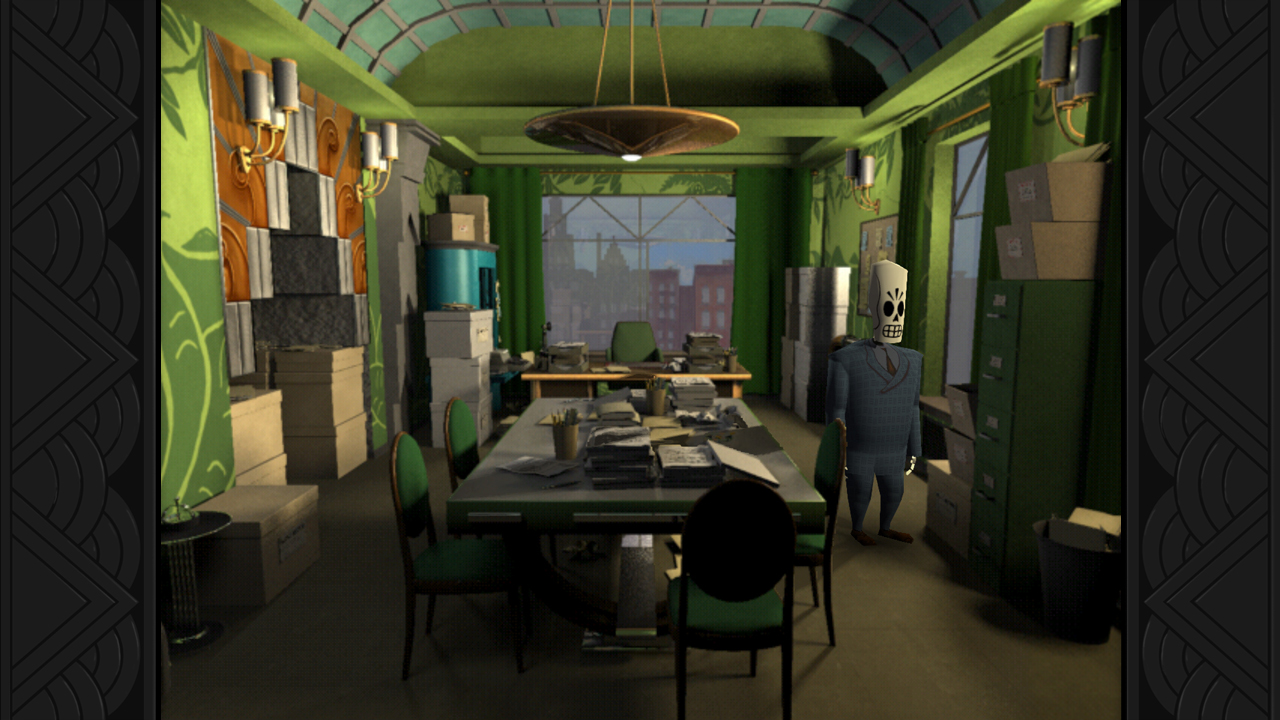
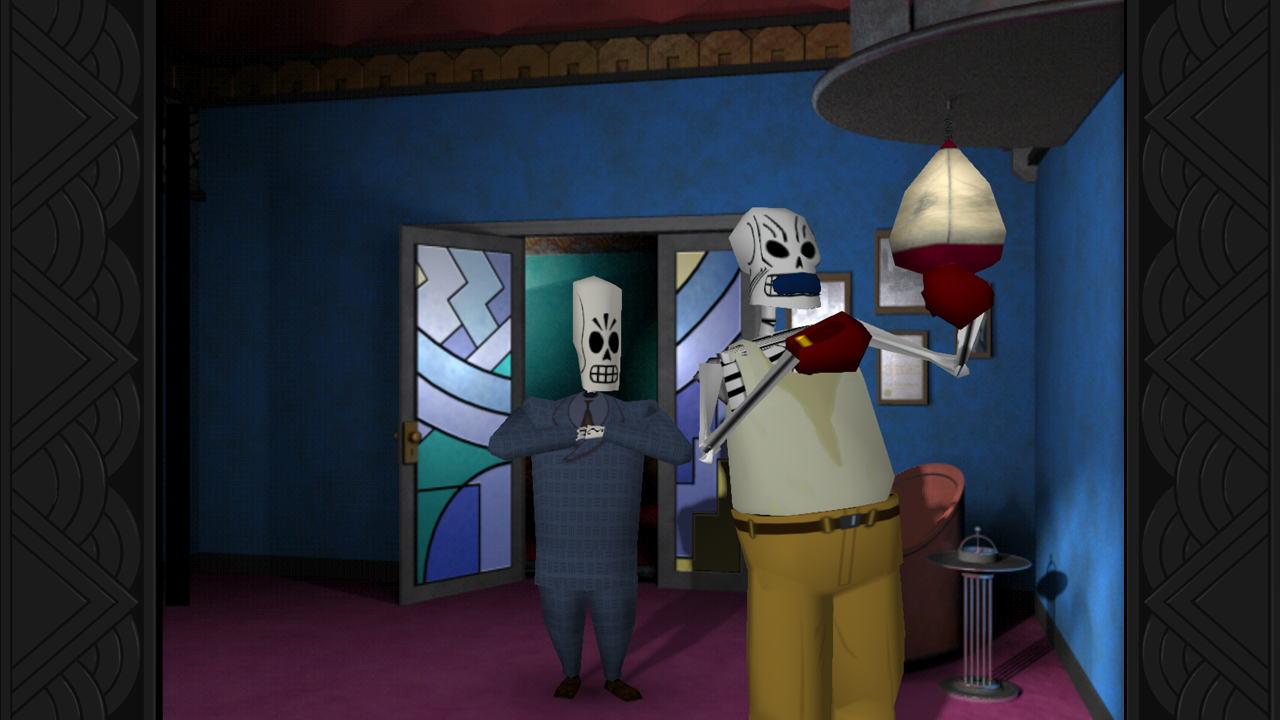
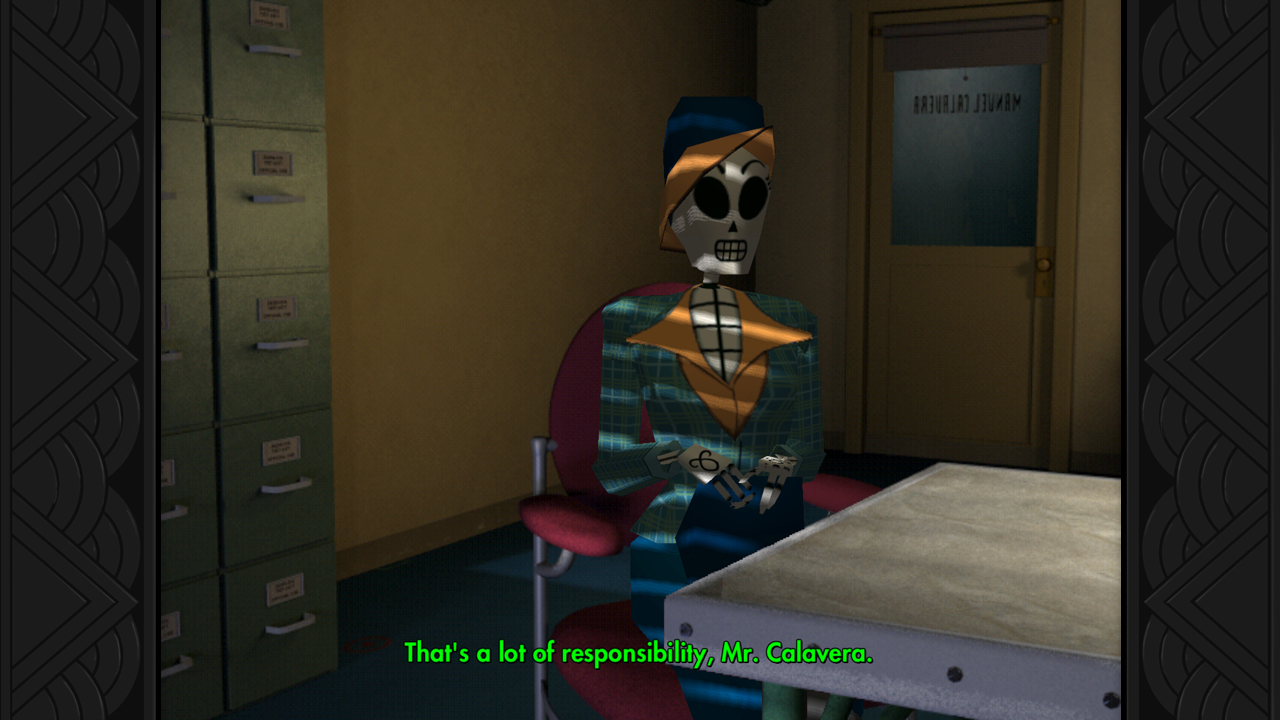
- Genuinely improved visual fidelity for character models, lighting and shadows compared to the 1998 original
- A memorable, well-loved cast of characters, led by Manny Calavera, that multiple reviewers describe as having a lasting personal impact well beyond the time spent playing
Cons
- A specific, reproducible softlock bug at a fixed story point — a wheelbarrow interaction near a metal tree in the Petrified Forest — reported by multiple reviewers spanning from shortly after release through as recently as early September 2026, with no apparent official fix in close to a decade
- A recurring, well-documented complaint about obtuse "moon logic" puzzle design, with several reviewers stating directly that completing the game without an external guide is close to impossible at certain points
- Because the game's backgrounds are pre-rendered 1998-era assets, one detailed reviewer notes they couldn't be meaningfully remastered, creating a visible fidelity gap against the upgraded character models
- Some reviewers report the story's momentum, strong in its opening act, loses focus in later chapters compared to its excellent start
- As an old-school adventure game, the pacing and structure will read as slow and dialogue-heavy to players used to more modern, action-oriented game design
Screenshots
-
Grim Fandango RemasteredImage: Double Fine Productions via Steam -
Grim Fandango RemasteredImage: Double Fine Productions via Steam -
Grim Fandango RemasteredImage: Double Fine Productions via Steam -
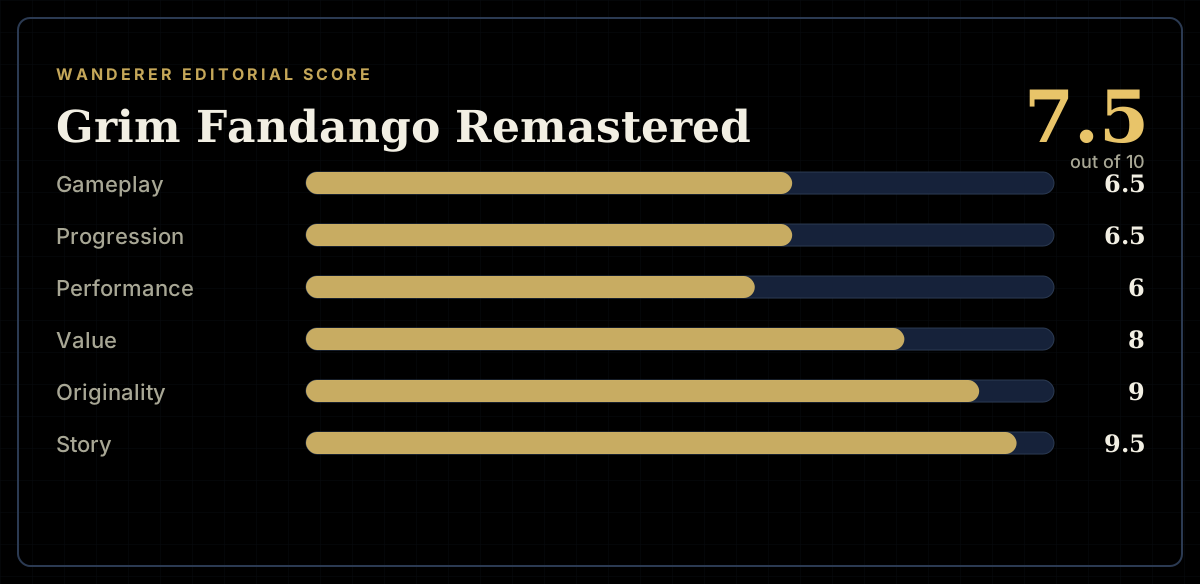
How the review scores each part of the gameWanderer Editorial -
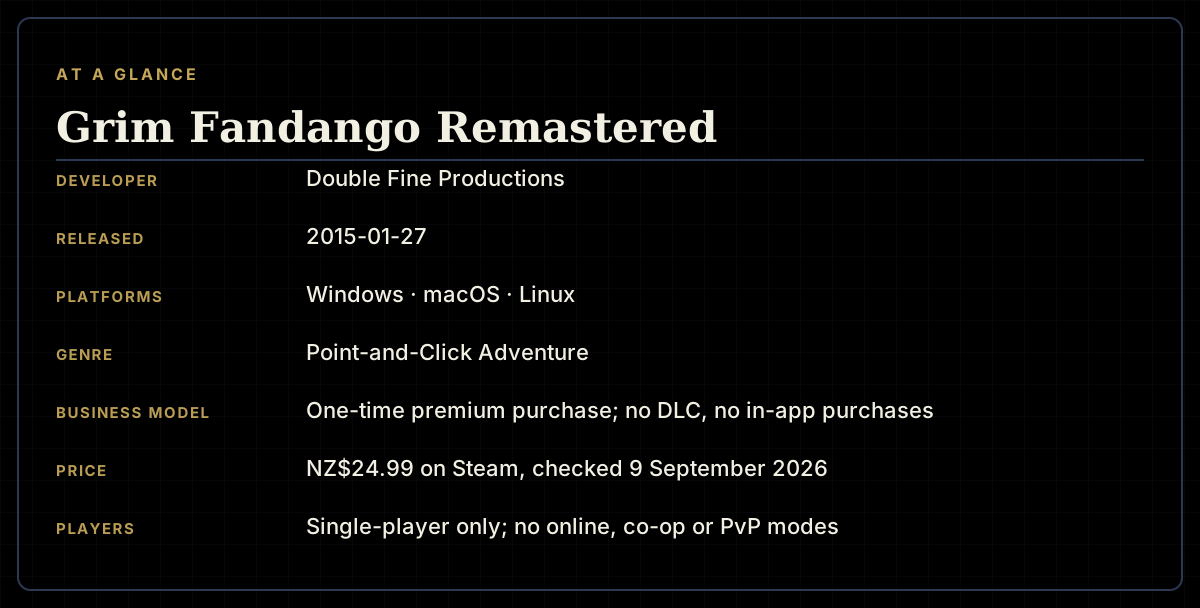
The specsWanderer Editorial -
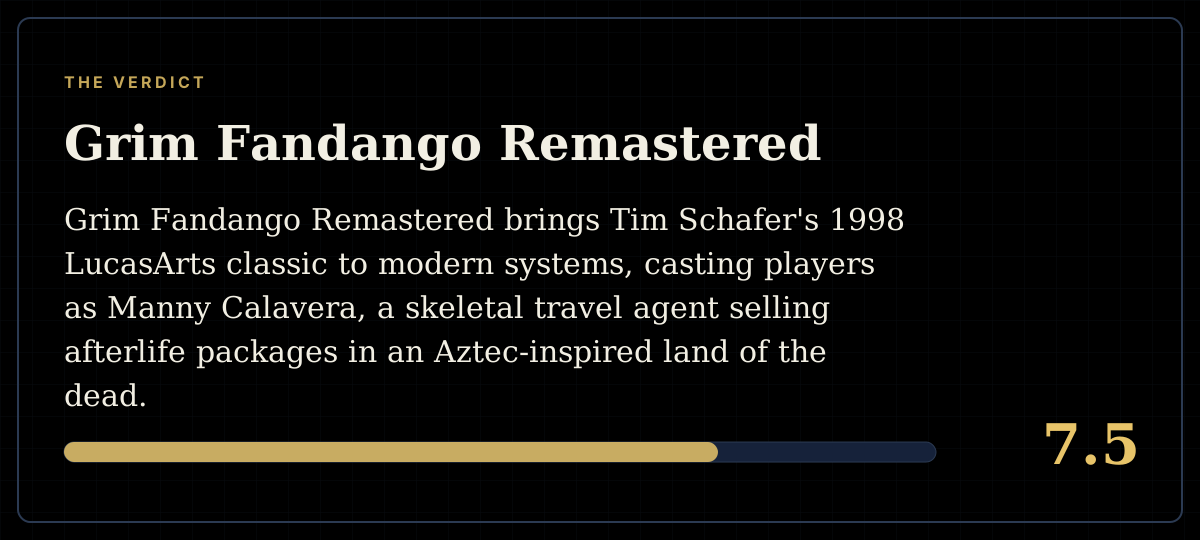
The short versionWanderer Editorial