Game review
Galithia
6.5 / 10
- Developer
- Josh Schoenberger
- Publisher
- Josh Schoenberger
- Released
- 15 September 2026
- Platforms
- Windows
- Genre
- RPG
A Thirty-Ninth Consecutive Launch Without a Single Review
Galithia entered Early Access on Steam on 15 September 2026, and at the time of writing it carries zero user reviews on either side of the ledger. That matters more than usual here, because the pitch is one of the most crowded in the RPG space right now: a dark-fantasy creature collector built around binding monsters, assembling a party from them, and surviving turn-based encounters. The genre has decades of comparison points, from Pokémon's core loop to a long run of smaller indie collectors on Steam, and a solo developer entering that field with a single-person credit line and no review history yet has to be judged entirely on what the store page itself claims, since nobody outside the studio has weighed in yet.
Binding Monsters Instead of Catching Them
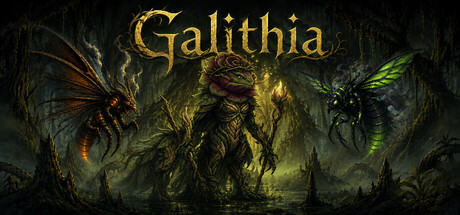
Where Galithia tries to differentiate itself from the catch-and-train template is in framing: creatures are "bound" rather than caught, and the store page leans into a "dark fantasy" tone of cursed forests, ruined paths, and hostile wilds rather than the friendlier presentation most creature collectors default to. The developer describes every unit as mattering, with "smart swaps, careful resource use, and the right abilities" deciding whether a party survives — language that suggests a design intent toward tighter squad sizes and more consequential losses than the roster-of-six-plus-bench structure typical of the genre's biggest names. Whether that intent holds up in practice, particularly around how punishing losing a bound creature actually is and whether the binding process itself involves any meaningful risk or cost beyond hunting the creature down, isn't described in enough detail on the store page to say for certain. The key features list promises roles that "excel at frontline pressure," others that "control the flow of battle," and others still that "keep your team alive" — a three-way tank/control/support split that is a sound design skeleton for turn-based party combat, but the store page gives no concrete numbers, ability names, or example creatures to verify how deep that role differentiation actually runs beyond the pitch. One screenshot answers a question the store page leaves open: how binding actually happens in practice. A post-battle rewards panel reads "Recruit: Grassland Hare joined you after the battle," alongside "Solari earned: +12" and "Experience: 50 EXP to each surviving ally" — confirming that at least some creatures join the roster automatically as a battle-victory reward, with Solari serving as the game's named currency, rather than requiring a separate catching action layered on top of combat. That same screenshot also complicates the store page's dark-fantasy framing in an interesting way: the overworld town shown in another screenshot is a bright, cheerfully coloured pixel-art village with a church, a shop, and an inn, closer in tone to a cosy farming-sim hub than to the "cursed forests, ruined paths, and hostile wilds" the copy promises — suggesting the darker atmosphere may be concentrated in specific wilderness areas rather than the game's overall visual identity.
Turn-Based Combat Without a Demo to Test It Against
The combat itself is described as turn-based with "tactical unit roles," managing "healing, reserves, and battle resources" across "challenging boss encounters that reward preparation." That's a conventional structure for the genre — nothing here claims to reinvent turn-based combat mechanically — and the emphasis instead falls on preparation and resource management rather than on any real-time or positional twist. No demo is listed on the store page, and with no user reviews yet, there's no independent account of how long a typical encounter runs, how deep the ability trees get, or whether the promised boss fights actually demand the kind of preparation the copy claims rather than simply outscaling the player's roster. The store page also doesn't state a total playtime estimate or a specific number of creature species available to bind, both of which would materially change how the collection-and-party-building loop is likely to feel across a full playthrough rather than just its opening hours. A battle screenshot does confirm some of the mechanical texture the store page leaves vague: named creatures such as Ember Wolf and Stone Fang each carry separate HP and FP bars, implying abilities draw from a distinct resource pool rather than HP alone, and a "Projected Turns" panel lists the next six queued actions across the whole battlefield — a turn-order prediction tool that would genuinely help with the "smart swaps" the store page emphasises, even though it's never mentioned in the marketing copy itself. A separate inventory screenshot shows concrete equipment examples too: a Moonlit Ribbon accessory granting a small Agility bonus, a Ward Stone adding HP alongside another stat, and a Potion restoring 25 HP — real, specific itemisation rather than the abstract "manage healing, reserves, and battle resources" language on the store page, though still too small a sample to judge how deep the full accessory pool eventually goes.
A Solo Developer's Early Access Scope
Josh Schoenberger is credited as both developer and publisher, which places Galithia firmly in solo-developer territory — a background worth naming plainly, since Early Access creature collectors built by a single person carry real risk of slow content cadence or an unfinished creature roster at launch, set against the genuine advantage of a tightly unified creative vision without the compromises that come from a larger team. The store page doesn't lay out a specific content roadmap, planned creature count at 1.0, or estimated time in Early Access, which makes it hard to judge how much of the eventual full game is actually playable right now versus how much of the "dangerous world" described in the pitch remains aspirational. The minimum system requirements target a 720p/30 FPS experience on integrated graphics, with a more comfortable 1080p/60 FPS tier requiring a dedicated GPU — modest technical asks that fit a small-scale pixel-art project and suggest the performance ceiling here is set more by content depth than by any graphical ambition.
A Budget Price With No Signal to Confirm It
At NZ$4.79 with no discount applied at the time of writing, Galithia sits at an impulse-buy price point that asks very little of a buyer willing to gamble on an unreviewed Early Access creature collector. There's no in-app purchase listing, no mention of a season pass or cosmetic store, and nothing in the store page's category tags suggesting any monetisation beyond the upfront cost — a clean, low-risk pitch on paper. The absence of any user reviews cuts both ways at this price: a few dollars is a small amount to lose if the roster turns out thin or the combat shallow, but it also means there is no early word-of-mouth signal at all to say whether the handful of hours on offer right now feel complete or like a skeleton waiting to be filled in over the coming months of Early Access updates.
Verdict
Galithia pitches a dark-fantasy creature collector with a tank/control/support role split, resource-managed turn-based combat, and a "binding" framing meant to distinguish it from the genre's friendlier touchstones, all at a genuinely low buy-in price with no signs of predatory monetisation. Screenshots go further than the store page's copy in a few useful ways: a turn-order queue, an HP-plus-FP resource split, concrete equipment examples, and a post-battle recruitment reward all confirm that the party-building loop is functioning code rather than pure marketing language, even if the actual creature roster size and total content depth remain unknown. It launched into Early Access on 15 September 2026 with zero user reviews so far, so how punishing losses actually feel, how many creatures there are to bind, and whether the promised boss fights reward preparation rather than just grinding levels are all still unverified for a solo developer's first Early Access build.
Screenshots
-
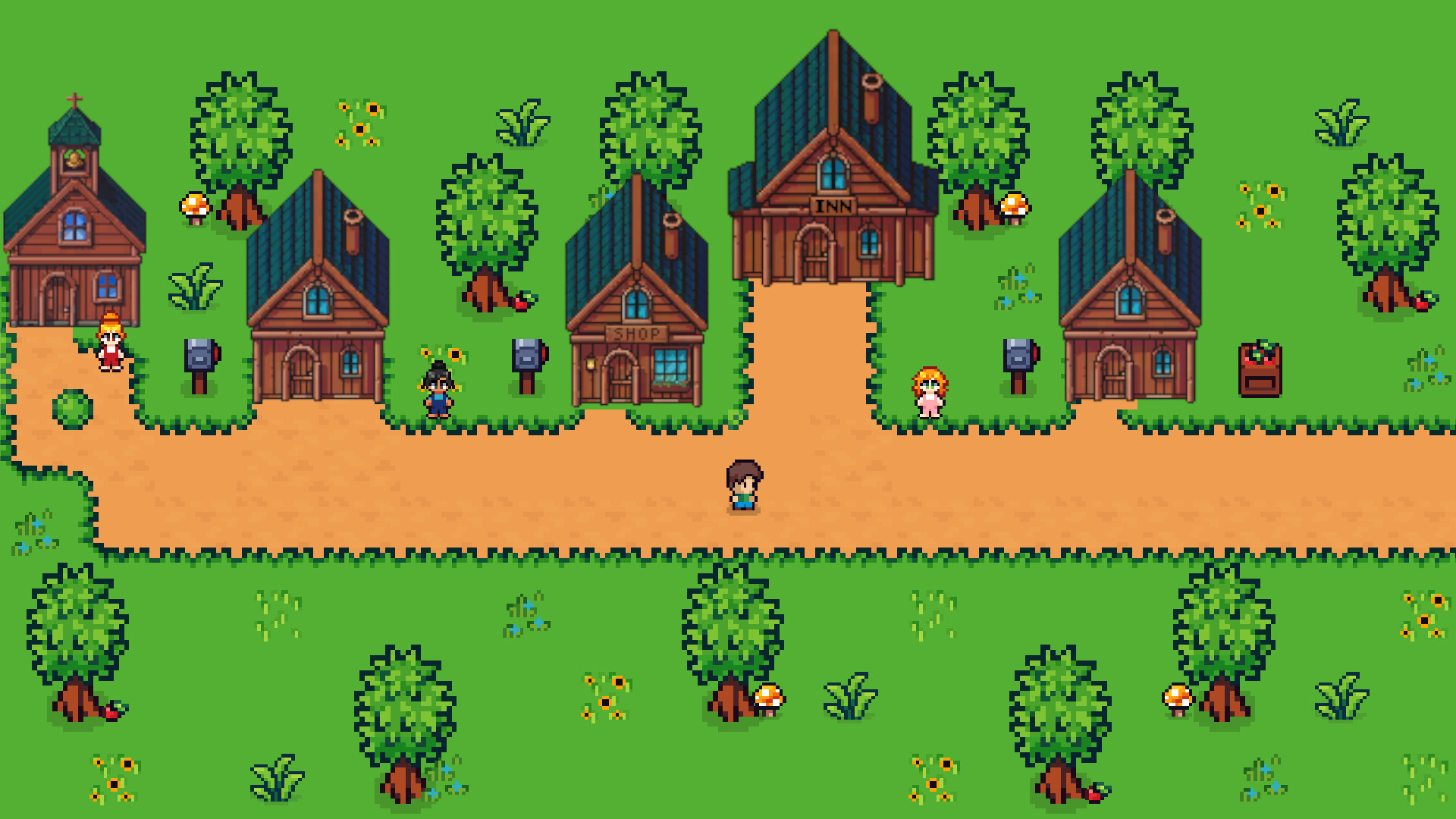
The overworld town shown here is a cheerful, brightly lit pixel-art village rather than the cursed-forest, hostile-wilds tone the store page's copy leans into — a real tonal contrast worth knowing about before buying.Steam store page -
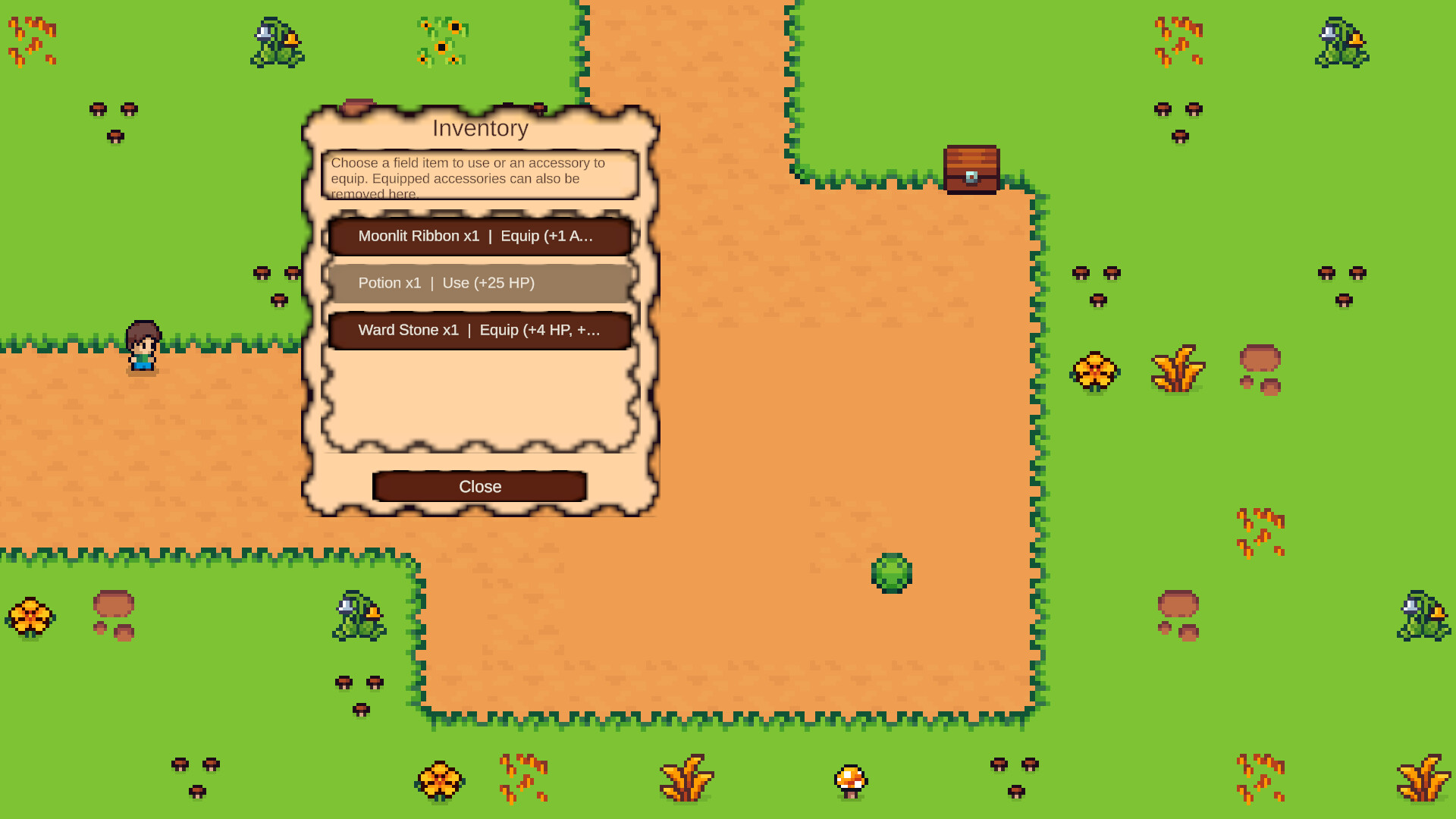
Concrete item examples confirm real equippable accessories with stat bonuses sit alongside consumables, rather than the vague 'right abilities' language on the store page.Steam store page -
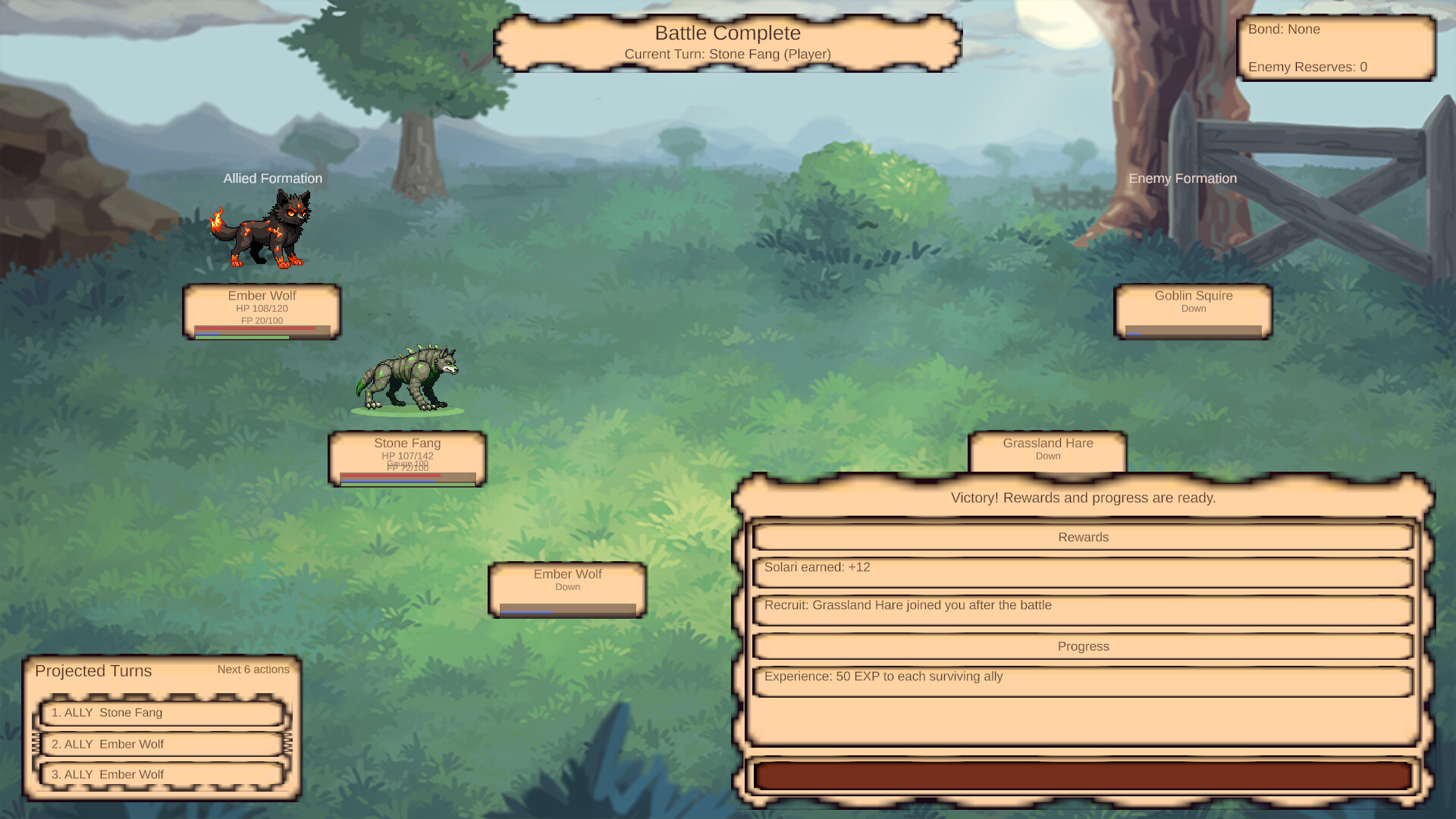
A real battle-complete screen confirms a turn-order queue, an HP-plus-FP resource system, a named currency called Solari, and an enemy joining the roster automatically after being defeated — concrete evidence for the binding and party-building loop the store page only describes in the abstract.Steam store page