Game review
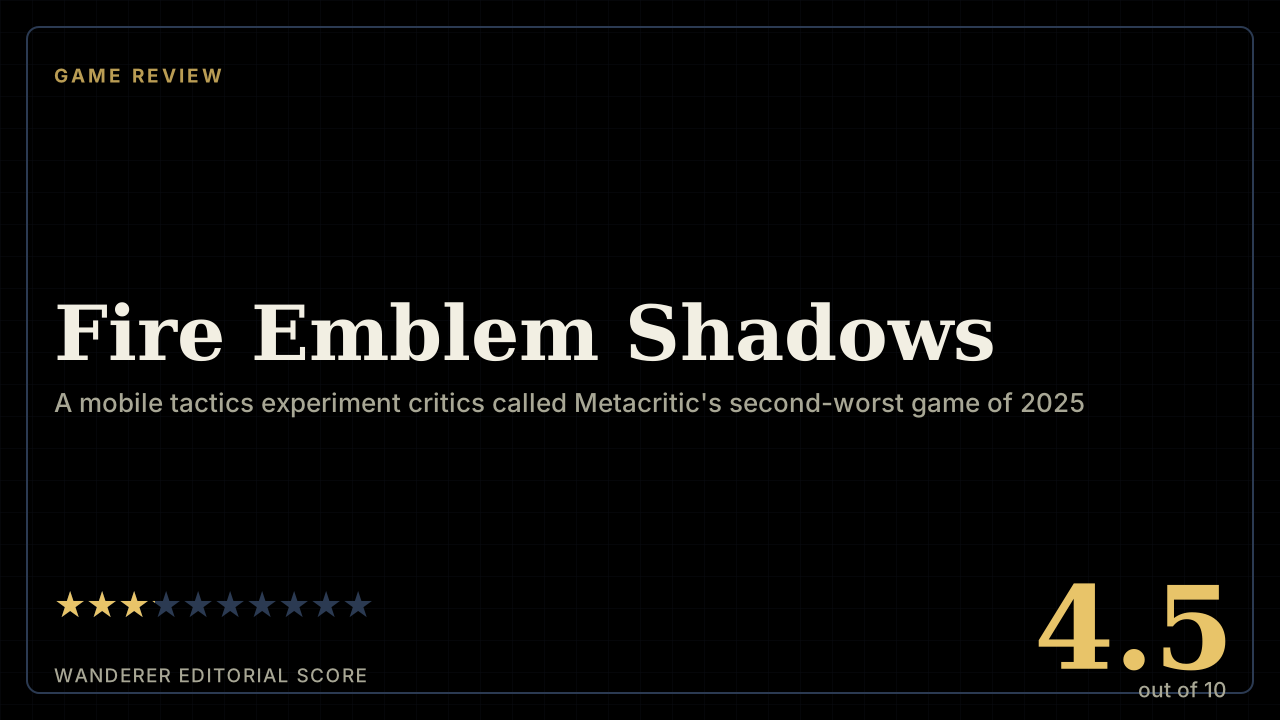
Fire Emblem Shadows
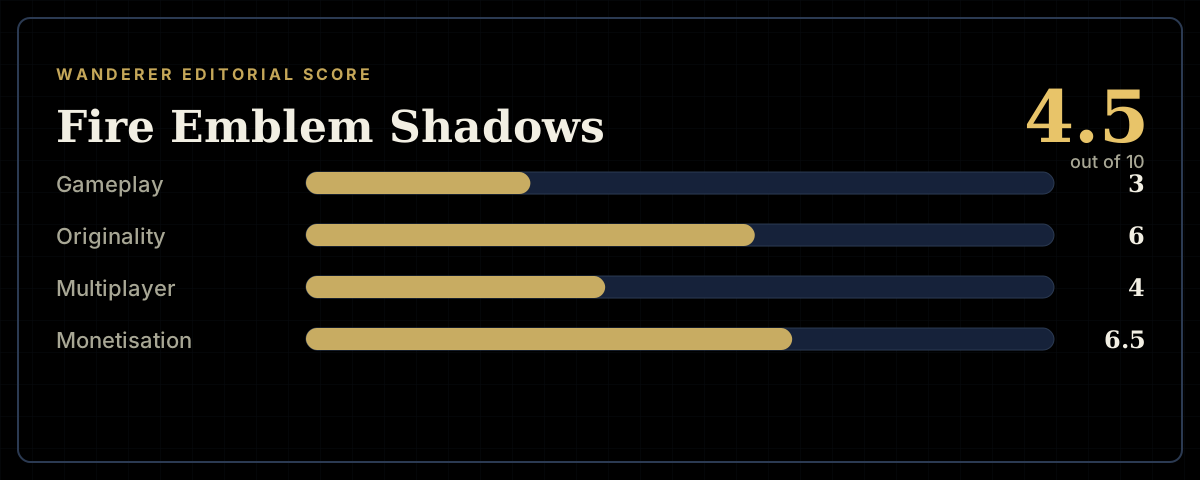
4.5 / 10
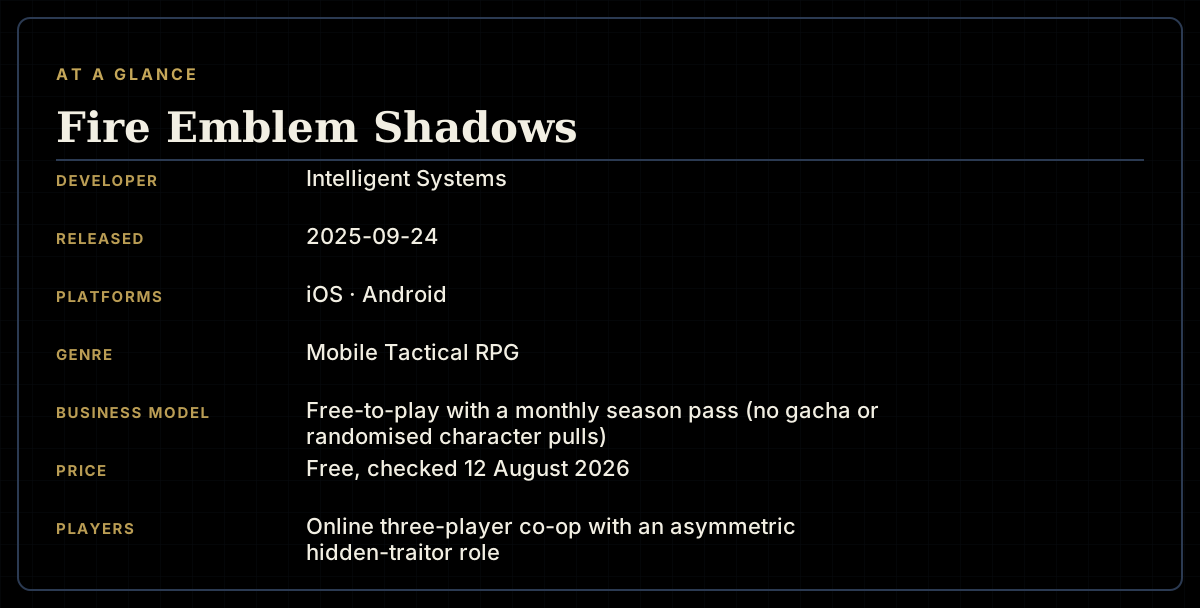
- Developer
- Intelligent Systems
- Publisher
- Nintendo
- Released
- 24 September 2025
- Platforms
- iOS, Android
- Genre
- Mobile Tactical RPG
- Monetisation
- Free-to-play with a monthly season pass (no gacha or randomised character pulls)
- Players
- Online three-player co-op with an asymmetric hidden-traitor role
The short version
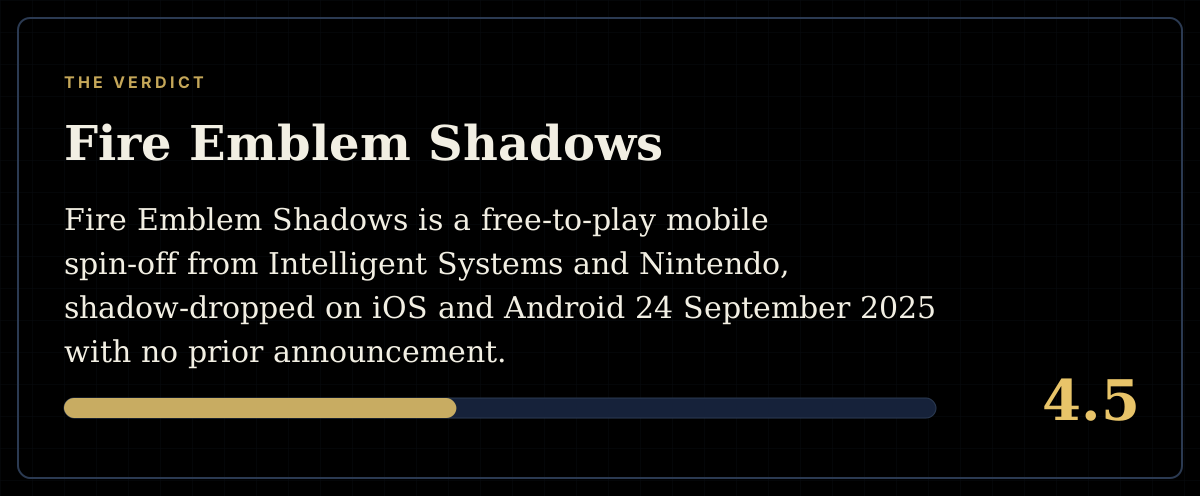
Fire Emblem Shadows is a free-to-play mobile spin-off from Intelligent Systems and Nintendo, shadow-dropped on iOS and Android 24 September 2025 with no prior announcement. Its pitch is genuinely distinctive: three players fight through short, automatic-combat tactical encounters in which one participant secretly serves an enemy goddess and can sabotage the others, Among Us-style, before a second "Moon Room" phase turns the unmasked traitor into a boss the group must defeat together. Reception from professional critics has been severe and unusually consistent — a 37/100 "generally unfavourable" Metacritic score across five reviews, which Metacritic itself later ranked as the second-worst-reviewed game of all of 2025, ahead of only MindsEye. GameSpot rated it 3/10, calling it "probably the worst" entry in the long-running tactics series; Nintendo Life gave 3.8/10. The near-unanimous critical complaint is structural: the game removes direct unit positioning, a foundational element of Fire Emblem's identity, replacing tactical decision-making with largely automatic combat and a social-deduction layer critics say resolves too quickly to build real tension. Set against that, the game's monetisation is a genuine, documented departure from its own franchise's gacha history — a season pass rather than randomised pulls, with even paid characters eventually earnable free — though commercial performance has been correspondingly weak, reported at a small fraction of predecessor Fire Emblem Heroes' revenue.
Biggest strengths
- A genuinely novel structural idea for the genre — three-player co-op tactics with a hidden traitor role and a second-phase boss confrontation — that several outlets credit as an interesting experiment even while criticising its execution
- Monetisation is a real, documented departure from Fire Emblem's own gacha history: a monthly season pass rather than randomised character pulls, with even the pass-exclusive character eventually available for free through post-season chest drops
- Presentation and character art draw specific praise even from critical reviews, credited as a visual strength independent of the gameplay disappointments underneath
Biggest weaknesses
- The near-unanimous critical complaint concerns the removal of direct unit positioning — a foundational Fire Emblem mechanic — in favour of largely automatic combat, which GameSpot and other outlets say strips away what makes the series' tactics distinctive in the first place
- The social-deduction layer, the game's most distinctive selling point, is repeatedly criticised as too shallow and too quick to resolve to generate the tension the format depends on, with Polygon specifically calling out weak social mechanics
- Metacritic aggregated five critic reviews at 37/100, later naming it the second-worst-reviewed game of 2025 ahead of only MindsEye — an unusually severe critical consensus for a major first-party franchise entry
Who it's for: Fire Emblem fans specifically curious about a genre experiment, and readers who want to see what a major franchise's attempt at moving away from gacha monetisation actually looks like in practice; a poor fit for anyone wanting tactical depth from the Fire Emblem name.
Our recommendation: Free to try, and worth a look purely as a monetisation case study — a first-party franchise entry that deliberately avoided gacha and still couldn't find an audience, for reasons critics say have nothing to do with the payment model and everything to do with the game underneath it.
4.5 / 10
Introduction
Fire Emblem Shadows arrived with no warning on 24 September 2025, a free-to-play mobile spin-off from series developer Intelligent Systems and Nintendo that swaps the traditional Fire Emblem tactics formula for something genuinely unusual: three-player online co-op battles in which one participant secretly serves the Goddess of Shadows and can sabotage their own team, resolved through a short investigation phase before a climactic "Moon Room" confrontation. It's a real structural experiment for the series, and it landed about as badly with professional critics as a first-party franchise entry can — a 37/100 Metacritic score that the aggregator itself later named the second-worst-reviewed game of the entire year, trailing only MindsEye. This review draws on that critical coverage, publicly reported commercial performance, and documented monetisation details, since the game has no Steam listing and this outlet does not play games directly.
A genuinely different pitch for the series
The mechanical hook is worth describing plainly, because it's a real departure rather than a reskin. Three players enter a short encounter together; combat resolves largely automatically, with players controlling when to use spells or healing abilities rather than positioning units on a grid the way mainline Fire Emblem games do. One player is secretly the traitor, working for the enemy side and able to attack or sabotage the others without immediately revealing themselves. The first round can't be lost outright, giving the traitor room to bluff and the others room to investigate; a correct identification in the second "Moon Room" phase makes the traitor's forced transformation into a monster easier to defeat, while a wrong guess swings the fight in the deceiver's favour. Several outlets frame the concept itself as a legitimately interesting idea for the genre, an Among Us-style social layer grafted onto a franchise that had never attempted anything like it.
Where critics say it falls apart
The praise for the concept comes with an almost uniformly harsh verdict on the execution. GameSpot's review, titled "Emergency Meeting," argues the automatic combat removes the ability to directly position characters — "a key aspect of what makes Fire Emblem what it is as a series" — leaving battles feeling like little more than hitting enemies with the spell type they're weak against and occasionally healing, with minimal real decision-making in between. That's a specific, structural complaint rather than a vague dismissal: the review argues the game removed the exact mechanic that defines the franchise it's built on. Nintendo Life's review, scored 3.8/10, reaches a similar conclusion from a different angle, describing the game as "flat F2P folly" whose social-deduction half doesn't carry enough weight to compensate for the tactical shallowness underneath. Polygon's review specifically singles out the social mechanics as weak, and Inverse describes the loop as too simple to sustain interest past a handful of rounds. Taken together, these aren't five reviewers independently disliking different things — it's a specific, converging critique that the game's two central ideas, simplified tactics and social deduction, each individually fail to deliver enough depth to carry the other.
A monetisation model that deserves real, separate credit
Here's the part of the story worth reporting carefully and separately from the gameplay verdict, because it's a genuinely different picture. Fire Emblem Shadows drops the gacha mechanics that defined its predecessor, Fire Emblem Heroes, entirely. Instead, it runs on a monthly Season Pass: a free track and a premium track purchasable for in-game currency (roughly the local equivalent of £6-7), with the premium track's exclusive character available immediately to paying players and folded into ordinary post-game chest rewards for everyone once the season ends. That's a real, verifiable structural improvement over randomised-pull monetisation — no spending real money for a chance at a specific character, and no permanently paywalled content. It isn't flawless: players who wait for a character to leave season-pass exclusivity are still subject to chest drop-rate luck rather than a guaranteed purchase, and a monthly subscription-style pass is still a real, recurring cost for players who want to stay current. But relative to the genre's worst habits — the kind this outlet has documented in games with far harsher pity systems — this is a design choice that deserves to be named as better, not lumped in with predatory norms by default.
A critic-user gap worth reporting honestly
One more finding is worth stating plainly rather than resolving in either direction: the game's public App Store and Google Play audience rates it considerably more kindly than professional critics did, at roughly 4.2 out of 5 across about 15,300 reviews. That's a real, documented gap, not a contradiction to explain away — professional critics evaluate a game against the standards and history of its genre and franchise, and a general mobile audience, many without deep Fire Emblem history, may simply be rating a free, well-presented tactics-and-social-deduction game on its own terms. Both figures are real and both are worth a prospective player knowing, rather than treating the lower, more press-driven number as the only one that counts.
The business outcome
Whatever the merits of its monetisation model, Fire Emblem Shadows has performed weakly commercially. Trade publication PocketGamer.biz reported roughly $353,000 in revenue across the game's first two months, a fraction of a percent of what Fire Emblem Heroes earned in an equivalent launch window years earlier. Despite that, public reporting as of this review indicates Nintendo has continued active investment in the game — ongoing Season Pass content and updates rather than a quiet shutdown — which is worth noting as a real counterpoint to reading the weak revenue figures as a settled failure story.
Final Verdict
Fire Emblem Shadows is a genuinely interesting experiment that professional critics say doesn't work: stripping out the unit positioning that defines Fire Emblem's tactics in favour of largely automatic combat and a social-deduction layer that multiple outlets independently call too shallow to carry the format. That critical consensus — a 37/100 Metacritic score, the second-worst-reviewed game of 2025 by that aggregator's own count — is unusually severe for a first-party entry in a major franchise, and this review has no independent play experience to weigh against it. What genuinely deserves separate credit is the monetisation model: a real, documented departure from gacha mechanics toward a season pass with eventually-earnable characters, a design choice this outlet wishes more mobile RPGs would make regardless of how the rest of the game turned out. Try it free if the social-deduction hook interests you, but go in with the critical consensus in mind rather than expecting a tactics experience that lives up to the Fire Emblem name.
Pros and cons
Pros
- A genuinely novel structural idea for the genre — three-player co-op tactics with a hidden traitor role and a second-phase boss confrontation — that several outlets credit as an interesting experiment even while criticising its execution
- Monetisation is a real, documented departure from Fire Emblem's own gacha history: a monthly season pass rather than randomised character pulls, with even the pass-exclusive character eventually available for free through post-season chest drops
- Presentation and character art draw specific praise even from critical reviews, credited as a visual strength independent of the gameplay disappointments underneath
- The App Store and Google Play user audience rates the game considerably more positively (4.2 out of 5 across roughly 15,300 reviews) than the professional critical consensus, worth noting as a genuine divergence rather than dismissing either figure
Cons
- The near-unanimous critical complaint concerns the removal of direct unit positioning — a foundational Fire Emblem mechanic — in favour of largely automatic combat, which GameSpot and other outlets say strips away what makes the series' tactics distinctive in the first place
- The social-deduction layer, the game's most distinctive selling point, is repeatedly criticised as too shallow and too quick to resolve to generate the tension the format depends on, with Polygon specifically calling out weak social mechanics
- Metacritic aggregated five critic reviews at 37/100, later naming it the second-worst-reviewed game of 2025 ahead of only MindsEye — an unusually severe critical consensus for a major first-party franchise entry
- Commercial performance has been reported as extremely weak relative to the franchise's own prior mobile entry — publication PocketGamer.biz reported roughly $353,000 in revenue across the game's first two months, under 1% of Fire Emblem Heroes' equivalent-period earnings
Screenshots
-
How the review scores each part of the gameWanderer Editorial -
The essentials at a glanceWanderer Editorial -
The short versionWanderer Editorial