
Game review
Exodus: The Colonization of Space
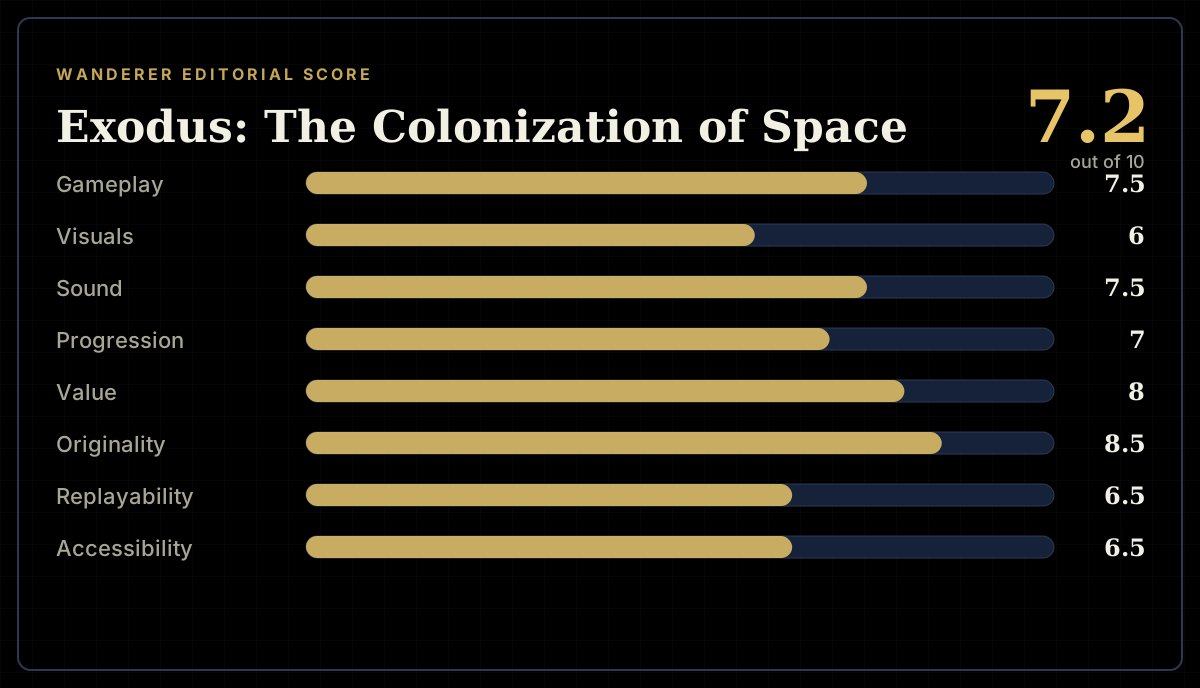
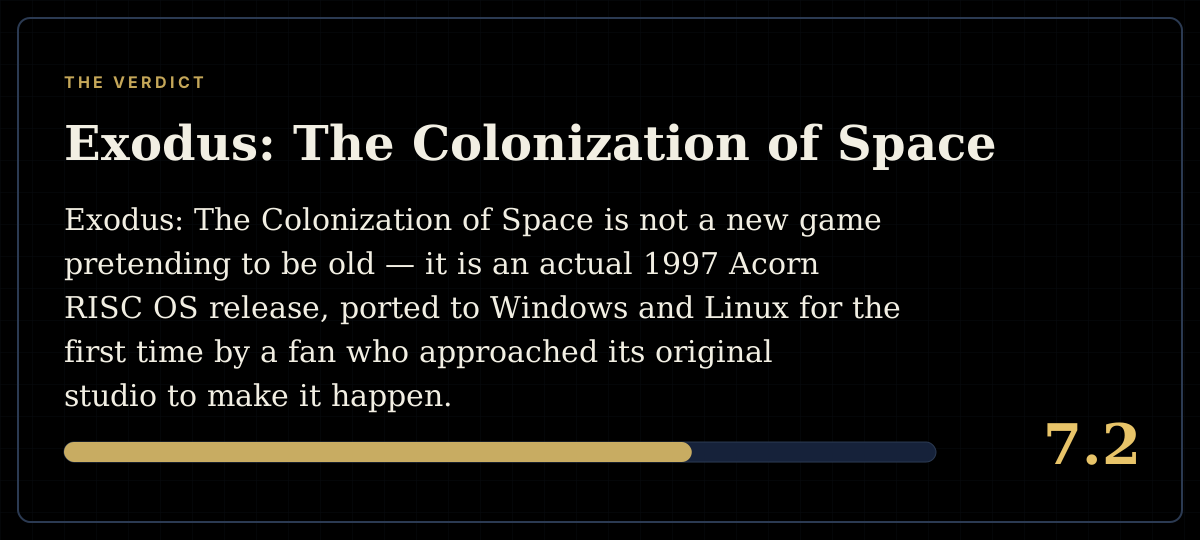
7.2 / 10
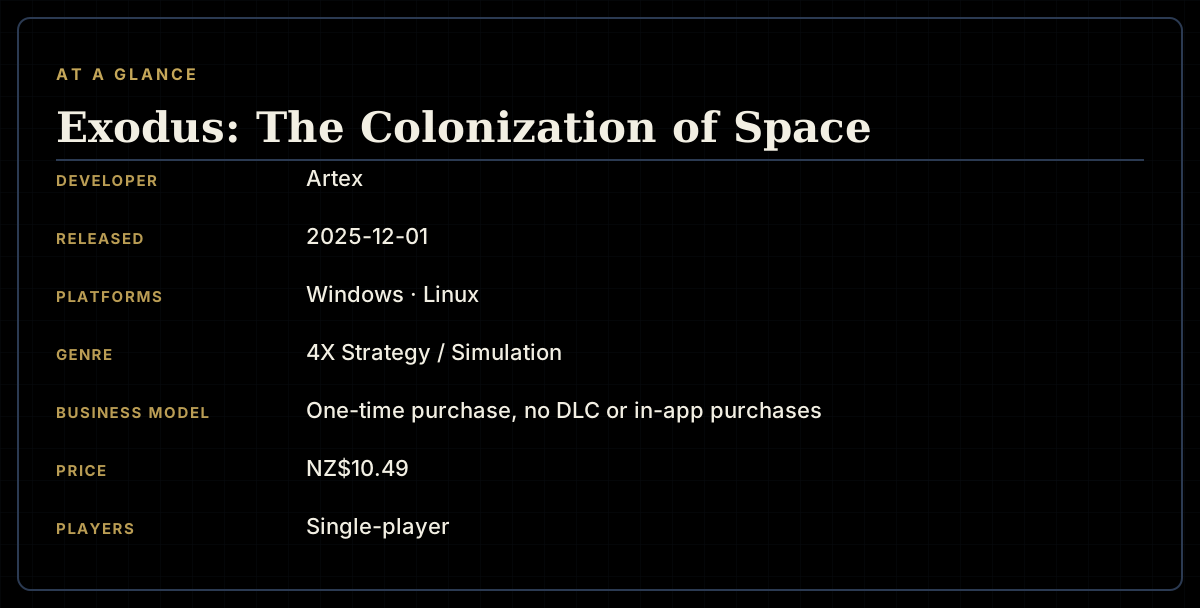
- Developer
- Artex
- Publisher
- Artex
- Released
- 1 December 2025
- Platforms
- Windows, Linux
- Genre
- 4X Strategy / Simulation
- Monetisation
- One-time purchase, no DLC or in-app purchases
- Players
- Single-player
The short version
Exodus: The Colonization of Space is not a new game pretending to be old — it is an actual 1997 Acorn RISC OS release, ported to Windows and Linux for the first time by a fan who approached its original studio to make it happen. Underneath the 256-colour presentation sits a properly dense 4X: claim planets, build out their surfaces around climate and resource limits, set laws that can trigger rebellion if you misjudge your population, research inventions, hire officers, and fight turn-based tactical battles or work the interactive bar minigame between missions. Thomas Mohr's original Acorn soundtrack survives the jump intact and is the single most-praised element in the small crowd of reviews the game has attracted so far.
What it isn't is easy to get into. Steam's own achievement data shows fewer than half of players ever found their first colony worth keeping, and under one percent have logged a win on any difficulty or galaxy size — a curve several of its own fans call out directly. Combined with a thin nineteen-year-old-feeling interface, English-only text and a genuinely tiny review base, this is a rewarding but demanding curiosity rather than an easy recommendation to a general strategy audience.
Biggest strengths
- A real piece of strategy-game history rather than a retro pastiche — the actual 1997 Acorn RISC OS game, brought to PC for the first time by a fan-turned-porter working with the original studio
- Made by Jan Klose, later a co-founder of Deck13 (The Surge, Lords of the Fallen), and it shows in how many interlocking systems are packed in: colonization, planetary climate and resource management, law-making with a real rebellion risk, research, officer hiring, starship and fleet upgrades, and turn-based tactical ground battles
- Thomas Mohr's original Acorn soundtrack is the most consistently praised element across the game's early reviews, and the store page frames it as a genuine selling point rather than an afterthought
Biggest weaknesses
- A brutal learning curve by the numbers: Steam's public achievement data shows only 47.5% of players ever found their first colony worth a foothold, and fewer than 1% of players across every galaxy size and difficulty have logged an actual win
- Small, thin review base — 15 Steam reviews at the time of writing, all positive, which is a genuinely unusual and encouraging signal but too small a sample to call the reception settled
- English text only, with no other supported languages listed on the store page
Who it's for: 4X and grand-strategy players with a soft spot for genre archaeology — people who enjoyed Master of Orion or Alpha Centauri and want to see where a parallel, less-famous branch of the family tree went, and who won't be put off by having to learn a UI that predates most modern strategy-game conventions.
Our recommendation: Worth the low asking price for genre historians and patient 4X players willing to push through an unforgiving opening few hours; players who bounce off a steep curve or want their strategy games to hold their hand should wait for a deeper look at reviews once the Steam sample grows.
7.2 / 10
The pitch
Exodus: The Colonization of Space is a turn-based 4X strategy game about claiming and building out planets across a procedurally-sized galaxy, contending with up to ten computer-controlled rivals drawn from four alien races, and winning through conquest, science or culture. That premise alone would put it in familiar company with Master of Orion, Alpha Centauri and their many descendants. What sets it apart is that it isn't new: it's an actual 1997 release for Acorn's RISC OS, the operating system built for Acorn's Archimedes and RiscPC computers, and this Steam release is its first-ever appearance on PC. It was developed and published by Artex, priced at NZ$10.49, released 1 December 2025, and runs on Windows and Linux (no macOS). Single-player only, English text only, no demo, no DLC.
This review is built from Artex's own store-page description and screenshots, Steam's public appdetails, user-review and global-achievement-percentage APIs (fetched with day-range set wide enough to catch the game's entire review history rather than a truncated recent slice), and outside coverage of the game's development history from GamingOnLinux and other outlets. At the time of research, Exodus had drawn exactly 15 Steam user reviews, every one of them positive — a small enough number that this review read every single one rather than a sample. It is written from documented material, not a play session.
A 1997 game that never left the building
The unusual part of Exodus's story is right there in its credits. According to Artex's own store page and corroborated by outside coverage, the game's original 1997 version was the first title from Artex Software, co-founded by Jan Klose — who would go on to co-found Deck13 Interactive, the studio behind The Surge and Lords of the Fallen. Exodus stayed an Acorn RISC OS exclusive for nearly three decades, a platform that had a passionate but small following even at its commercial peak and had effectively no presence on PC. This 2025 release exists because developer Tom Pickering, by his own account in the game's top-voted Steam review, approached Artex's then-defunct ownership with a proposal to build a modern PC implementation of a game he'd loved since childhood. That review — written by the porter himself, and flagged as such — describes Exodus as a game whose "music and graphics somehow become more than the sum of their parts," and the resulting PC version is presented less as a remaster and more as a straight recreation: period-accurate 256-colour visuals, the original Acorn soundtrack, and by several accounts the original balance and pacing intact rather than smoothed over for modern audiences.
Building on a planet's surface
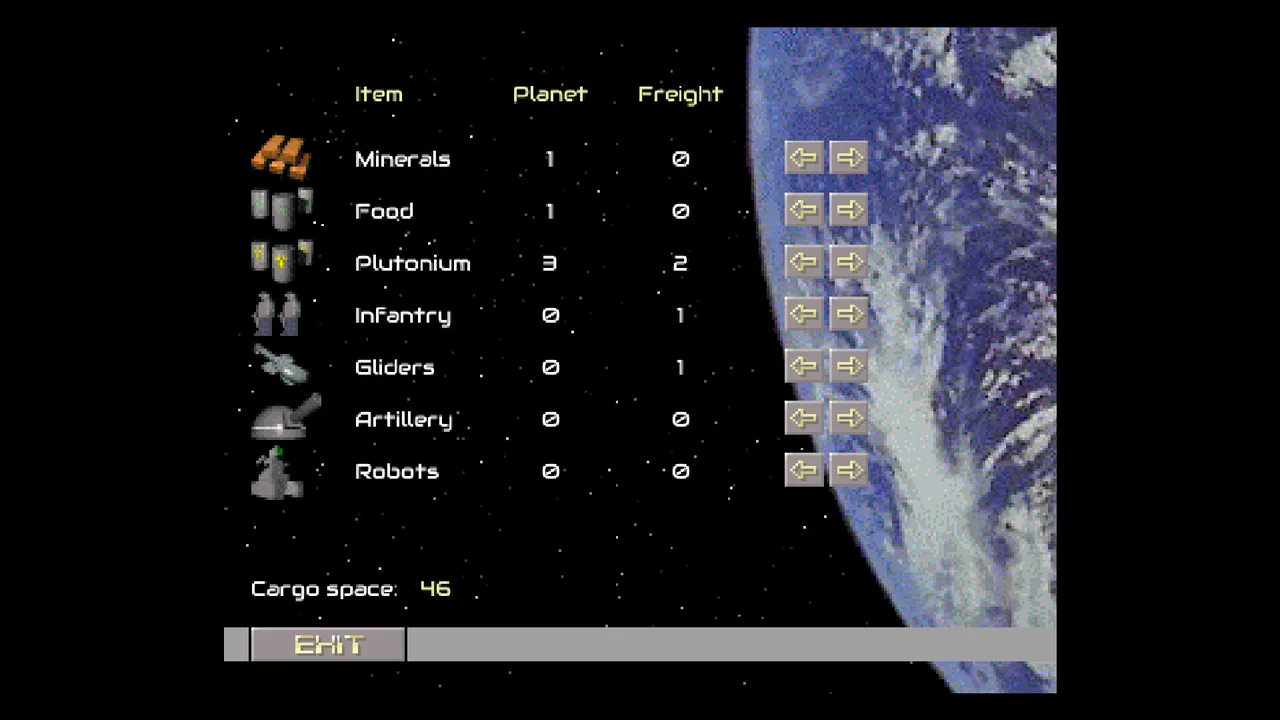
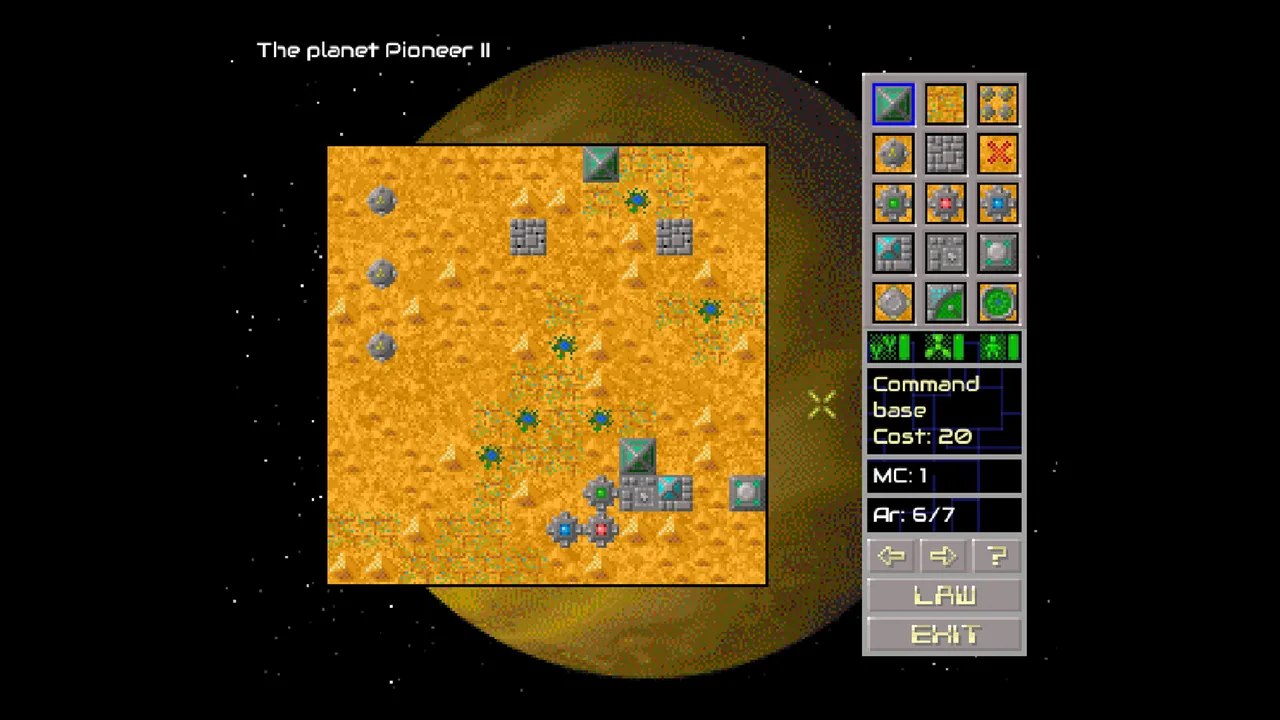
Each claimed world gets its own dedicated surface map, according to the store description, where cities, factories and farmland get placed by hand against real constraints: a planet's climate determines whether agricultural zones are viable or prone to collapse, and nuclear plants carry a genuine risk of "messy accidents." That's a level of per-planet micromanagement that plenty of modern 4X games have moved away from in favour of abstracted resource sliders, and it's one of the clearer signs that this is a game built to a late-90s design sensibility rather than a contemporary one streamlined for pace. Law-making sits alongside it as its own system: players set policy on narcotics, civilian weapons and religious freedom on each world, and populations that disagree with how they're governed can rebel — a governance layer with real consequences rather than flavour text, and one that a handful of Steam achievements (ACH_PopulationAppeased, ACH_RebelsSuppressed, ACH_RebelsAppeased) confirm is a tracked, ongoing concern rather than a one-off event.
Law, rebellion and tactical battles
Beyond internal governance, Exodus layers on research (funding scientists produces "passive and active improvements" that can culminate, per the store page, in building a whole artificial planet capable of moving between solar systems), officer hiring to staff different fields of action, and starship and fleet equipment upgrades for dealing with rival empires, space pirates, orbital bombardments and incoming asteroids. Combat itself resolves on a separate tactical map using three unit types in turn-based battles that can be commanded directly or delegated to a general. It's a genuinely wide spread of interlocking systems for a game with a 100 MB install size and a Dual Core 2 GHz minimum spec — this is old-school design density rather than old-school technical modesty, and it's consistent with reviewer comments comparing it favourably to "more modern games" in terms of depth. One recurring detail worth flagging on its own: several Steam reviews mention an interactive bar minigame the player can visit between the galactic-scale systems, described by one reviewer as playing it "till my arm hurt" — a small, unexpected piece of texture that several early adopters singled out as a highlight rather than filler.
A steep curve, and what the achievement data says about it
Exodus's fans are consistent on one point across the review sample: this game does not ease players in. One reviewer, recommending it with a "side-ways thumb" rather than a full endorsement, writes that "the base game requires you to play a very specific way to get anywhere early game." Others describe a "high learning curve" that's "very much worth it" once past, and multiple reviews frame their few hours of playtime as still getting oriented rather than mastering the systems. Valve's public achievement-percentage data backs that framing with hard numbers rather than anecdote: of players who've earned at least one achievement, 47.5% managed ACH_FirstCity (establishing a first colony) and 28.4% found ACH_BestStartWorld, but the curve falls off fast after that — DefeatHostileFleet and ManyEnemies sit around 11%, and by the time you reach the win-condition achievements (ACH_WinSmallGalaxy, ACH_WinMedium, ACH_WinHard, ACH_WinCiv), every single one sits at or below 0.7%. Read plainly: fewer than one in a hundred players who've unlocked anything at all have actually won a game of Exodus, on any difficulty or galaxy size. That's a far steeper attrition curve than most contemporary 4X games show, and it lines up exactly with what the written reviews describe — a game whose systems reward real investment but punish players who try to play it like a modern, more forgiving genre entry.
Presentation and sound
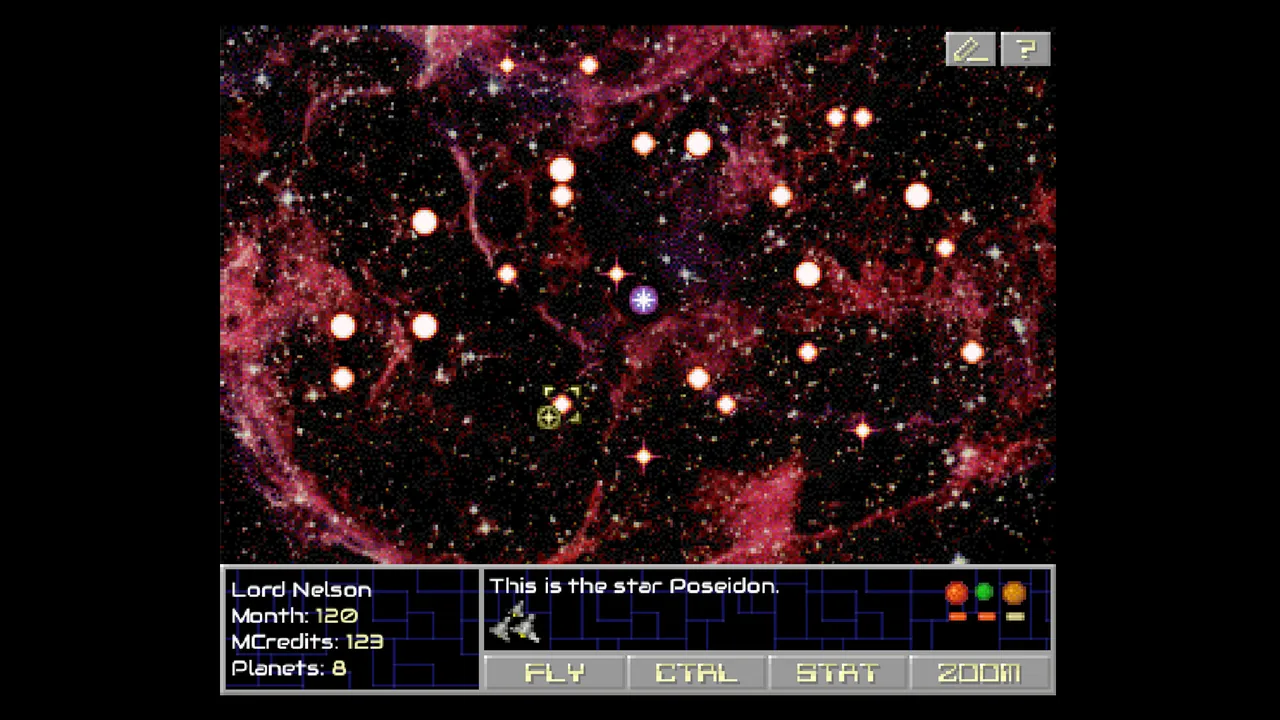
Visually, Exodus commits fully to its source material rather than modernizing it: the store page advertises "256 colors" as a feature, not an apology, and the screenshots show chunky, low- resolution pixel art, simple UI chrome and animated ship cutscenes that read as authentically 1997 rather than styled to look retro. Whether that lands as charming or simply dated will depend heavily on a given player's tolerance for genuinely old interface conventions — several reviews use words like "retro charm" and "instant retro vibes," but none describe the visuals as a strength on their own technical merits. Sound is a different story: the game's music, composed by Acorn veteran Thomas Mohr, is called out by name in the store description as an "interactive 1997's space opera soundtrack," and it's the single element multiple independent reviews mention unprompted and favourably — one reviewer specifically credits "the charming old-school space soundtrack" among the details that show "how much heart and passion" went into the original game. For a 29-year-old soundtrack to still be doing that work for new players is a genuinely strong sign of the original composition, not just nostalgia among people who played it the first time around.
Reception: fifteen reviews, zero of them negative
At the time of writing, Exodus: The Colonization of Space had accumulated exactly 15 Steam user reviews, and every single one of them was positive — a 100% positive rate that Steam's own algorithm reports simply as "Positive" rather than one of its higher-confidence labels, purely because the sample is still so small. That's a genuinely notable state for a game eight months after release: it means there is, as of writing, no negative review to weigh against the positive ones, and this review read the entire set rather than a filtered slice. Recurring themes across those fifteen: gratitude that the game got ported at all and a wish to "support the developer," repeated comparisons to Alpha Centauri and Master of Orion, the soundtrack praise noted above, and the learning-curve warnings covered in the previous section. Playtime figures attached to the reviews range from as little as ten minutes (a support-purchase review promising to update later) up to 752 minutes — over twelve and a half hours — from a reviewer calling it "super fun." A small sample skewed positive isn't proof of universal appeal, especially with the achievement data showing how many players stall out early without leaving a review either way, but it is a genuinely clean record for a niche release with essentially no marketing push behind it.
Value and verdict
At NZ$10.49 for a genre entry with this many interlocking systems — planetary micromanagement, law and rebellion, research, officer hiring, fleet upgrades and turn-based tactical combat, plus a soundtrack good enough to be the thing reviewers mention first — Exodus: The Colonization of Space is priced to reward curiosity rather than to compete on production values with a modern full-price 4X. It succeeds best as exactly what it is: a genuine artifact from a nearly-forgotten platform, made playable again by a fan who cared enough to track down its original studio, rather than a new game dressed up in borrowed nostalgia. The achievement data is the honest caveat here — a sub-1% win rate across every difficulty and galaxy size is a real barrier, not a humble-brag stat, and players who want a 4X that meets them halfway should look elsewhere. But for genre historians, RISC OS veterans, and 4X players who enjoy digging into a system until it clicks, this is a rare chance to play a piece of strategy-game lineage that connects directly to Deck13's later work, at a price that makes the risk an easy one to take.
Pros and cons
Pros
- A real piece of strategy-game history rather than a retro pastiche — the actual 1997 Acorn RISC OS game, brought to PC for the first time by a fan-turned-porter working with the original studio
- Made by Jan Klose, later a co-founder of Deck13 (The Surge, Lords of the Fallen), and it shows in how many interlocking systems are packed in: colonization, planetary climate and resource management, law-making with a real rebellion risk, research, officer hiring, starship and fleet upgrades, and turn-based tactical ground battles
- Thomas Mohr's original Acorn soundtrack is the most consistently praised element across the game's early reviews, and the store page frames it as a genuine selling point rather than an afterthought
- Cheap for the amount of systems on offer at NZ$10.49, with several early reviewers calling it a no-brainer at the price
- Adjustable difficulty, multiple objective types (conquest, science, culture) and a choice of galaxy size give it real replay range for players who push past the opening hours
- "Playable without Timed Input" and "Save Anytime" are both listed store categories, so the turn-based pacing itself is not the source of the game's difficulty
Cons
- A brutal learning curve by the numbers: Steam's public achievement data shows only 47.5% of players ever found their first colony worth a foothold, and fewer than 1% of players across every galaxy size and difficulty have logged an actual win
- Small, thin review base — 15 Steam reviews at the time of writing, all positive, which is a genuinely unusual and encouraging signal but too small a sample to call the reception settled
- English text only, with no other supported languages listed on the store page
- The 256-colour, low-resolution presentation is a faithful recreation of a 1997 Acorn game rather than a modernized retro style, and will read as genuinely dated rather than charmingly retro to players expecting something closer to a contemporary pixel-art 4X
- No demo, so there is no way to try the interface before buying into a game several of its own fans admit takes real effort to click with
- Windows and Linux only, no macOS support, and no controller support listed
Screenshots
-
Exodus: The Colonization of SpaceImage: Artex via Steam -
Exodus: The Colonization of SpaceImage: Artex via Steam -
Exodus: The Colonization of SpaceImage: Artex via Steam -
How the review scores each part of the gameWanderer Editorial -
The game at a glanceWanderer Editorial -
The short versionWanderer Editorial