Game review
EverQuest II
6.5 / 10
- Developer
- Darkpaw Games
- Publisher
- Daybreak Game Company
- Released
- 8 November 2004
- Platforms
- Windows
- Genre
- MMORPG
- Monetisation
- Free to download and play with an optional All Access membership, sold in one-, three-, six- and twelve-month terms, which unlocks the in-game broker, all spell tiers, all mercenary tiers, unlimited chat channels, five extra character slots, +50% experience, 15% more coin, double alternate currency, members-only zones and servers, a 500 Daybreak Cash monthly stipend and 10% off marketplace purchases. Expansions are sold separately each year at four price tiers — Rage of Cthurath launched at US$35 standard, US$70 Collector's, US$140 Premium and US$250 Family and Friends. On top of that sits a Daybreak Cash marketplace selling familiars, spell upgrades, level boosts, and since December 2025 the Conqueror's Campaign, a 1,499 Daybreak Cash seasonal pass. Checked 3 August 2026.
- Players
- Persistent-world MMORPG built for grouping and raiding, with mercenary NPCs that let most solo and heroic content be run alone. Guilds have their own halls, levels and — since Rage of Cthurath — Guild Coalitions. Alongside the live servers there are time-locked progression servers and the Origins servers, Anashti Sul and Dozekar, which recreate 2004-era Norrath and unlock old expansions on a schedule; Origins access requires an active membership.
The short version
There is more game here than almost anything else in the genre — two decades of zones, nine playable cities' worth of history, a crafting system with its own levelling track, player housing people still build in, and a development team that has not missed a December expansion in years. What stands between a curious 2026 player and all of that is an interface designed for 2004 monitors and a free-to-play conversion that removes the auction house and the chat channels from anyone who is not paying. EverQuest II is worth playing. It is not, in any meaningful sense, free to play.
Biggest strengths
- Twenty-two expansions of content means a genuinely enormous world, and unlike most MMOs of its age the old zones were never squashed into a levelling corridor — they are still there
- Crafting and housing are first-class systems with their own progression, not bolt-ons; player housing in particular remains among the best in the genre two decades on
- Mercenary NPCs let a solo player run content that would otherwise require a group, which is what keeps a low-population MMO playable at all
Biggest weaknesses
- The free account cannot use the broker, is locked out of general chat channels, cannot access the higher spell tiers and gets the weaker mercenary tiers — restrictions that hit exactly when a new player would start needing an economy
- The interface has not kept pace with modern resolutions; UI complaints are the single most common theme in the game's negative reviews, and an experimental 4K scaling pass was still listed as in testing in the July 2026 producer's letter
- The Conqueror's Campaign seasonal pass appeared in the marketplace at 1,499 Daybreak Cash with no advance explanation, days after players had spent up to US$250 on the expansion itself
Who it's for: MMO players who want depth, crafting and housing over cinematic presentation, lapsed Norrath veterans deciding whether to come back, and anyone curious about how a 2004 MMO ages when it is actually maintained rather than left on life support. Poorly suited to anyone expecting a modern UI, drop-in matchmaking or a free account that behaves like a free account.
Our recommendation: Install it free, roll a character, and judge the first thirty levels on their own merits — the game is genuinely generous with content long before it asks for money. But treat the free tier as an extended demo rather than a way to play, because the broker lock and the spell tier ceiling turn into hard walls somewhere in the middle levels, and decide up front whether a subscription plus an annual expansion is a purchase you want to make every year.
6.5 / 10
Open EverQuest II's Steam page in 2026 and you are looking at a fossil. The last downloadable content listed for sale is from 2014. The newsfeed's final entry is from 2020. Everything about that page suggests a game that stopped some time during the last decade and was left running out of politeness.
It didn't. Darkpaw Games shipped the twenty-second expansion, Rage of Cthurath, on 10 December 2025, raised the level cap to 135, and had the next game update in beta by August 2026. The disconnect between the storefront and the game is the single most useful thing to understand about EverQuest II right now, because it is the same disconnect that runs through the whole product: a genuinely enormous, genuinely maintained MMO wrapped in a commercial layer that consistently makes the worst possible first impression.
Two decades of world, and none of it thrown away
The thing EverQuest II does that almost nothing else in the genre does is keep its old content intact and relevant. Most long-running MMOs eventually squash their history — old zones get flattened into a two-hour levelling corridor, or removed outright in a revamp. Norrath still has its cities, its overland zones, its dungeons and its questlines spread across twenty-two expansions' worth of map, and a character levelling through it can genuinely pick a route. There is an obscene amount of game here. That's not a marketing line, it's a design consequence: a 2004 MMO that never had a world-destroying reboot accumulates content the way sediment accumulates.
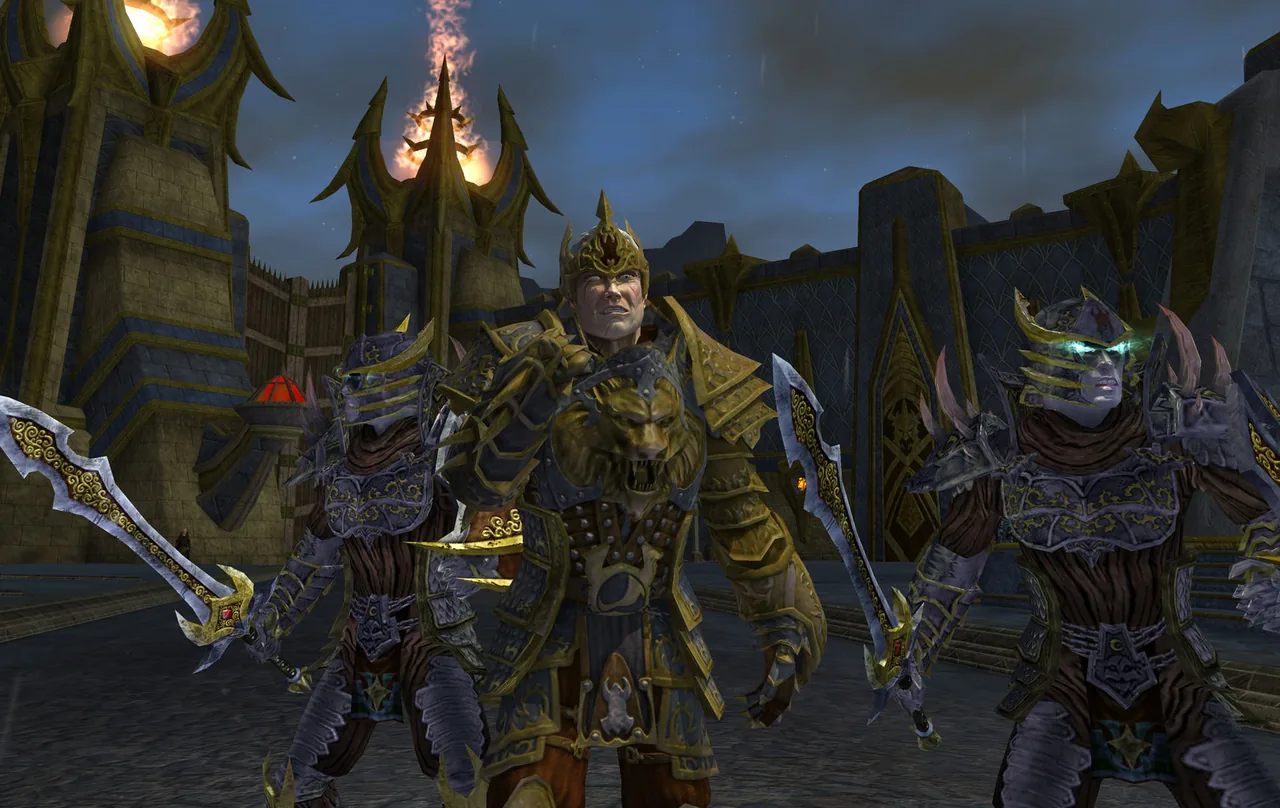
Combat is unapologetically of its era — tab-target, hotbar-driven, built around class roles and long ability lists rather than dodge rolls and telegraphs. If you have come from something like Neverwinter and its aimed attacks, this will feel slow for the first hour and then either click or not. What holds it up is class distinctiveness. Twenty-six classes across four archetypes, most of them with real identities rather than reskins, is a spread modern MMOs have mostly abandoned in the name of balance. The cost is exactly what you'd expect: balance is a permanent argument, and every expansion resets it. Class balance was the loudest complaint about Rage of Cthurath even from players who otherwise loved it.
Crafting deserves its own paragraph, because it is not the usual afterthought. It is a parallel progression track with its own levels, its own questlines and its own reason to exist, and it feeds a player economy that actually matters. Housing is the other standout — EverQuest II's housing system predates most of its competition and is still, twenty years later, more flexible than what most modern MMOs ship. Players who describe the game fondly in 2026 talk about harvesting, crafting and decorating far more often than they talk about raid tiers.
The free tier is a demo wearing a costume
Here is where the enthusiasm has to stop.
EverQuest II went free-to-play in December 2011, and the conversion was one of the harsher ones in the genre. A free account today cannot use the broker — the game's player auction house. It cannot speak in general chat channels. It cannot access the higher tiers of its own spells, which in this game are not cosmetic upgrades but 30-40% power differences on abilities you already own. It gets the weaker mercenary tiers, in a game where mercenaries are the reason solo play works at all.
Take those four together and look at what they mean in practice. A free player is a mute character who cannot buy or sell, running a permanently under-powered version of their own class, with a dumber hired companion. The restrictions do not bite in the first twenty levels, which is why the game presents so well at first. They bite in the middle, exactly when a new player would start needing an economy and a guild — which is to say, at the precise moment the game becomes an MMO.
The membership that lifts all this — All Access, sold in one-, three-, six- and twelve-month terms — also carries +50% experience, 15% more coin, double alternate currency, five extra character slots, a monthly Daybreak Cash stipend and a marketplace discount. That is a subscription doing what subscriptions do, and there is nothing objectionable about a twenty-two-year-old MMO wanting one. The objection is to the shape of the free tier underneath it, which is not designed as a way to play the game slowly. It is designed to be uncomfortable.
Rage of Cthurath, and a pass nobody was told about
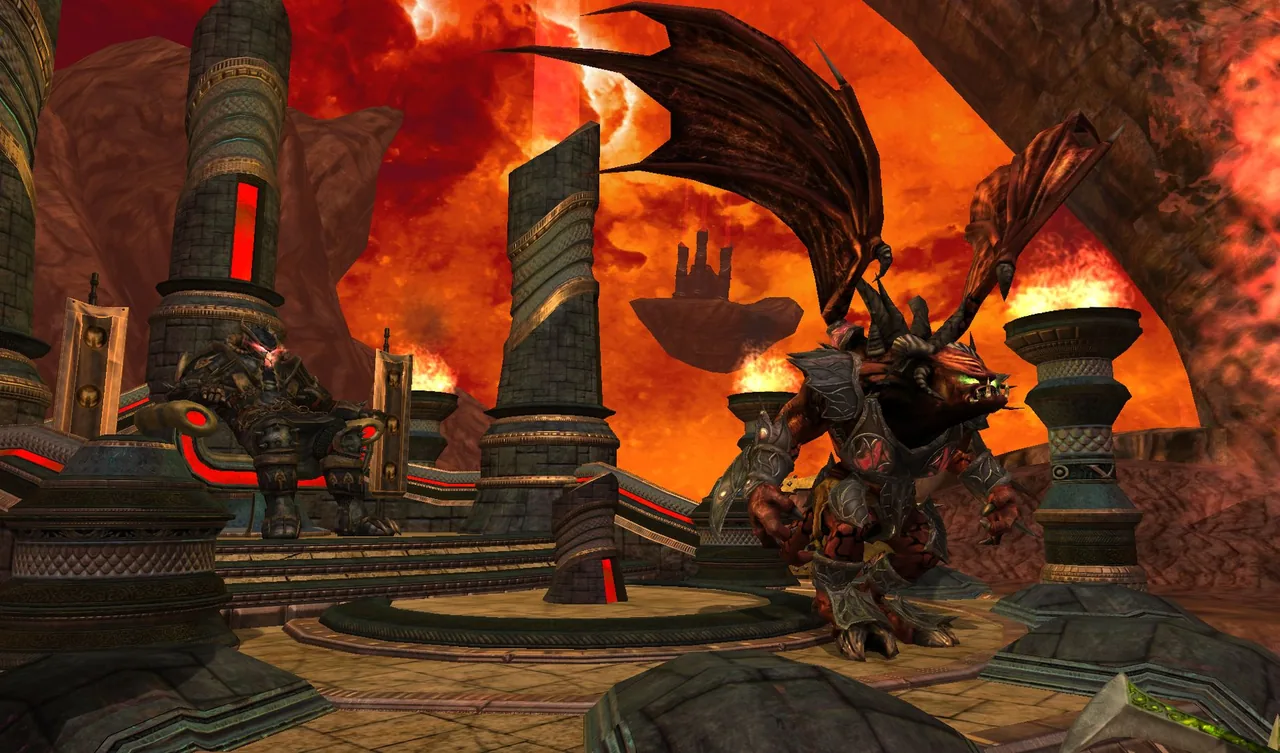
The December 2025 expansion is, by the account of players who dug into it, one of the better ones. Rage of Cthurath goes Lovecraftian — Void-themed zones with names like Yon Gorroth and Oogothl Sprawl, a raised cap of 135, public quests, and an Untold Heroic dungeon ladder running past eighty escalating stages that gave the endgame something to actually chew on. The art direction drew real praise, which for a 2004 engine is a genuine achievement of palette and composition over polygons. Guild Coalitions gave guilds a reason to talk to each other. Daybreak spent the following months tuning the Untold ladder down — boss health, resolve requirements and spawn rates all came down in patches through mid-2026 — which reads as a team responding to feedback rather than shipping and walking away.
Then there's the pricing. The expansion sold at four tiers: US$35 standard, US$70 Collector's, US$140 Premium, and US$250 for the Family and Friends edition. Two hundred and fifty dollars is a number that deserves to be said out loud. It buys tradable copies of items for other players, so it is nominally a gifting tier, but it is still an annual expansion with a price sitting five times above a standard AAA release.
Days after launch, a marketplace item called Conqueror's Campaign: Rage of Cthurath appeared for 1,499 Daybreak Cash, with a subscriber discount. It is functionally a seasonal pass: it unlocks extra daily adventure missions and the currency those missions pay, which buys crates from a merchant. Daybreak did not explain it in advance, and the reaction in the game's own community channels was mostly confusion — players who had just paid up to US$250 discovering a further paid progression layer they had not been told about. The system itself is not the scandal. Announcing an expansion for months and then quietly adding a paid pass to it afterwards is how you turn a reasonable monetisation decision into a trust problem.
Origins, and what a subscription actually buys
The most interesting thing Darkpaw has done in recent years is Origins: servers that rebuild the 2004 launch version of Norrath and unlock the old expansions on a schedule, so players move through the game's history together. Anashti Sul and Dozekar had reached Rise of Kunark by July 2026, with Varsoon on Kunark Ascending and a separate time-locked server, Wuoshi, running free trade rules.
For a certain kind of player this is the whole pitch — the original game, with the original difficulty and the original grouping requirements, without twenty years of power creep flattening it. It also works as an answer to the low-population problem, because a progression server puts everyone in the same zones at the same time instead of scattering them across two decades of content.
Origins requires an active membership. No membership, no access, and characters created there stay locked until the sub is renewed. That is a defensible business decision — it is the closest thing the game has to a premium product — but it does mean the most compelling reason to play EverQuest II in 2026 sits entirely behind the paywall, which is worth knowing before you evaluate the free download.
The interface is the actual barrier
Read the game's negative reviews and one theme outweighs everything else, including monetisation: the UI. Nearly half of the hundred most recent English negative reviews mention it. Windows that don't scale, text that is unreadable on a 4K monitor, panels with no resize option. One reviewer put it plainly — they'd re-review once an official patch lets the UI scale to modern resolutions.
Darkpaw knows. An experimental 4K UI scaling pass was listed as coming to testing in the July 2026 producer's letter. That it is still experimental in 2026 tells you how deep the problem goes; this is a 2004 codebase, and a wholesale interface rewrite in an MMO of this age is a genuinely hard engineering job rather than a neglected ticket. The community's third-party UI replacements have covered the gap for years, which is a real solution and also an admission that new players are expected to go find one.
The rest of the presentation ages about as you'd expect. The engine's lighting and character models were ahead of their time in 2004 and are not now, though the art direction in newer expansions does a lot of heavy lifting. The launcher and patcher get their own share of complaints — the Steam version bounces you to Daybreak's own client and account system, and 2025-2026 reviews include account lockouts demanding phone verification, entitlement errors at the login screen, and a browser window that opens to a membership sales page when you close the game. That last one comes up repeatedly, from separate players, months apart. It is a small thing and it is doing outsized damage.
Who is actually still playing
Steam's numbers are the wrong place to look — the game routes players to its own client, so the Steam concurrent count measures a side door, not the game. What Steam is useful for is sentiment, and the picture there is more interesting than the badge suggests. The overall rating sits at Mostly Positive, 79% of 2,918 reviews. Crucially, and unlike some MMOs of this vintage where the review corpus is a fossil of a single bad year, EverQuest II's negatives are current: a third of the hundred most recent English negative reviews were written in 2025 or 2026. People are still turning up, still trying it, and still bouncing off the same three things — the UI, the free-tier locks and the marketplace.
The positives are current too, and they are not mostly nostalgia. Recent positive reviews talk about helpful players, a functioning economy, guilds that take down contested content, harvesting and crafting as things to do rather than chores. This is a game with a small, dense, long-tenured population that likes it a great deal. Several negative reviews come from players with a thousand, two thousand, seven thousand hours logged — the anger of people who care, not drive-by dismissals. That's a healthier signal than a quiet 90%.
If you are weighing it against its neighbours: The Lord of the Rings Online is the closest comparison for world density and a similarly aged engine, Mabinogi matches it for crafting-first design, and EverQuest Legends is Daybreak's own attempt at a friendlier entry into the same universe.
Verdict
EverQuest II is a better game than its reputation, its storefront and its own sales funnel suggest. Twenty-two years in, it is still receiving full expansions with real content in them, still running one of the genre's best crafting and housing systems, and still capable of the specific pleasure of a world so large you can get lost in a corner of it nobody has mentioned in a decade. The Origins servers are the smartest thing anyone has done with a classic MMO's back catalogue in years.
What keeps the score at 6.5 is everything wrapped around that. An interface that a new player has to work around before they can see the game properly. A free tier that removes the auction house and the chat channels rather than the cosmetics. An annual expansion with a US$250 top edition, followed by a 1,499-Daybreak-Cash pass that nobody was told about. Individually each of these is survivable. Stacked, they mean the game asks for a leap of faith before it shows you what it is good at, and a lot of people are entirely reasonable in not making it.
Play it if you want depth over polish and you're prepared to subscribe. Skip it if you were hoping "free-to-play" meant what it usually means.
Players who like the idea of a world that keeps progressing while they're away — rather than one that demands a nightly raid slot — may also enjoy Wanderer.
Pros and cons
Pros
- Twenty-two expansions of content means a genuinely enormous world, and unlike most MMOs of its age the old zones were never squashed into a levelling corridor — they are still there
- Crafting and housing are first-class systems with their own progression, not bolt-ons; player housing in particular remains among the best in the genre two decades on
- Mercenary NPCs let a solo player run content that would otherwise require a group, which is what keeps a low-population MMO playable at all
- The team still ships a full paid expansion every December, plus regular game updates — Rage of Cthurath added a 135 level cap, five zones, an 80-plus-stage Untold Heroic dungeon ladder and Guild Coalitions, and August 2026 has Game Update 132 in beta
- Origins servers rebuild 2004 Norrath and unlock expansions on a schedule, which is the closest thing to a genuine second chance at the game's best era
Cons
- The free account cannot use the broker, is locked out of general chat channels, cannot access the higher spell tiers and gets the weaker mercenary tiers — restrictions that hit exactly when a new player would start needing an economy
- The interface has not kept pace with modern resolutions; UI complaints are the single most common theme in the game's negative reviews, and an experimental 4K scaling pass was still listed as in testing in the July 2026 producer's letter
- The Conqueror's Campaign seasonal pass appeared in the marketplace at 1,499 Daybreak Cash with no advance explanation, days after players had spent up to US$250 on the expansion itself
- Exiting the game has been opening a browser window to a membership sales page, a pattern multiple 2025 and 2026 reviewers describe as the thing that made them quit
- The Steam listing is effectively abandoned — its DLC list stops in 2014 and its news feed in 2020, so the storefront most new players find tells them nothing about the live game
- Low-level population is thin outside progression servers, and the endgame gear treadmill assumes years of accumulated systems knowledge
Screenshots
-
EverQuest IIImage: Daybreak Game Company via Steam -
EverQuest IIImage: Daybreak Game Company via Steam -
EverQuest IIImage: Daybreak Game Company via Steam -
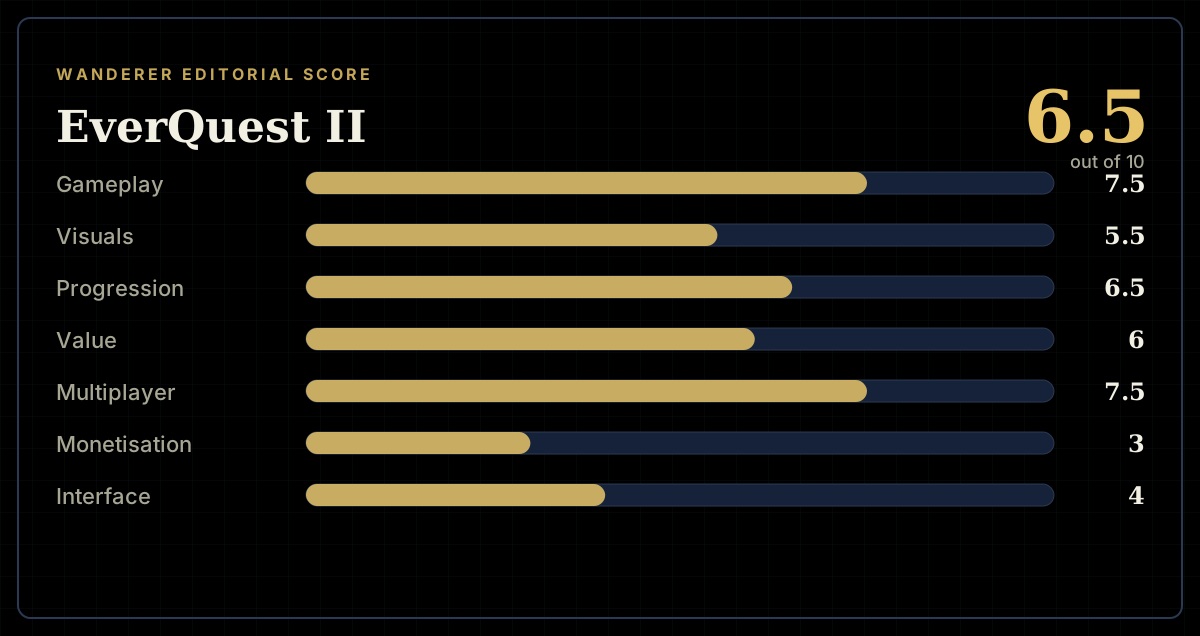
How the review scores each part of the gameWanderer Editorial -
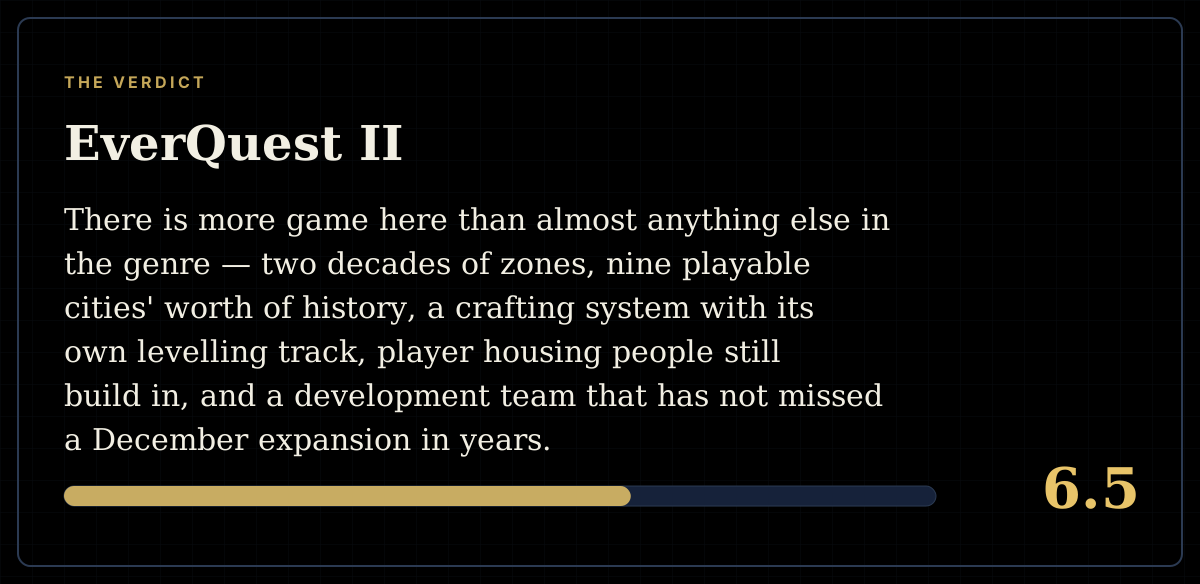
The short versionWanderer Editorial