Game review
EverQuest Legends
7 / 10
- Developer
- Game Jawn
- Publisher
- Daybreak Game Company LLC
- Released
- 28 July 2026
- Platforms
- Windows
- Genre
- MMORPG
- Monetisation
- $19.99 one-time purchase includes the first month of subscription access; $9.99 a month recurring after that. A separate premium currency, Iridium Coins, is sold in packs from roughly $4.99 for 500 up to $99.99 for 12,000 and is non-transferable between characters. Iridium buys cosmetic ornamentation tokens, storage and loadout slot unlocks, weight-reduction bags, alternate-advancement potions, character name changes and class unlock tokens (the priciest confirmed item, around $15). None of it is a direct stat purchase, but storage and loadout space were both cut hard in the run-up to launch and then partly restored after player backlash, which is the part worth understanding before subscribing.
- Players
- Solo play is the designed default, but four-player groups and eight-player raids are both fully supported; the game runs through its own launcher and account system rather than Steam or another third-party storefront.
The short version
EverQuest Legends takes the most group-dependent MMORPG of its era and rebuilds it around a single, genuinely clever idea: let a character run three active classes at once, so a solo player effectively brings their own tank, healer and damage dealer into every fight. That system, paired with the removal of 1999 EverQuest's brutal death penalty, is the reason two days of launch coverage and beta impressions describe a game that actually delivers on "solo-friendly" rather than just claiming it.
What keeps this from being an easy recommendation is everything wrapped around that redesign. A box price that includes a month of subscription, then asks $9.99 a month after that, sits beside a cash shop selling storage and loadout expansions the beta had visibly shrunk only weeks earlier — a sequence specific enough that "bait-and-switch" became the community's own word for it before Daybreak and Game Jawn walked part of it back. Two days old, running on staggered launch-day servers, EverQuest Legends is a genuinely interesting redesign of a 27-year-old game that still has to prove its business model deserves the same praise as its class system.
Biggest strengths
- The three-active-class system lets a solo character cover damage, healing and support at once, solving classic EverQuest's group-or-don't-bother design problem without removing groups and raids for players who still want them
- Removing experience loss and corpse runs on death cuts the original's most punishing friction point while beta impressions describe fights that still feel genuinely risky
- Antonica, Faydwer and Odus are rebuilt from the actual 1999 zones, spell effects, loot tables and music rather than a from-scratch reimagining, which is exactly what returning players are paying for
Biggest weaknesses
- Character loadouts were cut from sixteen to two and bank and equipment storage were roughly halved between beta phases, alongside an unannounced early XP-rate reduction, and the backlash was specific and vocal enough that the developers publicly walked part of it back before launch
- A box price, a recurring $9.99 subscription and a separate Iridium cash shop selling storage, loadout slots and class unlocks is a three-layer monetisation stack that launch-week players are already calling a "triple dip" against more feature-complete modern MMORPGs
- The 1999-era art, zones and spell effects that returning players are nostalgic for also read as dated to players without that context, and the game does not attempt to modernise them beyond UI scaling
Who it's for: Former EverQuest players who want the original's world, pacing and pre-Kunark content without needing five friends online at the same time, and anyone curious what a 1999 MMORPG looks like redesigned specifically around solo play. Less suited to players allergic to subscriptions stacked on a box price and a cash shop, or anyone expecting modern MMO visuals.
Our recommendation: Worth the $19.99 entry for EverQuest veterans and solo-minded MMORPG players who want to see the multiclass system for themselves — it is the game's real achievement. Weigh the $9.99 monthly commitment against a launch-week monetisation controversy that Daybreak and Game Jawn have only partly resolved, and expect the visuals and server stability to need a few more weeks before judging either fairly.
7 / 10
EverQuest, in 1999, was built on a premise that would never survive a modern design review: if you weren't grouped, you probably weren't progressing, and if you died, you paid for it with experience and a naked corpse run back through the monsters that killed you. That design is also why an entire generation of players remembers Norrath as a place where finding a group mattered more than any quest text. EverQuest Legends, which opened its servers on 28 July 2026, is a full standalone rebuild of that game aimed at the player who loved the world but doesn't have five friends free on a Tuesday night — and its answer to that problem, a system letting one character run three active classes simultaneously, is genuinely the most interesting redesign idea in the MMORPG space this year. Everything the game charges for around that idea is a separate conversation, and not always a flattering one.
Who actually made this
Getting the credit right matters here, because the two companies attached to EverQuest Legends aren't interchangeable. Daybreak Game Company LLC, the current steward of the EverQuest franchise, publishes the game and its own site names Daybreak first. But the studio actually building it is Game Jawn, described consistently across independent coverage — RPG Site names Daybreak as publisher and Game Jawn as developer outright, MonsterVine describes the two as co-developers with Daybreak "handling publishing duties," and Massively Overpowered's own launch-day headline reads "Game Jawn's EverQuest Legends." Game Jawn's leadership has deep roots in the EverQuest emulator scene, and its project director, Eda "Secrets" Spause, was the developer voice responding directly to players during the pre-launch monetisation controversy discussed below, alongside Daybreak's David "Sysyphus" Youssefi. That's a working studio, not a marketing byline — and it explains why the class redesign feels like it was built by people who understand exactly what made the original tick, even where the business side of the launch feels like it came from somewhere else.
The multiclass system is the whole pitch, and it works
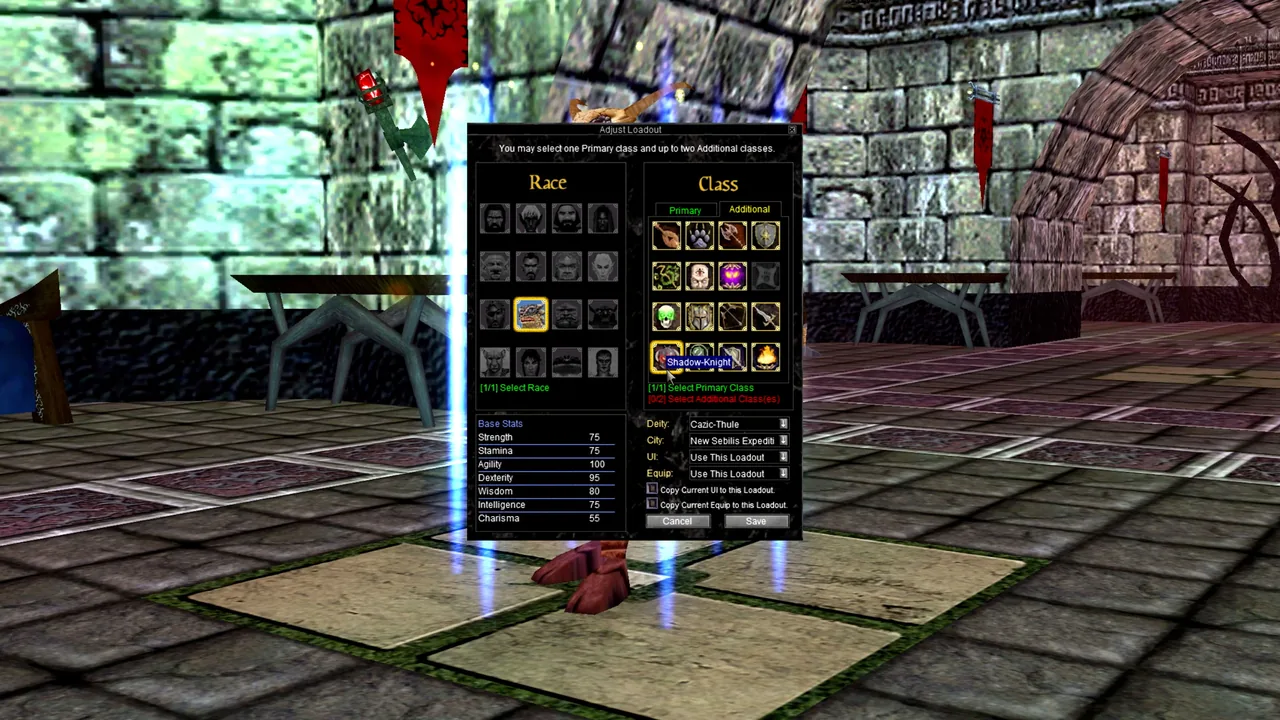
Character creation locks a primary class to your race, hands you a second class free, and unlocks a third at level 10 — all three active and contributing spells, abilities and stats at once. A Magician's summoned pet can tank while a paired Cleric heals it, or a Rogue can stack backstab damage under a Paladin's survivability and a Wizard's burst. Beta impressions describe genuine build variety rather than a checkbox feature: players report picking combinations for experimentation as much as optimisation, and with 15 races and up to three classes each, the game advertises 560 possible combinations. The one real cost, flagged consistently by beta players, is that switching active classes mid-game resets a character's effective level to whichever of its three classes is lowest — a mechanic that protects against instant power spikes but also punishes the exact kind of curiosity the system is supposed to encourage.
The other half of the solo-friendly redesign is what EverQuest Legends removed rather than added. Classic EverQuest's death penalty — experience loss plus a corpse run to recover your gear from wherever you died — is gone, replaced by a lighter, more forgiving failure state. Reports from the beta describe this as "liberating" rather than trivial: fights are still described as tense, because five scaling difficulty tiers (Normal through the punishing "Fused" tier, which reportedly wants near-best-in-slot gear to solo) let players choose how much risk they actually want, rather than the original's flat, unforgiving curve. Groups of four and raids of eight are still fully supported for players who want them, and nothing about the solo redesign appears to have removed that option — it just stopped making it mandatory.
The same world, deliberately
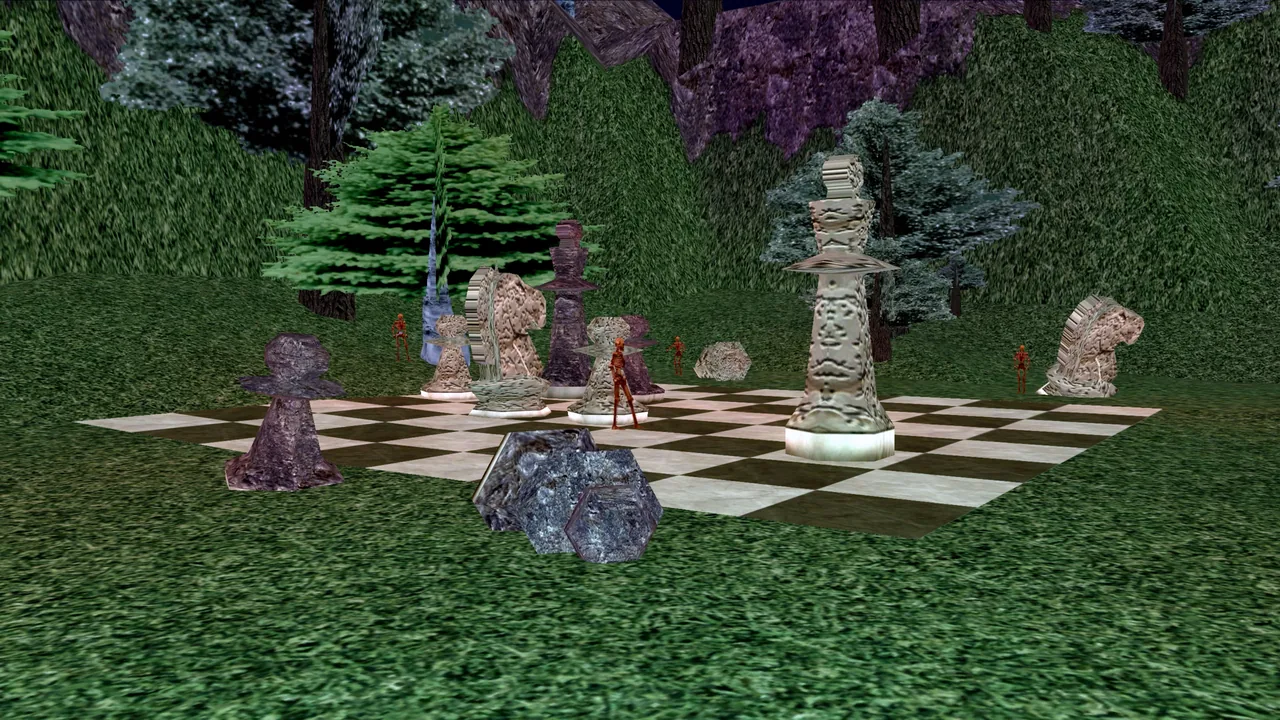
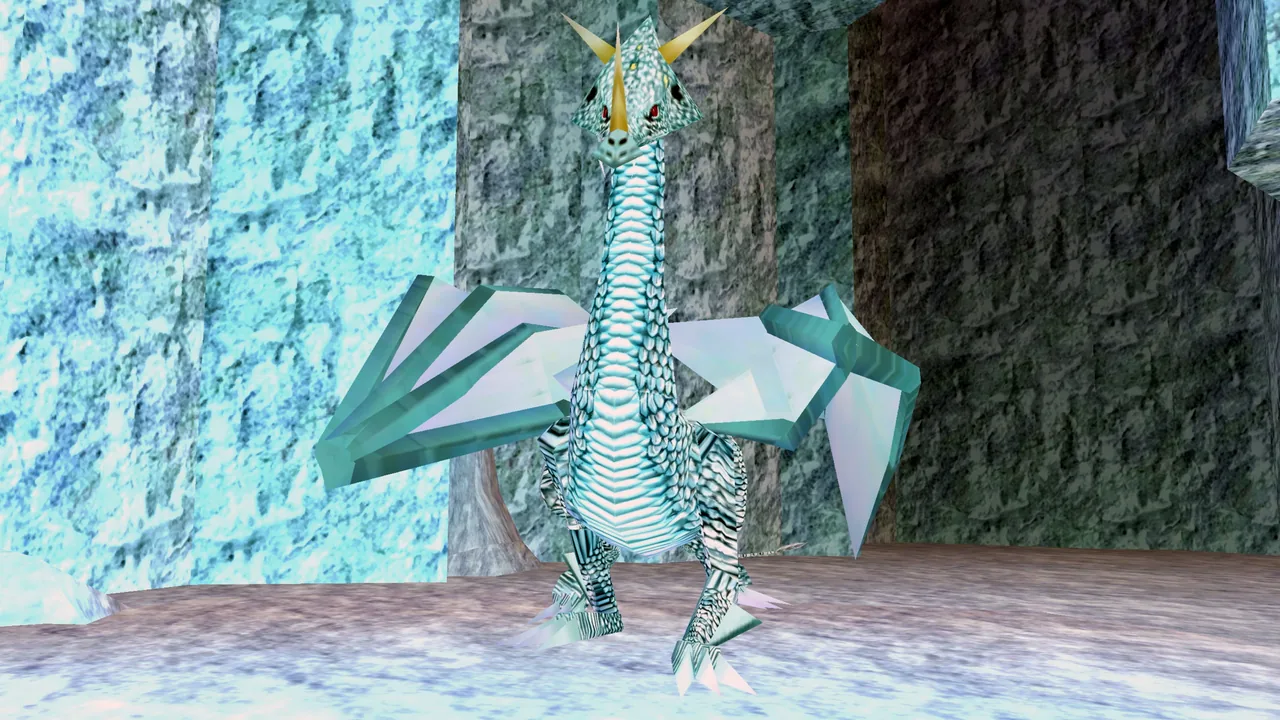
Antonica, Faydwer and Odus at launch are the pre-Kunark continents from 1999, built from the original zones, loot tables, spell effects and music rather than redrawn from scratch. Fifteen playable races are available, including Iksar and Frogloks alongside a newly playable Kerran. For returning players, that fidelity is the point — this isn't EverQuest reimagined as a different game wearing familiar names, it's the actual game with its worst friction sanded down. For anyone without that nostalgia already installed, the same fidelity reads differently: the visuals are, by design, 1999-era, and modern UI scaling and quality-of-life menus sitting on top of decades-old character models and environments is a deliberate trade-off rather than an oversight, but it's one that will put off players who came in expecting a current-generation MMORPG. A roadmap promising Deity Achievements, a new Rujarkian Hills open-world zone, a Nektropos Castle mini-expansion and an eventual Kunark expansion suggests Daybreak and Game Jawn intend to keep building forward rather than treating launch as a finished product, which matters for a subscription game specifically.
Monetisation: the part that needs the most scrutiny
This is where the review has to slow down, because the actual complaint circulating around EverQuest Legends' launch is more specific than "it costs money." The base package is $19.99 and includes the first month of subscription access, after which it's $9.99 a month to keep playing — a fairly standard MMORPG structure on its own. Layered on top is Iridium Coins, a premium currency sold in packs from roughly $4.99 for 500 up to $99.99 for 12,000 Iridium, non-transferable between characters to discourage real-money trading. Iridium buys cosmetic ornamentation tokens that copy an item's appearance onto another piece of gear, storage and loadout slot unlocks, weight-reduction bags, alternate-advancement potions, character name changes and class unlock tokens, the most expensive confirmed single item at around $15. None of that is a direct stat purchase, and Daybreak hasn't sold raw power for cash — but storage and loadout space function as real progression gates in an MMORPG, and that's exactly where the launch went wrong.
In the pre-order beta, players discovered that character loadouts had been cut from sixteen down to two, equipment and augmentation storage had been roughly halved, and bank space had been reduced from 125 slots to 50 — alongside an apparently unannounced reduction in early XP gain. The reaction was immediate and specific enough that it generated its own shorthand: players started calling the combined cost of box, subscription and cash shop a "triple dip," and the sequence of quietly shrinking free storage right before asking players to buy it back read to a lot of the community as a bait-and-switch. To their credit, Game Jawn's Eda Spause and Daybreak's David Youssefi responded directly rather than staying quiet: starting loadout slots were raised to three and starting equipment slots to 50 ahead of launch, and both studios committed to adding more earnable storage and loadout expansion through gameplay after launch rather than gating all of it behind the shop. That's a real, substantive walkback — but it happened because players caught the cuts during a beta, not because the plan shipped clean, and it's a pattern worth watching closely as EverQuest Legends' first few content updates land.
Launch week, honestly assessed
EverQuest Legends is two days old as of this review, and that matters for how confidently any of this can be stated. Demand going into launch was real — close to 35,000 beta signups and more than 11,000 pre-order beta participants, according to Daybreak's own figures — and servers opened staggered across six US regions and two EU regions rather than as a single global pool, with Asian server availability still described as under consideration. That staggering, plus scattered reports of login and storefront issues on launch day, points to a studio managing real demand rather than a collapse, but it also means judging server stability, endgame balance or long-term content pacing this early would be premature. Early public reaction is genuinely split along a predictable line: players enjoying the nostalgia and the fact that sessions now work in shorter blocks, against players already unhappy about bugs, the cash shop and whether a solo-first redesign quietly loses some of what made the original's forced cooperation special in the first place. Both reactions are reasonable responses to the same launch, and neither is likely to be the last word on it.
Final verdict
A 7 out of 10 reflects a game whose central idea — three simultaneous active classes solving the group-dependency problem that made 1999 EverQuest inaccessible to solo players — genuinely works, backed by faithful recreations of Antonica, Faydwer and Odus that will land exactly as intended with the audience it's built for. It doesn't score higher because the business model surrounding that redesign gave players a real, documented reason not to trust it going in: cut storage, cut loadouts, an unannounced XP reduction, and a subscription-plus-cash-shop structure that launch-week players are already measuring against friendlier modern MMORPGs. Daybreak and Game Jawn partially fixed the worst of it before launch, which counts for something, but "partially" is doing real work in that sentence.
Buy in for the multiclass system and the world if you're the target audience — a former EverQuest player who wants the pacing without the five-person group requirement. Go in aware that this is a subscription commitment sitting on top of a rocky, two-day-old launch, and give the cash shop and the post-launch storage promises a few content patches to prove out before deciding whether $9.99 a month is worth keeping up.
Players who'd rather their MMORPG progression kept moving without a subscription clock attached might also want to look at Wanderer.
Pros and cons
Pros
- The three-active-class system lets a solo character cover damage, healing and support at once, solving classic EverQuest's group-or-don't-bother design problem without removing groups and raids for players who still want them
- Removing experience loss and corpse runs on death cuts the original's most punishing friction point while beta impressions describe fights that still feel genuinely risky
- Antonica, Faydwer and Odus are rebuilt from the actual 1999 zones, spell effects, loot tables and music rather than a from-scratch reimagining, which is exactly what returning players are paying for
- Five scaling difficulty tiers let solo players dial risk up or down instead of the original's one-size-fits-all camp-and-grind pacing
- Beta demand — close to 35,000 signups and over 11,000 pre-order beta players — translated into a staggered but functioning launch across eight servers rather than a collapse
Cons
- Character loadouts were cut from sixteen to two and bank and equipment storage were roughly halved between beta phases, alongside an unannounced early XP-rate reduction, and the backlash was specific and vocal enough that the developers publicly walked part of it back before launch
- A box price, a recurring $9.99 subscription and a separate Iridium cash shop selling storage, loadout slots and class unlocks is a three-layer monetisation stack that launch-week players are already calling a "triple dip" against more feature-complete modern MMORPGs
- The 1999-era art, zones and spell effects that returning players are nostalgic for also read as dated to players without that context, and the game does not attempt to modernise them beyond UI scaling
- Launch day required staggering access across six US and two EU servers, and early players have reported login and storefront issues consistent with a first-week rollout rather than a settled service
- Switching class combinations mid-game resets a character's effective level to its lowest active class, which beta players flag as a real cost to experimenting with the multiclass system the game is otherwise selling
Screenshots
-
EverQuest LegendsImage: Daybreak Game Company LLC via official site -
EverQuest LegendsImage: Daybreak Game Company LLC via official site -
EverQuest LegendsImage: Daybreak Game Company LLC via official site -
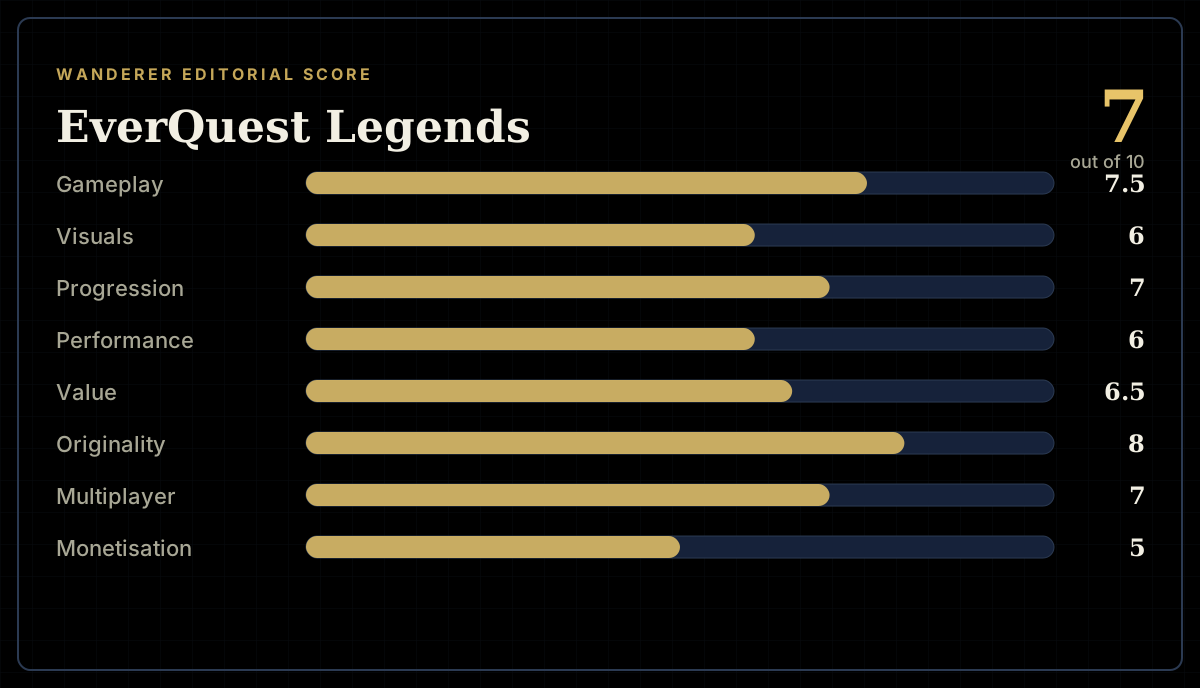
How the review scores each part of the gameWanderer Editorial -
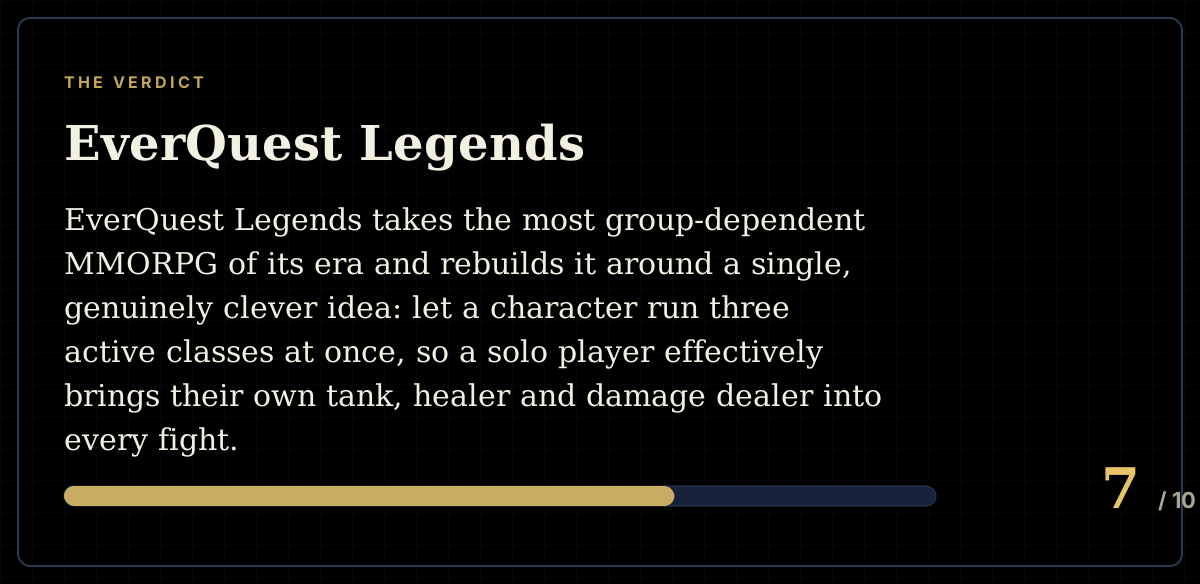
The short versionWanderer Editorial