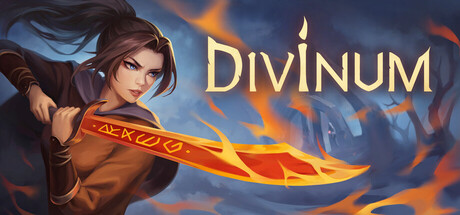
Game review
Divinum
6.5 / 10
- Developer
- Sigil Games
- Publisher
- Sigil Games
- Released
- 28 August 2026
- Platforms
- Windows
- Genre
- Action, Adventure, Indie, RPG
- Monetisation
- One-time purchase, no in-game purchases listed
- Players
- Single-player
The short version
Divinum, released 28 August 2026 by solo developer Sigil Games, is a stylish action-adventure blending expressive, combo-driven combat with map exploration, as players repel mysterious invaders and uncover an island's hidden truth. It sits Very Positive with a substantial sample of 216 reviews, and reading widely through it reveals near-unanimous agreement on one specific point sitting alongside a large, equally consistent body of structural disappointment. Reviewers across the entire spectrum, positive and negative alike, praise the combat itself in remarkably similar terms: fluid, weighty, precise, frequently compared to Sekiro, Hollow Knight and even 2D Devil May Cry, with several reviewers specifically astonished that a single developer built something this polished. Set against that near-universal praise, a large number of reviewers report the game ends abruptly at around the four-to-seven-hour mark, immediately after a second weapon unlocks, with several describing the ending as feeling unfinished rather than a deliberate, satisfying conclusion. This review also found consistent complaints that the game markets itself with metroidvania framing it doesn't fully earn, describing a largely linear map with minimal backtracking or branching paths, alongside reports that the story largely disappears after the opening levels and that damage-dealing progression stays flat for much of the back half.
Biggest strengths
- Combat draws overwhelming, remarkably consistent praise across nearly every review in this sample, positive and negative alike, with reviewers describing fluid, weighty, precise combos and comparing the feel favourably to Sekiro, Hollow Knight and 2D Devil May Cry
- Multiple reviewers specifically express astonishment that the game was built by a single developer, describing production values, animation quality and combat depth that read as the work of a much larger team
- Pixel art and presentation draw consistent, specific praise, with reviewers describing genuinely beautiful visuals that immerse players in the world more effectively than many other titles in the crowded metroidvania and action-platformer space
Biggest weaknesses
- A large number of reviewers report the game ends abruptly at around the four-to-seven-hour mark, immediately after a second weapon unlocks, with several describing the conclusion as anticlimactic and feeling unfinished rather than a deliberate, satisfying stopping point
- Multiple reviewers report the game markets itself with metroidvania framing it doesn't fully earn, describing a largely linear map with minimal backtracking, no meaningful branching paths, and limited incentive to explore for collectibles once the campaign is complete
- Reviewers consistently report the story largely disappears after the opening two levels, describing narrative content as barebones for the remainder of the game despite a promising start
Who it's for: Fans of fast, precise, combo-driven combat looking for a short, focused action experience, who are prepared to treat this as a tight, self-contained few hours rather than a sprawling metroidvania, and who can accept an abrupt ending.
Our recommendation: Worth it for the combat alone if you go in with the right length and structure expectations; wait for a deeper discount if a full-length metroidvania experience matters more to you than a short, polished combat showcase.
6.5 / 10
Introduction
Divinum, released 28 August 2026 by solo developer Sigil Games, is a stylish action-adventure that blends expressive, combo-driven combat with island exploration, tasking players with repelling mysterious invaders while uncovering a hidden truth buried beneath the world they explore. It sits Very Positive with a substantial sample of 216 reviews, and reading widely through it reveals something distinctive in the pattern of praise and criticism: near-total consensus on one specific strength, sitting directly alongside an equally consistent body of structural disappointment that even many of this game's biggest fans share.
Combat that nearly every reviewer, positive or negative, praises identically
The single most striking pattern across this entire sample is how consistently reviewers on both sides of the recommend line describe the combat in almost identical terms. Words like fluid, weighty, precise and expressive recur constantly, and reviewers repeatedly reach for the same specific comparisons: Sekiro's parry-driven intensity, Hollow Knight's movement feel, even 2D Devil May Cry's combo-chaining expressiveness. Multiple reviewers specifically express disbelief that this level of combat polish came from a single developer working alone, describing production values and animation quality that read as the work of a considerably larger team. This isn't faint or generic praise — even reviewers who ultimately can't recommend the game due to its other shortcomings consistently carve out space to specifically credit the combat system as a genuine, standalone achievement.
An ending that arrives without warning
Set against that near-universal combat praise, this review found the single most consistent structural complaint in this entire sample: the game ends abruptly, typically around the four-to-seven-hour mark, immediately after a second weapon unlocks. Multiple detailed reviewers describe barely having time to use that second weapon in meaningful combat before the credits roll, and several frame the ending directly as feeling unfinished rather than a deliberate, considered stopping point. One reviewer states bluntly that it's "pretty clear the dev didn't want to finish it," while others more charitably suggest the game was simply scoped smaller than its own marketing and early hours imply.
Metroidvania framing the structure doesn't fully earn
A separate, equally consistent complaint concerns genre labelling. Multiple reviewers explicitly push back against the game's metroidvania framing, describing a map that initially suggests extensive backtracking and interconnected exploration before revealing itself as largely linear, with minimal branching paths and limited incentive to revisit earlier areas once the main campaign concludes. At least one detailed reviewer frames this specifically as a design tension: the developer built an excellent combat system and then, in that reviewer's words, "felt obligated to build a metroidvania around it" rather than the exploration structure emerging as a fully realised design pillar in its own right.
A story that largely vanishes, and progression that flattens
Beyond structure, this review found consistent complaints about narrative and progression depth. Multiple reviewers report a promising opening story that largely disappears after the first two levels, leaving the remainder of the game close to narratively barebones despite an engaging setup. Separately, reviewers report combat progression stays relatively flat through much of the back half, noting the player's primary weapon can't be meaningfully upgraded and available spells feel underwhelming relative to the polish of the core combat system itself — a specific gap between how good moment-to-moment combat feels and how little that combat actually evolves across the game's short runtime.
A price comparison reviewers keep making
A specific, recurring value complaint concerns price relative to content. Multiple reviewers directly compare Divinum's asking price unfavourably to Hollow Knight, noting the genre-defining comparison point offers dramatically more content for a similar or lower cost. Given how frequently this exact comparison recurs independently across different reviewers, this review treats it as a genuinely informative signal about how this sample perceives value, distinct from simply disliking a short game on principle.
Weighing an exceptional system against an incomplete-feeling package
Taken as a whole, this review reads Divinum as a case where one component, the combat system, is executed at a level that would headline a much larger, more expensive release, sitting inside a surrounding package — length, story, progression, structural framing — that consistently reads as underdeveloped relative to that combat's own quality. That's a genuinely different situation from a uniformly mediocre game, and several reviewers explicitly frame their recommendation this way: worth playing specifically for the combat, with expectations calibrated accordingly rather than expecting a complete, full-length metroidvania experience.
What a sequel or expansion would most need to fix
Reading across this sample as a whole, this review can identify a small number of specific, addressable directions that would most improve a future version of this concept, even though most reviewers frame these as disappointments rather than urgent demands. Extending the campaign by even a further two or three zones, specifically built around the second weapon that currently arrives with almost no time to use it, would directly address the single most common complaint in this entire sample. A genuine mid-to-late-game upgrade path for the primary weapon, rather than relying solely on spells that several reviewers describe as underwhelming, would give the combat system's own considerable depth more room to escalate across a longer runtime. Restoring background music to the areas reviewers specifically note currently lack it would be a comparatively small, low-effort fix. None of these gaps reflect a fundamentally broken design — they read, across this sample, as the specific, addressable seams of a genuinely strong combat system currently wrapped in a shorter, less structurally ambitious package than its own opening hours promise.
Final Verdict
Divinum delivers combat that an unusually wide cross-section of this review's research, spanning both positive and negative accounts, praises in remarkably consistent, specific terms as genuinely exceptional for a solo-developed project. What holds this score down is an abrupt, unsatisfying ending arriving far earlier than the game's own opening hours suggest, metroidvania marketing the actual linear structure doesn't fully earn, a story that mostly vanishes partway through, and combat progression that flattens out well before the game concludes. Worth it for the combat alone if your expectations are calibrated to a short, focused experience; wait for a deeper discount if you're hoping for the kind of full-length metroidvania the genre label implies.
Pros and cons
Pros
- Combat draws overwhelming, remarkably consistent praise across nearly every review in this sample, positive and negative alike, with reviewers describing fluid, weighty, precise combos and comparing the feel favourably to Sekiro, Hollow Knight and 2D Devil May Cry
- Multiple reviewers specifically express astonishment that the game was built by a single developer, describing production values, animation quality and combat depth that read as the work of a much larger team
- Pixel art and presentation draw consistent, specific praise, with reviewers describing genuinely beautiful visuals that immerse players in the world more effectively than many other titles in the crowded metroidvania and action-platformer space
- The core moment-to-moment loop of combat and light platforming draws praise for striking a genuinely satisfying balance, with reviewers describing a comfortable rhythm between relaxed exploration and tense, engaging combat encounters
Cons
- A large number of reviewers report the game ends abruptly at around the four-to-seven-hour mark, immediately after a second weapon unlocks, with several describing the conclusion as anticlimactic and feeling unfinished rather than a deliberate, satisfying stopping point
- Multiple reviewers report the game markets itself with metroidvania framing it doesn't fully earn, describing a largely linear map with minimal backtracking, no meaningful branching paths, and limited incentive to explore for collectibles once the campaign is complete
- Reviewers consistently report the story largely disappears after the opening two levels, describing narrative content as barebones for the remainder of the game despite a promising start
- Multiple reviewers report combat progression stays relatively flat through much of the back half, noting the primary weapon can't be meaningfully upgraded and available spells feel underwhelming, leaving the difficulty curve less pronounced than the polished combat system seems to promise
- Several reviewers specifically criticise the game's price relative to its short runtime, directly comparing the cost unfavourably to Hollow Knight's price for substantially more content, and at least one detailed reviewer notes some areas lack background music entirely
Screenshots
-
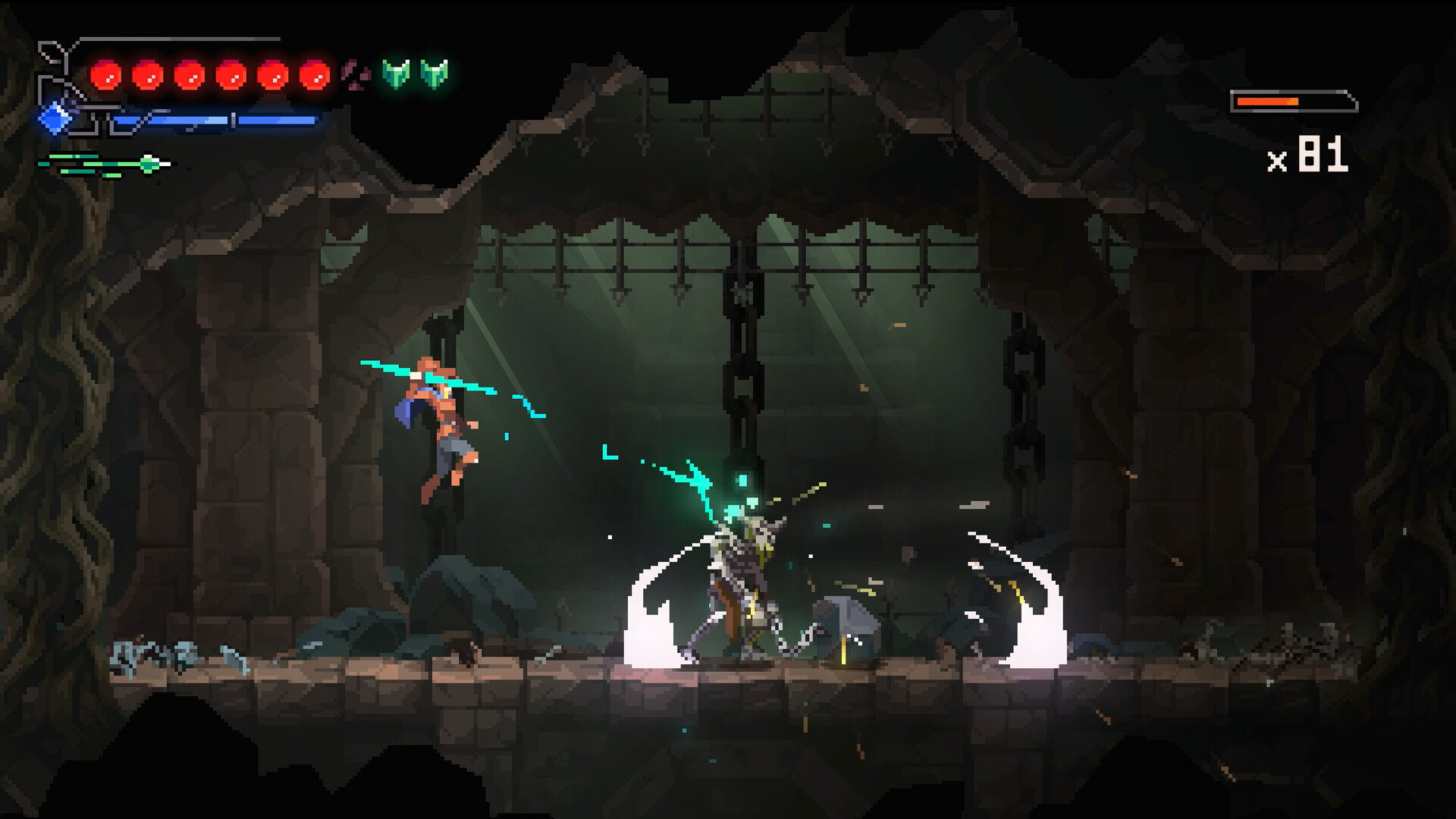
DivinumImage: Sigil Games via Steam -
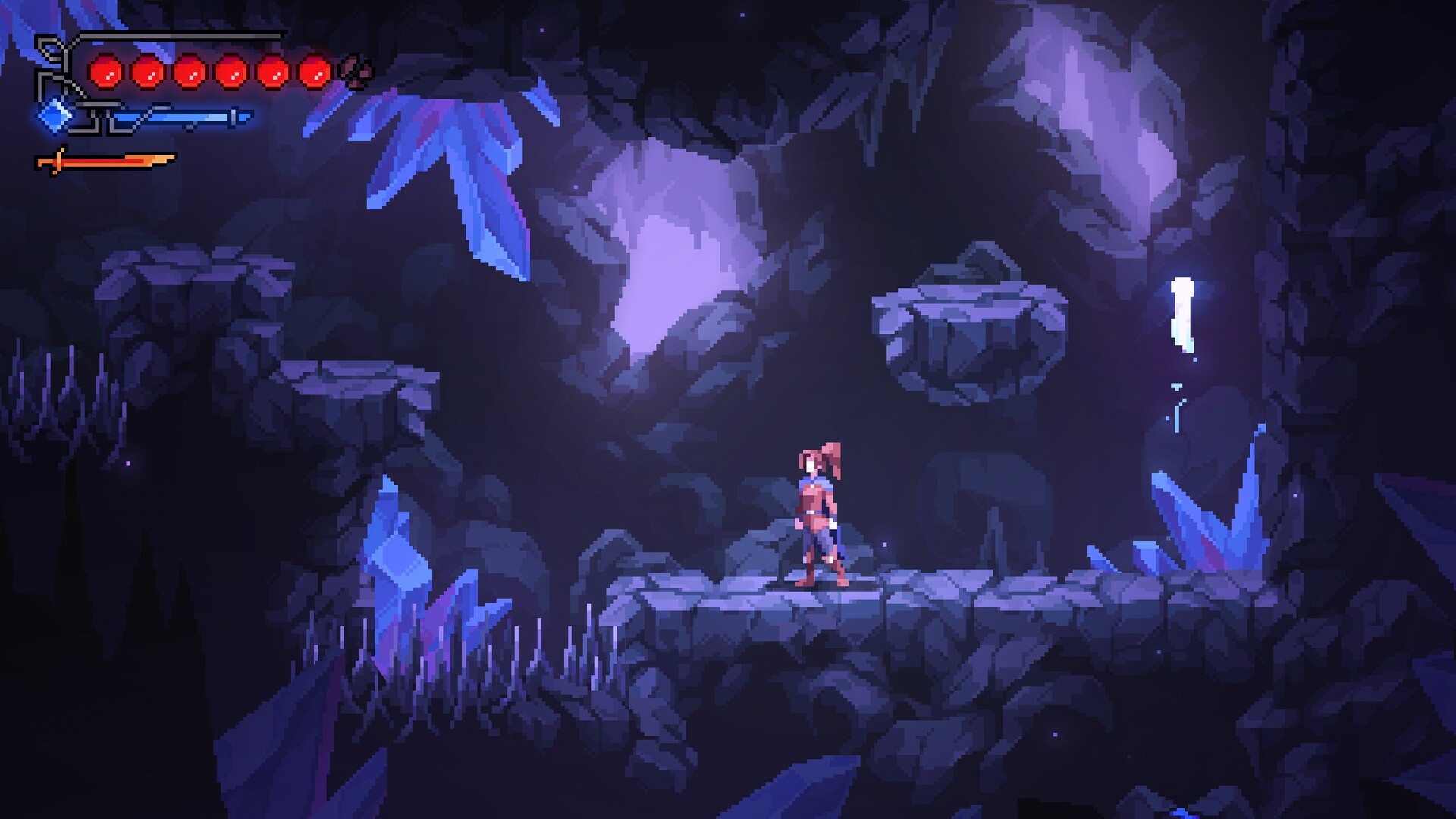
DivinumImage: Sigil Games via Steam -
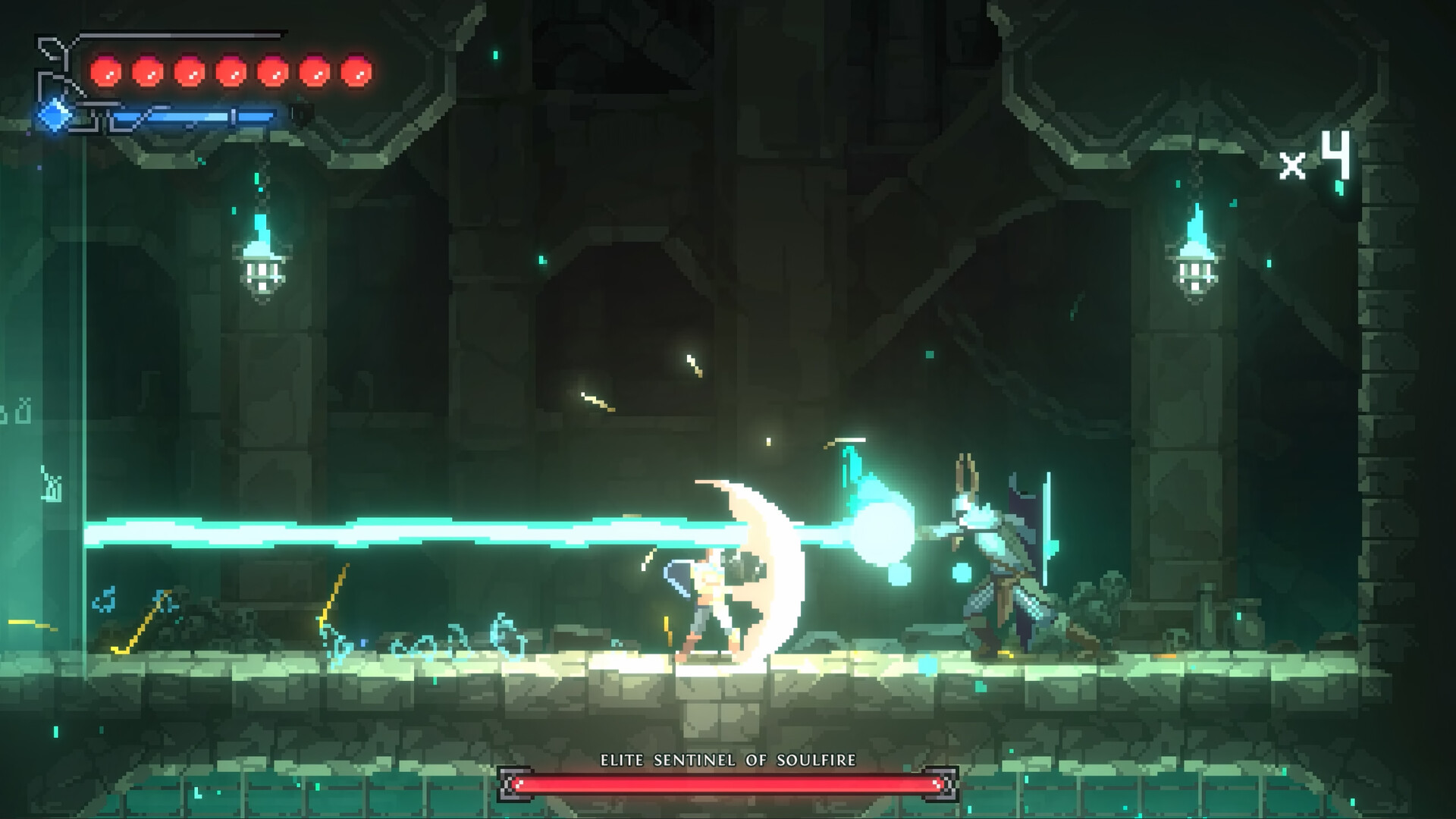
DivinumImage: Sigil Games via Steam -
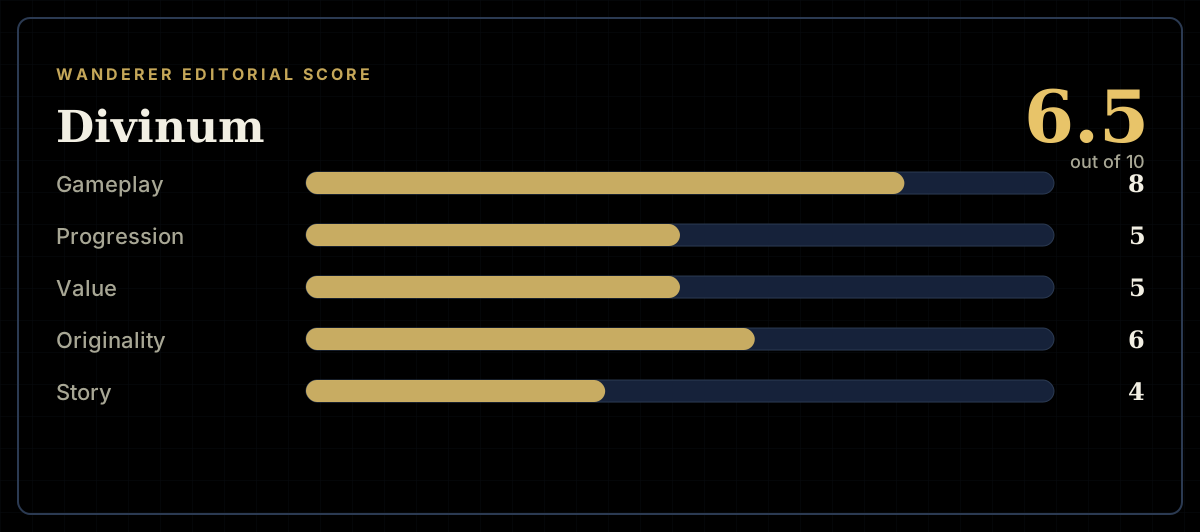
How the review scores each part of the gameWanderer Editorial -
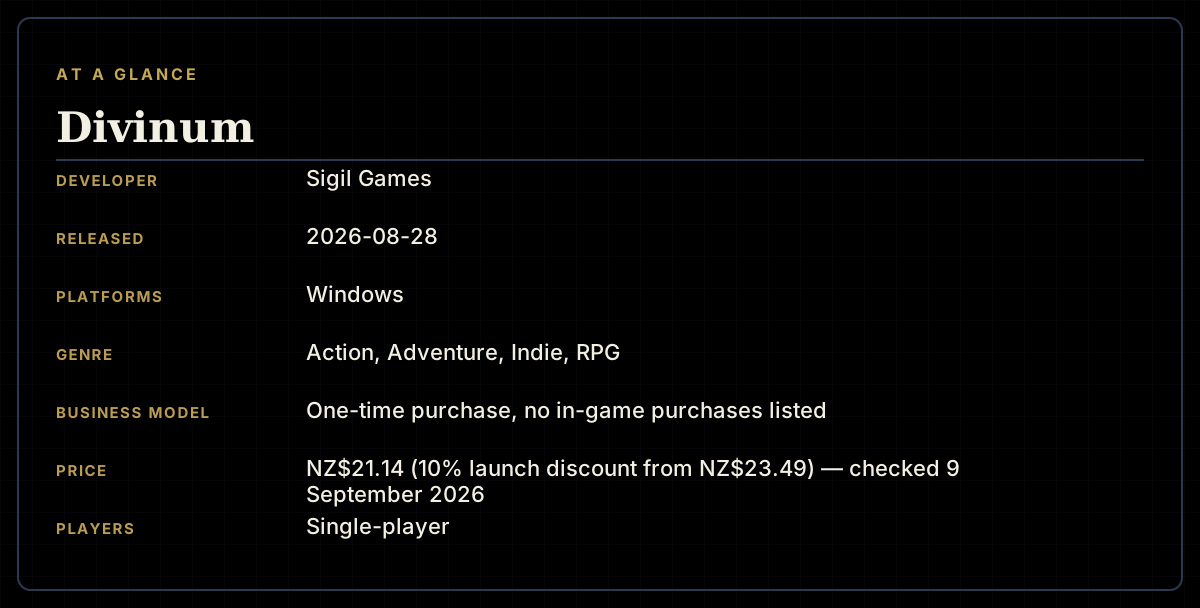
The essentials at a glanceWanderer Editorial -
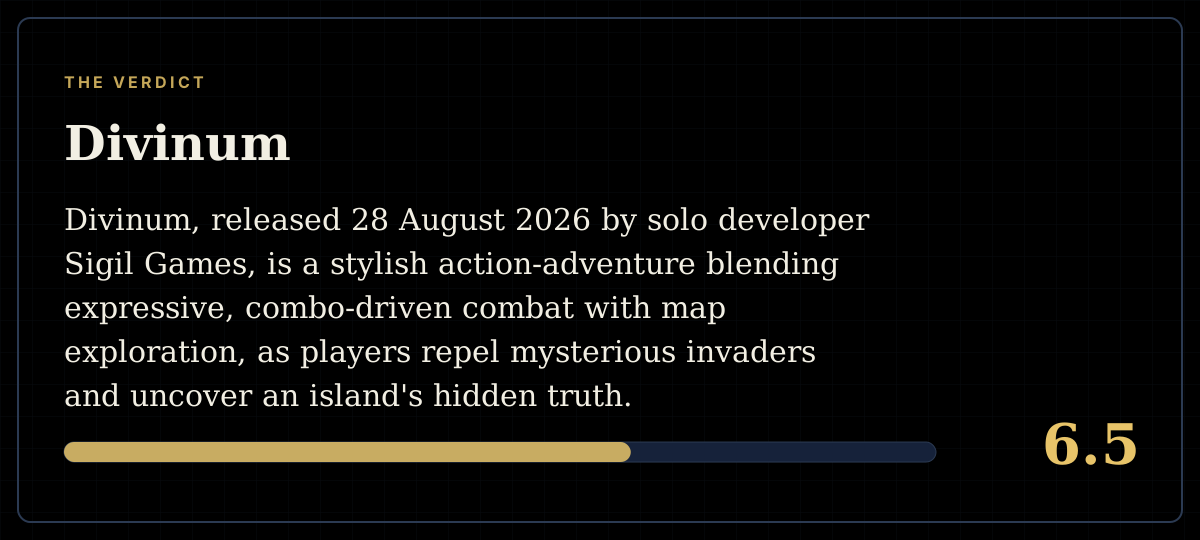
The short versionWanderer Editorial