Game review
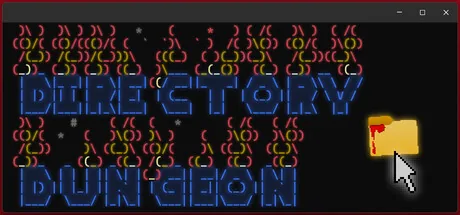
Directory Dungeon: File Explorer Dungeon Crawler
7 / 10
- Developer
- JuhrJuhr
- Publisher
- JuhrJuhr
- Released
- 9 March 2026
- Platforms
- Windows
- Genre
- Text-Based Roguelite Dungeon Crawler
- Monetisation
- One-time purchase
- Players
- Single-player
The short version
Directory Dungeon commits fully to a single, genuinely novel idea: your character is a literal folder on your hard drive, you explore a dungeon by dragging that folder between room folders in Windows Explorer, and you equip loot by dropping item files into an equipment folder while a console window narrates the fight like a dungeon master. It's the kind of concept that could easily have been a five-minute joke, and instead it's a complete, funny, well-made little game — every one of its 36 Steam reviews at time of writing is positive.
It's still a novelty first and an RPG second. Combat auto-resolves rather than asking anything of the player, most runs are over in thirty minutes to two hours, and a Steam curator review that scored it 5/10 makes a fair point: the file-explorer gimmick is close to the entire substance on offer. None of that stopped nearly forty reviewers across six languages from recommending it anyway, and at under two dollars, it's easy to see why.
Biggest strengths
- A genuinely one-of-a-kind concept — literally play a dungeon crawler by dragging folders around Windows Explorer
- A clean 100% positive Steam reception across reviews written in at least six different languages
- The developer states plainly the game never touches files outside its own install folder, and used no generative AI
Biggest weaknesses
- Combat is fully auto-resolved, and one curator review calls the file-explorer gimmick "pretty much the entire substance" on offer as an RPG
- Most completed runs land between 30 minutes and a couple of hours, a one-sitting novelty rather than a game to return to
- Drag-and-drop movement is reportedly a little sluggish, with several reviewers recommending cut-and-paste shortcuts instead
Who it's for: Anyone who wants proof that a genuinely new idea in game design still exists, and players who enjoy short, funny, one-sitting indie curiosities. Less for anyone wanting deep tactical combat or a game that lasts more than an afternoon.
Our recommendation: An easy recommendation at NZ$1.79 — set aside an hour or two, close some other Explorer windows first, and enjoy one of the more genuinely original ideas released this year.
7 / 10
Most games that promise to do something "you've never seen before" are exaggerating. Directory Dungeon isn't: it is, as advertised, a dungeon crawler played inside the actual Windows File Explorer on your actual computer. Your character is a folder. Rooms are folders. Loot is files you drag into an equipment folder to wear. It sounds like a novelty gag that couldn't sustain more than a screenshot's worth of interest, and the fact that it clearly does — 36 out of 36 Steam reviews positive at time of writing, in English, Spanish, Japanese, French, Russian, German and Czech — is the most interesting thing about it.
A dungeon crawler that lives in your file system
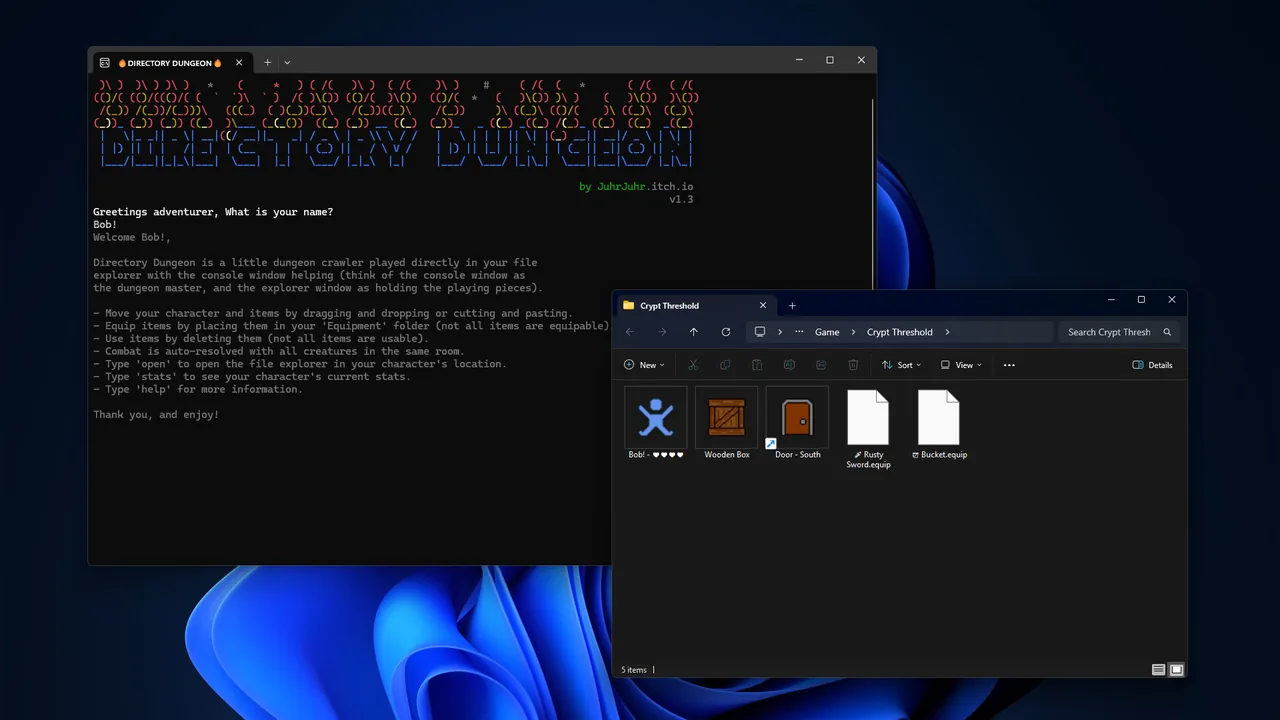
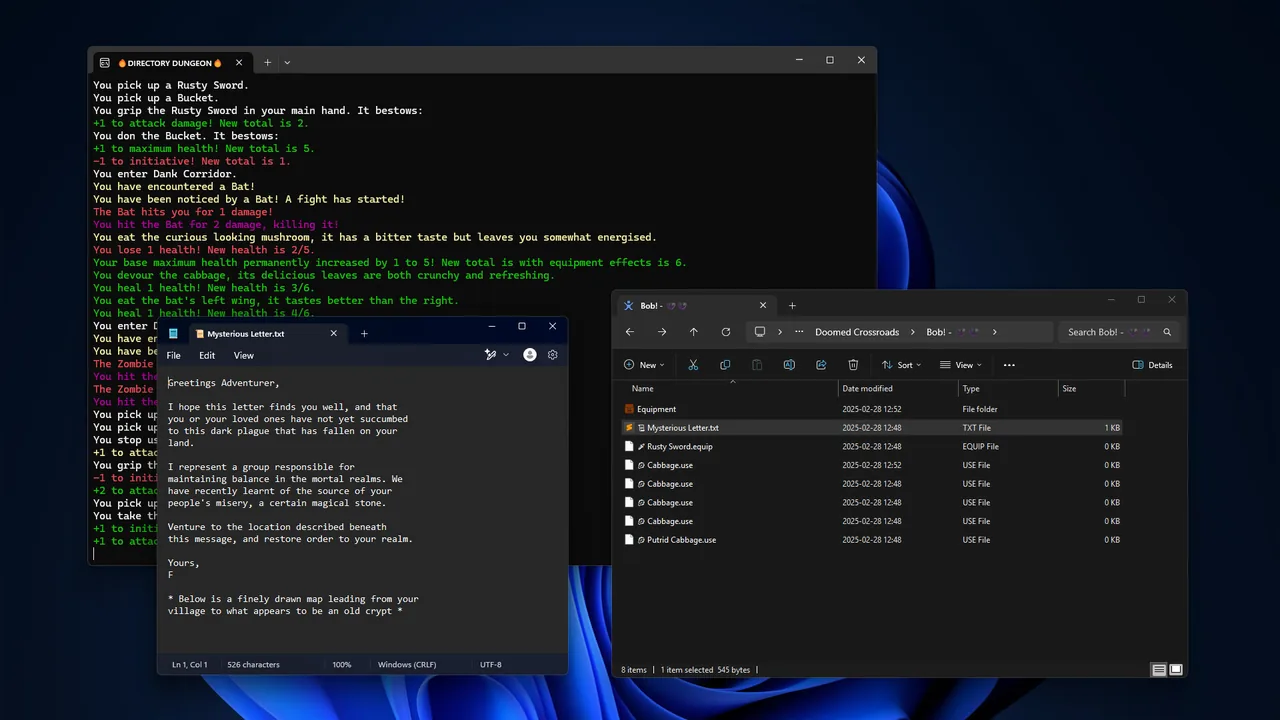
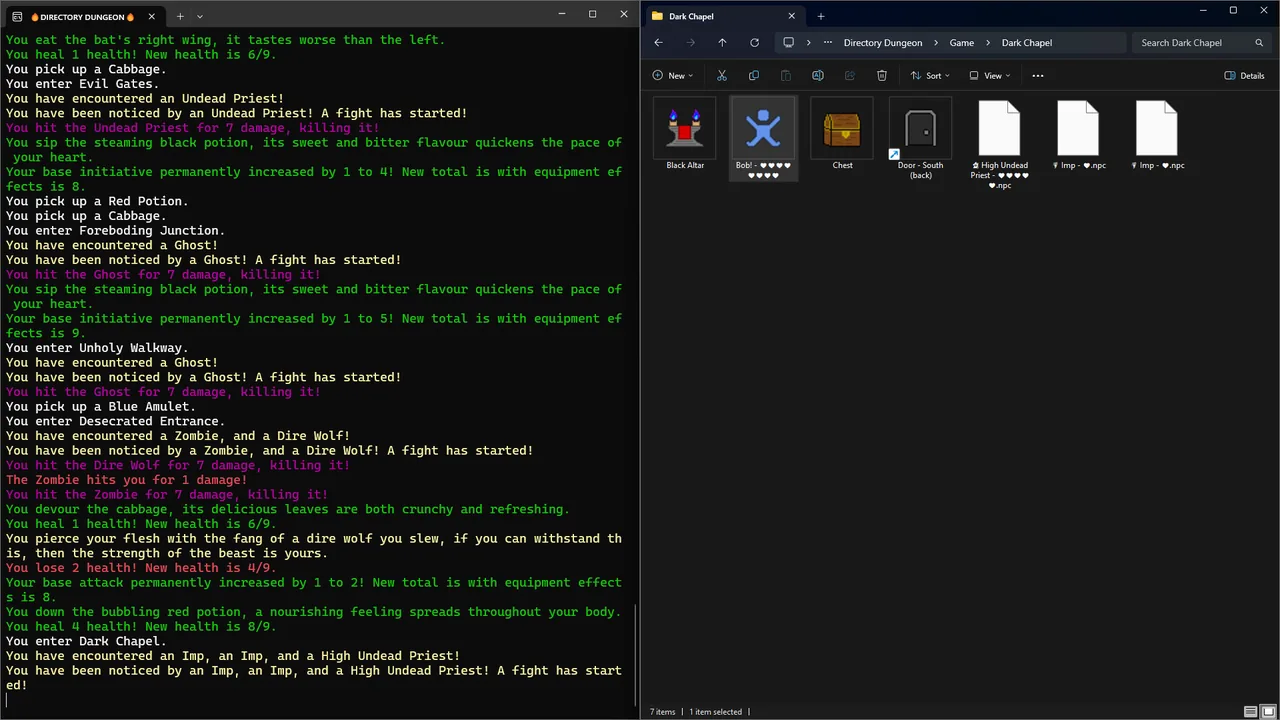
The core conceit is exactly what the store page promises: drag your player folder into a new room folder to move there, drop a weapon or armour file into your equipment folder to wear it, and open a text file to read what's written on a wall or sign. A separate console window sits alongside the Explorer pane acting as narrator and dungeon master, describing what happens in text as you play — part command-line RPG, part physical puzzle box made of your own file system. One Spanish-language review captures the appeal succinctly: your character is "a real folder on your computer, and you progress through the adventure by dragging it and dropping it" into the story. Combat itself is auto-resolved rather than something the player actively directs — you engage an enemy and the console narrates the outcome, occasionally punctuated by absurd flavour like achievements for eating suspicious numbers of cabbages.
A gimmick, but a very well-executed one
Because combat resolves itself, the entire experience really does live or die on the file-explorer conceit holding a player's attention, and the corpus is honest about that trade-off even while recommending the game. A Steam curator review quoted directly in the review feed scores it 5/10 and says plainly: "this is definitely a gimmick, and it's also pretty much the entire substance of what makes this game worth trying. As an RPG..." — the sentence trails into a lower rating than the public review score would suggest, and it's a fair counterweight to the enthusiasm elsewhere. Other reviewers reach similar conclusions more warmly: "a proof of concept than the idea taken to its fullest potential," "I would love to see something more involved in this format," "the idea could be developed further." The near-universal request across the corpus isn't for the concept to change — it's for more of it.
Short, funny, and safe
Playtime reports cluster consistently: a 30-to-50-minute successful run for players who know what they're doing, one to three hours for a full completionist pass including all achievements, and Steam's own achievement data backs that up — the game-complete achievement sits at roughly 20% of the tracked population, in line with a short roguelite rather than a broken or abandoned one. The tone throughout is deliberately silly (a Tower-of-Druaga-esque medieval aesthetic crossed with a command prompt, and one reviewer got themselves killed early "wearing a very trendy bucket on my head"), and the developer directly addresses the obvious safety question on the store page: Directory Dungeon "only ever touches files which it has created, never looks at files outside of its install directory," and states plainly that no generative AI was used in making it — a reassurance worth having for a game whose whole pitch is manipulating your actual file system. On the practical side, drag-and-drop movement is reportedly a little sluggish (several reviews suggest using cut-and-paste shortcuts instead), and at least one review notes there's currently no way to save mid-run.
Final verdict
Directory Dungeon is a small, cheap, genuinely inventive idea that gets far more mileage out of its one central joke than it has any right to, and the people who've played it agree almost unanimously. It won't satisfy anyone looking for real tactical depth — the combat resolves itself, and a fair curator review is right that the file-explorer gimmick carries most of the weight — but as a one-sitting curiosity that costs less than a coffee and tells you plainly it won't mess with your files, it's an easy, low-risk recommendation for anyone who still wants to be surprised by what a video game can be.
Pros and cons
Pros
- A genuinely one-of-a-kind concept — literally play a dungeon crawler by dragging folders around Windows Explorer
- A clean 100% positive Steam reception across reviews written in at least six different languages
- The developer states plainly the game never touches files outside its own install folder, and used no generative AI
- A charming, funny tone throughout, from self-harming cabbages to console-window narration
- Extremely cheap at NZ$1.79 for a complete, self-contained experience
Cons
- Combat is fully auto-resolved, and one curator review calls the file-explorer gimmick "pretty much the entire substance" on offer as an RPG
- Most completed runs land between 30 minutes and a couple of hours, a one-sitting novelty rather than a game to return to
- Drag-and-drop movement is reportedly a little sluggish, with several reviewers recommending cut-and-paste shortcuts instead
- At least one review reports there's no way to save mid-run, so an interruption may mean starting over
- English only, despite reviews arriving in at least six other languages
Screenshots
-
Directory Dungeon - File Explorer Dungeon CrawlerImage: JuhrJuhr via Steam -
Directory Dungeon - File Explorer Dungeon CrawlerImage: JuhrJuhr via Steam -
Directory Dungeon - File Explorer Dungeon CrawlerImage: JuhrJuhr via Steam -
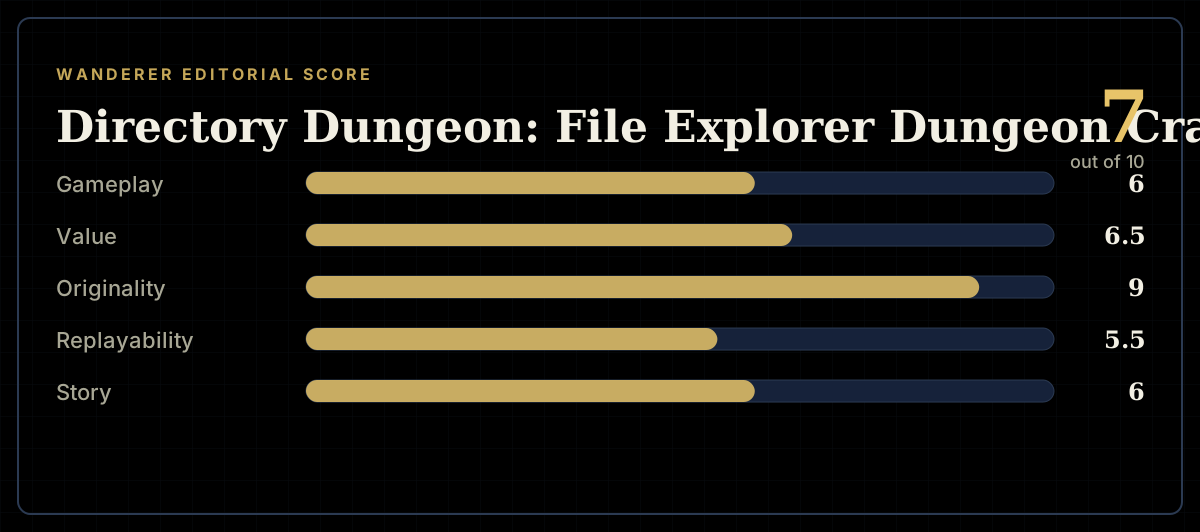
How the review scores each part of the gameWanderer Editorial -
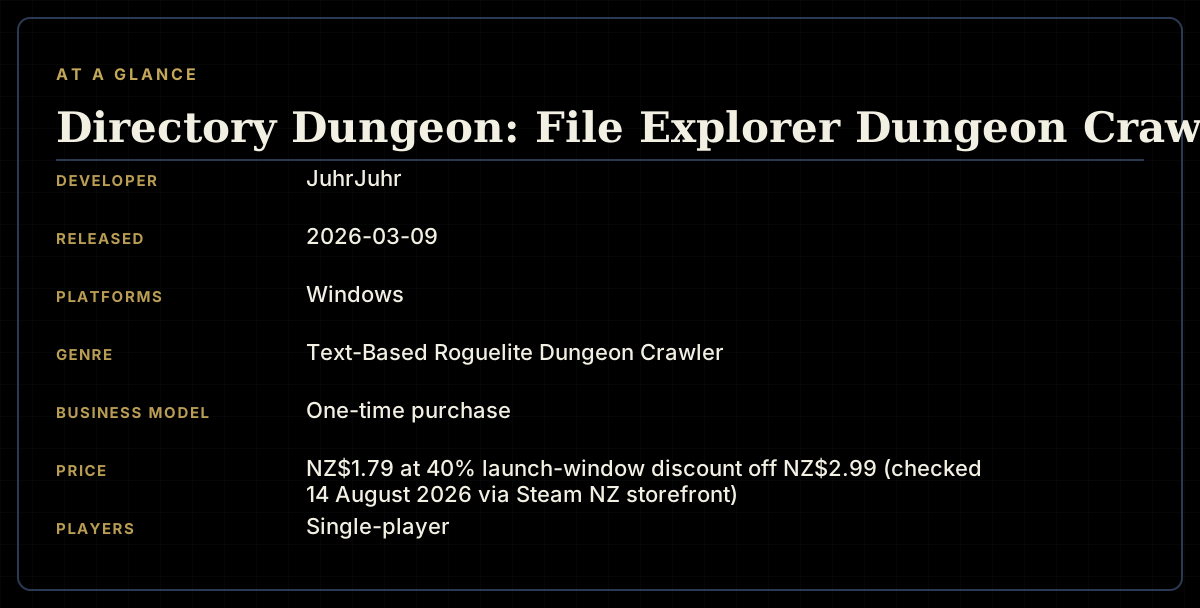
The essentials at a glanceWanderer Editorial -
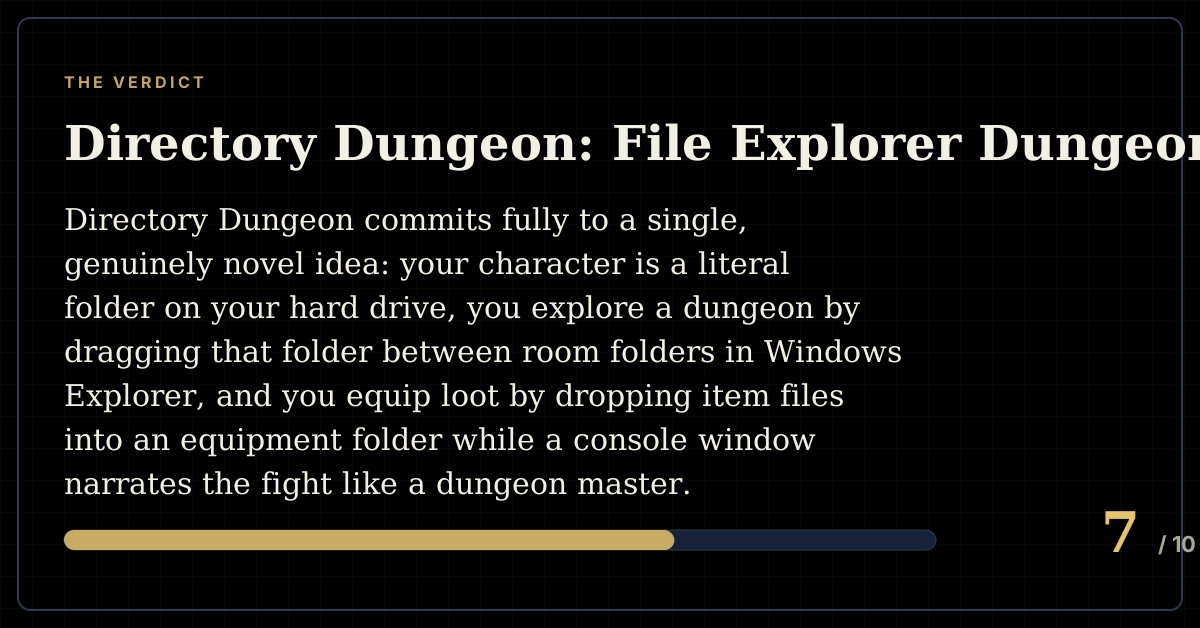
The short versionWanderer Editorial