
Game review
DigDigDrill
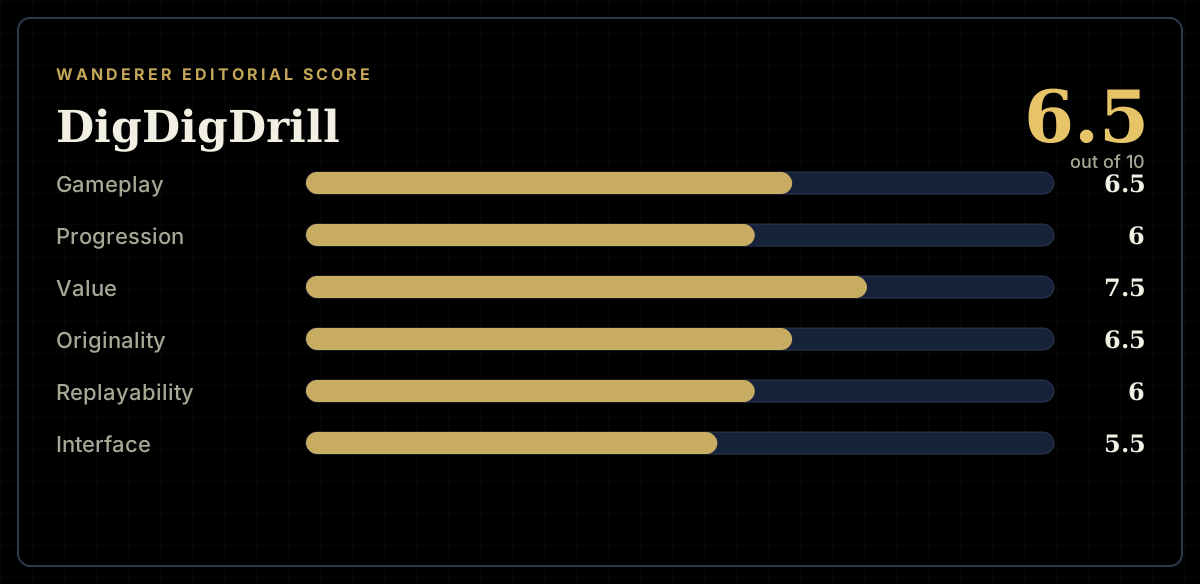
6.5 / 10
- Developer
- Toorai
- Publisher
- Toorai
- Released
- 9 December 2024
- Platforms
- Windows
- Genre
- Mining roguelite
- Monetisation
- One-time purchase, no in-game store or additional currency purchases
- Players
- Single-player only
The short version
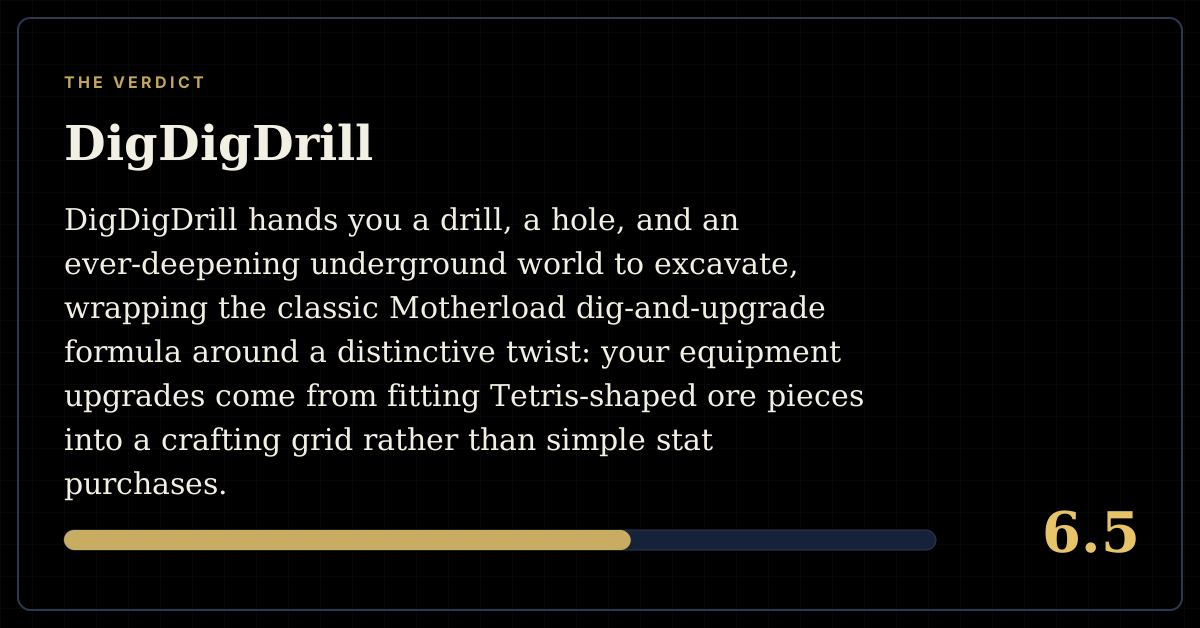
DigDigDrill hands you a drill, a hole, and an ever-deepening underground world to excavate, wrapping the classic Motherload dig-and-upgrade formula around a distinctive twist: your equipment upgrades come from fitting Tetris-shaped ore pieces into a crafting grid rather than simple stat purchases. This review's sample shows real, sustained devotion to that loop, with multiple reviewers logging hundreds and even thousands of hours and drawing direct, favorable comparisons to genre classics. What tempers that enthusiasm is a specific, cross-cutting complaint about the randomness built into that same crafting system — reviewers with enormous time investment in the game still describe the drill-reforging RNG as frustrating enough to sour an otherwise addictive experience.
Biggest strengths
- The core dig-and-upgrade loop earns wide, enthusiastic praise as genuinely addictive, with multiple reviewers directly comparing it favorably to Motherload and other beloved genre classics
- The Tetris-shaped ore crafting system is credited as a genuinely original, satisfying twist on typical mining-game progression, adding real strategic depth to what upgrades you can build
- The metaprogression and endgame build variety draw specific praise from experienced players, who describe it as deeper and more complex than the game's simple, casual presentation initially suggests
Biggest weaknesses
- A specific, cross-cutting complaint concerns the heavy randomness in drill crafting and reforging, with even extremely dedicated players — including one reviewer with nearly 500 hours logged — describing repeated failed attempts to get desired equipment stats as a source of real frustration rather than satisfying grinding
- Multiple reviewers report the game crashing, including at least one describing crashes severe enough to make extended play sessions impossible on their system
- Two specific technical gaps are documented independently: missing V-Sync support making extended sessions uncomfortable for some players, and no controller support at launch despite the game's structure seeming well-suited to one
Who it's for: Fans of Motherload-style dig-and-upgrade games and other addictive incremental mining loops who enjoy a Tetris-inspired crafting twist, with a real tolerance for randomness-driven grinding in pursuit of optimal gear.
Our recommendation: A genuinely addictive, well-supported mining game that easily justifies its very low price for fans of the genre — just go in aware that its drill-crafting system leans heavily on randomness, which even devoted players report as a real source of frustration in the deeper endgame.
6.5 / 10
DigDigDrill's pitch is simple: dig down, collect ore, craft a better drill, dig deeper. It's a formula genre fans will recognize instantly from Motherload and its many spiritual successors, but this solo-developed take adds a distinctive wrinkle — your drill upgrades come from fitting oddly-shaped ore pieces into a crafting grid, Tetris-style, rather than simply spending currency on stat boosts. This review's sample shows the resulting loop is genuinely, sometimes alarmingly addictive, and just as clearly identifies where that addiction starts to curdle into frustration.
An addictive loop that earns real comparisons
The core dig-and-upgrade cycle draws consistent, enthusiastic praise. "A drilling game so addicting it should be illegal. DigDigDrill is one of those simple games that turns out to be incredibly addicting to play. It is one of those games where I say I will have a play session of an hour or two and move on to something else only to find" hours have passed, one reviewer with over 5,000 minutes logged writes. Another, a self-described "huge Motherload fan," offers a more measured but no less positive assessment: "I have played lots of 'dig and upgrade' games over the years and this one is really solid. Big fan of the mechanics and gameplay loop. It's simple to get into, its fun to collect, progression feels well designed, and the game is priced very fairly." A third reviewer came in expecting little and found considerably more: "I came in expecting a fun little three-hour timewaster, but what I got was a game that's both literally and mechanically much deeper than it looks. Drill customization is top notch and the Tetris-styled crafting mechanic is very fun and satisfying to get the hang of."
Where devotion turns into frustration
What makes this review's negative sample worth taking especially seriously is how much time its authors had already invested before turning critical. One reviewer, with a genuinely staggering 29,756 minutes logged — nearly 500 hours — writes: "Spent 1 week of my life trying farm up money & hammers to get the drill i wanted because i spent another whole week typing & figuring out what drill i wanted to make, only to find out 2 weeks & 1 day of trying again again agian again x113 times was a waste of my life." Another reviewer with over 8,000 minutes logged, otherwise positive about the core loop, singles out the same underlying issue: "1. V-Synch missing, its pretty hard to look at it for more than five minutes... 2. No Controller-Support for a game that is predestined for it." A third reviewer distills the crafting complaint precisely: "There's so much randomness and so little control, it's a mining game not a casino or gacha game." This isn't a case of impatient players bouncing off early — it's committed fans hitting a specific, identifiable wall deep into the experience.
Real, concrete technical gaps
Beyond the RNG complaints, a handful of specific technical issues recur. "To be fair the game is fun. but i literally cannot play the game for more than 10 minutes as it crashes my computer," one reviewer writes. Another reports a related stability concern: "The game crashes frequently," pairing it with a broader complaint about unclear early-game guidance. A separate reviewer flags a specific missing convenience feature: "No sell all button. Definitely needs better tutorial," a fair usability gap distinct from the deeper systemic complaints about crafting randomness.
A developer who responds directly to feedback
This review can confirm the developer took the community's most specific complaints seriously rather than letting them sit unaddressed. The game's partner-events feed includes a post titled directly "The Problem with the Charm Puzzle System and My Plan to Fix It," a remarkably transparent acknowledgment of exactly the kind of crafting-frustration complaint reviewers raise. Separately, "Full Controller support coming!" appears in the feed as its own dedicated announcement, directly answering the specific gap one heavily-invested reviewer flagged. That level of direct, itemized responsiveness to documented player feedback is genuinely uncommon, even among actively supported small indie titles.
What the achievement data confirms about the endgame grind
Steam's own completion figures line up closely with the reviewer-described pattern of an accessible start giving way to a genuinely demanding endgame. Early milestones sit at a near-universal 97-99%, confirming the core loop is easy to pick up and enjoy. But the hardest completion-tier achievements fall to just 2.2% and 5.9%, a steep enough drop to corroborate widespread reviewer reports that fully mastering the crafting system and reaching top-tier builds requires substantial time and no small amount of luck.
A demo that carries real weight for prospective buyers
Several reviewers specifically credit the game's public demo as a genuinely useful, honest preview rather than a stripped-down teaser. "Playing the demo is how I determined that I wanted to buy the game. I paid [a few dollars] and got 20+ hours of game play. After 20 hours, I experienced all aspects of the game. However, there is plenty more to do," one reviewer writes, describing the demo as an accurate representation of what the full purchase actually delivers. That's a meaningful signal for anyone weighing whether the core loop will click for them — the demo isn't a bait-and-switch preview of a different, more polished experience, but a genuine sample of the same mechanics reviewers describe throughout this review, RNG and all. One reviewer did flag a specific frustration with the transition from demo to full release, noting their demo progress didn't carry over into the purchased version, a fair quality-of-life complaint worth passing along directly.
Weighing the endgame honestly
At least one detailed reviewer offers a genuinely balanced accounting of where the game's pacing works and where it doesn't: "A very enjoyable digging game with a satisfying progression curve for about 20 hours of gameplay, but it's held back by a ludicrously grindy post-game. It should take about 10 hours to dig down to 999, at which point if you choose to reset the world you'll probably have a build" strong enough to make the reset meaningful, but the reviewer goes on to describe the subsequent grind toward full completion as considerably less well-paced than the initial descent. That's a useful, specific way to frame expectations: the first twenty-or-so hours are consistently described as excellent value regardless of overall recommendation, with the harshest criticism reserved specifically for post-completion, achievement-chasing content rather than the core experience most buyers will actually encounter.
Final verdict
DigDigDrill delivers a genuinely addictive, well-priced take on the Motherload formula with a distinctive and largely successful crafting twist, backed by a solo developer who has demonstrated real, itemized responsiveness to player feedback since launch. Its RNG-heavy drill-reforging system is a real, documented source of frustration even for its most devoted fans, so buyers chasing specific optimal builds should brace for genuine grinding — but at its very low price, the addictive core loop makes it an easy recommendation regardless.
Pros and cons
Pros
- The core dig-and-upgrade loop earns wide, enthusiastic praise as genuinely addictive, with multiple reviewers directly comparing it favorably to Motherload and other beloved genre classics
- The Tetris-shaped ore crafting system is credited as a genuinely original, satisfying twist on typical mining-game progression, adding real strategic depth to what upgrades you can build
- The metaprogression and endgame build variety draw specific praise from experienced players, who describe it as deeper and more complex than the game's simple, casual presentation initially suggests
- Steam's own partner-events feed documents exceptional, sustained solo-developer support, including a dedicated post directly addressing community feedback about the crafting system's problems and a full controller-support update added specifically in response to player requests
- The very low price is repeatedly cited as excellent value even by critical reviewers, several noting they got dozens of hours of engagement for a few dollars regardless of their other complaints
Cons
- A specific, cross-cutting complaint concerns the heavy randomness in drill crafting and reforging, with even extremely dedicated players — including one reviewer with nearly 500 hours logged — describing repeated failed attempts to get desired equipment stats as a source of real frustration rather than satisfying grinding
- Multiple reviewers report the game crashing, including at least one describing crashes severe enough to make extended play sessions impossible on their system
- Two specific technical gaps are documented independently: missing V-Sync support making extended sessions uncomfortable for some players, and no controller support at launch despite the game's structure seeming well-suited to one
- Several reviewers describe the tutorial and early-game guidance as confusing, with at least one noting the absence of a "sell all" convenience feature and general uncertainty about core systems
- Achievement data shows an unusually steep falloff toward full completion, with the hardest achievements sitting at 2.2 to 5.9 percent, corroborating reviewer reports of a genuinely grindy, RNG-heavy post-game that demands significant dedication to fully complete
Screenshots
-

DigDigDrillImage: Toorai via Steam -

DigDigDrillImage: Toorai via Steam -

DigDigDrillImage: Toorai via Steam -
How the review scores each part of the gameWanderer Editorial -
The short versionWanderer Editorial