
Game review
DICEOMANCER
7 / 10
- Developer
- Ultra Piggy Studio
- Publisher
- Gamirror Games
- Released
- 10 October 2024
- Platforms
- Windows
- Genre
- Roguelite deckbuilding card battler
- Monetisation
- One-time purchase, no in-game store or additional currency purchases
- Players
- Single-player only
The short version
DICEOMANCER takes the Slay the Spire template — a card-based roguelite with escalating floors, relics, and class-specific builds — and adds a genuinely inventive central hook: a special die that can overwrite nearly any number visible on screen, from enemy health to your own mana to a relic's charge count. Reviewers describe that mechanic as both the game's biggest strength and its most persistent flaw, sometimes within the same review. Nearly 500 hand-drawn cards, a striking 8-frames-per-second animation style, and a real sense of humour earn the game consistent, enthusiastic praise, and its Overwhelmingly Positive rating reflects genuine affection rather than hype alone. But a remarkably large and specific share of the same review sample argues the "One Die" mechanic breaks the challenge it's meant to complicate, letting skilled or lucky players trivialize fights the rest of the deck was clearly built to make tense — a tension the developer has acknowledged with balance patches but, as of this review, has not resolved to universal satisfaction.
Biggest strengths
- The "One Die" mechanic, allowing players to overwrite nearly any on-screen number with a dice roll, is repeatedly praised as a genuinely fresh and creative twist that fundamentally changes how deckbuilding strategy plays out compared to genre peers
- Hand-drawn art and animation earn near-universal, specific praise, with reviewers highlighting nearly 500 individually illustrated cards and a distinctive 8-frames-per-second animation style as a genuine visual achievement for an indie release
- A built-in colourblind mode with adjustable colour sliders draws specific praise from at least one reviewer as an unusually thoughtful accessibility feature for a genre that leans heavily on colour-coded systems
Biggest weaknesses
- The single most repeated complaint concerns the "One Die" mechanic itself, with numerous reviewers independently describing it as powerful enough to trivialize entire runs once understood, undermining the tension the rest of the game's systems are built to create
- Several reviewers describe upgrade and card-pool expansion as poorly considered, arguing that unlocking more card options dilutes the pool rather than meaningfully deepening strategy, echoing a specific critique also seen elsewhere in this lane's roguelite deckbuilders
- A specific mechanic converting multi-coloured cards via a random coin flip draws pointed criticism, with at least one reviewer calling it "infuriating" for making certain classes significantly harder to play consistently than others
Who it's for: Slay the Spire fans looking for a genuinely inventive, gorgeously presented variation on the formula who don't mind a game that leans into chaos and "breaking the rules" rather than tightly calibrated difficulty. Less suited to players who want the genre's usual precise balance and escalating, evenly-tuned challenge.
Our recommendation: A strong buy for deckbuilder fans specifically drawn to its central gimmick and hand-drawn presentation. Go in expecting a game that's more about creative rule-breaking than tight strategic balance, and don't be surprised if some runs feel trivially easy once you understand the die's full potential.
7 / 10
DICEOMANCER's opening pitch borrows its skeleton unashamedly from Slay the Spire — climb a procedurally structured ladder of encounters, build a deck, collect relics, escalate your power against increasingly dangerous bosses — and then hands you something no genre peer quite offers: a special die that lets you simply overwrite almost any number the game shows you. Enemy health too high? Roll it down. Your mana pool too small for the turn you want to play? Roll it up. One reviewer frames the appeal precisely: "the game is sorta tough compared to most of the rest of roguelike deckbuilders... [but] one of the main mechanics is cheating, and you have to use that REALLY wisely." That's an unusually honest description of exactly what makes this game both beloved and, for a real share of its own fans, structurally uneven.
A genuinely inventive hook, gorgeously presented
The dice-modification mechanic earns the kind of specific, enthusiastic praise that separates a real design achievement from a marketing gimmick. "Diceomancer is to Slay the Spire as David Bowie is to the Beatles: it takes an incredible established style and pays homage to it while simultaneously elevating and expanding upon it," one reviewer writes, having logged over 5,000 minutes after 1,000-plus hours in the genre's most famous entry. The presentation backs that ambition up directly — nearly 500 individually hand-drawn cards, rendered in a deliberately old-school 8-frames-per-second animation style that reviewers repeatedly single out as a genuine visual achievement rather than a budget constraint dressed up as an aesthetic choice.
The mechanic that both makes and unmakes the challenge
Set against that praise, an unusually large and specific share of the negative sample identifies the exact same mechanic as the game's core problem. "The 'one dice' is far too powerful and negates any challenge," one reviewer with nearly 4,900 minutes logged writes, adding: "not using it makes the challenge extremely unfair. So you're forced to abuse a broken mechanic to survive." Another reviewer, having tracked over 10,000 minutes and fully completed the game, offers perhaps the fairest framing available: "Is this the most balanced, long lasting card game roguelike? Nah. Does it 110% understand the assignment and go nuts with it, while being joyfully silly? Oh yes!" That's a genuinely useful distinction — DICEOMANCER isn't failing at being a tightly tuned strategy game so much as choosing not to be one, and whether that reads as a flaw or the entire point depends heavily on what a given player wants from the genre.
A familiar complaint about upgrades diluting strategy
A second, more specific criticism echoes a pattern this lane has seen in other roguelite deckbuilders: reviewers argue that unlocking additional card options as you progress dilutes the deck pool rather than meaningfully deepening it. "The addition of new cards options as you upgrade for new strategies only dilutes the card pool, making it more difficult to build a deck around any particular strategy," one reviewer writes, a genuinely specific structural critique rather than a vague complaint about difficulty. A related, narrower gripe concerns a coin-flip mechanic converting multi-coloured cards, which at least one reviewer singles out as "infuriating" for making certain classes noticeably harder to play consistently due to bad luck rather than a skill gap.
Interface friction on top of genuine depth
Beyond balance, several reviewers flag the user interface as a real barrier to entry, describing cards with multiple stacked effects and keywords that make the game considerably slower to parse than its most obvious genre comparison. "Far too much text and jargon to pick it up quickly," one reviewer writes, specifically wishing the developer had leaned more on icon-based shorthand the way Slay the Spire does. Steam Deck players face a sharper version of the same problem, with at least one reviewer reporting text too small to read comfortably and no in-game option to adjust it.
A responsive developer, with mixed results on the core complaint
To its credit, this isn't a studio that shipped and disappeared. The partner-events feed documents a dense hotfix cluster in the days immediately following the 10 October 2024 launch, addressing a crash issue within a week, followed by continued balance-focused patches through April 2025 and a Japanese localisation added the same month. At least one reviewer notes directly, though, that "the last minor update was back in April," expressing concern the developer's attention had moved elsewhere by the time of their review — a fair observation given how central the balance complaints in this review remain to the overall experience, even as the broader patch history shows real, sustained effort earlier in the game's life.
What the achievement data suggests about difficulty, despite the "broken" complaints
It's worth weighing the balance complaints above against Steam's own completion data, since the two paint a more complicated picture together than either does alone. If the "One Die" mechanic genuinely trivialised the game as thoroughly as its harshest critics suggest, a wide gap between early and late achievements would be surprising — trivial games tend to get fully completed by a large share of buyers. Instead, the hardest ascension-tier clears sit below 1%, a steep drop consistent with a game that remains genuinely difficult to fully master even for players who understand its core exploit. The likeliest reconciliation is that the die can trivialise individual fights or even entire early runs for players who deliberately optimise around it, while the game's hardest late-game content still demands real skill and system knowledge beyond simply rolling favourably — meaning both "this mechanic breaks the game" and "this game is still genuinely hard at the top end" are accurate descriptions of different parts of the same experience.
Final verdict
DICEOMANCER is a genuinely inventive, beautifully presented deckbuilder that succeeds specifically by refusing to play the genre's balance game the way Slay the Spire and its many imitators do — and that refusal is exactly what a meaningfully sized share of its own most dedicated fans wish it hadn't made. The hand-drawn art, the sheer size of its card pool, and the sincere creative confidence of its central "break the rules" hook earn it a strong recommendation regardless. Just go in understanding what kind of chaos you're signing up for, and don't expect the tight, escalating tension of its most obvious inspiration.
Pros and cons
Pros
- The "One Die" mechanic, allowing players to overwrite nearly any on-screen number with a dice roll, is repeatedly praised as a genuinely fresh and creative twist that fundamentally changes how deckbuilding strategy plays out compared to genre peers
- Hand-drawn art and animation earn near-universal, specific praise, with reviewers highlighting nearly 500 individually illustrated cards and a distinctive 8-frames-per-second animation style as a genuine visual achievement for an indie release
- A built-in colourblind mode with adjustable colour sliders draws specific praise from at least one reviewer as an unusually thoughtful accessibility feature for a genre that leans heavily on colour-coded systems
- The developer maintained a dense day-one and week-one hotfix cadence, followed by continued balance patches, a Japanese localisation, and cross-promotional bundles running well into 2026
- Steam achievement data confirms real difficulty at the highest tiers, with the hardest ascension-clear achievements sitting below 1%, indicating the game retains genuine long-term challenge for its most dedicated players despite the balance complaints below
Cons
- The single most repeated complaint concerns the "One Die" mechanic itself, with numerous reviewers independently describing it as powerful enough to trivialize entire runs once understood, undermining the tension the rest of the game's systems are built to create
- Several reviewers describe upgrade and card-pool expansion as poorly considered, arguing that unlocking more card options dilutes the pool rather than meaningfully deepening strategy, echoing a specific critique also seen elsewhere in this lane's roguelite deckbuilders
- A specific mechanic converting multi-coloured cards via a random coin flip draws pointed criticism, with at least one reviewer calling it "infuriating" for making certain classes significantly harder to play consistently than others
- The user interface is criticised by multiple reviewers as text-heavy and difficult to parse quickly, with cards carrying several stacked effects and keywords that make the game slower to learn than its most obvious genre comparison
- Steam Deck playability draws specific criticism, with at least one reviewer reporting very small, non-adjustable text and clunky controls making the handheld experience meaningfully worse than on desktop
Screenshots
-

DICEOMANCERImage: Gamirror Games via Steam -

DICEOMANCERImage: Gamirror Games via Steam -

DICEOMANCERImage: Gamirror Games via Steam -
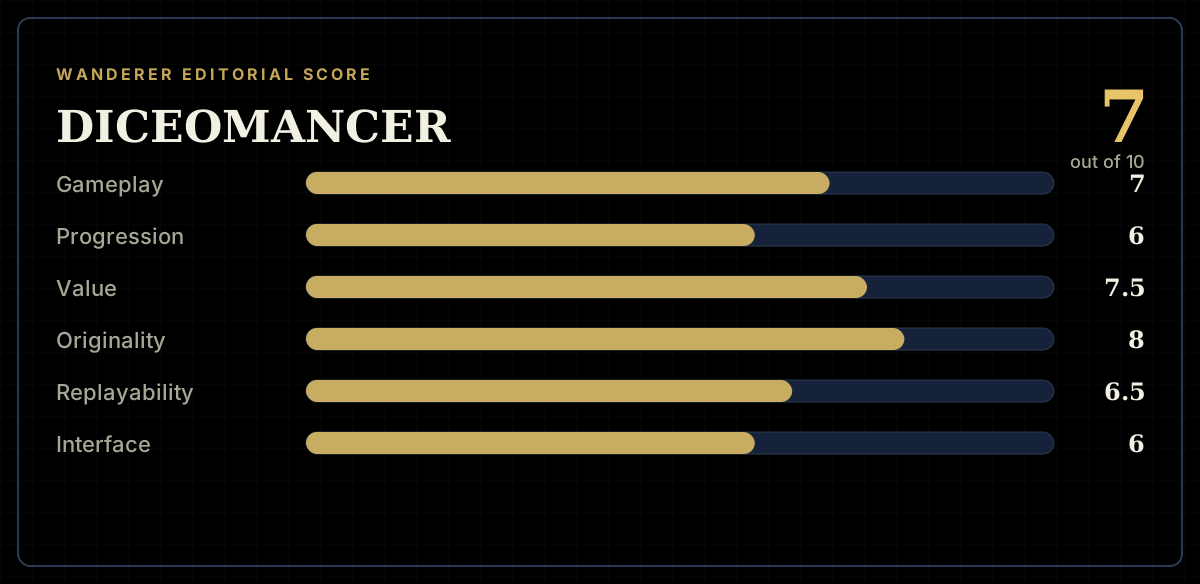
How the review scores each part of the gameWanderer Editorial -
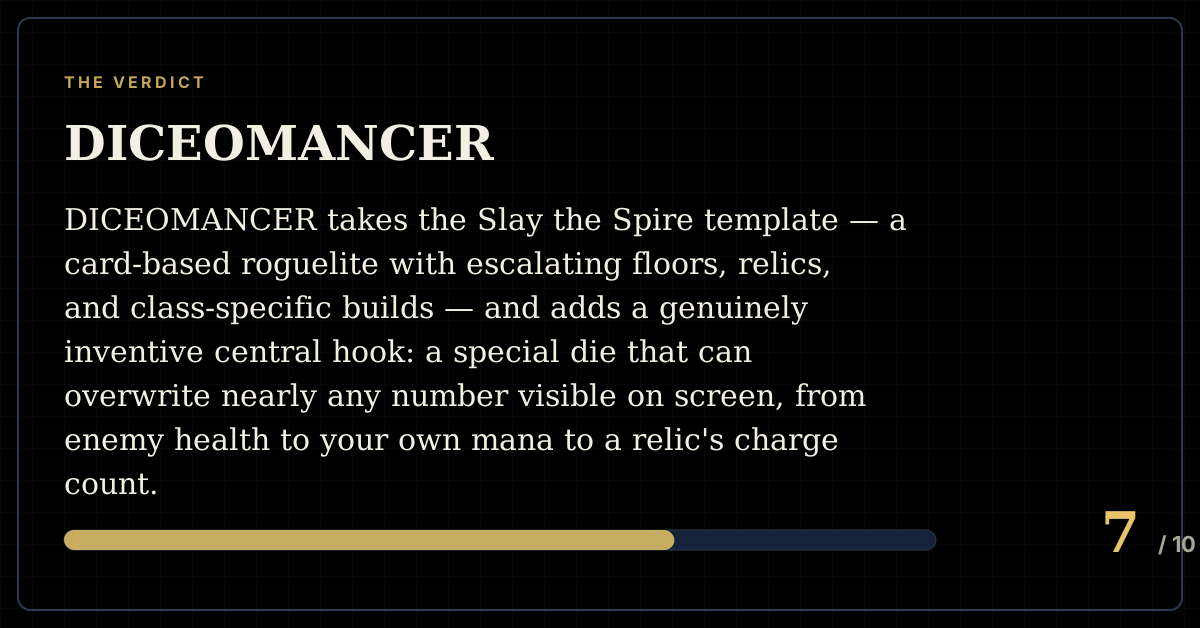
The short versionWanderer Editorial