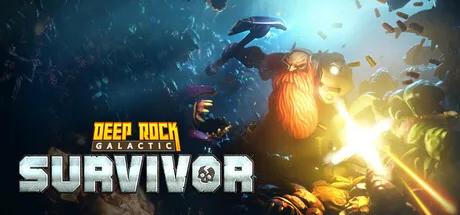
Game review
Deep Rock Galactic: Survivor
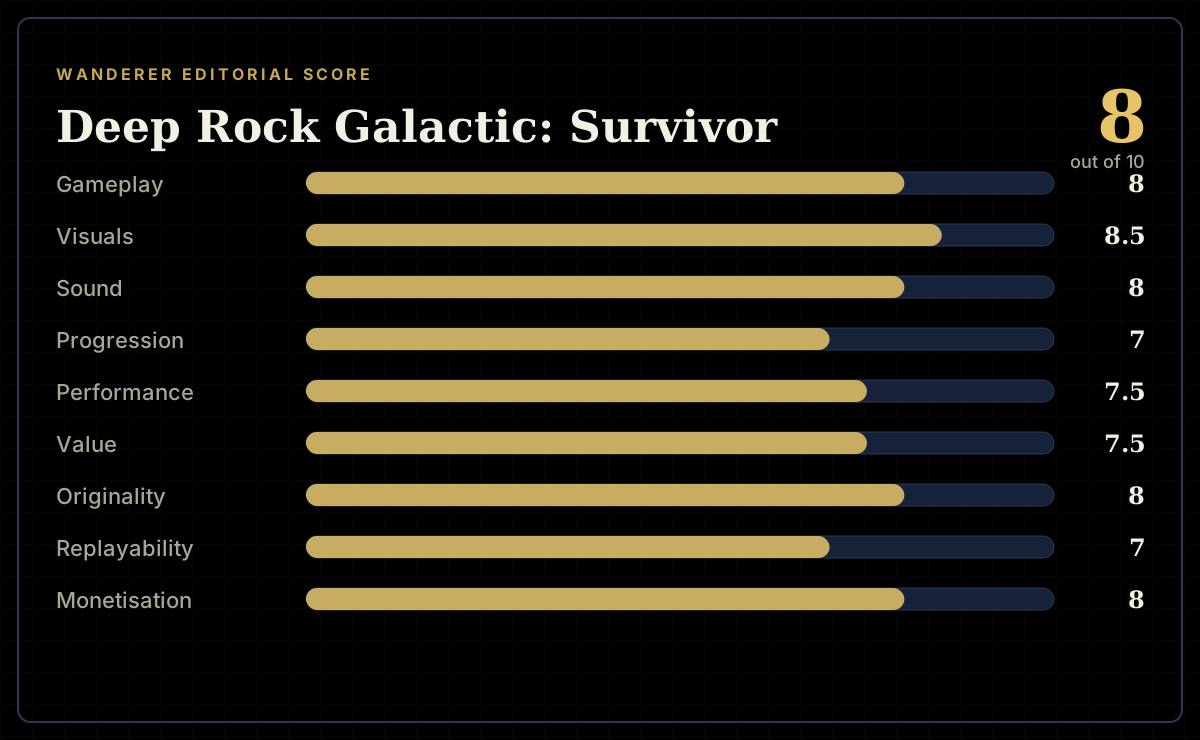
8 / 10
- Developer
- Funday Games
- Publisher
- Ghost Ship Publishing
- Released
- 14 February 2024
- Platforms
- Windows, Xbox Series X/S, iOS, Android
- Genre
- Survivor-like Auto-shooter
- Monetisation
- Premium one-off purchase on PC and Xbox, with two cosmetic-only DLC packs and one paid content expansion; a separate free-to-play mobile release on iOS and Android arrived later under a different, unconfirmed monetisation model
- Players
- Single-player only, no co-op in any form
The short version
Deep Rock Galactic: Survivor takes the Vampire Survivors template and welds a genuine mining loop onto it — you don't just dodge and level up, you decide in real time whether to detour into a wall of nitra and gold while a horde closes the gap behind you. That tension is real, and it's the single best reason this stands apart from the wave of "-vania" imitators it otherwise resembles closely.
It comes with a real cost, though. Reaching the good weapon overclocks and class mods runs through a wide, slow meta-progression grind, and a meaningful slice of the 14% of Steam reviews that don't recommend it converge on the same complaint: once you've unlocked the interesting stuff, a lot of what's left is flat percentage upgrades standing in for actual decisions. And for a game wearing a four-player co-op franchise's name and dwarves, running the whole thing solo is a choice the game never quite explains away.
Biggest strengths
- Digging for ore and objectives creates a real risk calculation that Vampire Survivors-style games usually lack entirely
- Five classes with three role variants each produce starting kits that genuinely change how a run opens
- The three-tier weapon overclock system turns levelling a gun into its own small decision tree
Biggest weaknesses
- Meta-progression frequently gates the fun options behind hours of grinding rather than in-run skill or luck
- Level-up choices lean heavily on incremental percentage buffs once the obvious weapon picks are made
- A vocal share of negative reviews report runs starting to feel interchangeable after the first dozen hours
Who it's for: Vampire Survivors veterans who want a slower, chunkier take with an actual reason to stop moving, and Deep Rock Galactic fans curious what the franchise looks like without a squad. Less suited to players who want every session to feel meaningfully different by hour twenty.
Our recommendation: Worth the asking price on PC or Xbox if the mining hook appeals — it's a genuinely different spin on a crowded genre. Skip the Supporter and After Hours packs unless you specifically want the cosmetics; put that money toward the Heavy Duty Expansion instead, since it's the only add-on that changes what you actually do in a run.
8 / 10
Every survivor-like since 2022 has asked the same basic question at level-up time: which of these four cards makes the horde die faster? Deep Rock Galactic: Survivor asks a second question nobody else in the genre really bothers with — do you actually need to walk over there? Somewhere off to the side of the horde is a wall studded with nitra, or a gold vein, or the objective the mission actually wants completed, and getting to it means peeling away from the safest patch of open ground you've found. That single addition, mining bolted onto an auto-shooter, is the entire reason this review exists instead of being one more paragraph in a roundup of Vampire Survivors clones.
Two loops fighting for your attention
The combat half of Deep Rock Galactic: Survivor is exactly what the genre trained you to expect: your dwarf auto-fires at the nearest target, you dodge rather than aim, and the screen fills with increasingly absurd numbers of bugs as a timer counts up. What's different is that the map isn't just a featureless arena to kite around in — it's a destructible cave, and a meaningful share of what you're there to collect is embedded in walls that take a second or two of standing still (or slow-walking while you fire) to break open. Objectives frequently sit behind rock rather than in open ground, and the currency you need for meta-progression comes disproportionately from digging rather than killing.
That creates an actual decision every few seconds instead of a single decision every level-up. Do you commit to a three-second dig with a swarm rounding the corner behind you, or do you leave the nitra and keep circling? Early game, when your dwarf can't take a hit, that calculation carries real weight — over-committing to a dig is a common, avoidable way to die. It's a smarter twist on the formula than it sounds, because it takes the genre's single point of tension (positioning) and gives it a second, competing incentive (loot) that actively argues against playing perfectly safe. Most of this genre's imitators only ever ask you to survive; this one also asks you to want something enough to risk it.
Where the risk stops mattering
The honest caveat, and it's the one that shows up constantly in the negative reviews, is that this tension is front-loaded. Once a run's build clicks into place — health and armor climbing, a levelled-up drill or flamethrower doing the actual killing — the danger from lingering near a wall drops fast, and digging stops being a gamble and starts being a chore you do because the mission timer wants it. That's a familiar shape for anyone who's played Vampire Survivors or Halls of Torment long enough to watch a build "solve" itself, but it's a sharper drop here specifically because the mining decision was the game's best idea — losing its teeth costs more than a generic bullet-heaven losing its difficulty curve would.
Classes, roles, and the overclock rabbit hole
Deep Rock Galactic: Survivor launched with the franchise's four classes — Driller, Engineer, Scout and Gunner — each split into three role variants that change starting weapons and passive bonuses enough that "playing Gunner" and "playing Heavy Gunner" feel like different opening ten minutes, not a reskin. Each class draws from a pool of ten class-specific weapons, and levelling any weapon during a run can unlock one of three tiers of overclock: a balanced option at two milestones and a riskier "Unstable" overclock that can radically change how the weapon behaves. Layered on top of the drafting-and-evolution formula this genre runs on, that's a genuinely deep system — figuring out which overclock turns a mediocre starting weapon into a build-defining one is the same kind of long-tail discovery that keeps Vampire Survivors players chasing new evolution recipes years after launch.
The Heavy Duty Expansion, released April 2026 at NZ$15.75, adds a fifth class worth calling out specifically: the Demolisher, who trades the other classes' mobility for a weaponised vehicle called the Rockdozer and an arsenal of eleven new weapons that other classes can also draw from through the game's cross-class tag system. That's the right way to expand a game like this — a genuinely different playstyle rather than another dozen weapons that all fill the same slot as something you already own.
Missions, biomes, and hazard as the actual difficulty lever
Runs are organised across five biomes, each offering five selectable hazard levels, and that combination is doing most of the long-term difficulty work once the base campaign stops being a threat. A player who's cleared everything on the default hazard has a legitimate reason to go back and try the same biome at a meaningfully harder setting, which is a more honest way to extend playtime than simply adding more of the same enemies at the same difficulty. The Heavy Duty Expansion adds a new frozen biome, Glacial Strata, with its own hazards (icicle traps, slick ice that trades control for speed), and a new mission type, Egg Hunt, that escalates into a multi-phase boss fight once you push your luck past the basic quota — exactly the kind of mission variety a game built entirely around repeatable dives needs more of, not less.
The grind that earns 14% of Steam a "not recommended"
Reading through a wide sample of the negative reviews, one complaint dominates every other one combined: progress depends more on how many hours you've sunk into unlocking permanent account upgrades than on how well you're actually playing a given dive. Several reviewers describe the level-up screen itself as the problem once the obvious weapon and overclock picks are made — what's left is a run of small, flat percentage buffs to damage, reload speed, or movement speed, rather than build-altering choices. One recurring, more specific version of the same complaint: the game was reportedly more chaotic and prone to "godlike" lucky runs during Early Access, and that later balance passes smoothed out exactly the kind of run-defining variance that makes a survivor-like worth replaying. A smaller number of reports flag technical issues, including at least one detailed account of a corrupted save after a power outage — a serious complaint for a full 1.0 release, even if it doesn't appear to be a widespread pattern. There's also a specific and reasonable ask that keeps surfacing: no Steam Workshop support, unusual in a genre where player-made content often extends a game's shelf life well past what the studio ships alone.
None of that erases what's genuinely good here, but it's worth taking seriously rather than waving off as the usual "grindy" complaint every incremental-adjacent game attracts. The specific shape of the complaint — meta-progression outweighing skill, upgrades feeling same-y at scale — is exactly the failure mode you'd predict from a game that layered a second resource loop (mining) onto a genre already built around numbers going up, and it's the fair price of that ambition.
Presentation and the single-player question
Visually and sonically, this carries Deep Rock Galactic's identity better than a spin-off has any right to — the mining sound design, the dwarven bravado, the "Rock and Stone" callbacks are all present in a completely different camera angle and genre, and it doesn't read as a cheap reskin the way a lot of licensed survivor-likes do. Performance is generally solid for what it asks of a machine, screen-filling swarms notwithstanding.
What it doesn't carry over is the thing Deep Rock Galactic is arguably best known for: four dwarves in a cave together. Survivor is single-player only, with no local or online co-op in any form, and that's a genuinely strange choice for a spin-off wearing a co-op franchise's name and cast. It's not a flaw in the way a bug is a flaw — the genre this game is built on is overwhelmingly single-player by convention, and adding co-op to an auto-shooter with this much screen clutter would be a real design challenge. But it does mean Deep Rock Galactic's most famous selling point, the squad, is completely absent here, and reviews that go in expecting some version of that are the ones most likely to walk away disappointed regardless of how good the mining hook is on its own terms.
DLC and what your money buys
The DLC picture is honest and easy to summarise. The Supporter Pack (NZ$7.39, launched alongside Early Access in February 2024) and the After Hours Pack (NZ$7.39, launched alongside the 1.0 release in September 2025) are both explicitly cosmetic — golden class skins and a menu badge in the first case, four character-specific costume skins in the second — and neither claims to be anything more. The Heavy Duty Expansion (NZ$15.75, April 2026) is the only one that changes what you actually do in a run, and it's priced and scoped like a real expansion rather than a reskin pack. Buying everything gameplay-relevant on top of the NZ$20.25 base price comes to roughly NZ$36, which sits above the genre's usual few-dollars-a-DLC norm, but the Heavy Duty content justifies its price on its own rather than needing the cosmetics bundled in to feel worthwhile.
Verdict
Eight out of ten. The mining loop is a legitimately smart addition to a genre that's mostly been running the same four-cards-at-level-up formula since 2022, and for the first several hours of any given hazard tier, it creates a kind of moment-to-moment tension this genre rarely bothers with. Class variety, the overclock system, and hazard-scaled biomes give it real structural depth beyond that one idea, and the Heavy Duty Expansion shows the studio is still adding systems rather than just weapons.
What keeps it from sitting higher is exactly what a sizeable minority of its own players are saying plainly: the meta-progression that gates the interesting builds is a slow, grindy climb, the level-up screen leans on dull incremental buffs once the good picks are gone, and running the entire experience solo is a real absence for a franchise defined by its squad. Buy it for the mining hook if that sounds like the missing piece in your survivor-like rotation — just don't expect the tension of the first ten hours to hold at exactly the same pitch through the fiftieth. Players who came to Wanderer for numbers that keep climbing through steady, structured progression rather than pure reflexes will recognise the appeal here immediately, even without a squad standing next to them.
Price and DLC details checked 30 July 2026.
Pros and cons
Pros
- Digging for ore and objectives creates a real risk calculation that Vampire Survivors-style games usually lack entirely
- Five classes with three role variants each produce starting kits that genuinely change how a run opens
- The three-tier weapon overclock system turns levelling a gun into its own small decision tree
- Hazard levels layered onto five biomes give experienced players a difficulty knob that scales past the base campaign
- Visual and audio identity lifts directly from the parent game, so it reads as Deep Rock Galactic rather than a reskin
- The Heavy Duty Expansion adds a genuinely new class built around a drivable vehicle, not just palette-swapped weapons
Cons
- Meta-progression frequently gates the fun options behind hours of grinding rather than in-run skill or luck
- Level-up choices lean heavily on incremental percentage buffs once the obvious weapon picks are made
- A vocal share of negative reviews report runs starting to feel interchangeable after the first dozen hours
- No multiplayer in any form, which is a strange omission for a spin-off of a game built entirely around a four-dwarf squad
- No Steam Workshop support, unusual for a genre that leans heavily on player-made content elsewhere
- Isolated but serious bug reports include save corruption after an unexpected shutdown
Screenshots
-
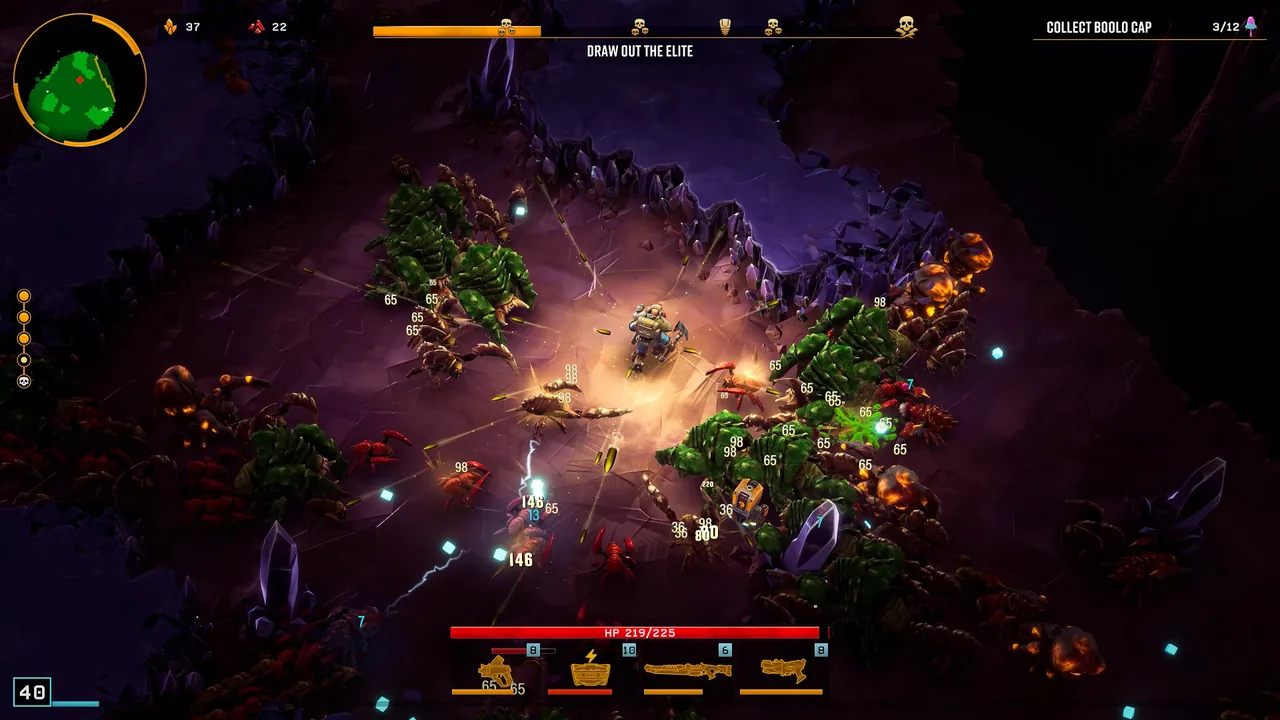
Deep Rock Galactic: SurvivorImage: Ghost Ship Publishing via Steam -
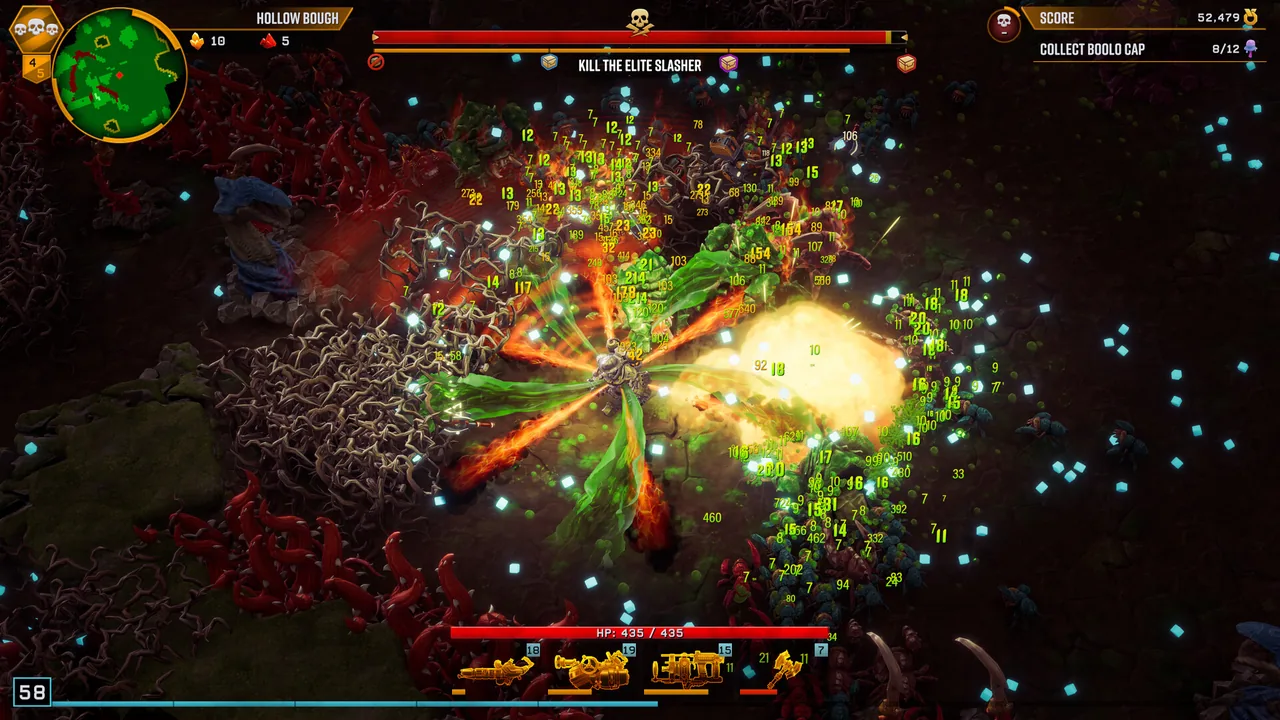
Deep Rock Galactic: SurvivorImage: Ghost Ship Publishing via Steam -
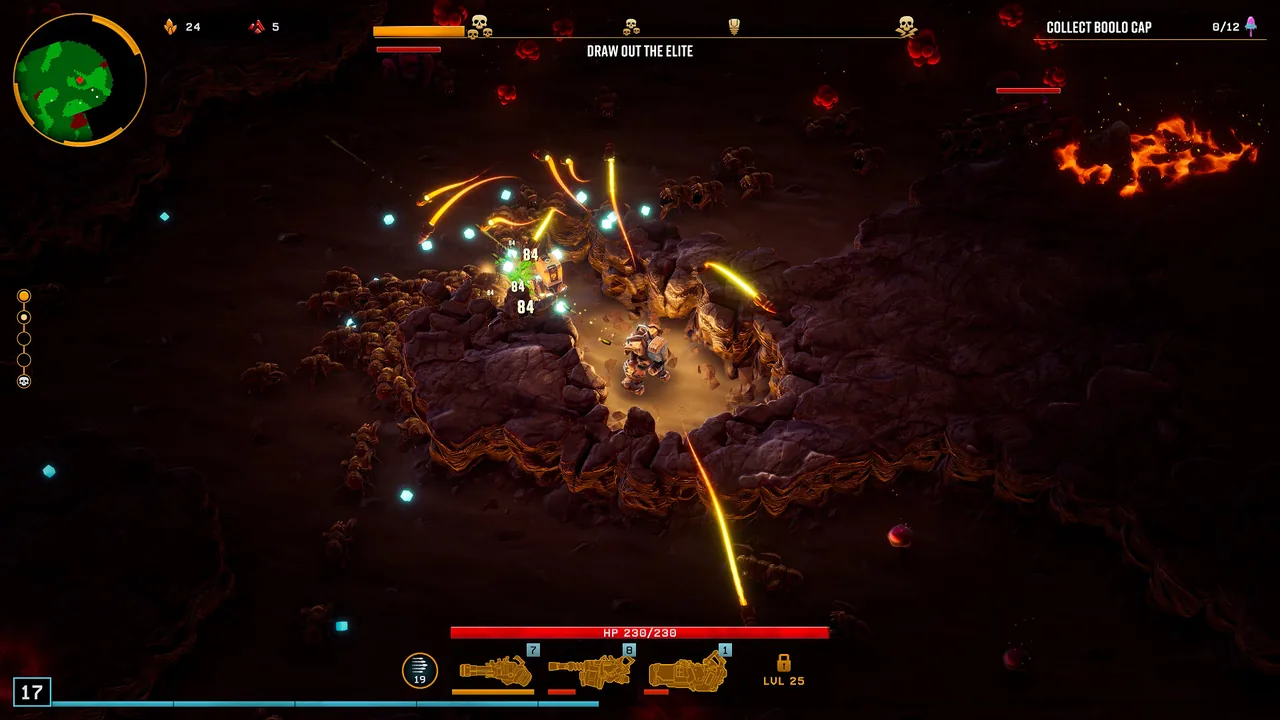
Deep Rock Galactic: SurvivorImage: Ghost Ship Publishing via Steam -
How the review scores each part of the gameWanderer Editorial -
The short versionWanderer Editorial