
Game review
Colony 37
6 / 10
- Developer
- Valen
- Publisher
- Valen
- Released
- 23 September 2025
- Platforms
- Windows
- Genre
- Mining, Survival, RPG
- Monetisation
- One-time purchase, no DLC or in-game currency
- Players
- Single-player
The short version
Colony 37 sends you 600-plus metres down into an abandoned colony's procedurally generated depths, digging block by block through ten distinct biomes, managing oxygen and radiation, and spending earned credits on more than 40 mining instruments and 200-plus trinkets while a dialogue-driven story slowly explains why the colony was abandoned in the first place. A meaningful share of its 223-review audience arrived via word of mouth from YouTube and Twitch coverage — SplatterCatGaming and a streamer known as Tomato are both named repeatedly and independently — rather than storefront discovery, and the reception that followed is genuinely warm: reviewers specifically credit the darker storytelling and RPG-flavoured progression for standing out from more casual digging games on the market. Just as consistently, reviewers are honest that this is an Early Access build with real rough edges — floaty movement, harsh fall damage, visual pop-in, and at least one report of a design change that removed a traversal tool players had come to depend on.
Biggest strengths
- The darker, dialogue-driven storytelling and RPG-style progression draw specific, repeated praise for differentiating Colony 37 from more purely mechanical digging games in the genre, with reviewers describing it as feeling more like an RPG than a typical "digging" game
- A meaningful share of the review corpus arrived through independent YouTube and Twitch coverage rather than paid marketing, a genuine word-of-mouth discovery pattern that speaks to real organic interest in the concept
- The scale of content on offer for the price draws specific praise — 40-plus instruments and 200-plus trinkets give real build variety, and one reviewer specifically frames the value proposition as comparable to getting a full, satisfying indie experience for the price of a coffee
Biggest weaknesses
- Movement is described as notably floaty, compounding a fall-damage system multiple reviewers call outrageous — one reports as little as half a metre being the difference between no damage and losing half of total health, an unusually punishing threshold for platforming this imprecise
- Visual pop-in and a specific room-regeneration bug are reported, with one reviewer noting that re-entering a previously-visited underground room can show a completely different layout than what was there before
- One long-term player with over 1,000 minutes logged reports a specific, disruptive design change: the developer removed a wall-climbing item the reviewer relied on for traversal, which they say makes the game's remaining jump-based platforming considerably worse without it
Who it's for: Fans of block-digging games (think a grimmer, RPG-inflected take on the Motherload/SteamWorld Dig lineage) who are comfortable buying into an Early Access build with acknowledged rough edges at a very low price. Less of a fit for anyone who wants a polished, finished experience right now, or who dislikes constant resource-management pressure from oxygen and radiation.
Our recommendation: A reasonable, low-risk purchase at NZ$4.49 for digging-genre fans specifically drawn to its darker, more story-driven approach — just go in with realistic Early Access expectations, since even its fondest reviewers describe the current build as unmistakably raw.
6 / 10
Found by word of mouth, not the store page
Colony 37 sends players deep underground into a procedurally generated, 600-plus-metre abandoned colony, block-mining through ten distinct biomes while a dialogue-driven story slowly reveals why the place was abandoned in the first place. What's notable about its review corpus is less the game itself at first glance than how players found it: SplatterCatGaming and a Twitch streamer known as Tomato are both named, independently and repeatedly, as the reason multiple reviewers picked the game up at all. That's a genuine organic-discovery pattern rather than the more common storefront-algorithm story, and it's worth noting on its own terms — a 223-review Early Access mining game finding its audience through creator coverage rather than paid placement is a real signal that the concept has independent appeal.
An RPG wearing a digging game's clothes
The specific quality reviewers credit for that appeal is tone and structure rather than raw mining mechanics alone. Multiple reviewers describe Colony 37 as feeling "more like an RPG than the other digging games on the market," pointing to its darker storytelling, dialogue system and perk-driven character progression as the differentiator from more purely mechanical genre peers. Content scope backs that framing up: more than 40 mining instruments ranging from basic pickaxes to flamethrowers and dynamite, plus over 200 trinkets offering build-shaping bonuses, give players real room to specialise rather than following one predetermined mining loadout. One reviewer frames the value proposition bluntly, comparing the amount of content on offer at a few dollars to getting a full-featured indie experience for the price of a coffee.
Real, specific Early Access roughness
Just as consistently, reviewers are honest that the current build shows its Early Access status. Movement is described as notably floaty, and that imprecision compounds a fall-damage system multiple reviewers call excessive — one specifically measures the threshold between no damage and losing half your health at roughly half a metre of fall distance, a punishing margin for a control scheme players already describe as hard to precisely judge. Visual pop-in is reported alongside a more specific bug: one reviewer describes re-entering a previously-explored underground room to find its layout has changed entirely, undermining the sense of a persistent, learnable space that exploration games usually rely on.
Two more serious reports deserve individual attention rather than being folded into general "early access is rough" caveats. A long-term player with over 1,000 minutes logged reports the developer removed a wall-climbing item they had come to rely on for traversal, arguing the remaining jump-based platforming is considerably worse without it — a live, disruptive design change rather than a launch-day bug. Separately, another reviewer reports losing all progress following an update, a serious data-loss complaint that the available review sample doesn't confirm as widespread, but which is concrete and severe enough to flag plainly rather than omit.
Managing the descent
Colony 37 layers real resource-management pressure on top of its digging loop. Oxygen depletes continuously and radiation exposure is described by reviewers as effectively unavoidable for most of a play session, meaning nearly every trip underground runs against a ticking clock rather than allowing unhurried exploration. Each of the ten biomes carries its own resource pool and its own underground chests to loot, and the deeper you go, the more valuable — and more dangerous — what you find becomes. Even destroyed blocks that don't make it back to base still grant experience toward character upgrades, a design choice that softens the sting of a failed or cut-short expedition somewhat, since a run that ends in retreat or death still contributes to long-term progression rather than being a complete waste.
One reviewer specifically frames the resulting loop in an unexpected comparison: at its low price, they describe the steady drip-feed of progression and content as reminiscent of Vampire Survivors' value proposition — a small, focused idea executed with enough depth and pacing discipline to justify a purchase many times over relative to its cost. That comparison is more about perceived value than genre similarity, but it captures something real about how reviewers who "got" the game's pacing describe their experience: steady, incremental, and satisfying once you stop expecting fast answers from a game built around patient, methodical descent.
Not every reviewer reaches that understanding easily, though. One specifically criticises the game for doing "an absolute piss-poor job explaining anything," describing the available Steam guides as similarly unhelpful — a real onboarding gap for a game whose systems, once understood, several reviewers otherwise praise for depth and pacing.
The verdict
Colony 37 has found real, organic affection from a modest but engaged audience specifically for doing something different with the block-mining formula — leaning into darker storytelling and RPG-style progression rather than pure mechanical digging. That affection comes paired with an unusually candid acknowledgment, even from its own fans, that the current build is still visibly rough: floaty movement, harsh fall damage, and at least one serious progress-loss report worth weighing before committing real time. At NZ$4.49, that's a low-risk bet for genre fans willing to treat this as an Early Access work in progress rather than a finished product — watch for how the game develops toward 1.0 before expecting the rough edges to be resolved, and consider checking one of the streamer playthroughs that first put the game on other players' radar before deciding whether its particular blend of digging and story is for you.
Pros and cons
Pros
- The darker, dialogue-driven storytelling and RPG-style progression draw specific, repeated praise for differentiating Colony 37 from more purely mechanical digging games in the genre, with reviewers describing it as feeling more like an RPG than a typical "digging" game
- A meaningful share of the review corpus arrived through independent YouTube and Twitch coverage rather than paid marketing, a genuine word-of-mouth discovery pattern that speaks to real organic interest in the concept
- The scale of content on offer for the price draws specific praise — 40-plus instruments and 200-plus trinkets give real build variety, and one reviewer specifically frames the value proposition as comparable to getting a full, satisfying indie experience for the price of a coffee
- Reviewers who understood the block-based, Minecraft-style digging mechanics upfront report a genuinely steady, satisfying progression curve once they adjusted their expectations and planning around the biome-based resource system
- The developer is actively working on the game during Early Access, and reviewers who call the current build rough consistently frame that as a reason to watch for 1.0 rather than a reason to avoid the game altogether
Cons
- Movement is described as notably floaty, compounding a fall-damage system multiple reviewers call outrageous — one reports as little as half a metre being the difference between no damage and losing half of total health, an unusually punishing threshold for platforming this imprecise
- Visual pop-in and a specific room-regeneration bug are reported, with one reviewer noting that re-entering a previously-visited underground room can show a completely different layout than what was there before
- One long-term player with over 1,000 minutes logged reports a specific, disruptive design change: the developer removed a wall-climbing item the reviewer relied on for traversal, which they say makes the game's remaining jump-based platforming considerably worse without it
- A separate reviewer reports losing all of their progress after an update, a serious data-loss report worth flagging clearly even though the review sample doesn't establish how widespread the issue is
- Oxygen depletion and unavoidable radiation exposure create near-constant time pressure according to multiple reviewers, with one specifically saying they'd have preferred more room to explore without a ticking survival clock attached to nearly every moment underground
Screenshots
-

Colony 37Image: Valen via Steam -

Colony 37Image: Valen via Steam -

Colony 37Image: Valen via Steam -
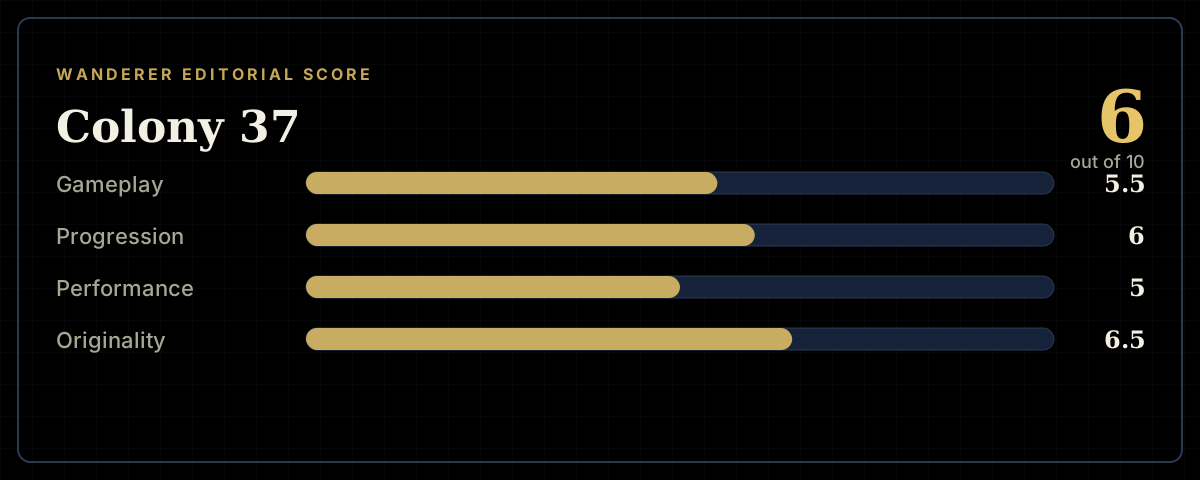
How the review scores each part of the gameWanderer Editorial -
The short versionWanderer Editorial