Game review
ClickRaid
5 / 10
- Developer
- Slikey Games
- Publisher
- Slikey Games
- Released
- 20 October 2017
- Platforms
- Windows
- Genre
- Multiplayer incremental clicker
- Monetisation
- One-off purchase, plus an optional paid "Supporter DLC" whose main documented benefit is extending the interval between mandatory anti-bot CAPTCHA prompts from 15 to 30 minutes — a real-money purchase that reduces friction built into the base game rather than adding new content
- Players
- Online party-based co-op and competitive raiding is the game's core structural hook, built around class synergy between party members; not designed for solo play
The short version
ClickRaid's core idea deserves more credit than the genre usually gets: a Clicker Heroes-style incremental built around parties, classes and shared raid bosses is a genuinely underexplored direction, and the sheer breadth of the endgame — dozens of parallel class-leveling milestones, a seasonal prestige structure, a patch history running to well over 500 numbered updates through late 2019 — proves the developer kept building on it for years. What keeps this from recommending easily is everything surrounding that idea: an interface reviewers describe with unusual, specific consistency as cluttered and counterintuitive, an onboarding process that drops new players into servers already dominated by veteran players with no in-game explanation, and a periodic CAPTCHA interruption whose paid "fix" is a real-money purchase rather than a design change — a detail that reads uncomfortably close to a friction-based monetisation mechanic in an otherwise one-off-purchase game. A detailed, heavily-upvoted review from a player with roughly 3,500 hours logged also describes a later developer handoff and a controversial monthly progress-reset proposal; this review's own check of the game's official patch history doesn't extend far enough to independently confirm that specific claim, so it's reported here as serious, credible reviewer testimony rather than established fact.
Biggest strengths
- A genuinely distinctive structural idea for the incremental genre — real party-based multiplayer with classes that meaningfully affect teammates, not just a leaderboard bolted onto a solo clicker
- An enormous amount of tracked long-term progression across dozens of parallel class-leveling achievement chains, evidence of real sustained content built over years rather than a thin launch left to rot
- A patch history running past 500 numbered updates from launch through late 2019 shows genuinely sustained, active development for a small indie incremental
Biggest weaknesses
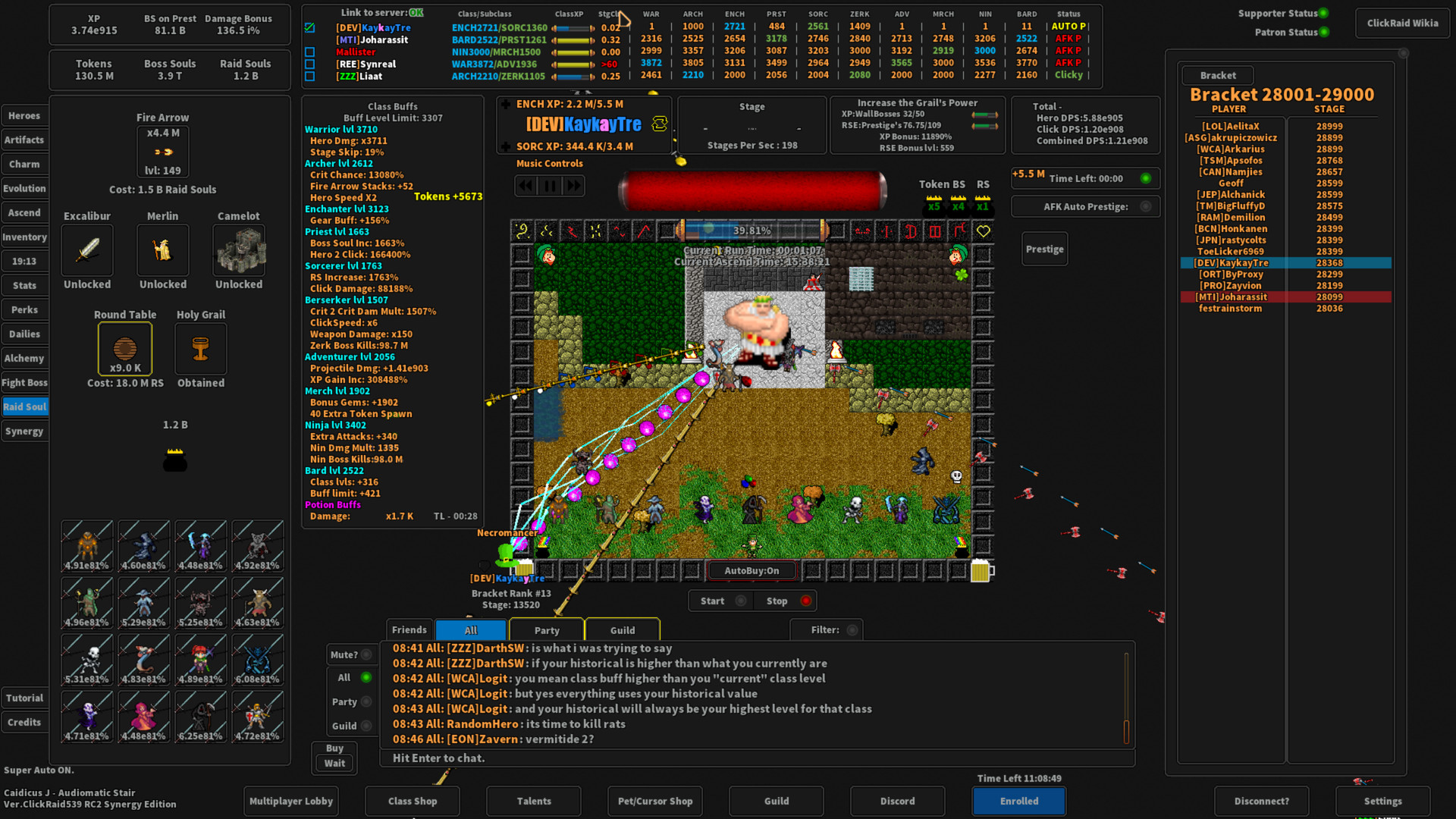
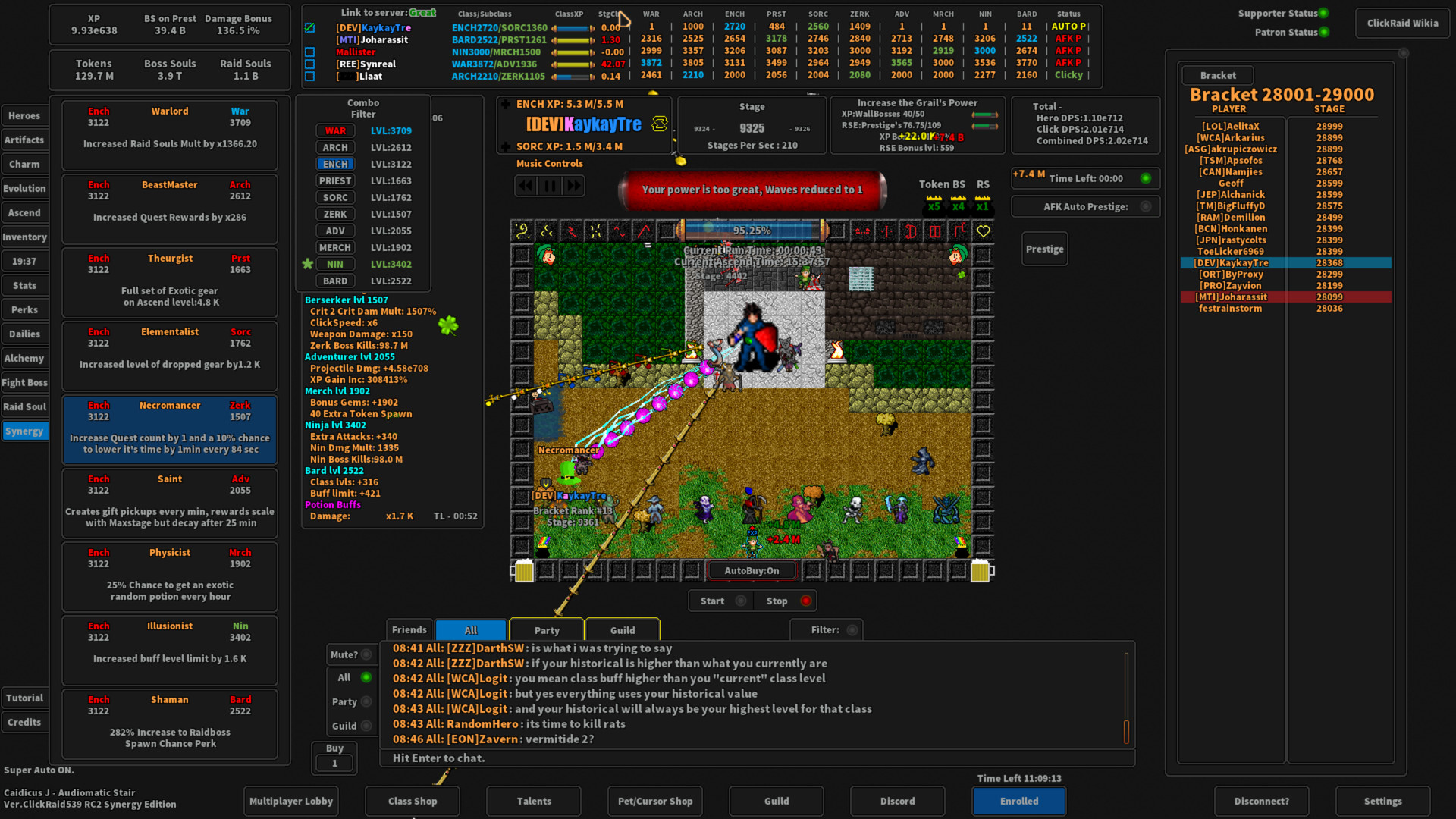
- The interface is criticized with unusual consistency and specificity across the review sample — "cluttered," "counterintuitive," "atrocious" — to the point that multiple detailed reviewers say it actively prevents understanding how the game works, not just that it looks dated
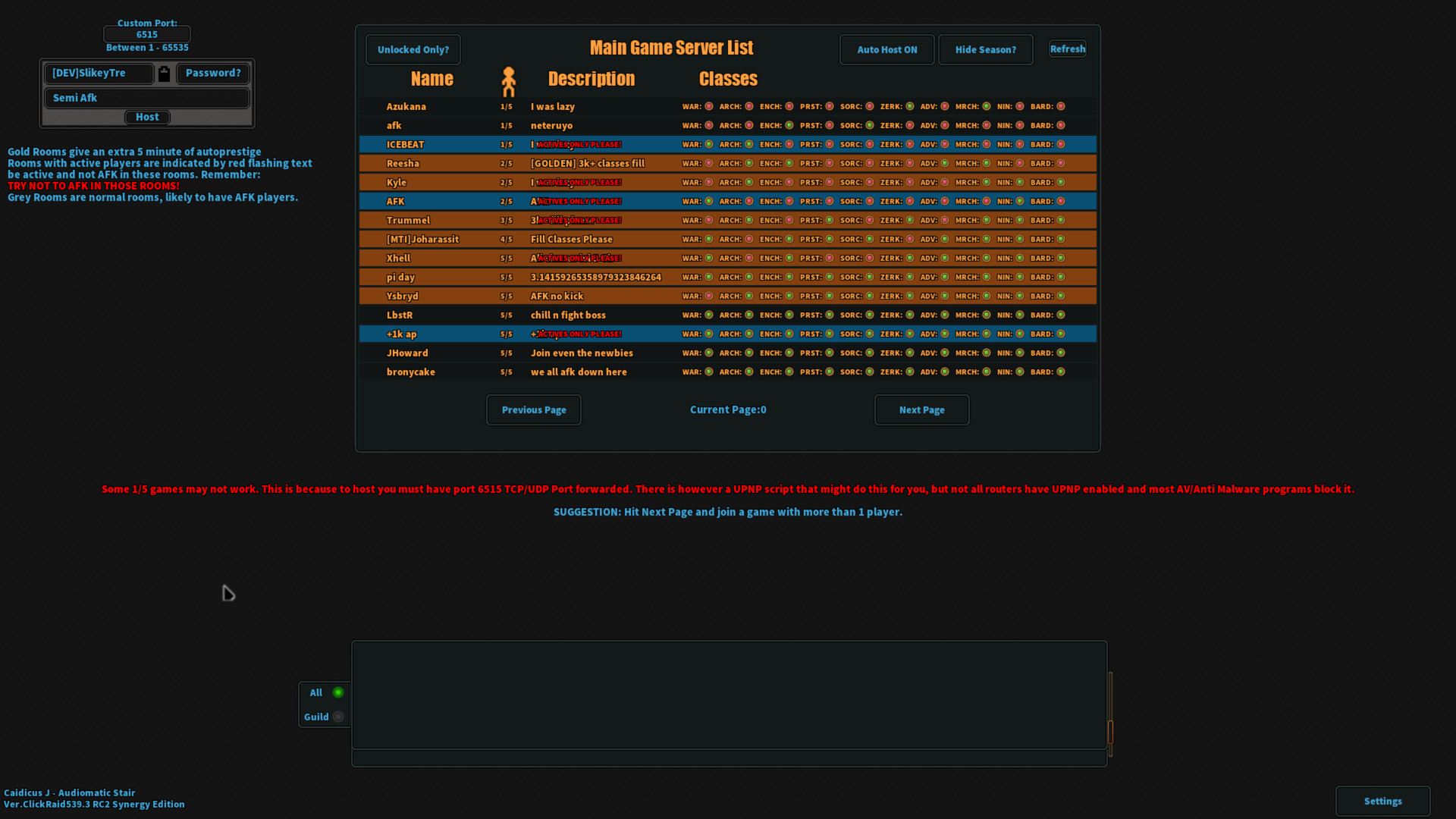
- New players are dropped into servers already populated by high-level veterans with little to no in-game explanation of core systems, leaving the community itself to do the onboarding the game doesn't
- A mandatory anti-bot CAPTCHA interrupts play periodically, and the game's own "Supporter DLC" exists specifically to make that interruption less frequent for a real-money purchase — a friction-reduction paywall that several reviewers single out as a serious complaint despite the base game otherwise avoiding pay-to-win mechanics
Who it's for: Incremental-genre fans specifically looking for a multiplayer, class-based take on the Clicker Heroes formula who are willing to push through a genuinely rough interface and a slow, under-explained start. Less suited to anyone who wants a polished onboarding experience or who will be put off by a paid option that exists to reduce a built-in interruption.
Our recommendation: Worth trying at its low price specifically for the multiplayer class-synergy hook, which is rare enough in this genre to justify some interface frustration — go in expecting to lean on the community for basic instructions the game itself doesn't provide.
5 / 10
Most incremental games are solitary by design — you watch your own numbers climb, on your own schedule, answerable to nobody. ClickRaid's founding idea is to break that assumption entirely: pick a class, join a party, and take on raid bosses that scale to and reward the group rather than the individual. It's a genuinely underexplored direction for a genre built almost entirely around solo compulsion loops, released in October 2017 and supported with an enormous patch cadence for the following two-plus years. The review sample treats that idea with real respect. What it doesn't treat kindly is almost everything wrapped around it.
A genuinely different multiplayer hook
The game's own description frames it plainly: "The game isn't meant for solo play." Classes chosen at the start have effects that ripple out to the rest of a player's party rather than existing in isolation, and progress is measured across five separate currencies (XP, Boss Souls, Raid Souls, Tokens, and Gems) each tied to a different source of engagement — killing regular enemies, defeating bosses, clearing raid-tier bosses, collecting floating tokens, and downing the toughest "Wall Bosses" that gate overall progress. Global achievement data shows this structure genuinely gets used: nine separate class-specific leveling tracks each have their own 1,000/2,000/3,000-plus milestone chains, all sitting in a similar low-teens-to-single-digits percentage range at the highest tiers, evidence of real players committing real hours across multiple classes rather than picking one and ignoring the rest. One reviewer's own pros list captures the sample's general verdict on the concept fairly: "fantastic developers... welcoming community... addictive gameplay," set directly against "poor instructions" and a UI multiple other reviewers call unusable.
An interface reviewers can't get past
If there's one complaint that appears with more consistency than any other in this sample, it's the UI. One detailed negative review states it plainly: "the terribly cluttered and counterintuitive UI basically prevents any understanding of how the game plays." Another, more measured review still concedes "the UI is absolutely atrocious, but you get used to it." A third abandoned the game entirely over it: "I tried to get into the gameplay but the amount of data and the terrible UI just isn't for me." This isn't a stylistic quibble about dated visuals — it's a repeated, specific claim that the interface actively obstructs comprehension of systems the game itself never explains, compounded by an onboarding process that drops new players directly into servers already populated by established veterans with no tutorial bridging the gap. For a game whose central hook depends on understanding class synergy well enough to coordinate with a party, a UI multiple reviewers say prevents exactly that understanding is a serious structural problem, not a rough edge.
A CAPTCHA, and a DLC that shortens it
The single most specific complaint in the sample concerns monetisation, and it's worth stating plainly because it's directly checkable: ClickRaid requires players to solve a CAPTCHA at a recurring interval — an anti-bot measure, reasonable enough on its own in a game with real multiplayer economies to protect. What draws real criticism is that Slikey Games sells a "Supporter DLC" whose documented effect, confirmed in the developer's own patch notes, is extending that interval from 15 minutes to 30. One long-term reviewer's complaint captures the core objection precisely: "the developers have added a microtransaction that directly impacts gameplay. This is a tremendous no-no." Reducing a built-in interruption for real money sits in an uncomfortable middle ground — it's not gear or power in the traditional pay-to-win sense, but it is selling relief from friction the base game itself imposes, and several reviewers treat that distinction as a difference without much of a moral difference.
A story this review can't fully confirm
The most serious claim in the sample comes from a single reviewer with an extraordinary amount of credibility behind it — roughly 3,500 hours logged, and 182 other players upvoting the account as accurate. It describes the original developer moving on to a planned "ClickRaid2," a new developer taking over the existing game, and a controversial proposal to reset all player progress on a monthly basis, alongside a description of the community thinning out considerably since. This review takes the claim seriously given its specificity and the weight of community agreement behind it, but it comes with an honest limit: the game's own official Steam partner-events patch history, the same channel used throughout this review to verify other claims, runs in dense detail from launch through a final entry in December 2019 and doesn't extend far enough to independently confirm or date a later handoff. It's reported here as serious, well-corroborated reviewer testimony, not as something this review verified directly.
Verdict
ClickRaid's core idea — bring real party-based multiplayer to the Clicker Heroes formula — is rarer and more interesting than most of what this genre produces, and the sheer volume of tracked, genuinely-used long-term progression proves the concept has real legs for players willing to commit. It's held back by an interface reviewers describe with unusual unanimity as actively obstructive, an onboarding gap the game leaves entirely to its own community to fill, and a paid add-on whose main effect is softening a built-in annoyance rather than adding anything new — plus a serious, credible but unverified account of a later rocky transition this review can't independently confirm. Worth trying cheap for the multiplayer hook alone; go in with patience for everything around it.
Sources: Steam store page and appdetails API (release date, pricing, platform data, DLC and category information); Steam's aggregate review data (query_summary totals, English-language sample); individually read user reviews, both positive and negative, sorted by helpfulness and recency; Steam's global achievement statistics API; Slikey Games' own partner-events patch notes, covering launch in 2017 through the last recorded entry in December 2019.
Pros and cons
Pros
- A genuinely distinctive structural idea for the incremental genre — real party-based multiplayer with classes that meaningfully affect teammates, not just a leaderboard bolted onto a solo clicker
- An enormous amount of tracked long-term progression across dozens of parallel class-leveling achievement chains, evidence of real sustained content built over years rather than a thin launch left to rot
- A patch history running past 500 numbered updates from launch through late 2019 shows genuinely sustained, active development for a small indie incremental
- The core prestige/ascension loop is legible once learned, giving experienced players a real long-haul structure to chase
- Cheap enough at its regular price that the amount of tracked content on offer is generous relative to the ask
Cons
- The interface is criticized with unusual consistency and specificity across the review sample — "cluttered," "counterintuitive," "atrocious" — to the point that multiple detailed reviewers say it actively prevents understanding how the game works, not just that it looks dated
- New players are dropped into servers already populated by high-level veterans with little to no in-game explanation of core systems, leaving the community itself to do the onboarding the game doesn't
- A mandatory anti-bot CAPTCHA interrupts play periodically, and the game's own "Supporter DLC" exists specifically to make that interruption less frequent for a real-money purchase — a friction-reduction paywall that several reviewers single out as a serious complaint despite the base game otherwise avoiding pay-to-win mechanics
- A detailed, heavily-upvoted long-term player review describes a later developer transition and a controversial proposal to reset all player progress monthly; this review could not independently confirm the claim through the game's official Steam patch history, which stops in late 2019
- Multiple reviewers describe the moment-to-moment loop as thin once systems are learned — watching for floating tokens and pressing prestige periodically — with real depth existing mainly in optimization rather than moment-to-moment decision-making
Screenshots
-
ClickRaidImage: Slikey Games via Steam -
ClickRaidImage: Slikey Games via Steam -
ClickRaidImage: Slikey Games via Steam -
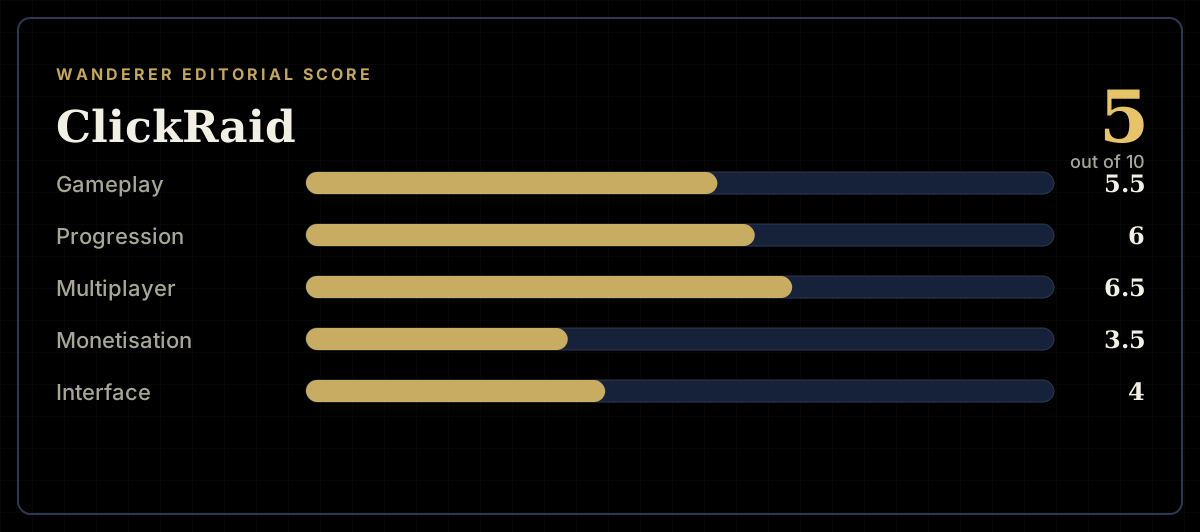
How the review scores each part of the gameWanderer Editorial -
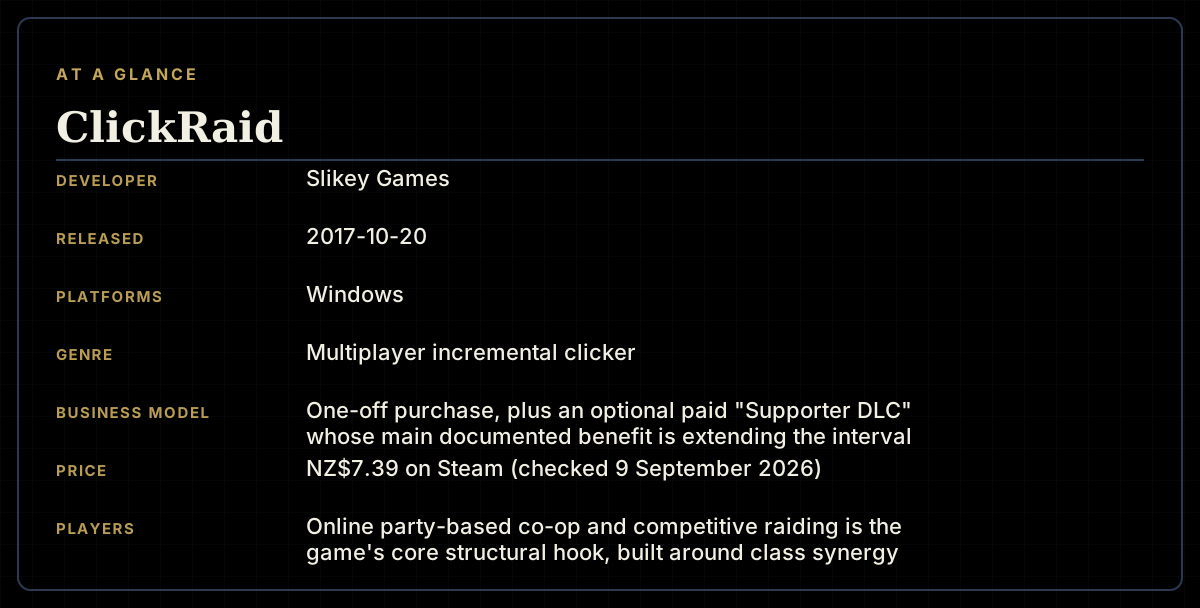
The specsWanderer Editorial -
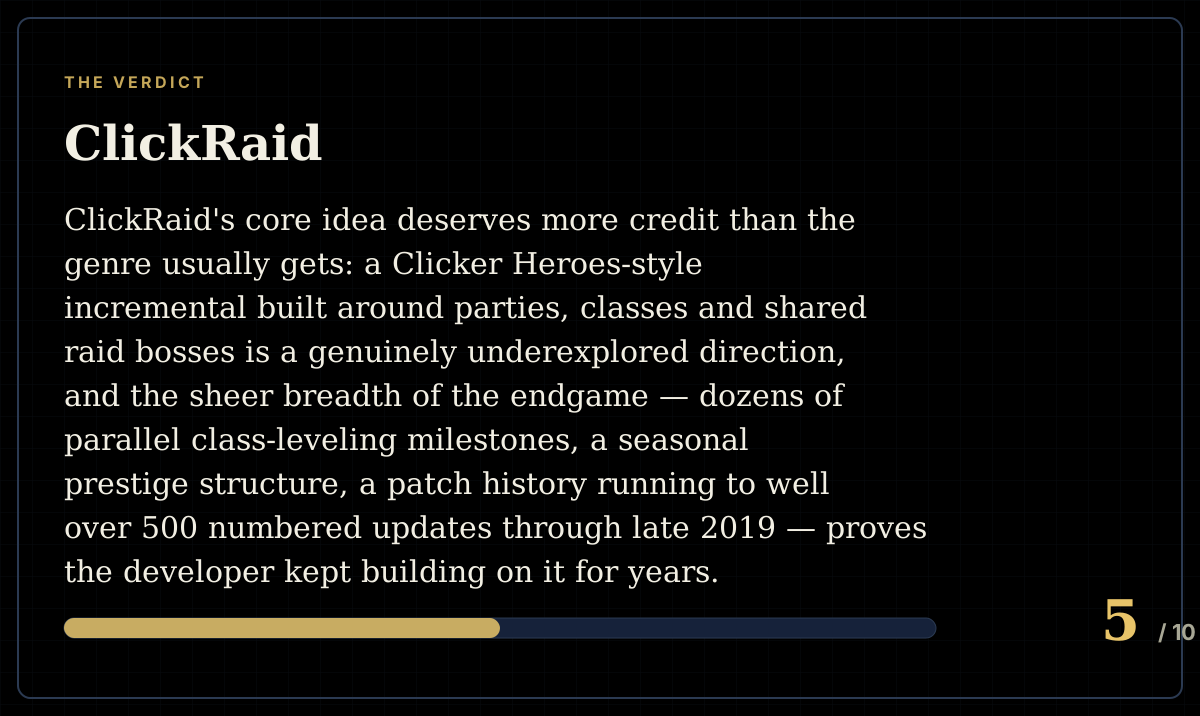
The short versionWanderer Editorial