Game review
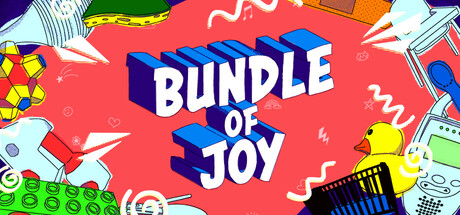
Bundle of Joy
7.5 / 10
- Developer
- Essay Games
- Publisher
- Essay Games
- Released
- 25 March 2025
- Platforms
- Windows
- Genre
- Indie, Simulation
- Players
- Single-player
The short version
Biggest strengths
- A genuinely rare and specific subject for a video game — the exhausting, isolating experience of becoming a first-time parent during COVID-19 lockdown — handled with real emotional honesty rather than sentimentality
- Frantic, WarioWare-style minigames used deliberately to convey the overwhelming, piled-up nature of newborn care, rather than as filler between story beats
- Multiple reviewers, including at least one self-identified new parent, describe the writing as genuinely moving and specifically, recognisably accurate to the experience it depicts
Biggest weaknesses
- Very short by design, and at its asking price that will read as thin value to anyone approaching it purely as a minigame collection rather than a narrative experience
- Several of the minigames are, by design, deliberately janky and frustrating to convey the chaos of new-parent life, which is a legitimate creative choice but one that will read as poor game feel to players expecting the responsive precision of a genre touchstone like WarioWare
- The review base is small and currently entirely positive, which makes it harder than usual to weigh how the experience lands for players outside its clearly self-selected, sympathetic audience
7.5 / 10
Turning newborn chaos into a game mechanic
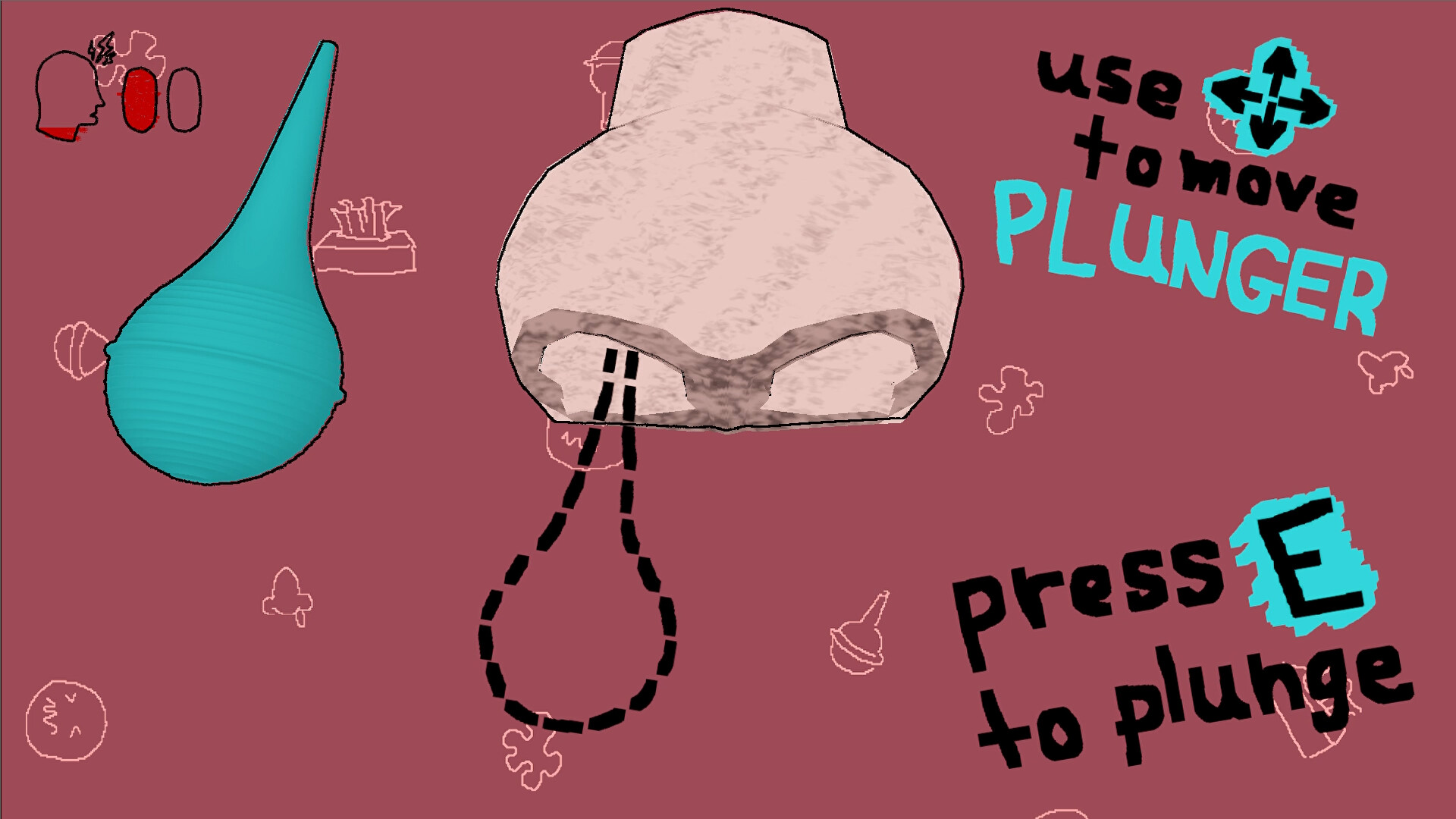
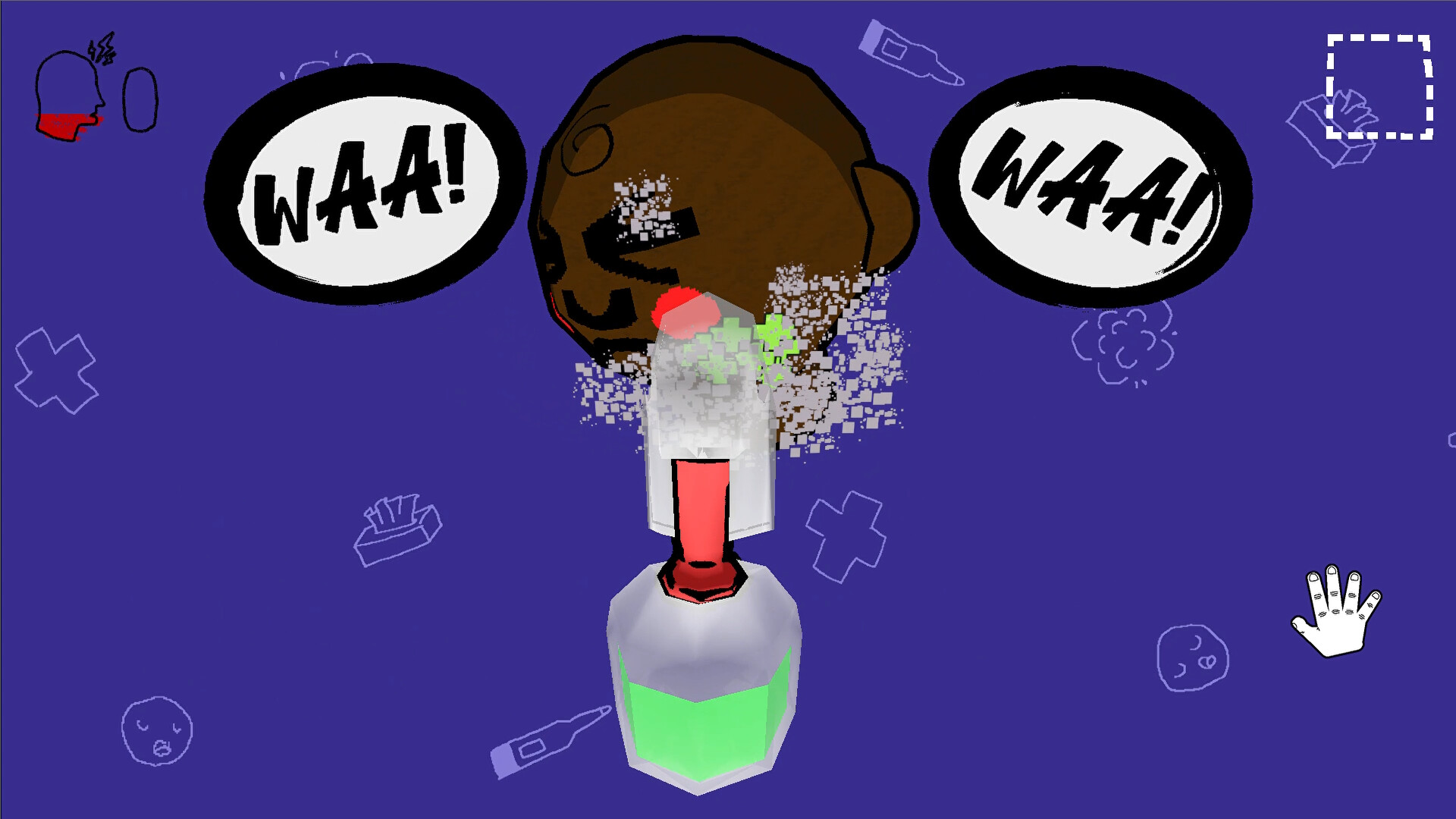
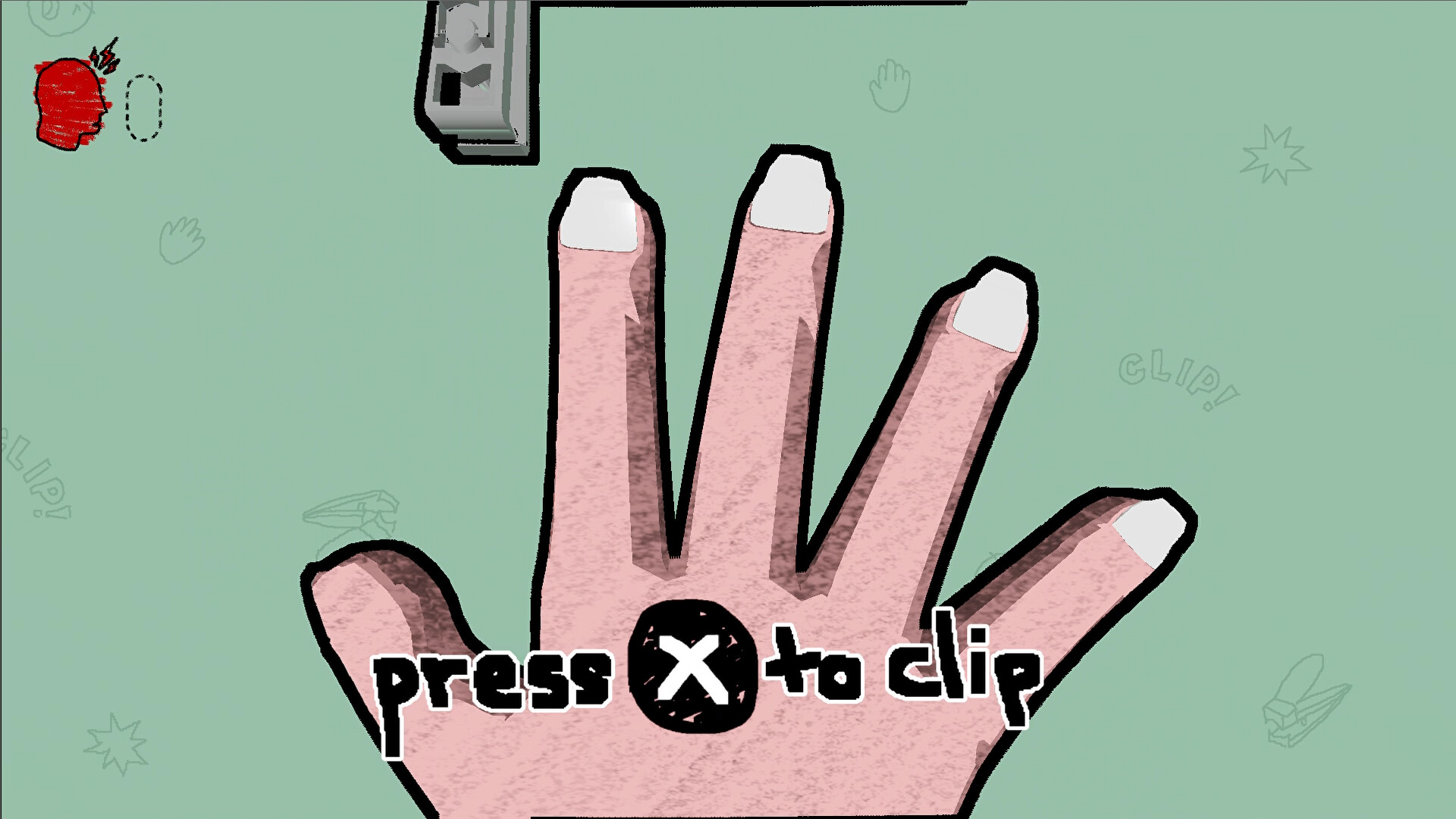
Bundle of Joy sets out to do something genuinely uncommon: use the rapid-fire, escalating-chaos minigame format popularised by WarioWare to depict, mechanically rather than just narratively, what it feels like to become a first-time parent during a pandemic lockdown, isolated from the usual support networks new parents rely on. Based directly on studio lead Nicholas O'Brien's own experience, the game alternates between quick, hectic caregiving tasks — soothing a crying baby, changing a diaper, managing your own rising stress — and quieter, reflective narrative vignettes processing self-doubt and exhaustion. One reviewer articulates precisely what makes this approach interesting as game design rather than just as subject matter: "the best thing videogames as a medium can do is to tell a story not with words or visuals... but with gameplay itself. Bundle of Joy does exactly this, turning the life of a new dad during the pandemic into a hectic flurry of mini-games."
That mechanical storytelling extends specifically to moments of friction. The same reviewer notes: "some of them are janky or frustrating, but that's the exact thing the game tries to convey." That's a meaningful design claim worth taking seriously rather than dismissing as an excuse for rough execution — a game about the overwhelming, poorly-signposted chaos of caring for a newborn arguably has a stronger claim to deliberately uncomfortable mechanics than most games attempting the same trick, since the discomfort is the point rather than an unintended side effect.
Writing that lands even for players outside its audience
What elevates Bundle of Joy beyond a clever mechanical gimmick, according to its reviewers, is the specificity and honesty of its writing. "A true trojan horse of a game, presenting itself as a collection of fun parenting-themed mini-games while containing the sort of deeply poignant moments of raw self-doubt that any new parent will recognize but few new fathers openly discuss, let alone make art out of," one detailed review states — a meaningful observation about the game tackling a specific gap in how fatherhood, particularly its harder emotional moments, gets represented in media generally, let alone games. A separate reviewer, a parent themselves, confirms the writing's accuracy directly: "if you're a parent, especially if you had a hard time with a newborn, you can likely relate," while others who explicitly aren't parents report the writing still reached them: "really nice narrative that, as a non-parent, helped me understand more about parenting."
The tonal contrast between the bright, cartoonish WarioWare-style presentation and the genuinely difficult emotional content underneath draws specific praise as a deliberate artistic choice rather than a mismatch: "I love the tonal mismatch of the game and its bright fun WarioWare style mini-games and the overall more dark storyline. It's a really nice juxtaposition," one reviewer writes, and a separate reviewer independently frames the same structural balance as the game's core achievement: "the balance of the hectic minigames and the quiet, reflective moments really is something special."
What "short" actually costs here
The most honest critical framing available for this game concerns length and price rather than execution. Bundle of Joy is explicitly, deliberately short — several reviewers describe finishing it in a single sitting — and at its roughly ten-dollar asking price, that's a real trade-off worth naming plainly rather than glossing over with enthusiasm about the writing. This isn't a case of thin content stretched to hide a lack of substance; the achievement data shows a genuine, gradual structure within that short runtime, with early onboarding milestones sitting at a full 100% and harder, more specific challenges — a "max stress" achievement, a "power dad" achievement, a "long day" achievement — all sitting at a notably rare 0.5%, suggesting real difficulty variation exists even within a compact package. But a buyer approaching this purely as a minigame collection, expecting hours of replayable content, will find considerably less here than the price might suggest, and the entire experience is clearly built around being consumed once, as a complete narrative arc, rather than replayed for score-chasing.
A small sample worth being honest about
It's worth noting directly that this review is drawing from an unusually small and entirely positive review base — every review currently on record recommends the game, with no dissenting accounts to weigh against the praise above. That's a genuine limitation on how confidently this review can characterise how the experience lands outside its clearly self-selected, sympathetic early audience, an audience that likely sought the game out specifically because its subject matter resonated with them personally. A prospective buyer without a personal connection to the pandemic-era new-parent experience the game depicts may reasonably have a different, more distant reaction than the reviewers quoted here, even if the craft on display is real.
Where this leaves it
Bundle of Joy succeeds at something genuinely difficult: using minigame mechanics themselves, not just surrounding narrative text, to communicate a specific, under-represented emotional experience with real honesty rather than sentimentality. Its deliberate roughness in places is a legitimate creative choice rather than a flaw, and the writing has clearly connected deeply with the players who've found it so far. What it isn't is a long or replayable game, and buyers should go in understanding they're paying for a short, complete, personal story rather than an extended minigame collection — a fair trade for the right audience, and a genuinely worthwhile one for anyone the subject matter speaks to.
Pros and cons
Pros
- A genuinely rare and specific subject for a video game — the exhausting, isolating experience of becoming a first-time parent during COVID-19 lockdown — handled with real emotional honesty rather than sentimentality
- Frantic, WarioWare-style minigames used deliberately to convey the overwhelming, piled-up nature of newborn care, rather than as filler between story beats
- Multiple reviewers, including at least one self-identified new parent, describe the writing as genuinely moving and specifically, recognisably accurate to the experience it depicts
- A wide achievement spread (100% for early onboarding milestones down to 0.5% for the hardest late-game challenges) confirms real structural depth within a deliberately short runtime
Cons
- Very short by design, and at its asking price that will read as thin value to anyone approaching it purely as a minigame collection rather than a narrative experience
- Several of the minigames are, by design, deliberately janky and frustrating to convey the chaos of new-parent life, which is a legitimate creative choice but one that will read as poor game feel to players expecting the responsive precision of a genre touchstone like WarioWare
- The review base is small and currently entirely positive, which makes it harder than usual to weigh how the experience lands for players outside its clearly self-selected, sympathetic audience
Screenshots
-
Bundle of JoyImage: Essay Games via Steam -
Bundle of JoyImage: Essay Games via Steam -
Bundle of JoyImage: Essay Games via Steam -
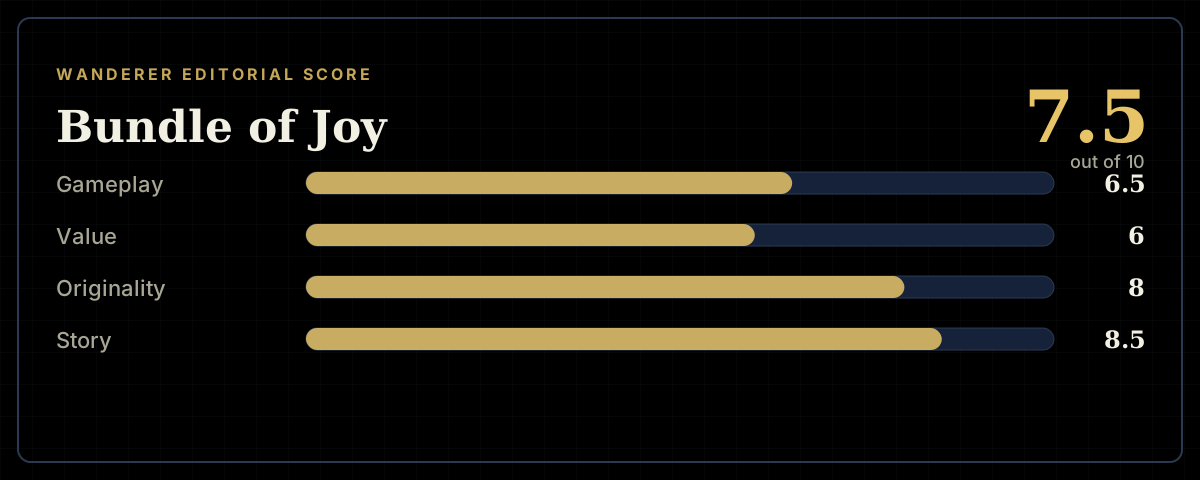
How the review scores each part of the gameWanderer Editorial -
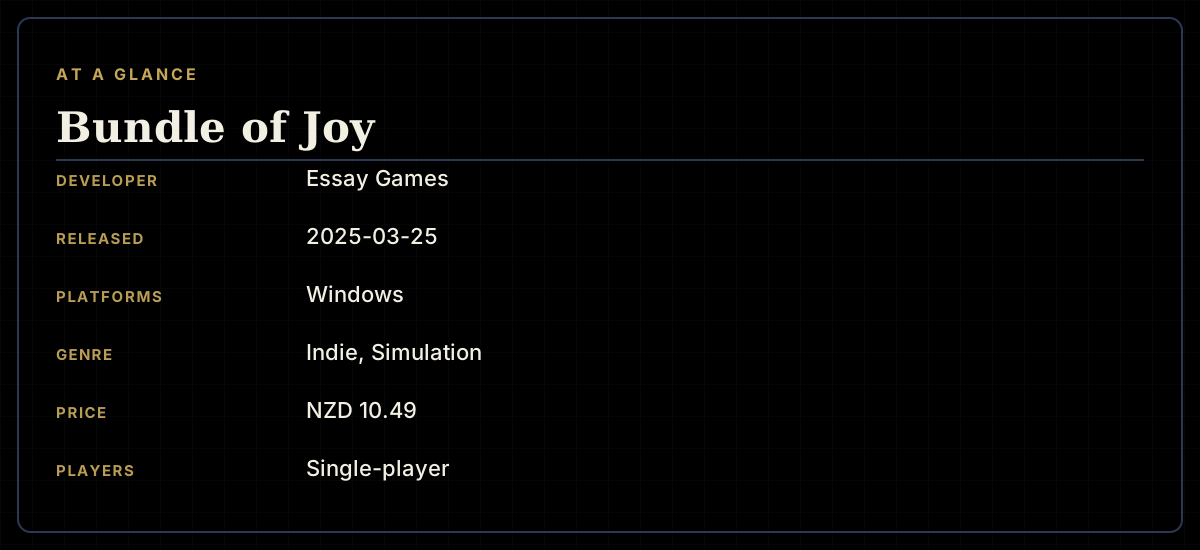
At a glanceWanderer Editorial -
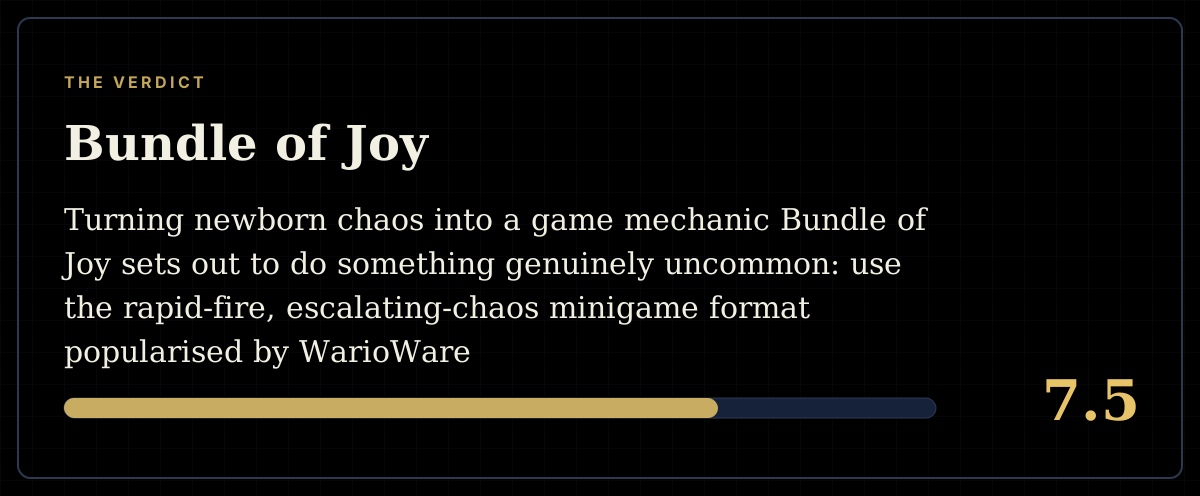
The short versionWanderer Editorial