Game review
Do No Harm
5.5 / 10
- Developer
- Darts Games
- Publisher
- Darts Games, Hawthorn Games
- Released
- 6 March 2025
- Platforms
- Windows
- Genre
- Simulation
- Players
- Single-player
The short version
Biggest strengths
- A genuinely distinctive premise — a Lovecraftian doctor diagnosing patients through observation and a Book of Medicine, deciding who lives and dies across 30 escalating days — that reviewers consistently praise for its atmosphere and art
- When its systems click, the deduction-based diagnosis loop delivers a real, satisfying "Papers, Please for medicine" feeling several reviewers say they came looking for
- A wide, 46-achievement completion spread confirms genuine structural depth and multiple distinct paths through the story
Biggest weaknesses
- The dosage-mixing system is overwhelmingly the most-cited source of frustration, with multiple reviewers reporting doses don't combine in intuitive ways and one detailed review noting the developer has reportedly confirmed some puzzles require guess-and-check trial and error rather than deducible logic
- Tutorial and explanatory text is repeatedly reported to auto-progress before players can finish reading it, undermining a game whose core loop depends entirely on correctly understanding its own systems
- A specific, mandatory late-game story beat is reported by multiple reviewers to force a choice between two morally horrific outcomes with no third option and no way to prevent either — a design choice several reviewers say strips away player agency at the worst possible moment
5.5 / 10
A Lovecraftian house call
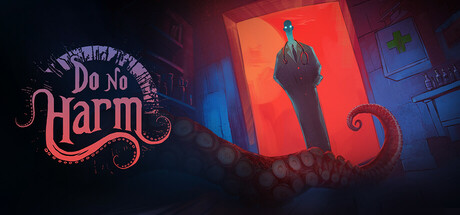
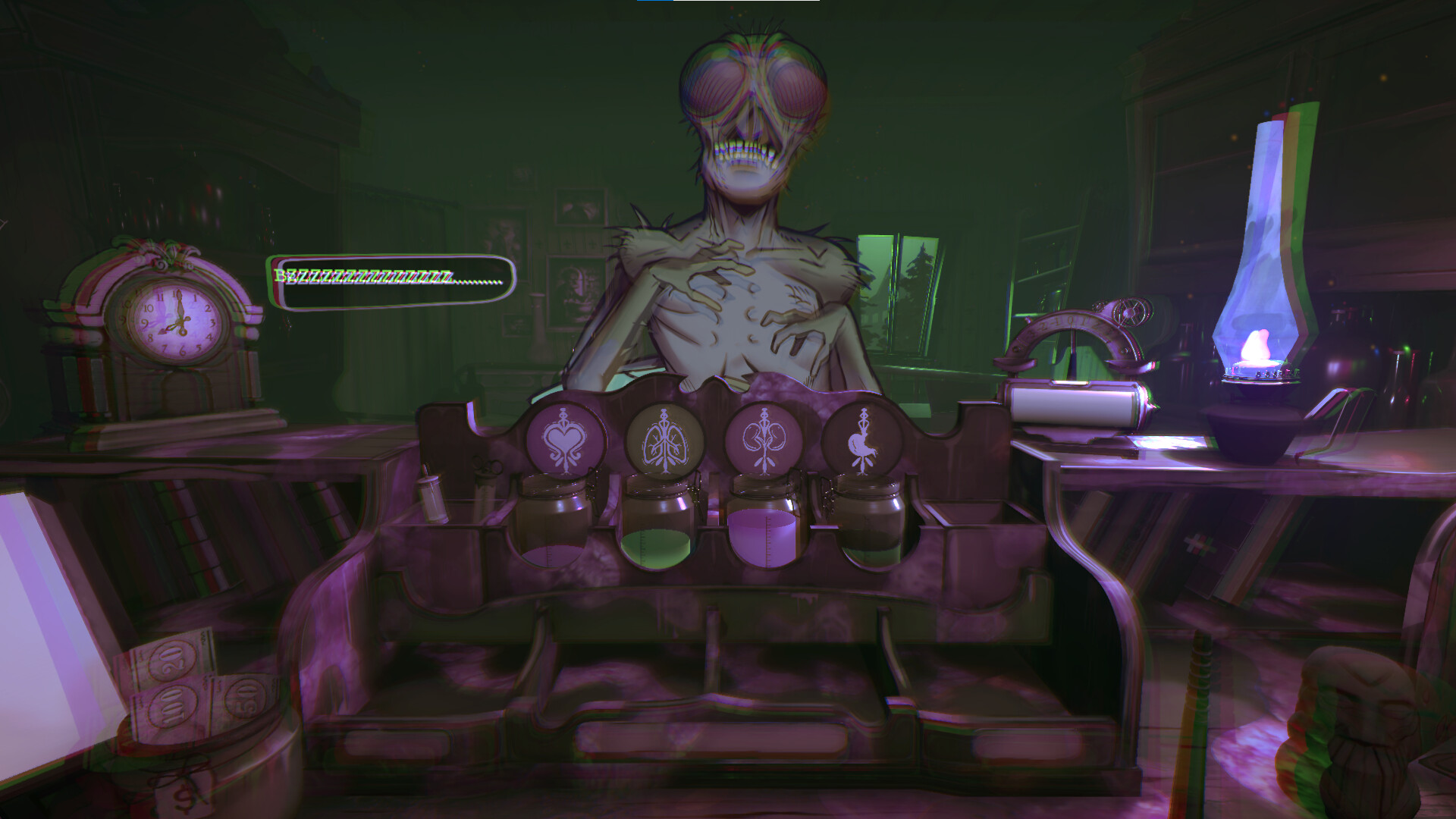
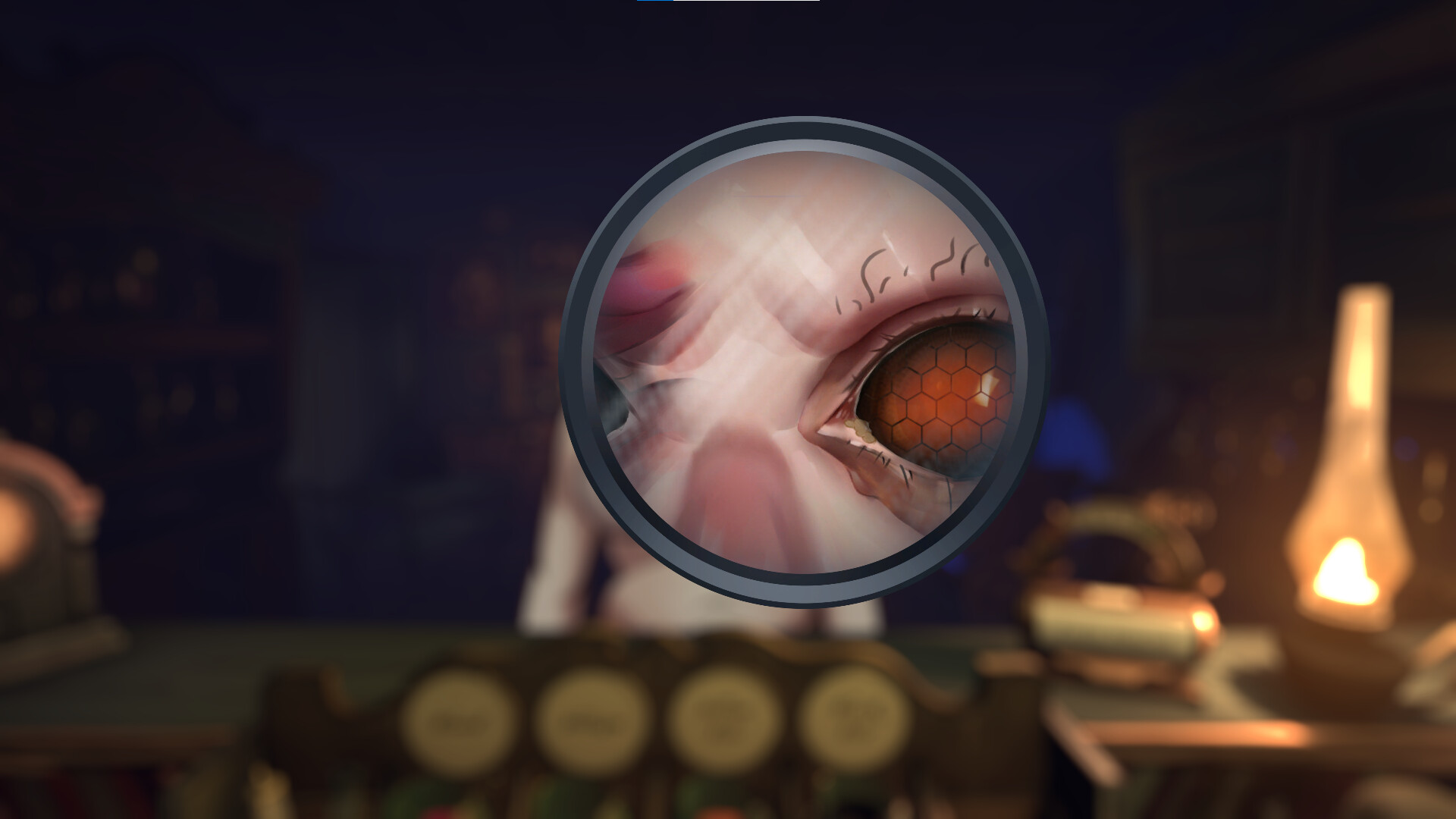
Do No Harm casts you as a doctor in a town sliding toward something cosmic and wrong, diagnosing patients by piecing together symptoms — some mundane, some anomalous — and treating them using recipes drawn from your Book of Medicine. Get it right and you save a life; get it wrong, or run out of time to figure it out, and you don't. Across thirty escalating days, the choices compound, trust in the town shifts, and the game's Lovecraftian elements creep further into what starts out reading as a fairly grounded medical mystery. The premise draws an obvious and frequently-cited comparison to Papers, Please, crossed with the slow-burn occult deduction of Cultist Simulator, and for a genuine share of its audience that comparison holds up: "Do No Harm is Papers, Please except you are a doctor trying to figure out the right medicine," one review notes approvingly before getting into specifics, and several others independently credit the atmosphere, art direction, and central concept as genuinely strong even amid frustration with the execution.
That frustration, though, runs deep and specific enough across the negative review sample to be the defining story of this game's reception rather than a footnote.
A dosage system that fights the player
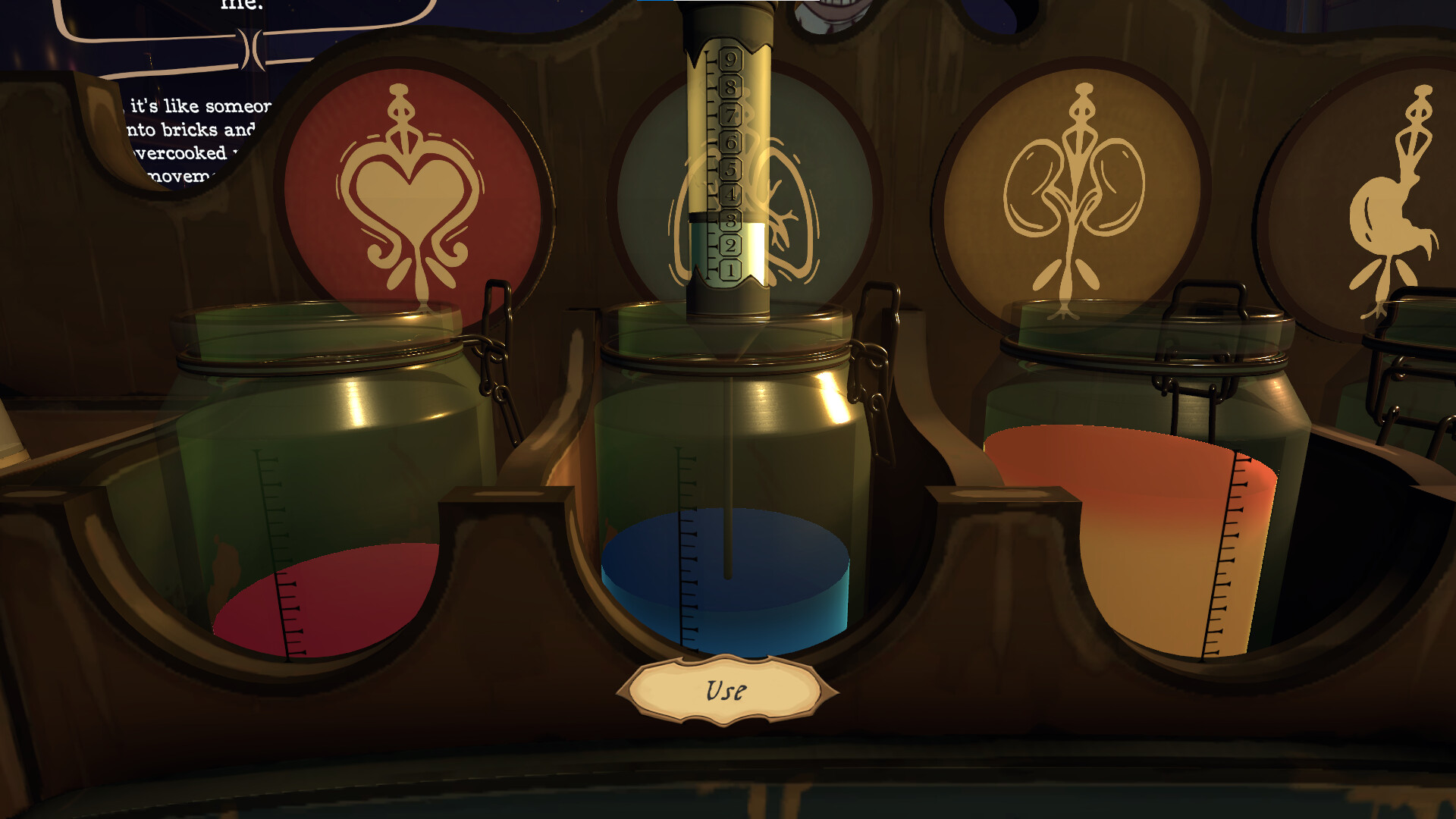
The single most consistently cited mechanical complaint concerns how medicine dosing actually works. Multiple reviewers independently report that doses don't combine the way intuition suggests they should — one detailed review explains that "a red dose of 2 units and another red dose of 4 units does not equal 6 units," meaning a player can waste a large dose because the game silently expected a different, non-obvious combination instead. That's a specific, mechanically precise complaint rather than a vague "it's confusing" dismissal, and it recurs across reviewers who otherwise like very different things about the game.
More striking still is a claim, repeated by more than one reviewer, that the developers have acknowledged some of the game's puzzles are intended to be solved through trial and error rather than through deduction from the clues the game actually provides. "The dev even says that you are supposed to guess or use trial-and-error to solve something, even though the present you with tools that seem like they should be used to solve the problem," one reviewer writes — a genuinely serious design admission if accurate, since a deduction game whose puzzles aren't actually solvable through deduction undermines its own core promise to the player.
A tutorial that outruns the reader
A second, compounding complaint concerns pacing of information rather than the information's clarity in isolation: several reviewers report that explanatory text and tutorial dialogue auto-advances before there's time to read and absorb it, forcing players to piece together systems from memory or repeated trial runs rather than from a clear initial explanation. "The explanations often auto-progress," one detailed review states, "on more than one occasion" costing them understanding of a mechanic before it mattered. For a game this dependent on correctly parsing its own rules under time pressure, an interface that doesn't let players read at their own pace is a specific, fixable failure that several reviewers single out as more damaging than the underlying mechanics themselves.
A moment several reviewers say removes all agency
One specific, mandatory story beat draws unusually detailed, distressed criticism from multiple independent reviewers, worth reporting plainly because of how consistently it's cited rather than dwelling on its content. A recurring antagonist figure presents the player with a late-game forced choice between two deeply disturbing outcomes, with reviewers reporting there is no third option, no way to intervene, and no way to avoid participating in some form of harm regardless of which option is chosen. One detailed account describes reaching this point after carefully avoiding an earlier related choice, only to discover the game removes any option to refuse, help, or resist at all once the moment arrives. The specific complaint isn't about the content's darkness in principle — this is, after all, an explicitly Lovecraftian horror game — but about the total absence of player agency at a moment the game's entire earlier structure had trained players to expect a meaningful choice. Several reviewers cite this exact beat as the point where they stopped playing entirely.
A community split on where the blame lies
Unusually for this lane, the review sample includes a genuinely active internal debate about whether the confusion complaints are fair. "The people giving this game negative reviews largely seem to simply seem to be having a hard time grasping the game's mechanics, which is clearly part of the game's challenge," one defender argues, and a separate reviewer goes further, directly rebutting specific negative reviews point by point as "absurd." That's worth taking seriously as a genuine two-sided disagreement rather than assuming either side is simply wrong — some players clearly do find the deduction loop rewarding once they push through the initial confusion, while others experience the same friction as a real barrier rather than an intended challenge.
The achievement data offers a small window into how that split plays out in practice: the earliest onboarding milestones sit at a healthy 80.7%, but achievements tied to more advanced mixing and mid-game systems drop quickly into the 20-60% range, and the rarest achievements — including specific alternative solutions to the game's hardest moral puzzles — sit at just 0.2-0.3%. That's consistent with a game whose early hours are broadly accessible but whose deeper systems genuinely do lose a large share of players along the way, regardless of which side of the "is it the game or the player" debate a given reviewer falls on.
Where this leaves it
Do No Harm has a genuinely compelling premise and atmosphere that a real, vocal portion of its audience finds worth the friction to master. But the dosage system's reported lack of intuitive logic, an auto-advancing tutorial that undercuts the game's own deduction-based design, and a specific, widely-reported late-game moment that strips away agency at what should be its most consequential choice add up to real, substantive problems beyond ordinary difficulty. Worth trying for the concept and the atmosphere if you have real patience for trial-and-error learning and can tolerate a story that, by multiple accounts, offers no way out of its darkest moment — go in with both expectations set clearly before committing.
Pros and cons
Pros
- A genuinely distinctive premise — a Lovecraftian doctor diagnosing patients through observation and a Book of Medicine, deciding who lives and dies across 30 escalating days — that reviewers consistently praise for its atmosphere and art
- When its systems click, the deduction-based diagnosis loop delivers a real, satisfying "Papers, Please for medicine" feeling several reviewers say they came looking for
- A wide, 46-achievement completion spread confirms genuine structural depth and multiple distinct paths through the story
- A vocal, engaged fanbase actively defends the game's intentionally obtuse mystery-solving design as a feature rather than a flaw
Cons
- The dosage-mixing system is overwhelmingly the most-cited source of frustration, with multiple reviewers reporting doses don't combine in intuitive ways and one detailed review noting the developer has reportedly confirmed some puzzles require guess-and-check trial and error rather than deducible logic
- Tutorial and explanatory text is repeatedly reported to auto-progress before players can finish reading it, undermining a game whose core loop depends entirely on correctly understanding its own systems
- A specific, mandatory late-game story beat is reported by multiple reviewers to force a choice between two morally horrific outcomes with no third option and no way to prevent either — a design choice several reviewers say strips away player agency at the worst possible moment
- The review base is genuinely split on whether the confusion is a real design failure or a skill issue, making it harder than usual to predict which side of that divide a given buyer will land on
Screenshots
-
Do No HarmImage: Darts Games via Steam -
Do No HarmImage: Darts Games via Steam -
Do No HarmImage: Darts Games via Steam -
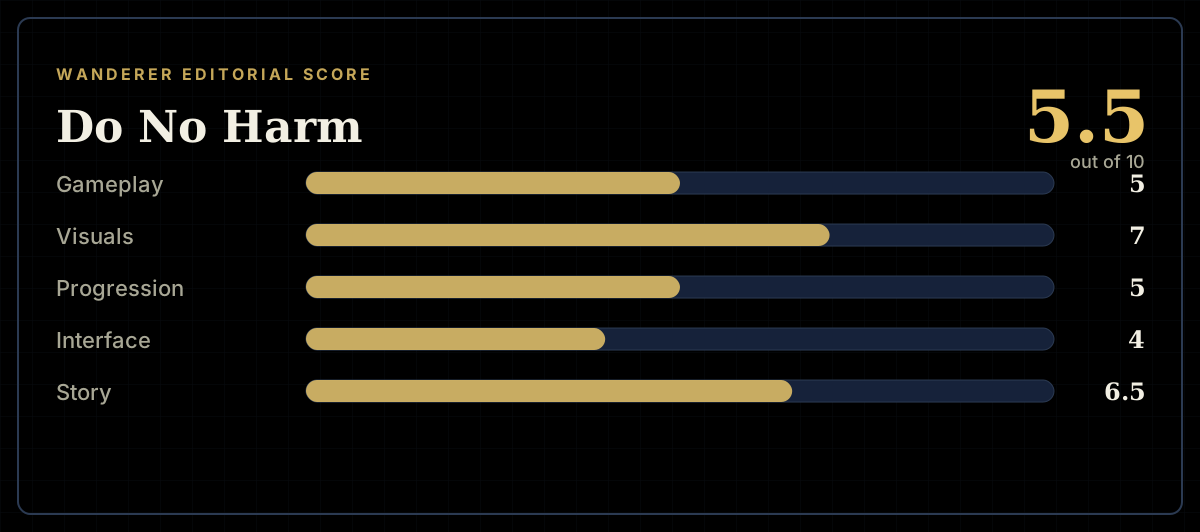
How the review scores each part of the gameWanderer Editorial -
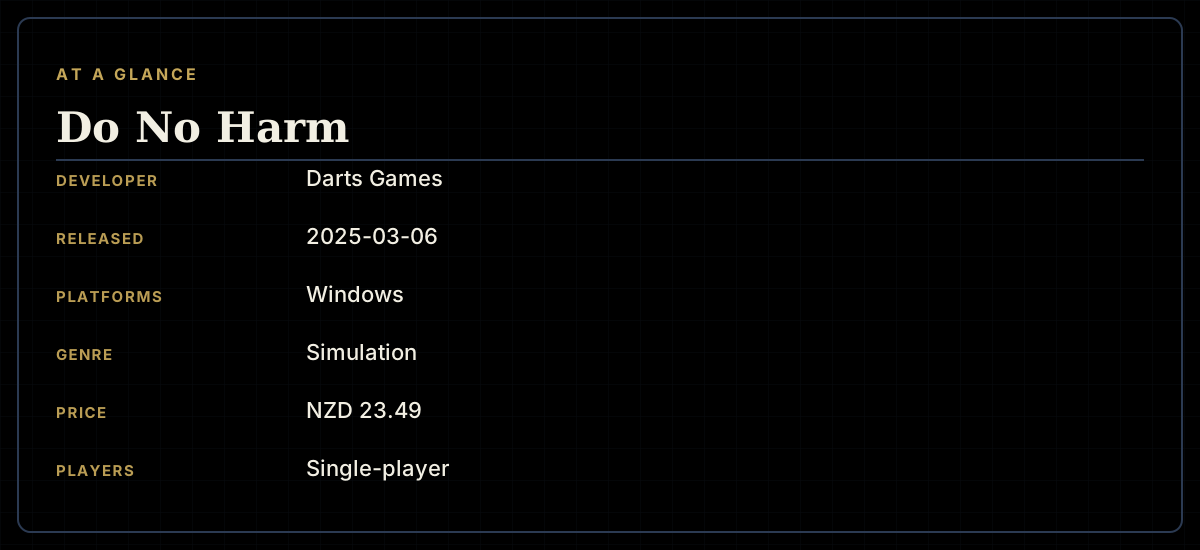
At a glanceWanderer Editorial -
The short versionWanderer Editorial