Game review
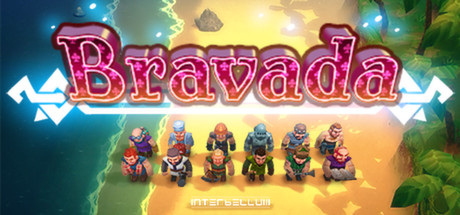
Bravada
6.5 / 10
- Developer
- Interbellum team
- Publisher
- Interbellum team
- Released
- 22 August 2014
- Platforms
- Windows
- Genre
- Tactical RPG
- Monetisation
- One-time premium purchase; no DLC, no in-app purchases
- Players
- Single-player only; no online, co-op or PvP modes
The short version
Bravada follows a young, beardless dwarf on a quest to solve his most embarrassing problem, wrapped around a grid-based tactical RPG that reviewers praise specifically for its pacing — fast enough to avoid the genre's usual slowness, while still leaving room to carefully outsmart tougher fights. One detailed review credits it with a genuinely modern approach to failure states, letting players stumble in small ways without derailing the whole run.
Real, specific problems recur alongside that praise: one detailed reviewer reports a game-breaking bug that locked out all actions on three separate occasions, and another describes poorly explained item effects and rules that left them uncertain what they were doing for stretches of play. A separate, candid reviewer concludes the writing and depth fall short for an adult audience specifically, while noting their ten-year-old loves it — a genuinely useful, if unusual, way to calibrate who this game is actually for.
Biggest strengths
- A genuinely thoughtful approach to failure and challenge design, letting players stumble in small ways without a single mistake derailing an entire run, praised as more modern than typical genre conventions
- Fast, well-paced turn-based combat that reviewers specifically credit with avoiding the genre's common problem of dragging fights, while still leaving room for real tactical thought
- A distinctive, charming premise and art style built around a beardless dwarf's quest, with genuine humor that lands for a meaningful share of reviewers
Biggest weaknesses
- A specific, reported game-breaking bug: one detailed reviewer describes all actions locking up entirely on three separate occasions during an otherwise smoothly running playthrough
- A separate reviewer describes poorly explained rules and item effects, reporting real confusion about basic mechanics and troops mysteriously disappearing without a clear in-game explanation
- Short even by the genre's standards, with multiple reviewers completing the full campaign in around five hours
Who it's for: Tactical RPG fans who want a short, breezy, humor-forward take on the genre, and families looking for a turn-based strategy game that works well for younger players. Less suited to players chasing deep, long-form tactical systems or expecting the writing to land as sophisticated adult humor.
Our recommendation: Worth a cheap purchase for a short, charming tactical RPG, especially for younger players or newcomers to the genre — just be aware of a specific reported bug and don't expect much beyond a five-hour campaign.
6.5 / 10
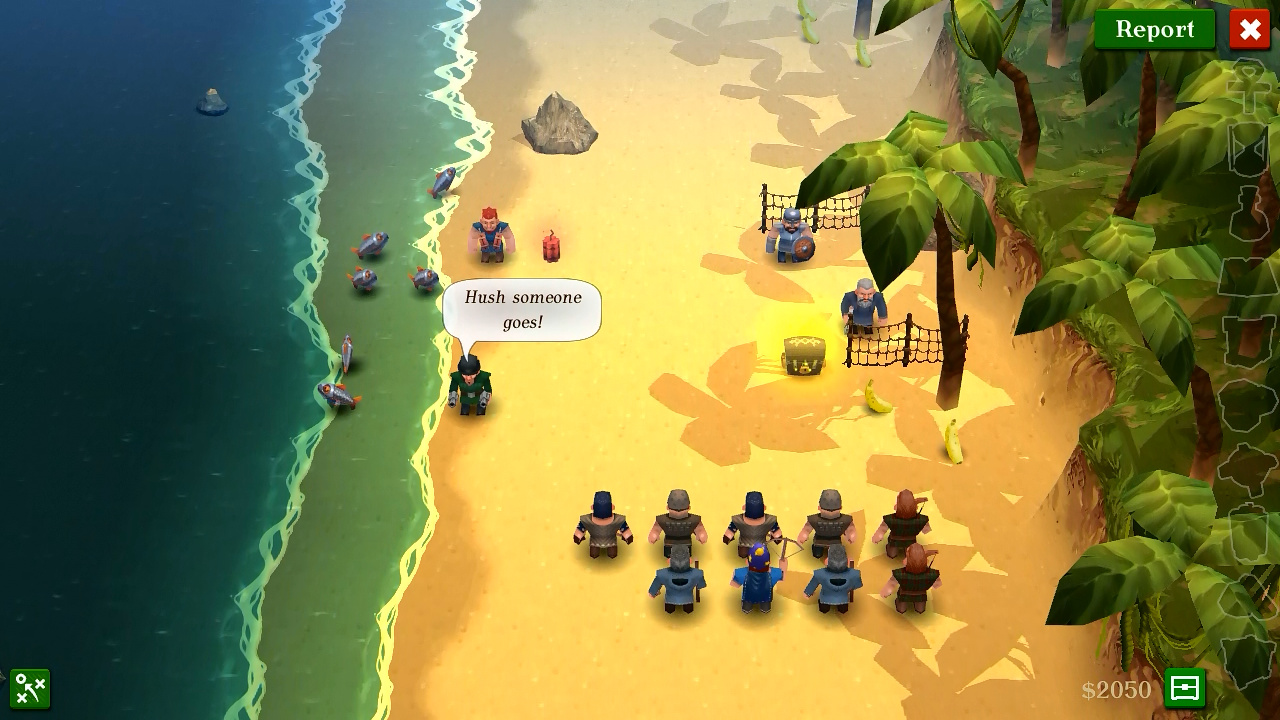
With barely a dozen English-language reviews to draw from, this is one of the thinner samples this review has worked with, and it says so plainly up front rather than stretching a small pool into false confidence. Bravada wraps a grid-based tactical RPG around a genuinely silly premise: a young dwarf whose beard, for unexplained mystical reasons, simply won't grow, sets off on an adventure with his bat companion to fix the problem. It's the kind of hook that could easily feel like a thin excuse for a generic strategy game, but a meaningful share of this small review sample credits the design underneath with real, specific thought rather than treating the premise as a coat of paint over standard mechanics.
A pacing and failure design reviewers specifically praise
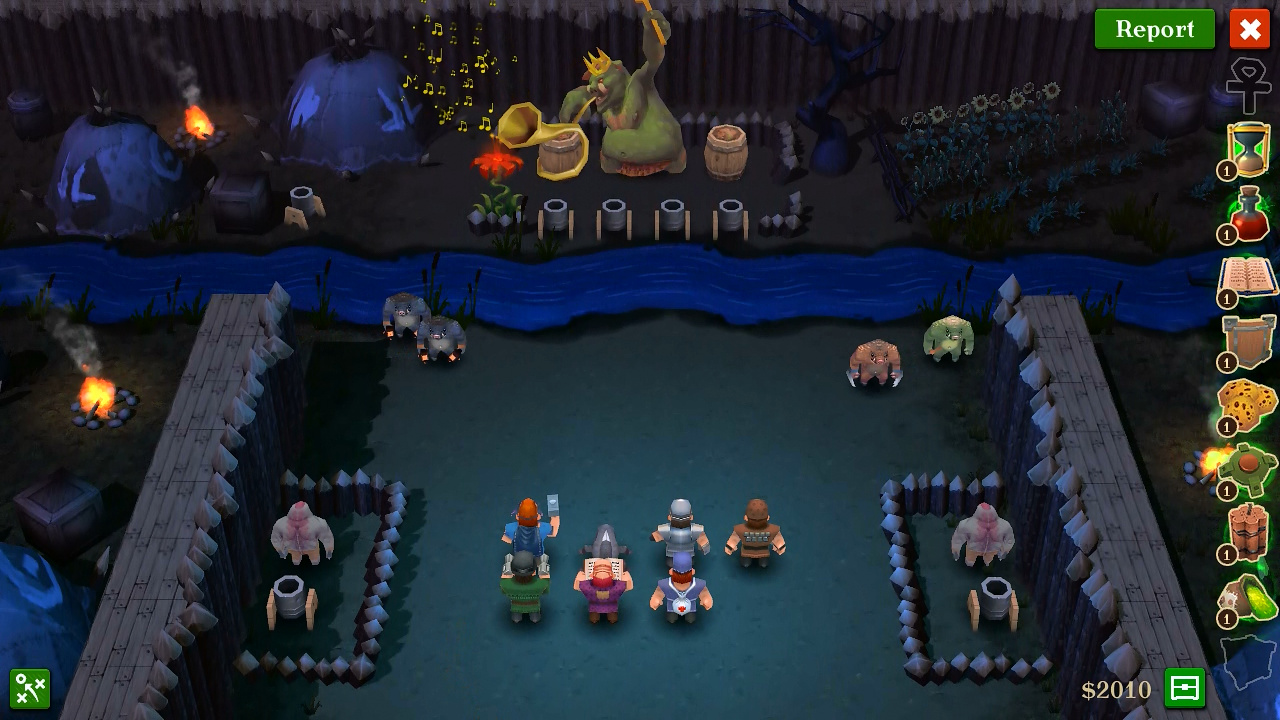
The most detailed positive review in this sample makes a precise argument worth quoting directly: "the most innovative games now include some built-in ability to fail, so that you can fail in big and small ways but still find reason to continue playing," crediting Bravada with exactly that kind of modern design sensibility layered onto "an old formula." Multiple reviewers separately praise the game's pacing specifically — fast enough that turns don't drag the way they often do in the genre, while still leaving room for real tactical decisions in the harder fights. One reviewer frames it as solving two genre problems at once: real-time strategy games that "make me feel clumsy and stupid," and turn-based ones that "take forever," landing Bravada in between as a genuine best-of-both-worlds approach.
Real, specific problems worth flagging directly
Set against that praise are concrete, specific complaints rather than vague dissatisfaction. One detailed reviewer reports a genuine game-breaking bug: "one bug that prevent you to do any actions, that occured to me 3 times," despite the game otherwise "running smoothly." A separate reviewer describes a rougher experience overall, calling it "poorly programmed" with "weird rules that aren't explained anywhere," including troops that would "mysteriously... disappear for no reason" they could identify. These are specific, reproducible-sounding technical and clarity issues rather than a matter of taste, and worth taking seriously given how small this game's overall review sample is — a handful of independent, detailed bug reports carries real weight in a sample this size.
A candid, useful audience-calibration finding
One of the more genuinely useful reviews in this sample doesn't come down clearly for or against the game — it recalibrates who it's actually for. After playing through to the finish, the reviewer concludes plainly: "the jokes were not very funny and most of the many items you can collect are not useful. There are better ways to spend your gaming time. This is a great game for kids however. My 10 year old loves it, so there is that going for it." That's a specific, honest distinction worth passing along directly rather than flattening into a single verdict — this reviewer isn't contradicting the praise above so much as suggesting the writing and depth land differently depending on the age and genre-experience of the player.
What the achievement data shows
With 48 tracked achievements showing a real, gradual decline from the mid-30% range down to the low single digits for the hardest tiers, Bravada's completion curve is consistent with a game offering genuine, escalating challenge beyond a single easy clear — useful context given the short overall length reviewers report, since it suggests the difficulty scales meaningfully for players chasing full completion rather than the whole experience being trivial once the core loop is understood.
A "relatively unknown" game worth a mention regardless
One reviewer, framing their comments explicitly as a curator recommendation, sums up the game's low profile directly: "This turn-based, party-based, strategy, RPG is a relatively unknown," before still landing on a positive, if measured, recommendation for genre fans specifically. That framing is a useful reminder that a lot of the criticism and praise in this sample comes from a genuinely small audience relative to the game's actual quality — Bravada never built the review volume of better-marketed genre peers, which makes each individual account in this small sample carry somewhat more weight than it would for a more widely-reviewed release.
Item clarity as a recurring, specific weak point
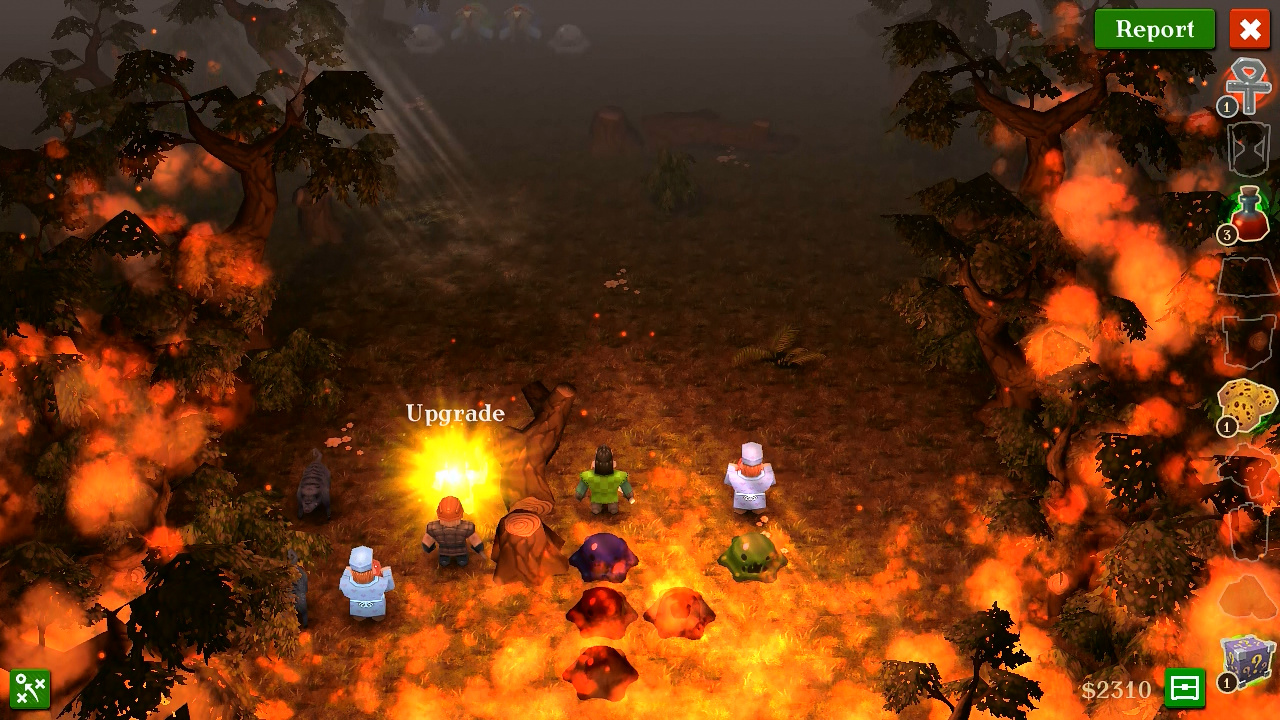
Beyond the mysteriously vanishing troops mentioned above, at least one reviewer separately flags item clarity as a specific design gap: "explaining what the actual item does before you spend your" resources on it is reportedly missing from the game's interface, forcing players to learn item effects through trial and error rather than informed decision-making. Combined with the broader "rules that aren't explained anywhere" complaint from a separate reviewer, this points to a recurring pattern in this game's onboarding specifically, distinct from the core combat design that draws most of the praise above.
Where it lands
Bravada earns real, specific praise for a thoughtful approach to pacing and failure design that a meaningful share of reviewers say sets it apart from more conventional tactical RPGs. But this is a thin review sample carrying real, specific bug reports and at least one detailed, honest account suggesting the writing and depth are better suited to a younger audience than genre veterans chasing sophistication. Worth a cheap purchase on those terms — a short, charming, occasionally buggy tactical RPG that may land best with kids or newcomers rather than players specifically looking for the genre's deepest, most demanding systems.
Pros and cons
Pros
- A genuinely thoughtful approach to failure and challenge design, letting players stumble in small ways without a single mistake derailing an entire run, praised as more modern than typical genre conventions
- Fast, well-paced turn-based combat that reviewers specifically credit with avoiding the genre's common problem of dragging fights, while still leaving room for real tactical thought
- A distinctive, charming premise and art style built around a beardless dwarf's quest, with genuine humor that lands for a meaningful share of reviewers
- Real replay value confirmed by at least one detailed player, who completed a second playthrough on hard difficulty with an entirely different party setup
- Achievement data shows a real, gradual difficulty and completion curve across 48 tracked goals, consistent with a game offering genuine challenge tiers beyond a single easy clear
Cons
- A specific, reported game-breaking bug: one detailed reviewer describes all actions locking up entirely on three separate occasions during an otherwise smoothly running playthrough
- A separate reviewer describes poorly explained rules and item effects, reporting real confusion about basic mechanics and troops mysteriously disappearing without a clear in-game explanation
- Short even by the genre's standards, with multiple reviewers completing the full campaign in around five hours
- A candid, detailed reviewer concludes the humor and overall depth fall short for an adult audience specifically, while noting the game works well for a child player in their household
- At least one reviewer reports level design becoming repetitive in the back half of the campaign, with similar encounters recurring without much variation
Screenshots
-
BravadaImage: Interbellum team via Steam -
BravadaImage: Interbellum team via Steam -
BravadaImage: Interbellum team via Steam -
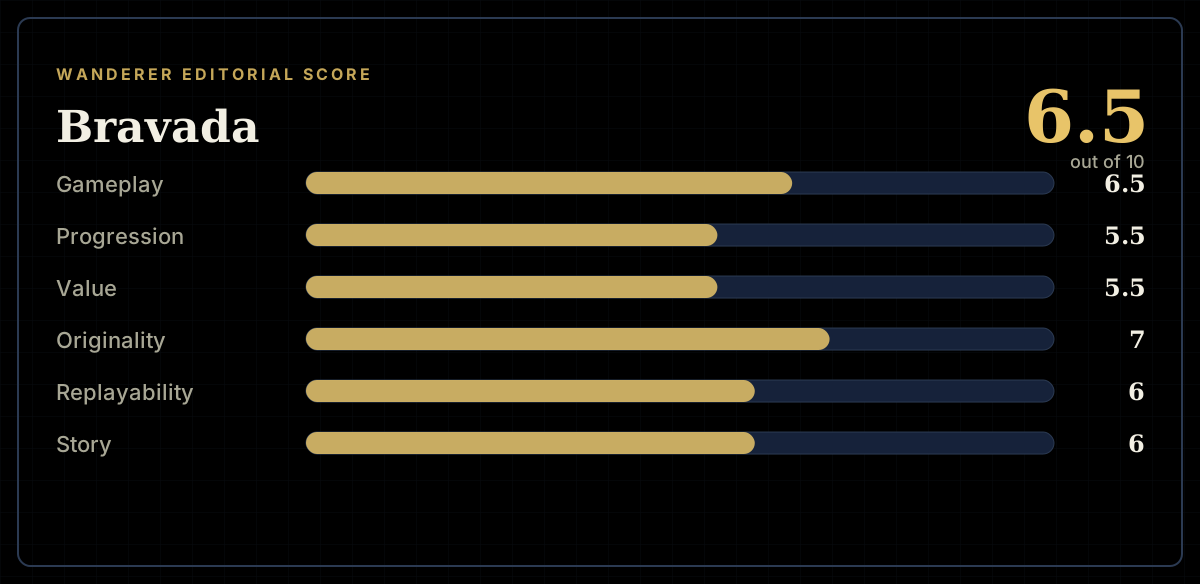
How the review scores each part of the gameWanderer Editorial -
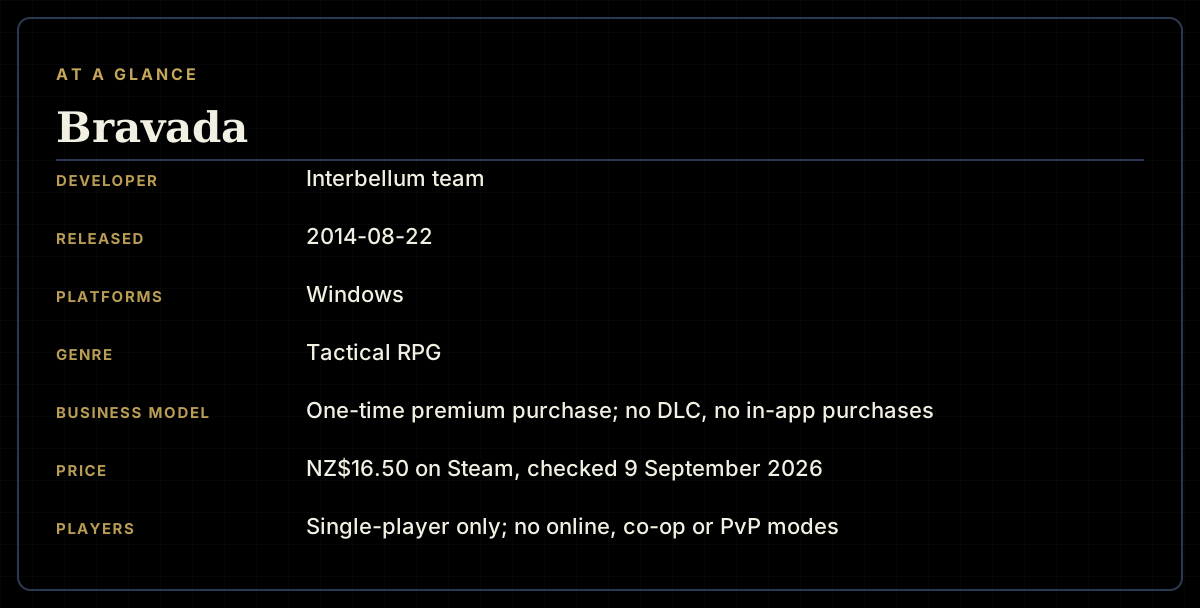
The specsWanderer Editorial -
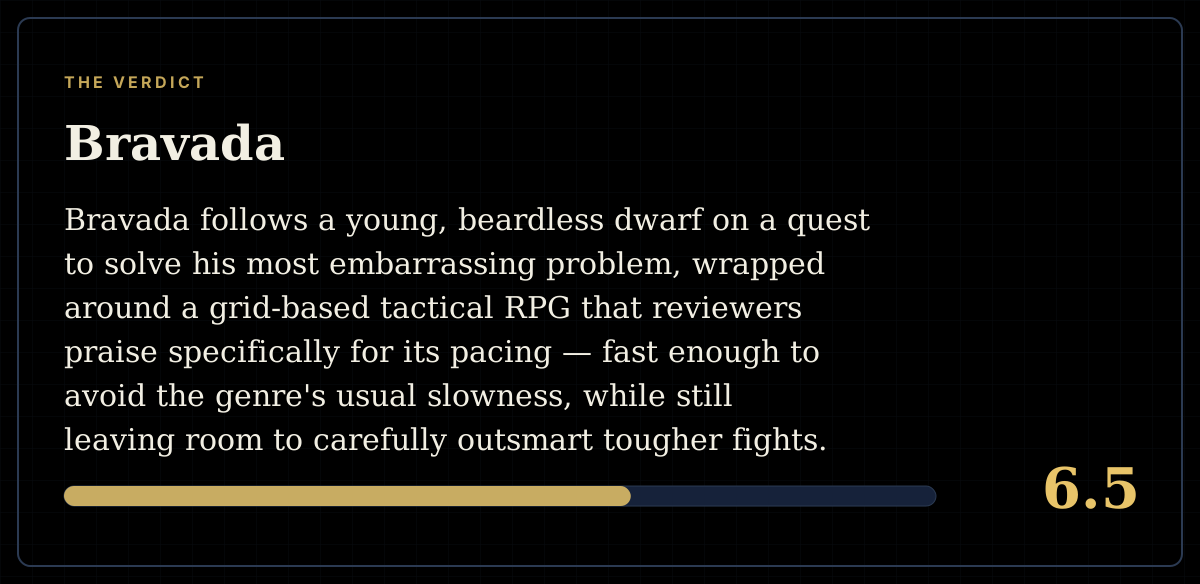
The short versionWanderer Editorial