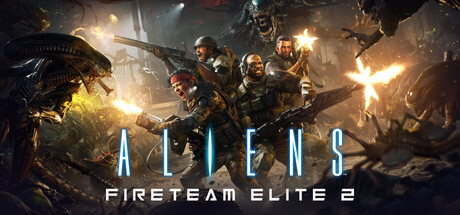
Game review
Aliens: Fireteam Elite 2
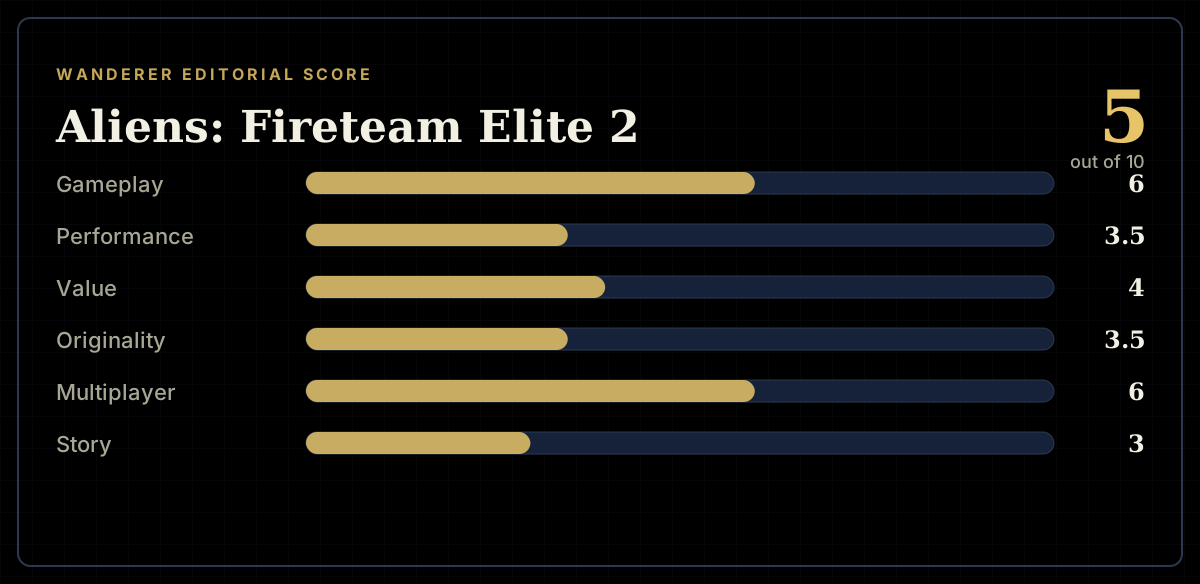
5 / 10
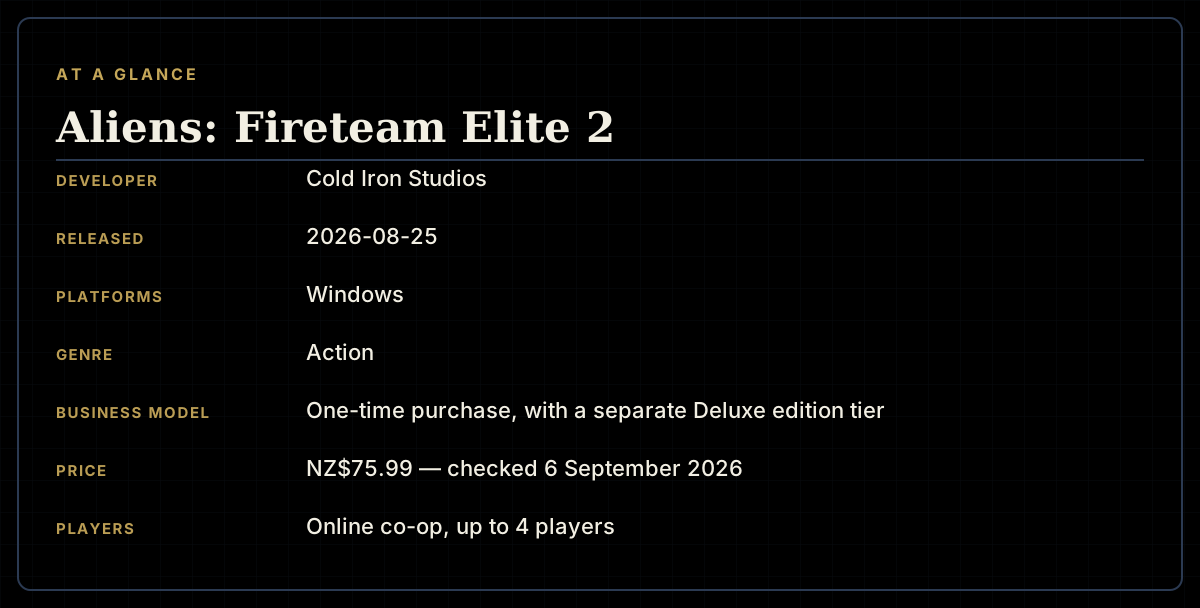
- Developer
- Cold Iron Studios
- Publisher
- Daybreak Game Company
- Released
- 25 August 2026
- Platforms
- Windows
- Genre
- Action
- Monetisation
- One-time purchase, with a separate Deluxe edition tier
- Players
- Online co-op, up to 4 players
The short version
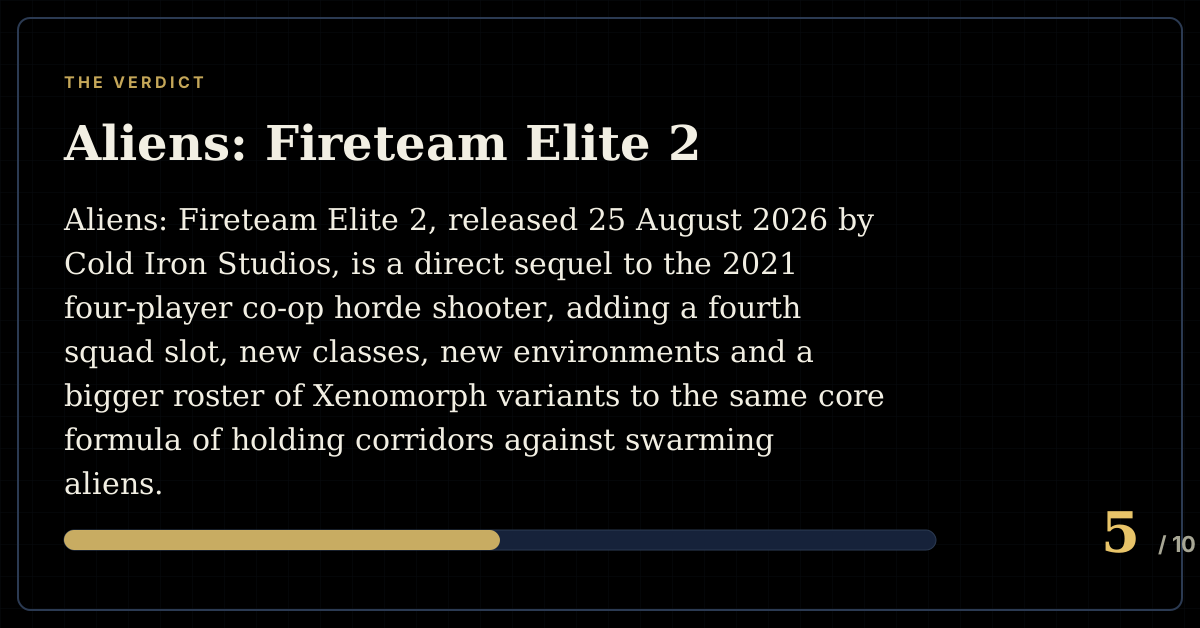
Aliens: Fireteam Elite 2, released 25 August 2026 by Cold Iron Studios, is a direct sequel to the 2021 four-player co-op horde shooter, adding a fourth squad slot, new classes, new environments and a bigger roster of Xenomorph variants to the same core formula of holding corridors against swarming aliens. It sits Mixed with a large sample of 3,192 reviews, and reading through both sides makes the split unusually legible: this review found broad, repeated agreement that the underlying combat loop still works and that co-op with friends remains genuinely fun, set against an equally broad and repeated set of complaints about stuttering, connection problems, and dialogue writing several reviewers specifically speculate reads as AI-generated. Layered on top of both is a price complaint that cuts across otherwise positive and negative reviews alike: a large number of players who otherwise enjoyed the game say the amount of new content doesn't justify a full-price sequel rather than an expansion.
Biggest strengths
- The core four-player horde-shooter loop that made the first game work is still intact and, per multiple detailed reviews who finished the campaign, genuinely improved in places — greater enemy variety, larger enemy counts, and reduced bullet-sponge health pools compared to the original
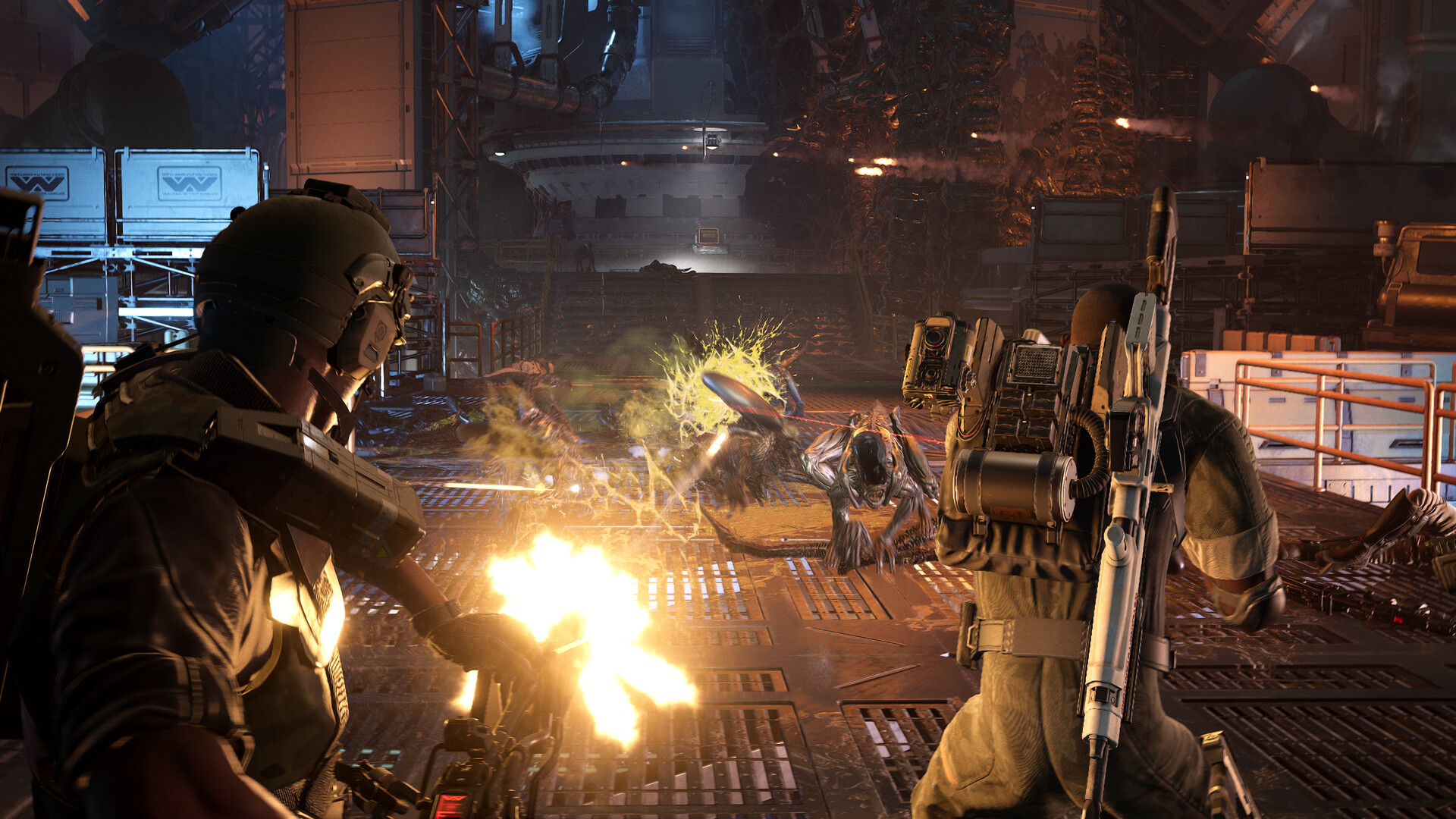
- Atmosphere and sound design draw specific, consistent praise even from otherwise critical reviewers, who describe the industrial settings, alien presence and overall tone as capturing the source material convincingly
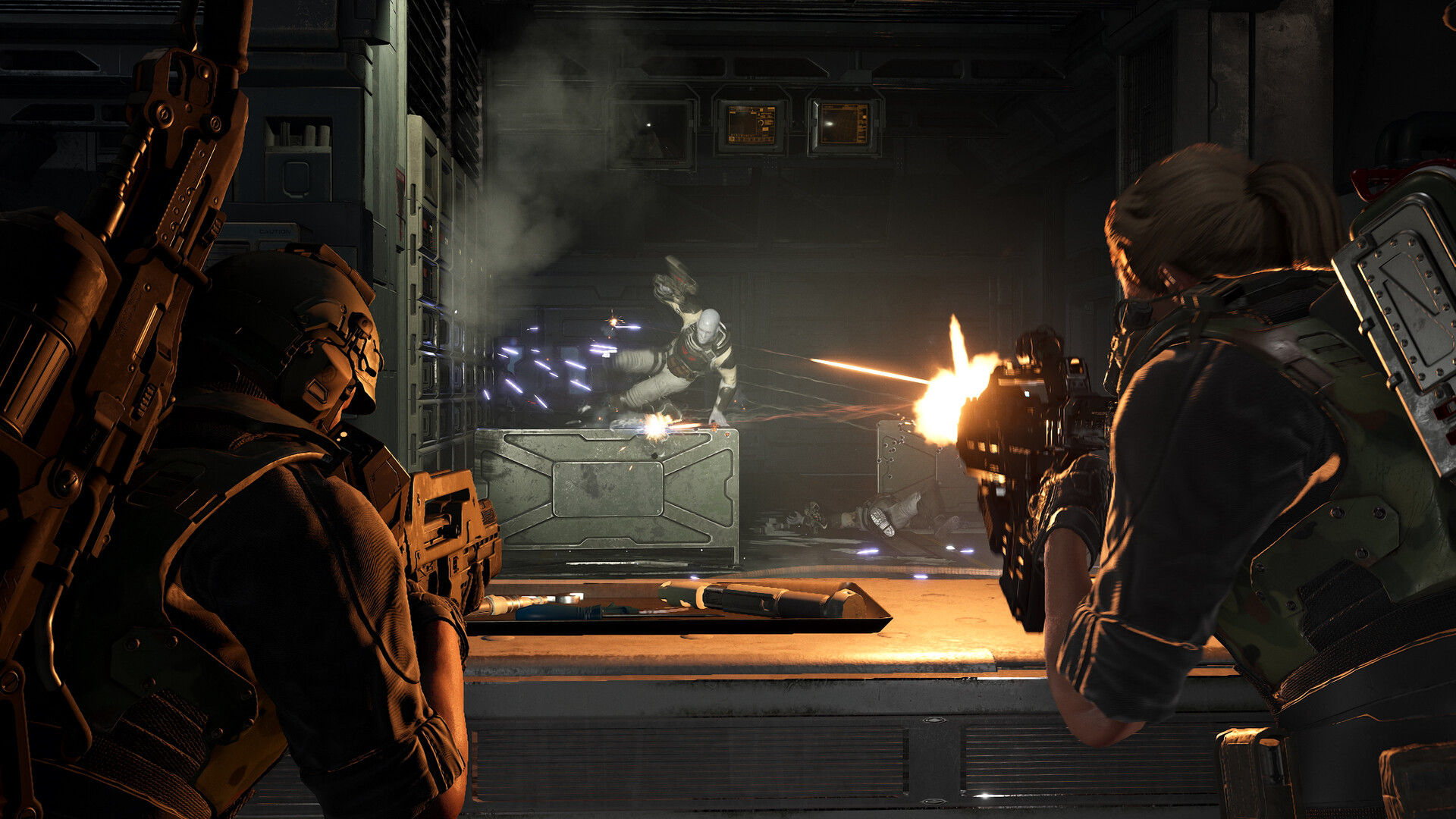
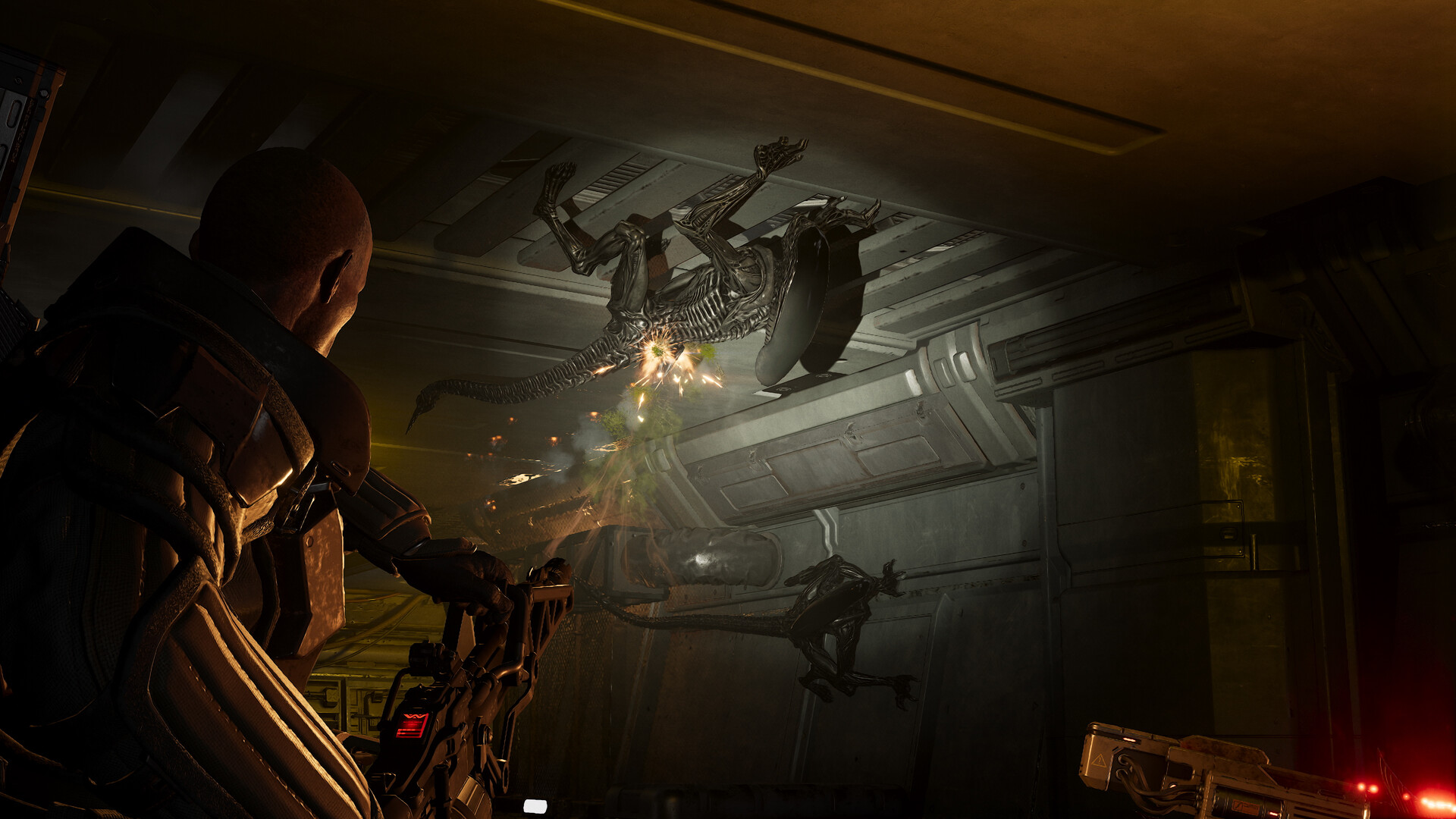
- New classes and an expanded four-player squad size are reported to add meaningful build diversity for players willing to experiment, with higher-difficulty combat described by more than one reviewer as delivering a genuine sense of being overwhelmed by the swarm
Biggest weaknesses
- A large number of reviewers report severe, specific technical problems at launch, including frequent stuttering during large encounters and when passing through doorways, connection drops in co-op sessions, and random controls becoming unresponsive mid-mission
- Multiple detailed reviewers describe the dialogue and voice acting as some of the weakest they've encountered in the genre, with more than one speculating openly, though without confirmation, that the writing reads as AI-generated; this review has not verified that claim and reports it only as reviewers' stated suspicion
- A price complaint recurs across both positive and negative reviews: many players who otherwise enjoyed the game argue the amount of new content over the first title doesn't justify a full-price sequel, with several specifically comparing it unfavourably to the discounted price of the original
Who it's for: Fans of the first Aliens: Fireteam Elite looking for more of the same four-player horde-shooter loop with friends, who can tolerate a rough technical launch and are prepared to wait for patches or a sale before paying full price.
Our recommendation: Worth playing in co-op with an existing squad if you loved the first game and can look past janky dialogue and launch-week performance issues; poor value as a solo purchase at full price, and better bought once patches land or a discount appears.
5 / 10
Introduction
Aliens: Fireteam Elite 2, released 25 August 2026 by Cold Iron Studios and published by Daybreak Game Company, is a direct follow-up to the 2021 four-player co-op horde shooter built on the Alien film franchise's licence. The pitch hasn't changed: pick a class, drop into a squad of up to four marines, and hold ground against overwhelming numbers of Xenomorphs across a linear campaign. It sits Mixed with a very large sample of 3,192 reviews at the time of this check, and reading through a wide cross-section of them turns up a split that's unusually easy to describe precisely — this is a game whose core combat loop still works for a large number of players, wrapped in a technical and pricing package that a comparably large number of players say lets it down.
The same formula, and reviewers are split on whether that's the problem
The single most repeated observation across both positive and negative reviews is that this is, structurally, very close to the first game. Several detailed reviewers who completed the full campaign describe it as the same core loop with real, specific improvements layered on top: a fourth squad slot, new classes, new environments to fight through, a larger roster of Xenomorph variants, and — according to more than one long-time player of the original — noticeably reduced bullet-sponge health pools that made enemies feel more responsive to gunfire than in the first game. One reviewer who waited until finishing the campaign before writing specifically frames it as "not a revolution, an evolution," reporting smooth performance through roughly 95 percent of their playtime and no major issues during large combat encounters.
Set against that account is an equally common complaint, voiced by reviewers on both sides of the recommend line: that the sequel feels less like a new game and more like a large paid expansion. Multiple reviewers explicitly describe encountering maps and encounters that feel reused rather than newly built, and more than one names specific classes or abilities from the first game that return with only cosmetic changes. This review cannot independently verify how much content is genuinely new versus recycled, but the volume and specificity of reviewers making this exact comparison — often while still recommending the game — suggests it reflects a real, felt continuity rather than a small vocal minority's complaint.
A rough technical launch
Independent of the content debate, a large number of reviewers report specific, severe technical problems at launch. Frequent stuttering is the most commonly named issue, described by multiple reviewers as occurring unpredictably during large combat encounters and, in several specific reports, when passing through doorways or loading transitions — one reviewer with a genuinely high-end PC states performance "struggled heavily" despite the hardware being well above the stated requirements. Co-op-specific problems recur too: reviewers report connection drops between squad members, and several describe missions becoming impossible to complete due to bugs like doors locking players out of the next area, controls becoming randomly unresponsive mid-mission, or friendly and enemy characters alike getting physically stuck on level geometry. Several reviewers separately report crashes tied specifically to changing graphics settings mid-session.
It's worth noting the other side of this clearly, because it complicates a simple "broken game" verdict: multiple reviewers with a thousand-plus hours logged between them report a smooth full campaign completion with none of the above issues, and at least one detailed technical reviewer frames most of the negative-review technical complaints as coming from players with very low playtime, arguing two hours isn't long enough to fairly judge a game's stability across its full length. Read together, the technical problems appear real, specific and widely reported, but plausibly inconsistent across hardware and network configurations rather than universal.
Dialogue that draws unusually harsh, specific mockery
Where reviewers on both sides of the recommend line converge most strongly is on the writing. Multiple detailed reviews single out the character dialogue and voice acting as a genuine low point — stiff line deliveries, tonal whiplash between horror-adjacent set pieces and jokey banter, and at least one specific complaint about randomly inserted trivia lines that feel disconnected from the scene they interrupt. More than one reviewer goes further and speculates, without offering evidence, that the writing reads as AI-generated; this review has not investigated the game's production pipeline and reports this only as a stated, unverified suspicion that recurs across multiple independent reviews rather than as a confirmed fact about how the game was made. Several players who otherwise recommend the game specifically note muting voice chat or NPC dialogue as their workaround, which is a notable thing for a narrative-adjacent co-op shooter to be prompting in its own reviews.
A price the game's own fans argue against
The most consistent complaint across this entire sample, cutting cleanly across positive and negative reviews alike, is price. At roughly NZ$76 for the standard edition, with a separate higher-priced Deluxe tier on top, multiple reviewers directly compare the asking price to genre peers like Vermintide, Darktide and Remnant 2, arguing the amount of new systems and content on offer doesn't clear that bar — one reviewer notes the first game itself can now be found on sale for a small fraction of this sequel's launch price, undercutting the case for buying the follow-up at full cost. Several reviewers who otherwise gave the game a thumbs-up still flag price as the one thing keeping them from a stronger recommendation, explicitly stating they'd feel comfortable recommending it to a friend only at a meaningfully lower cost than what's currently being charged.
Final Verdict
Aliens: Fireteam Elite 2 keeps the mechanical core that made the first game a reliable co-op pick — four-player squads, distinct classes, and genuinely tense moments of being swarmed by Xenomorphs in numbers the original never quite matched, with reduced bullet-sponge enemy health that several long-time players single out as a real improvement. What holds this score down is that this review found broad, specific, and repeated agreement on three separate weak points: a rough technical launch marked by stuttering and connection issues, dialogue writing that draws unusually pointed mockery even from fans of the underlying gameplay, and a full-price tag that a large share of the game's own supporters argue isn't justified by what's new. Worth it for an existing squad of first-game fans prepared to look past the rough edges; a poor first purchase into the series, and best approached after patches land or at a discount.
Pros and cons
Pros
- The core four-player horde-shooter loop that made the first game work is still intact and, per multiple detailed reviews who finished the campaign, genuinely improved in places — greater enemy variety, larger enemy counts, and reduced bullet-sponge health pools compared to the original
- Atmosphere and sound design draw specific, consistent praise even from otherwise critical reviewers, who describe the industrial settings, alien presence and overall tone as capturing the source material convincingly
- New classes and an expanded four-player squad size are reported to add meaningful build diversity for players willing to experiment, with higher-difficulty combat described by more than one reviewer as delivering a genuine sense of being overwhelmed by the swarm
- Multiple reviewers who logged upward of a thousand hours between them report a smooth, enjoyable full campaign completion with no major technical issues, suggesting the problems are inconsistent rather than universal
Cons
- A large number of reviewers report severe, specific technical problems at launch, including frequent stuttering during large encounters and when passing through doorways, connection drops in co-op sessions, and random controls becoming unresponsive mid-mission
- Multiple detailed reviewers describe the dialogue and voice acting as some of the weakest they've encountered in the genre, with more than one speculating openly, though without confirmation, that the writing reads as AI-generated; this review has not verified that claim and reports it only as reviewers' stated suspicion
- A price complaint recurs across both positive and negative reviews: many players who otherwise enjoyed the game argue the amount of new content over the first title doesn't justify a full-price sequel, with several specifically comparing it unfavourably to the discounted price of the original
- Several reviewers report AI teammates and enemies becoming physically stuck on level geometry, friendly synths failing to engage visible threats, and enemies attacking exclusively from narrow angles rather than using their established mobility
- More than one long-time fan of the first game reports that specific maps and encounters feel reused rather than newly built, compounding the sense that the sequel is closer to a large expansion than a ground-up follow-up
Screenshots
-
Aliens: Fireteam Elite 2Image: Daybreak Game Company via Steam -
Aliens: Fireteam Elite 2Image: Daybreak Game Company via Steam -
Aliens: Fireteam Elite 2Image: Daybreak Game Company via Steam -
How the review scores each part of the gameWanderer Editorial -
The essentials at a glanceWanderer Editorial -
The short versionWanderer Editorial