
Game review
AdVenture Communist
5 / 10
- Developer
- Hyper Hippo Games
- Publisher
- Hyper Hippo Games
- Released
- 23 August 2016
- Platforms
- Windows, macOS, iOS, Android, Browser (Kongregate)
- Genre
- Incremental / Idle Simulation
- Monetisation
- Free-to-play on every platform, funded by a Gold premium currency, tiered loot-box Capsules containing collectible Researcher cards, a rotating 30-day Supreme Pass with dual free/premium reward tracks and built-in ad removal, and periodic timed events with their own currencies
- Players
- Single-player
The short version
AdVenture Communist takes the buy-automate-reset spine of AdVenture Capitalist and splits it five ways, giving Potato, Land, Ore, Military and Placebo their own parallel economies and their own Rank ladders. That part is a genuine improvement — juggling five simultaneous investment curves asks more of a player than watching one number climb ever did. Bolted onto it is a Capsule system: loot boxes, bought with real or earned currency, that hand out Researcher cards in rising rarity tiers, where duplicates level a card up rather than doing anything a player actually chooses.
Nine years after launch it is still tagged Early Access on Steam, still capped by a hard numeric ceiling the engine cannot cross, and still drawing recurring player complaints that its PC build has been left to mobile's update schedule. The Rank system shows a studio that learned something about depth. The Capsule gacha and Supreme Pass show a studio that also learned how to sell RNG. Both are true at once, and neither cancels the other out.
Biggest strengths
- Five parallel resource lines with independent Rank ladders create real prioritisation choices that a single Angel Investor-style reset never offered
- Ranking up hands out a Silver Capsule and drip-feeds new Industry and Worker generators at a pace that keeps the opening hours legible
- Duplicate Researcher cards convert to science once a card is maxed rather than becoming permanently wasted pulls
Biggest weaknesses
- Researcher power is gated behind Capsule rarity rolls rather than a decision a player makes, turning a chunk of progression into pure loot-box variance
- The float-precision number ceiling around 1e308 caps late-game growth outright, which reads as an engine limitation rather than an intended endpoint
- Recurring player reports across 2021, 2023 and 2025 describe the Steam build as functionally abandoned while mobile keeps receiving updates
Who it's for: Idle-game players who want more moving parts than a single reset lever, and anyone tracking how idle monetisation shifted from flat currency shops toward loot-box collection layers and season passes.
Our recommendation: Worth a free look for the five-resource structure alone, but keep Capsules on their free-to-earn setting and treat the Supreme Pass as a 30-day rental, not a permanent fix — nothing here is required to see the game's ending state, but plenty of it is designed to feel that way around hour ten.
5 / 10
Hyper Hippo's first idle game asked one question: buy this business, then buy the next one, then hire someone to run it so you can buy a third. AdVenture Communist asks the same question five times at once and then asks it again through a loot box. That's the entire story of what this game is — not really a spiritual successor so much as AdVenture Capitalist with its single ladder split into five, and a Capsule-and-card collection system stapled on top that AdVenture Capitalist never needed. One of those changes makes the game more interesting to play. The other mostly makes it more interesting to write about.
Five economies instead of one
The core unit of play is unchanged from Capitalist: spend a resource on a generator, watch it produce more of that resource, hire a Researcher to automate it, repeat until the returns flatten, then Rank up for a permanent multiplier and start the relevant ladder over. What's different is that AdVenture Communist runs this five times in parallel — Potato, Land, Ore, Military and Placebo each have their own generators, their own Rank ladder and their own pacing, and later industries depend on earlier ones to function at all. Placebo generators need Military output to run efficiently; Military needs Ore; Ore needs Land; Land needs Potatoes. That dependency chain is the smartest thing in the game, because it turns "which investment is next" into "which of five simultaneous economies is the bottleneck right now," and that's a genuinely stickier question than anything the original ever asked. Twenty Industry Generators and five Worker Generators sit across those five lines, plus five separate Prestige Generators for the deep end-game — more moving parts than Capitalist managed across its three worlds combined.
The Rank ladder itself works the way the Angel Investor system did in Capitalist — push a resource line far enough, reset it, keep a permanent multiplier — except it happens per-resource rather than as one global button, and ranking up also drops a Silver Capsule and unlocks the next tier of generators for that line. That's a smarter reward loop than a bare multiplier: every reset both compounds progress and hands over new toys to spend the next run's income on, which keeps the mid-game from going quiet the way Capitalist's did once managers took over. As of December 2025 the game's rank ceiling sat at 185, with limited-time events occasionally adding a handful of bonus ranks on top — there's a lot of ladder here for a nine-year-old idle game, more than most players will realistically climb.
The Capsule problem
Sitting on top of all that is the part of the design that does the least for the player and the most for the shop. Capsules are loot boxes, full stop — Iron, Gold and Diamond tiers, obtained free from missions, ranking up and events, or bought outright, and each one hands out a randomised mix of science, gold and Researcher cards across rarity tiers up to Supreme. Researchers already automate a resource line the way managers did in Capitalist, but here their strength scales with card level, and levelling a card means pulling duplicates of it — "stronger, better, faster, supremer," in the game's own framing. A maxed-out duplicate at least converts into science instead of vanishing uselessly, which is a real mercy compared to games that just delete excess pulls. But the fundamental shape of the system is unchanged: a meaningful slice of a player's power comes down to what rarity a Capsule rolls, not a decision they made. Supreme Researchers, which apply their bonus across every resource rather than one industry, sit at the top of that RNG chain and are the single most efficient thing to chase in the entire game — which is exactly the lever a free-to-play shop wants a player fixated on.
This is the part of the brief worth being blunt about: a Rank ladder is design. A Capsule full of rarity-gated cards is a gacha wearing the same Communist Party skin as everything else, and calling it a "collection system" doesn't change what it's selling. It adds excitement to opening one — there's a reason loot-box openings are satisfying in every genre that uses them — but it does not add a choice. Compare that to the dependency chain between the five resources, which forces real prioritisation every session; Capsules mostly just happen to you, with the option to make them happen faster for money.
The Supreme Pass, and what changed since Capitalist
AdVenture Capitalist's monetisation was blunt and stacked: a Gold Bar shop, a separate US$9.99 monthly Gold Subscription, and a separate US$14.99 ad-removal pass sold as two different recurring costs for two different frictions. AdVenture Communist folds that structure into one product — the Supreme Pass, a roughly 30-day season that gives a premium reward track alongside the free one and removes ads for its duration, all in a single purchase rather than two. Judged purely on structure, that's tidier than what Capitalist shipped, and if the studio's monetisation had stopped there, it would be a fair story about a sequel learning restraint.
It didn't stop there. A season pass with dual reward tracks is also a newer and more deliberately retention-shaped tool than a flat monthly subscription — it resets on a clock, it dangles a premium track players have already half-paid attention to even on the free side, and it stacks on top of the Capsule shop rather than replacing it. Where Capitalist sold speed through one currency and one subscription, AdVenture Communist sells speed through Gold, sells power through Capsule rarity, and sells access and cosmetics through a seasonal pass, run concurrently. Neither game locks its ending state behind payment — every Rank, every generator and every Researcher tier is reachable through free Capsules and normal play given enough time — but "reachable eventually" is doing a lot of work in a game whose number ceiling caps out around 1e308 before the ladder even finishes. Exact real-money price points for Gold packs and Capsule tiers aren't itemised on the Steam or App Store listing pages, which is itself worth noting: Capitalist's storefronts publish clear tiered pricing, Communist's don't make it as easy to see the whole shop from outside the game.
Nine years in Early Access
AdVenture Communist entered Steam Early Access in August 2016 and, as of this check, is still tagged Early Access there — nine years without graduating, even though the mobile builds reached a "complete" 1.0 release back in November 2017 and continue receiving updates, with the current iOS build dated June 2026. Steam's own player feedback has tracked that split for years: reviews from 2021, 2023 and 2025 independently describe the PC version as effectively abandoned, missing researchers, events and endgame content that mobile has had for years, while newer reviews still show up complaining the desktop build hasn't moved. That's a consistent pattern across multiple years rather than one bad patch cycle, and it matters for anyone deciding which platform to play on — the mobile version is the actively maintained one, and the Steam listing is coasting on a label it never formally shed.
Visually and sonically, nothing here has moved the needle from Capitalist either. The same flat cartoon illustration style, the same UI chrome, the same stingers on a purchase — only the palette and the propaganda-poster theming are new. That's not necessarily a complaint on its own; the original's presentation was charming rather than ambitious, and Communist inherits that charm along with the datedness. But a sequel usually earns some credit for moving its own presentation forward, and this one mostly didn't bother.
Verdict
Five out of ten. AdVenture Communist's best idea — five interlocking resource economies with their own Rank ladders — is a real step up in structural depth from AdVenture Capitalist's single reset lever, and it deserves credit for making an idle game's mid-game feel less like waiting and more like triage. But the Capsule and Researcher-card system layered on top of it swaps player choice for loot-box variance in exactly the place that structural depth should have gone, and the Supreme Pass, whatever its tidier packaging, is a season-pass retention tool rather than proof the studio backed off. Add nine years of Early Access status, a hard numeric ceiling the engine can't cross, and a Steam build multiple years of player reviews describe as left behind for mobile, and what's left is a game with one genuinely better idea than its predecessor and at least as much appetite for converting attention into spend. Try it free for the five-resource loop. Don't expect the Capsules to feel like anything but what they are.
Pricing, platform availability and Steam review data checked 30 July 2026.
Pros and cons
Pros
- Five parallel resource lines with independent Rank ladders create real prioritisation choices that a single Angel Investor-style reset never offered
- Ranking up hands out a Silver Capsule and drip-feeds new Industry and Worker generators at a pace that keeps the opening hours legible
- Duplicate Researcher cards convert to science once a card is maxed rather than becoming permanently wasted pulls
- The Supreme Pass consolidates ad removal and premium rewards into one purchase instead of AdVenture Capitalist's separate subscription and ad-removal pass
- The five-industry structure gives the loop a genuine sense of scale once Military and Placebo start feeding back into the earlier resources
Cons
- Researcher power is gated behind Capsule rarity rolls rather than a decision a player makes, turning a chunk of progression into pure loot-box variance
- The float-precision number ceiling around 1e308 caps late-game growth outright, which reads as an engine limitation rather than an intended endpoint
- Recurring player reports across 2021, 2023 and 2025 describe the Steam build as functionally abandoned while mobile keeps receiving updates
- Nine years on, the game has never left Early Access on Steam despite shipping a "complete" release on mobile back in 2017
- Visual and audio presentation reuses AdVenture Capitalist's cartoon shorthand almost unchanged, down to the same UI rhythm and stinger cues
Screenshots
-
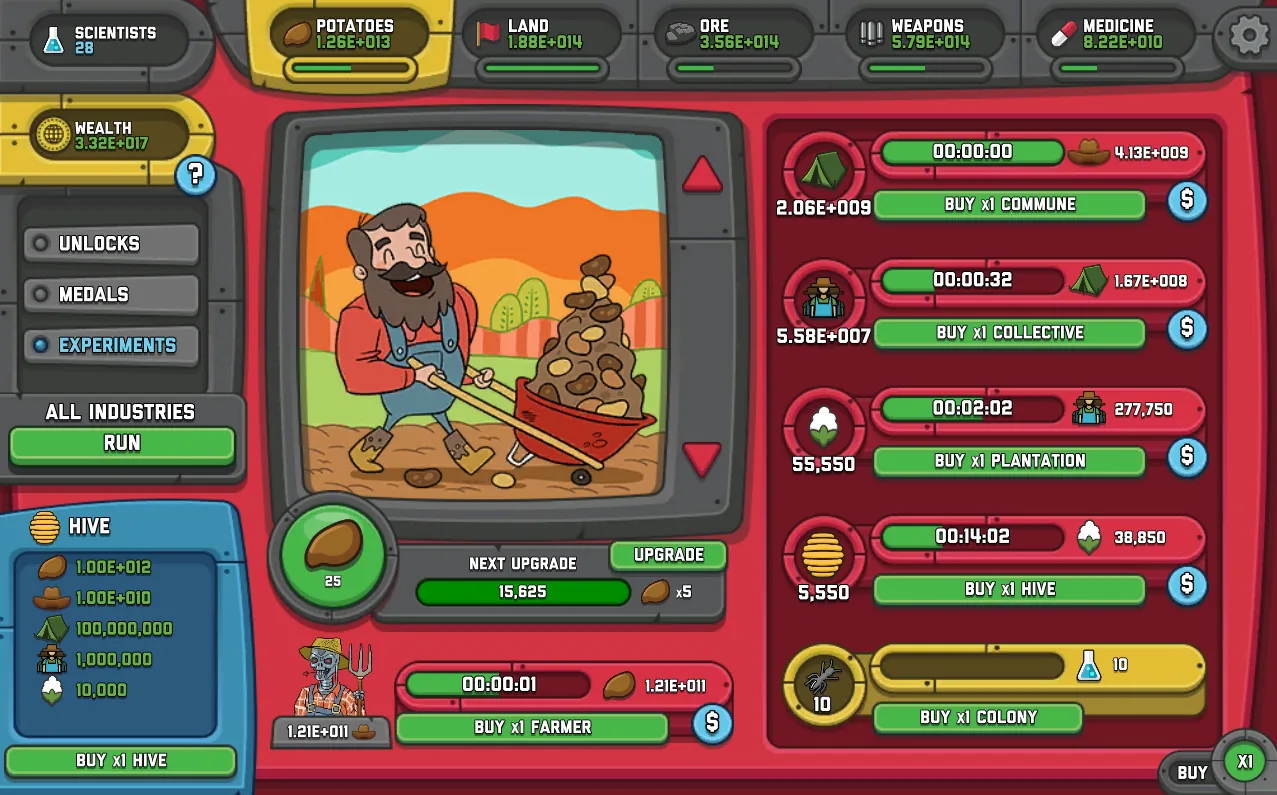
AdVenture CommunistImage: Hyper Hippo Games via Steam -
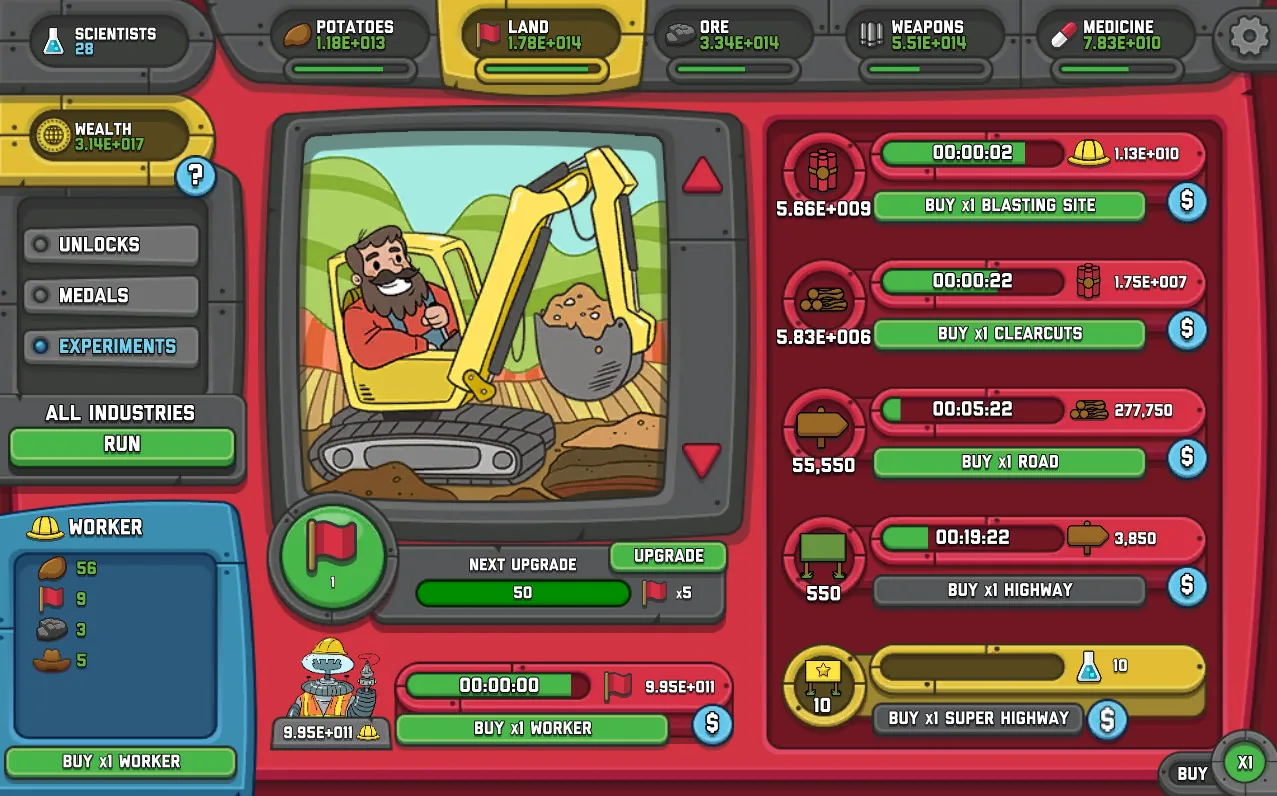
AdVenture CommunistImage: Hyper Hippo Games via Steam -
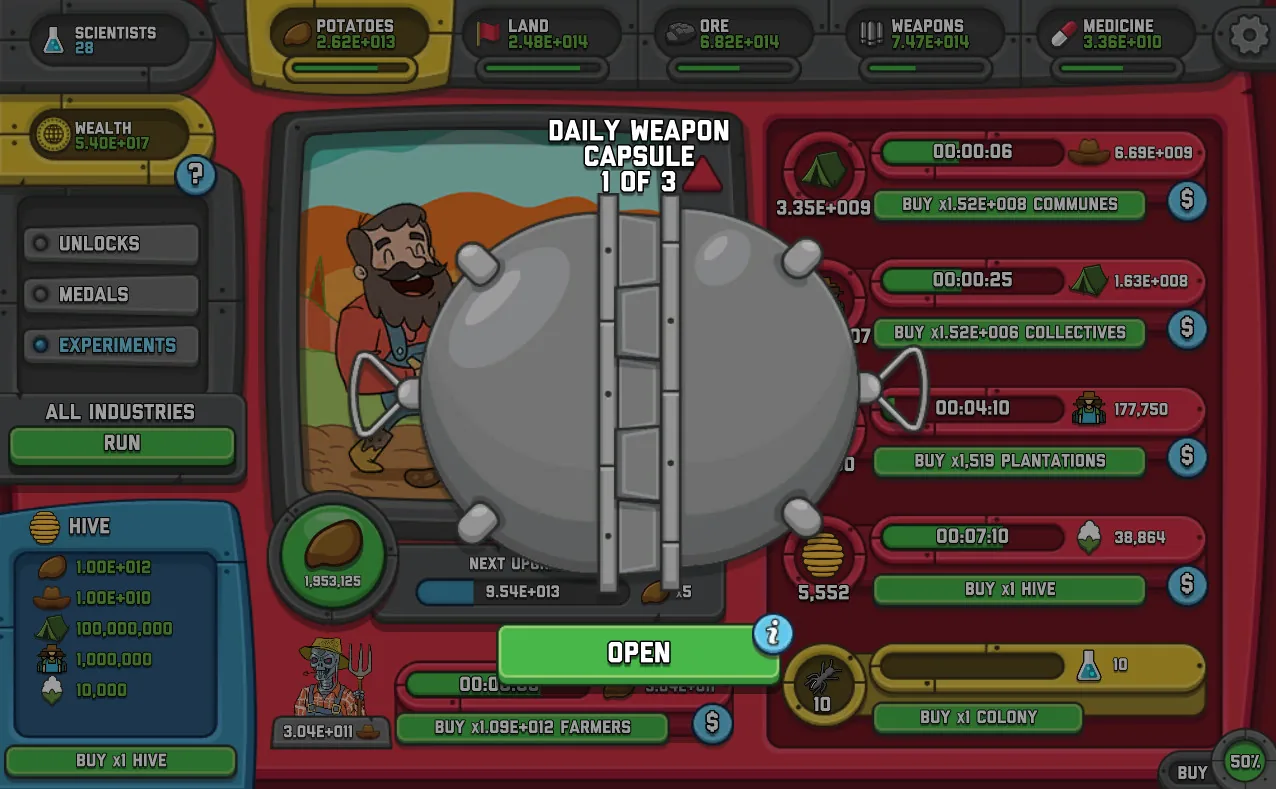
AdVenture CommunistImage: Hyper Hippo Games via Steam -
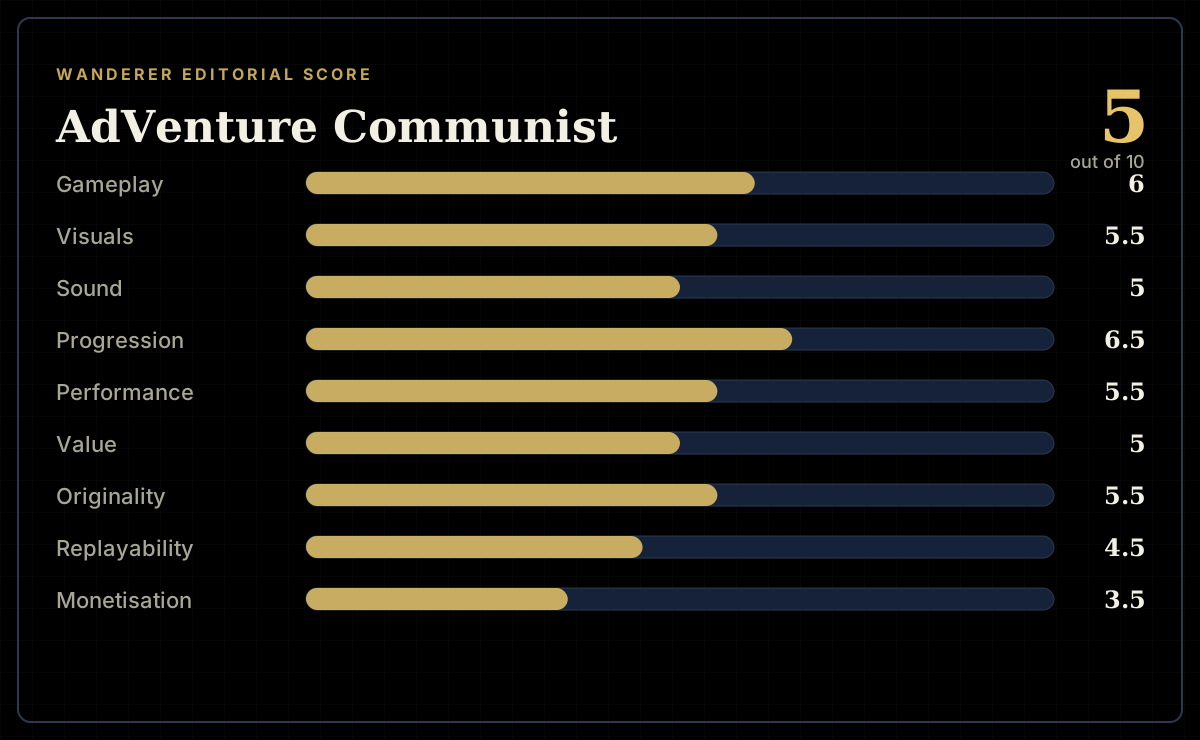
How the review scores each part of the gameWanderer Editorial -
The short versionWanderer Editorial