
Game review
A Merchant's Promise
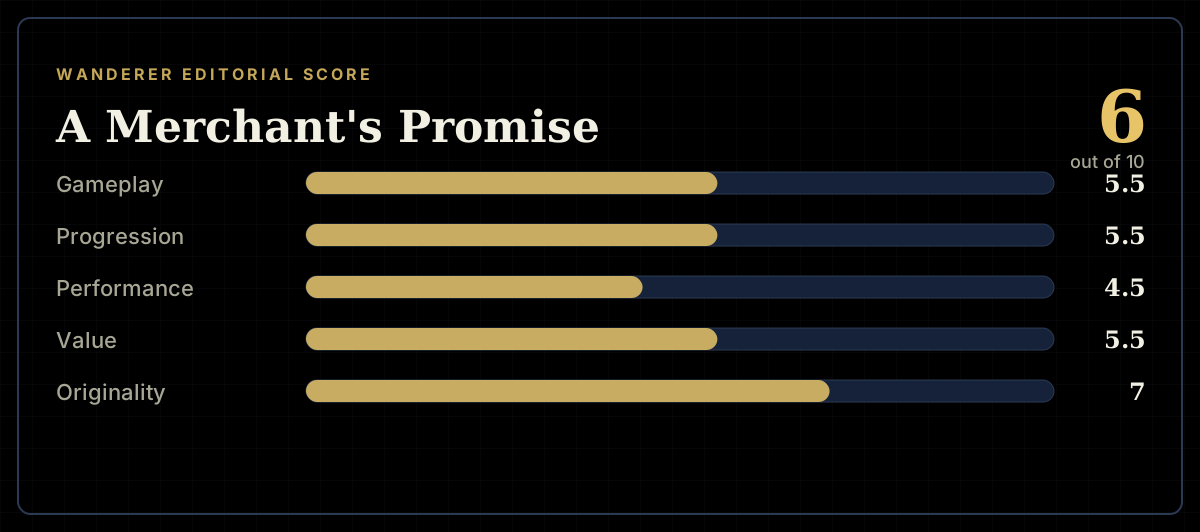
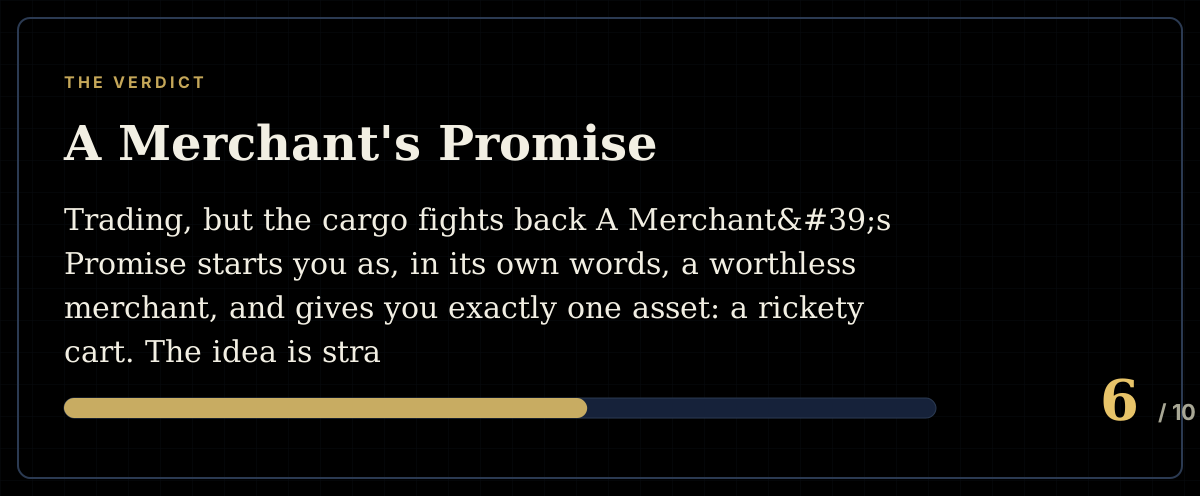
6 / 10
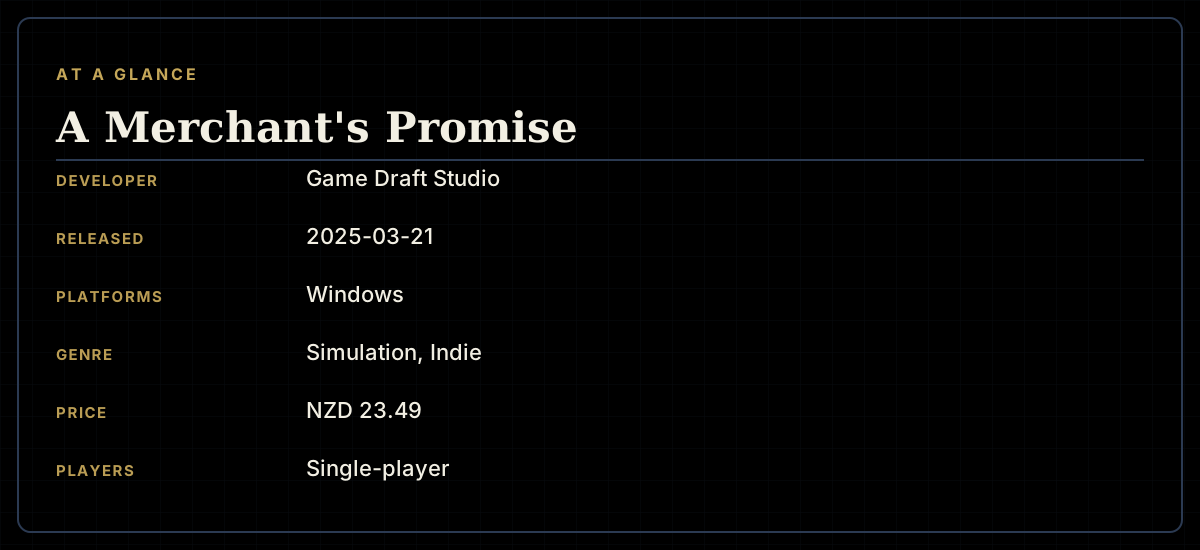
- Developer
- Game Draft Studio
- Publisher
- Game Draft Studio
- Released
- 21 March 2025
- Platforms
- Windows
- Genre
- Simulation, Indie
- Players
- Single-player
The short version
Biggest strengths
- A genuinely distinctive concept — hauling physics-simulated goods between medieval towns on a cart that can actually break, spill, and lose its load — that several reviewers say scratches an itch no other trading game does
- The developer is verifiably active and communicative, with a dense, ongoing patch cadence stretching well over a year past launch rather than tapering off
- Runs surprisingly well on Steam Deck according to multiple reports, with no keybind fiddling required
Biggest weaknesses
- Physics-based cart mechanics are reported broken often enough to end a session outright — carts spawning without wheels, falling through the map, or becoming permanently stuck
- Damaged goods can shatter into total loss with no partial-value fallback, a design decision multiple reviewers call punishing rather than tense
- Performance issues — frame drops and stutter — are reported even on modest scenes with little happening on screen
6 / 10
Trading, but the cargo fights back
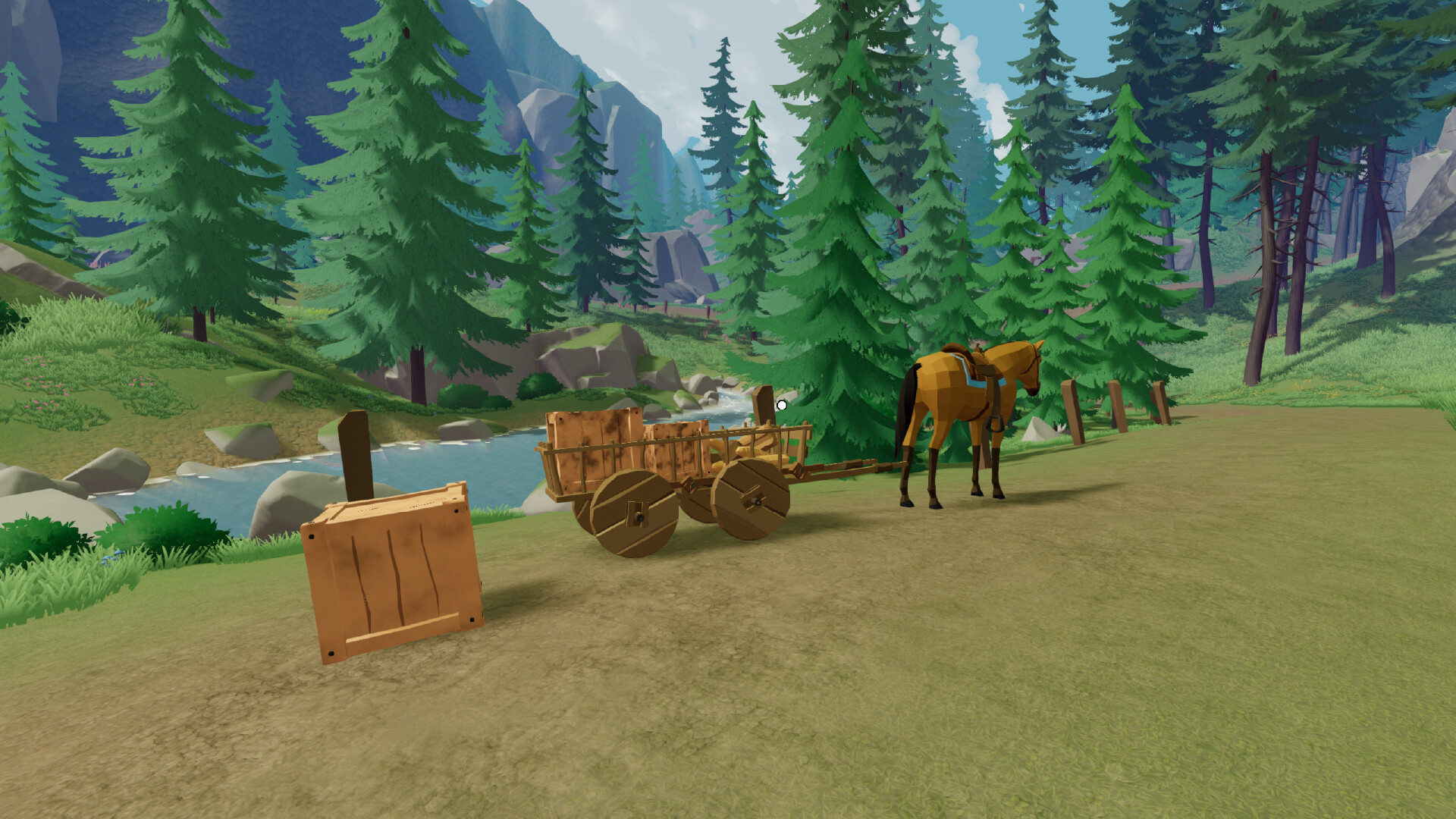
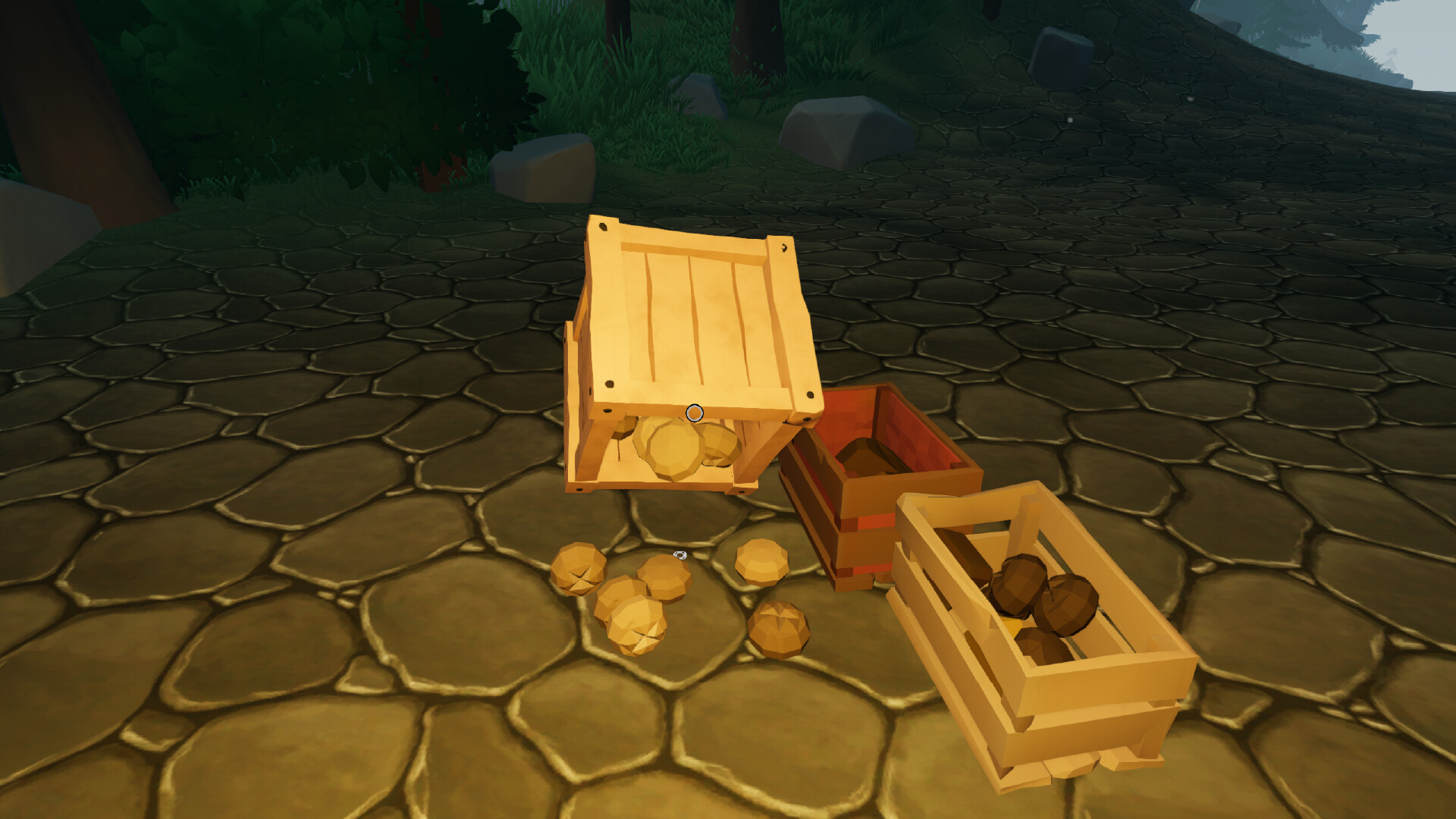
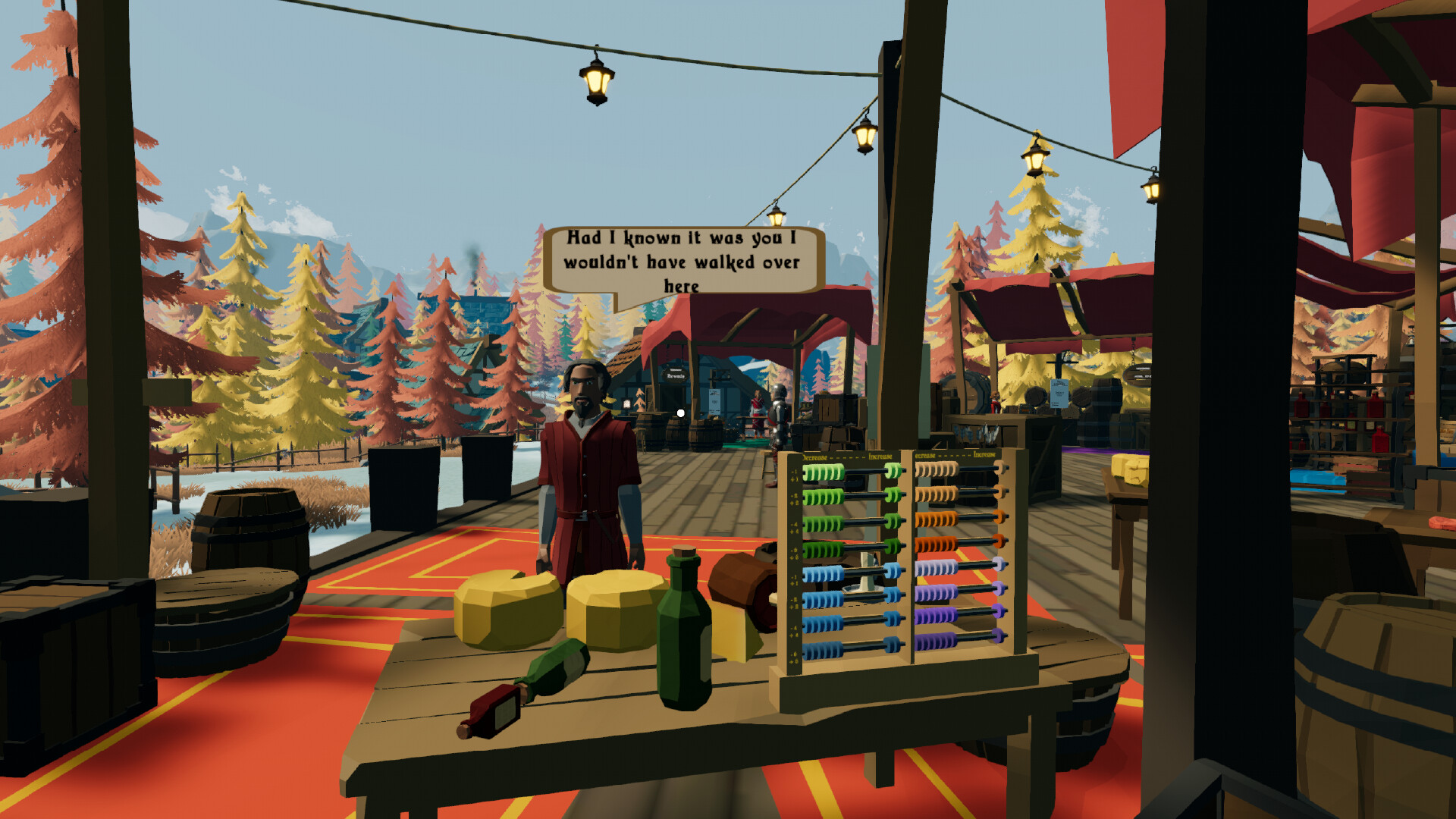
A Merchant's Promise starts you as, in its own words, a worthless merchant, and gives you exactly one asset: a rickety cart. The idea is straightforward trading-sim territory — buy goods cheap in one town, haul them somewhere they're worth more, sell, repeat — but the execution leans hard into physics simulation rather than abstracting the cargo into inventory slots. Fish, jars, and crates are real physical objects that can shift, tip, and shatter as your cart rattles over uneven medieval roads, and reviewers who click with that idea describe genuinely memorable emergent moments because of it. One of the most-upvoted reviews on the store page is essentially a short story about a run gone catastrophically wrong — a wagon of fish, a broken axle, and an ending living under the harbour stalls — delivered with real affection for the game that put them there.
That's the ceiling of what A Merchant's Promise is currently offering, and it's a genuinely appealing one: a trading game with real stakes attached to the physical act of transport, rather than a spreadsheet wearing a medieval skin. Several reviewers single out the Steam Deck experience specifically, reporting the control scheme works out of the box with no keybind adjustment needed, which is a small but concrete point in favour of a game this early in development.
Early Access growing pains, documented rather than assumed
The negative review sample is dense with a specific, recurring kind of complaint: the physics systems central to the game's identity don't yet reliably work. Reviewers report carts spawning without wheels and unable to have them added, carts falling through the map entirely, and multiple forced restarts within a single five-hour session because the simulation broke in a way that made continuing impossible. A related complaint concerns the goods themselves — cargo that takes damage doesn't degrade gracefully, it "explodes" or "shatters into pieces" once a damage threshold is crossed, with no option to sell it at a reduced price instead. More than one reviewer calls this punishing rather than tense, since a single bad road or a moment of rain can erase an entire haul's value instantly rather than partially.
Performance is a second, independently reported problem — multiple reviewers describe frame drops and choppy performance in scenes that, visually, have very little going on, which is a red flag for the simulation's current optimisation state rather than a hardware-scaling issue specific to weaker machines. And several reviewers describe onboarding friction from systems that aren't explained before they matter: a foraging permit that silently expires, rain that damages exposed goods with no warning the first time it happens, an early-game bottleneck where the only path forward depends on an NPC completing a scripted action that one reviewer reports simply never happens. These are the kinds of rough edges genuinely characteristic of an early Early Access build rather than a finished game's design failures, and the review base by and large treats them that way rather than as dealbreakers.
A developer who's actually still here
What separates this from several other rough Early Access titles this lane has covered is directly verifiable rather than a matter of reviewer trust: the developer's own Steam news feed shows a dense, essentially continuous patch cadence running from launch through the time of this review — numbered patch releases arriving multiple times per month, with no extended silence at any point in the history. Multiple reviewers independently cite this responsiveness as their reason for recommending the game despite its current rough state, describing "a Dev who is very active with constant updates, patches and communication with the community." For a genre and price point where abandoned Early Access is a real and recurring risk, that's a meaningfully different, and better, story than several comparable titles in this lane, and it's the main reason to treat the current jank as teething problems rather than a fixed ceiling.
What "worth it" depends on here
The split in the review sample maps cleanly onto expectations rather than taste. Reviewers who went in treating this as a finished purchase report bouncing off within three or four hours once they'd seen everything the current content loop offers — one review points out bluntly that most of the positive write-ups themselves admit to only a handful of hours before setting the game down, which is a fair thing to notice and repeat to anyone deciding whether to buy now versus later. Reviewers who went in explicitly framing the purchase as backing a promising Early Access project, with the expectation of returning periodically as content is added, report a far better experience and don't seem to mind the current session length in the same way.
That's a meaningful distinction for a buyer to make before purchasing rather than after: at NZD 23.49, this isn't an impulse price for what currently amounts to a few hours of core loop bracketed by real bugs, but it's a defensible one for someone specifically interested in following an actively-developed simulation game's progress from a rough but promising early state. The store page's own stated intent to prioritise a demo and refund-window transparency, which several reviewers note approvingly, suggests the developer is at least aware of exactly this dynamic and trying to let players self-select accordingly.
Where this leaves it
A Merchant's Promise is an Early Access game in the most literal sense: a genuinely interesting core idea, executed with real rough edges, backed by a developer who is visibly still building it. The physics-driven cargo system is either the best or most frustrating part of the game depending entirely on whether you hit it on a good day or a bad one, and right now the odds of a session-ending bug are high enough that this is a purchase for patient players who want to watch a promising concept mature, not for anyone looking for a polished trading sim today. Given the patch history, that calculus is likely to improve — but judge it on what it currently is, not what its update notes promise it will become.
Pros and cons
Pros
- A genuinely distinctive concept — hauling physics-simulated goods between medieval towns on a cart that can actually break, spill, and lose its load — that several reviewers say scratches an itch no other trading game does
- The developer is verifiably active and communicative, with a dense, ongoing patch cadence stretching well over a year past launch rather than tapering off
- Runs surprisingly well on Steam Deck according to multiple reports, with no keybind fiddling required
- The rough, dark-comic tone of a run gone wrong ("stole a piece of wood on wheels, foraged mushrooms, became rich, died of thirst") is genuinely part of the appeal for the reviewers who click with it
Cons
- Physics-based cart mechanics are reported broken often enough to end a session outright — carts spawning without wheels, falling through the map, or becoming permanently stuck
- Damaged goods can shatter into total loss with no partial-value fallback, a design decision multiple reviewers call punishing rather than tense
- Performance issues — frame drops and stutter — are reported even on modest scenes with little happening on screen
- Systems like foraging permits and rain damage are introduced with little explanation, leading to reviewers feeling softlocked or blindsided by rules they had no way to anticipate
- Several reviewers report bouncing off after three to four hours once the loop's current content is exhausted
Screenshots
-
A Merchant's PromiseImage: Game Draft Studio via Steam -
A Merchant's PromiseImage: Game Draft Studio via Steam -
A Merchant's PromiseImage: Game Draft Studio via Steam -
How the review scores each part of the gameWanderer Editorial -
At a glanceWanderer Editorial -
The short versionWanderer Editorial