Game review
Doodle Empires
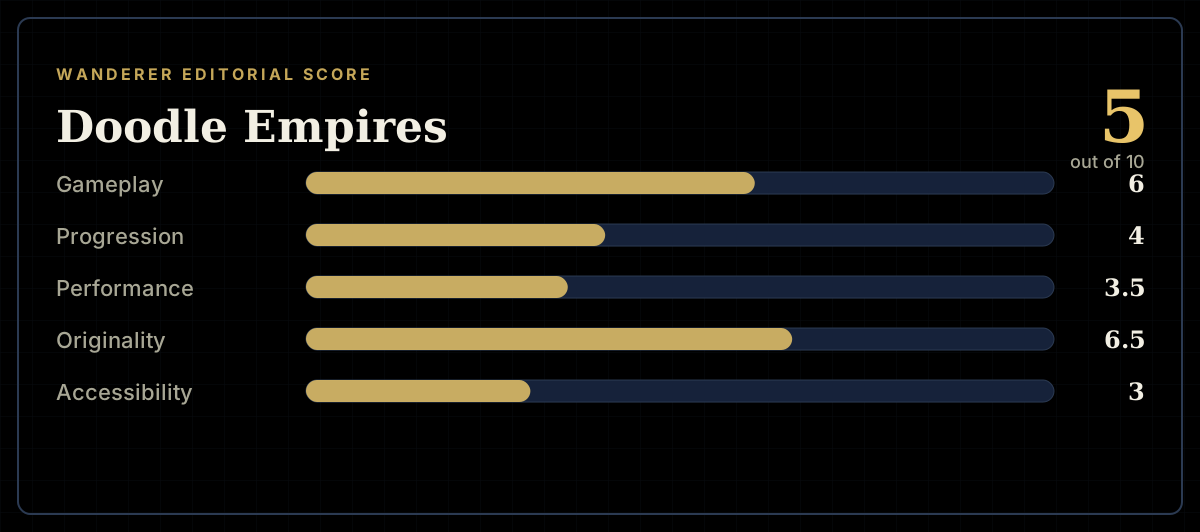
5 / 10
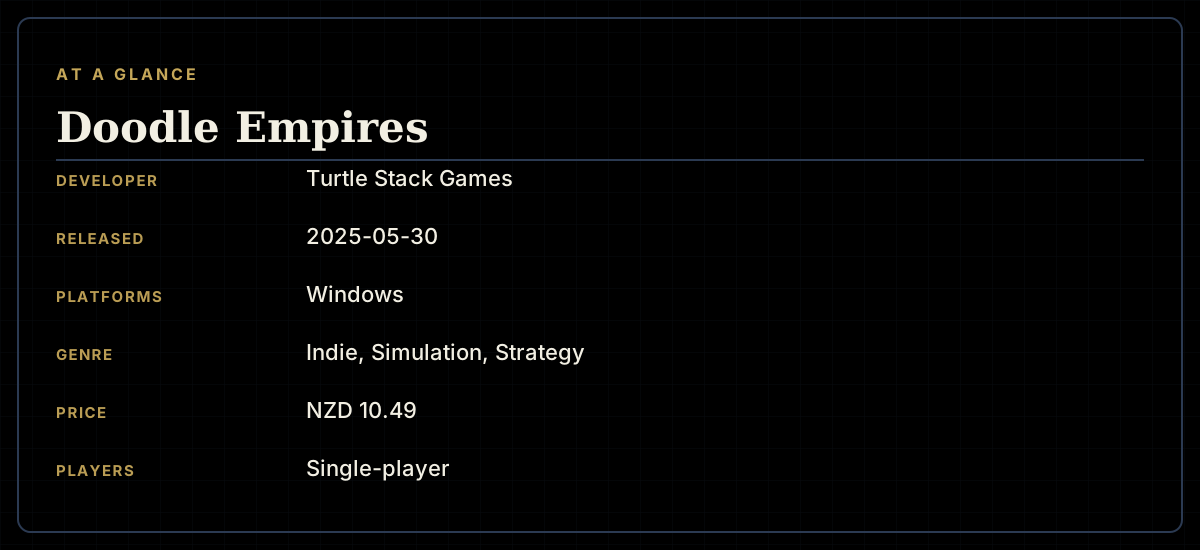
- Developer
- Turtle Stack Games
- Publisher
- Turtle Stack Games
- Released
- 30 May 2025
- Platforms
- Windows
- Genre
- Indie, Simulation, Strategy
- Players
- Single-player
The short version
Biggest strengths
- A genuinely addictive, distinctive core loop — draw your own nations onto a blank map and watch alternate history unfold — that a large and enthusiastic niche audience describes as scratching an itch no other game does
- Simple enough to describe in a sentence but deep enough that dedicated players report hours of "effortless fun" once the loop clicks
- Originated on itch.io with an existing fanbase that carried over to Steam, giving the developer a real base of invested, long-term players to build on
Biggest weaknesses
- Frequent, well-documented stability problems: crashes during normal play, saves broken by updates, and at least one specific report of an update deleting a player's progress entirely
- A serious, specific accessibility hazard reported on Linux: a rapid-flashing startup screen that also locks out all input, described by the affected reviewer as an epilepsy trigger, with no developer response when contacted
- No in-game tutorial, forcing new players to rely on an external wiki just to understand basic mechanics
5 / 10
Draw a world, then watch it tear itself apart
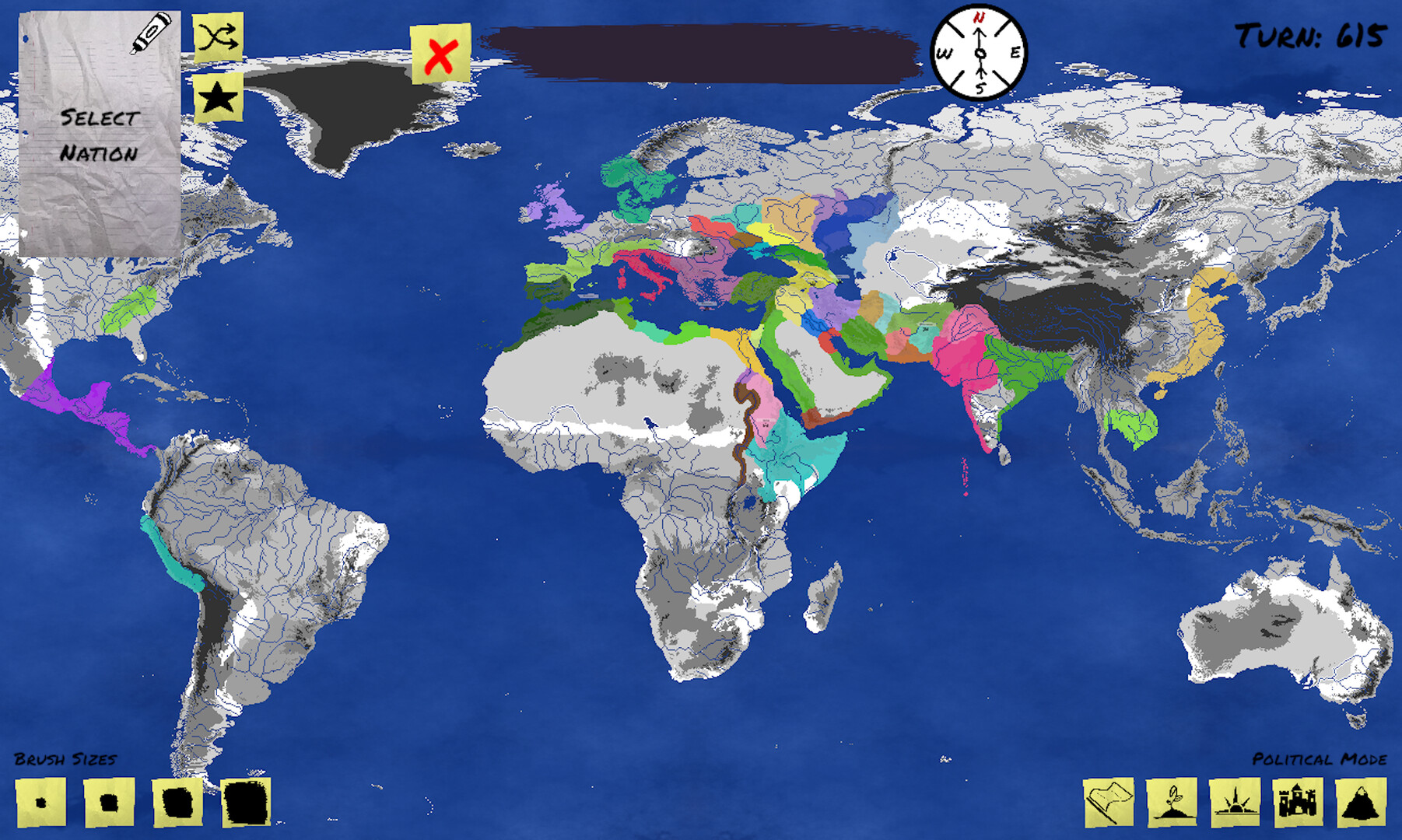
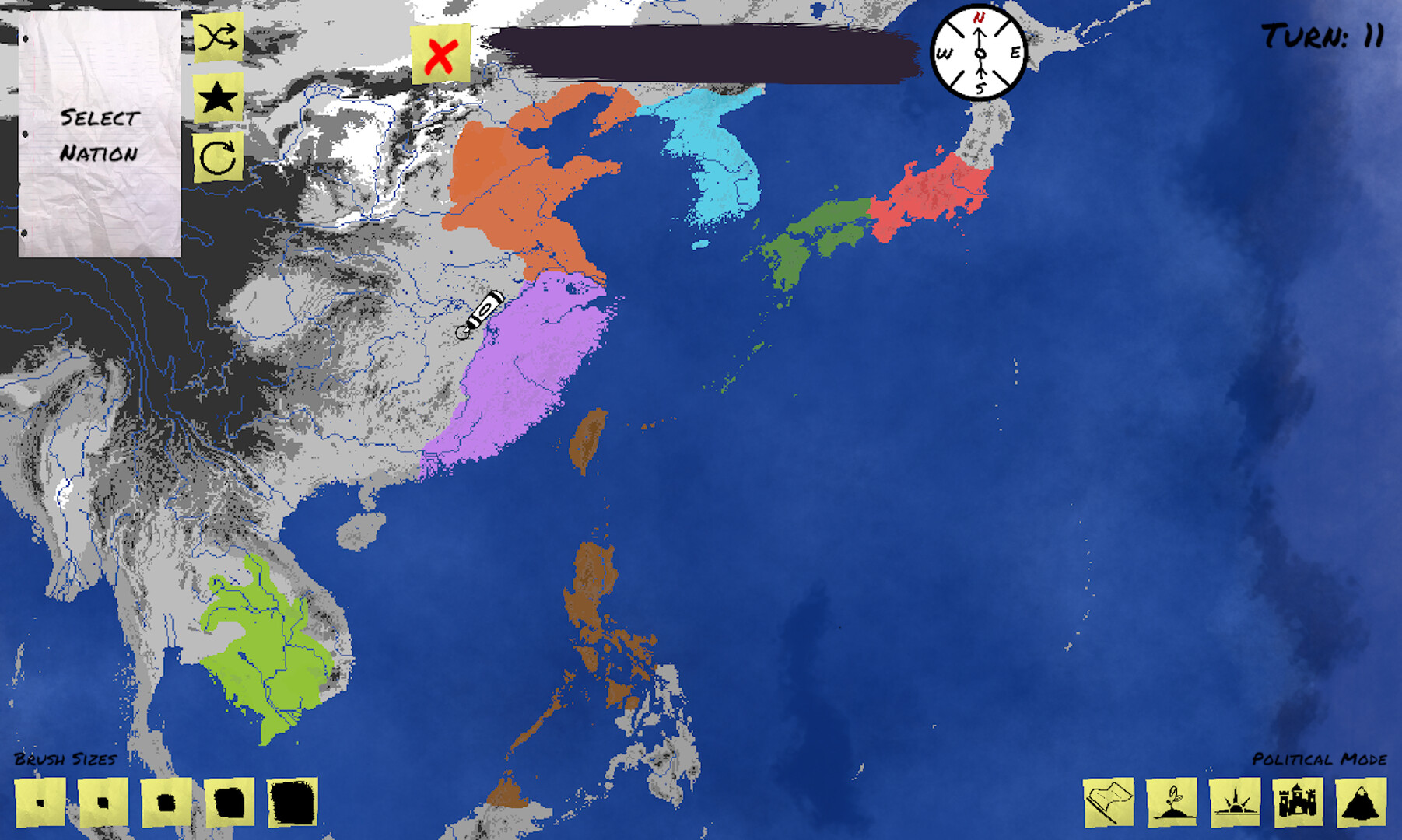
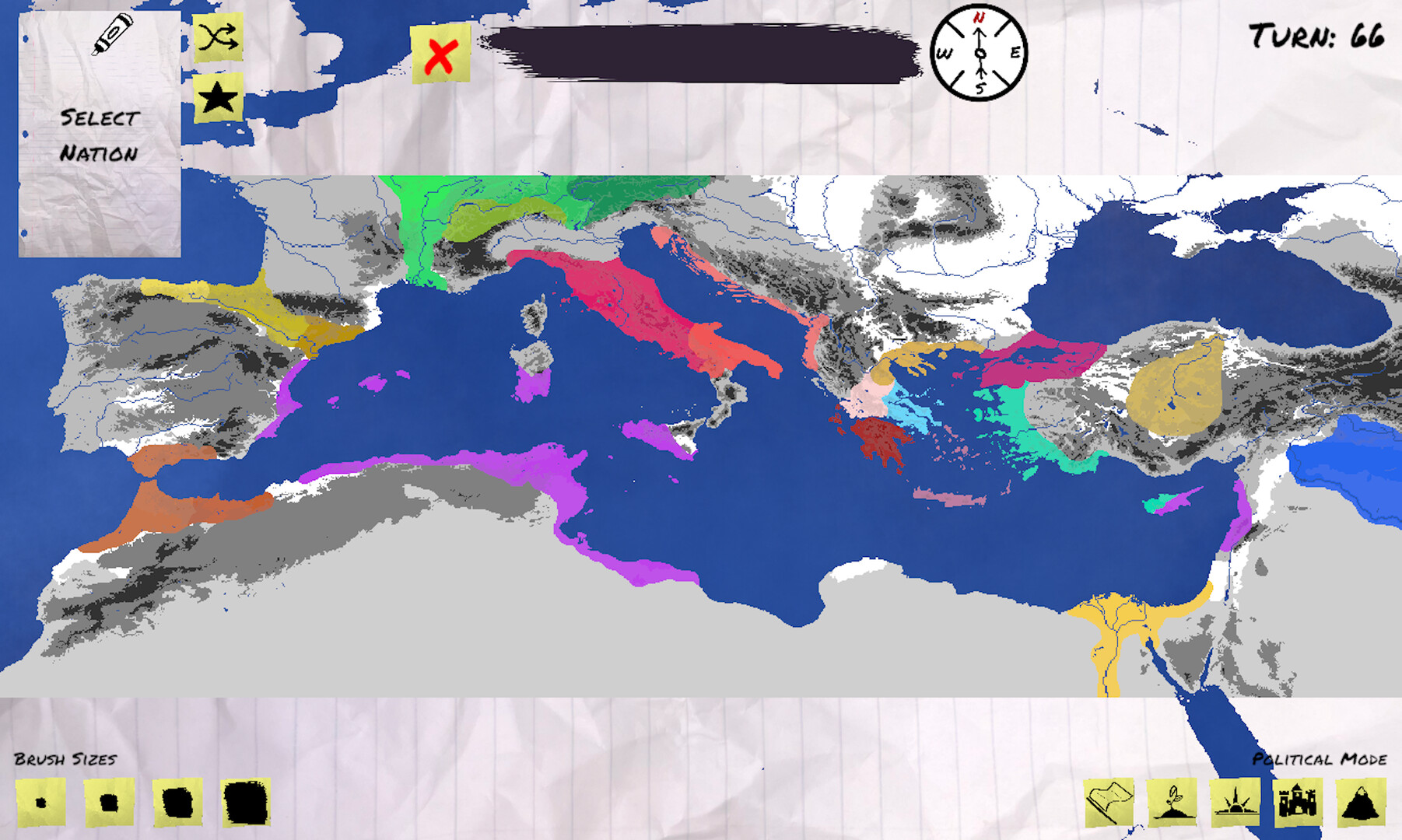
Doodle Empires is built around one of the simplest, most immediately graspable premises in the sandbox genre: you draw your own nations directly onto a blank map, and the simulation takes it from there, evolving borders, alliances, and conflicts across turns of alternate history you never scripted beyond the initial shapes. It's the kind of idea that sounds almost too simple to sustain a full game, and yet it's clearly landed with a genuinely large, dedicated audience who carried the project over from its original release on itch.io. "This game was made for fourteen year-old me autistically drawing fantasy maps in my school notebook. Highly recommend," one review puts it, capturing exactly the specific, nostalgic appeal the game is chasing and, for a meaningful slice of players, successfully hitting.
Reviewers who click with the concept describe it in genuinely enthusiastic terms — "sure you need to be a certain type of big nerd to enjoy this, but if you are that type of big nerd... it's hours of effortless fun," one writes, and another calls it something that "scratches an itch I never knew I had." The absurdist, emergent stories the simulation produces (one reviewer recounts a war between nations fought over ideological disagreements ending in a surprising unification) are clearly a big part of the draw, in the same tradition as WorldBox and similar "watch the world simulate itself" sandbox titles.
A rough, frequently broken Early Access build
Set against that genuine appeal is a review base full of specific, recurring, and serious stability complaints. Multiple reviewers independently describe the game crashing during ordinary play, sometimes repeatedly within short sessions — "I get in a game for 1 minute, and boom! Crash," one reviewer writes, calling the game "litterally unplayable" as a result. More seriously, several reviewers report that updates have actively broken saved games or, in at least one case, deleted progress outright: "every time I get really invested in the world a new update breaks it," one long-time player writes, adding pointedly that the game has been out for a year and the basic ability to reliably load a save "is not one of the priorities" the developer has addressed. A separate reviewer reports the identical pattern independently, describing selection and card-related mechanics as "broken almost every game" while still recommending the concept enough to suggest others wishlist it rather than buy immediately.
One specific report deserves particular attention because it concerns player safety rather than ordinary jank: a reviewer on Linux describes a rapid-flashing screen during startup that also disables all input, explicitly framing it as an epilepsy risk, and states they were unable to reach the developers to report it, posting the warning as a review instead since there was apparently no other channel. This review can't independently verify the bug's exact trigger conditions, but a specific, concrete safety concern raised this directly is worth surfacing plainly rather than folding into general "buggy" complaints.
Missing the basics that make a sandbox forgiving
Beyond stability, two more specific complaints recur often enough to treat as real design gaps rather than isolated frustration. First, the game currently offers no in-game tutorial, and multiple reviewers describe having to search out an external wiki just to understand core mechanics — one reviewer says even general web searches failed to surface adequate guidance, and ultimately refunded the game rather than continue guessing at systems the game itself never explains. Second, and perhaps more fundamental to a genre built entirely around an initial map-drawing phase: there's reportedly no way to fix or undo a mistake in your drawn borders once a playthrough has begun. For a game whose entire premise depends on getting your starting shapes right, the absence of any correction tool is a real structural gap rather than a minor inconvenience.
Reviewers who know the genre well also draw a direct, specific comparison to WorldBox, the more established title covering similar ground, and the comparison isn't flattering: "it's an okay country sandbox but WorldBox is 100% just better, this has no war system no flag system and is in general lacking A LOT," one reviewer states. That's a useful benchmark for anyone deciding between the two, particularly given both occupy the same small niche of "watch your drawn nations simulate history."
A wishlist that reveals what the game is missing
One of the more useful reviews in the sample isn't a complaint at all but a constructive list of what an engaged, long-time player wants added: more language options, reduced lag, achievements tied to specific in-game milestones, dedicated alliance and war cards, full-scale world wars, and a scenario-selection page for jumping into pre-built historical setups rather than always starting from a blank map. That list is worth reading as a roadmap of the gap between what Doodle Empires currently is and what its most invested fans believe it could become — features that would meaningfully close the distance to WorldBox rather than leaving the comparison one-sided. None of it is currently in the game, but its specificity suggests a community that's thought carefully about the concept's potential rather than one that's simply frustrated and moving on.
That's a genuinely useful signal for Early Access specifically: a wishlist this detailed, from players who are clearly still playing despite the bugs, points toward real headroom for the game to grow into a stronger recommendation later, even if today's build asks a lot of patience to reach the good parts.
Where this leaves it
Doodle Empires has a genuinely charming, distinctive hook that's clearly earned real devotion from a specific audience who grew up doodling their own fictional countries and finally have a game built for exactly that impulse. What holds it back, emphatically, is the current state of the Early Access build: frequent crashes, save-breaking updates, at least one reported case of progress lost entirely, a specific and serious accessibility hazard with no apparent developer response, and basic onboarding and error-correction tools still missing after roughly a year in the wild. Worth wishlisting for the concept, and worth playing if you're already the specific kind of player it's built for, but several of its own most invested fans are actively telling newcomers to wait for real stability before buying in.
Pros and cons
Pros
- A genuinely addictive, distinctive core loop — draw your own nations onto a blank map and watch alternate history unfold — that a large and enthusiastic niche audience describes as scratching an itch no other game does
- Simple enough to describe in a sentence but deep enough that dedicated players report hours of "effortless fun" once the loop clicks
- Originated on itch.io with an existing fanbase that carried over to Steam, giving the developer a real base of invested, long-term players to build on
- Cheap enough that even heavily critical reviewers rarely call it a bad value on price alone
Cons
- Frequent, well-documented stability problems: crashes during normal play, saves broken by updates, and at least one specific report of an update deleting a player's progress entirely
- A serious, specific accessibility hazard reported on Linux: a rapid-flashing startup screen that also locks out all input, described by the affected reviewer as an epilepsy trigger, with no developer response when contacted
- No in-game tutorial, forcing new players to rely on an external wiki just to understand basic mechanics
- No way to correct a map-drawing mistake once a session has started, a real problem for a genre built entirely around the initial map layout
- Widely and directly compared unfavourably to WorldBox, the genre's dominant title, which reviewers say offers features (a war system, flags, more world-simulation depth) this game currently lacks
Screenshots
-
Doodle EmpiresImage: Turtle Stack Games via Steam -
Doodle EmpiresImage: Turtle Stack Games via Steam -
Doodle EmpiresImage: Turtle Stack Games via Steam -
How the review scores each part of the gameWanderer Editorial -
At a glanceWanderer Editorial -
The short versionWanderer Editorial