
Game review
Bulwark: Falconeer Chronicles
7 / 10
- Developer
- Tomas Sala
- Publisher
- Wired Productions
- Released
- 26 March 2024
- Platforms
- Windows, PlayStation 5, Xbox Series X|S
- Genre
- City Builder
- Monetisation
- One-time purchase, with optional paid cosmetic and faction DLC packs
- Players
- Single-player
The short version
Bulwark: Falconeer Chronicles is solo developer Tomas Sala's return to the fantasy world of his acclaimed combat-flight game The Falconeer, swapping aerial dogfighting for procedural city building — growing sprawling settlements up out of rock formations in a windswept ocean world, one platform and connecting bridge at a time. It's Very Positive on Steam at 85.2% across roughly 1,375 reviews, and the review that keeps recurring, especially from the game's first few months, is a specific and honest one: the opening hours of carving out a first settlement are genuinely magical, and then the game runs out of things to ask of the player well before it should. Sala responded to that exact criticism directly, and unusually fast for a solo developer — a free content update released within six months of launch, renaming the game Bulwark Evolution and adding three distinct new ways to play, including a no-conflict Freebuild mode and a considerably harder Total Conquest mode. Reviews posted well after that update still describe real friction with the camera, tutorial and UI, so the fix wasn't total, but the throughline of a small developer listening and following through is a genuinely rare thing to be able to report plainly.
Biggest strengths
- The core mechanic of carving settlements out of natural rock formations and connecting them with bridges and platforms is a genuinely original take on the city-builder genre
- Visual identity is distinctive and consistently praised even by critical reviewers, carrying over the same striking windswept-ocean aesthetic that made The Falconeer stand out
- The developer directly answered the game's most common launch-era criticism — thin mid-game content — with a free "Evolution" update within six months, adding Freebuild and Total Conquest modes alongside the original experience
Biggest weaknesses
- Camera controls, frequently locked to cities or to the player's scout character, draw specific and repeated frustration, with several reviewers citing this as actively working against the building experience the game is otherwise selling
- Tutorial and UI feedback are criticised as vague and incomplete across the review timeline, including reviews posted well after the Evolution update, with players reporting they got stuck unable to progress or expand without understanding why
- Harbor and structure placement is described by multiple reviewers as fiddly and unintuitive, with specific complaints about being unable to place two harbors close together without unclear invisible restrictions
Who it's for: Players who enjoy the meditative, creative side of city-building — watching a settlement grow organically across an unusual rock formation — will find a lot to love here, especially in Freebuild mode, which removes the resource and conflict pressure some reviewers found got in the way of the game's best ideas. Players who want a deep, systems-rich management sim with a long, escalating mid-game should try the free demo first and read the specific UI and pacing complaints below.
Our recommendation: Recommended, particularly at its current discounted price and particularly if you specifically play the Evolution update rather than judging the game by its original March 2024 launch state. The core building mechanic is genuinely distinctive, the visual identity is one of the more memorable in the genre, and a developer who directly answered the loudest launch criticisms within six months deserves the benefit of that follow-through.
7 / 10
From dogfights to driftwood
Tomas Sala made his name with The Falconeer, a striking, atmospheric combat-flight game set entirely over a windswept, storm-lashed ocean world called the Great Ursee. Bulwark: Falconeer Chronicles returns to that same world and swaps flight combat for city-building, tasking the player with growing settlements up out of the ocean's exposed rock formations — carving platforms, running bridges between outcrops, and gradually turning a bare stone spire into a sprawling, organically-shaped city. It's a genuinely distinctive premise for the city-builder genre, and it launched to a strong reception: Very Positive on Steam at 85.2% across roughly 1,375 reviews, with the striking, painterly visual identity that made The Falconeer memorable carrying over almost entirely intact.
A magical opening that ran out of road
The specific, recurring criticism that defined the game's first several months on Steam wasn't about what Bulwark does badly — it was about how quickly it stops asking anything new of the player. Multiple detailed reviews from the March 2024 launch window describe the opening hours in genuinely enthusiastic terms: watching a settlement take organic shape across an unusual rock formation, discovering new building types, forming alliances with other factions. And then, several of those same reviews say, the game simply stops escalating. One especially candid review put it as plainly as a criticism can be put: after finishing the tutorial and demo content, "you've played everything there was to play." Others describe reaching a point with no real mid-game or endgame goals, just a quiet plateau where towers stop feeling meaningful and momentum has nowhere left to go.
Compounding that pacing problem, reviewers across the entire timeline — not just the launch window — describe real friction with the game's camera and interface. The camera locking to cities or to the player's scout character is a specific, repeated complaint, described by multiple reviewers as actively working against the sense of freedom the building mechanic is supposed to deliver. Harbor placement draws its own specific frustration: several reviews describe invisible, unexplained restrictions that make it difficult or impossible to place two harbors near each other, with no clear UI feedback explaining why a placement is being rejected. Construction and resource costs are another recurring gap — players report not knowing what a given building or upgrade actually requires until after they've already committed resources to it, which undercuts the kind of careful planning city-builders usually reward.
The developer's answer, and how much of it landed
What makes Bulwark's story worth telling in more detail than a typical launch-critique writeup is what happened next. Within about six months of the original March 2024 release, Sala shipped a free update substantial enough to warrant renaming the game Bulwark Evolution: Falconeer Chronicles, adding three genuinely distinct ways to play rather than a handful of new building types bolted onto the same structure. Freebuild mode strips out resource pressure and conflict entirely, letting players build purely for the creative pleasure several early reviews said was the game's real strength all along. Total Conquest goes the opposite direction, starting the player at war with every faction simultaneously for a considerably harder, more combat-driven experience. That's a direct, substantive answer to the "runs out of things to do" criticism, delivered unusually fast for a solo-developer project, and it's the kind of post-launch follow-through that's genuinely rare enough to be worth crediting on its own merits.
It didn't fix everything, though, and honesty about that matters here too. Reviews posted well after the Evolution update — some dated well into 2025 and 2026 — continue to describe the same camera lock frustrations, the same unclear tutorial gaps, and the same difficulty understanding construction costs before committing to them. The mid-game content problem got a real, substantive answer; the interface and onboarding problems, by contrast, appear to have persisted largely unchanged across the whole life of the game so far.
Faction identity and the wider world of the Great Ursee
One thing the original release did get right from the start, and which the Evolution update built on rather than needed to fix, is faction identity. Three starting scenarios drop the player into different factions scattered across the Great Ursee, each with its own starting position and its own "soultree" of unique unlockable content as the settlement attracts new populations. It's a smaller-scale echo of the same worldbuilding instinct that made The Falconeer's version of this setting distinctive — trade routes, alliances and rival commanders all carry real flavour rather than being reskinned versions of the same mechanic, and it's part of why reviewers who bounce off the interface friction still frequently say they want to like the game more than they end up recommending it. That gap between affection for the world and frustration with the tools used to build in it is the most honest way to describe where Bulwark sits, even after a year and a half of post-launch support.
Verdict
Bulwark: Falconeer Chronicles is a genuinely original idea from a solo developer working in a distinctive fantasy world, and its opening hours of carving a settlement out of raw rock are exactly as magical as its most enthusiastic reviewers describe. Where it initially fell short — a thin mid-game with nowhere left to escalate — got a real, fast, substantive answer in the free Evolution update, which is more than most launch criticisms of this kind ever receive. Where it still falls short — camera control, tutorial clarity, and construction cost transparency — remains a fair complaint even now. Judge this one by the Evolution version rather than its original launch state, expect Freebuild mode to be where its real strengths live, and go in patient with the interface rather than expecting it to hold your hand.
Pros and cons
Pros
- The core mechanic of carving settlements out of natural rock formations and connecting them with bridges and platforms is a genuinely original take on the city-builder genre
- Visual identity is distinctive and consistently praised even by critical reviewers, carrying over the same striking windswept-ocean aesthetic that made The Falconeer stand out
- The developer directly answered the game's most common launch-era criticism — thin mid-game content — with a free "Evolution" update within six months, adding Freebuild and Total Conquest modes alongside the original experience
- Freebuild mode specifically removes resource pressure and conflict, letting players build purely for the pleasure of it, which several reviewers say suits the game's real strength better than the original conflict-driven structure
- As a solo-developer project, the scope and polish of what's here is genuinely impressive, and the price reflects that scale honestly rather than overreaching
Cons
- Camera controls, frequently locked to cities or to the player's scout character, draw specific and repeated frustration, with several reviewers citing this as actively working against the building experience the game is otherwise selling
- Tutorial and UI feedback are criticised as vague and incomplete across the review timeline, including reviews posted well after the Evolution update, with players reporting they got stuck unable to progress or expand without understanding why
- Harbor and structure placement is described by multiple reviewers as fiddly and unintuitive, with specific complaints about being unable to place two harbors close together without unclear invisible restrictions
- Several detailed early reviews describe the original launch content as running out within a few hours — "you've played everything there was to play" — a criticism that predates but directly motivated the Evolution update
- Resource and construction costs are frequently described as unclear at the point of building, leaving players uncertain what a given upgrade actually requires until they've already committed to it
Screenshots
-

Bulwark: Falconeer ChroniclesImage: Wired Productions via Steam -

Bulwark: Falconeer ChroniclesImage: Wired Productions via Steam -

Bulwark: Falconeer ChroniclesImage: Wired Productions via Steam -
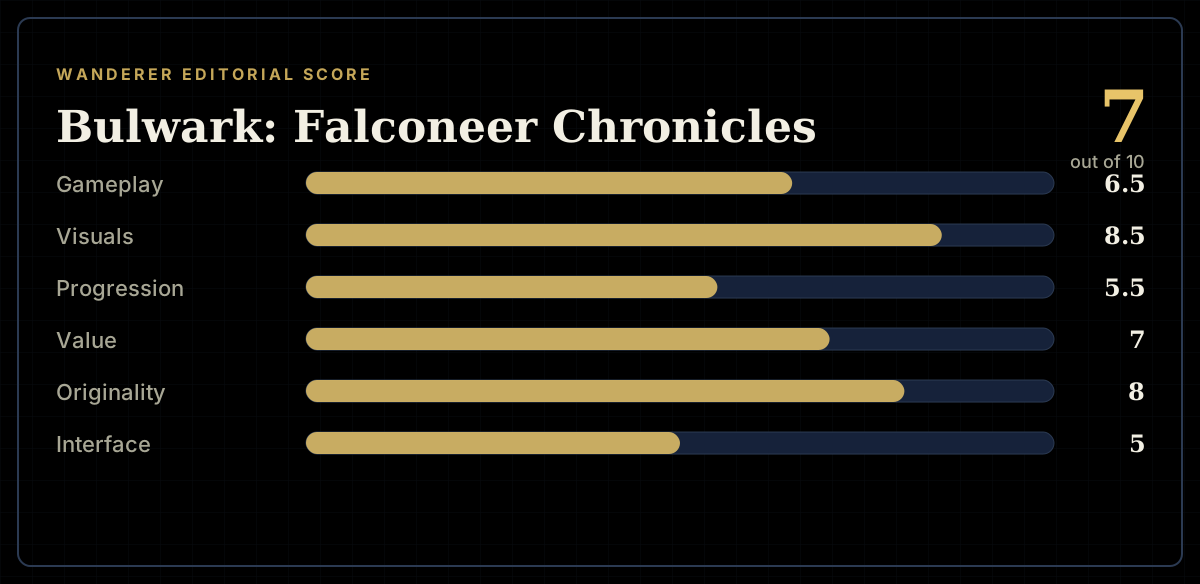
How the review scores each part of the gameWanderer Editorial -
The short versionWanderer Editorial