Game review
Wyldernook
6.5 / 10
- Developer
- Studio Kejami
- Publisher
- Studio Kejami
- Released
- 23 June 2026
- Platforms
- Windows
- Genre
- Casual, Indie, Strategy, Free To Play, Early Access
- Monetisation
- free
- Players
- true
The short version
Biggest strengths
- A genuinely fresh simultaneous-turn structure, praised by longtime TCG veterans as one of the more inventive systems they've encountered in years
- The Devotion deckbuilding mechanic, letting players mix up to three of seven factions, praised for adding real strategic depth and doubling as an elegant card-balancing tool
- An unusually generous free-to-play economy, with multiple reviewers noting hundreds of craftable cards obtainable without spending money
Biggest weaknesses
- A rough, largely absent new-player onboarding experience, with reviewers noting there's no real tutorial beyond playing against faction decks
- Real balance problems flagged by multiple reviewers, including at least one specific faction deck described as effectively unbeatable at launch
- A currently thin player population making PvP matchmaking difficult for some reviewers, one describing being pushed toward bot matches by a lack of opponents
Who it's for: Experienced TCG players looking for a genuinely inventive simultaneous-turn card game with a generous free-to-play economy, who can tolerate a rough Early Access onboarding experience and a currently small matchmaking population
Our recommendation: recommended with caveats
6.5 / 10
A card game that dares to break from the pack
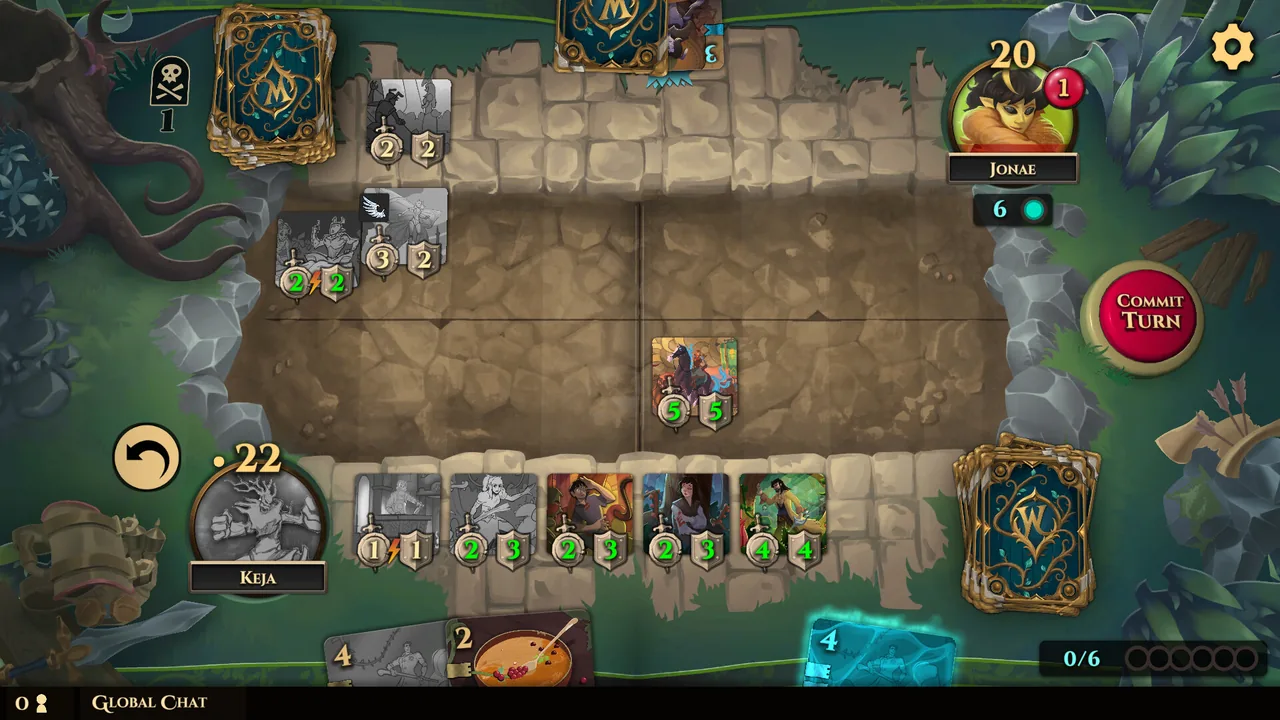
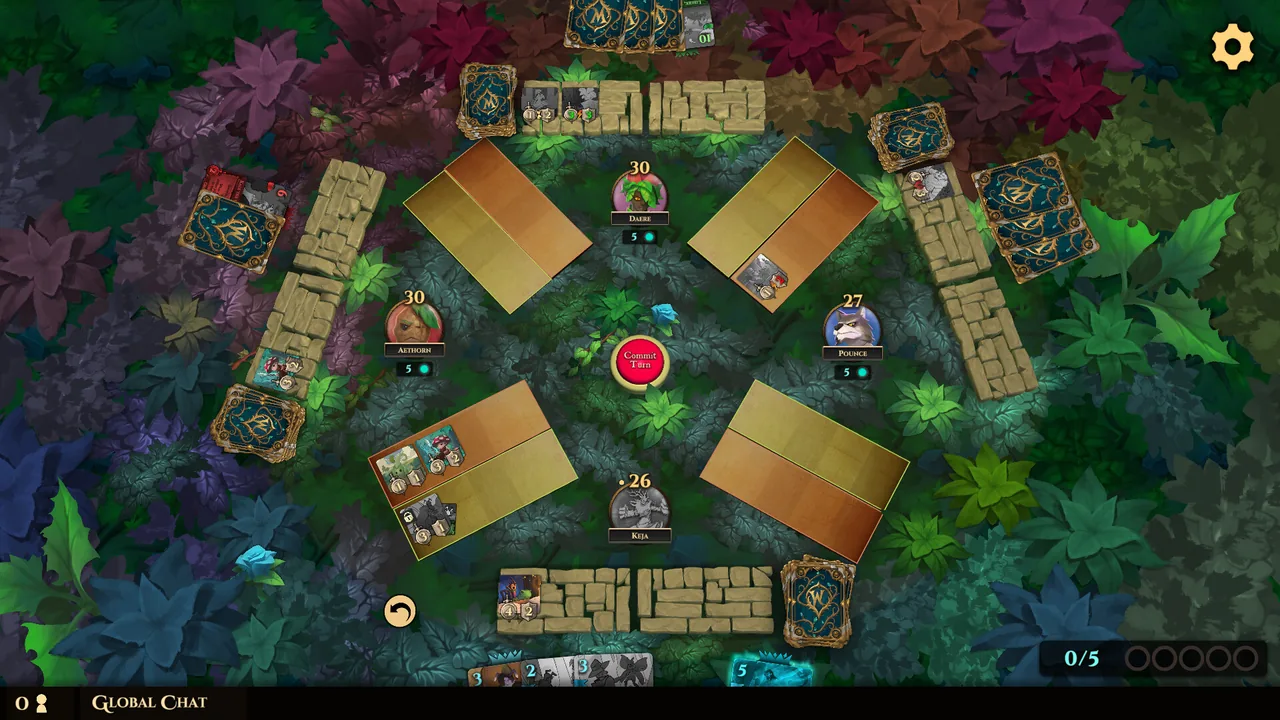
Wyldernook, from the original designer of Infinity Wars, builds its identity around a structural choice most digital TCGs avoid: simultaneous turns, where both players plan their moves in secret and everything resolves at once. Reviewers who've been in the genre a long time are notably enthusiastic about the result. One wrote, "I've been playing trading card games for 15+ years and I can confidently say that this is one of the best made TCG's I've ever played. For an Early Access game it's mind blowing how many incredible features this game already has." Another summarized their reaction bluntly: "Wyldernook is the most excited I've been about a TCG in a long time & I think it has a very bright future ahead of it."
The Devotion system: deckbuilding as a balancing act
The pool's most consistently praised mechanic is Wyldernook's Devotion system, which lets players combine up to three of seven factions in a single deck while managing a shared resource cost. One detailed reviewer explained why it works so well: "You have 7 Factions and can play any combination up to 3 Devotions. Cards cost 1, 2 or 3 Devotion in Deckbuilding, which makes Deckbuilding a fun thing since you have to think what cards you need and how much Devotion you can have. This is also a really great balancing tool." Another reviewer praised the same system from a different angle, calling it "a fresh and clever one, since it can also be used, through increasing or decreasing the Devotion cost of a card, for balancing the game." Combined with zone-based unit placement that adds a layer of bluffing and positioning to combat, described by one reviewer as letting players decide whether "to place your units" in an attacking or defensive rest zone, the combat system draws real, specific praise from players with deep genre experience.
A free-to-play economy that doesn't feel like a trap
Multiple reviewers singled out Wyldernook's monetization as unusually player-friendly for the genre. One wrote, "Super F2P friendly - you get around 300 cards after beating all faction starter decks AND you can craft ANY card in the game. You can also 'find' cards which drop as loot just from playing games regularly." Genuine card trading between players, a feature increasingly rare in modern digital TCGs, drew separate praise: one reviewer opened their review by highlighting "a new Digital TCG that actually respects the T since cards are Tradable." That said, at least one enthusiastic reviewer raised a specific concern about long-term sustainability tied to that same generosity, worrying the game could end up "too generous and thus causing its own demise" in the way some other generous-but-short-lived TCGs have struggled commercially.
New players are being left behind
Set against that praise from genre veterans, a specific and credible pattern emerges: newcomers to the game, or to TCGs generally, are having a rough time. The pool's longest critical review laid out the problem directly: "There is not really a tutorial. You can play against the factions and earn their starter decks upon winning each one, and that serves more or less as a tutorial... I think users new to the genre will feel completely lost." The same reviewer connected this to a deeper structural issue: "most of the die hards have huge collections and great decks, and the dev is balancing everything around them, and ignoring the new player experience entirely." That's a meaningful concern for a free-to-play game whose growth depends on continually attracting new players.
Balance problems, some quite specific
Several reviewers flagged concrete balance issues rather than vague difficulty complaints. One detailed account singled out a specific faction: "The third faction deck ('Pounce') is so overtuned that I was never able to beat it normally." Another reviewer put it more broadly: "Bad balance. Any experienced players can see the inconsistency between the powers and costs (including devotion requirement) of several cards," adding that the game's campaign mode still needs real tuning: "The final boss' mechanic is a joke; even I beat them twice, I still say they need more tweaking." These are the kind of specific, mechanically grounded complaints that carry real weight for an Early Access title still finding its balance.
A quiet lobby is the biggest immediate risk
The most practically serious complaint concerns population, not design. One reviewer wrote plainly, "One month after EA launch the game is here... the main problem is, that there are no players. There is the option in settings to not match against bots, if enabled you won't find a match... if the game is solely on PvE, it's trash." For a competitive multiplayer card game, a thin matchmaking pool is a genuinely serious risk to the experience regardless of how well the underlying systems are designed, and it's a concern that will need real attention from the developer as Early Access continues.
Verdict
Wyldernook offers a genuinely inventive foundation for a digital TCG, and reviewers with deep genre experience are responding to its simultaneous-turn structure, Devotion deckbuilding system, and generous free-to-play economy with real enthusiasm. But its Early Access growing pains are equally real: a largely absent new-player onboarding experience, specific and credible balance complaints, an underdeveloped campaign mode, and, most urgently, a currently thin player population that threatens the PvP experience the whole game is built around. Recommended for experienced TCG players willing to ride out Early Access rough edges for a genuinely fresh set of ideas, but newcomers to the genre, or anyone specifically hoping for reliable PvP matchmaking today, should watch for further updates before diving in.
Pros and cons
Pros
- A genuinely fresh simultaneous-turn structure, praised by longtime TCG veterans as one of the more inventive systems they've encountered in years
- The Devotion deckbuilding mechanic, letting players mix up to three of seven factions, praised for adding real strategic depth and doubling as an elegant card-balancing tool
- An unusually generous free-to-play economy, with multiple reviewers noting hundreds of craftable cards obtainable without spending money
- Genuine trading between players, a feature multiple reviewers specifically praised as rare among modern digital card games
Cons
- A rough, largely absent new-player onboarding experience, with reviewers noting there's no real tutorial beyond playing against faction decks
- Real balance problems flagged by multiple reviewers, including at least one specific faction deck described as effectively unbeatable at launch
- A currently thin player population making PvP matchmaking difficult for some reviewers, one describing being pushed toward bot matches by a lack of opponents
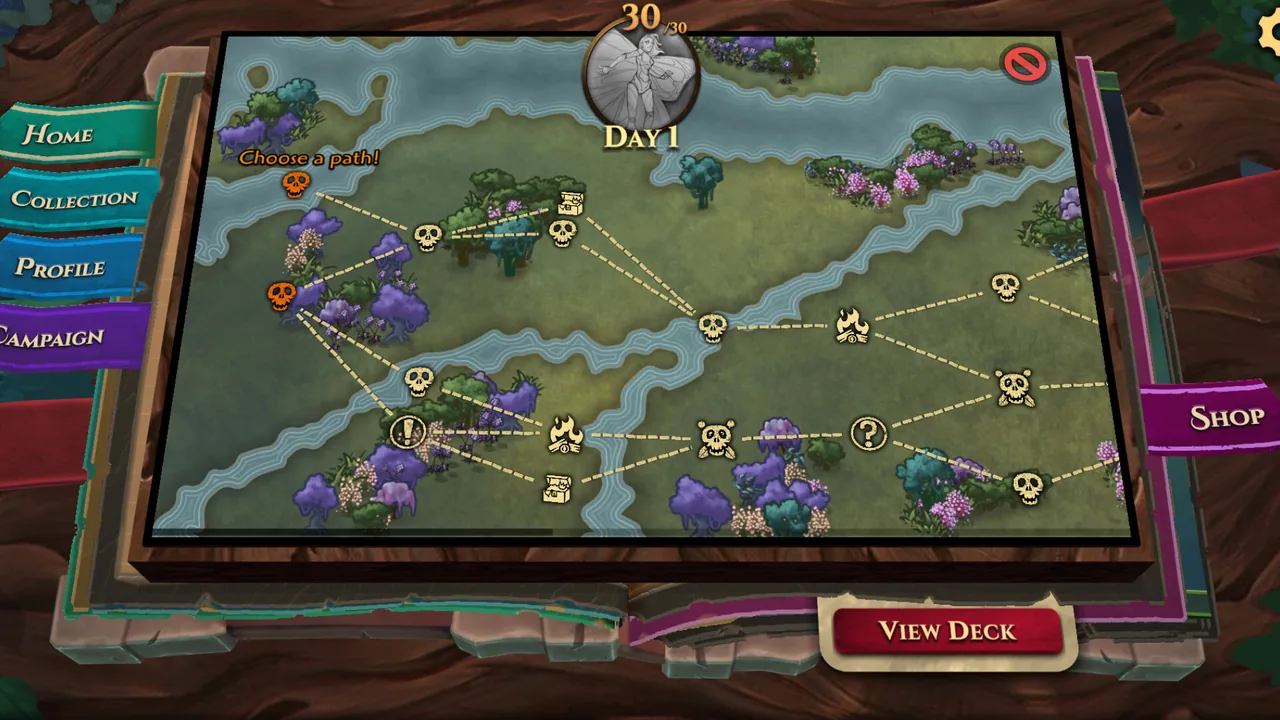
- An unfinished, highly random campaign/roguelike mode that one reviewer said still needs meaningful tuning, including a final boss mechanic called out as underdeveloped
Screenshots
-
WyldernookImage: Studio Kejami via Steam -
WyldernookImage: Studio Kejami via Steam -
WyldernookImage: Studio Kejami via Steam