
Game review
Wizardry Variants Daphne
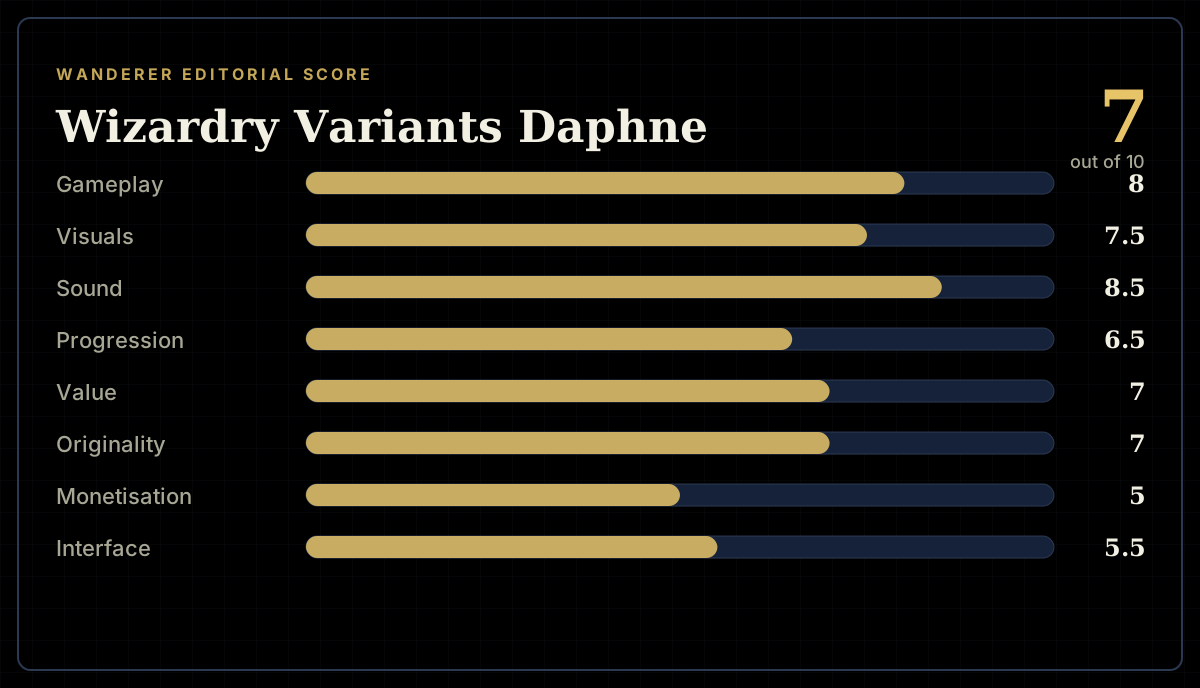
7 / 10
- Developer
- Drecom Co., Ltd.
- Publisher
- Drecom Co., Ltd.
- Released
- 15 October 2024
- Platforms
- Windows, Android, iOS
- Genre
- Dungeon Crawler RPG
- Monetisation
- Free to play with gacha character summons, premium currency and optional purchases
- Players
- Single-player, with asynchronous guild dispatches and online ranking events
The short version
Wizardry Variants Daphne is one of the few gacha games that actually understands the genre it's paying tribute to. Its dungeons are stingy, its deaths sting, and its combat rewards careful formation play the way the 1981 original did. The gacha layer sitting on top of that is more restrained than most of its peers, but its pity system is stingy enough, and its PC port rough enough, that the game undercuts its own best ideas.
Biggest strengths
- Turn-based combat is genuinely tense, with formation, spell range and enemy ambush angles all mattering
- Character death has real weight without being instantly unforgiving, thanks to the ash-and-revival system
- Free characters and free-to-play resources are enough to finish the main story
Biggest weaknesses
- Guaranteed-pull pity does not carry between banners, so a bad month of luck is simply lost
- The Steam build is a mobile UI wearing a PC skin, down to swipe-style movement that fights a mouse
- A March 2026 update tightened kernel-level anti-cheat enough to break the game for Steam Deck and Linux players who were previously getting by
Who it's for: Old-school dungeon-crawler fans who can tolerate a gacha economy wrapped around a genuinely difficult game, and mobile RPG players who want something with real consequences for failure.
Our recommendation: Play it free on mobile or PC, spend nothing for the first several weeks, and decide only then whether the pull rates are worth your money.
7 / 10
A Wizardry game that remembers what Wizardry was
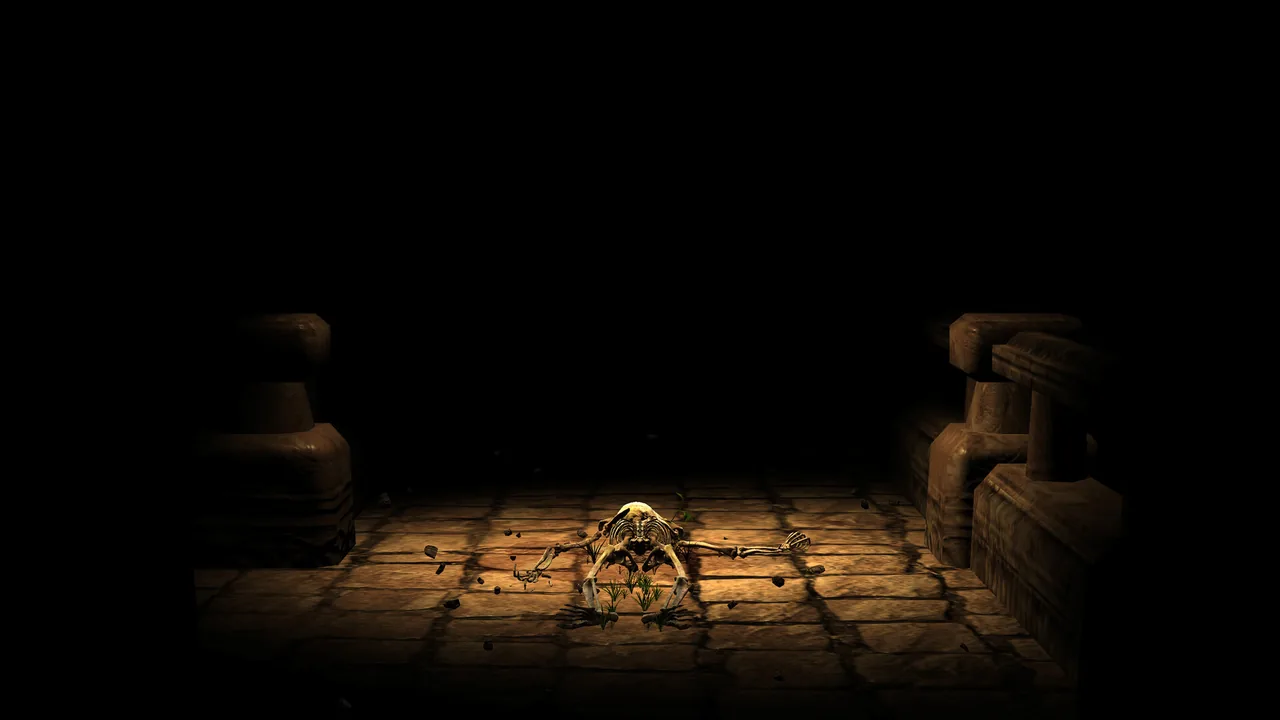
Most licensed revivals of old genres soften the source material. Wizardry Variants Daphne doesn't. It opens with your custom-built adventurer dying, badly, in the game's first real encounter, and lets the corpse rot on screen before the story properly starts. That's not a fake-out tutorial death — it's a statement of intent. Everything that follows, the grid-based first-person crawling, the ambushes that can wipe an unprepared party in two rounds, the slow crawl back to town with a bag of loot and a stack of near-misses, plays it straight. Drecom clearly understands why the 1981 original still has a cult forty-plus years later, and most of Daphne's best moments come from refusing to file the edges off it.
The complication is that this is also a free-to-play gacha game, built around summoning named, voiced allies through randomised pulls rather than recruiting generic adventurers at a tavern counter. Those two identities don't always sit comfortably together, and the tension between them is the story of this review: a punishing, faithful dungeon crawler that happens to fund itself the way a mobile collector RPG does.
The crawl and the combat
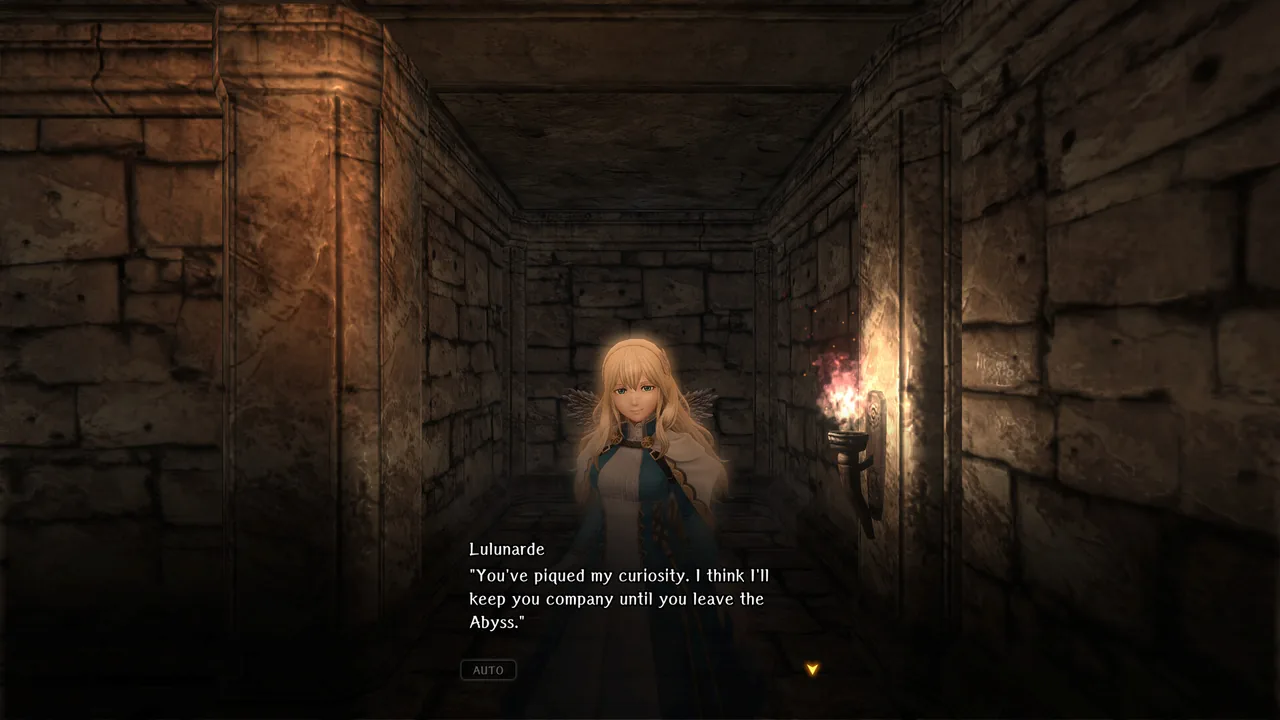
Structurally, Daphne is a floor-by-floor labyrinth crawler. You build a party of five or six from a roster of classes and races, map corridors by hand rather than trusting an auto-fill minimap you haven't earned, and fight in first-person, turn-based encounters where positioning in the front or back row genuinely changes who gets hit and who gets to act. Basic enemies can drop a squishy back-line mage in two or three unlucky hits, and the game rarely telegraphs an ambush before it happens. That sounds punitive written down, and it is, but it's punitive in a way that rewards preparation rather than reflexes: buying the right consumables before a descent, retreating a floor early rather than pushing a depleted party, and building a formation that accounts for elemental resistances all matter more than any single dice roll.
Class and race combinations still carry the series' fingerprints — a beefy front line of knights and fighters, a thief for traps and locks, priests keeping fortitude and health topped up, and mages who eventually dominate a late-game party once their spell lists open up. None of that will surprise anyone who has played a Wizardry game before, and that's the point: Daphne isn't trying to reinvent dungeon crawling, it's trying to prove the format still works, and for long stretches it does.
Death, ash, and the church
The permadeath system is the game's sharpest idea and its most contentious one. Die in a dungeon and you don't simply respawn for free — your character's body has to be hauled back to a church and revived, at a cost, with the odds of success tied to a recovering resource the game calls Fortitude. Fail a revival attempt with Fortitude below a certain threshold and the character turns to ash. Try to revive ash under the same conditions, and that's it: permanent loss.
In practice, Daphne builds in more safety nets than that description suggests. Fortitude recovers over time even while a character is dead, premium currency can guarantee a revival outright, and a limited-use "reawakening" mechanic lets a full party wipe be rewound rather than accepted outright. The result is a system that keeps the psychological weight of old-school permadeath — you will feel the loss of a character you've invested hours in — without being the instant, unforgiving finality the original games were notorious for. It's a reasonable modernisation. It's also the point where the gacha economy becomes impossible to ignore, because Fortitude, revival costs and the premium currency that can shortcut both all live in the same wallet as character summons.
Progression, and where it stops being free
Early and mid-game progression is genuinely generous. Story missions, daily and weekly tasks, and guild rewards hand out enough currency and equipment that a free player can keep pace with the difficulty curve for the first several weeks without feeling starved. The trouble starts once the story missions run out and the endgame's difficulty spikes meet a resource income that hasn't scaled to match it. That's the point where duplicate copies of characters start to matter: fully realising a unit's kit in Daphne isn't a cosmetic nicety, it's tied to a limit-break-style potential system that can call for well over a dozen extra copies of the same character to max out, and those copies come from the same randomised pool as the character itself.
This is where the review has to be precise about what's actually being sold, because "pay to win" is a label this genre earns unevenly. Community tracking of the game's economy puts a single gacha pull at 200 gems, with a full guaranteed pull on a legendary banner costing roughly 18,200 gems — north of ninety single pulls. A dedicated free player collecting from every available source can expect to reach that figure roughly once every five and a half months. Spend real money and the exchange rate holds at close to $4 per pull. None of that is unusual for the genre. What is worth flagging is that Daphne's guaranteed-pull currency does not carry over between banners: fall short on one limited character and that progress is gone rather than rolling into the next pull.
Set against that, the more reassuring fact is that the base roster and free-to-play resources are enough to finish the story campaign — multiple independent accounts of the game agree that a non-paying player is not locked out of completing it, and that paid characters mostly offer alternate kits and faster progress rather than encounters that are simply unbeatable without them. So the honest verdict on monetisation is a split one: this is not a game that gates its story behind a credit card, but it is a game whose best characters, and whose endgame optimisation, run through a pull system stingier than most of its direct competitors, with premium bundles — including character-specific skill-experience packages priced close to the cost of a full retail game — sitting at the very top of the shop for players chasing that last few percent.
Interface: a mobile game wearing a PC coat
Daphne's biggest weakness on Steam has nothing to do with its dungeons. The interface is built for a touchscreen and was ported to PC with minimal adaptation. Movement defaults to a swipe gesture that translates awkwardly to a mouse, menus and shop screens carry mobile-scaled buttons that don't take advantage of a monitor's extra space, and the graphics options amount to a handful of toggles rather than the resolution and quality settings PC players expect by default. None of that breaks the game, but it's a constant, low-grade friction that a first-person dungeon crawler — a genre that lives or dies on precise, comfortable navigation — can't really afford.
It has also gotten worse for a specific group of players rather than better. Steam Deck owners had been running Daphne through Proton despite its use of kernel-level anti-cheat, but a March 2026 update tightened that anti-cheat implementation enough to stop the game launching on Steam Deck and Linux entirely, with no fix at the time of writing. For a mobile-native game, refusing to work cleanly on a handheld PC is a self-inflicted wound, and it's the kind of regression that separates a review of Daphne's launch state from a review of where it stands now.
Presentation and sound carry more weight than the budget suggests
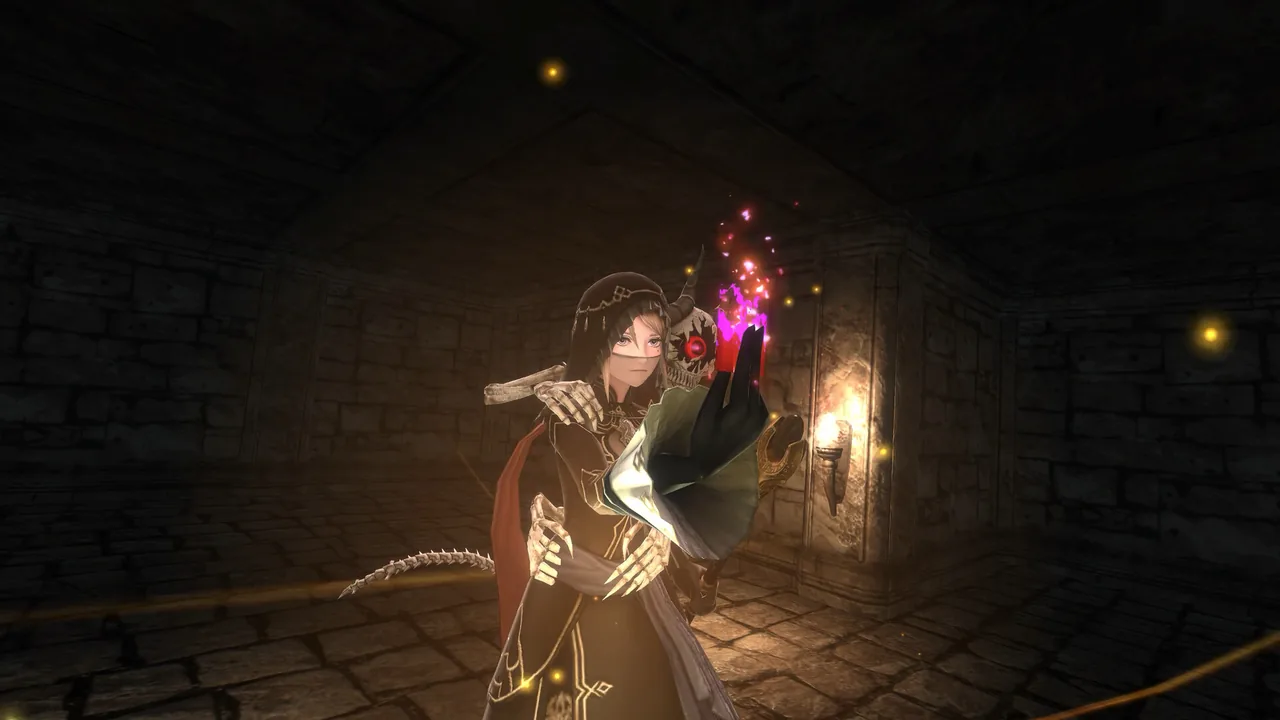
Whatever else is true about the economy underneath it, Daphne doesn't look or sound like a typical mobile gacha release. Character designs come from manga artist Yusuke Kozaki, monster and boss art from Katsuya Terada, and the score from Hitoshi Sakimoto, whose work anchors the game's dread-soaked atmosphere far more effectively than its dungeon geometry alone would manage. The English dub, led by Doug Cockle in a supporting role, is a genuinely full cast rather than the two-or-three-voice-actor patchwork common to the genre, and the decision to let the opening death sequence play out in unflinching detail sets a tone the rest of the game mostly lives up to.
Still being worked on
It's worth noting, because it's unusual, that Drecom has kept shipping content and balance updates on a near-weekly cadence well past the game's first anniversary — the most recent update landed within the last few days of this review going live. That's a healthier support rhythm than most free-to-play RPGs manage this far past launch, and it means the game reviewed today is meaningfully different, for better in its event content and worse in its Linux compatibility, from the one that launched on Steam in March 2025.
Final verdict
Wizardry Variants Daphne earns its strongest praise for refusing to be gentle. The dungeons are dangerous in a way few current RPGs bother with anymore, death carries a cost that makes you actually plan around it, and the game's classical Wizardry bones are still visible and still working under all the modern trappings. Where it loses ground is everywhere the gacha economy touches the design: a pity system that punishes bad luck by simply discarding it, an endgame that leans harder on duplicate pulls than the story difficulty alone would demand, and premium pricing at the top of the shop that has no business sitting next to a game this committed to being fair in its combat. The PC port compounds the problem by being an afterthought, and its recent Steam Deck breakage is the kind of unforced error that costs a portion of its audience outright.
None of that erases what the game gets right. It's still free to reach the credits, still winnable without spending, and still one of the more mechanically honest dungeon crawlers to carry the Wizardry name in years. Go in expecting a hard game with a gacha tax attached, rather than a gacha game with dungeon crawling attached, and Daphne mostly delivers on that promise.
Pros and cons
Pros
- Turn-based combat is genuinely tense, with formation, spell range and enemy ambush angles all mattering
- Character death has real weight without being instantly unforgiving, thanks to the ash-and-revival system
- Free characters and free-to-play resources are enough to finish the main story
- Hitoshi Sakimoto's score and full dual-language voice cast give the game a presentation budget most gacha titles can't match
- Drecom has kept up a near-weekly update cadence more than a year and a half after launch
Cons
- Guaranteed-pull pity does not carry between banners, so a bad month of luck is simply lost
- The Steam build is a mobile UI wearing a PC skin, down to swipe-style movement that fights a mouse
- A March 2026 update tightened kernel-level anti-cheat enough to break the game for Steam Deck and Linux players who were previously getting by
- Fully building out a favourite character can mean chasing more than a dozen duplicate copies of them
- Difficulty spikes hard once free resources dry up, right when a paying player would otherwise pull ahead
Screenshots
-
Wizardry Variants DaphneImage: Drecom Co., Ltd. via Steam -
Wizardry Variants DaphneImage: Drecom Co., Ltd. via Steam -
Wizardry Variants DaphneImage: Drecom Co., Ltd. via Steam -
How the review scores each part of the gameWanderer Editorial -
The short versionWanderer Editorial