
Game review
Withering Realms
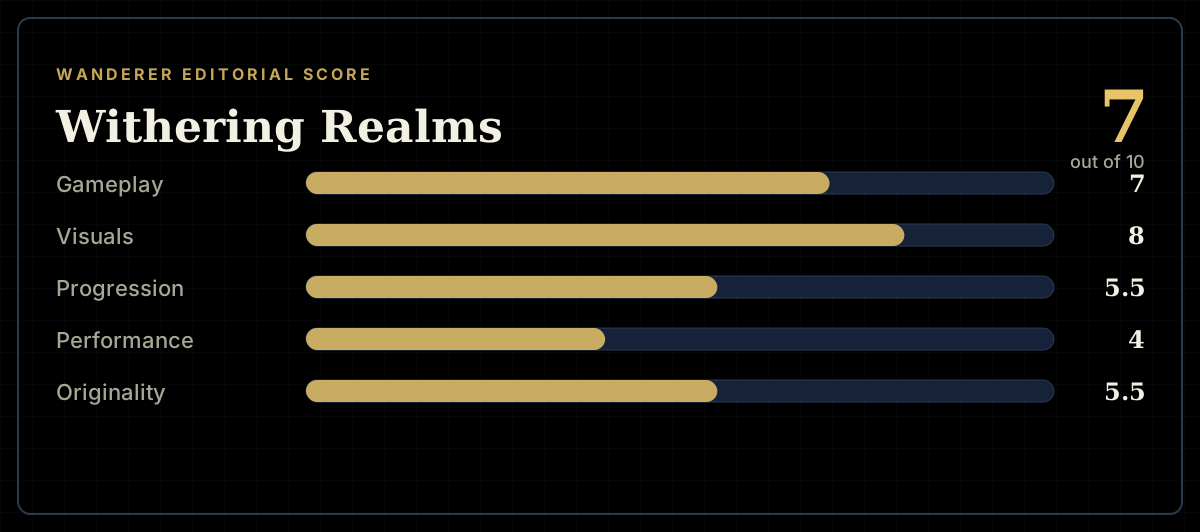
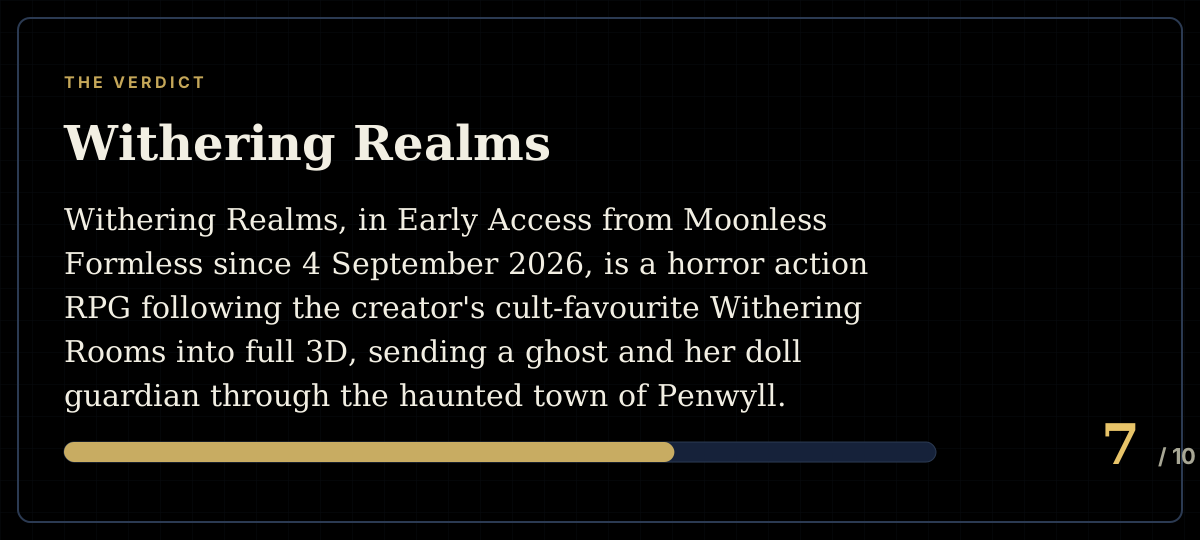
7 / 10
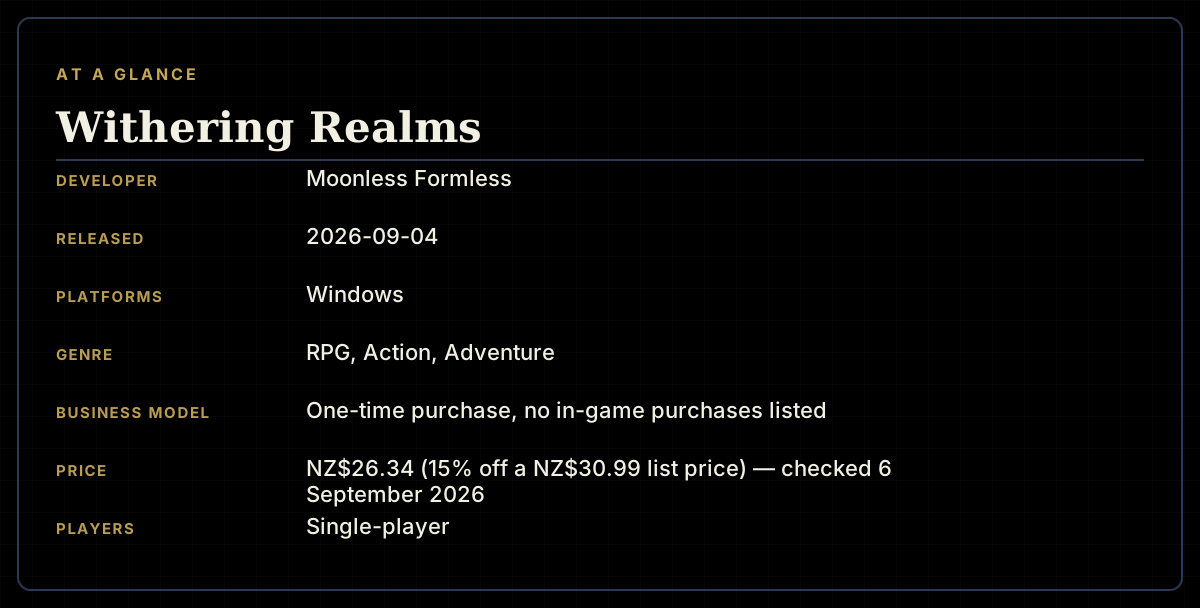
- Developer
- Moonless Formless
- Publisher
- Moonless Formless
- Released
- 4 September 2026
- Platforms
- Windows
- Genre
- RPG, Action, Adventure
- Monetisation
- One-time purchase, no in-game purchases listed
- Players
- Single-player
The short version
Withering Realms, in Early Access from Moonless Formless since 4 September 2026, is a horror action RPG following the creator's cult-favourite Withering Rooms into full 3D, sending a ghost and her doll guardian through the haunted town of Penwyll. Barely two days old at the time of this check, it sits Very Positive with English-speaking players, 94.2% across 86 reviews, driven substantially by goodwill from Withering Rooms fans praising its Victorian horror art direction and music. Set against that early enthusiasm is an unusually detailed and credible critique from reviewers who loved the original: they report that death currently carries little real consequence, resources can be effectively farmed rather than conserved, and combat has shifted toward a more conventional souls-like template with generic stat-levelling in place of the original's distinctive item-based systems. Separately, one methodically documented technical review reports the game struggling to hold 60fps even on an RTX 4090 at native 4K once volumetric lighting is set to its maximum setting, isolating a specific, reproducible performance cliff.
Biggest strengths
- Victorian horror art direction, sound design and music draw near-universal, specific praise, with reviewers repeatedly citing the atmosphere as a direct continuation of what made Withering Rooms distinctive
- Fans of the original consistently describe the game as feeling substantially fleshed out for an Early Access release, with a large amount of surface content, weapon and item variety, and build diversity already present two days after launch
- The developer is credited by at least one reviewer as directly responsive to control-rebinding feedback, including active work on native Steam Deck input support
Biggest weaknesses
- Multiple detailed reviews from self-described fans of Withering Rooms report that death currently carries little real consequence — items are kept on respawn and even harvestable resources in the environment reappear, meaning materials can be effectively farmed rather than carefully managed, undermining the survival-horror tension the original was built around
- The same reviewers report combat and progression have shifted toward a more generic soulslike template, replacing the original's strategic item-based upgrade systems with stat-levelling via a generic currency, and one reports that guns now share a resource pool with magic spells, making several weapon-and-spell build combinations impractical
- One extensively documented technical review reports the game struggling to sustain 60fps even on an RTX 4090 at native 4K once volumetric lighting is set to maximum, describing a disproportionate performance cost relative to the visual difference from the setting one tier below, and reports the same issue reproduced within minutes despite developer claims of extensive pre-release community testing
Who it's for: Horror-RPG and soulslike fans drawn to strong Victorian-gothic atmosphere, especially newcomers rather than devotees of Withering Rooms' specific survival-horror mechanics; wait for further patches if you want the original's punishing identity carried forward intact.
Our recommendation: A promising, atmospheric Early Access purchase if you're evaluating it as its own soulslike rather than a direct continuation of Withering Rooms' mechanics, and you're not running volumetric lighting at maximum on demanding hardware; worth watching for balance and performance patches before buying if either concern applies to you.
7 / 10
Introduction
Withering Realms, in Early Access from Moonless Formless since 4 September 2026, follows the studio's cult-favourite Withering Rooms into full 3D: a ghost and her doll guardian exploring the haunted Victorian town of Penwyll, its graveyards, tombs and rotting estates. Barely two days old at the time of this check, it's already drawing a substantial response — Very Positive with English-speaking players, 94.2% across 86 reviews — much of it clearly powered by goodwill from players who loved the original. Reading through that early sample turns up a specific, useful tension: the praise is genuine and detailed, but so is a smaller cluster of unusually thoughtful critical reviews from reviewers who know exactly what made the first game distinctive, and are specifically worried the sequel is trading that identity away.
Atmosphere and art direction that clearly deliver
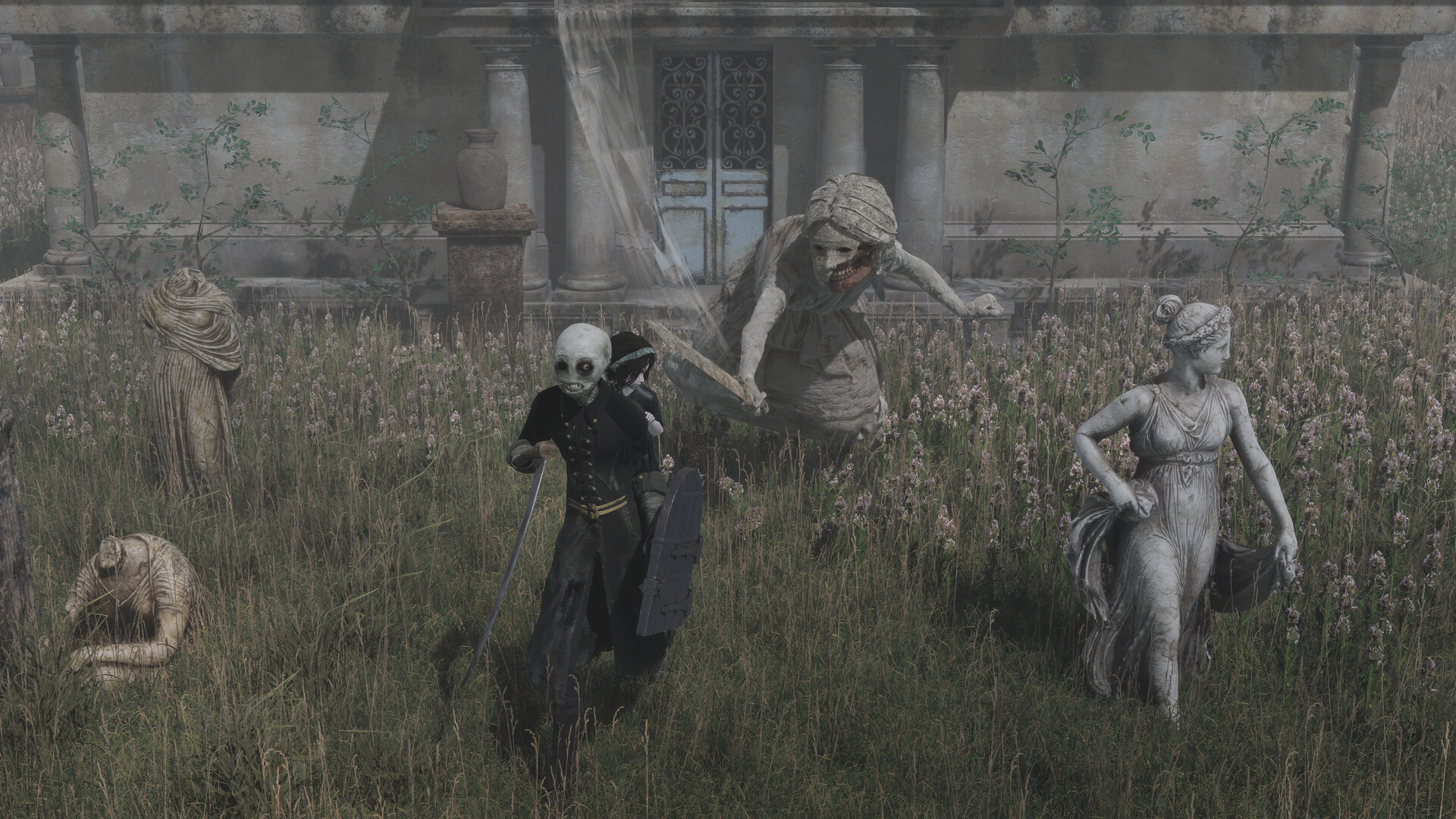
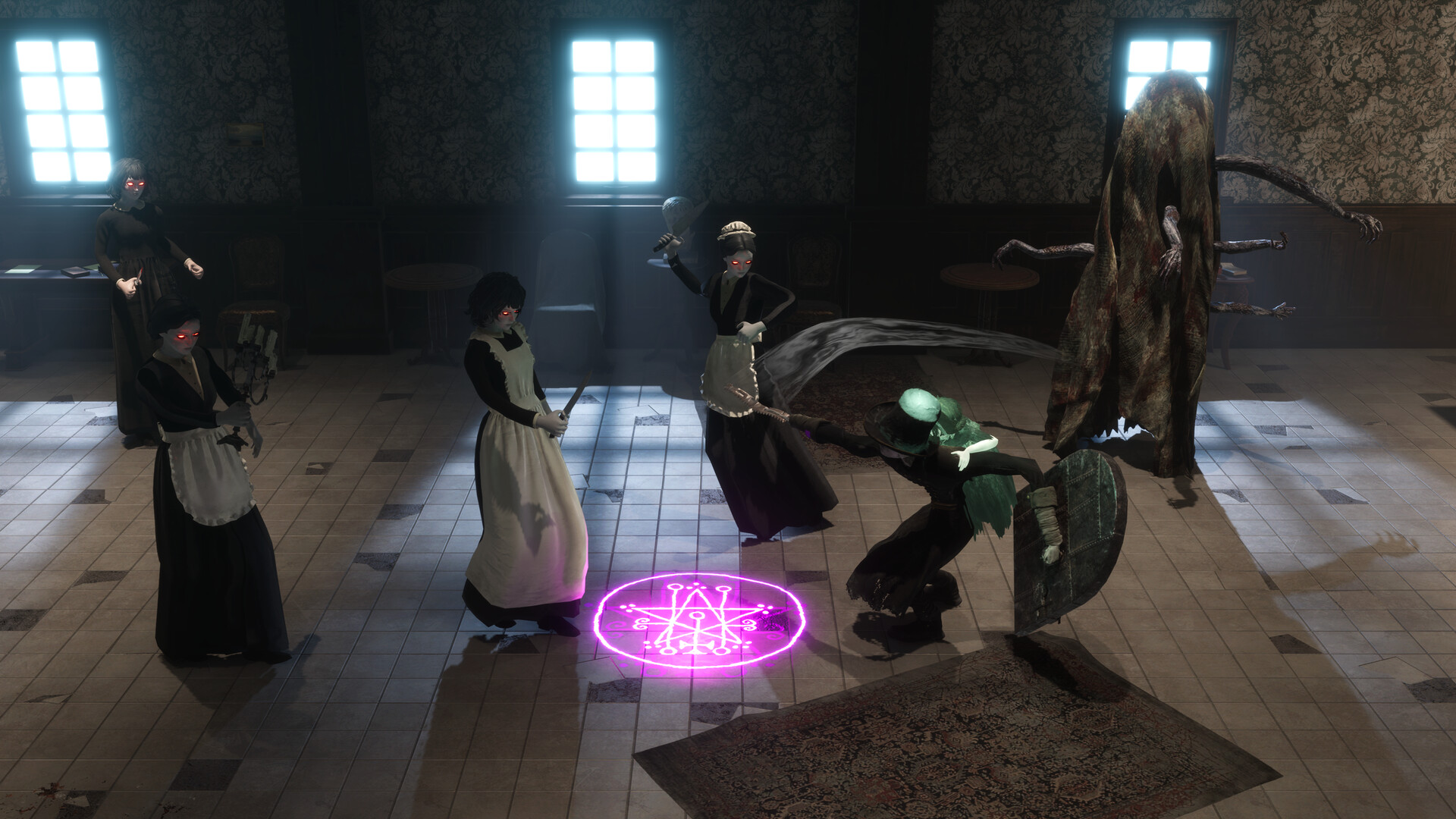
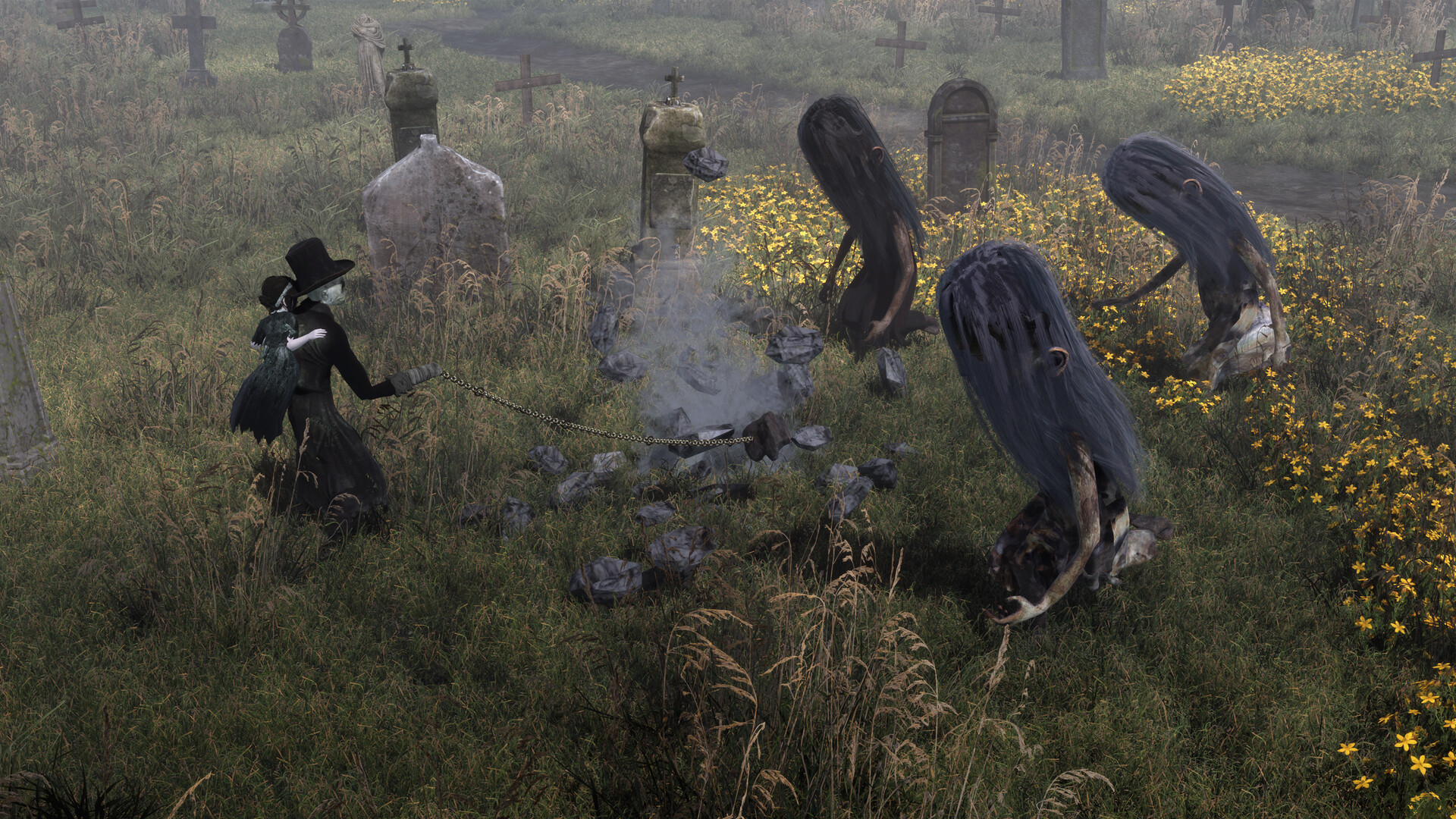
The praise here is consistent and specific rather than vague goodwill. Reviewers repeatedly single out the Victorian horror art direction, haunting music and overall atmosphere as a direct, worthy continuation of Withering Rooms' identity, with several drawing comparisons to PS1/PS2-era survival horror touchstones like Rule of Rose, Haunting Ground and Kuon, and at least one comparing the combat feel favourably to Bloodborne. For an Early Access release only days old, multiple reviewers also describe the amount of content already present — weapons, items, enemy variety, and build options — as unusually fleshed out, several explicitly forgiving rough edges as expected day- one jank rather than a fundamental problem.
A sequel some longtime fans say has lost its nerve
Set against that atmosphere is a specific, carefully argued concern from reviewers who completed Withering Rooms and loved it. The core complaint is that death, which the original built its entire identity around making meaningful, currently carries little real weight: one detailed review describes dying to a boss, respawning nearby with items intact, and finding that even harvestable resources in the environment had reappeared — meaning materials can be effectively farmed rather than the scarce, carefully-managed resource the first game demanded. That same reviewer and a second, independently, describe the upgrade systems shifting from the original's distinctive, strategic item management toward a more generic soulslike model — spending an undifferentiated currency to level stats — and report that guns now draw from the same resource pool as magic spells, making a number of weapon-and-spell build combinations impractical by design. Enemy AI is separately described as currently weak and unthreatening, which, combined with death's reduced consequence, further softens the tension both critical reviewers say defined the original. Neither reviewer frames this as a hater's dismissal — both state clearly that they loved Withering Rooms and came in wanting to enjoy the sequel, which makes their shared, specific diagnosis worth taking seriously rather than reading as reflexive negativity.
A loot and exploration pace some say undercuts discovery
A related complaint concerns pacing rather than combat identity specifically: one detailed reviewer describes the map as overloaded with markers for unexplored or potentially interesting locations, to the point that exploration starts to feel like checklist completion rather than organic discovery, compounded by equipment and items arriving, in that reviewer's words, "at ridiculous speed." Given how central meaningful scarcity was to the original's appeal per the reviews quoted above, a loot pace this generous is a specific, related symptom of the same underlying shift in design philosophy, not a separate issue.
A severe, reproducible performance problem at maximum settings
Separate from questions of design direction, one unusually rigorous technical review documents a specific, severe performance cliff. Testing on an RTX 4090 at native 4K, that reviewer reports sustaining only roughly 19–29fps with volumetric lighting set to its maximum setting — a result that held across both the pre-release demo and the Early Access build. Enabling DLSS Balanced, which substantially reduces the actual rendered resolution, still wasn't enough to reliably reach 60fps at that setting. Dropping volumetric lighting one tier, from Max to High, produced what the reviewer describes as an enormous performance improvement with comparatively little visible difference in image quality — evidence, in their assessment, of a specific setting scaling far more expensively than its visual payoff justifies. That reviewer also notes the developers had stated the game received extensive pre-release community testing, and points out that this issue was reproducible within minutes on top-tier hardware, raising a specific, reasonable question about how thoroughly that testing covered maximum settings at native 4K. Several other, more casually written reviews separately mention performance dips in town or with many enemies active, which is broadly consistent with this more detailed report, though most players not testing at maximum volumetric settings describe the game running smoothly.
Final Verdict
Withering Realms arrives with real strengths already in place: an atmosphere and art direction that clearly deliver on its predecessor's reputation, and enough day-one content and build variety to have won over a large early audience. What keeps this score from going higher is that its most detailed critical reception isn't dismissible noise — it's a specific, carefully reasoned argument from demonstrated fans of the original that its survival-horror identity, built on real consequence and resource scarcity, has been substantially traded for a more conventional soulslike template, compounded by a rigorously documented, reproducible performance cliff at maximum settings. This is Early Access, and design direction and optimization can both still change substantially before a full release — but as it stands today, this is a beautiful, promising foundation with real, specific, well-documented growing pains rather than a finished, refined experience.
Pros and cons
Pros
- Victorian horror art direction, sound design and music draw near-universal, specific praise, with reviewers repeatedly citing the atmosphere as a direct continuation of what made Withering Rooms distinctive
- Fans of the original consistently describe the game as feeling substantially fleshed out for an Early Access release, with a large amount of surface content, weapon and item variety, and build diversity already present two days after launch
- The developer is credited by at least one reviewer as directly responsive to control-rebinding feedback, including active work on native Steam Deck input support
- Full controller support, including DualSense and DualShock-specific features, is confirmed, and multiple reviewers report a smooth experience on Steam Deck specifically
Cons
- Multiple detailed reviews from self-described fans of Withering Rooms report that death currently carries little real consequence — items are kept on respawn and even harvestable resources in the environment reappear, meaning materials can be effectively farmed rather than carefully managed, undermining the survival-horror tension the original was built around
- The same reviewers report combat and progression have shifted toward a more generic soulslike template, replacing the original's strategic item-based upgrade systems with stat-levelling via a generic currency, and one reports that guns now share a resource pool with magic spells, making several weapon-and-spell build combinations impractical
- One extensively documented technical review reports the game struggling to sustain 60fps even on an RTX 4090 at native 4K once volumetric lighting is set to maximum, describing a disproportionate performance cost relative to the visual difference from the setting one tier below, and reports the same issue reproduced within minutes despite developer claims of extensive pre-release community testing
- At least one detailed reviewer describes enemy AI as currently weak and unthreatening, compounding the reduced tension from consequence-free death
- The map is reported as overloaded with unexplored-location markers, with loot and equipment arriving fast enough that more than one reviewer says discovery already feels less meaningful than in the original game
Screenshots
-
Withering RealmsImage: Moonless Formless via Steam -
Withering RealmsImage: Moonless Formless via Steam -
Withering RealmsImage: Moonless Formless via Steam -
How the review scores each part of the gameWanderer Editorial -
The essentials at a glanceWanderer Editorial -
The short versionWanderer Editorial