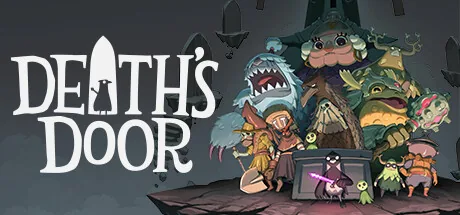
Game review
Death's Door
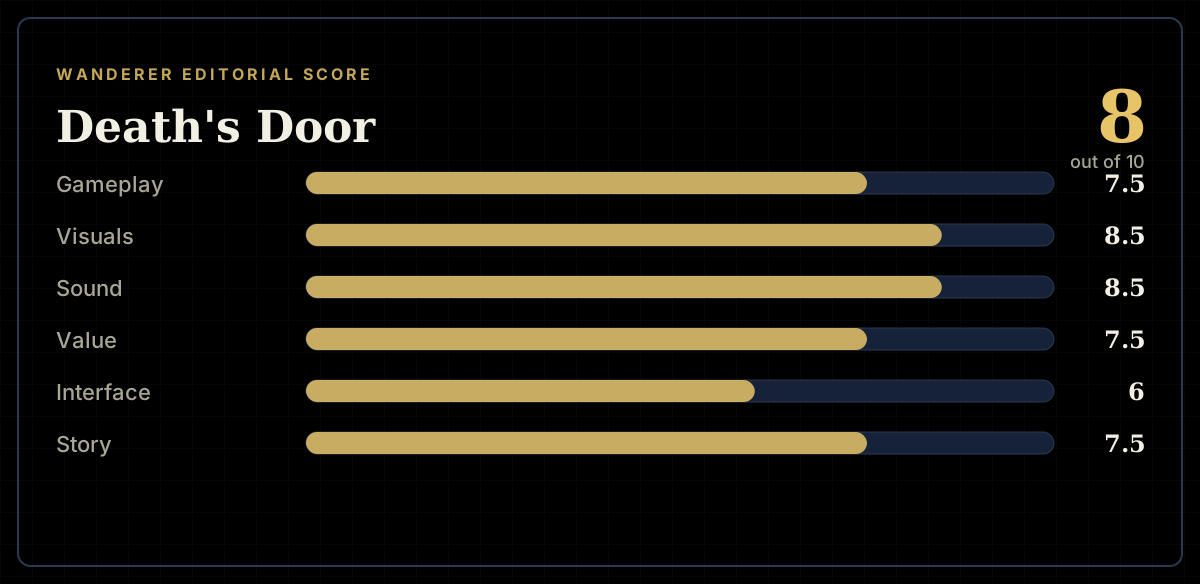
8 / 10
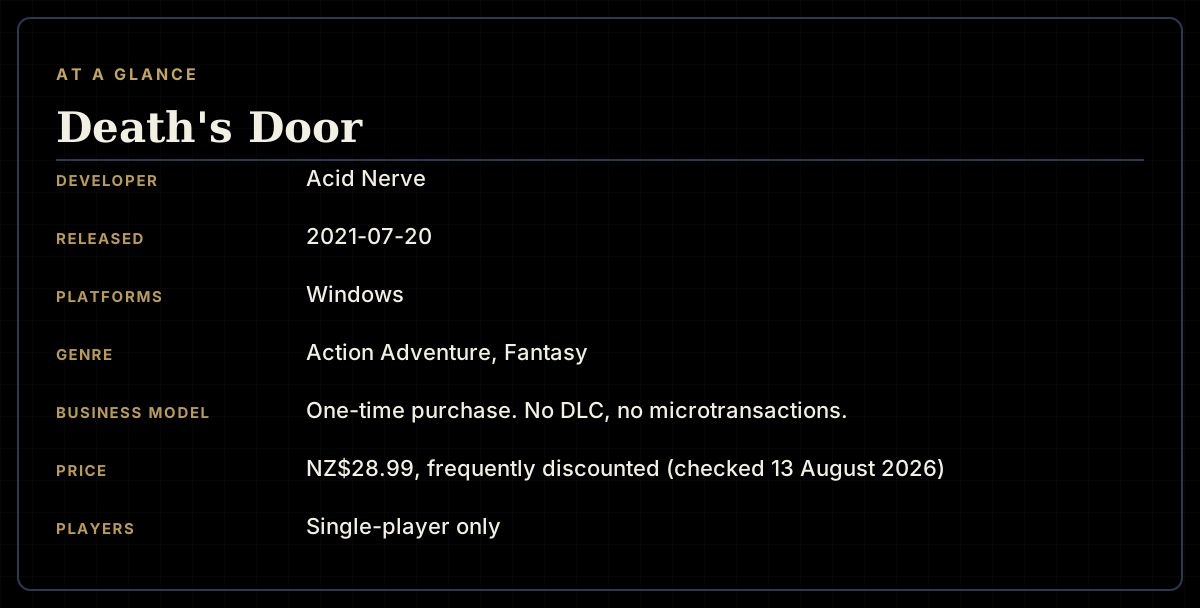
- Developer
- Acid Nerve
- Publisher
- Devolver Digital
- Released
- 20 July 2021
- Platforms
- Windows
- Genre
- Action Adventure, Fantasy
- Monetisation
- One-time purchase. No DLC, no microtransactions.
- Players
- Single-player only
The short version
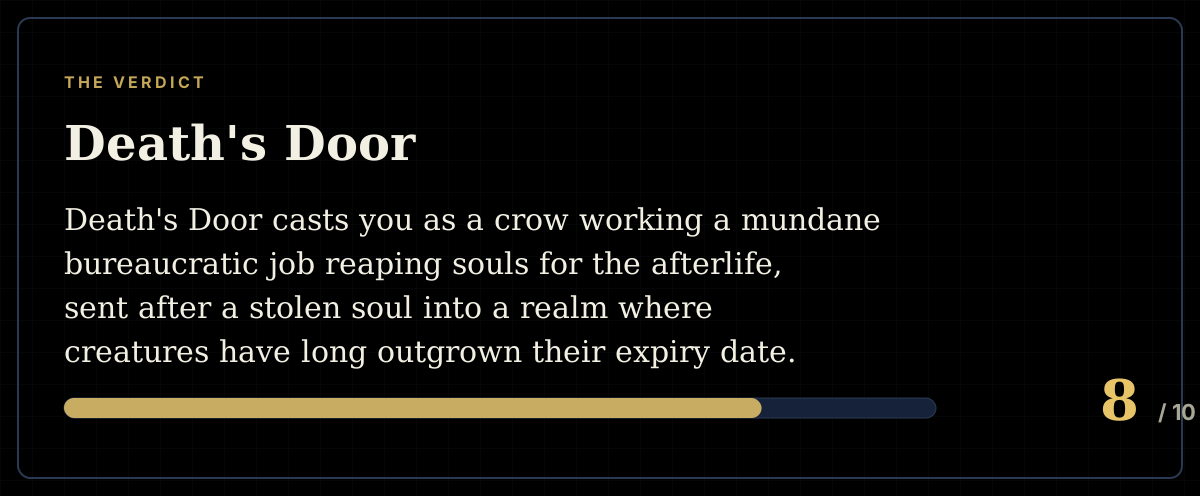
Death's Door casts you as a crow working a mundane bureaucratic job reaping souls for the afterlife, sent after a stolen soul into a realm where creatures have long outgrown their expiry date. Made by a two-person studio, Acid Nerve, and published by Devolver Digital, it launched on 20 July 2021 to two BAFTA nominations, a Golden Joystick win for Best Indie Game, and Very Positive Steam reviews it has held for five years -- roughly 93% of 21,944 total.
The review sample's single most consistent, specific complaint is a deliberate design decision: the game has no map function at all. It's a choice fans and critics both bring up unprompted, and while many treat it as part of the game's intentional, disorienting atmosphere, a real and vocal share -- including some who otherwise loved the game -- describe navigating its large, samey-looking areas as the single biggest drag on an otherwise tight, well-regarded experience.
Biggest strengths
- Distinctive, widely-praised art direction and a soundtrack reviewers consistently call among the best of its release year, alongside sharp, funny dialogue
- Tight, well-paced isometric action-adventure structure that respects the player's time relative to many of its genre peers -- a roughly 10-15 hour main campaign
- Genuine critical pedigree from a two-person studio's second game: two BAFTA nominations, a Best Indie nomination at The Game Awards, and the Golden Joystick Award for Best Indie Game in 2021
Biggest weaknesses
- No in-game map of any kind, by deliberate design -- reviewers repeatedly cite this as the single biggest source of friction, describing large, visually similar areas that become disorienting to navigate, especially for players who return to the game in short sessions
- A vocal minority describe the combat and weapon variety as simple and repetitive relative to the genre's best, with several calling the overall experience "aggressively mediocre" set against the near-universal praise it launched with
- Keyboard-and-mouse controls are described by several reviewers as notably worse than a controller, particularly for the game's more demanding boss encounters
Who it's for: Fans of isometric action-adventures in the Zelda or Hyper Light Drifter mould who want a tightly-scoped, atmospheric 10-15 hour campaign with real critical pedigree. Less suited to players who specifically need in-game maps or fast, frictionless navigation, or who want deep build variety in a genre where weapon options are intentionally limited.
Our recommendation: A confident recommendation, especially at its modest asking price and frequent discounts -- this is one of 2021's most consistently well-regarded indies for good reason. Go in aware there's no map and the exploration can feel like backtracking through similar-looking areas; that's the one specific, recurring friction point serious enough to mention to a buyer weighing whether this is the right game for how they play.
8 / 10
Death's Door casts you as a small, world-weary crow employed by an afterlife bureaucracy to reap souls — punching a clock, filing paperwork, the whole grim office routine — until an assigned soul is stolen and the job sends you chasing the thief into a realm untouched by death, where creatures have grown monstrously far past their natural lifespan. It's the second game from Acid Nerve, a two-person studio, published by Devolver Digital, and it launched on 20 July 2021 to a level of critical attention rare for a team that size: two BAFTA nominations (Best British Game, Original Property), a Best Indie nomination at The Game Awards, and the Golden Joystick Award for Best Indie Game of 2021. Five years later, it sits at Very Positive on Steam, roughly 93% of 21,944 total reviews — a strong, stable score that has held remarkably steady, with one deliberate design choice recurring across the review sample as its most consistent point of friction.
What earned the acclaim
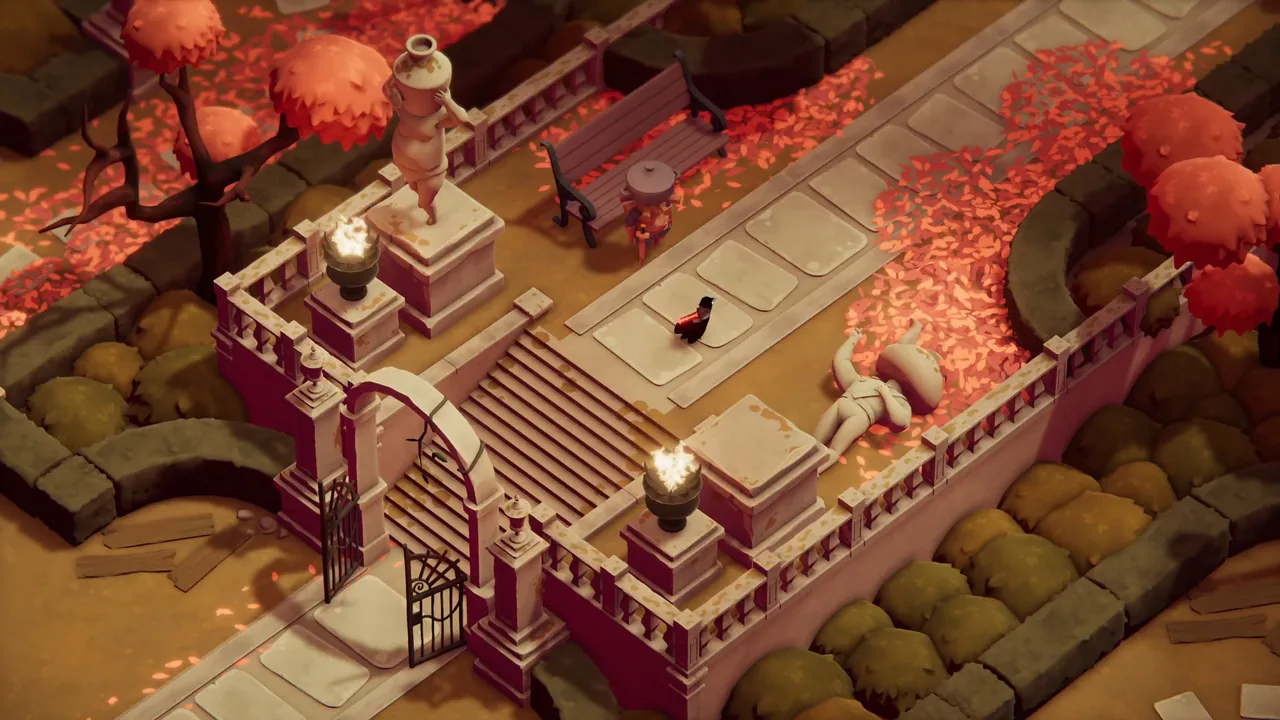
The praise across the review sample is consistent and specific in a way that's worth taking at face value: distinctive art direction that blends melancholic, autumnal environments with genuine visual wit, a soundtrack reviewers repeatedly single out as one of the best of its release year, and sharp, funny dialogue that lands even for reviewers otherwise unmoved by the gameplay. "The world is absolutely stunning. The art design and music are top-notch, and the creativity on display in the world is hard to overstate. Dialogues are hilarious," reads a negative review that still opens with that level of enthusiasm before getting to its complaints — a pattern that recurs across the sample: almost nobody disputes the presentation. Structurally, reviewers also credit the game for its pacing — a roughly 10-15 hour main campaign that several call refreshingly tight compared to genre peers that overstay their welcome, and a boss-gated structure that gives the game clear, escalating milestones.
The map that isn't there
Set that consensus aside and one specific complaint recurs with unusual consistency, in both negative and — tellingly — a fair number of positive reviews: Death's Door has no map function of any kind, a deliberate design decision rather than an oversight, and it divides players sharply. "It felt like 80% of the game was just running around unnecessarily large, confusing maps that didn't contain anything. A minimap would've helped IMMENSELY," reads one 75-vote negative review. A 2025 review makes the same point after otherwise enjoying the game: "So many aspects of the game were enjoyable. Unfortunately the map traversal was arduous and excessive. Spent most of my gameplay walking." What makes this worth flagging specifically rather than filing under generic "some people didn't like it" is that the complaint shows up inside clearly positive reviews too — "If you are a casual player only playing every few days or short times every day, reconsider buying this. Death's Door has no map function and the levels are definitely not super easy to navigate," reads a 2026 review that still recommends the game overall. That's a genuinely useful, specific piece of buying advice a launch review couldn't have framed with five years of hindsight: this isn't a bug that got patched, it's a permanent design choice, and it matters more to some playstyles than others — particularly players who return to the game in short, infrequent sessions rather than longer sittings where the map stays fresh in memory.
A vocal "this is fine, not great" minority
A second, smaller but persistent thread in the review sample pushes back directly against the game's critical reception rather than any specific mechanic. "I'm honestly a little shocked at how much gushing there is over Death's Door. It's not a bad game... It's just not terribly interesting," reads a 201-vote review from launch week. Several others land on almost identical language independently across different years: "it is just a very 5/10 game that looks and has reviews of an 8/10 game," and "Is the game bad? No, but it is so aggressively mediocre." The specific mechanical complaint underneath this sentiment is usually combat and weapon variety — reviewers describe the small arsenal of available weapons as functionally similar to each other, with limited build expression compared to genre touchstones like Hades or Enter the Gungeon that some reviewers explicitly compare it against. This is a minority position against a 93% positive backdrop, but it's specific and recurring enough, across enough years, to be worth naming rather than smoothing over — a buyer going in expecting a genre-redefining masterpiece on the strength of the BAFTA nominations alone may find the actual combat systems more modest than that pedigree implies.
How it has aged
Death's Door has aged into a settled, stable classic of its specific niche rather than a game whose reputation has shifted meaningfully in either direction — the balance of praise and specific complaint in 2026 reviews reads almost identically to 2021 launch reviews, which is itself a useful signal that the game's strengths and limitations were both apparent from day one rather than something that emerged only with hindsight. The achievement data shows a healthy, engaged audience: a top achievement around 43%, tapering to a median near 19%, with the hardest challenge — the umbrella-only completionist run — sitting at just 5.3%, evidence that a real, dedicated slice of the audience pushes into the game's optional extra challenge rather than stopping at the credits. Acid Nerve hasn't released a direct sequel in the years since, but Death's Door's critical standing — still cited as a benchmark two-person-studio achievement — has held up as well as any indie from its release year.
8 out of 10. Death's Door earned its BAFTA nominations and Golden Joystick win honestly: it's a tightly-scoped, beautifully realised isometric action-adventure with real wit and craft behind a two-person team's second game. Its lack of any map is a genuine, deliberate design choice that a meaningful share of players — including some who love the rest of the game — find a real drag on an otherwise well-paced experience, and it's worth knowing that going in rather than discovering it three hours into a confusing backtrack.
Pros and cons
Pros
- Distinctive, widely-praised art direction and a soundtrack reviewers consistently call among the best of its release year, alongside sharp, funny dialogue
- Tight, well-paced isometric action-adventure structure that respects the player's time relative to many of its genre peers -- a roughly 10-15 hour main campaign
- Genuine critical pedigree from a two-person studio's second game: two BAFTA nominations, a Best Indie nomination at The Game Awards, and the Golden Joystick Award for Best Indie Game in 2021
- A New Game Plus-style completionist path (the "Umbrella Run," using only the umbrella weapon) that gives dedicated players a real additional challenge to chase
Cons
- No in-game map of any kind, by deliberate design -- reviewers repeatedly cite this as the single biggest source of friction, describing large, visually similar areas that become disorienting to navigate, especially for players who return to the game in short sessions
- A vocal minority describe the combat and weapon variety as simple and repetitive relative to the genre's best, with several calling the overall experience "aggressively mediocre" set against the near-universal praise it launched with
- Keyboard-and-mouse controls are described by several reviewers as notably worse than a controller, particularly for the game's more demanding boss encounters
- Limited replayability outside the completionist Umbrella Run -- once finished, several reviewers note they had little pull to return
Screenshots
-
Death's DoorImage: Devolver Digital via Steam -
Death's DoorImage: Devolver Digital via Steam -
Death's DoorImage: Devolver Digital via Steam -
How the review scores each part of the gameWanderer Editorial -
The essentialsWanderer Editorial -
The short versionWanderer Editorial