
Game review
Red Interior
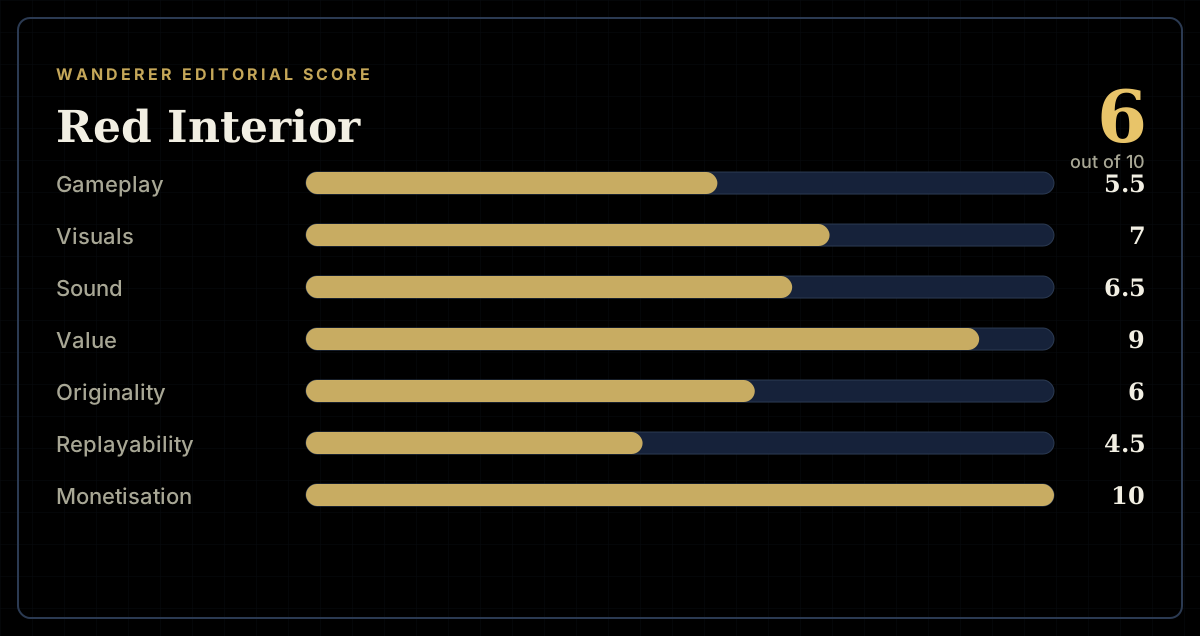
6 / 10
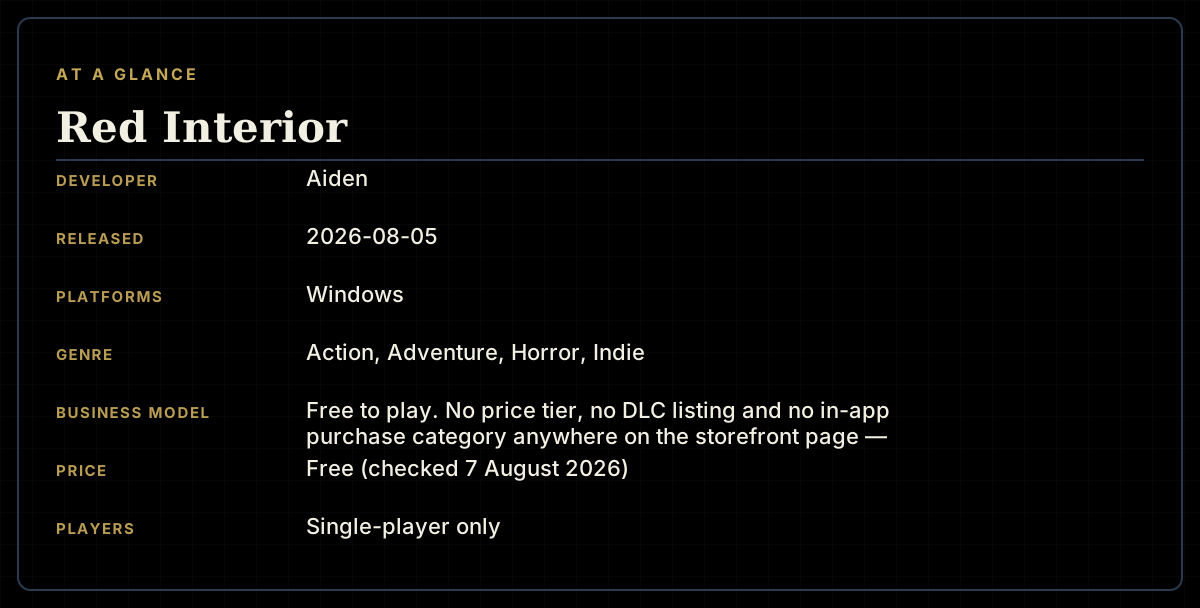
- Developer
- Aiden
- Publisher
- Quinn
- Released
- 5 August 2026
- Platforms
- Windows
- Genre
- Action, Adventure, Horror, Indie
- Monetisation
- Free to play. No price tier, no DLC listing and no in-app purchase category anywhere on the storefront page — nothing found to buy.
- Players
- Single-player only
The short version
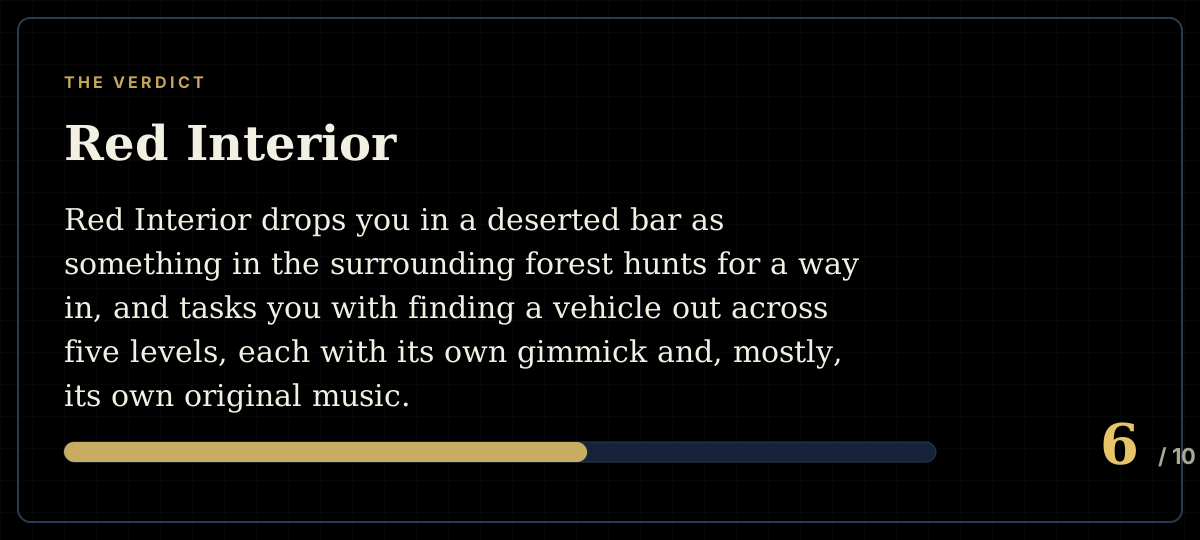
Red Interior drops you in a deserted bar as something in the surrounding forest hunts for a way in, and tasks you with finding a vehicle out across five levels, each with its own gimmick and, mostly, its own original music. It costs nothing, sells nothing, and appears to be a debut release from a two-person credit list working under first names and a personal email address. The one detailed player account so far is a thumbs-up wrapped around a long list of rough edges: inconsistent noise cues, a permadeath system that resets the whole run, a house that reads as disorientingly empty, and at least one player who couldn't find a required door.
Biggest strengths
- Completely free with no in-app purchases, no DLC and no purchase panel of any kind on the storefront listing
- Five levels each built around a different gimmick, most with their own dedicated music track, on a genuinely tiny team's apparent first release
- The one detailed player account singles out the monster art specifically as a highlight
Biggest weaknesses
- The one review on file reports that dying resets progress back to the start of the whole run, not just the current room
- The same review describes noise-triggered monster spawns as inconsistent — some interactable objects trigger them, others that logically should don't
- The bar's open layout reportedly makes navigation and object-spotting difficult rather than tense
Who it's for: Horror fans who want a short, free, top-down chase game and don't mind rough edges in exchange for zero cost and zero pressure to spend. Less suited to anyone who wants a polished, well-signposted experience on a first attempt, or anyone who bounces hard off permadeath systems that discard progress.
Our recommendation: There is nothing to lose by trying it — no price, no in-app purchases, no catch of any kind that the storefront discloses. Go in expecting an unpolished but sincere debut rather than a finished horror showcase, and expect to die, restart, and possibly get stuck before you see much of it.
6 / 10
Free horror games on Steam tend to come in two flavours: the five-minute jump-scare demo built to farm wishlists for a paid sequel, and the rare genuine full release that simply doesn't ask for money. Red Interior reads as the second kind. It's a top-down survival-horror game set entirely inside one bar, it ships with five distinct levels rather than one looping gimmick, and its storefront page has no price tier, no DLC and no purchase panel anywhere on it. For a genre readers get burned by constantly, that alone is worth stating plainly before getting into whether the game underneath is any good.
What it is
The setup, in the developer's own words on the store page, is a protagonist trying to find a vehicle to escape a bar while "something in the forest" and a growing population of bar-dwelling creatures try to stop him. The store description credits the concept as inspired by a game called Deep Woods, filtered through top-down mechanics, and structures the whole thing as a linear story rather than a procedurally varied run — the game's own tags list both "Linear" and, a little confusingly, "Action Roguelike" on the same page, which is worth flagging as an expectation-setting gap the way an RPG tag on a pure visual novel would be: don't go in expecting randomised runs or meta-progression between deaths.
Structurally, it's five levels, each with what the store page calls "their own gimmicks," and most carrying music written specifically for that level rather than a shared loop. That's a meaningful production commitment for a free game — bespoke level music is the kind of thing teams cut first when time runs short, not last.
The one account we have
Red Interior is two days old at the time of writing, and its user review count is exactly one. Steam's own tooltip on the page says plainly that it needs more reviews to generate a score, so there's no percentage to quote and no badge to lean on. What there is, though, is an unusually detailed writeup from a player 23 minutes into the game, and it's worth taking seriously precisely because it's the only documented account that exists.
The reviewer gave it a thumbs-up and opened by calling it impressive for what they assumed was a first published game, specifically praising the story and the monster art. Then they listed, in order, four separate friction points. The death-and-noise system seems to be the core loop: making noise appears to spawn a monster, but which actions count as noise reads as inconsistent — broken glass and one particular pot triggered it, doors and other interactable objects reportedly didn't. Dying doesn't reset the room or the level, according to this account, it resets the entire run, which the reviewer called "really irritating" once repeated. The bar itself is described as feeling too open — a room can look empty of objects and walls from its centre, which this player felt didn't add tension so much as make navigation difficult. And the review closes on an unresolved complaint: they couldn't locate a basement door they suspected was blocked by "the big tentacle," and the review gives no indication they ever got past it.
That's a single account, not a pattern, and it should be read as exactly that — one player's first 23 minutes, not a verdict on the whole five-level structure. But it's a rare case of a review being specific enough to double as a partial bug and design-friction list, and a future player deciding whether to try Red Interior would want to know all four of those points before starting.
Presentation
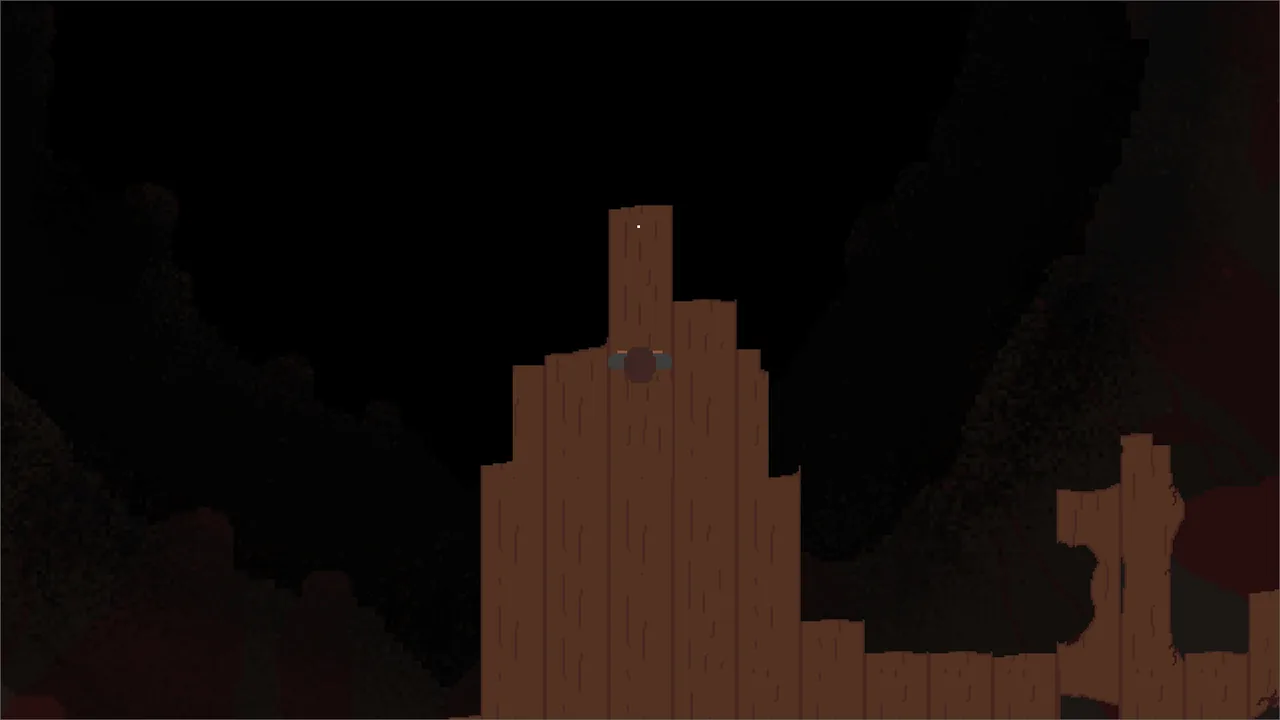
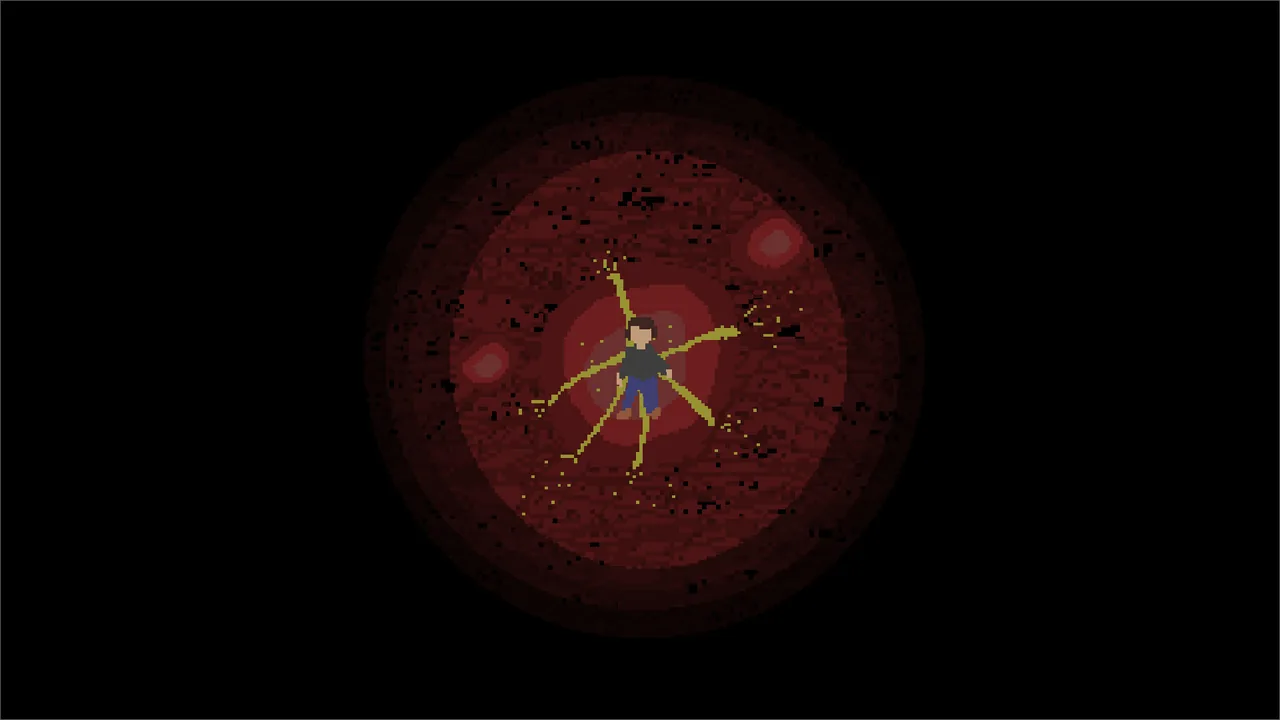
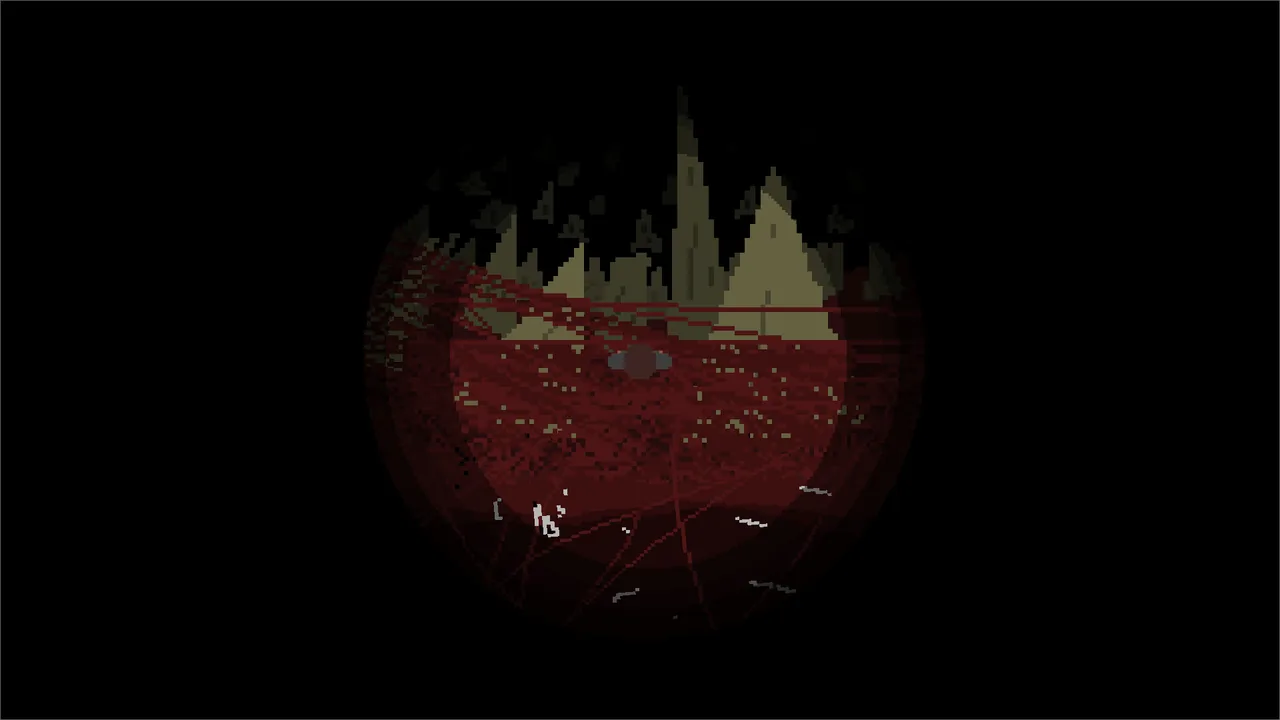
Between the store's own screenshots and the one review's specific praise for "the art" and the monster designs, Red Interior presents as pixel-art top-down horror with a deliberately grim palette — consistent with tags like Atmospheric and Pixel Graphics on its own listing. The per-level original music is the more distinctive claim on the store page; whether it lands is unverified beyond the developer's own description, but committing to five separate scores for a free five-level game is a genuine effort signal regardless of how the compositions themselves land.
Content-wise, the storefront's own age-rating disclosures put this squarely in adult horror territory: Brazil's DEJUS rates it 14 for violence, Germany's USK-style board rates it 16 for "drastic violence," and Indonesia's IGRS rates it 18 for violence and horror content. The developer's own content-descriptor note on the store page describes "pixelated gore" where death "depend[s] on the monster," and mentions bones and corpses rendered in a cartoonish style rather than realistically. None of that will surprise anyone who reads the genre tags first, but it's worth having in one place for anyone checking before downloading.
The business model, which is the actual headline
This is the section that matters most for Wanderer's readers, because free horror games are exactly where this audience has learned to expect a catch. Red Interior's store page lists no price, no DLC entries and no in-app purchase category in its feature list — categories that Steam normally surfaces the moment a game sells anything at all. There's no AI Generated Content Disclosure on the page either, and no purchase panel promoting extra content beyond the base download. As far as the storefront discloses, there is simply nothing for sale here: no premium currency, no cosmetic shop, no "definitive edition" waiting in the wings.
That's a clean bill of health, and on a genre where free frequently means "free until the paywall," it earns full marks on its own terms. It's also worth noting who's selling it: the developer and publisher credits are first names only — Aiden and Quinn — and the support contact is a personal Gmail address rather than a studio domain. A community announcement apologising for a Steam review-process delay is signed "Decent Gamer." Every signal here points to a very small, likely two-person team putting out what reads as their first Steam release, with no monetisation infrastructure in place because there's no publisher pushing for one.
How new this is
There isn't much more to measure yet. Steam's global achievement API returns no achievements at all for Red Interior, and the concurrent-player count sits at zero at the moment of writing — unsurprising for a two-day-old free release from an unknown developer, and not evidence of anything beyond how early this is. The only news post on the page is the developer explaining a Steam review-process delay that pushed the launch back to late July, which is a small but real signal of a solo or near-solo team learning the platform's submission process in public.
Final verdict
Red Interior is hard to score with confidence this early, and the honest thing to do is say so rather than round up or down to compensate. What's verifiable is a free, linear, five-level top-down horror game with a genuinely spotless business model, real production effort in its level-specific music and monster art, and — from the one detailed account available — a set of concrete rough edges around its core death-and-noise loop, a full-run permadeath system, a disorientingly open map, and at least one blocked or unclear progression point. None of that makes it a bad game; it reads like a sincere, reasonably ambitious first release with the kind of friction a small team without a QA pass would be expected to ship with.
Six feels like the right number: high enough to credit the real effort and the completely clean monetisation, held back by a single, detailed, first-hand account of exactly the kind of issues — inconsistent triggers, punishing restarts, a door nobody could find — that stop a free horror game from being an easy recommendation yet. Worth trying precisely because trying it costs nothing, and worth revisiting once more than one review exists to confirm whether those four complaints are teething problems or the whole story.
Price and monetisation checked 7 August 2026.
If you'd rather your progress stayed intact after every death without hunting through patch notes to check, Wanderer doesn't reset your character to the start of the run when you fall in a fight.
Pros and cons
Pros
- Completely free with no in-app purchases, no DLC and no purchase panel of any kind on the storefront listing
- Five levels each built around a different gimmick, most with their own dedicated music track, on a genuinely tiny team's apparent first release
- The one detailed player account singles out the monster art specifically as a highlight
- A short, low-commitment horror run that asks nothing of the player financially before they decide if it's for them
Cons
- The one review on file reports that dying resets progress back to the start of the whole run, not just the current room
- The same review describes noise-triggered monster spawns as inconsistent — some interactable objects trigger them, others that logically should don't
- The bar's open layout reportedly makes navigation and object-spotting difficult rather than tense
- That reviewer explicitly could not locate a required basement door and never confirmed finishing the game
Screenshots
-
Red InteriorImage: Quinn via Steam -
Red InteriorImage: Quinn via Steam -
Red InteriorImage: Quinn via Steam -
How the review scores each part of the gameWanderer Editorial -
The short versionWanderer Editorial -
The final verdictWanderer Editorial