Game review
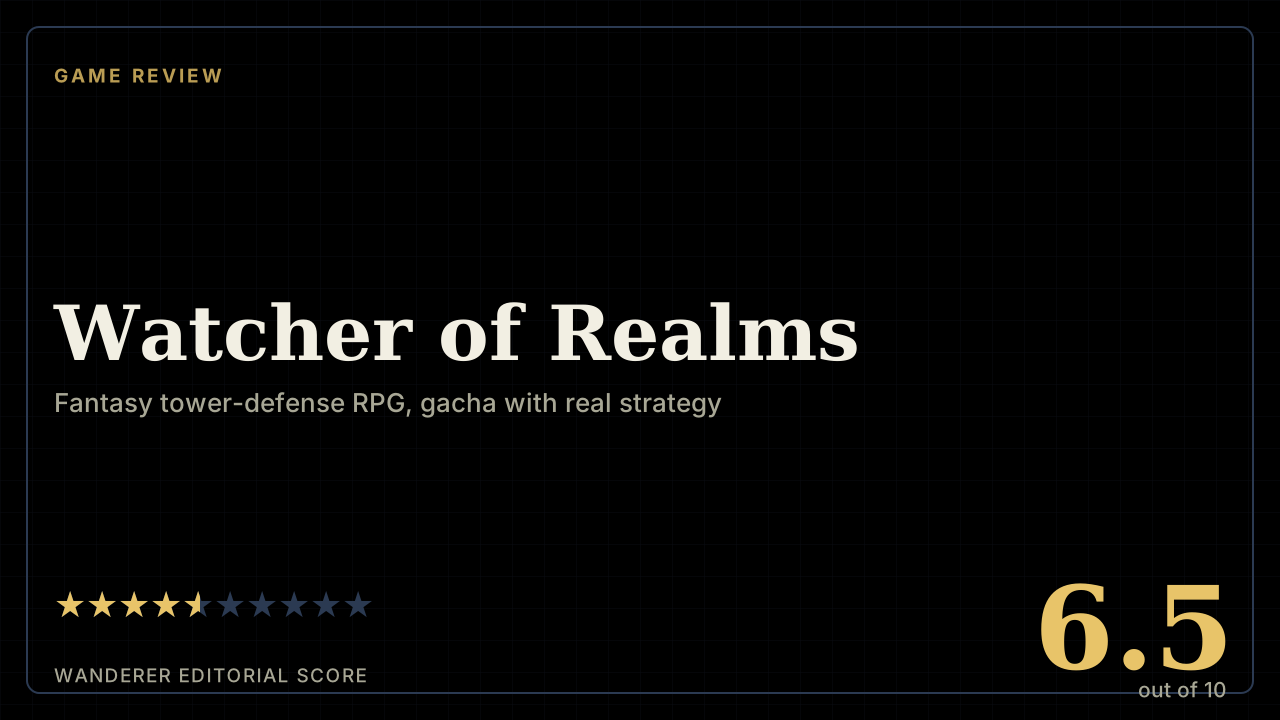
Watcher of Realms
6.5 / 10
- Developer
- MOONTON
- Publisher
- MOONTON Games
- Released
- 13 July 2023
- Platforms
- iOS, Android
- Genre
- Tower Defense RPG
- Monetisation
- Free-to-play with gacha hero summons, in-app purchases from roughly NZ$5 to NZ$165, a monthly subscription and a seasonal battle pass
- Players
- Guild co-op boss fights and a competitive PvP arena
The short version
Watcher of Realms is a free-to-play fantasy RPG from MOONTON, the studio behind Mobile Legends: Bang Bang, that reframes the gacha hero-collector formula around genuine tower-defense combat rather than turn-based team battles. Released 13 July 2023 across iOS and Android, it holds a 4.7-star rating from roughly 2,800 US App Store reviewers and has stayed in active development for three years, still shipping new heroes, seasonal content and crossover events. Coverage and player feedback broadly agree that the presentation and campaign structure genuinely earn the Diablo-adjacent comparisons reviewers reach for, and that its free-to-play track is unusually generous next to genre peers like Raid: Shadow Legends — while also agreeing that its summon system withholds the odds that would let a player judge exactly what they're buying, and that its highest-tier purchases climb well past what most mobile games ask.
Biggest strengths
- Combat genuinely uses tower-defense placement and faction synergy rather than dressing up a turn-based battler in different clothes, which reviewers describe as closer to a Diablo-style tower-defense game than a typical gacha battler
- Summoning scenes and character animation are repeatedly singled out as console-quality, well above what mobile hero-collectors usually manage
- The campaign across the continent of Tya paces its difficulty curve well, staying challenging for veteran players rather than trailing off once the tutorial ends
Biggest weaknesses
- Summon odds for its highest-rarity heroes are not published anywhere the game or its store listings disclose, leaving players to judge value entirely from anecdote
- In-app purchases run from roughly NZ$5 up to NZ$165 for a single bundle, on top of a monthly subscription and a seasonal battle pass, and reviewers describe transaction prompts as frequent enough to interrupt the experience
- The extended tutorial forces players through required lessons rather than letting newcomers opt out once they've grasped the basics
Who it's for: Fans of hero-collector gacha RPGs who want genuine tactical placement rather than auto-battling turn order, and who can enjoy a fantasy game for free without chasing every banner; not recommended for players who find gacha mechanics inherently uncomfortable, since no amount of design polish removes the randomised summon system underneath.
Our recommendation: One of the more thoughtfully built tower-defense gacha games on mobile, worth installing for free and playing patiently — just go in knowing the summon banners are exactly as opaque as the genre's worst offenders, even if the surrounding game treats free players better than most.
6.5 / 10
Introduction
Watcher of Realms sends players to the war-torn continent of Tya to recruit and command heroes across ten-plus factions, defending against waves of monsters using tower-defense placement rather than the turn-based battling that defines most gacha RPGs. Developed by MOONTON — the studio behind Mobile Legends: Bang Bang — and published by MOONTON Games, it launched 13 July 2023 on iOS and Android, and remains playable on desktop only through Android emulation rather than a native PC release. Three years on, it holds a 4.7-star rating from roughly 2,800 US App Store reviewers and is still receiving new content, including recent seasonal events and hero additions well past its launch year. This review draws on official coverage, player reviews across app storefronts and detailed hands-on write-ups to assess a game whose reputation splits cleanly along a familiar line for the genre: what MOONTON built is good, and what it charges for isn't always clearly explained.
Tower-defense combat that actually earns the comparison
The clearest praise for Watcher of Realms centres on a genuine structural choice: rather than arranging heroes into a formation and watching them trade turn-based blows, combat plays out as proper tower defense, with heroes placed strategically to counter different enemy types as waves approach. Reviewers who've covered the game at length describe the feel as close to "what you might imagine a Diablo tower defence game to be" — dark fantasy atmosphere wrapped around genuine tactical placement decisions rather than a passive auto-battler with extra menus. That distinction matters more than it sounds: the tower-defense structure means faction synergies and hero positioning have to be worked out deliberately, not just assembled into the highest raw power score and left to resolve itself. The campaign structure backs this up with a difficulty curve that reviewers say stays genuinely challenging for veteran players rather than flattening out once the early hours end, supplemented by side missions and rotating seasonal content that keep the map from feeling static.
Presentation that outperforms its genre
Watcher of Realms draws specific, repeated credit for production values well above what mobile hero-collectors typically manage. Summoning sequences and character animation are described as comparable to console-quality productions rather than the flat sprite work common to the genre, and the roster's over 170 heroes span a wide range of distinct visual identities across their ten-plus factions. That's not a universal win — some designs sit oddly against the game's otherwise dark-fantasy tone, with a pirate-themed hero drawing specific criticism as tonally mismatched — but the baseline quality bar is high enough that it's treated as a genuine selling point rather than marketing gloss.
A free track reviewers call unusually generous, alongside the usual opacity
Watcher of Realms' free-to-play structure draws a more interesting response than most gacha games manage: multiple independent sources describe it as more generous than direct competitors like Raid: Shadow Legends, with one outlet focused specifically on gacha games calling it "the most respected of the group" for players who want real strategy alongside a patient, free-to-play-friendly track. Coverage consistently notes that a player can have a genuinely good experience without spending anything, just at a slower pace than someone paying — and that the monetisation pressure, while present, feels comparatively restrained next to the genre's more aggressive offenders.
That said, the same reviewers are consistent about what doesn't improve: summon odds for the game's highest-rarity heroes aren't published anywhere the game or its storefront listings disclose, so players are left estimating value from community anecdote rather than a stated rate. In-app purchases run from small cosmetic-adjacent bundles up to roughly NZ$165 for a single top-tier pack, stacked alongside a monthly subscription around NZ$16 and a seasonal battle pass around NZ$33 — genuinely steep territory even by mobile gacha standards, and reviewers describe transaction prompts appearing frequently enough during play to interrupt the pacing MOONTON otherwise built carefully. The honest read is that Watcher of Realms treats its free players better than most of its direct rivals do, while still asking its paying players to accept exactly the same undisclosed-odds gamble that defines the worst of the category. Both things are true at once, and a prospective player should weigh them separately rather than letting one cancel the other out.
Friction worth knowing about before installing
Beyond the monetisation debate, the most consistent smaller complaint is the tutorial: it runs long and forces players through every required lesson in sequence rather than letting anyone who already understands tower-defense fundamentals skip ahead. It's a first-hour friction point rather than a structural flaw, but it's specific and repeated enough across coverage to be worth flagging for anyone impatient to reach the actual game.
Final Verdict
Watcher of Realms earns its strong App Store standing on real design merit — tower-defense combat that uses its genre honestly, presentation that outclasses most of its mobile competition, and a free-to-play track that reviewers focused specifically on gacha games rate as more generous than its closest rivals. What keeps it from a stronger recommendation is the part of the genre no amount of surrounding polish fixes: summon rates for its best heroes go undisclosed, and its top-tier purchases reach prices that put real pressure on anyone chasing a specific character rather than enjoying what's earnable for free. For a patient player willing to treat the campaign and PvE content as the actual game, and the summon banners as an optional side bet rather than the point, this is one of the better-built games in a genre that rarely rewards that patience so well.
Pros and cons
Pros
- Combat genuinely uses tower-defense placement and faction synergy rather than dressing up a turn-based battler in different clothes, which reviewers describe as closer to a Diablo-style tower-defense game than a typical gacha battler
- Summoning scenes and character animation are repeatedly singled out as console-quality, well above what mobile hero-collectors usually manage
- The campaign across the continent of Tya paces its difficulty curve well, staying challenging for veteran players rather than trailing off once the tutorial ends
- Its free-to-play track draws real praise as more generous than genre rivals, with one gacha-focused outlet calling it the most respected game in its category for players who want strategy without being forced to pay
Cons
- Summon odds for its highest-rarity heroes are not published anywhere the game or its store listings disclose, leaving players to judge value entirely from anecdote
- In-app purchases run from roughly NZ$5 up to NZ$165 for a single bundle, on top of a monthly subscription and a seasonal battle pass, and reviewers describe transaction prompts as frequent enough to interrupt the experience
- The extended tutorial forces players through required lessons rather than letting newcomers opt out once they've grasped the basics
- Some character designs sit awkwardly against the game's dark-fantasy tone, with reviewers singling out tonally mismatched additions like a pirate-themed hero
Screenshots
-
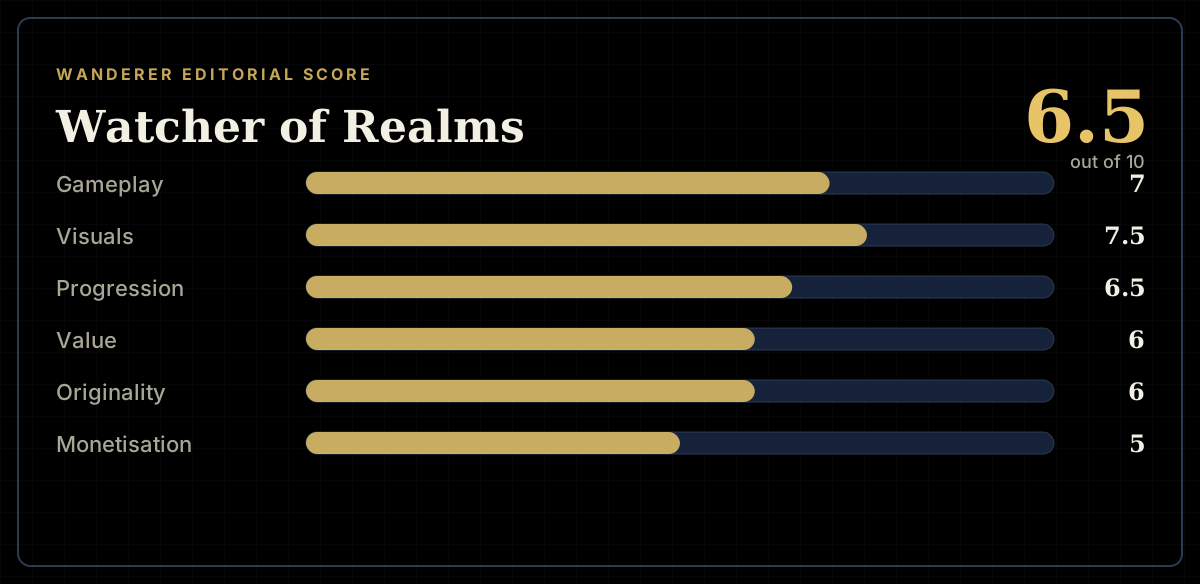
How the review scores each part of the gameWanderer Editorial -
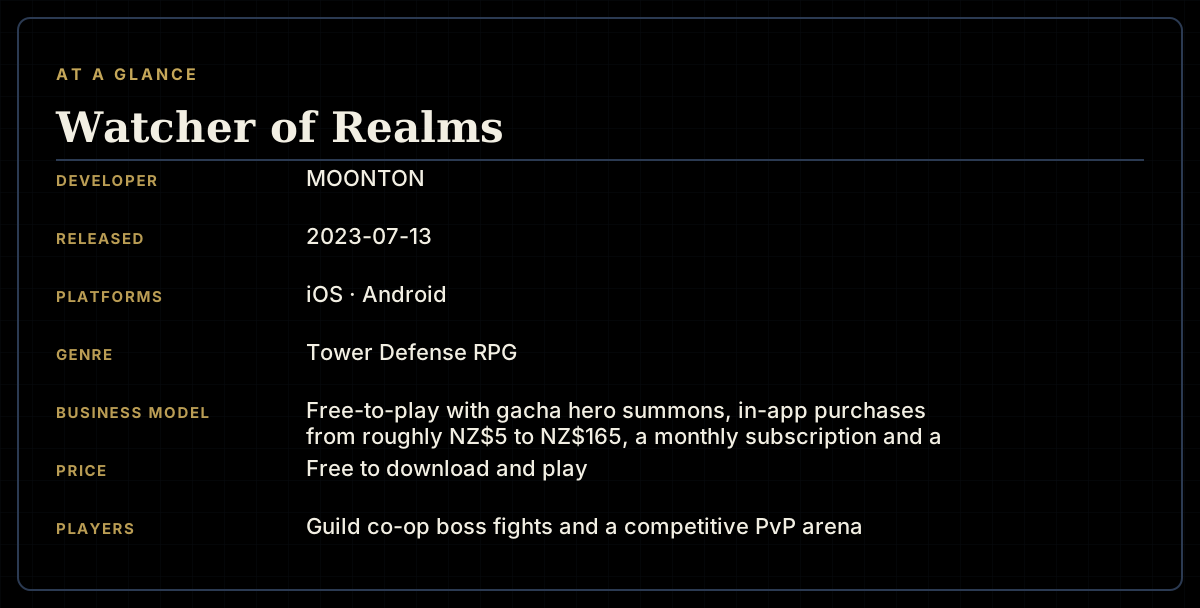
The game at a glanceWanderer Editorial -
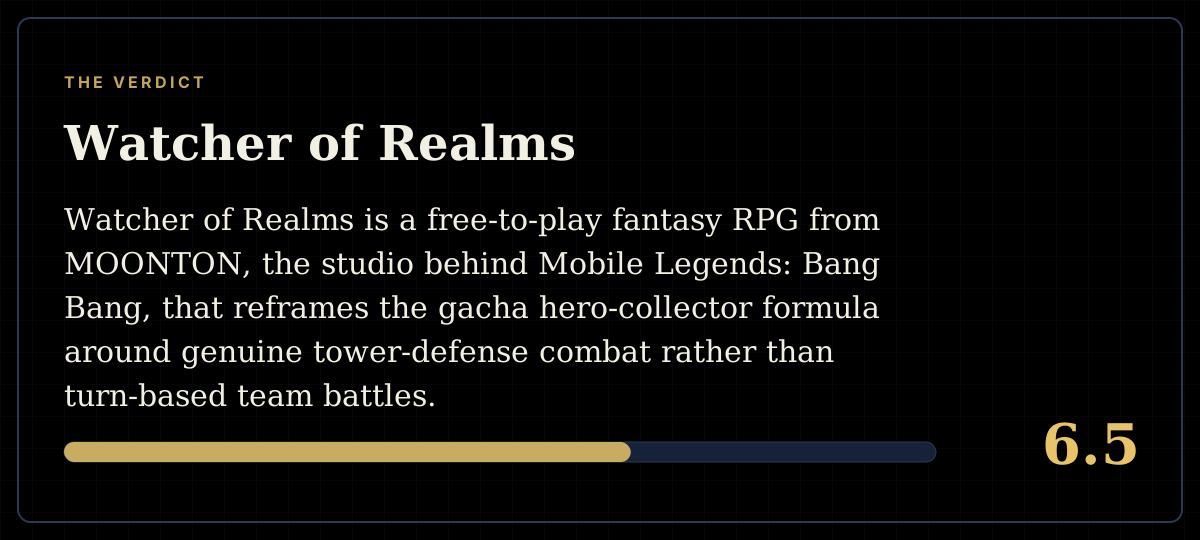
The short versionWanderer Editorial