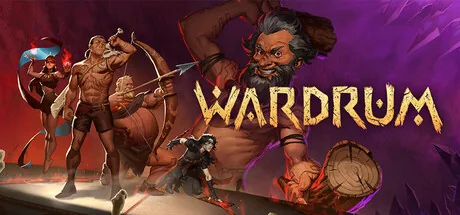
Game review
Wardrum
7 / 10
- Developer
- Mopeful Games
- Publisher
- Team17
- Released
- 7 May 2026
- Platforms
- Windows
- Genre
- Tactical Roguelite
- Monetisation
- One-time purchase, no in-game store
- Players
- Single-player only
The short version
Wardrum is a tactical turn-based roguelite from Mopeful Games, published by Team17, that layers rhythm-game timing directly onto its combat: every attack, block and ability activation is performed as a timed input sequence, and status effects like debuffs actively complicate those sequences rather than just reducing a stat. It released 7 May 2026 for NZ$21.69, and three months later sits at Very Positive across 58 English-language reviews (~84.5%). The reception is unusually coherent for a genre mash-up: reviewers across the board credit the rhythm-tactics fusion itself as genuinely novel and well-executed, alongside striking pixel art and a tribal-drum-driven soundtrack specifically singled out for quality. Where the same review sample pulls in two directions is the layer built around that central hook — several reviewers, including some with extraordinary playtime logged, argue the roguelike progression, build variety and equipment systems don't match the depth of the combat innovation, leaving runs that can feel longer than their decision space justifies.
Biggest strengths
- The rhythm-timing combat system is this review's most consistently and specifically praised element — reviewers describe debuffs turning simple attack sequences into genuinely demanding timing puzzles rather than just numeric penalties
- Pixel art and 3D environment work draw wide, repeated praise, distinct from generic "nice visuals" comments
- The soundtrack, built around tribal drums that double as the game's core mechanic, is singled out by name across a large share of the positive sample as one of the release's strongest elements
Biggest weaknesses
- Reviewers with very high playtime — including one logging over 3,700 hours — describe the roguelike build variety and talent options as shallow relative to genre peers, wanting a more expanded progression system
- Several reviewers report individual runs feeling longer than the amount of meaningful decision-making within them justifies, a pacing complaint distinct from simple difficulty
- Balance issues recur across the negative sample: forced party composition restrictions, enemy abilities described as disproportionately powerful, and boss placement that can put an enemy in a position the player's abilities can't actually reach
Who it's for: Rhythm-game fans curious about tactics, and tactics fans open to a genuinely different input method, who can accept a progression layer several experienced reviewers found thinner than the combat deserves.
Our recommendation: A genuinely original combat idea, extremely well executed on its own terms, in a roguelite shell that reviewers who've put serious hours in wish had more built around it — worth playing for the hook alone, with tempered expectations about long-term build depth.
7 / 10
Introduction
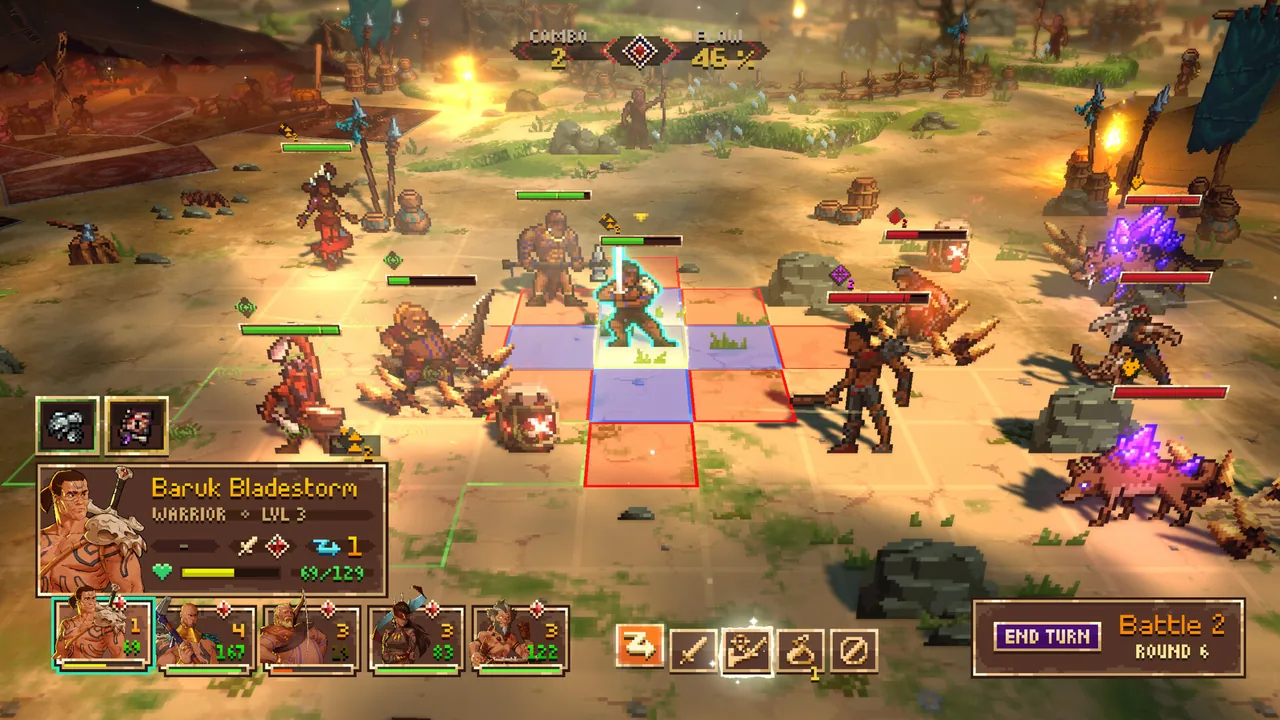
Wardrum asks a question few tactics games have tried: what happens if every action in a turn-based battle also has to be performed on the beat? Developed by Mopeful Games and published by Team17, it puts players in charge of a tribal warband fighting through a fantasy world corrupted by dark sorcery, with combat built around timing attacks, blocks and abilities to a rhythm rather than simply selecting them from a menu. It released 7 May 2026 for NZ$21.69, and three months on sits at Very Positive across 58 English-language reviews — a small enough sample that this review reads it in full: every negative review, and a representative share of the positive ones.
A combat idea that genuinely works
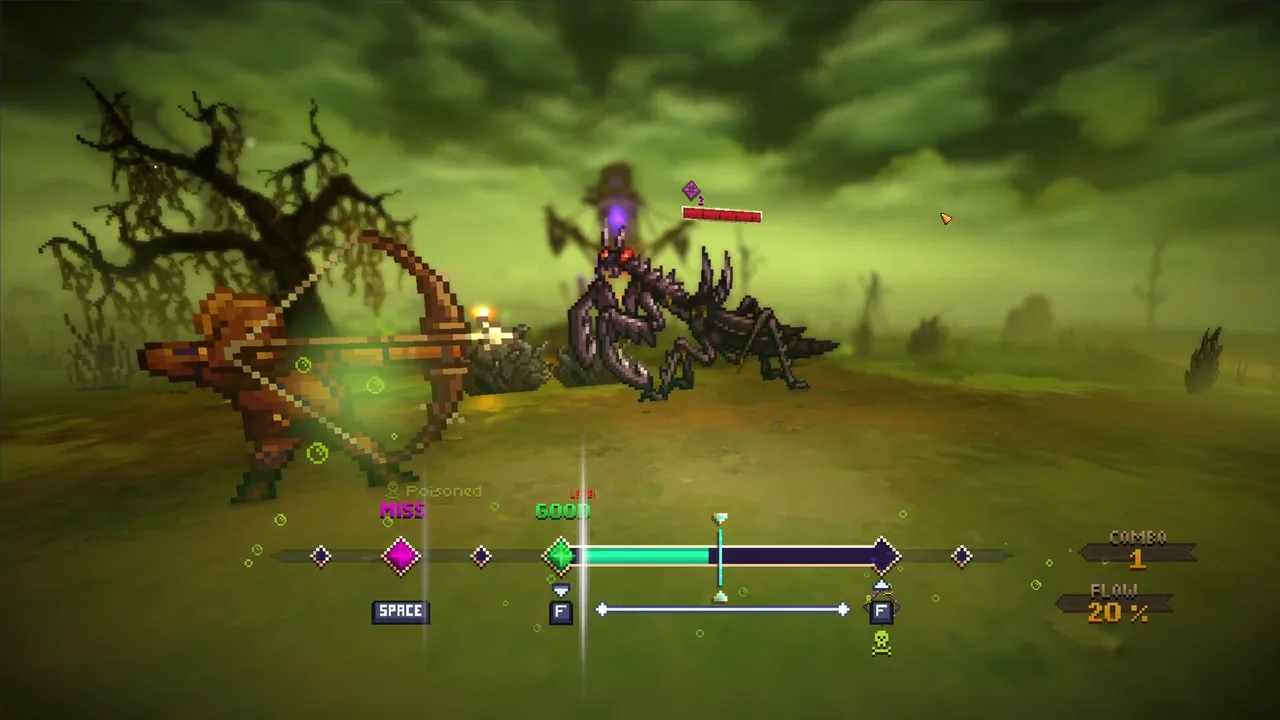
The central premise is the thing this review's sample agrees on most emphatically, and the specificity of the praise is what makes it credible. One reviewer described the mechanical texture directly: "shooting an arrow is: press (get arrow from quiver), press again and hold (draw), and release (shoot)" — a simple enough sequence on its own, but the game's real trick is what it does to that sequence once status effects enter the picture. Debuffs don't just reduce a number; they actively complicate the input pattern itself, turning what was a clean two-beat action into what one reviewer called "some rubix cube level rhythm" once two or three effects stack. That's a genuinely different way of representing a debuffed character being harder to play well — mechanically embodying the fiction rather than just applying a stat penalty — and it's rare enough in the genre that reviewers coming from both the rhythm side and the tactics side describe being won over by it.
Presentation that earns its own praise, separate from the hook
Beyond the central mechanic, Wardrum draws real, specific praise for its presentation on its own terms. Pixel art and 3D environment work show up constantly across the positive sample rather than being folded into vague "looks nice" comments, and the soundtrack — built around tribal drums that double as the literal timing mechanism for combat — is credited by name as one of the release's standout elements. That layered design, where the music isn't just atmospheric but is the actual interface for playing the game, is a genuinely elegant piece of design work distinct from the combat innovation itself, and it's part of why the rhythm-tactics fusion reads as more than a gimmick in this review's sample.
Where experienced players want more
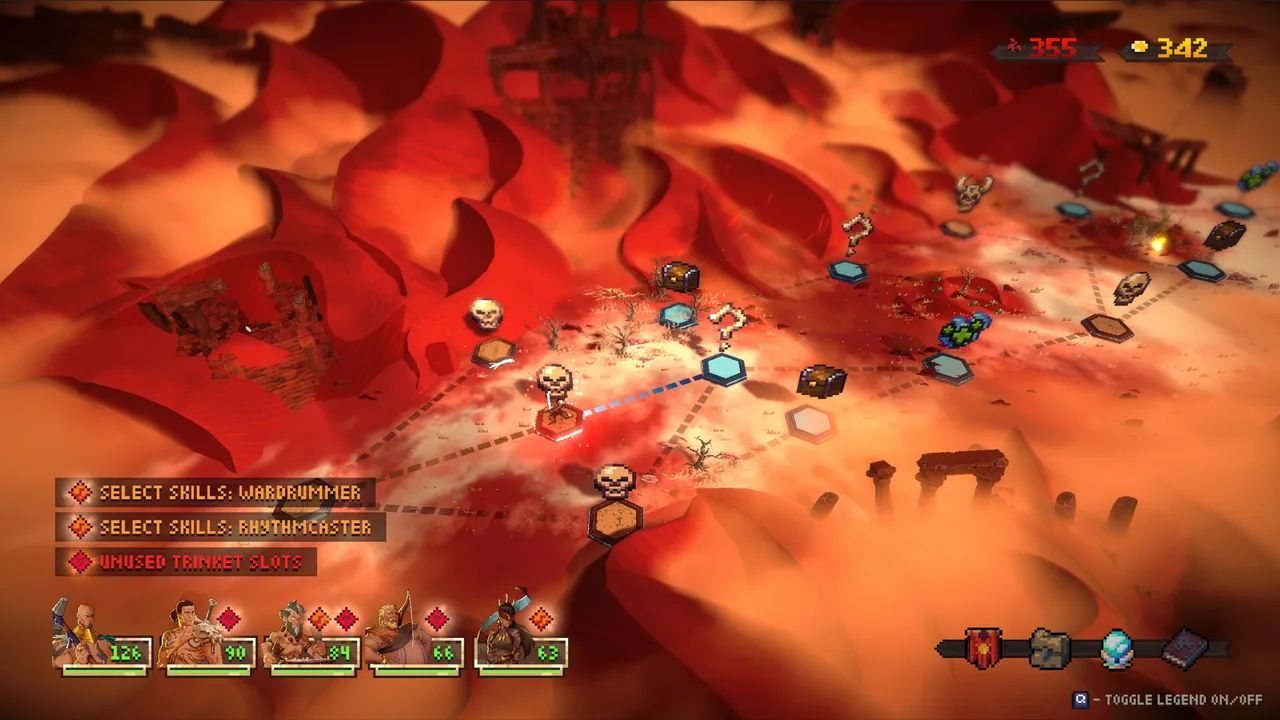
Set against all of that, the most consistent and most credible criticism in this review's sample comes specifically from reviewers with extraordinary time invested — not casual bouncers, but players who clearly committed to the game and still came away wanting more. One reviewer logging over 3,700 hours summarised ten runs in with "good presentation, shallow build options," calling for a more expanded talent tree even while acknowledging the game improves once meta-progression kicks in. Another, at 83 hours, put it more sharply: "nearly every system lacked meaningful depth or experimentation," describing leveling choices as predictable and combat eventually turning "repetitive and sluggish" across the length of individual runs. One reviewer's blunt framing — "a rhythm-game in a turn-based tactics skin" — captures the specific shape of the complaint: not that the tactics layer is broken, but that it exists to support the rhythm mechanic rather than standing as a fully-realised system in its own right. That's a defensible design choice, but it's clearly not what every player wanted going in.
Balance rough edges
A separate cluster of complaints centres on balance and reliability rather than depth. Several reviewers describe enemy abilities as disproportionately powerful relative to available counters — one specifically cited enemies able to "mark your entire party" and then reduce HP by 70-80% in a single effect, a spike that undercuts the careful positioning the tactics layer is meant to reward. Boss placement draws a more concrete complaint: at least one reviewer with nearly 1,900 hours logged reports that a boss spawning at the top or bottom edge of the arena can end up genuinely unreachable by the player's available attacks, which reads as a real design oversight rather than intended difficulty. Smaller but real technical complaints round out the negative sample: unreliable waypoint-based movement, a reported controller button-mapping issue that blocked one reviewer's progress past the tutorial entirely, and ultrawide monitor support that reportedly cuts off characters and UI elements.
Final Verdict
Wardrum succeeds decisively at the hardest part of what it's attempting — fusing rhythm-game timing with turn-based tactics in a way that feels purposeful rather than gimmicky, backed by presentation and sound design specific and strong enough to be praised in their own right. Where it draws real, credible criticism is in the roguelike shell built around that idea: progression and build variety that several highly-invested reviewers find thinner than the combat deserves, alongside balance and reliability rough edges that are fixable rather than fundamental. For players drawn specifically to the central hook, that's an easy trade to accept. For tactics purists hoping for a deep, system-heavy roguelike first and a rhythm game second, this review's sample suggests tempering that expectation before buying.
Pros and cons
Pros
- The rhythm-timing combat system is this review's most consistently and specifically praised element — reviewers describe debuffs turning simple attack sequences into genuinely demanding timing puzzles rather than just numeric penalties
- Pixel art and 3D environment work draw wide, repeated praise, distinct from generic "nice visuals" comments
- The soundtrack, built around tribal drums that double as the game's core mechanic, is singled out by name across a large share of the positive sample as one of the release's strongest elements
- Full controller support is implemented well according to most reviewers, notable for a genre where rhythm-precision input can be an awkward fit for a gamepad
Cons
- Reviewers with very high playtime — including one logging over 3,700 hours — describe the roguelike build variety and talent options as shallow relative to genre peers, wanting a more expanded progression system
- Several reviewers report individual runs feeling longer than the amount of meaningful decision-making within them justifies, a pacing complaint distinct from simple difficulty
- Balance issues recur across the negative sample: forced party composition restrictions, enemy abilities described as disproportionately powerful, and boss placement that can put an enemy in a position the player's abilities can't actually reach
- UI and movement reliability draw specific complaints, including unreliable waypoint-based movement and ultrawide monitor support that reportedly cuts off characters and interface elements
Screenshots
-
WardrumImage: Team17 via Steam -
WardrumImage: Team17 via Steam -
WardrumImage: Team17 via Steam -
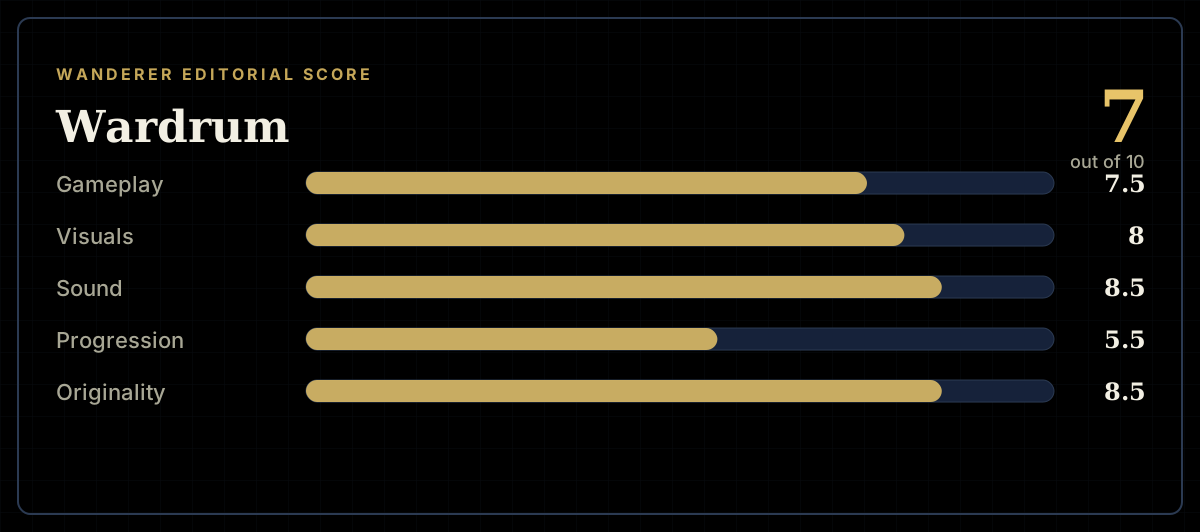
How the review scores each part of the gameWanderer Editorial -
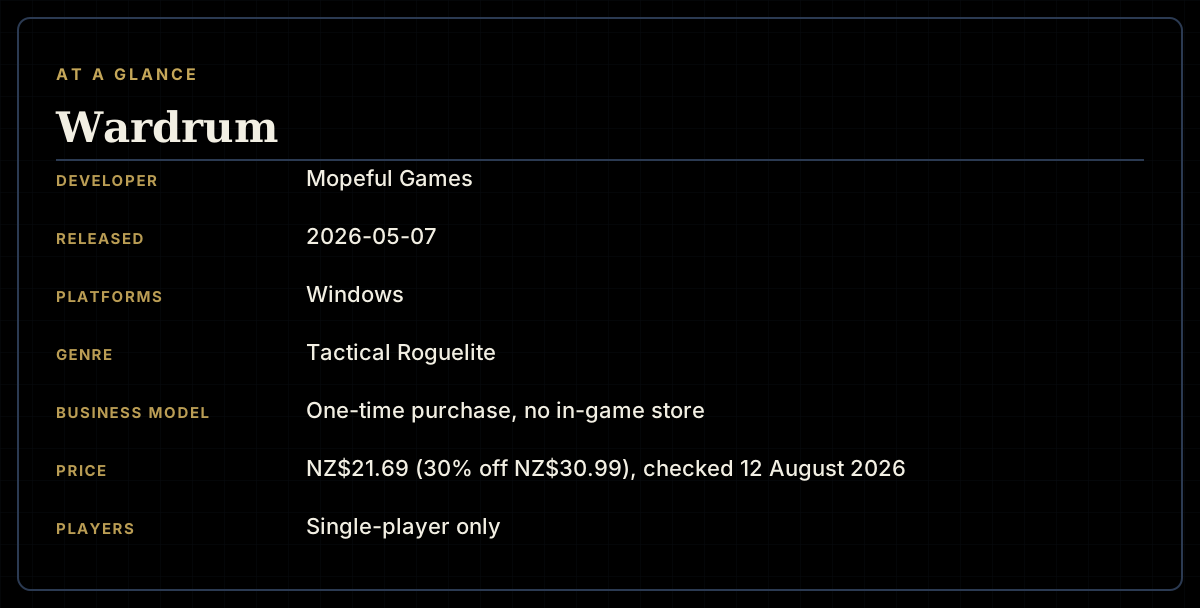
The essentials at a glanceWanderer Editorial -
The short versionWanderer Editorial