Game review
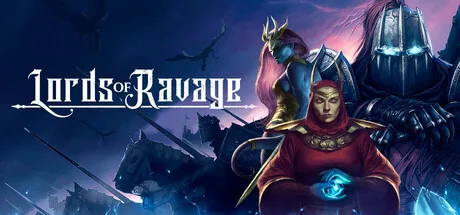
Lords of Ravage
5 / 10
- Developer
- Synthetic Domain
- Publisher
- 101XP
- Released
- 15 October 2025
- Platforms
- Windows
- Genre
- Tactical RPG
- Monetisation
- One-time purchase, no in-game store
- Players
- Single-player only
The short version
Lords of Ravage is a dark-fantasy tactical RPG from Synthetic Domain, published by 101XP, casting the player as a villainous warlord conquering a doomed kingdom across three short campaigns. Released 15 October 2025 for NZ$14.75, it carries a Mixed rating — 65.6% positive across 61 English-language reviews and 69.3% across its 150-review all-language corpus. This review reads all 21 English negative reviews and finds a real, engaging turn-based battle system at its core, praised even inside several critical reviews — undercut by genuine, verified problems: launch-week bugs including softlocks and crashes that persisted for months, a threat-scaling system multiple reviewers describe as mathematically broken, and thin content spread across only three similar campaigns with no meta-progression to sustain replays. Most damaging is a claim this review can verify independently: Steam's own news feed for the game shows exactly one hotfix, posted two days after launch, and nothing addressing gameplay or bugs in the nine months since — directly corroborating reviewer complaints that the developer went quiet.
Biggest strengths
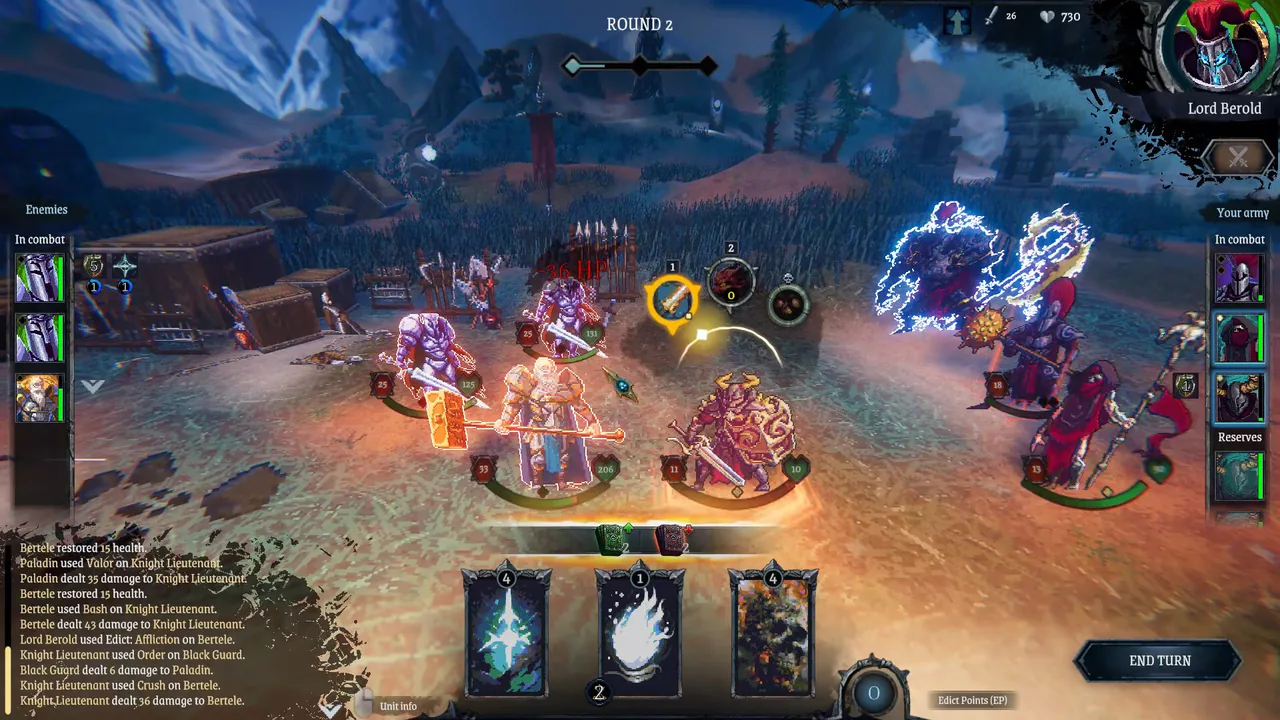
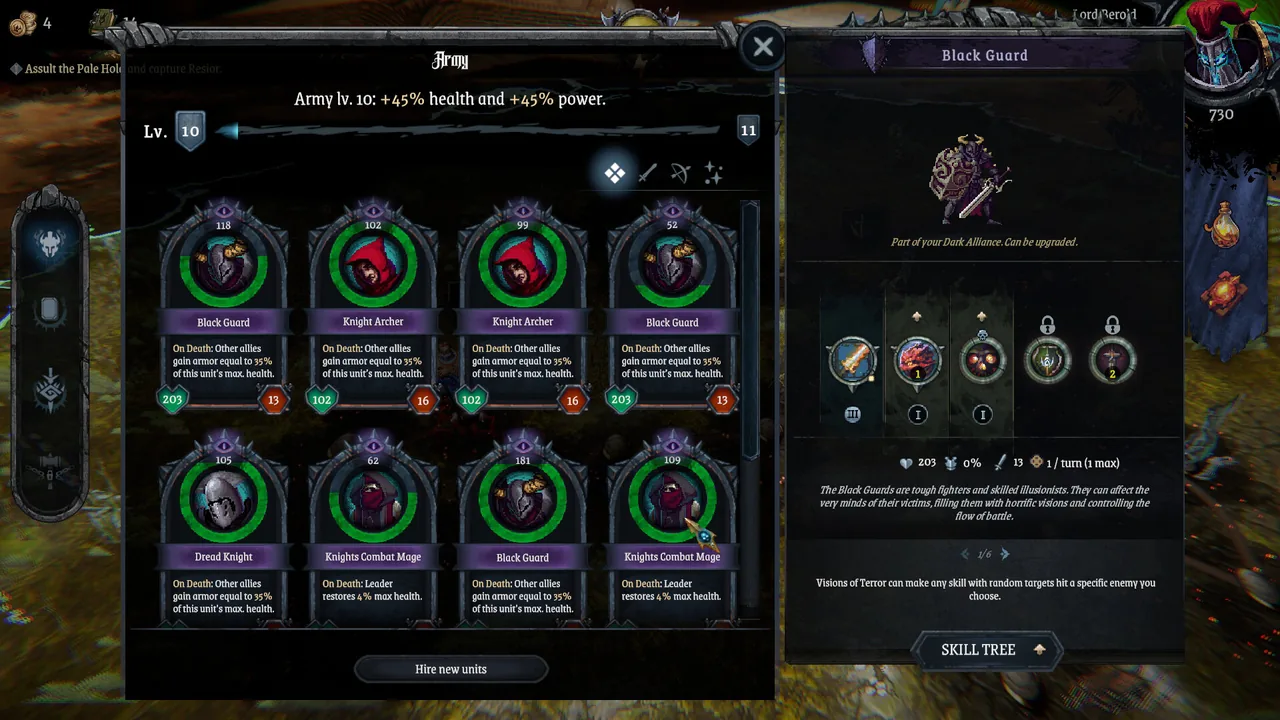
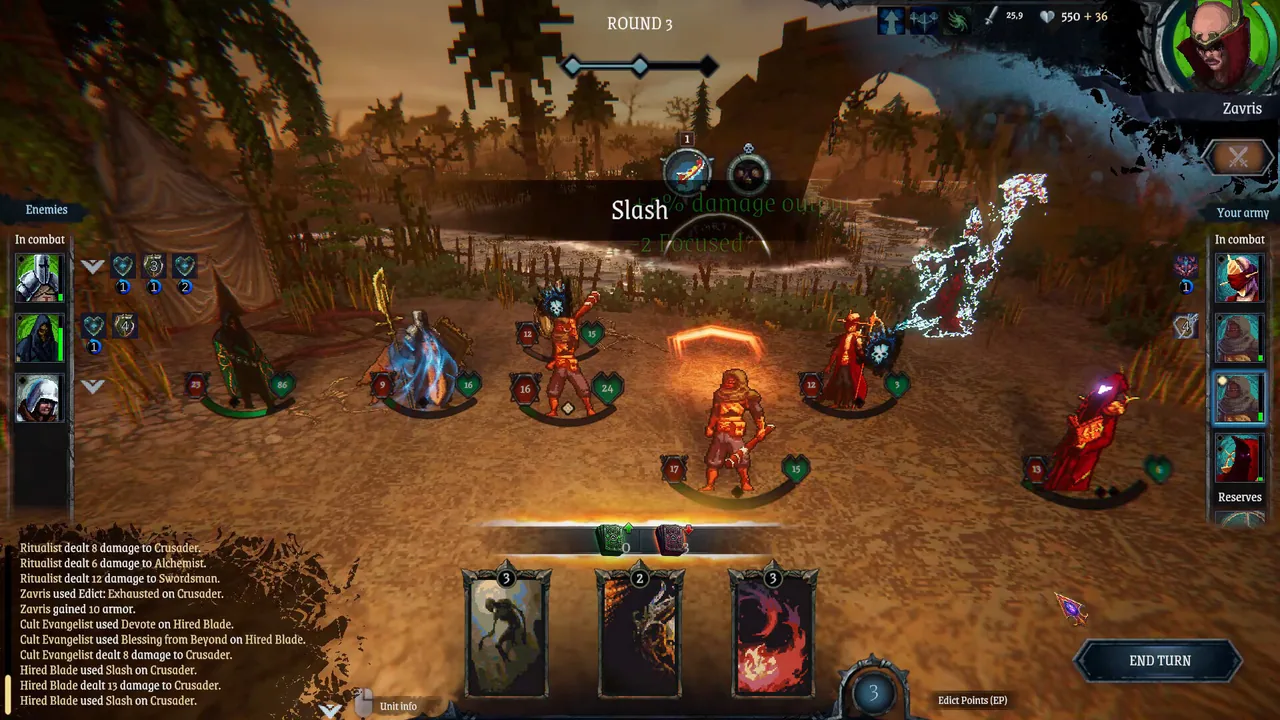
- The turn-based battle system draws real, specific praise even from critical reviewers, with unit variety, upgrade paths and positioning described as genuinely engaging from the opening hours
- The villain-perspective dark fantasy premise — playing the conquering warlord rather than the hero resisting one — earns credit as a distinctive angle reviewers say they wish more games explored
- Visual presentation draws consistent praise across both positive and negative reviews, holding up even in reviews that mark the game not recommended for other reasons
Biggest weaknesses
- Launch-week bugs were real and severe — including a tutorial-blocking softlock reported within the first half hour of release, at 79 upvotes the most-helpful negative review the game has — and Steam's news feed shows exactly one hotfix, two days after launch, with nothing addressing gameplay or stability issues since
- A threat/menace scaling system that raises enemy stats as a run progresses draws detailed, specific criticism as badly tuned, with reviewers describing exploration itself becoming actively punishing rather than rewarding
- Content is thin — three campaigns that reuse the same core structure with different units and leaders, no meta-progression between runs, and several reviewers explicitly comparing the final release unfavourably to a more generous, more powerful-feeling pre-release demo
Who it's for: Fans of villain-perspective dark fantasy and turn-based tactics willing to tolerate real, unfixed bugs for a short, characterful campaign; a poor fit for anyone expecting ongoing support or a long play-through.
Our recommendation: A game with a genuinely engaging core battle system let down by real bugs, thin content and an apparent lack of continued support. Worth a look only at a steep discount, and only after checking whether its outstanding bugs affect your specific setup.
5 / 10
Introduction
Lords of Ravage puts the player in charge of the villains for once — a warlord commanding legions of darkness across a doomed medieval kingdom, three short campaigns each following a different leader and faction. Developed by Synthetic Domain and published by 101XP, it released 15 October 2025 for NZ$14.75 carrying real pre-release goodwill from a well-received demo period and a DevGAMM Awards nomination. It sits at a Mixed rating today — 65.6% positive across 61 English-language reviews, 69.3% across its wider 150-review all-language corpus. This review reads all 21 of the game's English negative reviews in full, and the picture that emerges is a genuinely engaging tactics game whose launch problems appear to have simply never been fixed.
A battle system that earns real, specific praise
Set the problems aside for a moment, because the core loop deserves credit this review's sample gives it consistently. Turn-based combat with distinct unit roles, upgrade paths and positioning draws praise even from reviewers who ultimately mark the game not recommended for other reasons — one detailed critical review opens by conceding "the battle system very engaging and fun to use. Each unit has a purpose, and even your basic foot soldiers can be upgraded." The villain-perspective framing earns its own specific credit: several reviewers say they specifically sought the game out for its dark fantasy premise, playing the side that wins rather than resists, and call it a refreshing angle the genre rarely explores with real commitment. Visual presentation is another point of near-universal agreement, praised across both positive and negative reviews alike.
Bugs that were real, and apparently never fixed
Here's where this review's read of the negative sample turns from ordinary launch grumbling into something more serious. The single most-helpful negative review the game has — 79 upvotes, posted the day of release — describes getting stuck in the tutorial itself, unable to progress past a bugged "end turn" interaction. Other reviewers report crashes on startup, confusing lack of in-game documentation for basic settings, and — critically for a turn-based tactics game where a single bad decision can end a run — no manual save option, only autosaves, which several reviewers specifically flag as compounding the risk of losing progress to a crash.
What makes this more than an ordinary "buggy at launch" story is what happened next, or rather didn't. This review independently checked Synthetic Domain's Steam news feed for Lords of Ravage: it lists exactly one hotfix, posted two days after launch on 17 October 2025, and nothing else addressing gameplay, balance or stability in the roughly nine months since — the only later posts are seasonal storewide sale announcements. That's not this review inferring abandonment from review text; it's a directly verifiable gap in the record. One positive review, written on launch day itself, captures the irony precisely: "Launch bugs can of course be frustrating, but they'll be patched out soon enough." Reading that alongside a news feed with nothing since two days later is a striking contrast between reasonable launch-day optimism and what actually happened.
A scaling system reviewers call broken, and thin content underneath it
Beyond bugs, this review's sample raises a specific, mechanical complaint about the game's "menace" or threat system, which raises enemy stats as a run progresses. One detailed review works through the maths directly, arguing the scaling percentages create runaway difficulty that punishes exploration rather than rewarding it — moving around the map too much, which the game otherwise encourages for resources and story content, actively makes battles harder in a way multiple reviewers call disproportionate. Layered on top of that, several reviewers describe the overall content as thin: three campaigns sharing the same core structure with different units and leaders, no meta-progression carrying anything forward between runs, and multiple mentions of three different leaders sharing near-identical endings. A recurring, more personal disappointment comes from players who invested significant time in the pre-release demo — one reports over 200 hours across demo builds — and found the finished 1.0 release noticeably less generous and less powerful-feeling than what they'd spent years anticipating.
What the numbers suggest
Steam's achievement data offers a useful counterweight here: across 23 achievements, the median completion rate sits at 31.4%, with the easiest at 93.6% — a comparatively healthy curve for this library, consistent with a genuinely short game rather than one players are bouncing off early. That lines up with the "too short" and "no meta-progression, feels repetitive" complaints from the review sample: a fair share of buyers who start Lords of Ravage do see a meaningful amount of it, they just don't find much reason to keep going once they have.
Final Verdict
Lords of Ravage has the bones of a genuinely good tactics game — reviewers on both sides of its Mixed rating agree the battle system itself works, and the villain-perspective dark fantasy premise is distinctive enough to be worth exploring on its own merits. What holds it back from a fair score today isn't a design disagreement, it's a verifiable fact: real, reported bugs at launch, including a tutorial-blocking softlock in the game's most-helpful review, met exactly one hotfix and then silence for the better part of a year. Combined with thin, short content and a threat-scaling system several reviewers argue is mathematically unbalanced, this reads less like a game with rough edges still being sanded down and more like one the developer moved on from shortly after release. Worth revisiting if a substantial update ever lands — but as it stands today, buy only at a steep discount and with clear eyes about what's likely to stay broken.
Pros and cons
Pros
- The turn-based battle system draws real, specific praise even from critical reviewers, with unit variety, upgrade paths and positioning described as genuinely engaging from the opening hours
- The villain-perspective dark fantasy premise — playing the conquering warlord rather than the hero resisting one — earns credit as a distinctive angle reviewers say they wish more games explored
- Visual presentation draws consistent praise across both positive and negative reviews, holding up even in reviews that mark the game not recommended for other reasons
- A one-time NZ$14.75 purchase with no in-game store or monetisation of any kind
Cons
- Launch-week bugs were real and severe — including a tutorial-blocking softlock reported within the first half hour of release, at 79 upvotes the most-helpful negative review the game has — and Steam's news feed shows exactly one hotfix, two days after launch, with nothing addressing gameplay or stability issues since
- A threat/menace scaling system that raises enemy stats as a run progresses draws detailed, specific criticism as badly tuned, with reviewers describing exploration itself becoming actively punishing rather than rewarding
- Content is thin — three campaigns that reuse the same core structure with different units and leaders, no meta-progression between runs, and several reviewers explicitly comparing the final release unfavourably to a more generous, more powerful-feeling pre-release demo
- By December 2025, two months after launch, reviewers were describing the game as functionally abandoned, a claim this review's own check of the developer's news feed corroborates rather than contradicts
Screenshots
-
Lords of RavageImage: 101XP via Steam -
Lords of RavageImage: 101XP via Steam -
Lords of RavageImage: 101XP via Steam -
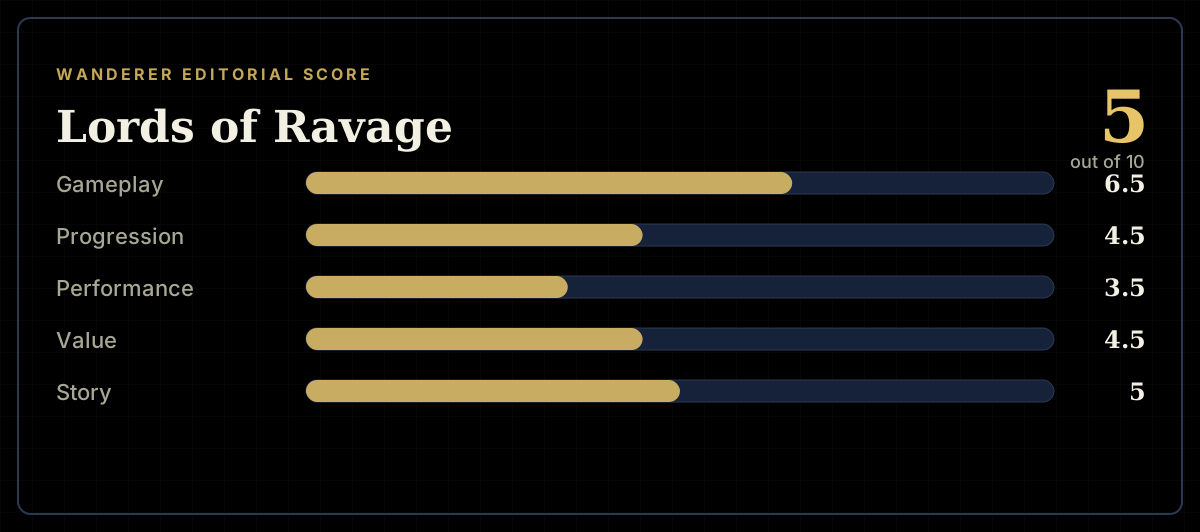
How the review scores each part of the gameWanderer Editorial -
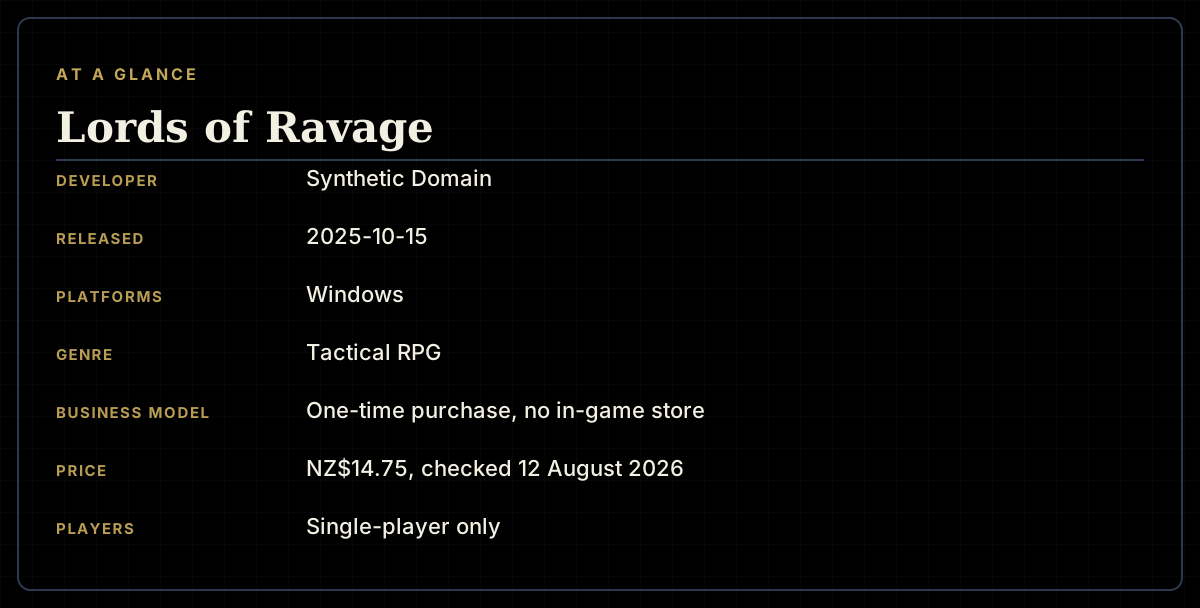
The essentials at a glanceWanderer Editorial -
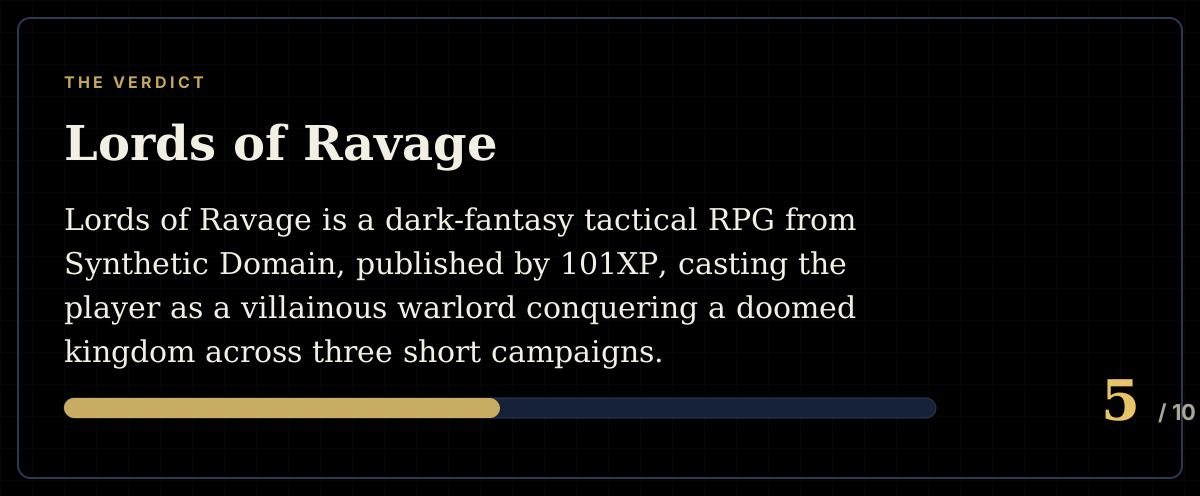
The short versionWanderer Editorial