Game review
Gorgon Shield
5.5 / 10
- Developer
- Whiskeybarrel Studios
- Publisher
- 2 Left Thumbs, Gamersky Games
- Released
- 29 July 2024
- Platforms
- Windows
- Genre
- Roguelite, RPG, Strategy, Fantasy, Arcade
- Monetisation
- One-time purchase, no DLC or in-game currency
- Players
- Single-player only
The short version
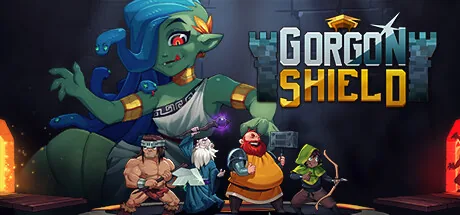
Gorgon Shield sends a party of up to four heroes climbing a tower atop a rotating shield, spinning it in real time to put the right hero in front of the right threat — defending, healing, or looting while the tower's monsters attack from every side at once. Made by Whiskeybarrel Studios and published by 2 Left Thumbs and Gamersky Games, it launched fully on 29 July 2024 and sits at Mostly Positive across 49 English-language reviews (76%), a small enough sample for this review to read every negative and positive review in full. The core mechanic is genuinely inventive and well-liked — reviewers compare it to a mythological fidget spinner — but a specific, repeated crash problem, visible in reviews from the first week through late 2025, keeps recurring as the dominant complaint across the game's entire history.
Biggest strengths
- The rotating-shield positioning mechanic is a genuinely original spin on party-based roguelite combat, with multiple reviewers specifically praising how much depth it adds to what could have been a simple game
- Strong retro arcade presentation, including an announcer voice and old-school sound design that reviewers repeatedly single out as adding real charm
- The developer was reported as fast to respond to bug reports in the game's first weeks, engaging directly with players rather than dismissing feedback
Biggest weaknesses
- Crashes are the single most consistent complaint across the entire review history, from launch week in August 2024 through reviews written as recently as October 2025, spanning the game's full lifetime rather than clustering around one bad patch
- Multiple independent reviewers describe the same specific developer response to crashes: an in-game message that restores the gold a lost run would have earned, rather than a fix for the underlying instability, which more than one reviewer calls out directly as the wrong solution
- Steam's own achievement data shows only 8.6% of players have ever defeated the final boss and 7.7% have completed the full 60-level tower, a completion floor consistent with reviews describing runs cut short by crashes rather than difficulty alone
Who it's for: Roguelite fans looking for a short, distinctive arcade session with a genuinely novel positioning mechanic; a poor fit for anyone who wants a guaranteed stable run or deep, synergy-driven build variety.
Our recommendation: A clever, well-executed core idea let down by stability problems the developer worked around rather than fully solved — worth a shot at its low price, best bought on sale given how many reviews report lost runs to crashes.
5.5 / 10
Introduction
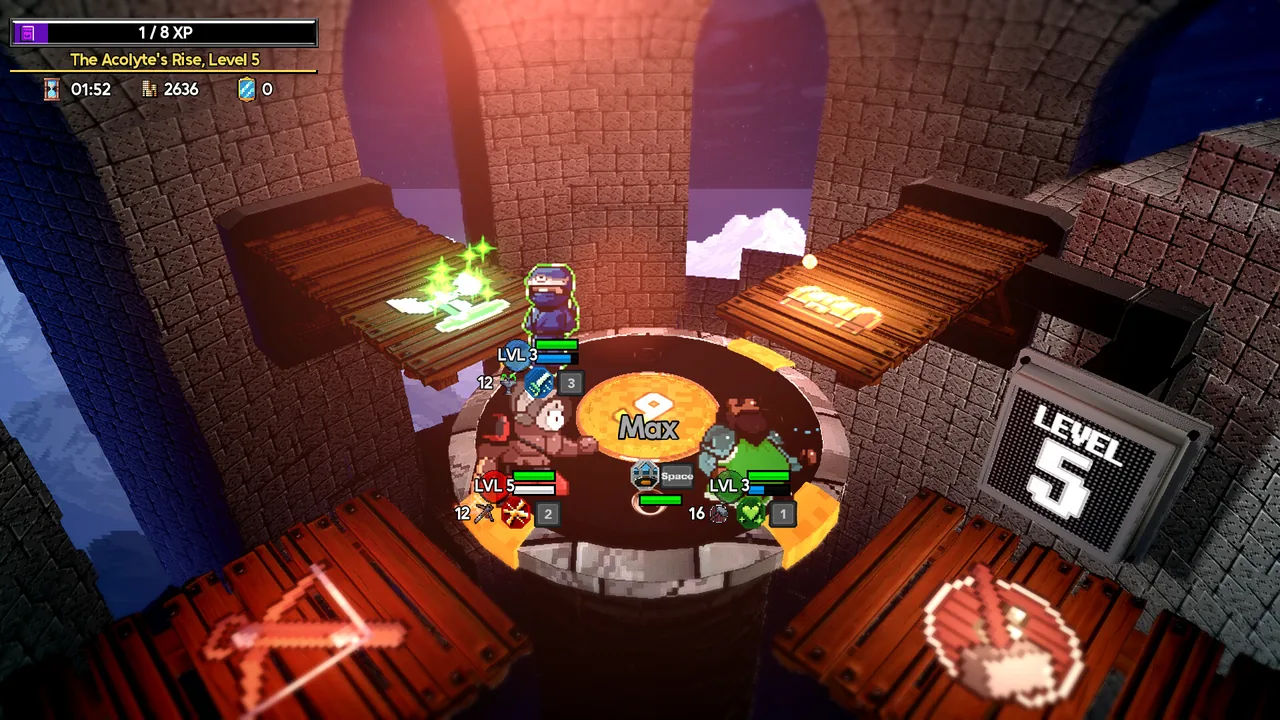
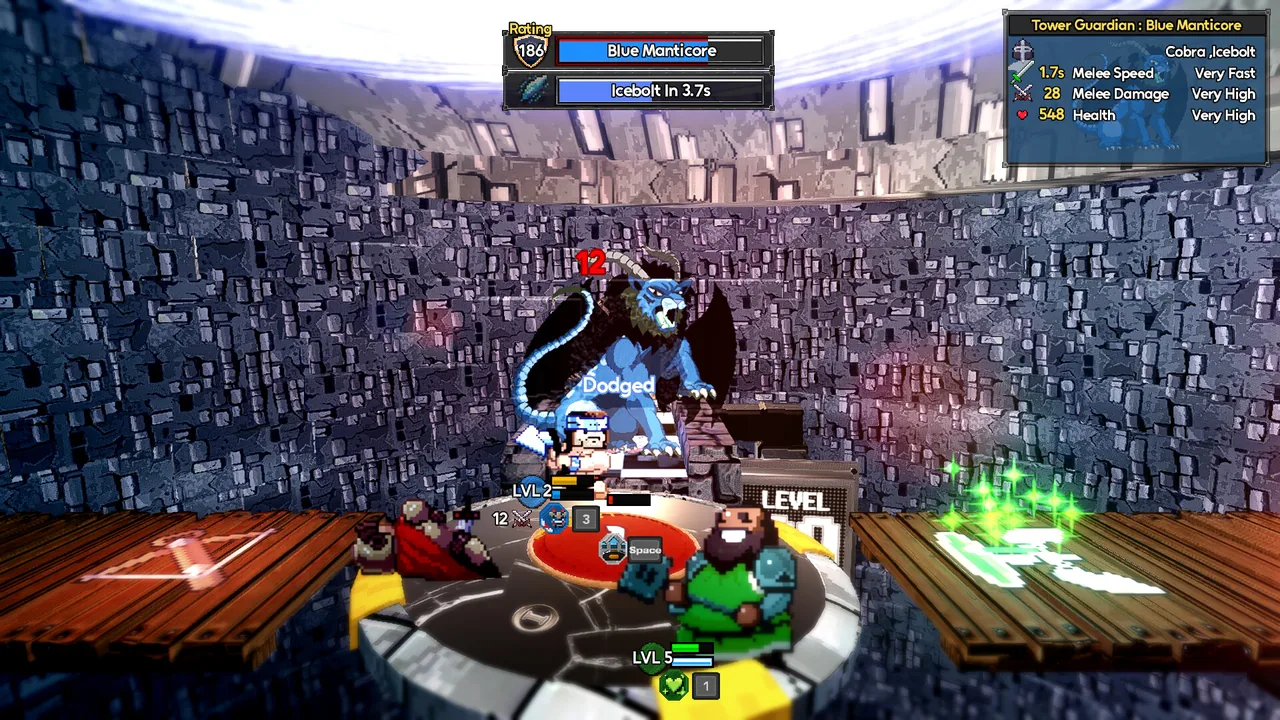
Gorgon Shield's hook is easy to picture and hard to find anywhere else: a party of up to four heroes stands on a shield-shaped elevator platform, climbing a tower level by level while monsters attack from all four sides at once. The player's job is to spin that shield in real time, rotating the right hero into the right quarter to block, heal, or fight back before the next wave arrives. One reviewer nails the feeling precisely, calling it "a fidget spinner of the Greek mythology." Developed by Whiskeybarrel Studios and published by 2 Left Thumbs and Gamersky Games, it launched fully on 29 July 2024, and this review reads every one of its 49 English-language reviews — a small enough sample to cover completely rather than sample. What it finds is a genuinely well-liked core idea sitting on top of a stability problem that never fully went away.
A genuinely original mechanic
The praise for Gorgon Shield's central conceit is specific and consistent rather than generic. Reviewers describe it as more involved than "a game that basically boils down to moving a circle left or right has any right to be," and several single out the tension of managing four simultaneous threats through a single rotating input as the thing that keeps runs interesting. The retro arcade presentation backs the mechanic up — an announcer voice, chunky sound design, and old-school visual charm draw repeat praise even from reviewers who ultimately don't recommend the game. This isn't a case of a good idea buried under bad execution everywhere; the moment-to-moment core loop clearly works for a real share of the people who've played it.
A crash problem the developer worked around, not through
The dominant complaint across nearly every negative review, regardless of when it was written, is instability. A review from November 2024, three months after launch, describes the game crashing "multiple times" during a short session, "to the point where I can't even finish a run." A review from August 2025, nearly a year later, describes an almost identical experience: crashing mid-run, losing progress. What makes this worth dwelling on isn't just that the crashes persisted — it's how the developer chose to address them. Multiple independent reviewers describe the same specific fix: rather than resolving the underlying instability, the game now shows a message after a crash restoring the gold a lost run would have earned, framed as a courtesy. One reviewer's reaction sums up the general sentiment: "Their solution to bugs is to give the gold I would have earned while ending my current run. YIKES." That's a workaround for the symptom, not the cause, and reviewers as recent as October 2025 still report the game failing to load at all on some systems.
To be fair, the developer was reported as unusually responsive to feedback in the game's first weeks — one August 2024 review specifically praises quick engagement with reported issues, a contrast the reviewer draws against other small studios who "kick everybody out" over criticism. The patch history bears out real ongoing support, including a March 2025 update specifically targeted at framerate stuttering and a September 2025 patch addressing "Game Stability and Shader Batching." Whatever the cause, though, crash reports keep surfacing well after both of those stability-focused patches, which suggests the underlying issue has been narrowed rather than eliminated.
What the achievement data shows
Gorgon Shield's own completion data lines up with the crash narrative more than it contradicts it. Only 8.6% of players have ever triggered the achievement for defeating the final boss, Medusa, and just 7.7% have completed the full 60-level tower climb — genuinely low numbers for a short arcade roguelite whose appeal is built around repeat, snappy runs. Early achievements clear at healthy rates (80.5% for a basic combat milestone, 70.8% for healing), so this isn't a game that repels players immediately; it's one where a meaningful share of runs, for whatever combination of crashes and difficulty, never make it to the end.
Final Verdict
Gorgon Shield deserves real credit for its central idea — the rotating-shield mechanic is genuinely inventive, well executed on a moment-to-moment level, and dressed up in retro arcade presentation that consistently lands with reviewers. What holds this review's score down is that the crash problem isn't a launch-week footnote; it's a throughline visible in reviews from the first week through more than a year later, and the developer's most visible fix for it treats the symptom rather than the cause. Roguelite fans who want a short, distinctive session should find plenty to like here, especially at its modest price, but go in aware that a real share of reviewers report losing runs to crashes rather than to the tower's monsters.
Pros and cons
Pros
- The rotating-shield positioning mechanic is a genuinely original spin on party-based roguelite combat, with multiple reviewers specifically praising how much depth it adds to what could have been a simple game
- Strong retro arcade presentation, including an announcer voice and old-school sound design that reviewers repeatedly single out as adding real charm
- The developer was reported as fast to respond to bug reports in the game's first weeks, engaging directly with players rather than dismissing feedback
- A short, replayable session length that several reviewers describe as easy to pick up for one more run
Cons
- Crashes are the single most consistent complaint across the entire review history, from launch week in August 2024 through reviews written as recently as October 2025, spanning the game's full lifetime rather than clustering around one bad patch
- Multiple independent reviewers describe the same specific developer response to crashes: an in-game message that restores the gold a lost run would have earned, rather than a fix for the underlying instability, which more than one reviewer calls out directly as the wrong solution
- Steam's own achievement data shows only 8.6% of players have ever defeated the final boss and 7.7% have completed the full 60-level tower, a completion floor consistent with reviews describing runs cut short by crashes rather than difficulty alone
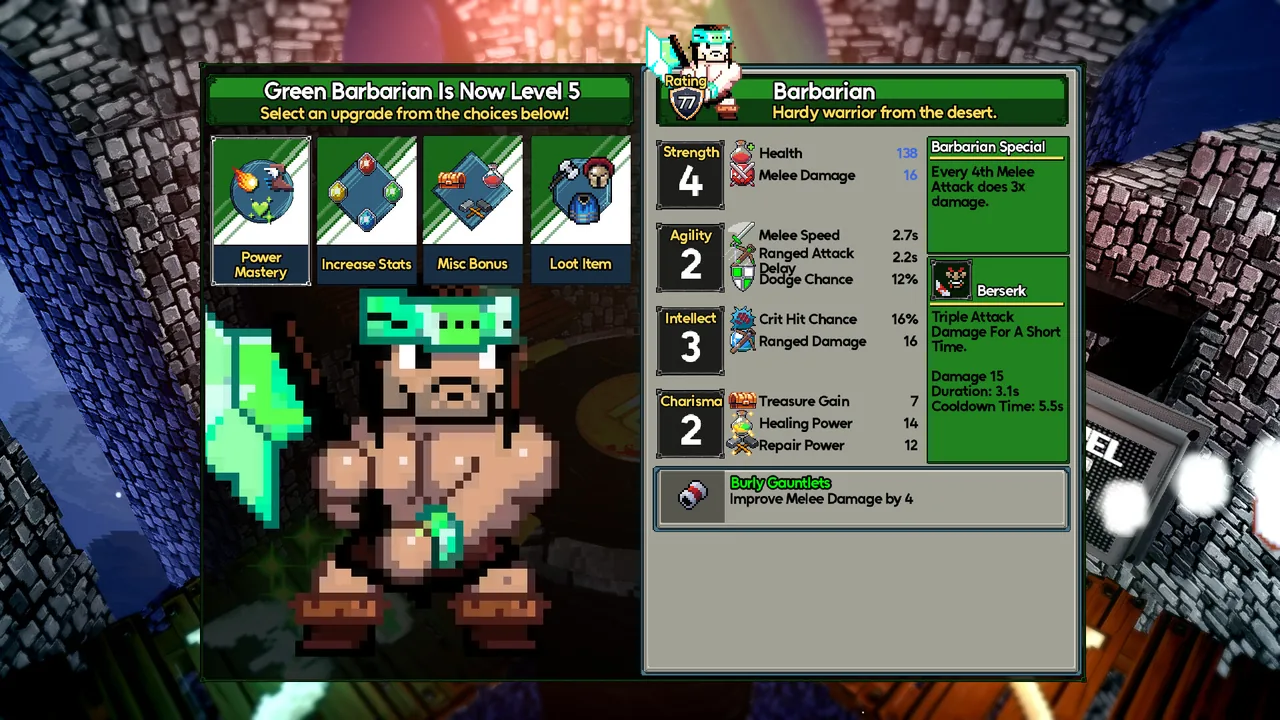
- Several detailed reviews describe the build and upgrade variety as shallow once the initial novelty wears off, with minor stat increases rather than meaningful synergies between heroes
- The game gates a full four-hero party behind meaningful progress, which at least one detailed review argues delays the core appeal — balancing a full party around the shield — well past a new player's first several runs
Screenshots
-
Gorgon ShieldImage: 2 Left Thumbs via Steam -
Gorgon ShieldImage: 2 Left Thumbs via Steam -
Gorgon ShieldImage: 2 Left Thumbs via Steam -
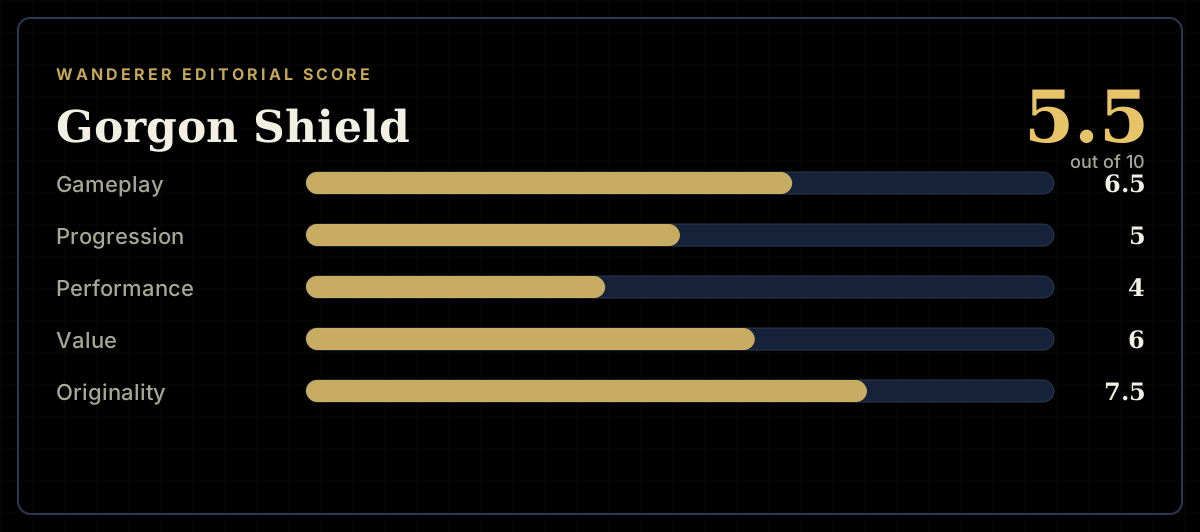
How the review scores each part of the gameWanderer Editorial -
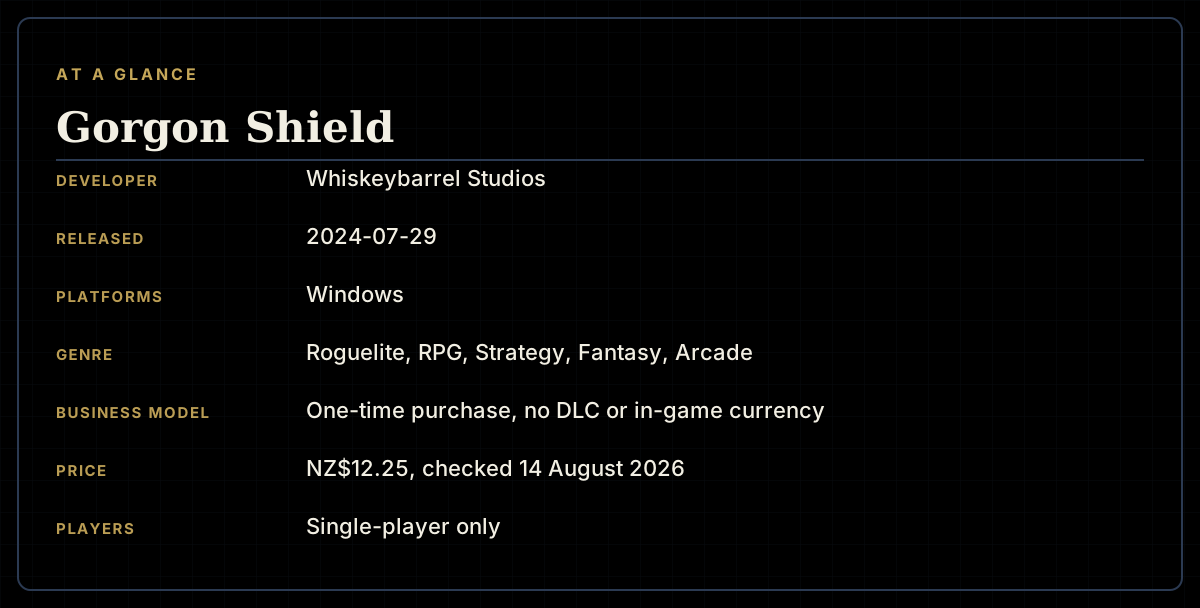
The essentials at a glanceWanderer Editorial -
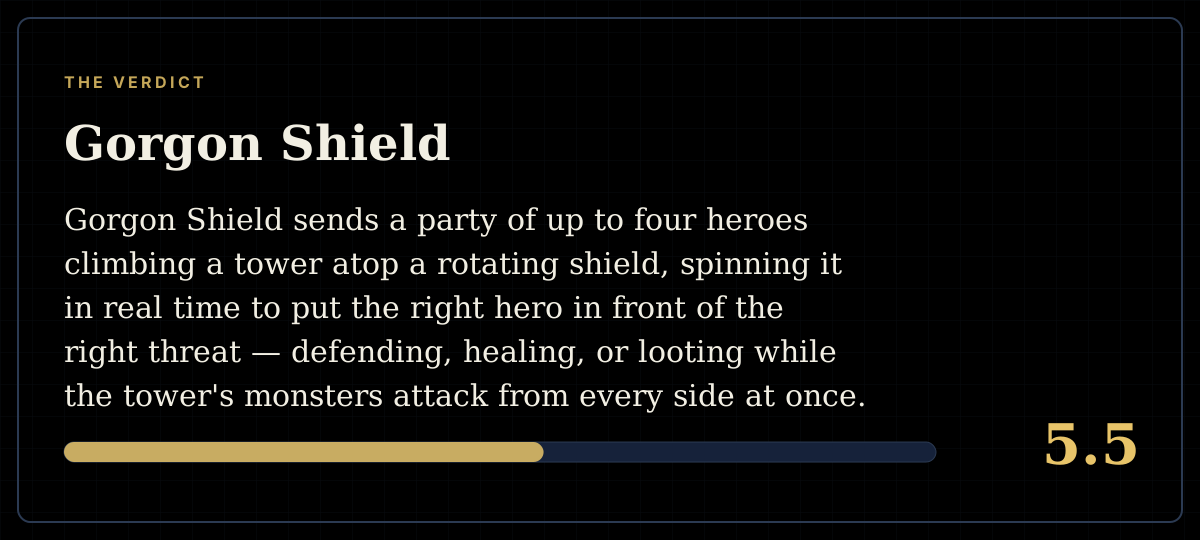
The short versionWanderer Editorial