Game review
Voor De Kroon
6.5 / 10
- Developer
- Future Minimalism
- Publisher
- Future Minimalism
- Released
- 9 December 2022
- Platforms
- Windows
- Genre
- Strategy
- Monetisation
- One-time premium purchase; no ads, in-game purchases or premium currency found
- Players
- Single-player only; no online, co-op or PvP modes
The short version
Voor de Kroon asks to be judged against Mount & Blade: Bannerlord and Total War, and reviewers consistently oblige, generally landing somewhere between "a promising alternative that's genuinely its own thing" and "the same idea, currently worse in most ways." Both readings are fair for different parts of the game. Its historical grounding is unusually specific for the genre — the Friso-Hollandic Wars at launch, an expanding scope toward the Hundred Years' War since — and its faction, army and castle customisation tools, including a full campaign-map editor, draw real, detailed praise even from reviewers who don't currently recommend buying.
What holds it back is combat that a meaningful share of detailed reviews call clunky and unresponsive: units that don't reliably follow orders, animations that feel disconnected from impact, and a tutorial some players say doesn't function at all. Several reviewers, particularly through 2025, describe development as stalled — but the developer's own public record tells a different, more recent story: near-continuous updates through the middle of 2026, expanding scope and running ahead of its own announced roadmap. This is a genuinely unfinished game whose most recent visible trajectory doesn't match its most pessimistic reviews.
Biggest strengths
- Unusually specific historical grounding for the genre, launching around the Friso-Hollandic Wars and actively expanding toward the Hundred Years' War, rather than a generic fantasy-medieval setting
- Deep faction, troop and castle customisation, including a full campaign-map editor that lets players build and share their own scenarios — repeatedly cited as the strongest part of the game even by critical reviewers
- A currently very active development pace: the developer's public update log shows near-weekly patches, hotfixes and content drops sustained through the middle of 2026, well past the point several older reviews assumed development had stalled
Biggest weaknesses
- Combat is repeatedly described as clunky and disconnected, with unit orders reported not reliably followed — archers not firing on command, units standing still while under attack — a serious problem for a game whose entire pitch is tactical battle command
- Multiple reviewers report the tutorial not functioning correctly, leaving new players to learn campaign and battle systems with little guidance
- The campaign layer is criticised by some detailed reviews as feeling more like a constrained board game than an open medieval sandbox, citing small fixed limits on construction and army slots
Who it's for: Mount & Blade and Total War fans specifically interested in a more historically grounded, still-developing alternative, and players who enjoy deep faction/army customisation tools more than they need polished, responsive combat today. Not for anyone wanting a complete, stable battle sim right now.
Our recommendation: Worth watching closely and a reasonable buy on the current discount if you want to support a demonstrably active solo-developer project, but temper expectations for combat responsiveness until you've checked the most recent patch notes yourself.
6.5 / 10
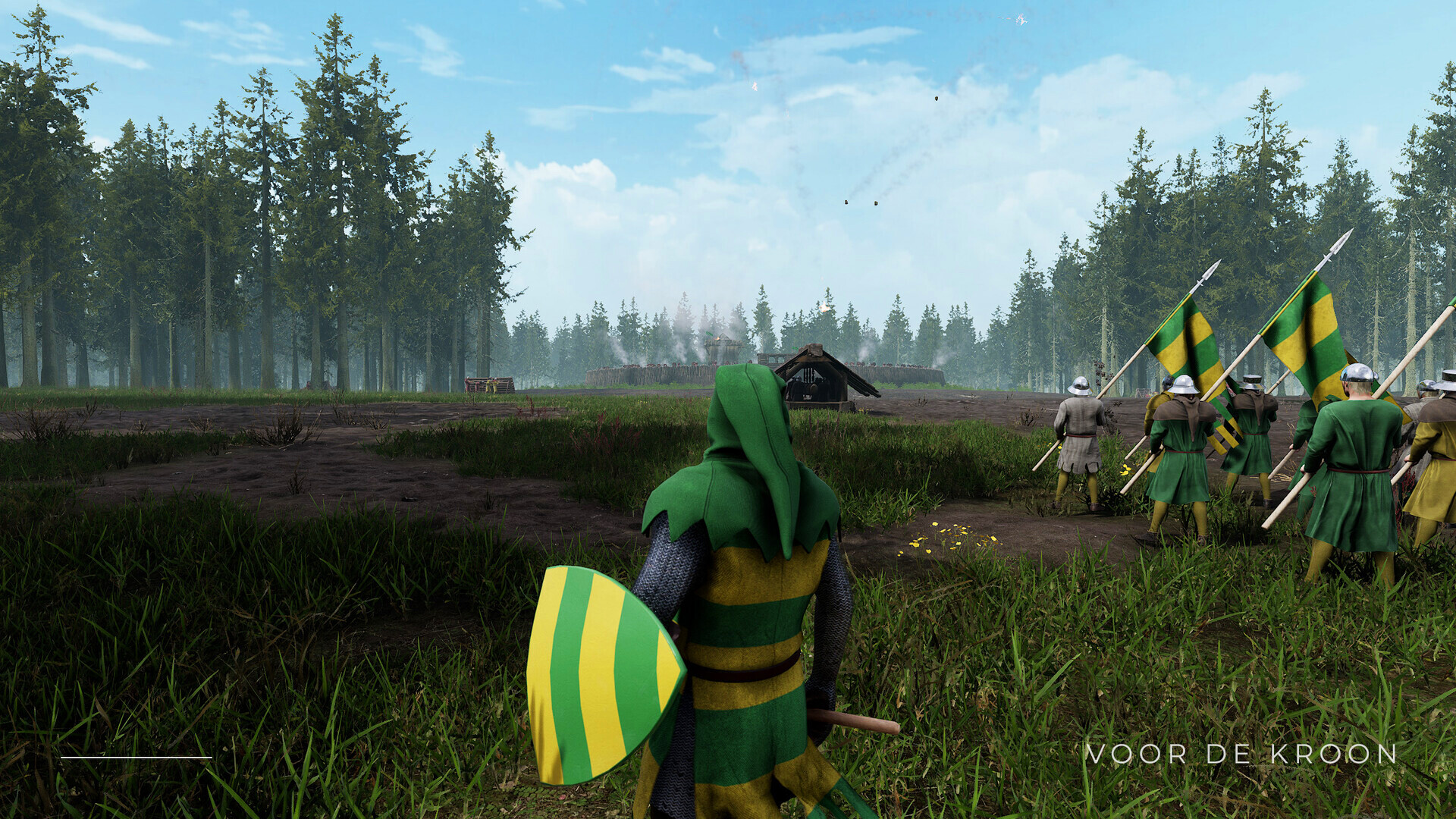
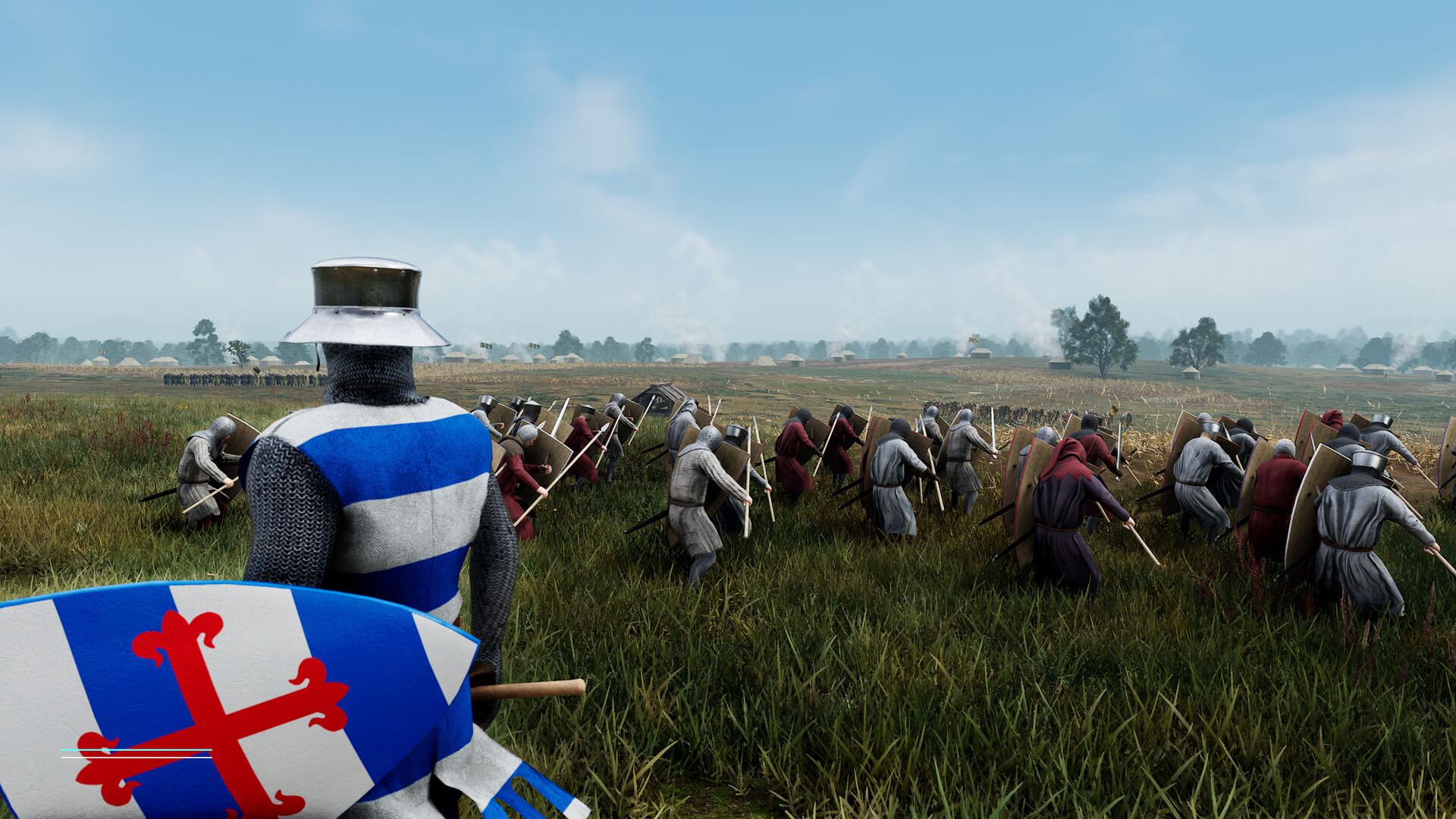
Voor de Kroon wears its influences on its sleeve — a campaign map recruiting armies and managing a growing faction, tactical battles fought with individually commanded units, and a level of historical specificity that sets it apart from the generic fantasy-medieval settings the genre usually defaults to. It launched into Early Access in December 2022 grounded in the Friso-Hollandic Wars, a genuinely under-served corner of medieval history for games, and reviewers who know the genre consistently credit it with feeling like its own thing rather than a straight Bannerlord clone. Nearly four years later, it remains unfinished, and reviewers disagree sharply about whether that's still forgivable.
A genre swing worth taking seriously
The praise Voor de Kroon earns is specific rather than generic goodwill toward another indie strategy game. Reviewers single out its damage and morale systems as a real, considered blend of Bannerlord's individual-soldier feel and Total War's larger-scale tactical abstraction, rather than copying either wholesale. The customisation tools go further than most genre peers offer even at 1.0: players can build their own factions, design and equip individual troop types, construct castles piece by piece, and use a full campaign-map editor — the "Warforge" system — to build and share entirely custom scenarios. More than one reviewer who ultimately doesn't recommend the game in its current state still calls this toolset the best reason to keep watching the project.
Where the pitch and the execution still diverge
The consistent, specific complaint holding the game back is combat responsiveness. Multiple detailed reviews describe giving units direct orders — fire, retreat, hold — that aren't reliably followed, archers standing idle instead of shooting, and units taking hits without reacting in ways that feel disconnected from what's happening on screen. For a game whose core pitch is tactical battle command, unreliable unit AI is a foundational problem rather than a surface-level rough edge, and it's the complaint that shows up across reviews from multiple different years rather than clustering around one bad patch. A broken or missing tutorial compounds it: several reviewers describe being dropped into campaign systems with little explanation, a rough introduction to a genre that already has a learning curve even when everything works as intended.
A development story its own recent record contradicts
Several reviewers, especially through 2025, frame the game as effectively stalled — one bluntly notes "three years since release and they haven't done much." That characterisation doesn't match this game's own public development record as of this review. The developer's update log shows an extremely active, near-continuous cadence through the middle of 2026: dozens of patches, hotfixes and content updates, including a May 2026 jousting update, a May 2026 overhauled tactical camera, and a July 2026 expansion toward the Hundred Years' War, with the developer's own June 2026 post noting work is "running ahead of my planned timeframe." Whatever the pace looked like in the game's quieter earlier years — a gap this review's available records can't fully account for — the visible trajectory over roughly the last year and a half is genuinely active development, not abandonment. That doesn't retroactively fix the combat problems detailed reviews still raise, but it does mean the specific "the developer has given up" reading isn't supported by the current evidence.
A campaign layer that divides opinion on its own terms
Beyond the combat debate, reviewers disagree about the campaign map itself. Some describe it as addictive in a "Civ playthrough" way — simplified compared to the genre's biggest names, but approachable and quick to grasp because of that simplicity. Others push back hard, with one detailed review comparing the current construction and army-size limits (a handful of building slots, a five-unit army cap) to a board game rather than an open sandbox, arguing the scope feels artificially constrained rather than intentionally focused. Both readings can be true depending on what a player wants from the genre: reviewers hoping for Total War-scale armies and freeform territorial expansion are more likely to bounce off the current limits, while reviewers who enjoy a tighter, faster-paced strategic loop describe those same limits as part of what keeps runs from dragging.
A fair price for an honestly unfinished game
At its discounted NZ$32.69 (NZ$43.59 undiscounted), Voor de Kroon sits at a more moderate Early Access price than some genre peers charging full retail for comparably unfinished products. Few reviewers raise price as a standalone complaint the way it recurs for pricier EA titles in this lane — most criticism centres on what's actually playable rather than what it costs, which is itself a reasonable proxy for the price feeling roughly proportionate to the current state. That's a meaningfully different value picture than a game charging a premium price for early-alpha content, and it's worth crediting the developer for pricing the project in line with where it actually is rather than where its marketing says it's headed.
Where it lands
Voor de Kroon is a genuinely distinctive, actively developed take on a crowded genre, held back by combat that doesn't yet deliver on its own tactical premise and a campaign layer some reviewers find thin. Its historical grounding and customisation depth are real, specific strengths that keep drawing in genre fans despite the rough edges, and its recent patch record is meaningfully more reassuring than its most pessimistic reviews suggest. A 6.5 credits a promising, still-improving project for what it's building toward, while being honest that the core combat loop isn't there yet for players who aren't specifically motivated to watch a solo-developed Early Access project mature.
Pros and cons
Pros
- Unusually specific historical grounding for the genre, launching around the Friso-Hollandic Wars and actively expanding toward the Hundred Years' War, rather than a generic fantasy-medieval setting
- Deep faction, troop and castle customisation, including a full campaign-map editor that lets players build and share their own scenarios — repeatedly cited as the strongest part of the game even by critical reviewers
- A currently very active development pace: the developer's public update log shows near-weekly patches, hotfixes and content drops sustained through the middle of 2026, well past the point several older reviews assumed development had stalled
- A distinct morale and damage system that reviewers familiar with both Bannerlord and Total War describe as a genuine blend rather than a straight clone of either
Cons
- Combat is repeatedly described as clunky and disconnected, with unit orders reported not reliably followed — archers not firing on command, units standing still while under attack — a serious problem for a game whose entire pitch is tactical battle command
- Multiple reviewers report the tutorial not functioning correctly, leaving new players to learn campaign and battle systems with little guidance
- The campaign layer is criticised by some detailed reviews as feeling more like a constrained board game than an open medieval sandbox, citing small fixed limits on construction and army slots
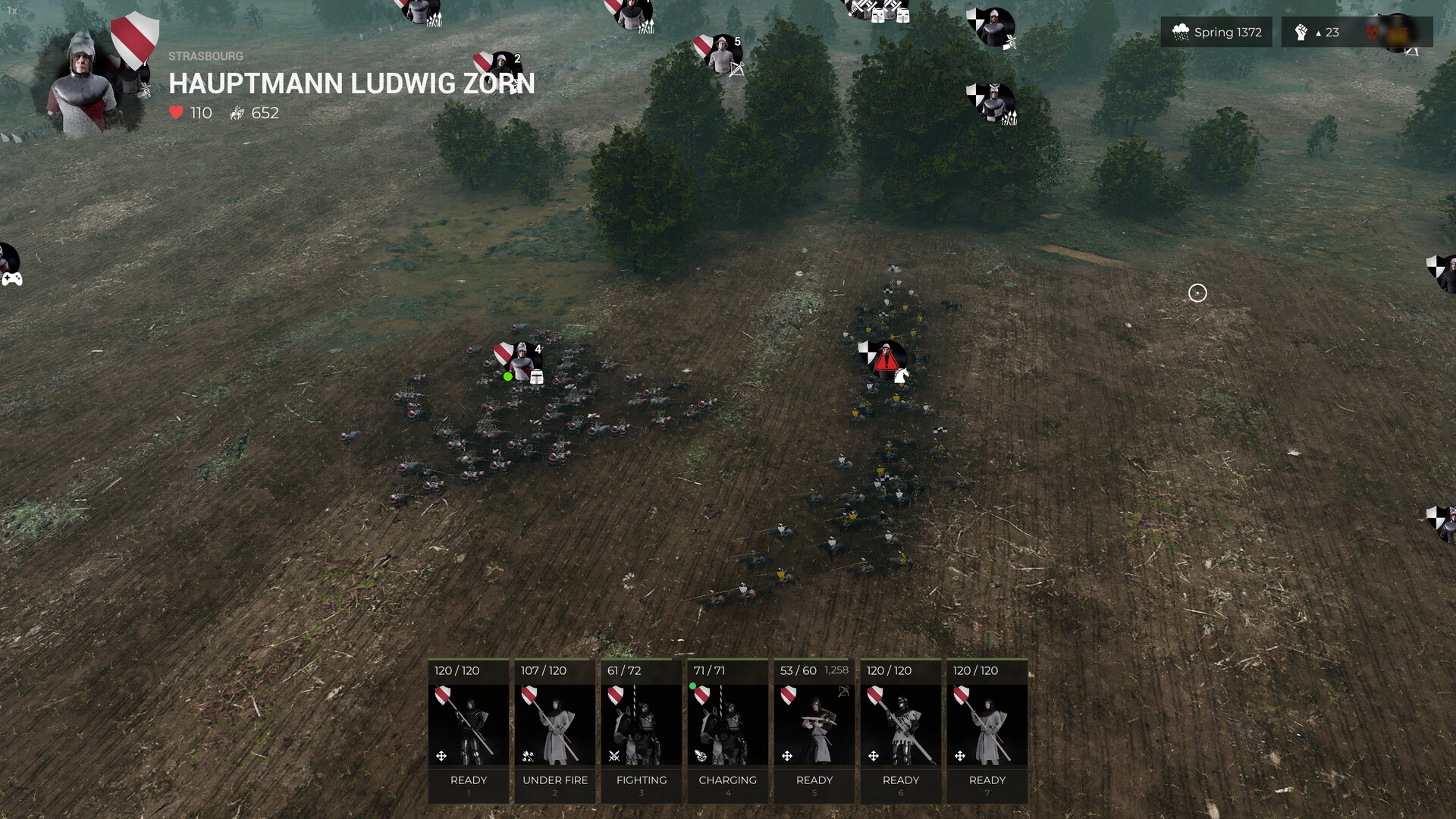
- The battle interface is criticised for lacking basic information, such as clear identification of which unit is which during combat
Screenshots
-
Voor De KroonImage: Future Minimalism via Steam -
Voor De KroonImage: Future Minimalism via Steam -
Voor De KroonImage: Future Minimalism via Steam -
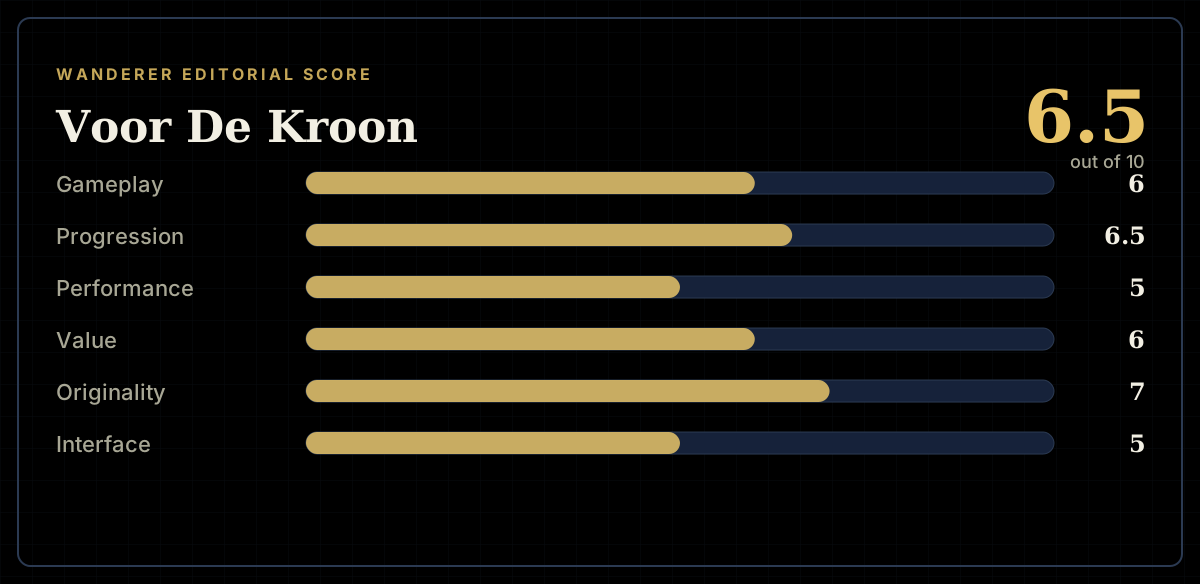
How the review scores each part of the gameWanderer Editorial -
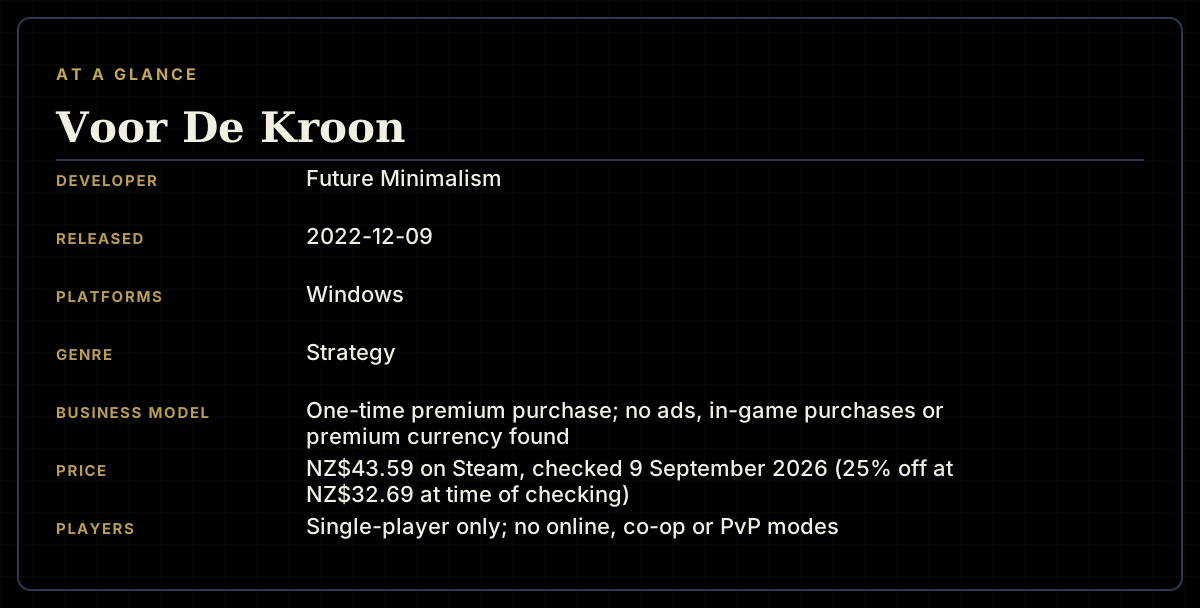
The specsWanderer Editorial -
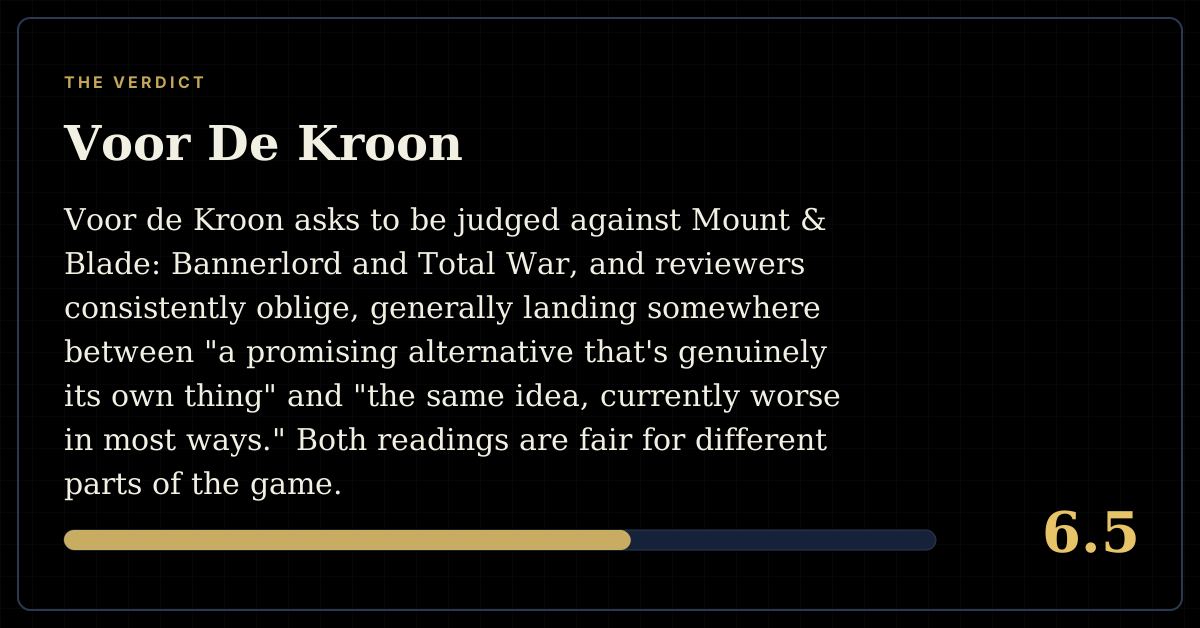
The short versionWanderer Editorial