Game review
Kingdoms and Castles
7.5 / 10
- Developer
- Lion Shield, LLC
- Publisher
- Lion Shield, LLC
- Released
- 20 July 2017
- Platforms
- Windows, macOS, Linux
- Genre
- City-building simulation
- Monetisation
- One-off purchase, no in-game currency, ads or gameplay-affecting purchases; every content update since launch has been free
- Players
- None; single-player only, though multiplayer is a frequently requested feature in reviews with no confirmed timeline from the developer
The short version
Kingdoms and Castles has earned its Very Positive standing the hard way: not through a single polished launch, but through nearly nine years of continuous, entirely free major content updates — merchants and ports, creative mode, a full warfare and diplomacy system, Steam Workshop support, VR, and a 2025 dragon-taming system that reviewers who've followed the game since 2017 call the best addition yet. Achievement data confirms the core loop holds real, sustained attention: completion tapers smoothly from a near-universal first hamlet down to a genuinely difficult "kingdom of the gods" tier reached by only 4% of players, evidence of long engagement rather than a game people bounce off early. Set against nearly a decade of that effort is one specific, glaring, and entirely fair complaint: the game has never shipped a tutorial, leaving new players to guess at core systems like building adjacency and resource chains that reviewers say the interface simply doesn't explain. A vocal minority also argue the systems underneath all those updates are shallower than the update list implies, most sharply in one reviewer's direct allegation that the game is "a raw clone" of Banished. Both criticisms are worth taking seriously without letting either erase what's a genuinely rare success story: a small studio that kept its word to its earliest buyers for the better part of a decade.
Biggest strengths
- An extraordinary, nearly nine-year record of continuous, entirely free major content updates — merchants and ports, creative mode, full warfare and diplomacy, Steam Workshop support, VR, and dragon taming — that shows no sign of stopping as of a 2026 larger-maps beta
- Achievement data confirms real, sustained long-term engagement with a smooth difficulty taper rather than an early wall, evidence the core loop genuinely holds attention over dozens of hours
- Individually simulated villagers and resources give the kingdom a real sense of a living, responding population rather than an abstract spreadsheet
Biggest weaknesses
- No in-game tutorial exists nearly nine years after launch, a specific and repeated complaint from reviewers who describe learning core mechanics like building adjacency requirements entirely through trial, error, and outside guides
- A specific, direct allegation from at least one reviewer that the game is "a raw clone" of Banished, a much longer-established colony-management sim, is worth reporting as a pointed critical claim about originality rather than dismissing outright
- Multiple reviewers report meaningful performance degradation and lag once a kingdom's population and building count grow large, a real technical complaint distinct from any difficulty or design criticism
Who it's for: City-builder fans who want a cozy, systems-driven medieval kingdom sim with real long-term depth for patient players, and anyone specifically curious about VR city-building. Less suited to players who need an in-game tutorial to get started, or who are looking for a design as tightly original as its most devoted fans describe it.
Our recommendation: A strong buy, especially for patient players willing to look up a guide for the first hour — the sheer volume of genuinely free, high-quality content added since 2017 makes this one of the better long-term value propositions in the entire city-builder genre.
7.5 / 10
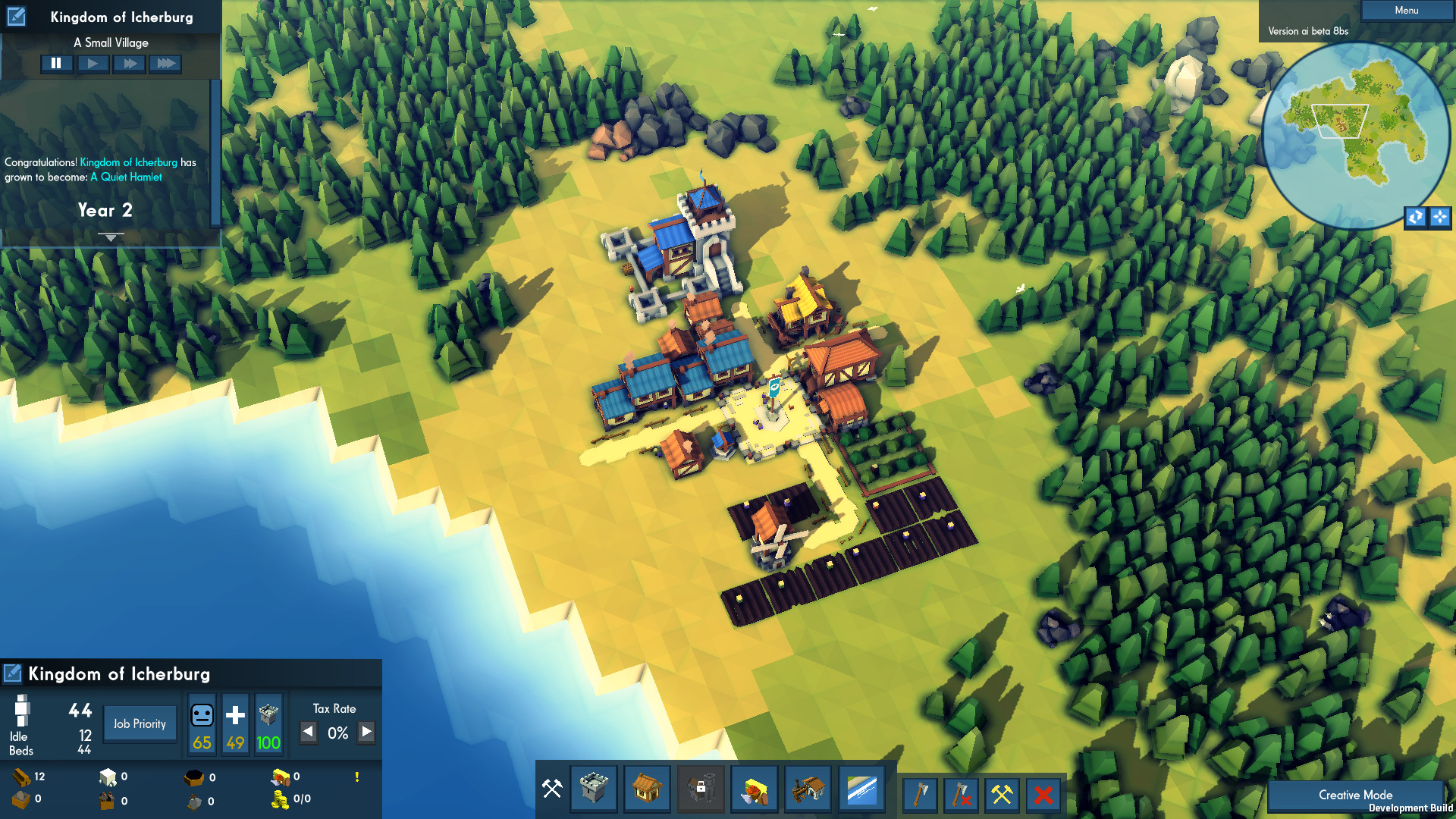
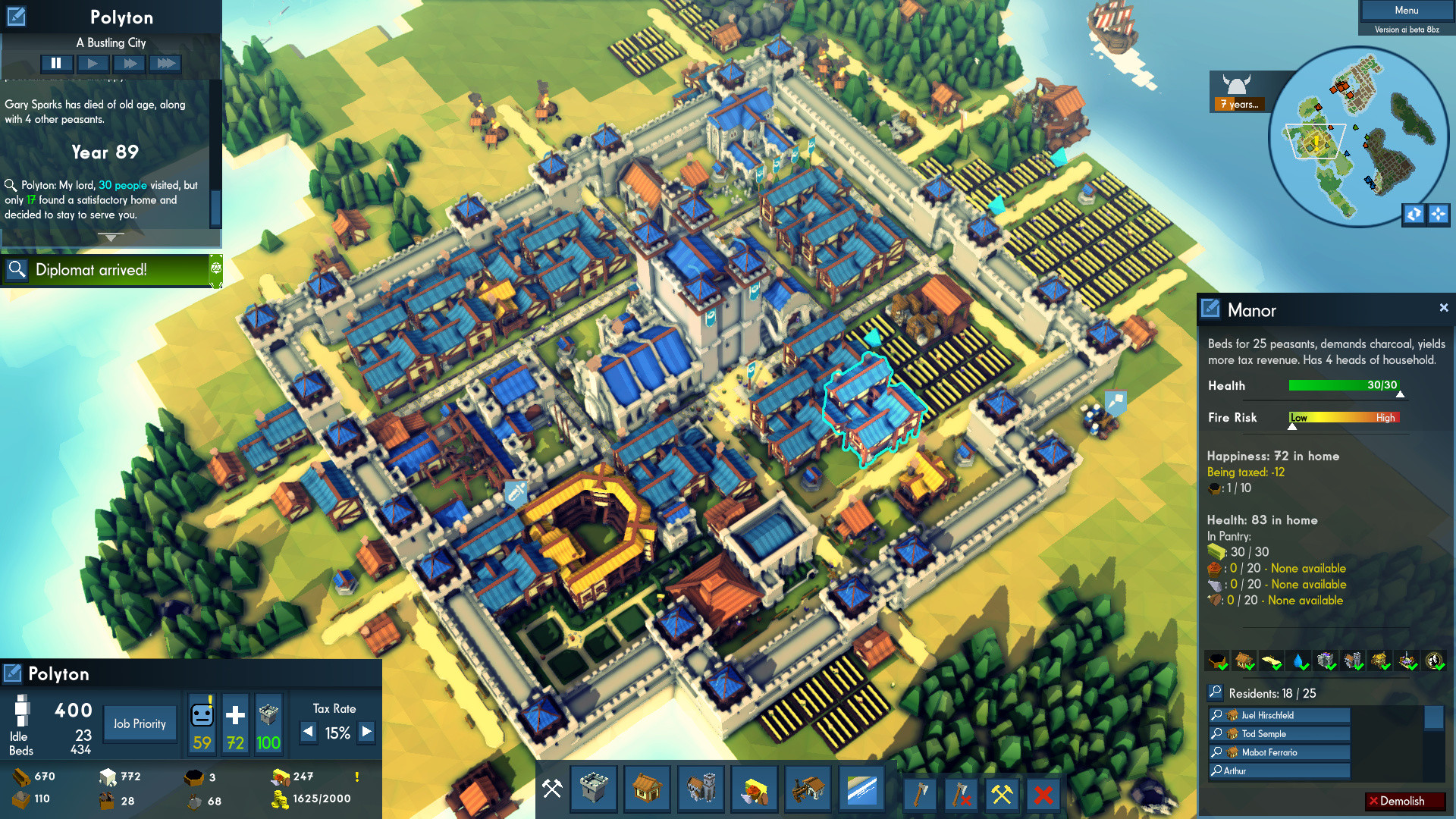
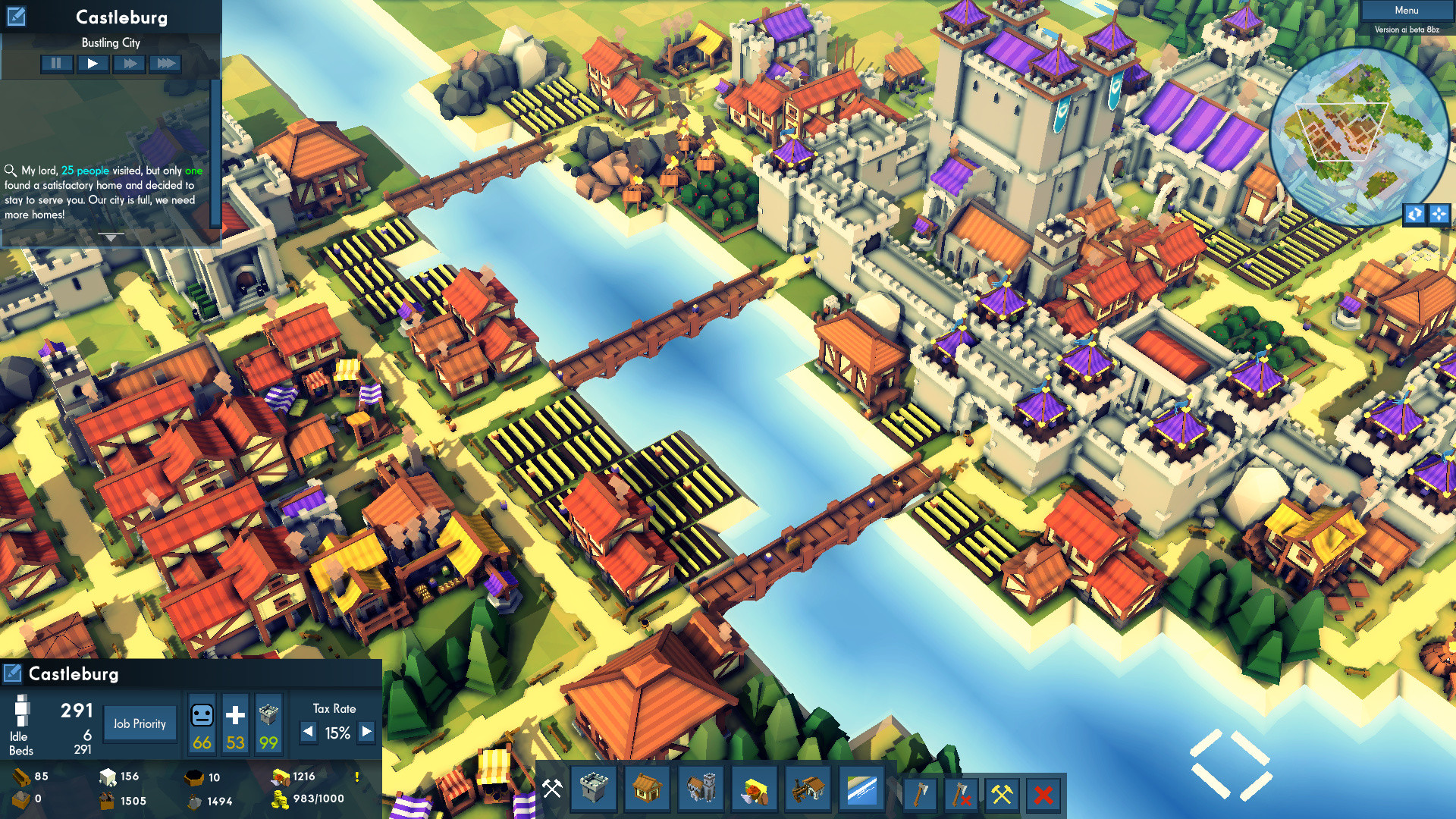
Kingdoms and Castles asks players to grow a single hamlet into a sprawling, walled medieval kingdom, defending it from viking raiders and the occasional dragon while trading, allying, or warring with neighboring AI-controlled kingdoms. Released in July 2017 by a small studio, it has since become one of the more quietly remarkable success stories in the city-builder genre — not because of a spectacular launch, but because of what came after it. Nearly nine years and roughly 60 major and minor update posts later, the developer is still shipping free content, and nearly 20,000 English-language reviews have settled the game at a Very Positive 94%. The more interesting story for a review written this deep into that history isn't whether the game found an audience — it plainly did — but whether the specific things its own long-term players still complain about have ever been fixed, and the answer is a genuinely mixed one.
A rare case of a developer keeping every promise but one
The single most striking fact about Kingdoms and Castles, verifiable directly through its own partner-events history, is the sheer consistency of its post-launch support. Starting with Merchants and Ports within months of release, the update list runs almost without a real gap through Creative Mode (2018), a Warfare Update and Infrastructure II (2019), Steam Workshop support (2020), an AI Kingdoms overhaul and full VR support (2022), a War & Diplomacy system and Infrastructure & Industry update (2022-2023), and a Dragon Taming system that reached full release in 2025 — with a "Larger Maps" beta already announced for 2026 at the time of this review. Every one of those has been free. Reviewers who've owned the game since launch describe this arc directly: one who's followed it "since 2020" specifically calls dragon taming "the best update yet," and another simply states, "I have owned this game for years and play it on and off a lot." That kind of sustained, genuine, unpaid commitment from a small studio is rare enough in this fleet's research to deserve real, specific credit rather than a passing mention.
The one promise never kept
Set against that extraordinary record is a complaint that shows up with real frequency and real specificity: after nearly nine years and dozens of major systems added, Kingdoms and Castles has never shipped an in-game tutorial. One recent, detailed review states the irony plainly: "Nine Years and Still No Tutorial. How has a game released in 2017 and updated for nearly nine years still not received a proper tutorial? I'm sure I could eventually figure everything out through trial and error, but players shouldn't have to rely on outside guides and videos." Another reviewer's frustration is more visceral: "No tutorial been rubbing quarry's on stone trying to put it down don't think this game knows what adjacent means" — a specific complaint about building adjacency rules that the game apparently never explains anywhere in its interface. A third calls it "cozy banished but with literally NO TUTORIAL or instruction," still recommending the game despite the gap. This isn't a minor rough edge; it's a structural omission that's persisted across literally every one of the sixty-plus updates in the game's history, and it's worth stating plainly that no amount of new content has addressed the single most repeated new-player complaint in the review sample.
Real depth, or a well-dressed familiar formula?
A smaller but sharper thread of criticism questions whether the systems underneath all that content are as deep as the update cadence implies. The most direct version of this complaint comes from a reviewer who names a specific point of comparison: "Having Banished on the market for years and still selling this raw clone is diabolical." That's a pointed originality allegation worth reporting as exactly that — one reviewer's specific claim, not an established fact this review independently verified — but it echoes a broader, more measured thread from other reviewers. One detailed account concedes the colony-building "isn't bad" and the building selection is "good," but concludes overall that "everything is smooth and functional" in a way that ticks "standard checkboxes" without surprising a player who's seen the genre before, adding that combat specifically felt undercooked. These aren't complaints about bugs or missing features — they're an argument that beneath a distinctive viking-and-dragon theme, the core simulation loop is a competent but not especially novel take on an established colony-sim formula.
The numbers back up genuine long-term engagement
Whatever the debate about originality, achievement data confirms the core loop keeps a real share of its audience engaged well past the opening hours. Early milestones — founding a hamlet, growing to a village — sit at 97% and 86% completion respectively, unsurprising for any game's earliest goals. What's more telling is the shape of the taper after that: reaching "first city" sits at 62%, surviving a first dragon attack at 49%, and the hardest tier, "kingdom of the gods," is held by just 4% of the entire playerbase. That's a smooth, continuous decline rather than an early cliff or a wall at any single point, consistent with a game that genuinely holds attention across a long mid-game rather than losing most players immediately after the tutorial-that-doesn't-exist.
A technical cost of ambition
Reviewers also raise a more concrete, checkable complaint distinct from either the tutorial gap or the depth debate: performance. Multiple reviews describe meaningful lag and slowdown once a kingdom's population and building count scale up, with one bluntly summarizing "the game itself is okay. But the level optimization (or lack thereof) makes it" difficult to enjoy at scale. Given how much the game leans on individually simulating each villager and resource as a selling point, this is a believable, specific technical trade-off rather than a vague complaint, and it's worth flagging directly for anyone planning to build toward the game's largest, most ambitious kingdoms.
Verdict
Kingdoms and Castles is a genuine rarity: a small studio that has kept adding substantial, free content to the same game for nearly nine years, and whose achievement data confirms players are still genuinely engaging with the result rather than treating it as a launch-week curiosity long since abandoned. That commitment deserves real, specific credit. It doesn't erase two persistent, fair complaints from the game's own longtime fans — a tutorial that has simply never arrived, and a sharper minority argument that the core simulation is a well-dressed but not especially original take on the colony-sim formula. Buy it expecting to learn the basics from outside guides rather than the game itself, and expect a genuinely long, well-supported tail once you do.
Sources: Steam store page and appdetails API (release date, pricing, platform data); Steam's aggregate review data (query_summary totals, English-language sample); individually read user reviews, both positive and negative, sorted by helpfulness and recency; Steam's global achievement statistics API; Lion Shield, LLC's own partner-events patch and development-update history, spanning launch in July 2017 through an announced beta update in April 2026.
Pros and cons
Pros
- An extraordinary, nearly nine-year record of continuous, entirely free major content updates — merchants and ports, creative mode, full warfare and diplomacy, Steam Workshop support, VR, and dragon taming — that shows no sign of stopping as of a 2026 larger-maps beta
- Achievement data confirms real, sustained long-term engagement with a smooth difficulty taper rather than an early wall, evidence the core loop genuinely holds attention over dozens of hours
- Individually simulated villagers and resources give the kingdom a real sense of a living, responding population rather than an abstract spreadsheet
- A distinctive threat mix — viking raids and dragon attacks alongside conventional AI-kingdom diplomacy and war — gives it real thematic identity within a crowded genre
- Full VR support, a genuinely uncommon feature for a city-builder at this scale, added years after launch as part of the same ongoing development commitment
Cons
- No in-game tutorial exists nearly nine years after launch, a specific and repeated complaint from reviewers who describe learning core mechanics like building adjacency requirements entirely through trial, error, and outside guides
- A specific, direct allegation from at least one reviewer that the game is "a raw clone" of Banished, a much longer-established colony-management sim, is worth reporting as a pointed critical claim about originality rather than dismissing outright
- Multiple reviewers report meaningful performance degradation and lag once a kingdom's population and building count grow large, a real technical complaint distinct from any difficulty or design criticism
- A vocal minority describe the underlying systems as shallow once the initial charm wears off, with one detailed review calling the experience "smooth and functional" but ultimately "standard checkboxes ticked" rather than genuinely deep
- Multiplayer remains one of the single most-requested features across years of reviews with no confirmed developer commitment to ever adding it
Screenshots
-
Kingdoms and CastlesImage: Lion Shield, LLC via Steam -
Kingdoms and CastlesImage: Lion Shield, LLC via Steam -
Kingdoms and CastlesImage: Lion Shield, LLC via Steam -
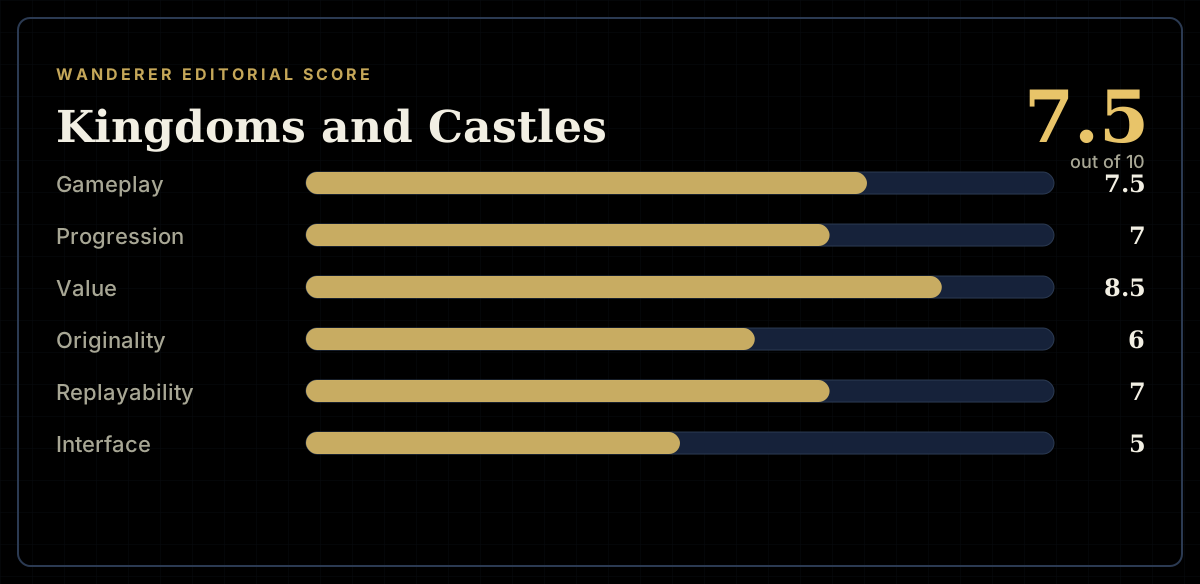
How the review scores each part of the gameWanderer Editorial -
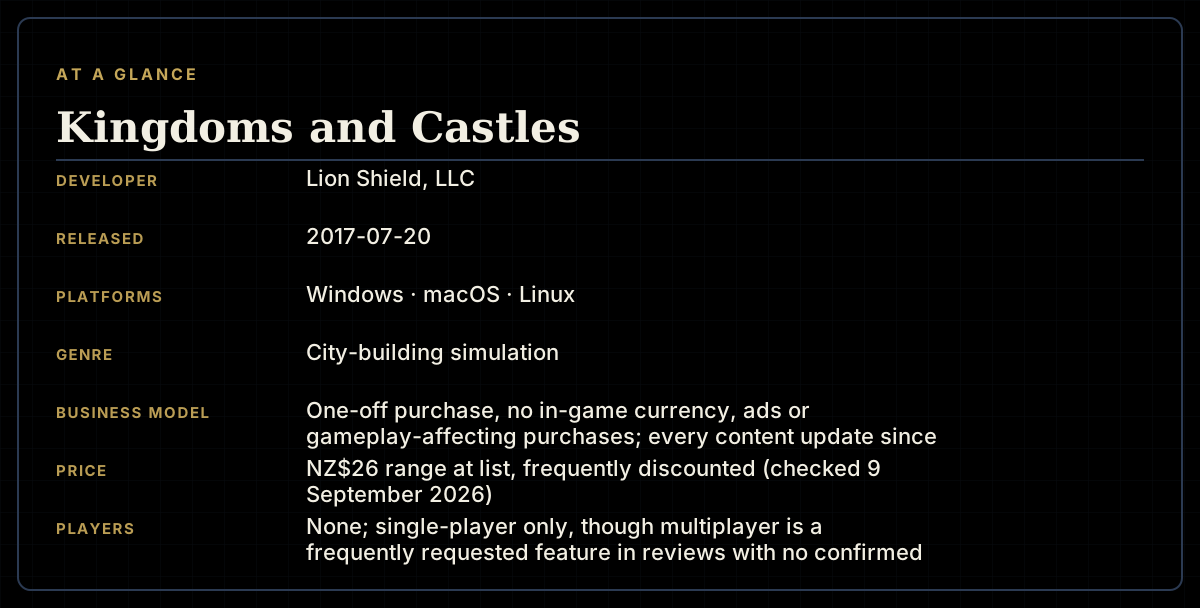
The specsWanderer Editorial -
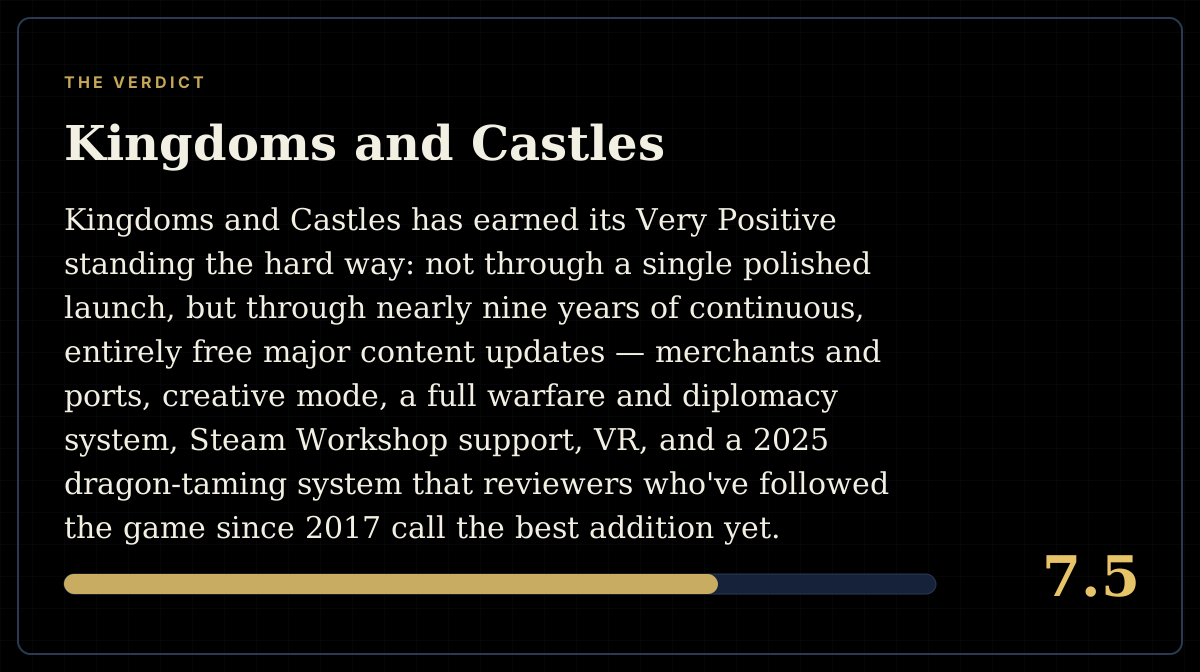
The short versionWanderer Editorial