Game review
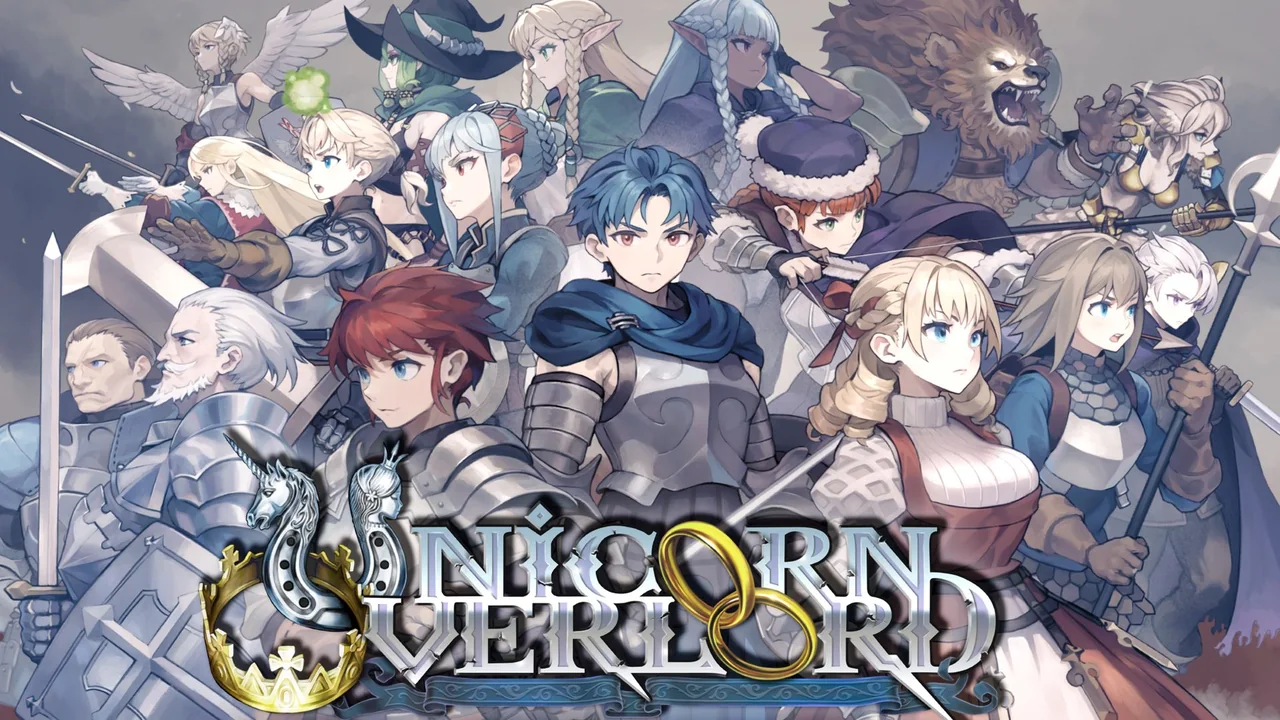
Unicorn Overlord
8 / 10
- Developer
- Vanillaware
- Publisher
- Atlus (Japan); Sega (worldwide)
- Released
- 8 March 2024
- Platforms
- Nintendo Switch, PlayStation 4, PlayStation 5, Xbox Series X|S
- Genre
- Tactical Fantasy RPG
- Monetisation
- Premium, one-off purchase; no DLC beyond a cosmetic pre-order banner pack
- Players
- Online-only asynchronous PvP through the Coliseum, unlocked partway through the story; no local co-op and no cooperative mode
The short version
Unicorn Overlord's core idea is genuinely unusual for a game this polished: you don't fight battles, you write the standing orders that fight them for you, assigning each unit a ranked list of conditional actions and then watching your formations execute that plan against whatever the map throws at them. On Expert difficulty, with squads built to cover each other's weaknesses, that's a real and satisfying kind of strategy — you're debugging a system, not button-mashing a menu. On the lower difficulties the same system solves its own puzzles, and large stretches of the sixty-plus-hour campaign become something to watch rather than something to play.
It's a gorgeous, generous game with a few real problems underneath the presentation: the liberation structure repeats "beat the enemy commander" far more than a game this long should allow, the story plays its central conflict extremely safe, and a roster of over sixty units arrives loaded with strong recruits well before there's anything meaningful left for them to grow into. None of that undoes what the tactics system gets right for players willing to lean into it on a harder setting.
Biggest strengths
- The gambit-style order list turns each unit into a small program you tune rather than a stat block you click, and getting a formation to solve a fight on its own is a genuine kind of satisfaction
- Vanillaware's hand-drawn sprite work gives every one of dozens of units a distinct silhouette and combat animation, not a handful of palette swaps
- The real-time overworld map with its gradual town-by-town liberation is the game's best-paced system, letting you scout, reroute and commit resources without a battle ever fully pausing your plans
Biggest weaknesses
- Normal and Tactical difficulty let a well-built formation solve fights on autopilot, turning long stretches of the campaign into something to watch rather than decide
- Mission variety is thin for a campaign this long — defeat the enemy commander is the objective on a large majority of story battles
- The empire your Liberation Army is fighting barely reacts to losing territory, so the stakes never escalate the way sixty hours of campaign should earn
Who it's for: Tactics fans who want to engineer a system and then watch it run rather than pilot every unit by hand, Vanillaware fans coming for the art, and anyone drawn to games that reward planning over reflexes. Players who want to feel a controller input land on every kill should look elsewhere.
Our recommendation: Buy it, but set the difficulty to Expert from the opening hours rather than easing in on Normal — the gambit system needs real pressure to become interesting, and by the time Normal players notice the game playing itself for them, dropping the difficulty mid-save loses most of the benefit.
8 / 10
Most tactical RPGs sell you on the moment of input — the cursor hovering over an enemy, the calculated risk of one more attack before retreating. Unicorn Overlord removes that moment entirely. You never issue a single order in the middle of a fight. Instead you spend your time before the battle even starts, assigning each unit in a formation a ranked list of conditional actions — attack the lowest-health enemy unless an ally is below 30% health, in which case heal them first, unless a specific enemy class is present, in which case retreat two ranks — and then you press go and watch five- or six-unit brawls resolve entirely on the logic you wrote. It's a strange, confident design choice for a game this expensive and this polished, and it's the single thing worth understanding before anything else about whether Unicorn Overlord is for you.
You're not the general. You're the system
Call it a gambit system, if you know Final Fantasy XII, or a programmed-tactics system if you don't — either way, the comparison matters more than the label. Each unit in your Liberation Army has a limited number of order slots, and filling them well is most of the actual skill Unicorn Overlord asks for. A frontline knight might be told to guard the squishiest ally first, counter-attack anyone who targets them, and only ever use their strongest cooldown against an enemy caster. A healer gets a priority list that reads almost like a flowchart: revive the downed unit, then top off whoever is lowest, then buff the frontline if nobody needs healing. Get that list right for every unit in a five- or six-person formation and you've built something that can walk into a fight cold and win it without a single further decision from you.
That's the whole thesis, and whether it lands for you personally comes down to one question: does writing the plan feel like the interesting part, or does watching it execute feel like losing the game to a spreadsheet? Both readings are honest. Getting a formation's gambits to interlock — the tank drawing aggro exactly when the healer needs the breathing room, the mage's area spell timed to a moment when three enemies happen to cluster — is a real puzzle with a real payoff, closer in spirit to setting up a factory line or an idle game's automation tree than to picking a target in XCOM. It rewards the same kind of systems thinking Wanderer's own players apply to gear loadouts and gathering routes: get the configuration right once, and it keeps paying off every time it runs. But it is categorically not moment-to-moment tactical control, and players who came to a tactical RPG expecting to steer every swing will spend a long time feeling like a spectator at their own battle.
Where the difficulty slider actually matters
This is where the design's honesty runs out a little. On Normal and the introductory Tactical setting, a formation built from decent gear and common-sense gambits solves most fights before they've properly started — enemy AI on those settings doesn't punish sloppy positioning or under-tuned orders hard enough to force real iteration, so a lot of the mid-campaign becomes watching health bars empty rather than deciding anything. Expert is a different game. Enemy formations hit harder, punish an exposed flank, and force you to actually revise a gambit list that isn't working rather than steamroll past the problem. If there's one piece of practical advice worth taking from this review, it's to start the campaign on Expert rather than easing in — the system this game is built around only becomes interesting under real pressure, and climbing the difficulty mid-save loses most of the benefit once your early units are already overlevelled for the fights ahead of them.
The overworld: where the pacing actually works
Between fights, Alain's Liberation Army moves across a real-time overworld map, scouting territory, dodging or engaging roaming enemy patrols, and gradually freeing towns from Zenoiran occupation. This is Unicorn Overlord's best-paced system and the one most worth praising on its own terms. Movement is genuinely real-time and pausable — you can reposition a squad, redirect toward a side objective, or pull back from a fight that's shaping up badly, all without the game stopping to ask permission. Liberated towns open new gambit slots, recruit pools and shops, and the map's gradual shift from occupied red to friendly territory gives the whole campaign a visible, satisfying shape that the story itself often doesn't provide on its own.
The problem is what fills that map once you're actually in a fight. The Liberation Army spends sixty-plus hours doing structurally the same thing at nearly every stop: enter a region, defeat the enemy commander stationed there, move to the next region. Story missions vary the setup — a defended pass here, an ambush there — but the actual win condition is almost always "kill the named enemy leader," and by the campaign's back half that repetition is hard to miss. Making it worse, the Zenoiran Empire you're slowly dismantling never meaningfully counterattacks or escalates in response to losing ground; a war that should feel like it's tightening around both sides instead just quietly recedes as your side of the map fills in.
Sixty-plus units, and a familiar recruitment problem
The roster is enormous — north of sixty recruitable characters across the full playthrough, each with a distinct class, hand-drawn portrait and full combat animation set, which is a genuinely remarkable amount of bespoke art for a single-player release at this price. The trouble is depth versus scale: a lot of these units arrive late enough, or over-tuned enough for their point in the story, that they enter your roster already close to their class ceiling. There's very little of the slow-burn growth arc that makes recruiting a weak early unit in other tactical RPGs worthwhile — Fire Emblem's habit of turning a fragile early recruit into a monster through patient investment barely exists here, because Unicorn Overlord would rather hand you a strong unit outright than make you build one. The result is a roster that's wide rather than deep: plenty of silhouettes and skill sets to try, but not much reason to stick with one over another once you've found a formation that works, and not much sense that any individual unit earned their strength through your decisions rather than the game's own scripted pacing.
Rapport, gifts, and a plot that plays it safe
Unicorn Overlord layers a relationship system on top of the roster — units gain Rapport through fighting alongside each other, eating shared meals, and gift-giving, unlocking small stat bonds and short character vignettes as the number climbs. It's a nice idea that never gets the writing to back it up: the loop of handing a unit an item they'll either like or tolerate and watching a number tick upward is mechanically thin, and the vignettes it unlocks rarely go beyond a pleasant, low-stakes exchange. Compared to the social systems this genre's better entries have shipped — even handheld-era Fire Emblem managed more texture in its support conversations — this feels like a system added because the genre expects one, not because it had something specific to say about these characters.
The main plot follows the same pattern: exiled prince returns after a decade to lead a liberation army against the general who usurped his mother's throne and crowned himself emperor of a reborn ancient empire. It's a completely serviceable fantasy premise, delivered with a script that reads well and a voice cast that sells its bigger moments, but it rarely takes a genuine risk with where that premise could go. The antagonist recedes from view for long stretches rather than escalating the pressure, and the story is content to be a competent frame for the roster and the tactics system rather than a reason to keep playing on its own merits. If you're here for the plot rather than the systems built around it, temper your expectations accordingly.
Presentation: the clearest reason to play
Whatever else is true about Unicorn Overlord, Vanillaware's presentation is not a debatable strength — it's the best argument for the game that exists independent of how you feel about the combat philosophy. Every one of those sixty-plus units has a genuinely distinct sprite, combat animation set and portrait, hand-drawn in the studio's signature painterly style rather than assembled from shared skeletons and palette swaps. That matters mechanically as much as aesthetically: because every unit reads instantly on sight, scanning a chaotic formation mid-battle to check who's where and who needs a gambit adjustment is far easier than it would be with generic unit tokens standing in for the art. The environments carry the same care — Cornia's fields, Zenoira's fortified holds and the coastal regions further out each have a distinct palette and silhouette, and the game's animation budget clearly went toward making combat readable in motion rather than just pretty in a screenshot. The soundtrack backs this up with a genre-appropriate orchestral and choral score that knows when to recede during long gambit-driven fights rather than fighting for attention it doesn't need.
Interface and the weight of managing sixty units
The presentation's one genuine cost shows up in the menus. Equipment comparison, class change and — especially — gambit editing are all dense, nested screens, and with a roster this large the sheer volume of management adds up fast. Rebuilding four or five formations' worth of gambits after a batch of new recruits, or comparing two similar weapons across several units at once, means backing in and out of the same stacked menus repeatedly. None of it is badly designed in isolation, but a system built around configuring dozens of characters in advance was always going to live or die on how quickly that configuration can happen, and Unicorn Overlord doesn't streamline it as much as a game leaning this hard into pre-battle setup should.
Multiplayer, performance and value
The Coliseum's online PvP is a minor bonus rather than a real second pillar of the game — it's asynchronous, pitting your formation against another player's saved squad rather than a live opponent, and it unlocks only after meaningful story progress. It's worth knowing it exists, not worth buying the game for. Performance across all four platforms has held up well by account of the reviews and player reports gathered since launch, with the Switch version naturally trailing PS5 and Series X in resolution and load times without dropping below a playable experience.
Value is the more interesting conversation. At full price, NZ$107.95 for a sixty-plus-hour single-player campaign with no live-service structure, no premium currency and — genuinely refreshing by 2026 standards — no DLC at all beyond a cosmetic pre-order flag pack, is a straightforward premium purchase that respects the money you're spending on it. The Nintendo eShop's current discount to NZ$32.38 makes this an easy recommendation at that price for anyone even mildly curious about the tactics system; at full price it's still fair for the amount of hand-crafted content on offer, even with the mid-game repetition weighing against it. There is, and as of this review remains, no PC or Steam release — Atlus has said it would like one, but the decision sits with Vanillaware, and nothing has changed since the studio ruled it out shortly after launch.
Verdict
Unicorn Overlord succeeds at something few big-budget tactical RPGs attempt: building an entire combat philosophy around writing the plan rather than executing it, and trusting Expert-difficulty players to find that satisfying on its own terms. When a carefully tuned formation solves a brutal fight exactly the way you designed it to, that's a real, distinct kind of win condition — closer to automation-game satisfaction than to traditional tactics-game satisfaction, and worth knowing about if that's a feeling you already chase in other genres. Wanderer's own readers, who already get a kick out of setting a gathering route or an equipment loadout and letting it run while they're away, will recognise the appeal here immediately, even if Unicorn Overlord asks for that same instinct across a sixty-hour premium campaign rather than an idle session.
What keeps it out of the genre's very top tier is everything sitting underneath the presentation: a liberation structure that repeats the same win condition far more than a campaign this long should allow, a story and rapport system that never push past "pleasant," and a roster so large that many of its units arrive without anywhere meaningful left to grow. None of that undoes what the gambit system gets right for players willing to meet it on Expert difficulty — this is a very good tactical RPG wrapped in genre-best presentation, not a genre-defining one, and it's worth full price for anyone the central idea appeals to.
Players who like the idea of configuring a system and then watching it run, rather than piloting every action by hand, might also want to look at Loop Hero, which takes the same instinct even further by removing your control over combat entirely. Readers coming from Metaphor: ReFantazio should know this is a very different kind of Atlus-published RPG — no calendar, no turn-based menus, and a much heavier bet on pre-planned automation over direct command.
Pricing, platform and critical-aggregate details checked 1 August 2026.
Pros and cons
Pros
- The gambit-style order list turns each unit into a small program you tune rather than a stat block you click, and getting a formation to solve a fight on its own is a genuine kind of satisfaction
- Vanillaware's hand-drawn sprite work gives every one of dozens of units a distinct silhouette and combat animation, not a handful of palette swaps
- The real-time overworld map with its gradual town-by-town liberation is the game's best-paced system, letting you scout, reroute and commit resources without a battle ever fully pausing your plans
- Recruiting a new unit and slotting them into an existing formation's gaps is consistently satisfying even sixty hours in
- The English localisation and voice cast carry a straightforward plot further than the writing alone would manage
Cons
- Normal and Tactical difficulty let a well-built formation solve fights on autopilot, turning long stretches of the campaign into something to watch rather than decide
- Mission variety is thin for a campaign this long — defeat the enemy commander is the objective on a large majority of story battles
- The empire your Liberation Army is fighting barely reacts to losing territory, so the stakes never escalate the way sixty hours of campaign should earn
- Menus for equipment, class change and gambit editing are dense and unavoidable, and comparing two similar loadouts means backing out of nested screens repeatedly
- The rapport system's gift-and-chat loop is mechanically shallow next to the roster it's meant to be humanising, and its dialogue rarely goes beyond a pleasant surface
- No PC release exists, and Atlus has said outright that Vanillaware's agreement rules one out for the foreseeable future
Screenshots
-
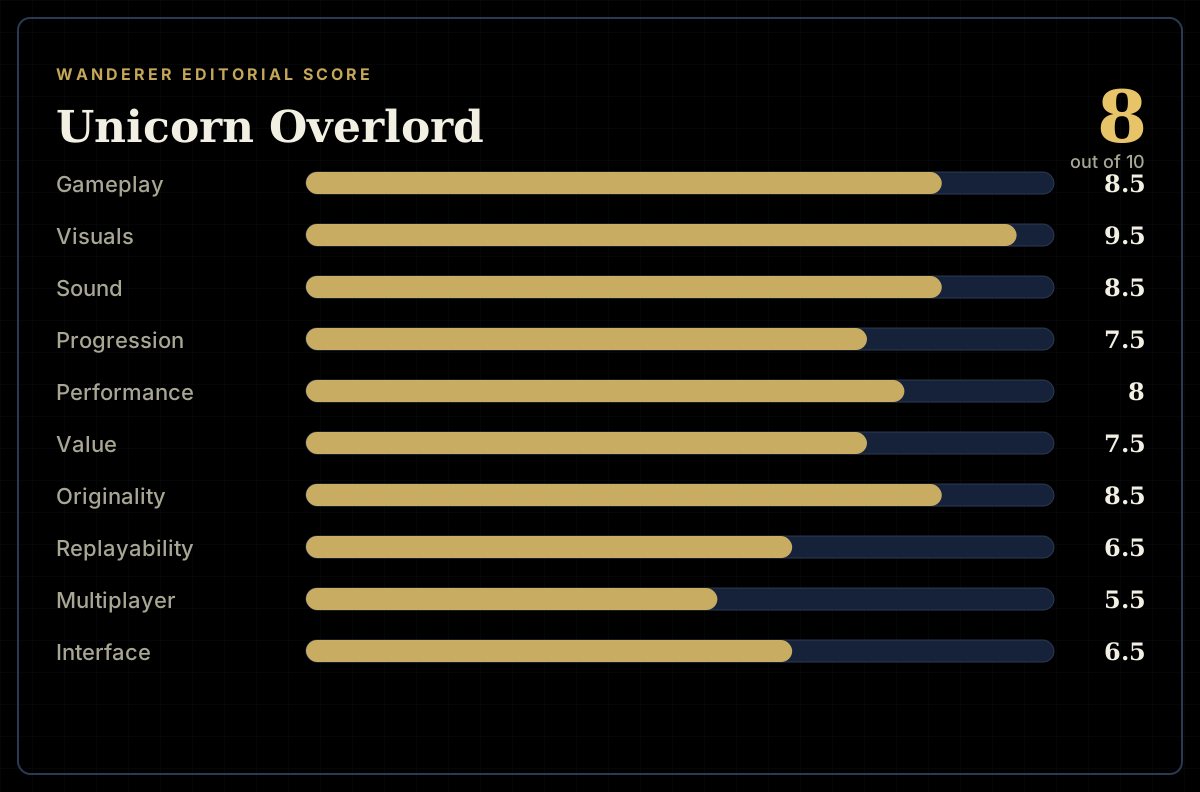
How the review scores each part of the gameWanderer Editorial -
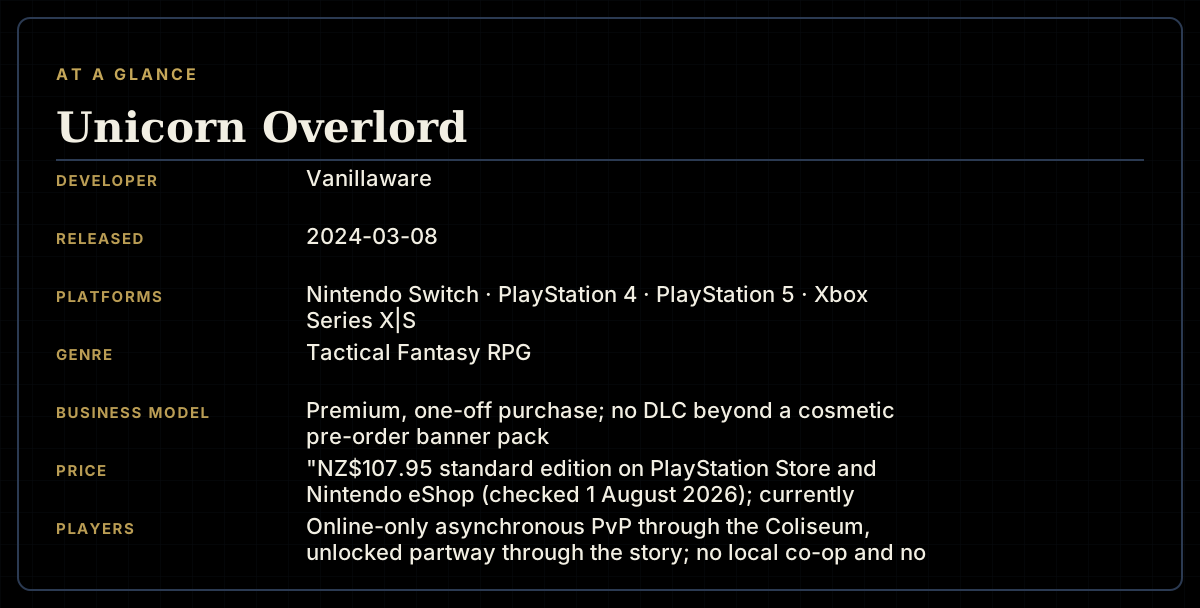
The game at a glanceWanderer Editorial -
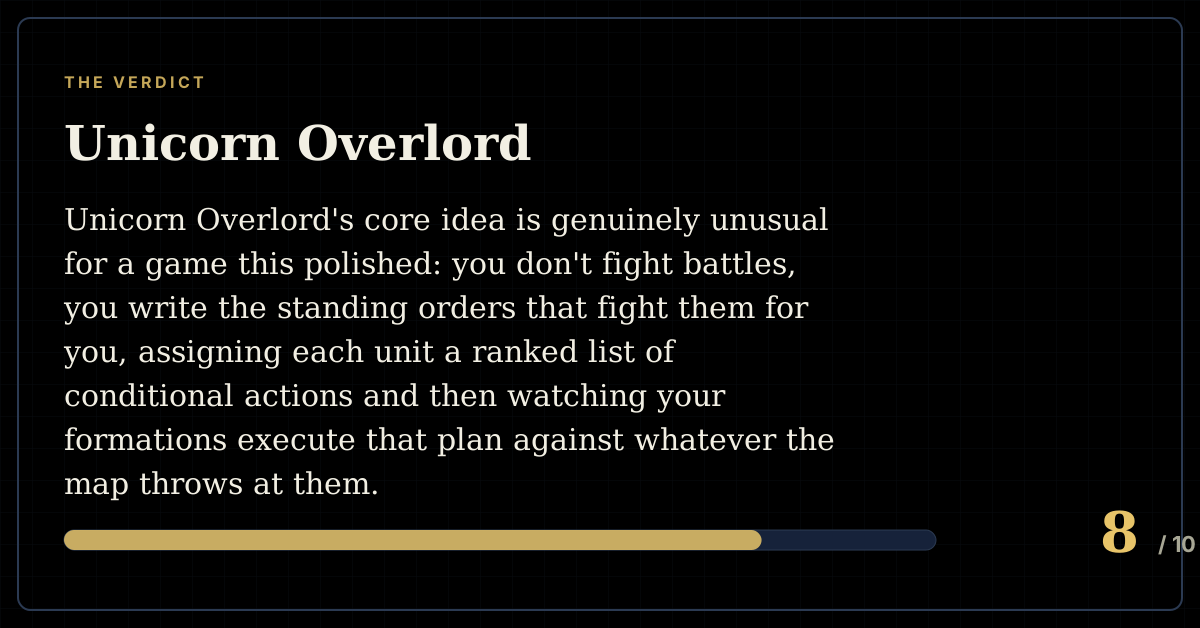
The short versionWanderer Editorial