
Game review
Ultrapool Review
7 / 10
- Developer
- Icedrop Games
- Publisher
- offbrand games
- Released
- 24 August 2026
- Platforms
- ["Windows"]
- Genre
- Strategy
The Pool Version Of Balatro, And Reviewers Aren't Shy About Saying So
Ultrapool is a $11.99 roguelite from developer Icedrop Games and publisher offbrand games, released on Steam on August 24, 2026 after a long, extremely well-attended free demo period that doesn't count toward its original release date, and a clean history since with no early access phase. It's the single comparison every review in its pool reaches for first. "Balatro + 8 ball pool is the best explanation anyone can give you," wrote one reviewer, while another, with over 3,000 hours logged, called it simply "one of my favourite games of the year." With 209 English reviews a few weeks after launch, 188 of them positive, the reception is a genuinely strong Very Positive, built almost entirely on how well a deckbuilding roguelite's DNA transplants into a game about hitting balls into pockets.
Wacky Balls, A Snack Bar, And Ten Rounds To Survive
The loop is straightforward to describe and apparently hard to put down: assemble a rack of balls with strange effects, pocket them for score, spend that score at an in-game bar on new balls and "snack" modifiers, and try to survive ten escalating rounds. "It's a simplified version of pool, you score points per ball rather than target a specific sequence. It resembles Snooker moreso than 8-Ball or 9-Ball," one reviewer explained, while another summed up the appeal in three words: "You put balls in holes... but the balls can be really weird balls." Multiple reviewers stress that the Balatro comparison isn't a knock. "The different play mode style selection reminds me a bit of Balatro, but not in a 'They copied it!' sense, because it's completely its own thing," wrote one, and another with real breadth across the genre agreed: "I like this game even more than Balatro. It's easily my favorite roguelite deckbuilder."
Combos, Sound Design, And A Refreshing Absence Of Mobile-Pool Junk
What reviewers praise most consistently is how satisfying the moment-to-moment feedback loop feels once a build clicks. "Combos feel satisfying. Ball physics feel natural," wrote one reviewer, and another highlighted the specific sensory payoff: "Great sound effects, good controls and an easy to read board... all the ball boink sounds is music to my ears." A recurring, pointed compliment is what Ultrapool doesn't have: "It's probably the only pool game I've played that didn't have ads or a janky multiplayer. That alone makes it a 10/10," one reviewer wrote, a real point of contrast in a genre historically dominated by free-to-play mobile pool games built around exactly those two things.
Built Mobile-First, And It Occasionally Shows On PC
Ultrapool shipped simultaneously on mobile, and reviewers on Steam Deck and desktop both flag friction that traces back to that portrait-first design. "Please give us more options to fine-tune the control on Steam Deck. Using the track pad is brilliant, but it's almost TOO sensitive," wrote one reviewer, a complaint echoed by another who specifically had to "reduce the cursor sensitivity" before the game felt right on the same hardware. A harsher review connected the dots explicitly: "Not being able to rotate the table so you can play fullscreen on PC (because it's built for portrait mode on mobile)... show a real lack of polish." On a more encouraging note, a Steam Cloud save-sync complaint from one reviewer was resolved fast enough that the same reviewer edited their own review to say so: "Great game, just wish it was steam cloud compatible. Have to start a fresh on steam deck. Edit: Devs are awesome, fixed steam cloud."
Shop RNG And A Post-Launch Balance Debate
The pool's negative reviews cluster around two related complaints: how much a run's outcome depends on the luck of the shop, and whether recent balance changes have made the game less fun than it was pre-launch. "You basically have to get big hole multipliers to stand a chance of winning in certain modes, so it just becomes a restart simulator until luck works in your favor," wrote one reviewer, while another put the shop's randomness in more mechanical terms: "Shop RNG is so bad that getting crazier builds is annoyingly hard." A separate, more alarming thread comes from players who logged real time in the beta or demo before launch. "Was more fun in the beta when synergies actually worked and gave satisfaction, now just gives frustration," wrote one, and a second reviewer with pre-release experience made the same point more forcefully: "First time I've loved a game in testing and then the release fell totally flat. All the fun has been optimized away... in favor of what is a tiresome, time consuming slot machine." That's a real, if minority, thread worth flagging: it isn't just difficulty tuning being contested, it's whether recent patches nerfed the exact synergy interactions that made earlier builds click.
Too Easy For Some, Punishingly Hard For Others
Difficulty and content depth split the review pool in a way that suggests the escalation curve between modes is uneven rather than simply well-tuned. "Beating the first 4 difficulties is easy enough, but the fifth can be challenging," wrote one reviewer who otherwise praised the game, while a more frustrated reviewer described the top difficulty as breaking the format entirely: "The hardest difficulty is just so frustratingly hard... I am 45 mins into a run and trying my best score negative 1200/640. It's just not possible with the modifiers." On the flip side, several reviewers who blitzed through lower difficulties report the opposite problem: "It's too easy, and I quickly ran out of content," and another added there's "no real unlockables" and no strong pull to keep grinding once the early sets are cleared. Reviewers also raised the mobile version specifically as a sticking point unrelated to gameplay: "Would be a 5/5 if I could play on mobile and steam without having to buy it twice," a fair complaint for a roguelite whose replay hooks depend heavily on unlocking content that doesn't currently carry over between platforms.
Verdict
Ultrapool takes the Balatro formula and finds a genuinely fitting new home for it at the pool table, and the vast majority of its large, largely positive review pool agrees the transplant works: satisfying combo-building, tactile ball physics and sound design, and a refreshing lack of the ads and janky multiplayer that plague mobile pool games. That success comes with real, corroborated friction, a mobile-first interface that shows through on PC and Steam Deck, shop RNG that some players find outright punishing, a vocal minority convinced post-launch balance changes gutted synergies that worked better in testing, and a difficulty curve that manages to feel both too easy and unfairly brutal depending which end a player hits. At $11.99, with no cross-buy or cross-save against its own mobile release, it's an easy recommendation for roguelite fans willing to tolerate some early rough edges, but players chasing the exact high that beta testers described should go in with tempered expectations about what launch actually shipped.
Screenshots
-
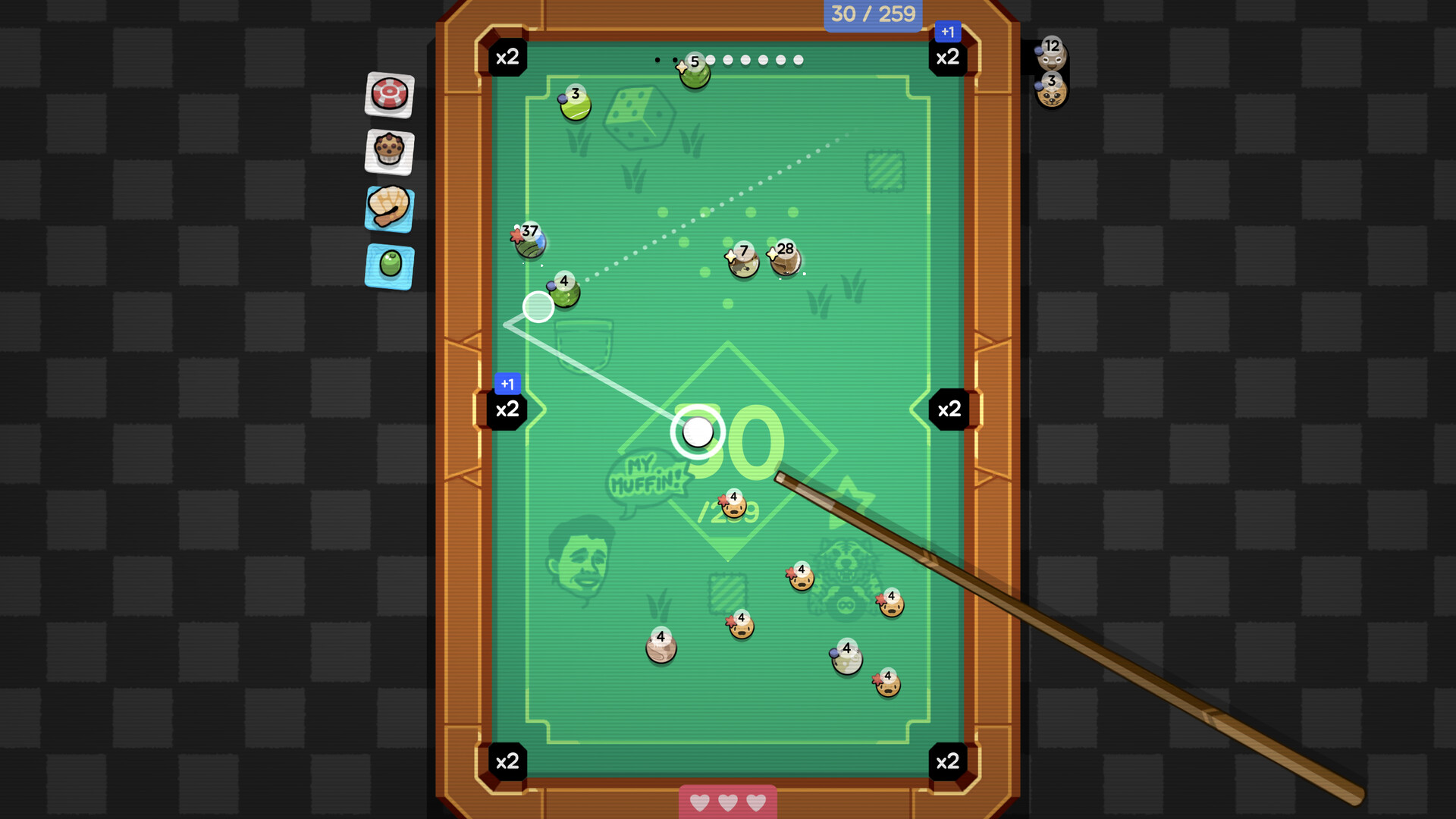
A single shot lined up against a rack of scoring balls, each one worth a different, escalating number of points.Image: offbrand games via Steam -
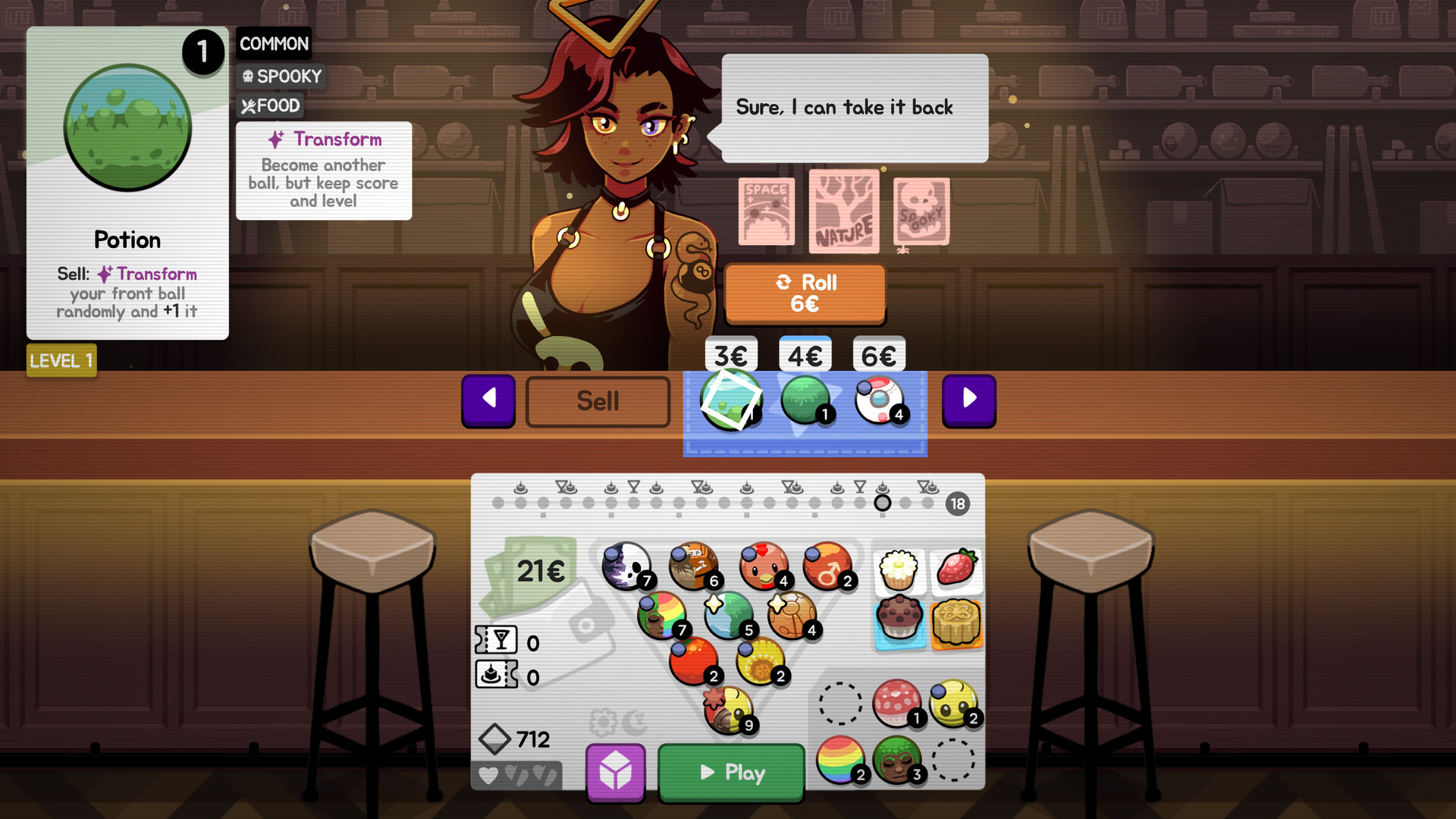
The bar between rounds: reroll the shop, buy new balls, and shape a build around food, spooky, or space-themed synergies.Image: offbrand games via Steam -
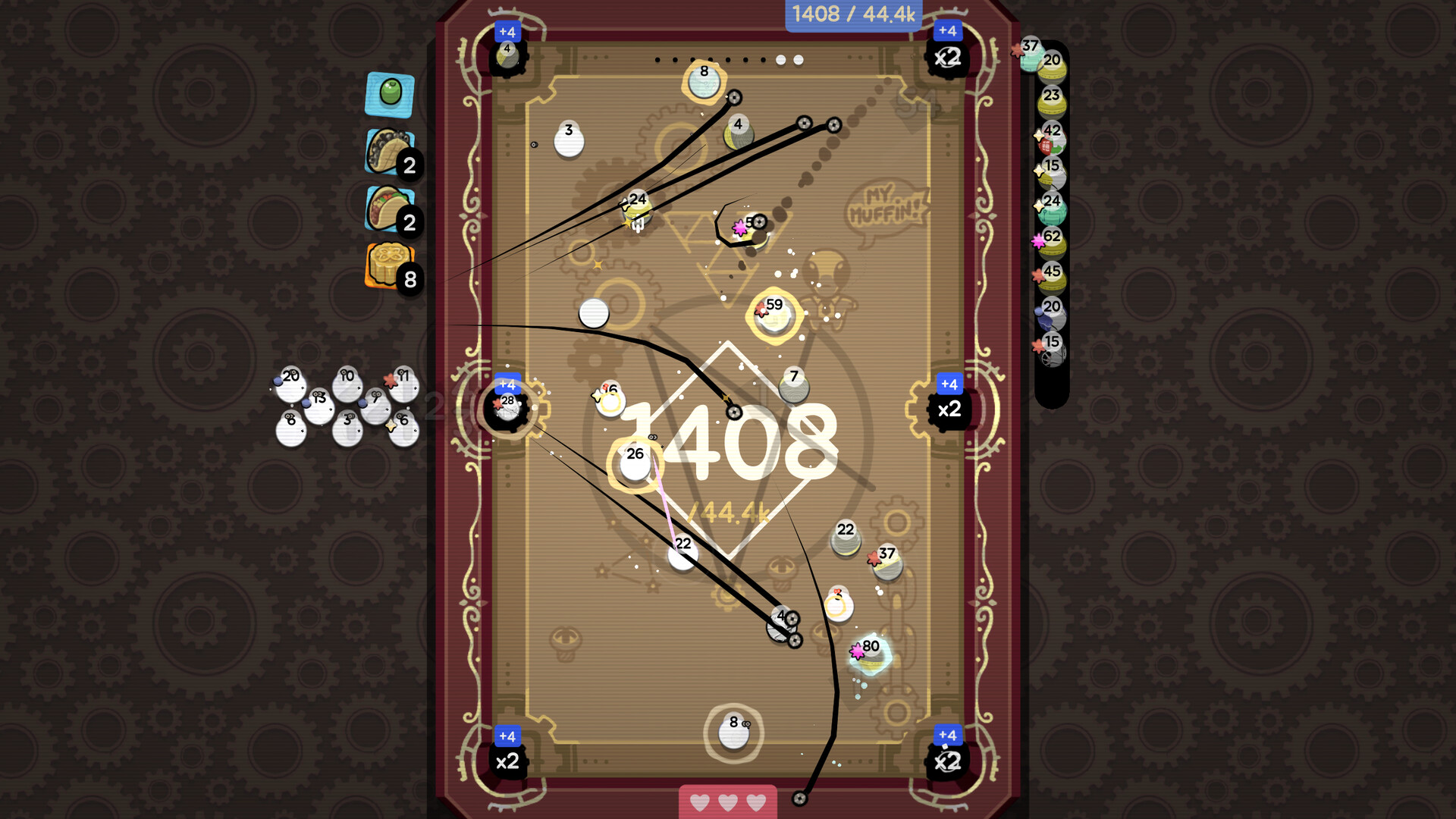
A late-game run where builds start to sprawl: dozens of balls on the table and a score needing to climb into the tens of thousands.Image: offbrand games via Steam