
Game review
Turbo Overkill
7.5 / 10
- Developer
- Trigger Happy Interactive
- Publisher
- Apogee Entertainment
- Released
- 11 August 2023
- Platforms
- Windows
- Genre
- Boomer Shooter
- Monetisation
- One-time premium purchase; no ads, DLC-gated content or in-game store found
- Players
- Single-player only; no online, co-op or PvP modes
The short version
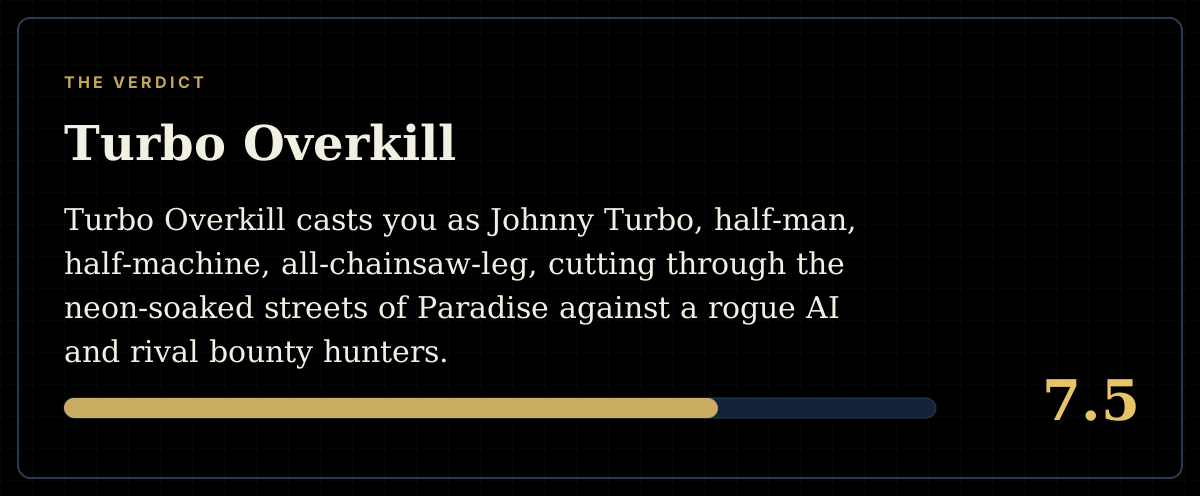
Turbo Overkill casts you as Johnny Turbo, half-man, half-machine, all-chainsaw-leg, cutting through the neon-soaked streets of Paradise against a rogue AI and rival bounty hunters. Built by a strikingly small team and released the same year as System Shock, Atomic Heart and Trepang2, reviewers consistently rank it among the strongest entries in the "boomer shooter" revival, praising exceptional gunplay, genuinely inventive level design, and a tone that leans fully into its own absurdity.
That acclaim comes with real, specific caveats. A meaningful share of reviewers describe the later episodes shifting away from the exploratory pacing of the opening hours into relentless, exhausting arena-style combat with little breathing room, and a smaller cluster criticizes the story for derailing into confusing, gimmicky detours partway through. A documented audio-mixing bug drew persistent complaints even after a patch specifically added remixable audio channels in response.
Biggest strengths
- Exceptional, widely-praised gunplay with a genuinely large and varied arsenal, reviewers consistently rating the combat among the best in the current boomer shooter revival
- Inventive, high-quality level design with real verticality, exploration and secrets, rewarding players who go off the critical path with unlockable gameplay modifiers and hidden levels
- A striking, fully-committed cyberpunk tone and self-aware humor that reviewers say elevates the game well past a straightforward retro-shooter pastiche
Biggest weaknesses
- A meaningful share of reviewers describe later episodes shifting away from the exploratory pacing of the opening hours into relentless, exhausting arena-style combat encounters with little time to recover between waves
- Story elements are criticized by some reviewers as derailing into confusing detours and gimmicky one-off mechanics (vehicle sequences, mecha segments) partway through, diluting the stronger, more focused setup of the opening chapters
- A documented audio-mixing bug — weapons, music and ambience becoming badly imbalanced — drew persistent complaints even after a later patch specifically added remixable audio channels in direct response
Who it's for: Boomer shooter and retro FPS fans who want exceptional, fast-paced gunplay and a game willing to commit fully to its own ridiculous tone. Less suited to anyone wanting a consistently paced difficulty curve or a coherent, focused narrative throughout.
Our recommendation: A strong recommendation for FPS fans specifically, tempered by real warnings about the back half's difficulty spike and some persistent audio-mixing complaints worth checking against your own hardware before buying.
7.5 / 10
Half-man, half-machine, entirely committed to chainsaw-leg-powered violence — Johnny Turbo is not a subtle protagonist, and Turbo Overkill isn't a subtle game. Built by a small team and released in a genuinely stacked year for the genre alongside System Shock, Atomic Heart and Trepang2, reviewers consistently single it out as one of the strongest entries in the ongoing "boomer shooter" revival, and more than one reviewer explicitly ranks it above its higher-profile 2023 peers on the strength of its gunplay alone.
Gunplay and design that earn genre-topping praise
The core shooting draws essentially unanimous praise. Reviewers describe a large, genuinely varied arsenal where every weapon feels distinct and viable, paired with movement and combat encounters that reward both raw reflexes and precise weapon selection. Level design draws equally strong praise for its verticality and willingness to reward exploration — hidden gameplay modifiers, secret levels, and Easter eggs scattered throughout give committed players real reasons to backtrack rather than rushing to the next checkpoint. Underpinning all of it is a tone that commits fully to its own absurdity, from a teleporting sniper rifle capable of instantly telefragging enemies to a soundtrack and visual style reviewers describe as a "banging" cyberpunk pastiche done with real craft rather than empty nostalgia. Given the size of the team behind it, reviewers repeatedly frame the overall scope and polish as remarkable, drawing favourable comparisons to far larger-budget releases from the same year.
A back half that wears out its welcome for some
Set against that acclaim, a meaningful share of reviewers describe a real shift in pacing as the game progresses. The exploratory, secret-hunting design of the opening episodes gradually gives way, in later chapters, to what several reviewers describe as relentless, exhausting arena-style combat encounters, with one detailed review noting that "as you move into the second episode, the game removes all of the interesting exploration type gameplay" in favor of near-constant waves of difficult enemies with little recovery time between fights. Boss encounters specifically draw criticism from some reviewers for becoming pure attrition tests — one detailed account describes the final boss fight requiring players to drain multiple health bars across separate rooms, framing it less as a climactic challenge than as an endurance test for how long a player can hold down the trigger while dodging.
Story detours and mission padding
A related, smaller cluster of complaints concerns narrative structure. Some reviewers who praise the game's opening story pacing report that the plot "completely derailed" around the midpoint, introducing branching detours and one-off mechanical sequences — a flying car, a motorcycle chase, a mecha segment — that several reviewers felt served little purpose beyond extending playtime. A related complaint concerns mission design specifically, with at least one reviewer describing a single objective artificially split into five separate parts, arguing the approach dilutes pacing rather than genuinely expanding content.
A documented audio bug, and how the developer responded
This review's research also turned up a specific, detailed technical complaint: badly imbalanced audio mixing, with music and weapon sounds overwhelming ambience, chainsaw effects and enemy audio cues to the point of making the soundscape difficult to parse. Checking that complaint against the patch record shows a direct, dated response — Patch 1.1, released roughly two months after the full 1.0 launch, specifically added the ability to "remix some audio channels in the audio menu" as a named feature. That's a genuine, targeted fix rather than a vague promise, though this review found reviewer accounts describing ongoing mixing frustration even after that update, suggesting the adjustable channels helped without fully resolving every player's experience of the issue.
A confirmed save-corruption risk
Separately, at least one detailed, credible account describes losing an entire near-complete playthrough — guns, augments, collectibles and unlocked levels all reset — to a save-file corruption bug near the very end of the game, on the game's hardest difficulty. The reviewer notes independently confirming via their own research that the issue is a known, legitimate bug rather than a one-off fluke. This review found no patch note explicitly claiming a direct fix for this specific problem, so it's worth treating as a real, if apparently uncommon, risk rather than an issue confidently resolved.
What the achievement data confirms about difficulty
Global achievement figures back up the shape of a genuinely steep difficulty curve matching reviewer accounts. Episode 1 completion sits at 25% of the playerbase, already a meaningful drop from the 71.5% who finish just the first level, and that decline continues through the later episodes: only about 14.8% of the entire playerbase completes the full three-episode campaign. That's a substantial falloff consistent with the later-game difficulty-spike complaints above, though it's also worth noting this is a genre where a demanding endgame is often an intentional, embraced design choice rather than an unambiguous flaw.
Continued investment well past launch
Independent of any specific complaint, Turbo Overkill's post-launch trajectory reflects a developer still meaningfully invested in the project years after its original release. Console ports to PlayStation, Xbox and Nintendo Switch arrived roughly a year and a half after the PC 1.0 launch, and a substantial "Enhanced Visuals" update followed shortly after, adding optional screen-space reflections, dynamic shadows, and a rendering options menu alongside dozens of smaller bug fixes across secret levels and specific encounter geometry. That's a genuinely unusual level of continued technical investment for a game this size well past its original launch window, and it's worth weighing alongside the specific bugs and pacing complaints above as evidence of a team still actively refining the game rather than treating its initial release as final.
Where it lands
Turbo Overkill earns its Very Positive reception through gunplay and level design reviewers consistently rank among the best in its genre, delivered with remarkable polish for a team this small. The later-game difficulty spike and narrative detours are real, specific, well-corroborated criticisms worth weighing seriously, and the documented audio and save-corruption issues deserve plain acknowledgment even within an otherwise glowing reception. For boomer shooter fans specifically, this remains an easy, distinctive recommendation — just go in aware that the back half asks considerably more than the front.
Pros and cons
Pros
- Exceptional, widely-praised gunplay with a genuinely large and varied arsenal, reviewers consistently rating the combat among the best in the current boomer shooter revival
- Inventive, high-quality level design with real verticality, exploration and secrets, rewarding players who go off the critical path with unlockable gameplay modifiers and hidden levels
- A striking, fully-committed cyberpunk tone and self-aware humor that reviewers say elevates the game well past a straightforward retro-shooter pastiche
- Remarkable scope and polish for a team this small, drawing repeated favourable comparisons to far larger-budget 2023 releases in the same genre space
- Sustained multi-year post-launch support, including console ports, a major visual enhancement update, and continued content additions well past the original 1.0 release
Cons
- A meaningful share of reviewers describe later episodes shifting away from the exploratory pacing of the opening hours into relentless, exhausting arena-style combat encounters with little time to recover between waves
- Story elements are criticized by some reviewers as derailing into confusing detours and gimmicky one-off mechanics (vehicle sequences, mecha segments) partway through, diluting the stronger, more focused setup of the opening chapters
- A documented audio-mixing bug — weapons, music and ambience becoming badly imbalanced — drew persistent complaints even after a later patch specifically added remixable audio channels in direct response
- At least one reviewer reports a confirmed save-corruption bug that wiped a near-complete playthrough's progress; this review found no explicit patch note claiming a direct fix for that specific issue
- Achievement data confirms a real, steep difficulty curve, with only about 14.8% of the playerbase completing the full three-episode campaign, consistent with reviewer accounts of a punishing later game
Screenshots
-

Turbo OverkillImage: Apogee Entertainment via Steam -

Turbo OverkillImage: Apogee Entertainment via Steam -

Turbo OverkillImage: Apogee Entertainment via Steam -
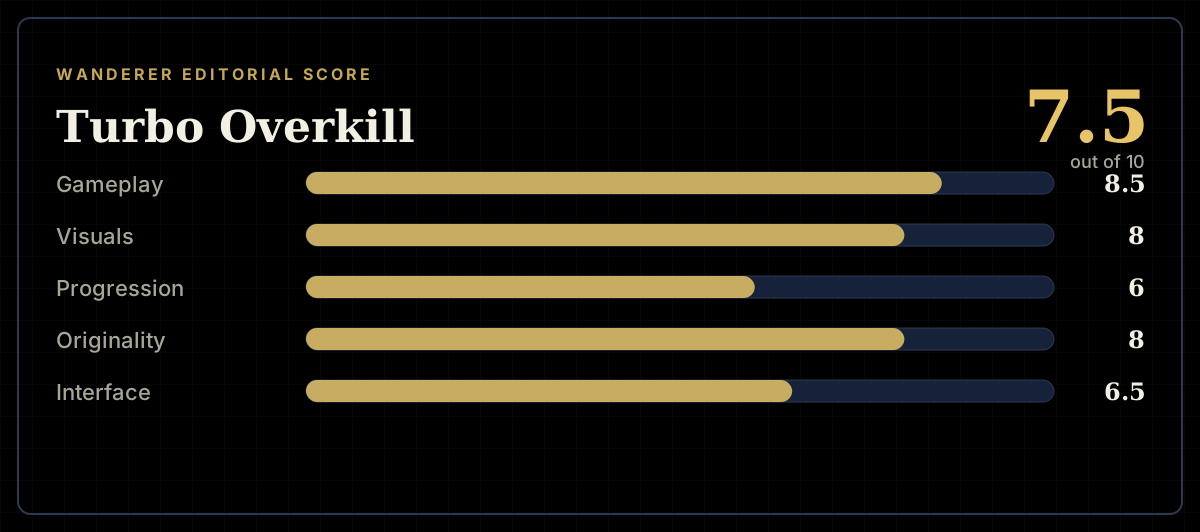
How the review scores each part of the gameWanderer Editorial -
The short versionWanderer Editorial