Game review
Tingus Goose
6.5 / 10
- Developer
- SweatyChair
- Publisher
- Playsaurus
- Released
- 1 December 2025
- Platforms
- Windows, Mac
- Genre
- Idle / Incremental Simulation
- Monetisation
- Premium (one-time purchase)
- Players
- false
The short version
Tingus Goose commits so completely to its own deranged premise that it becomes genuinely compelling — an idle game about growing geese out of people's bellies that turns out to have a surprisingly well-tuned automation loop underneath the body horror. It won't survive contact with anyone who wants a straight-faced management sim, but for the audience it's built for, it delivers dozens of hours of strange, addictive fun for a low asking price.
Biggest strengths
- Genuinely one-of-a-kind premise executed with total commitment, not just shock value
- Strong art direction, animation and sound design that sustain the surreal tone for dozens of hours
- Idle loop is more mechanically substantial than it first appears, with real layout and automation decisions to make
Biggest weaknesses
- Visual clutter and unpolished systems become noticeable once the initial shock wears off
- Late-game progression noticeably slows and starts to feel repetitive
- One widely discussed review flags AI-generated portions of the in-game guidebook and off-platform memecoin promotion tied to the game's branding, worth knowing before buying
Who it's for: Idle-game veterans and fans of absurdist, deliberately uncomfortable comedy who don't mind a premise that reads more like a fever dream than a pitch document.
Our recommendation: Recommended, with the caveat that its tone is the whole pitch — if the premise doesn't land for you in the first five minutes, the mechanics underneath won't win you over.
6.5 / 10
What Is Tingus Goose?
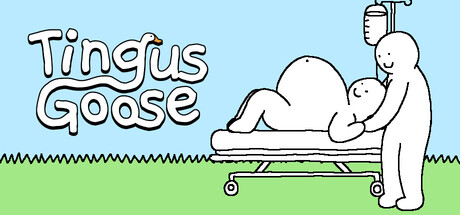
Tingus Goose is an idle/incremental game with a premise that resists a normal sentence: you plant seeds in "patients," water their bellies until geese emerge, and then bounce those geese for profit, using the proceeds to automate, upgrade and expand your operation across a sequence of increasingly strange worlds. It is, structurally, a fairly conventional idle game — unlock tiers, automation purchases, prestige-style resets dressed up as "ascension" — wrapped in presentation that plays like a fever dream crossed with a body-horror sketch show. Steam's user base has responded warmly: 89% positive across 1,224 reviews as of this writing, with a notable cluster of reviewers explicitly calling out "dozens of hours" of play time from a NZ$10.49 purchase.
The short description on the store page undersells just how committed the game is to its bit. Reviewers repeatedly reach for comparisons rather than plain description — Untitled Goose Game by way of Don Hertzfeldt, or "Plug & Play and Untitled Goose Game had a baby." That instinct to describe the game via other things says a lot about how singular the tone actually is; there isn't an obvious reference point for "idle economy sim where the resource is geese grown from human digestive systems."
The Idle Loop Has More Going On Than It First Appears
It would be easy to assume a game this committed to shock value is coasting on novelty alone, and some of the harsher reviews in the sample make exactly that case — one describes it, once the absurdity wears off, as "a very shallow idle clicker game with poor balancing." That criticism isn't baseless, but it undersells what the more engaged reviews describe: real decisions around unlock pacing, automation sequencing, and physical layout optimisation on the play space itself, not just a number that goes up while the tab sits in the background. One of the more detailed reviews in the sample lays out the loop's actual strengths plainly — "good incremental progression, fun layout optimization, satisfying unlock pacing, enough automation to reduce tedious grinding" — while also noting the same review's core complaint: visual clutter and systems that "needed another polish pass before release."
That tension defines the experience. Tingus Goose is not simply an idle game with a strange skin over generic systems, nor is it a fully realised, rigorously balanced incremental design hiding under comedy. It sits in between: mechanically sturdier than its premise suggests, but rougher around the edges than its most devoted fans are willing to admit in the moment. Players coming in expecting a polished, best-in-class incremental (in the tradition of, say, a heavily iterated genre veteran) will likely find the systems thinner than hoped. Players coming in for the tone and staying for whatever mechanics show up will generally find enough here to hold their attention across the dozens of hours several reviewers report logging.
Commitment to Tone Is the Actual Selling Point
What separates Tingus Goose from a shock-value gag stretched past its runtime is how consistently the presentation supports the premise rather than just announcing it once and moving on. Reviewers single out the animation, sound design, creature design and UI art as unusually strong for the genre and price point, describing a "surreal fever dream vibe that somehow stays entertaining for dozens of hours" rather than wearing thin after the first fifteen minutes. That's a real achievement for an idle game specifically, since the genre lives or dies on whether the moment-to-moment audiovisual feedback stays satisfying across long, repetitive play sessions.
The writing and humour follow the same philosophy: total commitment over safe, broadly palatable jokes. "No corporate focus-tested design. No safe humor. Just pure unfiltered goose insanity," as one reviewer puts it — and that's accurate whether or not it's a compliment for any given player. This is not a game reaching for mass appeal; it is a game that has picked its audience precisely and is entirely uninterested in softening itself for anyone outside that group. For the audience it's aimed at, that specificity reads as sincerity rather than try-hard weirdness, which is a difficult needle to thread and one the game generally threads well.
A Few Things Worth Knowing Before You Buy
Two specific concerns surface in the review sample that are worth flagging plainly rather than glossing over. First, one detailed negative review states that the in-game guidebook or manual "seems to be using AI for at least a notable portion of its written content" — a claim about the game's own shipped text content, not a comment on how any review here was produced, and one prospective buyers who care about that distinction should weigh for themselves. Second, the same review states that "the artist also seems to promote a memecoin under the games name," which — if accurate — is the kind of off-platform branding entanglement that's reasonable to want to know about before purchasing, independent of how the game itself plays. We haven't independently verified either claim beyond what's stated in the review sample, but both are specific and detailed enough to be worth surfacing rather than omitting.
Setting those concerns aside, the core purchase decision is more straightforward: at NZ$10.49, with multiple reviewers reporting 30+ hours logged and an 89% positive rating across a four-figure review count, the raw value proposition for an idle-game fan is solid. Achievements and Steam Cloud support are both present, and the experience is entirely single-player, so there's no online component or live-service dependency to worry about long-term.
Final Verdict
Tingus Goose succeeds by refusing to blink. It commits fully to an absurd, faintly upsetting premise, backs that commitment with genuinely strong art and sound direction, and builds an idle loop underneath that's more thoughtful than a shock-value cash-in would need to be — even if that loop shows real seams once the initial novelty fades and progression slows in the back half. It's not for everyone, and it doesn't want to be; the humour and body-horror imagery will be a hard pass for a large chunk of the potential audience. But for idle-game regulars and absurdist-comedy fans willing to meet it on its own bizarre terms, it's a strange, memorable, and reasonably substantial way to spend a low-cost handful of evenings.
Pros and cons
Pros
- Genuinely one-of-a-kind premise executed with total commitment, not just shock value
- Strong art direction, animation and sound design that sustain the surreal tone for dozens of hours
- Idle loop is more mechanically substantial than it first appears, with real layout and automation decisions to make
- Low price point relative to the amount of playtime reviewers report getting out of it
Cons
- Visual clutter and unpolished systems become noticeable once the initial shock wears off
- Late-game progression noticeably slows and starts to feel repetitive
- One widely discussed review flags AI-generated portions of the in-game guidebook and off-platform memecoin promotion tied to the game's branding, worth knowing before buying
- Extremely tone-dependent; players who bounce off the humour will find little else to hold onto
Screenshots
-
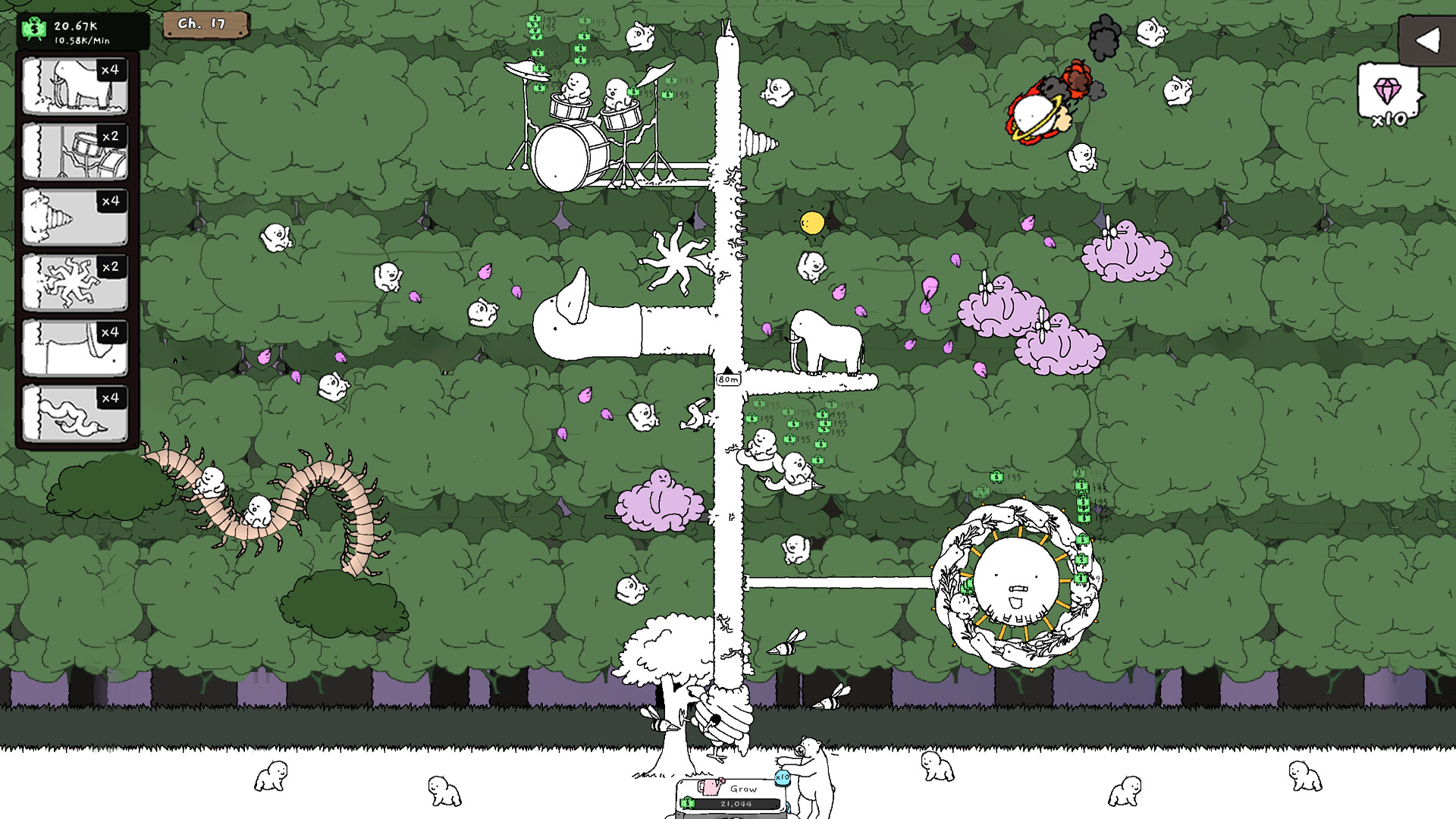
Late-game maps fill up fast with automation and absurd set dressingPlaysaurus -
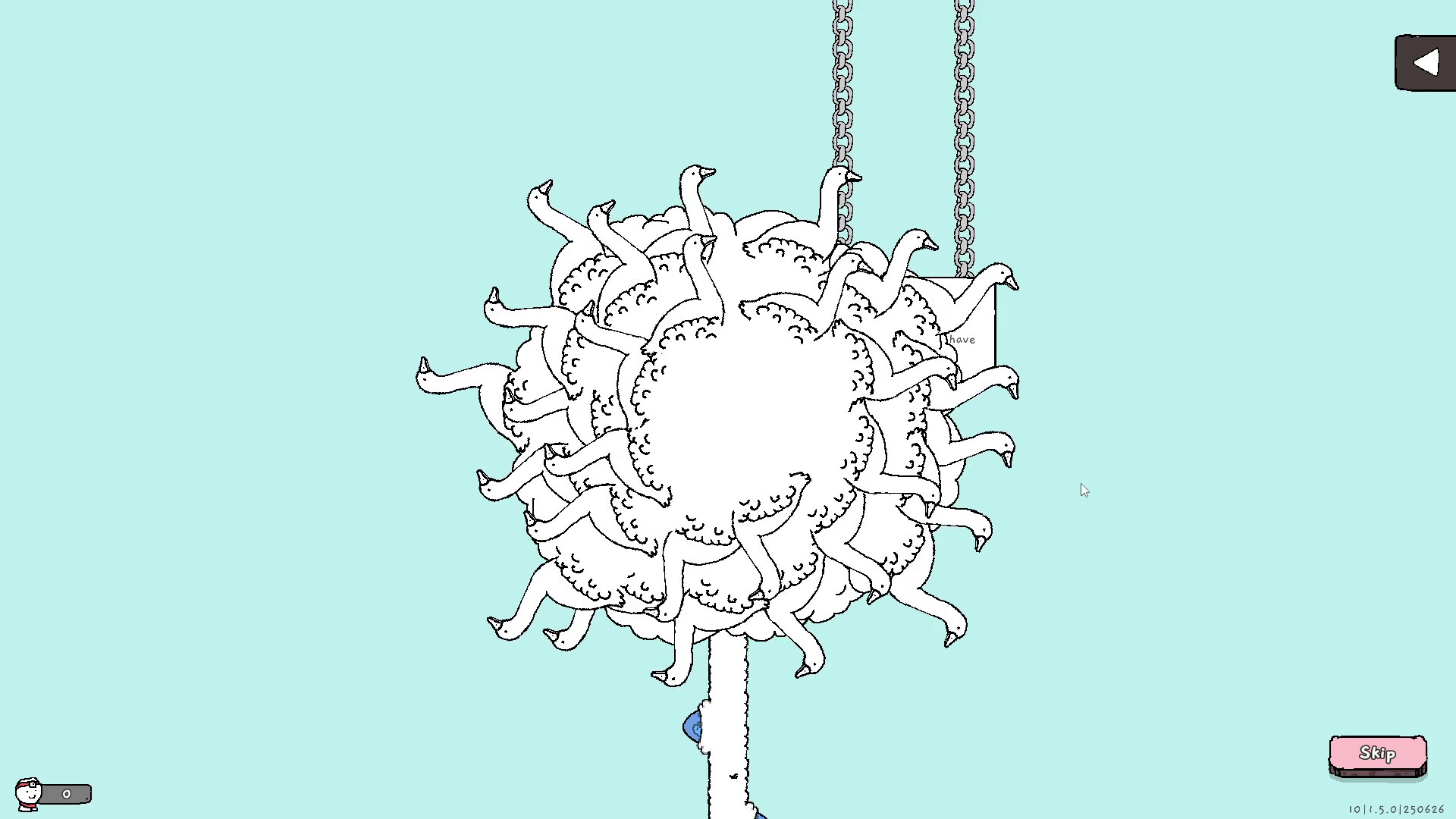
The game's escalating, body-horror-adjacent creature designsPlaysaurus -
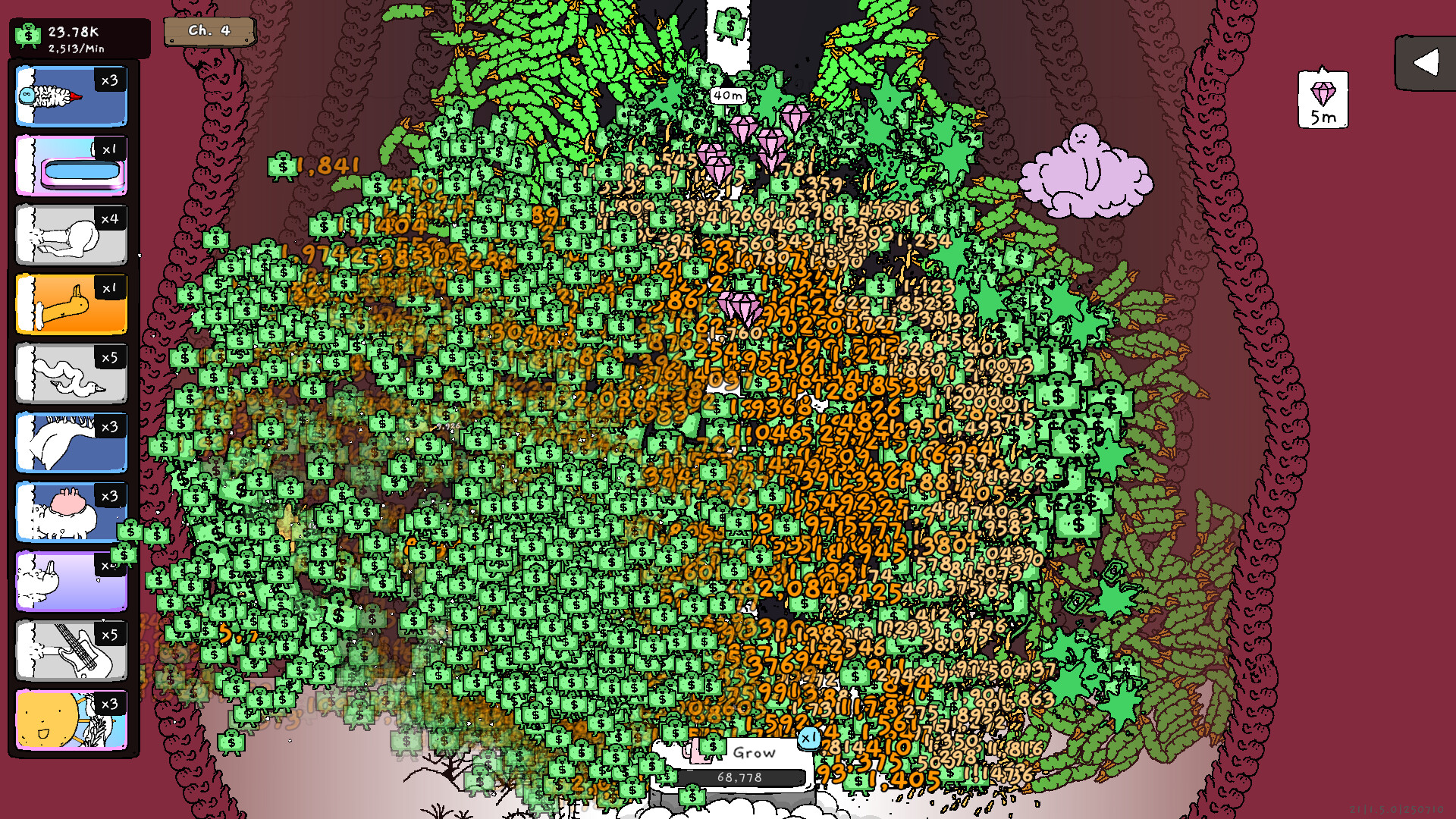
The idle economy in full swing, with income numbers stacking on top of each otherPlaysaurus -
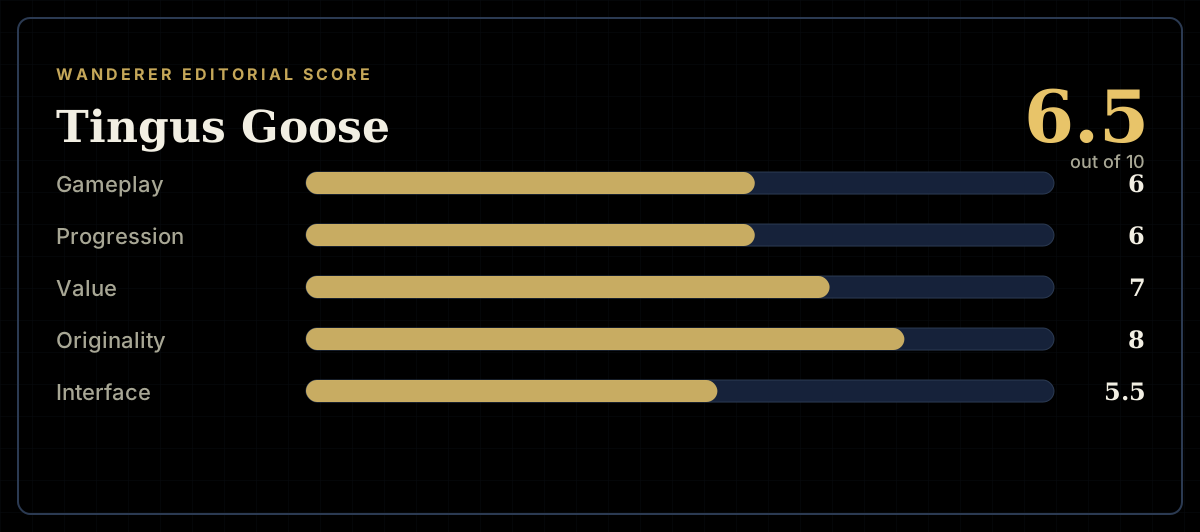
How the review scores each part of the gameWanderer Editorial -
The short versionWanderer Editorial