Game review
Timber Fever Review
7.1 / 10
- Developer
- Virtual Ducky Games
- Publisher
- Virtual Ducky Games
- Released
- 7 May 2026
- Platforms
- Windows
- Genre
- Action
- Monetisation
- Premium
- Players
- Single-player only
The short version
Timber Fever takes a joke premise — a sellsword beaver hired to gnaw down the tree of life — and builds a genuinely sticky arcade roguelite around it, with weapon and build variety that keeps runs feeling fresh well past the point a game this cheap has any obligation to. The unlock grind at higher difficulties is real, and the moment-to-moment controls stay simple throughout, but at its asking price this is difficult to argue with.
Biggest strengths
- A wide, genuinely varied arsenal of silly weapons and perks that encourages experimenting with broken builds
- Extremely cheap for the amount of content and replayability on offer
- Runs smoothly, including well-praised performance on Steam Deck
Biggest weaknesses
- Movement is limited to left, right, and attack, which some players find repetitive across longer sessions
- Unlocking the full roster of tools, perks, and playable beavers at higher difficulty levels is a real grind
- The five difficulty tiers don't always introduce enough new ideas to justify the climb
Who it's for: Fans of tight, run-based arcade roguelites who want something cheap, funny, and good in short sessions rather than a sprawling meta-progression epic.
Our recommendation: Recommended, especially for anyone who wants a snappy Steam Deck roguelite that doesn't demand a big time investment per session.
7.1 / 10
A Beaver, a Demonic Contract, and an Infinitely Tall Tree
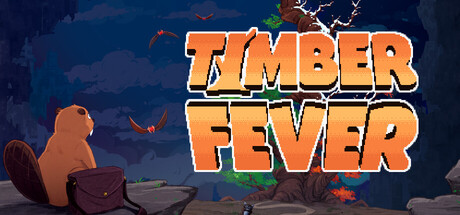
The pitch for Timber Fever is almost too good not to lead with: players control a sellsword beaver, hired by a demonic overlord to gnaw away at the tree of life, fighting off the tree's guardian wardens in a compact arena while an infinite supply of trunk waits to be chewed through. It's a joke premise, and the game knows it, leaning into a tone that's silly without being cloying — capitalist demon bosses hawking hammers, golf balls, and pigeons as weapons of choice, colourful unlockable beaver characters, and enough throwaway humour scattered through the presentation to keep the theme from wearing thin.
Underneath the joke, though, is a genuinely well-built arcade roguelite. Runs are short, arena-based, and built around dodging incoming enemies while chipping steady damage into the central log and the guardians defending it, with power-ups and unlocks accumulating both within a run and across the meta-progression that ties runs together. It's a format familiar to anyone who's played a survival-arena roguelite before, but the execution — smooth performance, a charming pixel-art style, and a premise silly enough to make every menu screen a small treat — carries it well past "familiar but fine."
Chaos Weapons and Genuinely Different Builds
The game's strongest asset by far is how much its weapon and perk variety actually matters. Reviewers consistently single out the build diversity as the thing that keeps runs interesting long after the novelty of "chop tree as beaver" would normally wear off — unlocking a new combo of tools can turn a cautious, careful run into what one player called "pure chaos," and the sense of experimentation is rewarded rather than punished. Multiple playable beaver characters add another layer of variation, though it's worth noting one detailed reviewer felt the roster doesn't differentiate itself as sharply as the tool and perk system does — the characters are a nice-to-have rather than a second full axis of build variety.
That said, the actual input the player has at any given moment is narrow: movement along a horizontal plane, an attack or "bite" button that can be held rather than mashed, and one special ability per run. For most of the review sample that's a feature, not a bug — the appeal is in choosing what to bring into a run and letting the resulting chaos play out, not in mechanical execution. But at least one thorough critique flagged the limited input space directly, arguing that even a single run can start to feel repetitive precisely because there isn't much to do besides move, bite, and watch numbers climb. Both readings are fair, and which one applies to any given player probably depends on how much they're drawn in by the build variety layered on top.
A Grind Wrapped in Charm
Where the reviews split more clearly is on pacing at the higher end. The game offers five difficulty tiers, and while the early unlock pace is described as steady and rewarding, that changes higher up the ladder — one reviewer, writing from the perspective of an incremental-game specialist, was blunt about it: unlocks get "pricy" and grindy, and climbing through the full difficulty range "doesn't bring enough novelty to feel worth playing" all the way to the top. That's a real tension in a game whose core loop is this simple: the moment-to-moment chaos is fun in short bursts, but stretching that same loop across a long grind toward the last few unlocks asks a lot of a formula built for snack-sized sessions.
It's worth weighing that against the far more common reaction in the sample, which is straightforwardly enthusiastic — reviewers describing hundred-hour play totals, calling the progression "satisfying" rather than a "spreadsheet simulator," and specifically praising how the drip-feed of new tools and beavers kept runs feeling fresh well into double-digit hours. The honest read is that the early-to-mid game is where this design is at its best, and the grind complaint applies mainly to players chasing full completion at the hardest settings rather than to the game as most people will actually experience it.
Rough Edges: Repetition and Platform Support
A couple of smaller issues round out the picture. Accessibility options are present and sensible — camera comfort settings and adjustable difficulty are both built in — but one detailed review from close to launch specifically called out the absence of controller support as a real gap for a game this well-suited to short, couch-friendly sessions. Later reviews, closer to the present, describe playing extensively on Steam Deck with a controller "highly recommended," which suggests that gap has likely been closed by an update since launch, though it's the kind of detail worth confirming directly with the store page before assuming it's fully resolved.
The other recurring note is that some weapons are clearly stronger than others, tilting certain builds into "broken" territory more easily than others. Most reviewers who raised this treated it as part of the fun rather than a flaw — a lucky broken build is a payoff for the run, an unlucky one is a fair challenge — but it's worth flagging for anyone who cares about tight numerical balance rather than swingy roguelite chaos.
Verdict
Timber Fever is a small, cheerful game that punches well above its five-dollar asking price, wrapping a genuinely varied and often very funny arsenal of tools around a simple, dodge-and-bite arcade core. It's best enjoyed in the short-to-medium term, where the steady trickle of new weapons, perks, and beavers keeps every run feeling different; players chasing full completion at the highest difficulty should expect the grind to catch up with the charm eventually. For the asking price, it's an easy recommendation regardless.
Pros and cons
Pros
- A wide, genuinely varied arsenal of silly weapons and perks that encourages experimenting with broken builds
- Extremely cheap for the amount of content and replayability on offer
- Runs smoothly, including well-praised performance on Steam Deck
- Charming pixel-art presentation and a premise silly enough to carry the whole package
Cons
- Movement is limited to left, right, and attack, which some players find repetitive across longer sessions
- Unlocking the full roster of tools, perks, and playable beavers at higher difficulty levels is a real grind
- The five difficulty tiers don't always introduce enough new ideas to justify the climb
- Early reviews noted a lack of controller support, though later ones suggest that gap has since been addressed
Screenshots
-
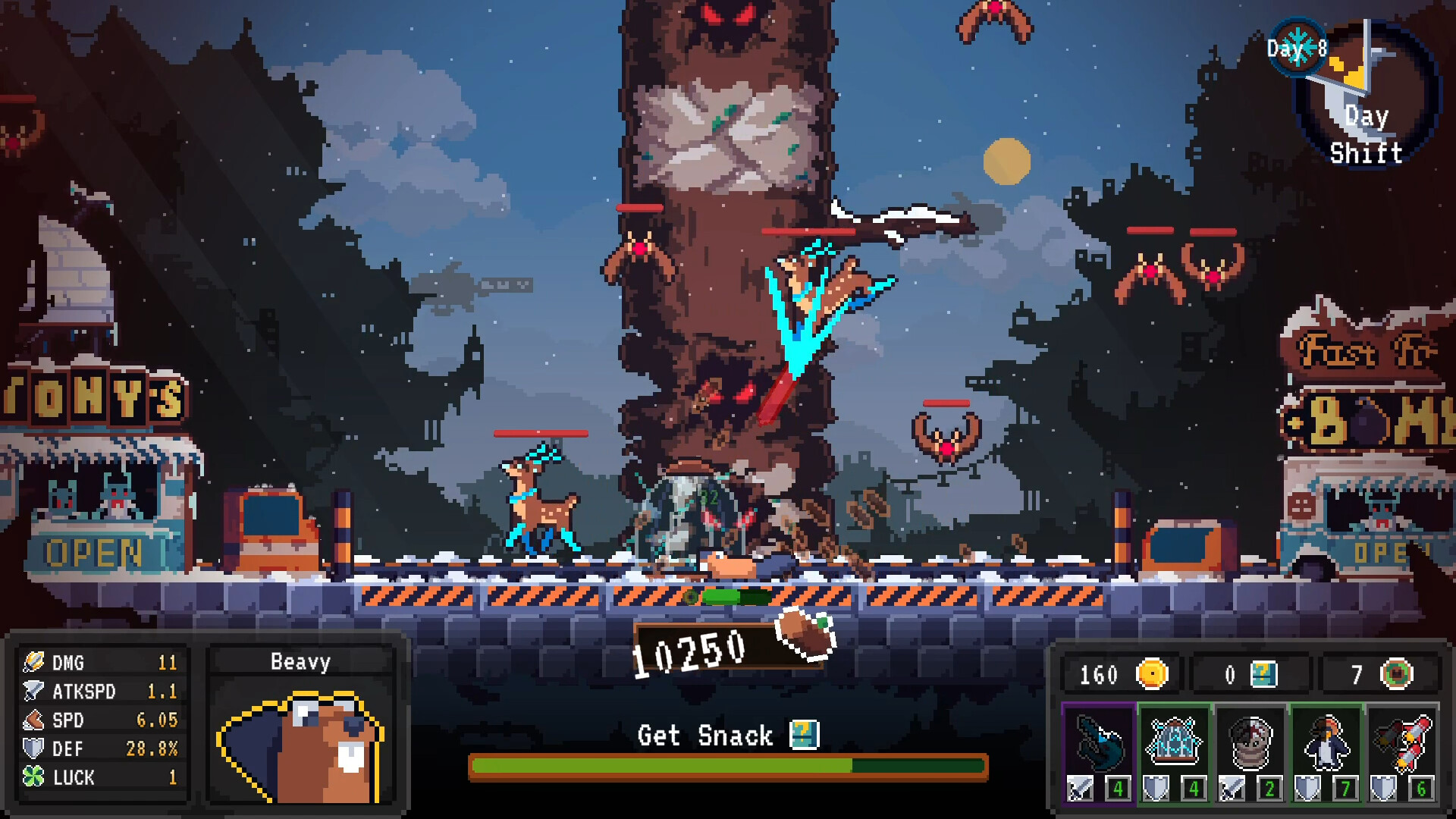
A run in progress — the beaver "sellsword" gnaws at the tree while fending off its guardian wardensVirtual Ducky Games -
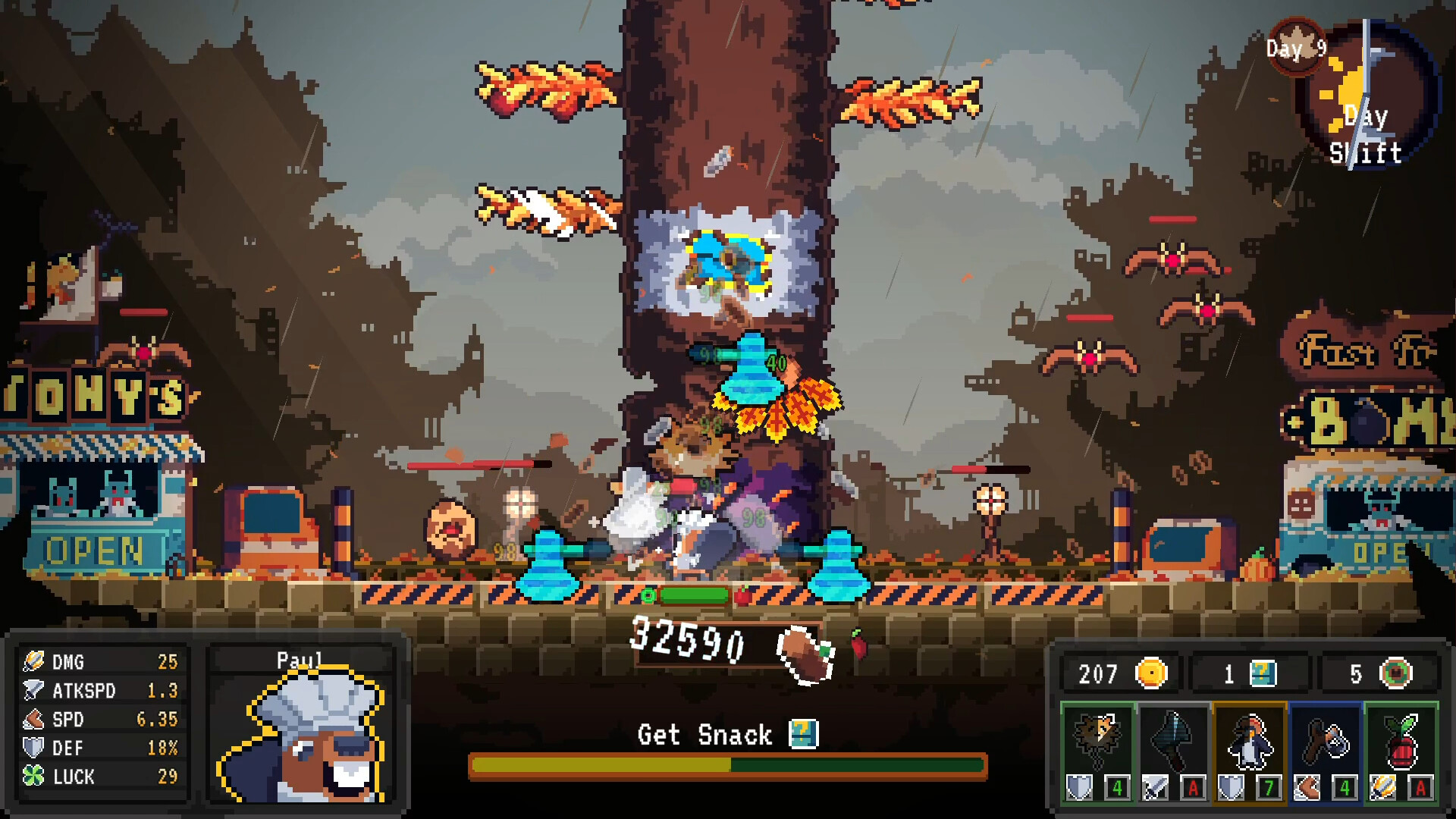
One of several unlockable playable characters, each with a different stat spread rather than a different beaverVirtual Ducky Games -
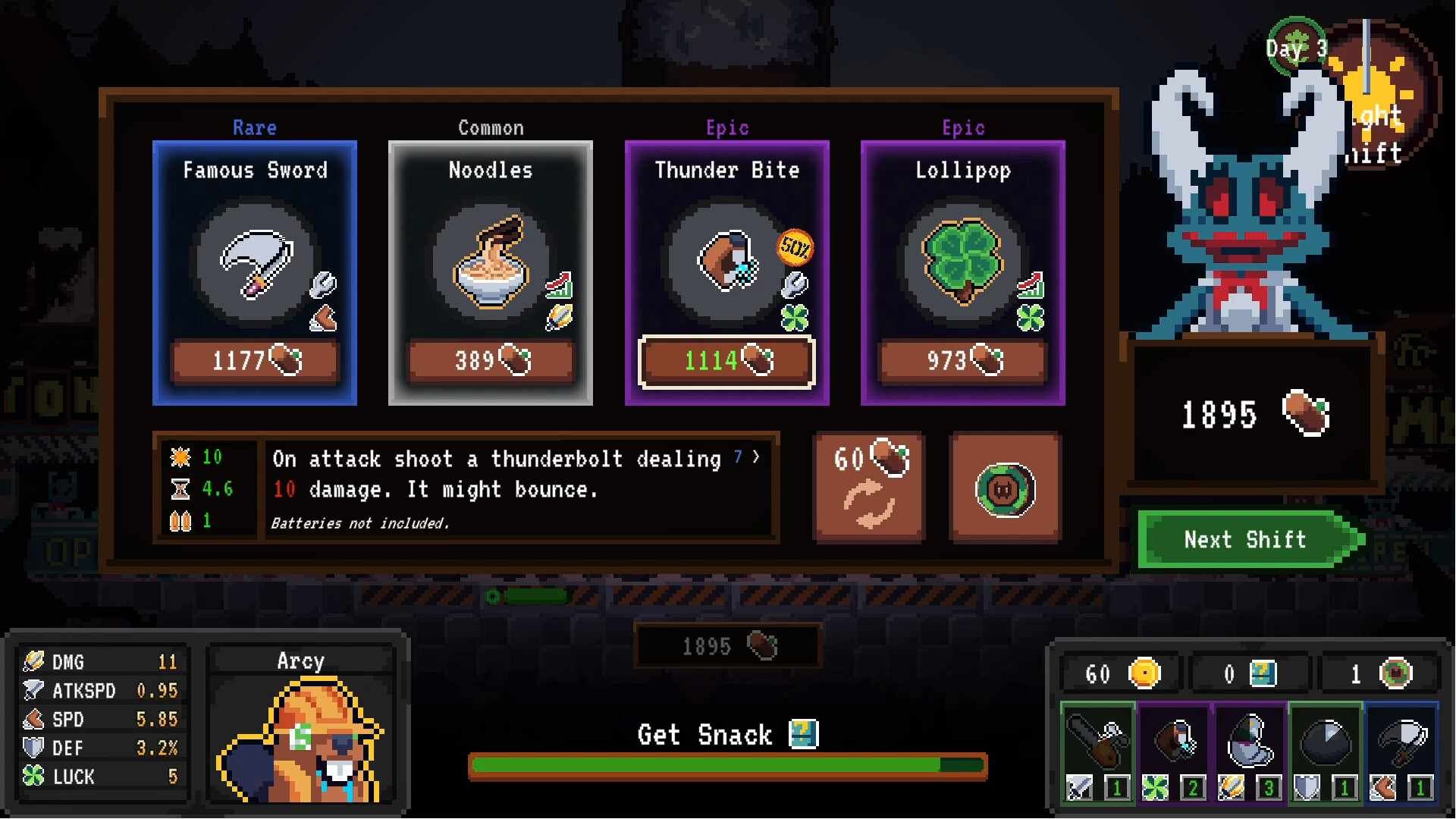
Between-run shopping for weapons and perks — the build variety reviewers repeatedly point to as the game's strongest hookVirtual Ducky Games -
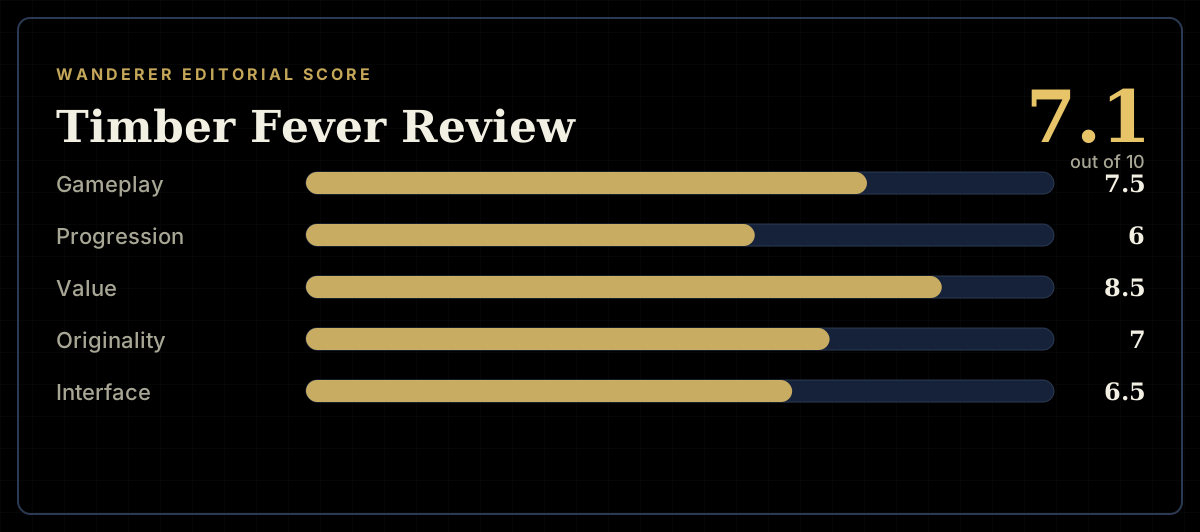
How the review scores each part of the gameWanderer Editorial -
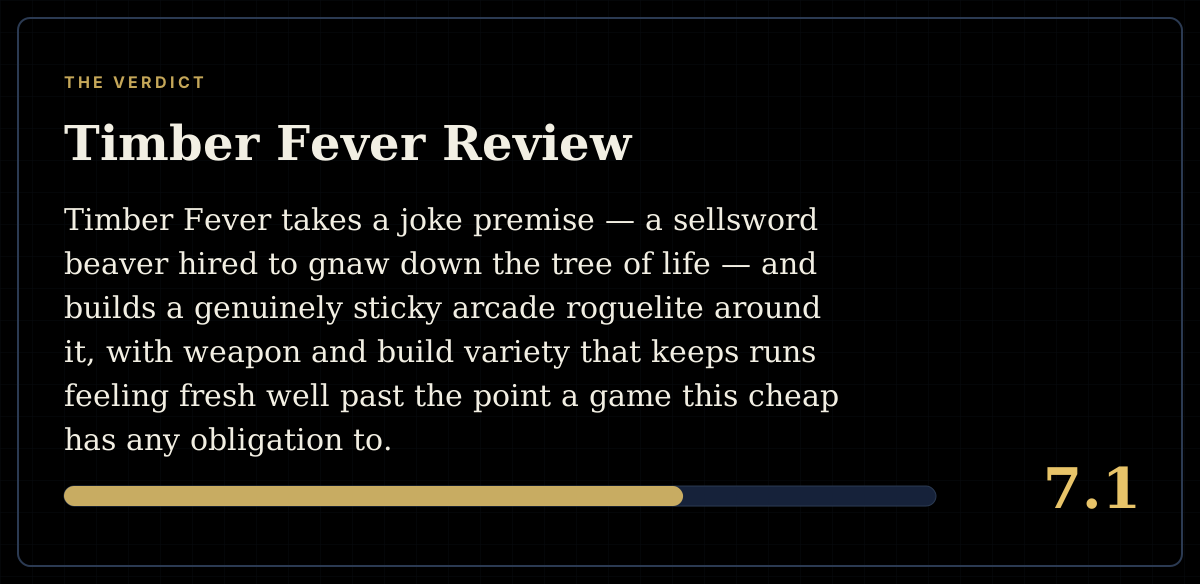
The short versionWanderer Editorial