
Game review
Thief Simulator
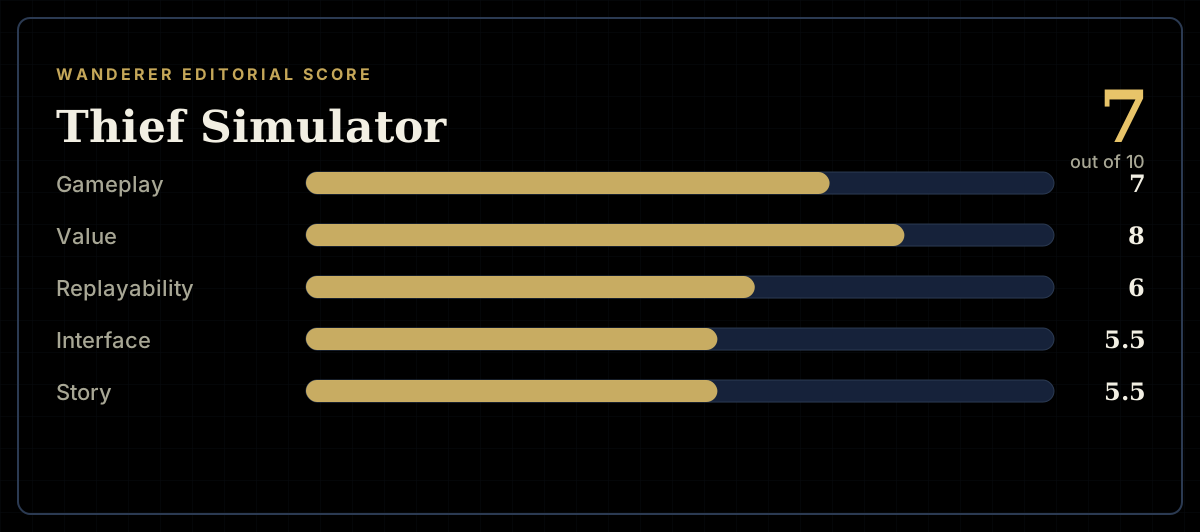
7 / 10
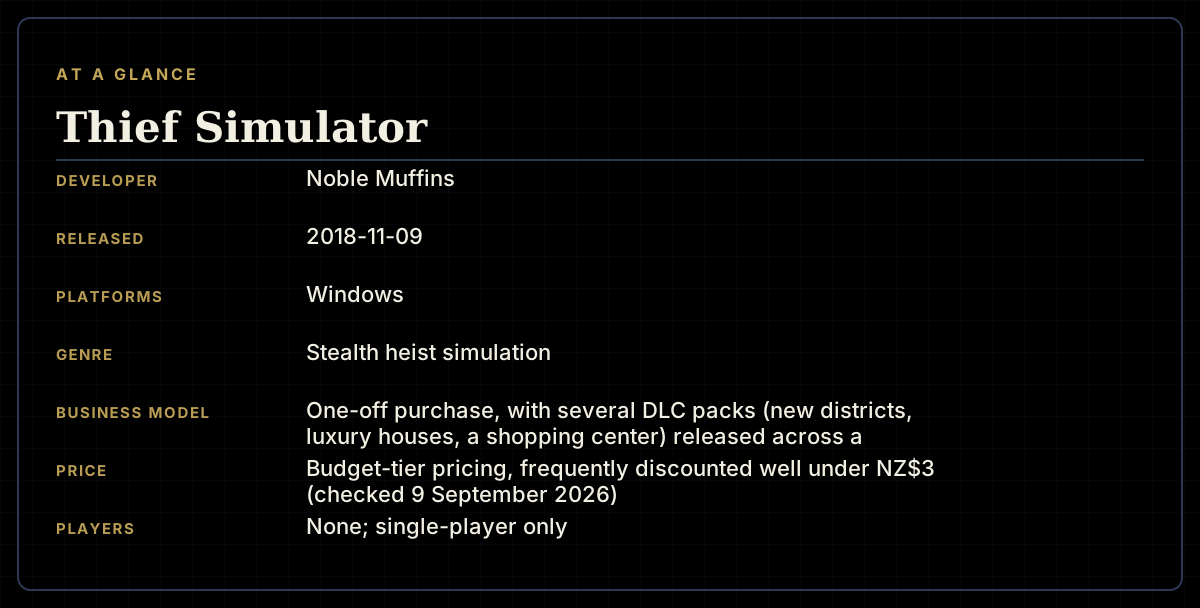
- Developer
- Noble Muffins
- Publisher
- PlayWay S.A.
- Released
- 9 November 2018
- Platforms
- Windows
- Genre
- Stealth heist simulation
- Monetisation
- One-off purchase, with several DLC packs (new districts, luxury houses, a shopping center) released across a multi-year support life; no in-game currency or gameplay-affecting purchases
- Players
- None; single-player only
The short version
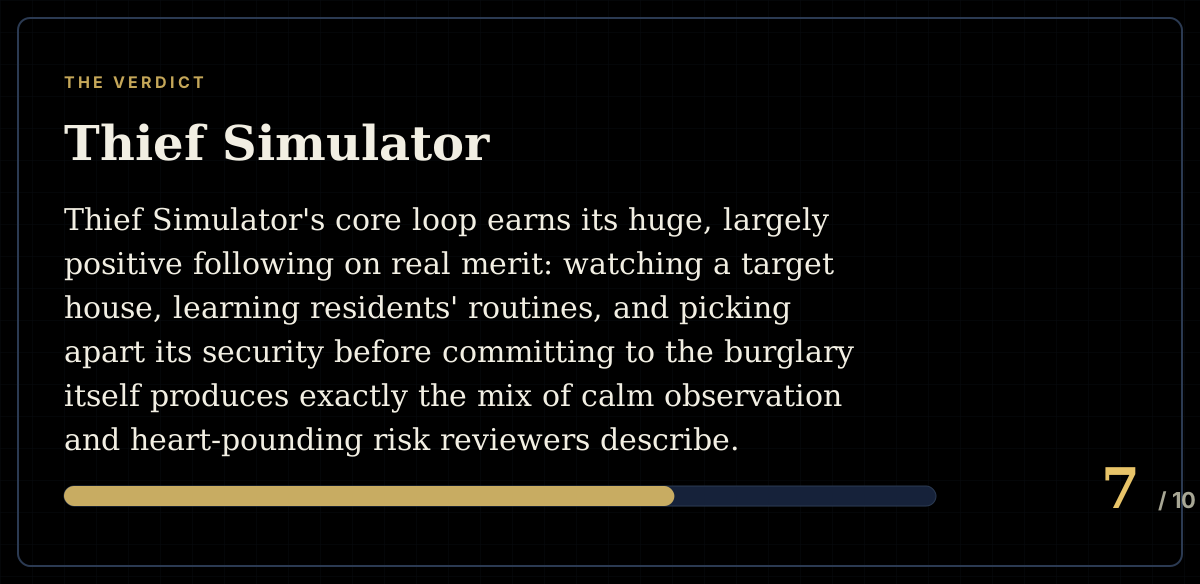
Thief Simulator's core loop earns its huge, largely positive following on real merit: watching a target house, learning residents' routines, and picking apart its security before committing to the burglary itself produces exactly the mix of calm observation and heart-pounding risk reviewers describe. Nearly 11,400 English reviews back that reception up at scale rarely seen in this lane. What's worth addressing directly is a specific, serious, heavily-upvoted claim from one detailed review — that "these creators do not care about any of their games" and that the title suffered "a very quick downfall" after a promising start. Checked directly against the developer's own partner-events history, that claim doesn't hold up: patches and paid DLC continued for years after launch, a sequel followed, and a third entry with co-op support was in public playtesting as of this review. The genre's real, more defensible criticisms — repetitive pacing once the format is learned, occasional NPC detection logic that breaks immersion, and an ending several reviewers call underwhelming — are worth taking seriously on their own, without the abandonment framing that the record itself doesn't support.
Biggest strengths
- A genuinely satisfying tension-and-release loop built around real observation and planning rather than pure action, described by many reviewers as uniquely calming and thrilling by turns
- Extremely strong value reception, with reviewers who paid a dollar or two consistently calling it an easy recommendation at that price
- Distinct districts and house layouts give real variety to the burglary targets rather than repeating the same floorplan with new dressing
Biggest weaknesses
- A serious, heavily-upvoted reviewer allegation that the developers "do not care about any of their games" is directly contradicted by the studio's own multi-year patch, DLC, and sequel history — worth knowing this specific claim doesn't hold up before weighing it in a purchase decision
- Multiple reviewers describe the core loop becoming repetitive once its patterns are fully learned, with one calling the ending specifically underwhelming
- NPC detection logic is reported as inconsistent by at least one reviewer, with residents reportedly noticing the player through walls in some situations
Who it's for: Fans of tension-driven stealth and observation gameplay who want a grounded, real-world-adjacent premise rather than a fantasy heist. Less suited to players who want fast, action-oriented pacing throughout, since a meaningful share of play time is spent patiently watching and waiting.
Our recommendation: An easy, low-risk buy at its typical steep discount — the core loop delivers on its premise for the large majority of players, and even reviewers who found it repetitive generally still call it worth the very low asking price.
7 / 10
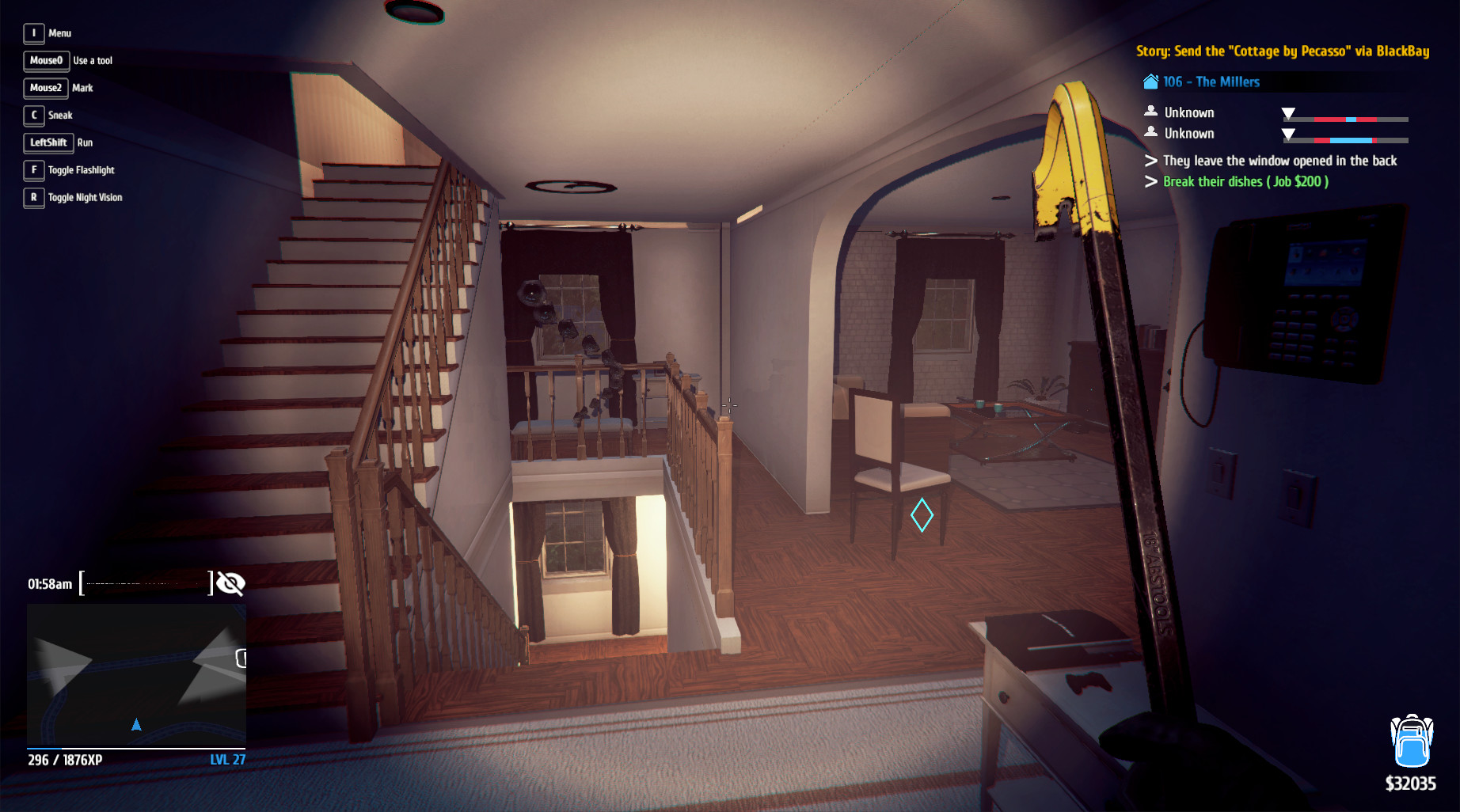
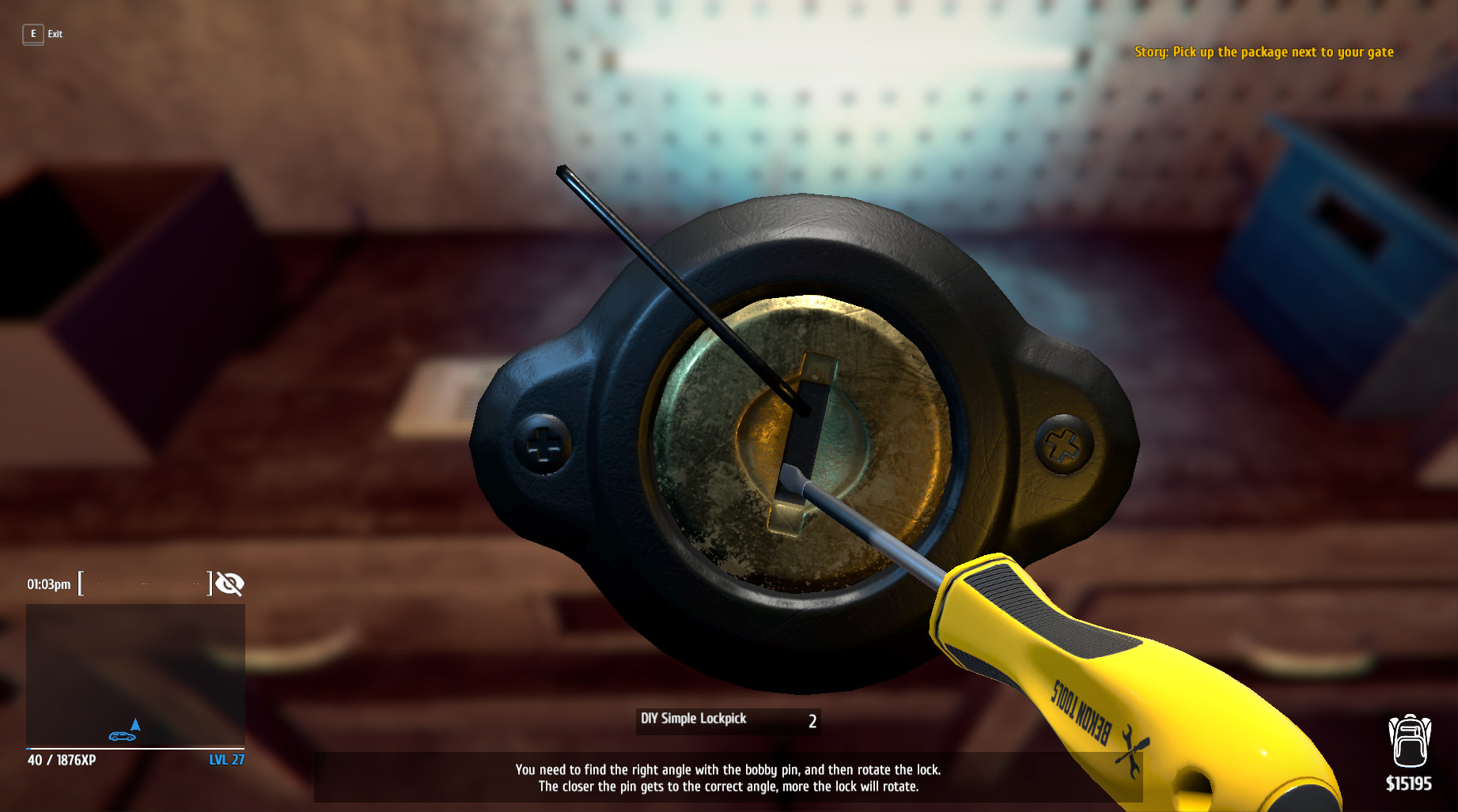
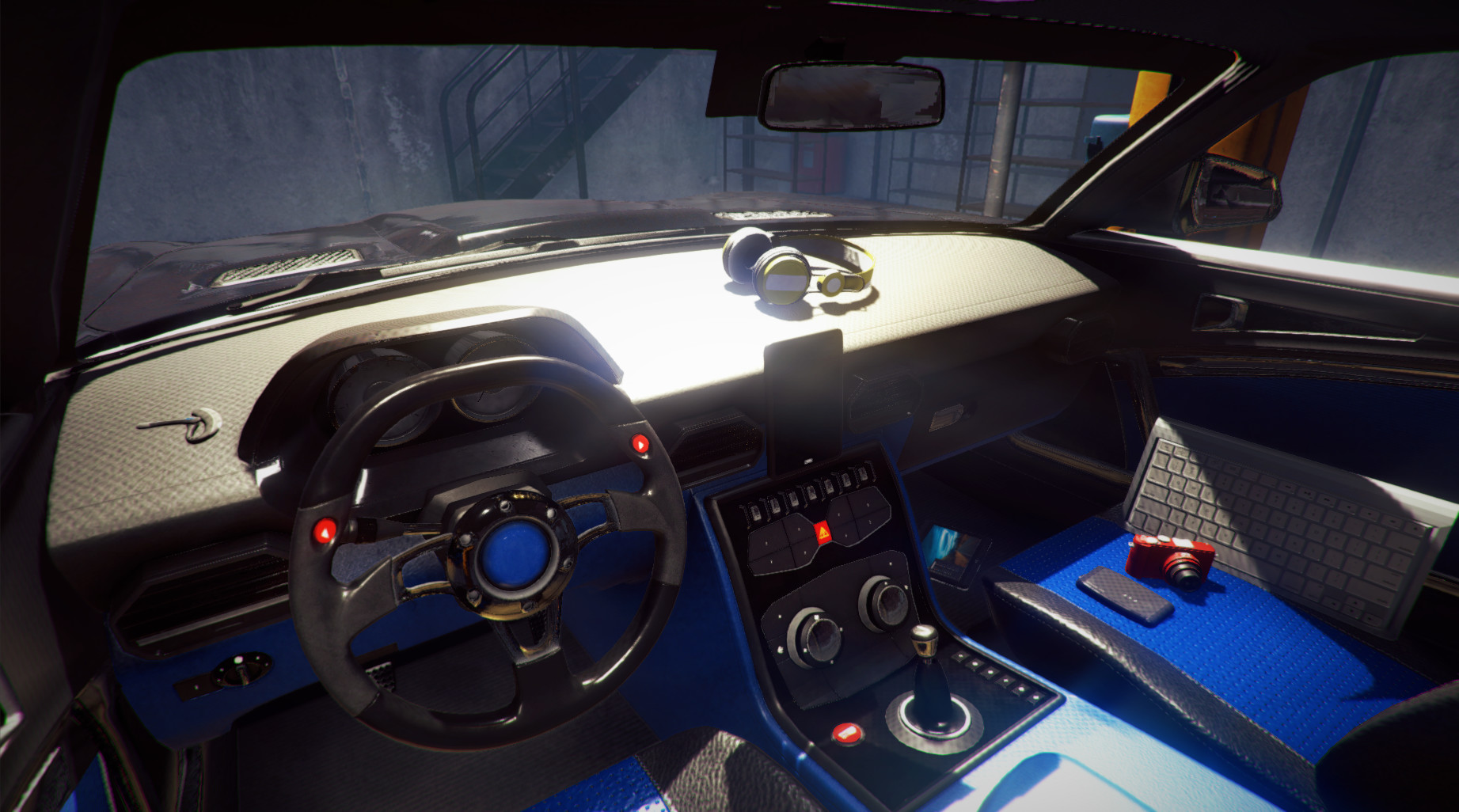
Thief Simulator asks players to become, as its own pitch puts it, "the real thief" — casing houses in a free-roam neighborhood, learning who lives where and when they're away, and planning a burglary with whatever hi-tech equipment the proceeds of the last job can buy. Released in November 2018, it built one of the largest audiences encountered anywhere in this research window: nearly 11,400 English reviews, 88% Very Positive. That scale alone makes its review sample worth reading closely, and doing so surfaces both a genuinely well-earned reputation and one serious claim worth checking directly against the record before repeating it.
A loop built on patience that pays off
The core praise across the sample centers on a specific emotional rhythm reviewers describe consistently. One detailed review captures it precisely: "the perfect mix of calming and relaxing with heart pounding edge of your seat thrills, at your discretion. Calming parts are the stalking and watching, figuring out their routines and schedules, eyeing out the cameras and security. Heart pounding parts are when you actually commit to it, at any moment they could catch you!" Another reviewer credits the game directly with starting "my fandom for simulator games," praising how each district's houses "all felt unique" despite the format repeating district to district. That's a real, specific design achievement — building tension out of patient observation rather than constant action — and it's the throughline connecting most of the positive reviews in the sample, even the ones that raise real complaints elsewhere.
A serious claim worth checking, and refuting
One of the most heavily-upvoted reviews in the entire sample (over 14,000 helpful votes) makes a serious, specific allegation: "these creators do not care about any of their games... Began well as a proof-of-concept, yet had a very quick downfall." That's a strong claim, and this review checked it directly against Noble Muffins and PlayWay's own partner-events history rather than taking either side at face value. The record doesn't support it: patches continued for years after launch, including a 2022 Warehouse expansion, a 2023 Luxury Houses DLC, and a 2024 Shopping Center DLC alongside a free trains update, each accompanied by real, dated patch notes rather than cosmetic-only content. Beyond this specific game, the studio went on to release Thief Simulator 2 and, as of this review, had a public playtest open for Thief Simulator 3 with cooperative multiplayer. A developer that abandoned a title after "a very quick downfall" doesn't typically follow it with two further entries in the same franchise, one of which is actively in playtesting years later. This review states plainly: the specific abandonment claim in that widely-upvoted review does not hold up against the studio's own documented history, and readers encountering that review shouldn't take its central claim at face value.
The real, more defensible complaints
None of that erases genuine, more measured criticism elsewhere in the sample. Multiple reviewers describe the loop growing repetitive once its patterns are internalized — one calls the game "fun" but notes it "gets repetitive" and finds the ending "a little underwhelming." A separate review flags a specific AI inconsistency: "the tenants keep noticing you even through the walls sometimes," a concrete, checkable complaint about detection logic rather than a vague difficulty gripe. A third reviewer frames the pacing demand honestly rather than as a flaw: "very suitable for people with a lot of patience," warning that impatient players "won't find this game interesting" given how much time is spent waiting for residents' schedules to create an opening. These are fair, specific complaints that don't require the abandonment narrative to be taken seriously on their own terms.
What the numbers say about lasting engagement
Global achievement data shows a real, if moderate, engagement curve: early milestones like a first cash haul or spotting a target's TV sit around 29%, dropping through the 10-20% range for mid-tier car-theft and stealth achievements, and falling sharply below 2% for the hardest and most specific challenges (seasonal Halloween and Christmas-themed achievements, stealing every car type available). That's consistent with a game whose core loop holds a real audience through its main content while its most demanding optional challenges reach only the most dedicated completionists — a normal, healthy shape rather than evidence of an unfinished or abandoned game.
A franchise built to keep expanding, for better and worse
The scope of Noble Muffins' continued investment is worth detailing a little further, since it directly bears on value for a buyer today. Beyond the base game's districts, the Warehouse, Luxury Houses, and Shopping Center expansions each added genuinely new burglary environments with their own layouts and challenges rather than reskinning existing content, and a free trains update alongside the most recent DLC shows continued attention to the base experience alongside paid additions. That's a real, multi-year value proposition for anyone buying the base game today at its typical steep discount — a title released in 2018 that, by 2024, had meaningfully more content than it launched with, all confirmed through dated, specific patch announcements rather than vague promises. It also means a buyer weighing whether to pick up the DLC alongside the base game is getting new, distinct environments rather than cosmetic padding, worth factoring into any decision about how much of the extended catalogue to buy at once.
Verdict
Thief Simulator earns its large, positive audience through a genuinely well-executed tension-and-patience loop that turns ordinary house-casing into real, replayable drama. A serious claim that its developers abandoned it doesn't survive a direct check against the studio's own multi-year patch, DLC, and sequel history, and should be treated as unsupported rather than repeated. The fairer criticisms — repetition, some AI inconsistency, an underwhelming ending — are real, but they're the honest cost of a formula that otherwise works exactly as intended for the overwhelming majority of the people who've played it.
Sources: Steam store page and appdetails API (release date, pricing, platform data); Steam's aggregate review data (query_summary totals, English-language sample); individually read user reviews, both positive and negative, sorted by helpfulness and recency; Steam's global achievement statistics API; Noble Muffins/PlayWay S.A.'s own partner-events history, dense and continuous from the November 2018 launch through a Thief Simulator 3 playtest announcement in 2026.
Pros and cons
Pros
- A genuinely satisfying tension-and-release loop built around real observation and planning rather than pure action, described by many reviewers as uniquely calming and thrilling by turns
- Extremely strong value reception, with reviewers who paid a dollar or two consistently calling it an easy recommendation at that price
- Distinct districts and house layouts give real variety to the burglary targets rather than repeating the same floorplan with new dressing
- A long, genuinely sustained support history — patches, expansions, and a growing franchise — directly contradicts any claim that the developer walked away after launch
- Achievement data shows a real, if moderate, base of players engaging with harder late-game challenges rather than the game losing its whole audience early
Cons
- A serious, heavily-upvoted reviewer allegation that the developers "do not care about any of their games" is directly contradicted by the studio's own multi-year patch, DLC, and sequel history — worth knowing this specific claim doesn't hold up before weighing it in a purchase decision
- Multiple reviewers describe the core loop becoming repetitive once its patterns are fully learned, with one calling the ending specifically underwhelming
- NPC detection logic is reported as inconsistent by at least one reviewer, with residents reportedly noticing the player through walls in some situations
- The pacing demands real patience — waiting for residents to leave on schedule is a core mechanic, not a flaw exactly, but one several reviewers say won't suit players wanting constant action
- Achievement completion falls off sharply for seasonal and highly specific challenge achievements, several under 2%, suggesting the game's harder optional content reaches only its most dedicated players
Screenshots
-
Thief SimulatorImage: PlayWay S.A. via Steam -
Thief SimulatorImage: PlayWay S.A. via Steam -
Thief SimulatorImage: PlayWay S.A. via Steam -
How the review scores each part of the gameWanderer Editorial -
The specsWanderer Editorial -
The short versionWanderer Editorial