
Game review
Pure Farming 2018
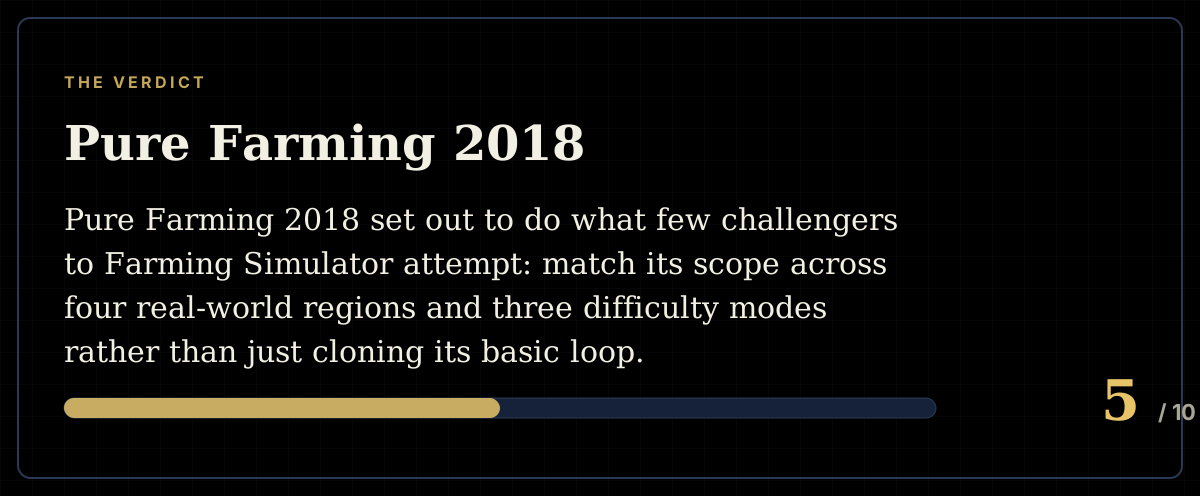
5 / 10
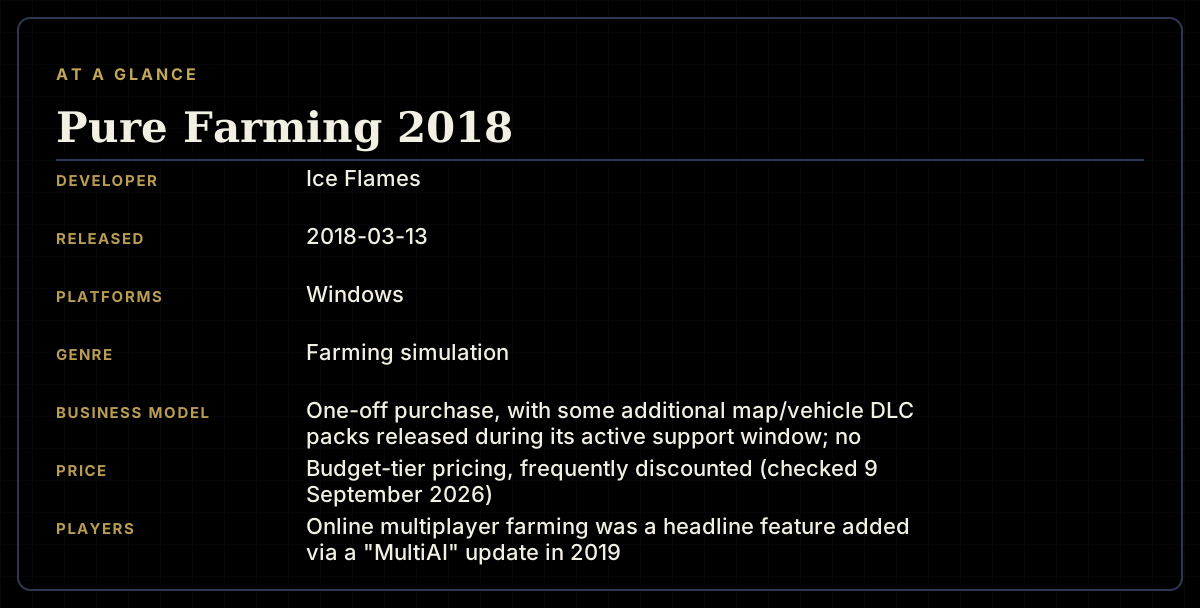
- Developer
- Ice Flames
- Publisher
- Techland Publishing
- Released
- 13 March 2018
- Platforms
- Windows
- Genre
- Farming simulation
- Monetisation
- One-off purchase, with some additional map/vehicle DLC packs released during its active support window; no in-game currency or gameplay-affecting purchases
- Players
- Online multiplayer farming was a headline feature added via a "MultiAI" update in 2019
The short version
Pure Farming 2018 set out to do what few challengers to Farming Simulator attempt: match its scope across four real-world regions and three difficulty modes rather than just cloning its basic loop. Reviewers broadly credit the ambition, several specifically recommending it as a worthwhile budget alternative for players who "can't afford" the market leader. What undercuts that goodwill is a specific, persistent set of technical problems that its roughly thirteen months of active support — including at least two dedicated attempts to fix the worker AI — never fully resolved: helper units get stuck or skip sections of fields, purchased vehicles have been reported disappearing, there is no autosave, and multiple reviewers with capable, modern hardware report struggling to hit 60 frames per second years after launch. One of the most-upvoted reviews in the entire sample goes further, alleging the developers "blatantly rip off" a specific flawed mechanic from the genre's established leader rather than improving on it. Eight years after its last update, none of these specific complaints have anywhere left to be addressed.
Biggest strengths
- A genuinely ambitious scope for a budget farming sim — four real-world regions with region-specific crops (hemp, coffee, olives) and three difficulty tiers aimed at both newcomers and veterans
- Multiple reviewers specifically recommend it as a worthwhile, cheaper alternative for players priced out of the genre's market leader
- Runs comfortably on modest hardware according to several reviewers, despite the separate and real performance complaints from others on more capable systems
Biggest weaknesses
- Persistent, specifically-described worker/helper AI bugs — missing sections of fields, units getting stuck, commands failing to register — are reported as unresolved as recently as reviews written eight years after launch, despite at least two dedicated AI-focused updates during the game's active support window
- No autosave feature exists, a serious and specific complaint given how long individual farming sessions typically run
- Multiple reviewers report struggling to reach 60 frames per second on capable modern hardware, describing the optimization as poor relative to the game's modest visual fidelity
Who it's for: Farming-sim curious players who want a cheaper, four-continent alternative to Farming Simulator and can tolerate real, longstanding bugs in exchange for the lower price. Not recommended for anyone who wants a stable, actively maintained sim or who needs reliable autosave for long farming sessions.
Our recommendation: Only worth it heavily discounted and with realistic expectations — the ambition and scope are real, but so are the specific, unaddressed technical problems its own longtime players have documented for years.
5 / 10
Pure Farming 2018 arrived with real publisher weight behind it — Techland, best known for Dying Light, backing a farming sim aimed directly at unseating or at least sitting alongside Farming Simulator as a genuine alternative. The pitch was genuinely more ambitious than a simple clone: four real-world regions (Europe, Asia, and both Americas), region-specific crops like hemp, coffee, and olives, and three separate game modes tailored to both simulation veterans and complete newcomers. Released in March 2018, it settled at a Mixed 69% positive across 314 English reviews — a score that, read closely, reflects genuine appreciation for the scope and ambition set against a specific, persistent, and ultimately unaddressed list of technical problems.
A budget alternative that earns some real goodwill
Several reviewers frame the game plainly as a value proposition relative to its genre's market leader: "Great farming game to play if you can't afford Farming Simulator 25, its actually pretty good." Another, with thousands of hours logged across the Farming Simulator series specifically, gives a more measured but still positive account: "it's still mostly fun," despite conceding "controls that are a Pure Mess" and "a fair amount of jank." One of the most detailed positive reviews in the sample calls it "Jack of all trades and master of none" — a backhanded compliment that nonetheless credits the game with "more features and more things to do" than its direct inspiration, even while noting it "still lacks in many areas." That's a coherent, consistent picture across the positive side of the sample: real appreciation for scope and ambition, tempered by an equally consistent acknowledgment that execution never quite caught up to the pitch.
Bugs that outlived the support window meant to fix them
The most serious, specific complaints concern worker AI — the hired helpers meant to automate repetitive farm tasks — and they recur with striking consistency across reviews written years apart. One detailed, recent review lists exactly what's still broken: helpers "miss chunks of fields," get found "stuck going back and forth at the edge of a field," "stop working once the harvester is full," and sometimes simply won't accept a new command without a full game restart to reset them. That reviewer adds pointedly: "the game is 8 years old now, so it's clear the devs aren't interested in fixing anything." The partner-events history confirms the developer genuinely tried during the game's active life — a dedicated "Brand New Worker AI" update and a subsequent "MultiAI" open beta both shipped in 2018 and early 2019 specifically targeting this exact system — which makes the persistence of the same category of complaint years later more notable, not less: real, repeated effort was spent on this specific problem, and reviewers describe it as still unresolved regardless.
A specific, credible performance complaint
Beyond the AI issues, multiple reviewers raise a concrete, checkable performance concern rather than a vague "it runs badly" impression. One reviewer names specific, genuinely capable hardware — an Intel i7-7700K, 16GB of RAM, and a GTX 1070 — and reports being unable to reach 60 frames per second at 1080p, adding pointed criticism of visible aliasing and shimmering textures despite the modest graphical fidelity on display. A second, more colorfully phrased review calls the stuttering severe enough that "you won't get any closer to 60FPS even with a NASA Super Computer." Specific named hardware paired with a specific, reproducible performance shortfall is a stronger and more useful data point than general dissatisfaction, and it's corroborated independently by more than one reviewer.
A specific plagiarism allegation worth reporting plainly
The single most serious claim in the sample comes from one of its most heavily-upvoted reviews (207 votes at time of research): a detailed account arguing the developers, rather than improving on established genre conventions, "blatantly rip off an already flawed concept" — specifically citing a "collect 100 sapphires to net $200k"-style progression mechanic the reviewer says closely mirrors a similarly criticized system from Farming Simulator. This review has no independent way to verify the specific mechanical comparison, and reports it as exactly what it is: one detailed, widely-endorsed reviewer's specific allegation about the game's originality, not an established fact.
What the numbers say about how far players actually got
Global achievement data paints a notably steeper picture than the achievement curves seen elsewhere in this lane. Even the single most commonly earned achievement sits at just 55.8% of the playerbase, and completion falls off sharply from there — the majority of the roster sits in single digits, with several milestones under 2%. That's a meaningfully harder drop-off than a typical farming or management sim's mid-game achievements, and it's consistent with the review sample's account of a game whose persistent bugs and rough edges cause a real share of buyers to drift away well before reaching its deeper content, rather than a difficulty curve that's simply demanding by design.
A late-added multiplayer mode with little lasting visibility
One of the game's more ambitious late additions was online multiplayer farming, added via the "MultiAI" update in early 2019 as what the developer's own announcements framed as a major addition. Notably, it doesn't come up as a talking point anywhere in the review sample gathered for this piece, positive or negative — no reviewer mentions using it, recommending it, or being disappointed by it. That silence itself is informative: a headline feature added roughly a year after launch, on a title whose active playerbase and support window were both already narrowing, doesn't appear to have found the audience it needed to become a meaningful part of how the game is remembered by the people who played it.
Verdict
Pure Farming 2018 aimed higher than most farming-sim challengers and, by its own players' fairly consistent account, delivered real scope without matching execution — persistent, specifically documented worker AI bugs that outlived a genuine dedicated fix attempt, no autosave for long sessions, and performance complaints backed by named, capable hardware. A big publisher's backing bought it real ambition and roughly a year of real support; it didn't buy the follow-through needed to fix the problems that support was aimed at. Worth a look only heavily discounted, and only with the expectation that the bugs documented here in year one are the same ones still present in year eight.
Sources: Steam store page and appdetails API (release date, pricing, platform data); Steam's aggregate review data (query_summary totals, English-language sample); individually read user reviews, both positive and negative, sorted by helpfulness and recency; Steam's global achievement statistics API; Ice Flames/Techland's own partner-events patch notes from launch in March 2018 through the final recorded update in April 2019.
Pros and cons
Pros
- A genuinely ambitious scope for a budget farming sim — four real-world regions with region-specific crops (hemp, coffee, olives) and three difficulty tiers aimed at both newcomers and veterans
- Multiple reviewers specifically recommend it as a worthwhile, cheaper alternative for players priced out of the genre's market leader
- Runs comfortably on modest hardware according to several reviewers, despite the separate and real performance complaints from others on more capable systems
- A real, if time-limited, post-launch support cycle added online multiplayer, wheel-peripheral support, and new vehicles and content across roughly its first year
- Achievement data confirms a real base of engaged players working through its content, even if completion rates fall off steeply toward the harder milestones
Cons
- Persistent, specifically-described worker/helper AI bugs — missing sections of fields, units getting stuck, commands failing to register — are reported as unresolved as recently as reviews written eight years after launch, despite at least two dedicated AI-focused updates during the game's active support window
- No autosave feature exists, a serious and specific complaint given how long individual farming sessions typically run
- Multiple reviewers report struggling to reach 60 frames per second on capable modern hardware, describing the optimization as poor relative to the game's modest visual fidelity
- One of the most heavily-upvoted reviews in the sample alleges the developers directly copied a specific, already-criticized progression mechanic from the genre's market leader rather than improving on it
- Development support ended with a final update roughly thirteen months after launch, meaning none of the persistent bugs documented since have any realistic prospect of a fix
Screenshots
-
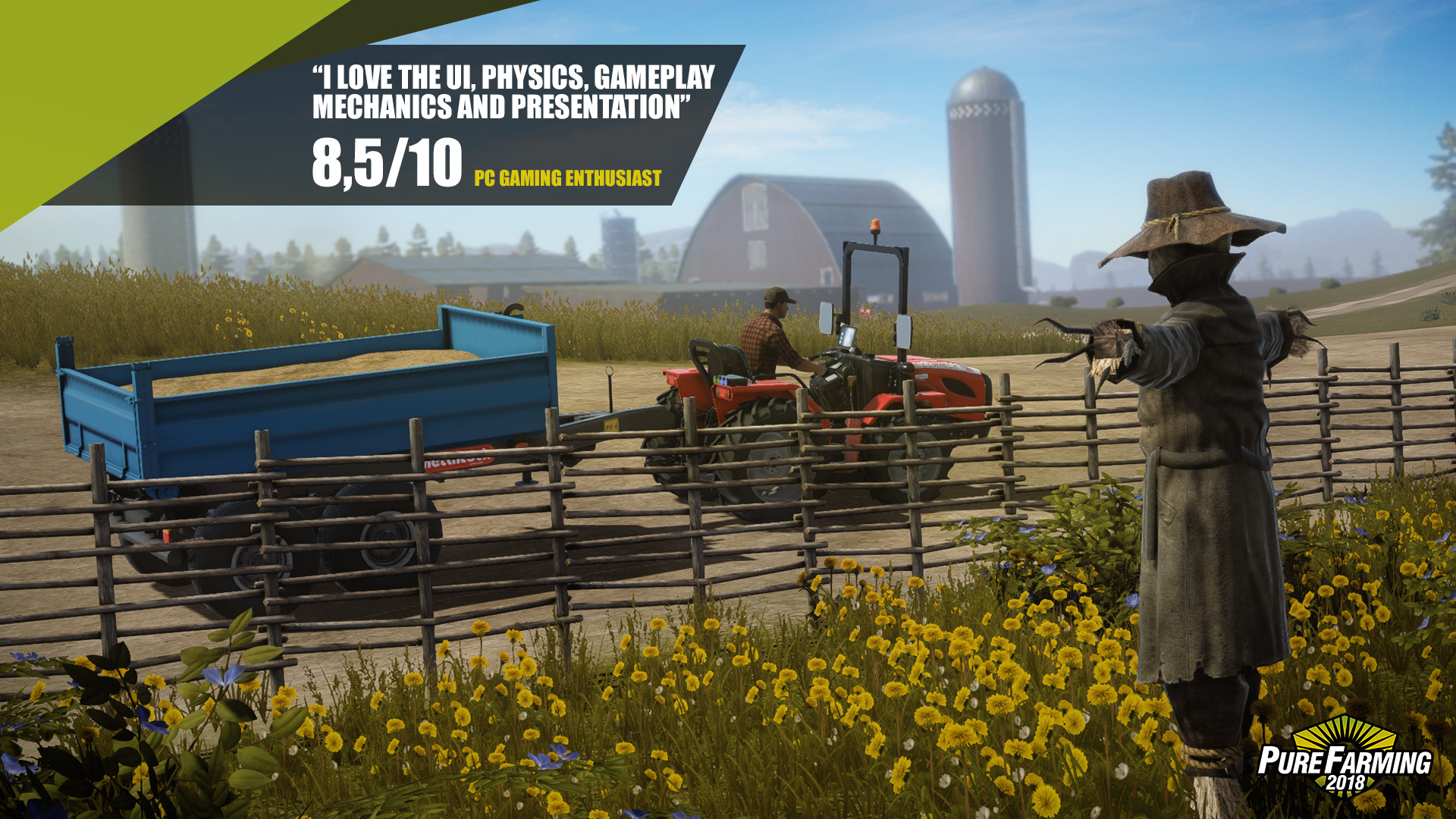
Pure Farming 2018Image: Techland Publishing via Steam -
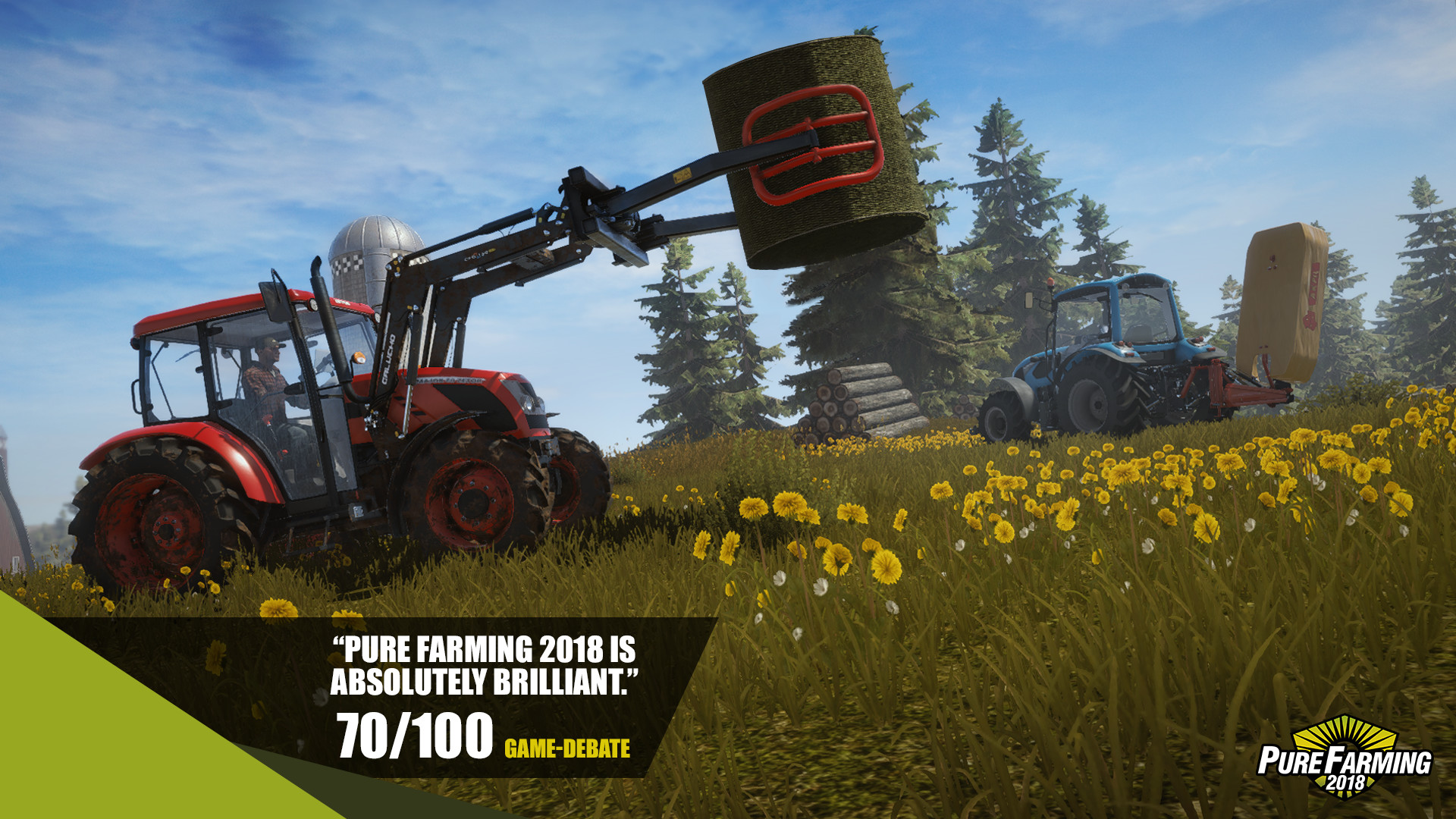
Pure Farming 2018Image: Techland Publishing via Steam -
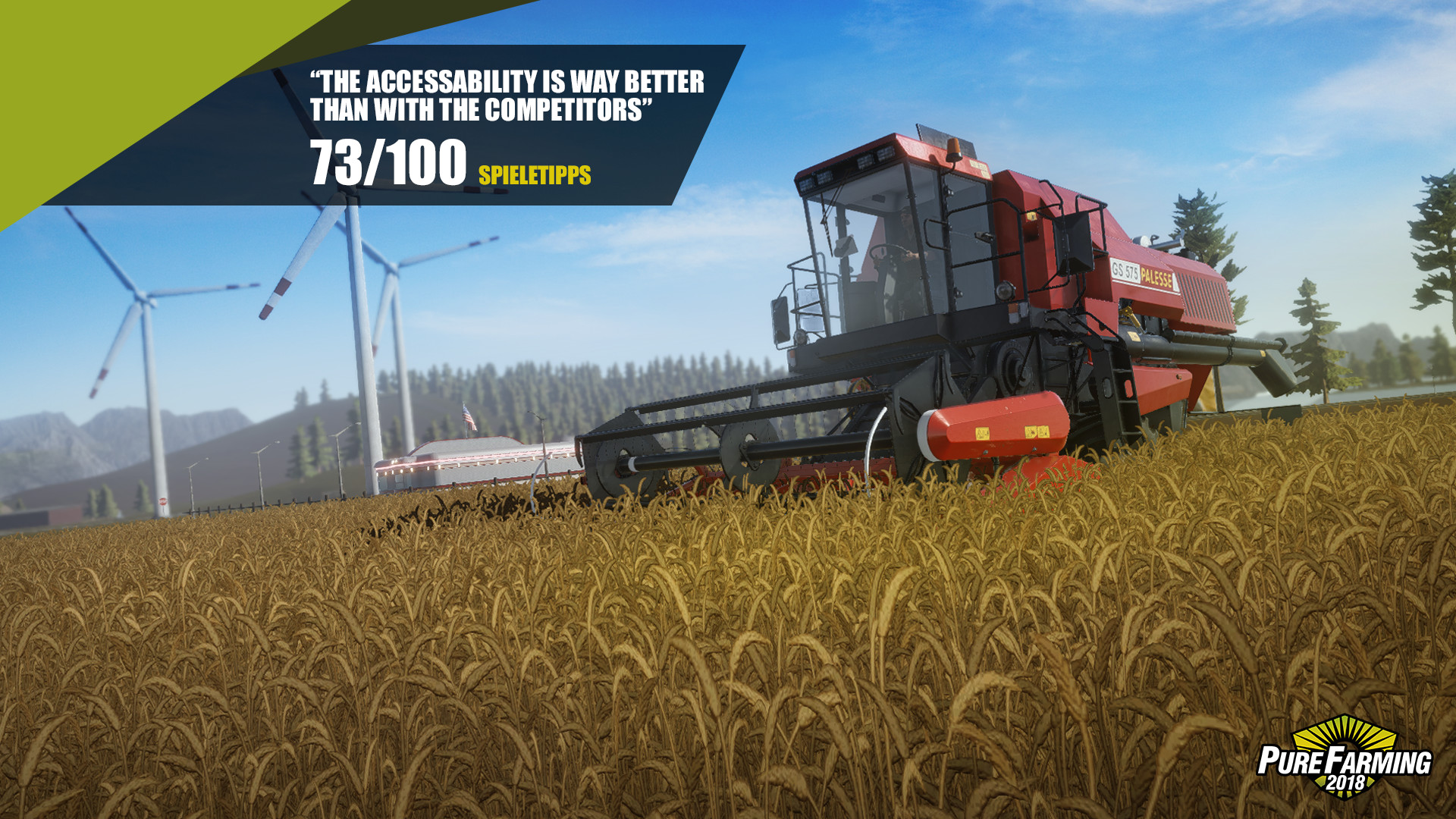
Pure Farming 2018Image: Techland Publishing via Steam -
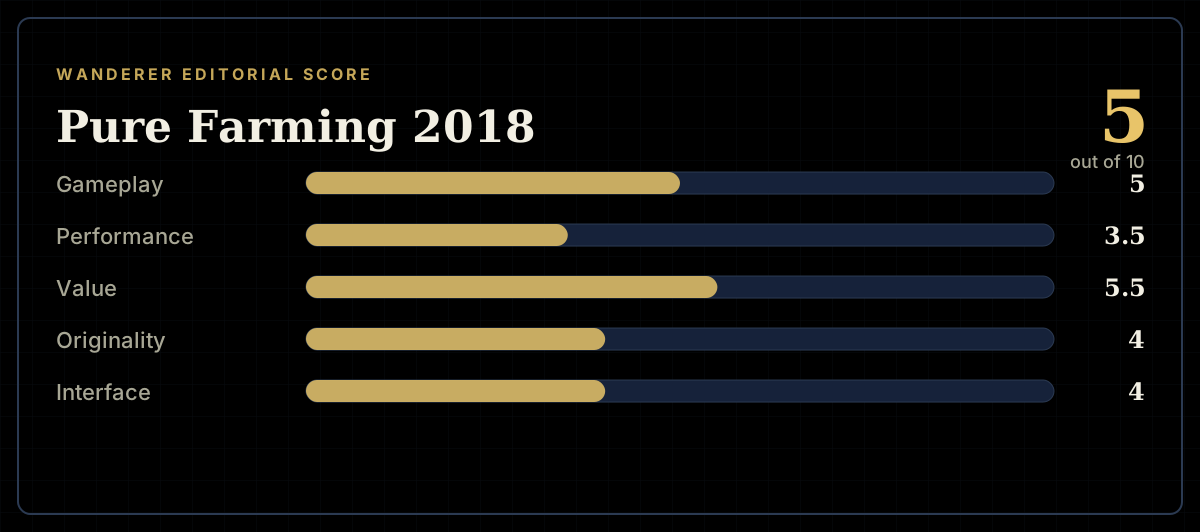
How the review scores each part of the gameWanderer Editorial -
The specsWanderer Editorial -
The short versionWanderer Editorial