Game review
The Syndicate: Classified Operations
7 / 10
- Developer
- A and I Software
- Publisher
- A and I Software
- Released
- 5 August 2026
- Platforms
- Windows
- Genre
- Cold War Incremental Strategy
- Monetisation
- One-time purchase, NZ$7.89 at launch with a 15% launch discount to NZ$6.70. No DLC, battle pass, subscription or in-app purchases are listed on the store page.
- Players
- Single-player only. No co-op, PvP or online mode is listed on the store page.
The short version
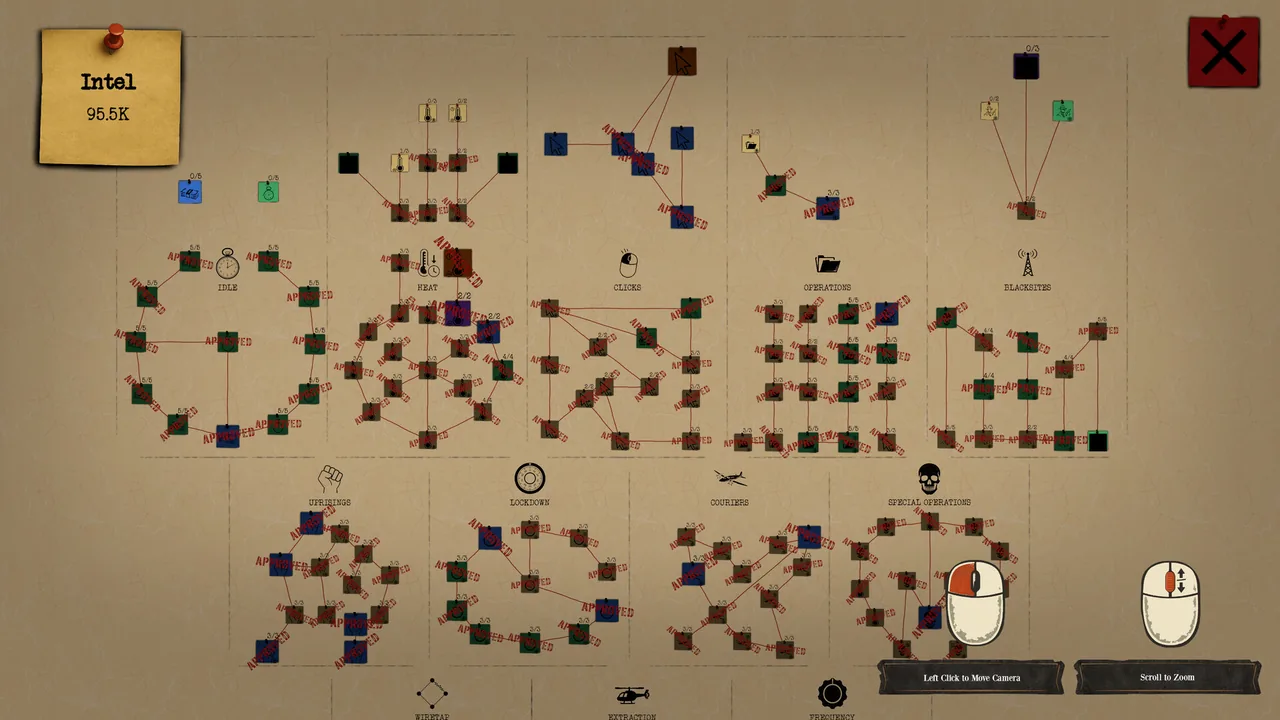
The Syndicate: Classified Operations is an incremental game dressed as a Cold War intelligence board: a single city grows into a global spy network through operations, automated agents and 465 upgrades, while a Heat mechanic forces you to keep pulling back from the edge instead of just watching numbers climb in one direction. It backs that design with a fully voiced campaign and an original score from composer Paul Michael Harrison, unusual investment for a solo-developed idle game. Steam lists it under Simulation and Strategy, but its own popular tags — Incremental and Idler — describe what it actually is more honestly.
Biggest strengths
- Heat generates naturally as cities operate and has to be actively managed against growth and automation, giving the escalating-numbers loop a real risk layer instead of one-directional progress
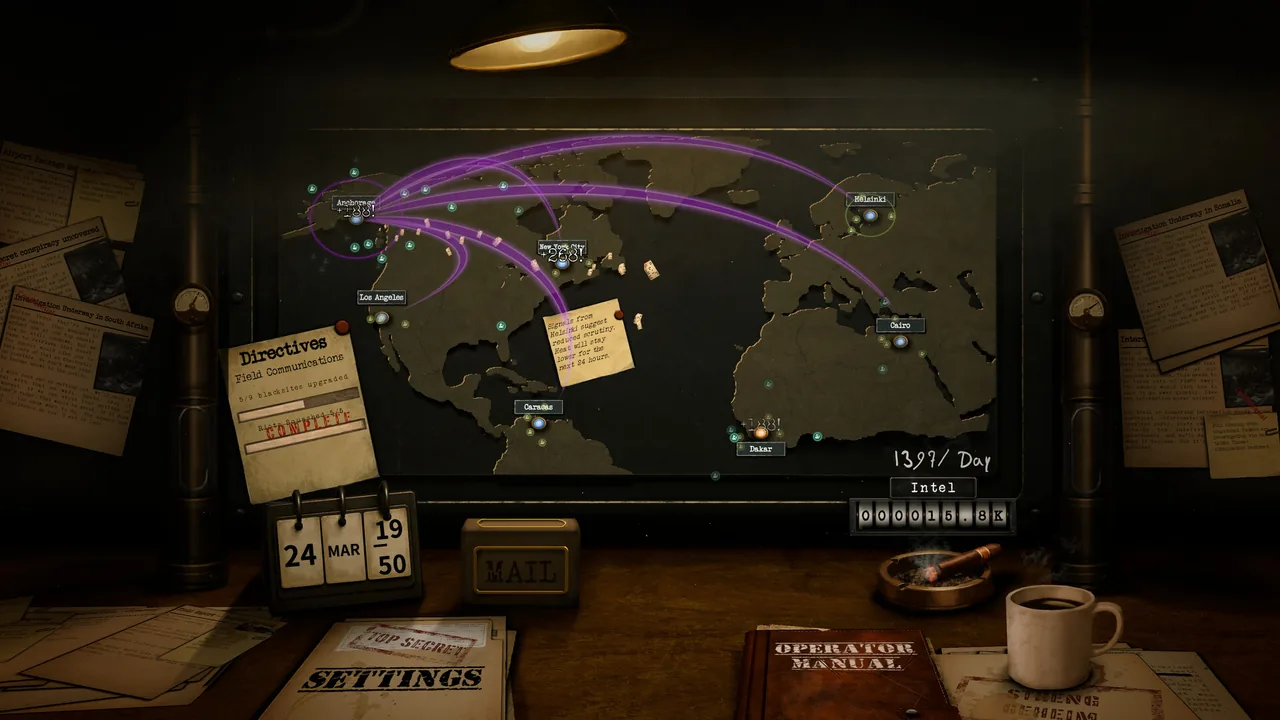
- Assets and agents move visibly between cities on the game's command board rather than existing as pure stat lines, a tactile presentation choice most incremental games skip
- A fully voiced campaign and an original soundtrack, credited by name to actor Brady Flanagan and composer Paul Michael Harrison, are unusual production investment for a solo developer's first release
Biggest weaknesses
- No controller support of any kind is listed despite a "Mouse Only Option" accessibility flag, and Windows is the only supported platform — no macOS, Linux or Steam Deck verification mentioned
- The most detailed English player account on record, from just over eight hours played, flags that Heat-cap upgrades reduce the number of escalation minigames available, which it says can "greatly extend" the time needed to clear later progression missions
- Exactly three user reviews exist at time of writing, all positive but far too few for Steam to display a review percentage, so there is no independent signal yet on whether 465 upgrades and three stages hold up across the dozens of hours a completionist run would take
Who it's for: Idle and incremental fans who want a themed, structured campaign rather than an open-ended number-go-up sandbox, and who don't mind being among the first hundred or so players through it.
Our recommendation: A safe, cheap purchase for anyone who reads "Cold War incremental with a physical command board" and wants exactly that. The clean one-time price and total absence of monetisation tricks remove most of the usual risk; the small remaining risk is buying two days after launch, when the only independent account of the late game is a single detailed player review.
7 / 10
Steam sorts The Syndicate: Classified Operations under Simulation and Strategy, two genres broad enough to mean almost anything. Its own most-applied user tags tell the more honest story: Incremental, sitting right behind Cold War and Espionage, with Idler a few places further down. Strip away the spy-thriller dressing and this is a number-go-up game — cities, resources, automated agents, an ever-expanding upgrade tree — built by a solo developer who spent four months of public demo builds figuring out how to make that loop feel like running an intelligence network instead of clicking a jar of gold.
A command board, not a dashboard
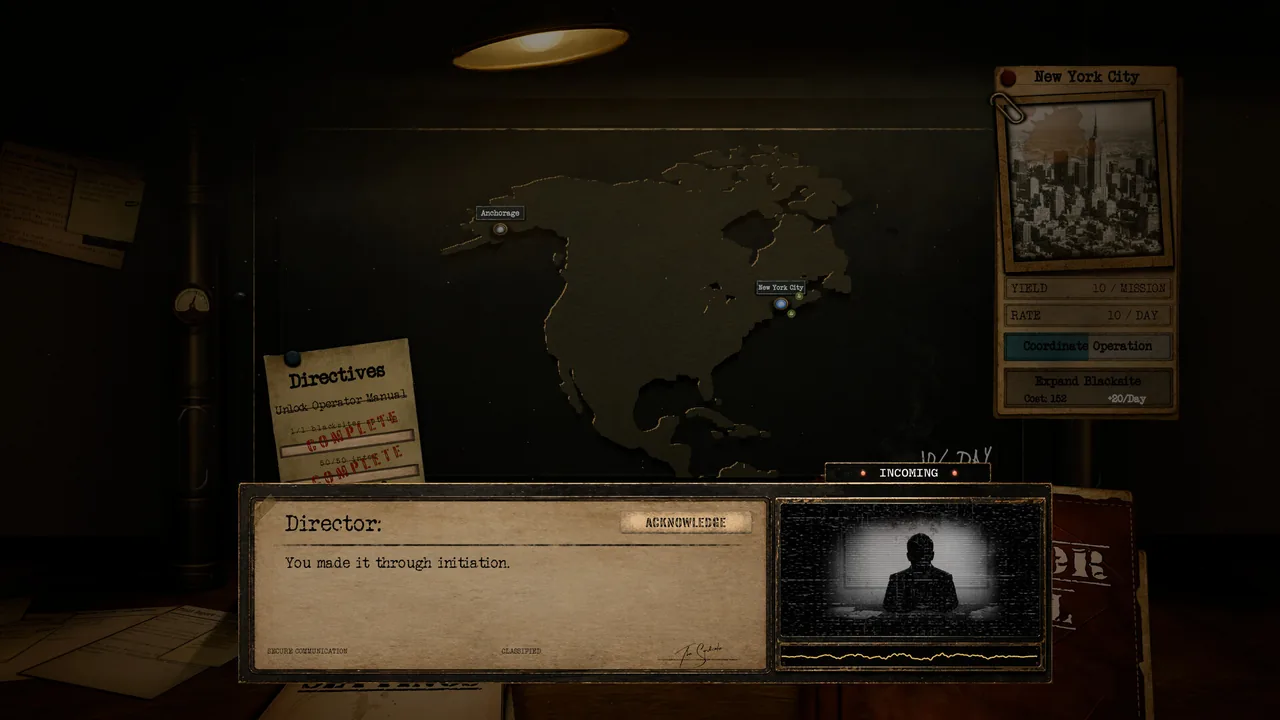
The pitch starts with a single city and a simple aim: complete operations, earn resources, unlock new territory, repeat. What separates it from the flood of clicker games chasing the same structure is Heat. Every operation a city runs generates Heat, and Heat is not just a number that goes up alongside everything else — it actively works against the player, forcing a choice between pushing growth further, investing in automation, or spending resources to pull a city back from the edge before a crisis event (the store page lists blackouts, lockdowns, riots and covert operations) interrupts momentum entirely. That is a meaningfully different shape from the genre's usual one-way climb: it gives every session a live tension between "grow faster" and "stay in control," which is the kind of design decision that separates an incremental game worth remembering from one that's forgotten after the first prestige reset.
The developer also chose to make the automation physical. A news post from the demo period, titled plainly "Physical Assets Are On The Board," describes agents and support units moving visibly between cities on the game's board rather than existing purely as line items in a menu — cities under active upgrade visibly gain more assets working on them. Judged by the store page's own screenshots, that's a small choice with an outsized effect on how the numbers read: watching a network expand across a map is a different experience from watching a counter tick, even when the underlying math is identical.
Voice, score, and an unusually loud production for a solo release
Two features stand out as investment well beyond what a single-developer incremental game typically ships with. The campaign is fully voiced, with actor Brady Flanagan credited by name on the store page, and the soundtrack is original and specifically composed rather than licensed stock music — composer Paul Michael Harrison gets his own credit line too, and an entire news post from mid-2026 was dedicated to unveiling a new trailer built around his finished tracks. For a game whose actual mechanical skeleton is spreadsheet-adjacent, spending that kind of production budget on atmosphere is a deliberate bet that the Cold War framing is the product, not decoration around it — and the three-review sample currently available backs that bet up, with one player specifically singling out "voice acting" and "art style" as reasons the pacing kept them hooked.
A long runway before day one
Judging a two-day-old release usually means judging blind, but this one has an unusually well-documented paper trail. A public demo (a separate Steam listing, appid 4598720) went live on 18 April 2026, and the developer's news feed shows seventeen posts running from that date through to launch — a steady cadence of directive-system rewrites, escalation-flow updates, a rebalanced economy, and a Steam Next Fest appearance in June that the developer describes as performing well for wishlists. The final demo update landed 4 August, one day before release, adding the complete soundtrack and final balance adjustments. That's close to four months of visible iteration against real player feedback before the game ever went on sale, which is a meaningfully longer and more public runway than most solo-developed incremental games get.
The launch itself wasn't flawless, but the response to it reinforces the same pattern. Two patches went out within a day of release: one specifically retuning Heat-scaling values because, in the developer's own words, players were able to "outpace your earnings," and a follow-up fixing a font-rendering bug that broke Japanese, Korean and Chinese text into placeholder boxes. Both are exactly the kind of problems that surface only once a real, mixed-language audience starts playing, and both were addressed within hours rather than left to accumulate.
What the early evidence actually says
Two days after release, a check of Steam's public player-count API returned nine concurrent players — a single dated snapshot, not a trend, but a real number rather than a guess. The review corpus is smaller still: three total reviews, all positive, comfortably below the ten needed for Steam to display a percentage score at all. The two English-language reviews both explicitly describe the game as a strong incremental — one calls the pacing and art style "really nice" and praises the developer's responsiveness to a bug report; the other calls it "fun minigames built into a generally entertaining incremental game," while flagging a specific, credible complaint worth watching: that Heat-cap upgrades reduce how many escalation minigames become available, which the reviewer says can "GREATLY extend" the time needed to clear a progression mission once DEFCON-tier content is in play. That's the kind of pacing friction that tends to compound the further a player gets, and with only one detailed account of the late game currently public, it isn't yet possible to say how serious it becomes.
The achievement curve adds a little more shape without proving much on its own. Of 30 achievements, the earliest steps sit above 85% (first click, first mission, first operational order), the midgame — unlocking Europe, clearing the first regional order — sits in the 55-75% band, and the two hardest, large-scale escalation achievements fall to 9.3% and 1.5%. That looks like a well-paced difficulty curve rather than a cliff, which is a good sign, but the population behind it is only two days old and presumably still small, so it measures early adopters' progress more than it measures where a broad audience eventually stalls out.
Accessibility and monetisation
There's little to criticise on either front. The store page lists Camera Comfort, Custom Volume Controls, Contrast Controls, a Mouse Only Option, full playability without timed input, Save Anytime and Subtitle Options — a genuinely thorough accessibility set for a solo release, and one well-suited to a genre that's often played passively in the background. Monetisation is equally clean: a single one-time purchase at NZ$7.89, discounted 15% to NZ$6.70 at launch, with no DLC, battle pass, subscription, premium currency or in-app purchase anywhere on the listing. The one disclosed use of AI in development is narrowly scoped and stated directly by the developer: text localisation into the game's other sixteen supported languages, explained as a solo developer's way of reaching a largely non-English wishlist without an outside localisation budget. English is the only language with full voice audio.
The gaps that remain are practical rather than design failures. Windows is the only platform, no controller support is listed in any form, and there's no mention of Steam Deck compatibility — an odd omission for a game whose interface, judging by the "Mouse Only Option" flag and its point-and-click board-driven presentation, sounds like it would translate reasonably well to a handheld.
Final verdict
The Syndicate: Classified Operations earns a 7.0 for building a genuinely well-considered incremental game around a Heat-management risk layer and a physical command board, and for backing that design with production values — full voice acting, an original score, four months of public iteration — that solo-developed idle games rarely bother with. It doesn't score higher because the evidence available two days after launch is necessarily thin: three reviews, a still-small player base, and exactly one detailed account of what the game's later stages feel like, which raises a specific and plausible concern about escalation-minigame pacing that nobody has yet confirmed or ruled out at scale. What's already clear is that this isn't a cynical clicker chasing the incremental market with a reskin — it's a considered, actively supported release from a developer who patched a balance complaint and a language-rendering bug within a day of shipping. Buy it for the theme and the design idea now; buyers who want to know whether the late game holds up should give the review sample a little more time to grow.
Pros and cons
Pros
- Heat generates naturally as cities operate and has to be actively managed against growth and automation, giving the escalating-numbers loop a real risk layer instead of one-directional progress
- Assets and agents move visibly between cities on the game's command board rather than existing as pure stat lines, a tactile presentation choice most incremental games skip
- A fully voiced campaign and an original soundtrack, credited by name to actor Brady Flanagan and composer Paul Michael Harrison, are unusual production investment for a solo developer's first release
- The developer shipped two patches within a day of launch, one specifically re-tuning Heat-scaling values "so you don't outpace your earnings," showing active post-launch balancing rather than a launch-and-abandon release
- A clean one-time purchase with no DLC, battle pass, subscription or in-app purchases anywhere on the store listing, discounted at launch
Cons
- No controller support of any kind is listed despite a "Mouse Only Option" accessibility flag, and Windows is the only supported platform — no macOS, Linux or Steam Deck verification mentioned
- The most detailed English player account on record, from just over eight hours played, flags that Heat-cap upgrades reduce the number of escalation minigames available, which it says can "greatly extend" the time needed to clear later progression missions
- Exactly three user reviews exist at time of writing, all positive but far too few for Steam to display a review percentage, so there is no independent signal yet on whether 465 upgrades and three stages hold up across the dozens of hours a completionist run would take
- A day-one patch was needed to fix a font-rendering bug that broke Japanese, Korean and Chinese text into placeholder boxes, an awkward first impression for the very non-English-speaking audience the developer built AI-assisted localisation to reach
- Filed on Steam under Simulation and Strategy rather than its own top user tags of Incremental and Idler, which undersells the game to shoppers browsing by genre
Screenshots
-
The Syndicate: Classified OperationsImage: A and I Software via Steam -
The Syndicate: Classified OperationsImage: A and I Software via Steam -
The Syndicate: Classified OperationsImage: A and I Software via Steam -
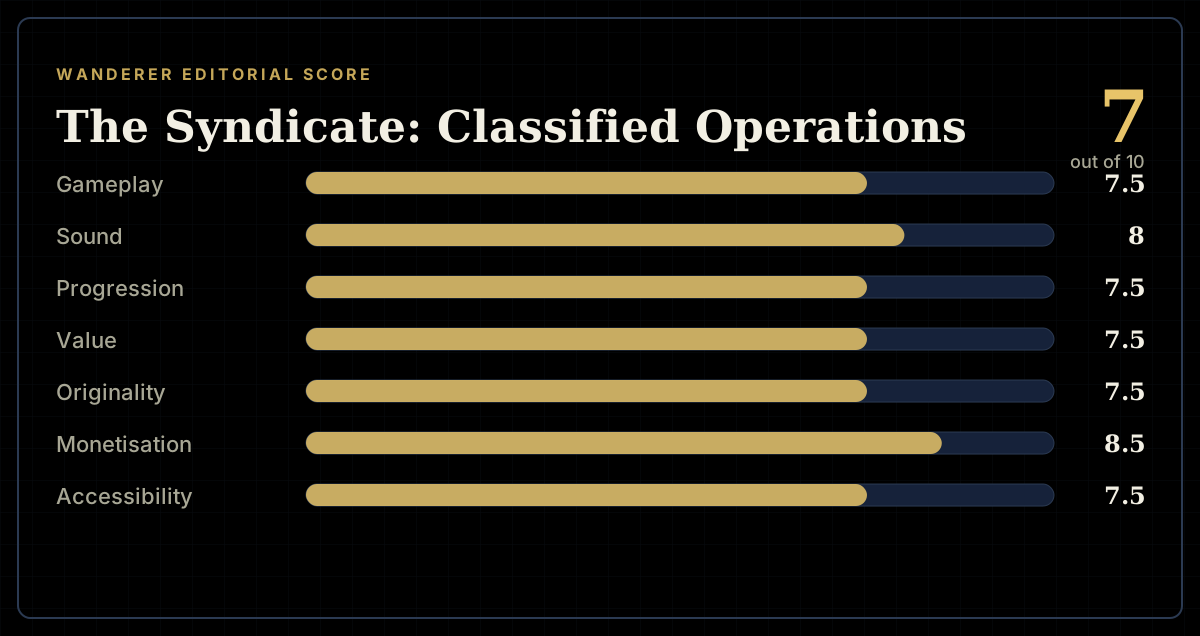
How the review scores each part of the gameWanderer Editorial -
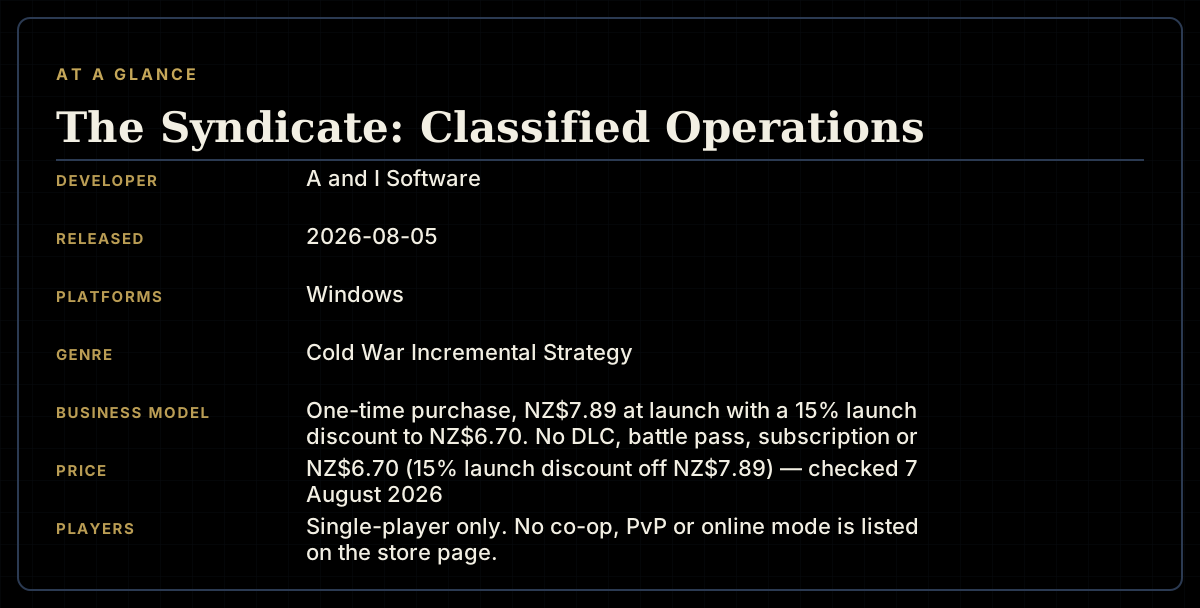
The game at a glanceWanderer Editorial -
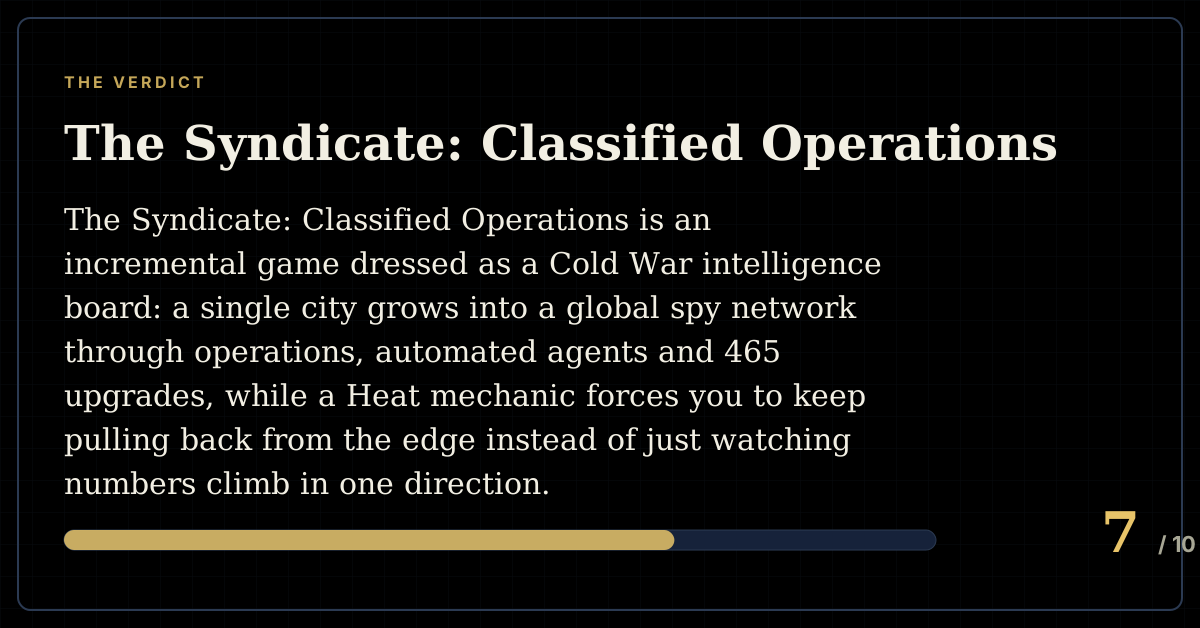
The short versionWanderer Editorial