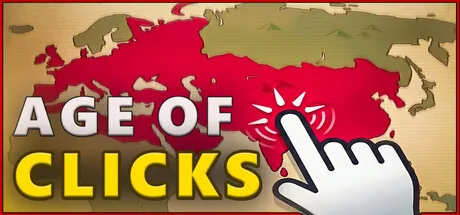
Game review
Age of Clicks
6 / 10
- Developer
- David Ius
- Publisher
- Red Border Studio
- Released
- 21 July 2026
- Platforms
- Windows
- Genre
- Grand strategy clicker / incremental strategy
- Monetisation
- One-time Early Access purchase; no in-app purchases, loot boxes or subscription listed on the store page
- Players
- Single-player only — Steam lists no multiplayer, co-op or PvP mode, despite a community-added "PvP" tag that appears to describe out-clicking AI nations rather than facing other players
The short version
Age of Clicks asks a genuinely interesting question — what does grand strategy look like if the core interaction is a mouse click instead of a treaty menu — and the opening hours answer it well enough that players describe losing an afternoon without noticing. What keeps it from landing is everything around that hook: a tutorial that doesn't explain its own economy, a combat rework that stripped out the tactical control players had grown attached to, and pathfinding bugs that can strand an army on a border or refuse to send it across water at all.
Biggest strengths
- The core loop genuinely fuses clicking with grand-strategy systems rather than reskinning a generic idle game with a world map — economy, diplomacy and territorial conquest all sit on top of the same click-driven interaction
- Lower barrier to entry than Paradox-style grand strategy, letting players engage with resource management, alliances and map painting without a Europa Universalis-length learning curve
- The peaceful-conquest path, where ultimatums can force a rival's surrender without a shot fired, gives players who dislike war-focused play a real alternative route to expansion
Biggest weaknesses
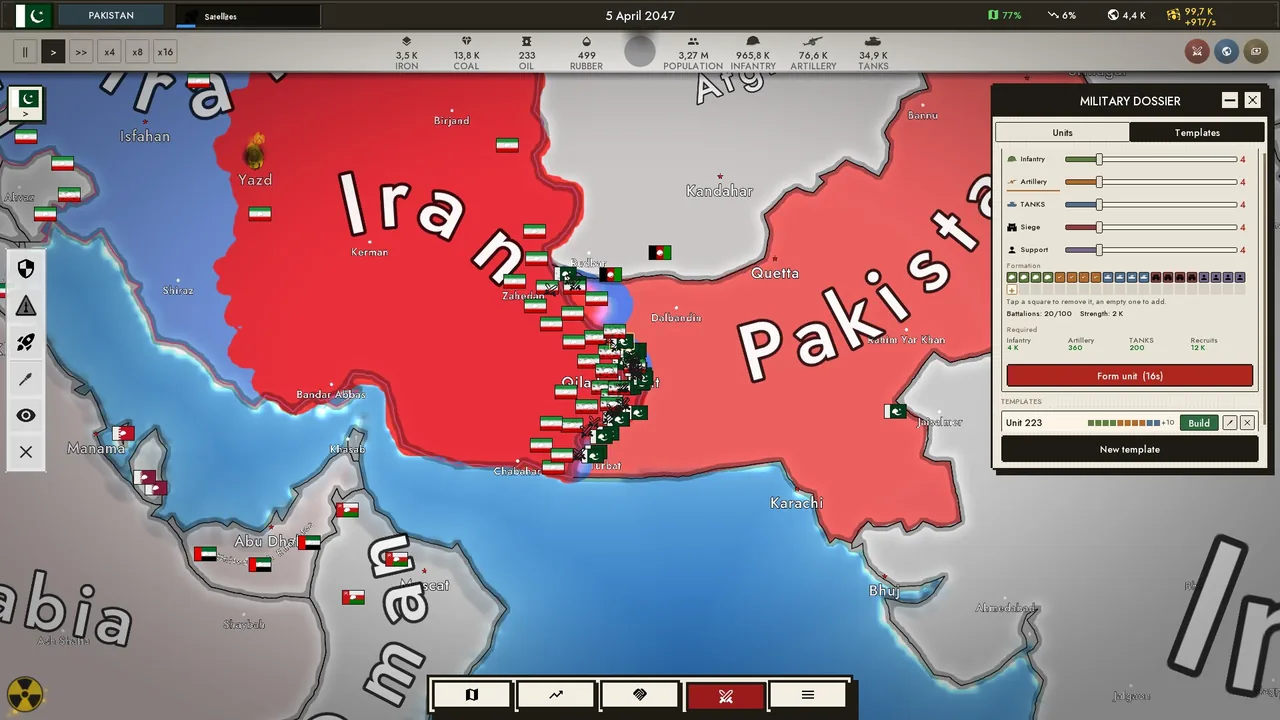
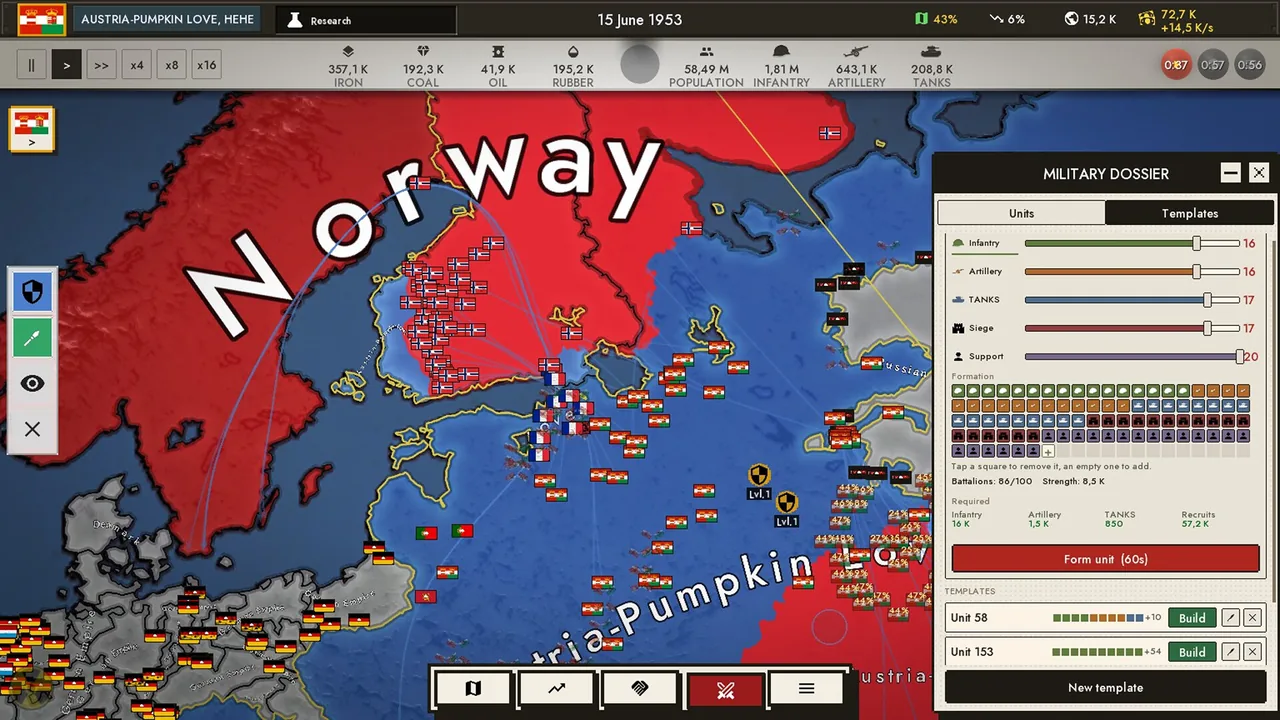
- A recent combat overhaul removed manual unit control in favour of automated army handling, and a large share of current negative reviews are specifically about war now amounting to repeatedly clicking fortress tiles rather than making tactical decisions
- Pathfinding bugs strand units on borders, leave armies stuck in territory after a peace deal, and can prevent naval invasions from crossing water entirely
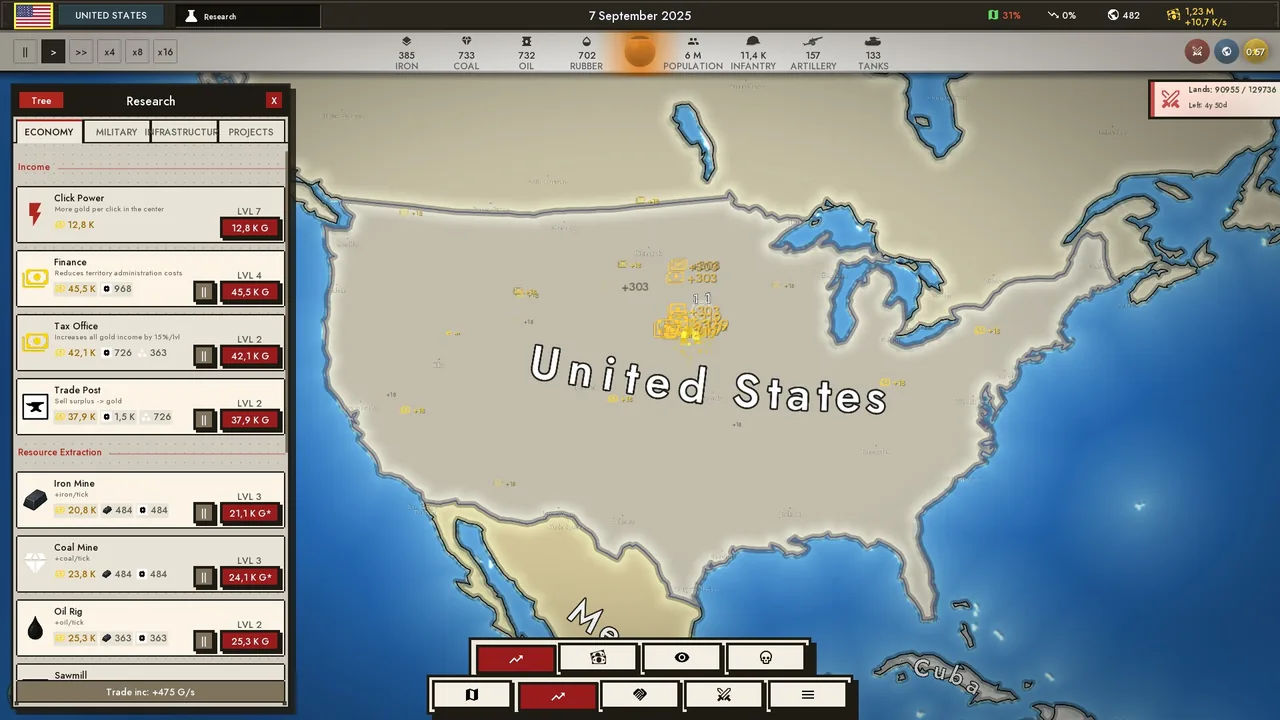
- The tutorial doesn't reliably explain the economy it hands you — population growth, building upkeep and what a researched technology actually unlocks are all left for players to reverse-engineer
Who it's for: Players who like the idea of a lighter, faster grand strategy game — something you can dip into for twenty minutes rather than commit an evening to the way Europa Universalis or Hearts of Iron demand — and who are willing to tolerate genuine Early Access roughness for a concept with real upside.
Our recommendation: Worth a look at its current discounted price if the pitch appeals to you and you're comfortable treating it as a work in progress. Players who want a finished, legible systems game today, or who specifically want tactical control over their armies, should wait for a few more patches before buying in.
6 / 10
Grand strategy games usually gate you with complexity — a menu tree deep enough that half the genre's reputation is built on tutorials people skip and wikis people keep open in a second monitor. Age of Clicks tries the opposite experiment: strip the interaction down to a click, and see how much of Europa Universalis' fantasy — building an economy, arming a nation, redrawing a map through diplomacy or force — survives the simplification. For its first few hours, more of it survives than you'd expect. Past that point, the game's Early Access seams start showing, and they're the kind that cost it real goodwill on Steam.
A genuinely novel hook
The premise is straightforward to state and harder to pull off than it sounds: you manage a country by clicking, and that single interaction scales all the way from queuing a factory to directing an invasion. Players describe sitting down meaning to check one thing and coming back an hour later having rebuilt an economy, militarised half a continent and annexed a neighbour they'd forgotten they were at war with — the kind of "just one more click" pull idle games chase deliberately, applied here to systems that are normally the domain of much heavier strategy titles. That's the game's real achievement: it isn't a clicker with a map skin, and it isn't grand strategy with a clicker gimmick bolted on. Resource management, alliances and territorial expansion are all genuinely present, just accessed through an interaction simple enough that someone who's never opened Hearts of Iron can follow what's happening.
The peaceful route deserves specific credit. Rather than forcing every expansion through combat, Age of Clicks lets ultimatums pressure a rival nation into surrender without a battle taking place, which gives the game an actual alternative identity for players who want the political side of grand strategy — borders shifting, alliances forming and breaking — without needing to enjoy directing wars to get there.
The combat rework nobody asked for
That said, war is still the loudest part of the negative reviews right now, and specifically a recent update that reworked how armies function. Manual unit control is gone in favour of automated handling, and the reaction has been sharp: reviewers describe the new system as "too simple and boring" and say war has effectively become repeated clicking on fortress tiles rather than a tactical exercise in troop movement. For a game whose entire pitch is turning strategic decisions into satisfying clicks, removing the layer of decision-making from combat specifically undercuts the part of the pitch that mattered most to players who'd already bought in. It's the single clearest example of an Early Access title changing a system faster than its community could weigh in on it, and the backlash reads accordingly.
Underneath the redesign, the mechanical bugs compound the frustration. Units get stuck on borders, armies remain stranded in enemy territory after a peace treaty is signed, and naval invasions frequently fail outright — troops simply won't cross water. Encirclements, a staple of this style of wargame, don't reliably function either, with surrounded armies reported to teleport back to friendly lines instead of being destroyed. None of that is a design complaint; it's Early Access instability, and it's the kind that makes even a strong concept feel unfinished in practice.
An economy the game won't explain
The second recurring thread in player feedback is that Age of Clicks doesn't teach itself well. The tutorial is reported to stall or skip steps outright, and even players who get through it describe a research tree and resource economy that operate on rules the game never states outright — what a given technology actually unlocks, how population growth is calculated, why a resource deficit sometimes just displays as zero instead of a real number. Cavalry units locked behind a World War I-era tech tier, in a game whose tags and framing lean toward earlier historical periods, is the kind of detail players flag specifically because it suggests the progression systems haven't been fully reconciled with each other yet.
This matters more here than it would in a typical strategy game, because Age of Clicks is explicitly selling itself as the accessible on-ramp to this genre. A player who'd bounce off Hearts of Iron's density is exactly the player most likely to get stuck the moment this game's own systems go unexplained, and several reviews describe exactly that outcome — real interest in the concept undone by not knowing what a building actually does until well after building it.
Interface friction
The interface compounds the learning curve rather than easing it. Windows take up a large portion of the screen and can't be repositioned, switching between the economic and military map views hides whichever layer you just left, and dense frontlines can make individual units impossible to click apart from their neighbours. None of these are exotic UI problems — they're the kind of thing a few more passes of polish fixes — but for a game whose whole identity rests on a satisfying, legible click, an interface that gets in its own way is a real problem rather than a cosmetic one.
Value and monetisation
On the business side, there's little to fault. Age of Clicks is a straightforward Early Access purchase — currently NZ$15.18, discounted from NZ$20.25 — with no in-app purchases, premium currency or advertising layered on top. That's a genuinely clean model for a genre that frequently ties clicker mechanics to energy timers and refill purchases, and it means every system described above is something you're meant to engage with directly rather than pay to skip. Reviewers who compare the asking price to the game's current state generally land around "fair for what's here, steep for what's still missing," which tracks with a young Early Access release rather than a finished product overcharging for polish it doesn't have.
Final verdict
Age of Clicks has a real idea at its centre, and the fact that its opening hours can genuinely absorb a player the way a good idle game does — while still asking them to think about diplomacy, economy and territory the way a good strategy game does — is not a small accomplishment for a solo-developed Early Access title. The problem is that everything surrounding that hook is still rough enough to actively work against it: a combat system reworked in a direction its own players didn't want, pathfinding bugs serious enough to break core mechanics like naval invasions, and a tutorial that leaves its economy essentially unexplained.
None of that is necessarily permanent — the developer's visible patch cadence and public roadmap are the best argument for coming back to this one later rather than writing it off. Today, though, it lands as a Fair-tier Early Access game: a distinctive concept worth watching, sold honestly, but not yet consistent enough to recommend without real caveats attached.
Players drawn to the idea of a persistent world that keeps evolving around clicks and check-ins, but who want that progression wrapped around a finished RPG rather than an in-development strategy sim, might also want to look at Wanderer.
Pros and cons
Pros
- The core loop genuinely fuses clicking with grand-strategy systems rather than reskinning a generic idle game with a world map — economy, diplomacy and territorial conquest all sit on top of the same click-driven interaction
- Lower barrier to entry than Paradox-style grand strategy, letting players engage with resource management, alliances and map painting without a Europa Universalis-length learning curve
- The peaceful-conquest path, where ultimatums can force a rival's surrender without a shot fired, gives players who dislike war-focused play a real alternative route to expansion
- A clean one-time purchase with no in-app purchases or ads layered onto the clicker premise, unusual restraint for a genre that leans hard on monetised energy systems elsewhere
- Visible, active Early Access development, with a public roadmap and patches responding directly to reported bugs and balance complaints
Cons
- A recent combat overhaul removed manual unit control in favour of automated army handling, and a large share of current negative reviews are specifically about war now amounting to repeatedly clicking fortress tiles rather than making tactical decisions
- Pathfinding bugs strand units on borders, leave armies stuck in territory after a peace deal, and can prevent naval invasions from crossing water entirely
- The tutorial doesn't reliably explain the economy it hands you — population growth, building upkeep and what a researched technology actually unlocks are all left for players to reverse-engineer
- The interface claims a large portion of the screen with windows that can't be repositioned, and switching between the economic and military map modes hides the other layer's information entirely
- Nations play close to identically once the opening novelty wears off, and the AI can out-pace a human player's clicking speed, pushing some players toward autoclickers just to keep up
Screenshots
-
Age of ClicksImage: Red Border Studio via Steam -
Age of ClicksImage: Red Border Studio via Steam -
Age of ClicksImage: Red Border Studio via Steam -
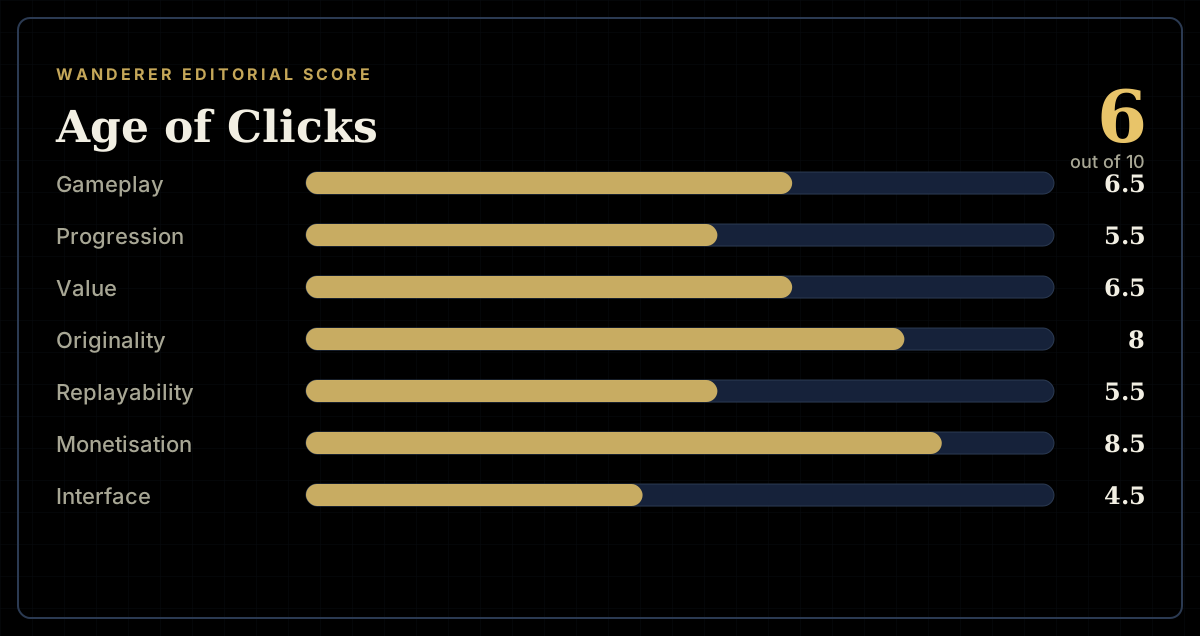
How the review scores each part of the gameWanderer Editorial -
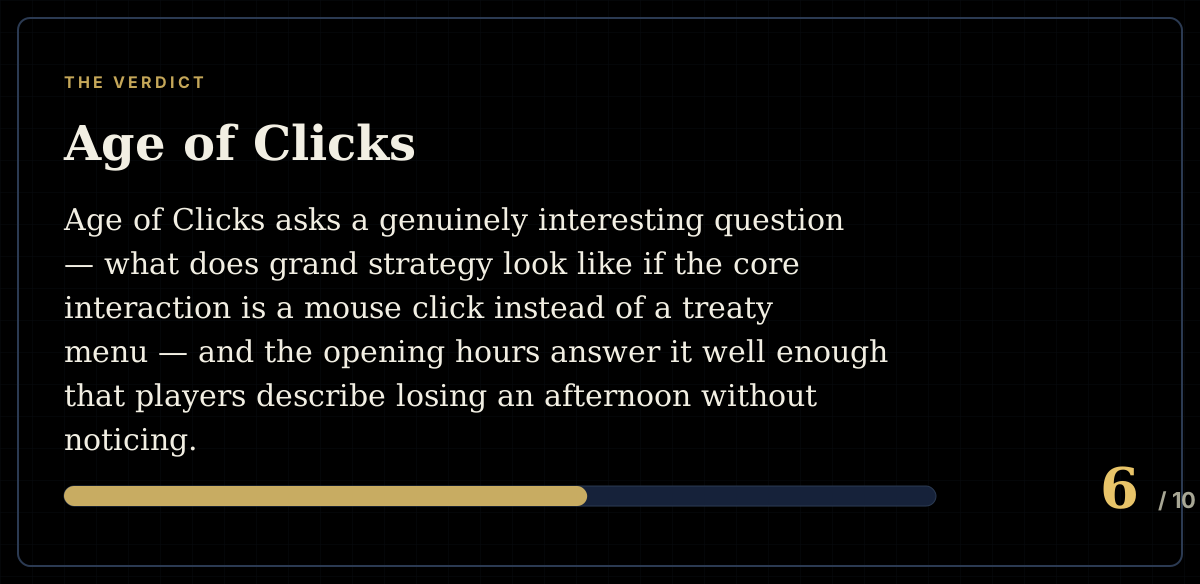
The short versionWanderer Editorial