Game review
Incremental Island
6 / 10
- Developer
- Tyler Hudson, Ryan Hoover
- Publisher
- Tylario
- Released
- 12 August 2024
- Platforms
- Windows
- Genre
- Incremental, Colony Sim, Strategy
- Monetisation
- One-time purchase, no DLC, no in-app purchases; a free demo is available covering the opening section
- Players
- Single-player only
The short version
Incremental Island drops the player on a procedurally generated island to build a civilisation from scratch, trade with neighbours and eventually conquer them. Made by a small two-person team under Tylario and released 12 August 2024 for NZ$4.49, it sits at Mostly Positive across its 37 English-language reviews — a corpus this review reads in full. Most of that positivity comes from players happy with a cheap, satisfying few hours; most of the friction comes from players who bought it expecting the ongoing, prestige-driven incremental system its own title and genre tags promise, and found a short story with a definite ending instead.
Biggest strengths
- A satisfying, well-paced core loop of gathering resources, expanding the island and trading with neighbours that several reviewers compare favourably to the browser classic CivClicker
- Genuinely cheap at NZ$4.49, and the majority of both positive and negative reviewers agree the price is fair for what's actually delivered
- Background resource collection does continue while the game is closed, rewarding players who check back in after time away, according to at least one detailed positive review
Biggest weaknesses
- A meaningful share of reviewers, including several detailed and specific ones, say the game is not meaningfully incremental at all — it has a linear technology tree, no prestige or ascension system, and a definite ending reached in one sitting rather than an open-ended system to grow over time
- Multiple reviewers report finishing the entire game in one to six hours, and the achievement data shows no clear reason to keep playing once the story concludes
- At least one detailed review describes missing basic building options (smiths, herbalists) they could not get working and received no useful response from the developer about
Who it's for: Fans of quick, cheap civilisation-builder puzzles — CivClicker is the direct comparison several reviewers reach for — who want a satisfying few hours rather than an ongoing commitment; a poor fit for anyone buying it specifically for long-term incremental progression.
Our recommendation: A likeable, inexpensive few hours of resource-juggling and island-building, let down by a genre label — "Incremental" — that a meaningful share of its own audience says the finished game doesn't really earn.
6 / 10
Introduction
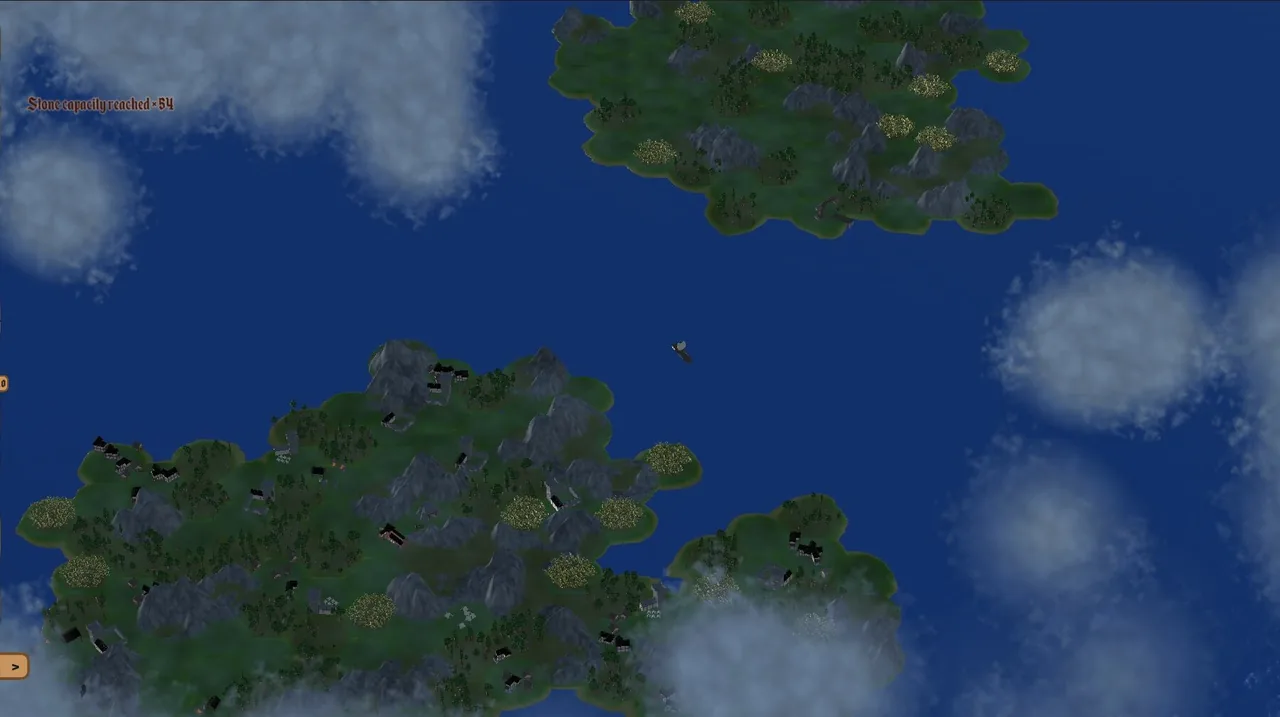
Incremental Island starts the player with a single settler on an empty, procedurally generated island and asks them to build it into a functioning civilisation — gathering wood and stone, assigning workers, researching upgrades, trading with neighbouring islands and, eventually, taking them by force. Made by a small two-person team, Tyler Hudson and Ryan Hoover, under the Tylario banner, it released 12 August 2024 for a modest NZ$4.49 and has settled into a Mostly Positive reputation — 70% across the 37 English-language reviews this review reads in full. Reading all of them together surfaces a clear, specific tension: the game's own name and its community-voted "Incremental" tag (97 votes, its most-applied) set an expectation that a real share of its audience says the finished product doesn't actually meet.
A satisfying, familiar loop
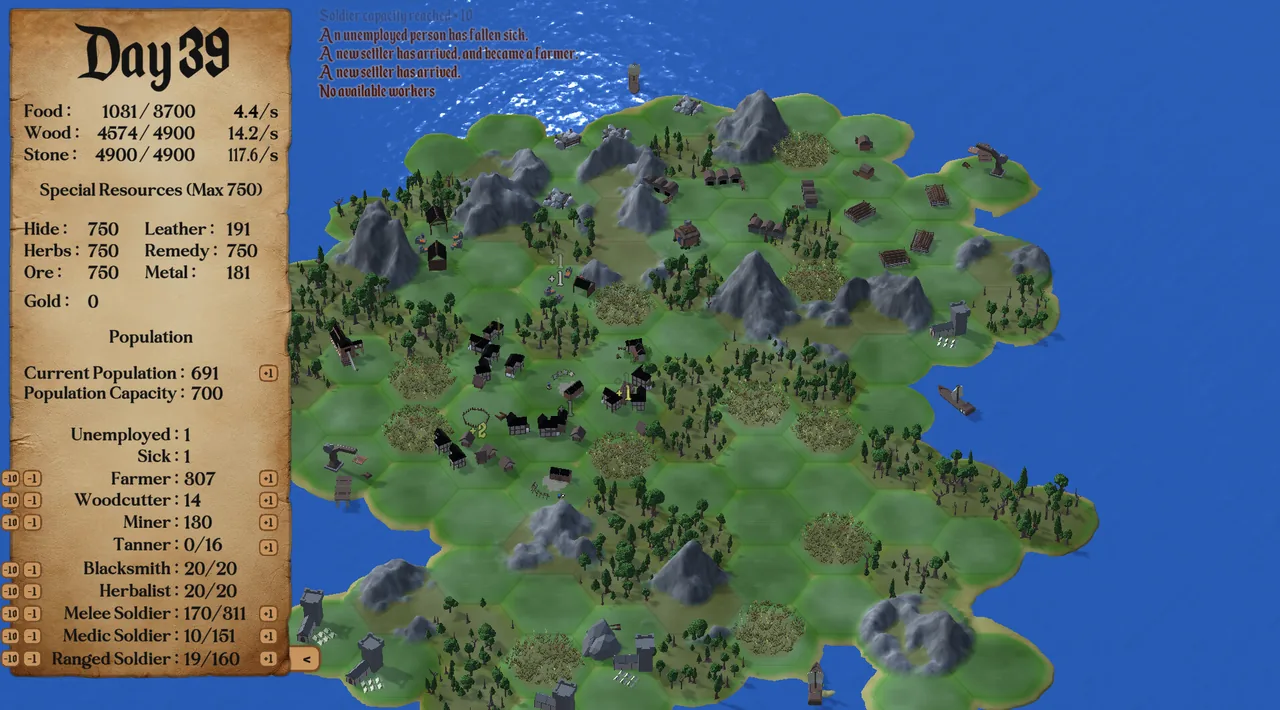
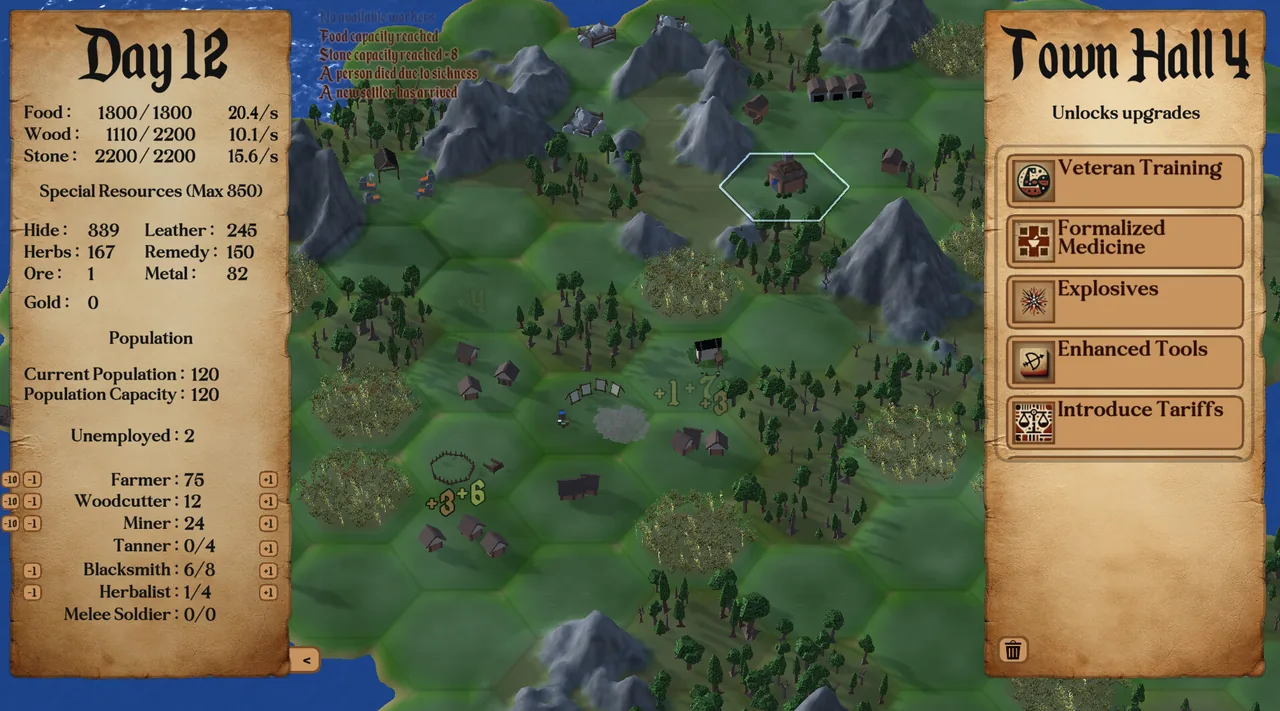
The core systems here are well-executed for what they are. Workers gather resources, buildings convert them into more valuable goods, a technology tree unlocks new options, and ships let the player trade with — or eventually raid — rival islands nearby. Several reviewers reach for the same comparison independently: this is CivClicker's DNA, rebuilt with modern presentation and a procedural map. "I played civclicker in middle school and this did the game justice," one positive review puts it, reporting about six hours to a satisfying finish and planning a second run for a higher score. Another calls it, only slightly tongue-in-cheek, "the best incremental randomized civclicker you will ever play for this money." At its best, the loop does what a good short strategy puzzle should: it gives the player enough decisions to feel ownership over how their island develops, without demanding hours of upfront learning to get there.
There is a genuine idle element buried in that loop too, worth crediting on its own terms: one detailed positive review describes specifically enjoying coming back to the game "after being out all day, and having all my resources collected and ready to be used" — real background progression, not purely an active clicker. That's a fair thing to weigh against the criticism below, even if it doesn't answer all of it.
A title the finished game doesn't quite live up to
Set against that is a specific, repeated complaint from a real share of this small review sample: that the game isn't meaningfully incremental in the way the genre and the title promise. "There is nothing 'Incremental' about this game," one reviewer writes bluntly, "you run an island, then for some reason have to murder everyone else, and then you're done." Another, more measured, writes that newcomers expecting "an incremental or idle game... will notice quickly that's not what's on offer here," describing seeing the credits after about an hour. A third sums up the mechanical gap precisely: "There's no prestige or ascension. There's hardly any 'incremental' increases, except for the linear tech tree. For a paid idle game, this is laughable." These aren't isolated complaints from players who misunderstood what they bought — they're specific, structural observations about what the genre's core promise (systems that compound and grow over an open-ended timeframe) requires, and what a single linear tech tree with a scripted ending doesn't deliver.
The runtime numbers back the complaint up rather than contradicting it. Multiple reviewers, positive and negative alike, report finishing the entire game in a range of one to six hours, and this review's own read of the sample finds a median critical playtime of 170 minutes — people who saw enough of the game to form a real opinion, not players bouncing off in confusion. One reviewer who completed every achievement in eight hours summed up the resulting shrug well: "it isn't awful. There just isn't much to it."
Rough edges around onboarding
A smaller but recurring thread concerns how little the game explains about its own systems. One player with over 1,000 minutes logged reports finishing two full playthroughs without understanding how the game's scoring actually worked, missing an achievement despite reaching a population milestone that seemed like it should have triggered it. Another describes struggling to identify which buildings were actually available and getting no useful response after raising it with the developer directly. Both point to the same underlying gap: a short game that doesn't take much time to teach its systems properly before ending, leaving some players working things out well after the credits would otherwise have rolled.
Final Verdict
Incremental Island is a well-made, inexpensive few hours built on a genuinely likeable civilisation-puzzle loop, and most of its audience — including several of its harshest critics — agree the price is fair for what's actually there. What holds it back from a stronger score is that its own framing oversells it: a meaningful, specific and consistent share of its reviewers say the "Incremental" in the title doesn't describe the finished game, which ends in a single sitting with no prestige system to bring players back. For a shopper who wants exactly what the positive reviews describe — a cheap, well-paced short builder in the CivClicker mould — this is an easy recommendation. For anyone buying it specifically because the genre tag promises an ongoing incremental system to grow over weeks, it's worth knowing upfront that isn't what you'll get.
Pros and cons
Pros
- A satisfying, well-paced core loop of gathering resources, expanding the island and trading with neighbours that several reviewers compare favourably to the browser classic CivClicker
- Genuinely cheap at NZ$4.49, and the majority of both positive and negative reviewers agree the price is fair for what's actually delivered
- Background resource collection does continue while the game is closed, rewarding players who check back in after time away, according to at least one detailed positive review
- A free demo covering the opening section lets buyers try the core loop before paying
Cons
- A meaningful share of reviewers, including several detailed and specific ones, say the game is not meaningfully incremental at all — it has a linear technology tree, no prestige or ascension system, and a definite ending reached in one sitting rather than an open-ended system to grow over time
- Multiple reviewers report finishing the entire game in one to six hours, and the achievement data shows no clear reason to keep playing once the story concludes
- At least one detailed review describes missing basic building options (smiths, herbalists) they could not get working and received no useful response from the developer about
- The tutorial is thin enough that at least two reviewers, including an 1,028-minute player, report finishing runs without understanding how key systems like scoring actually work
Screenshots
-
Incremental IslandImage: Tylario via Steam -
Incremental IslandImage: Tylario via Steam -
Incremental IslandImage: Tylario via Steam -
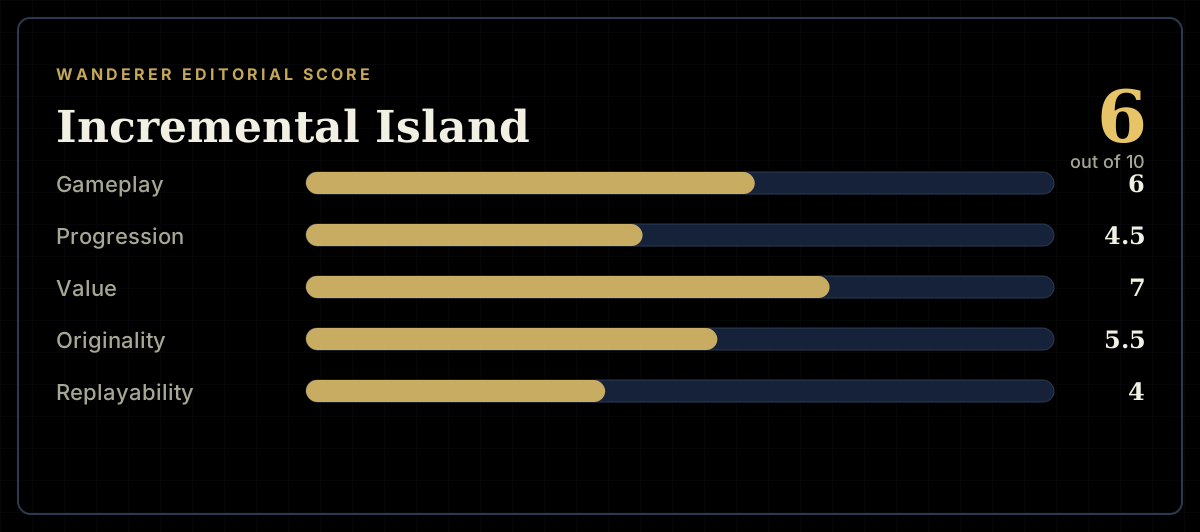
How the review scores each part of the gameWanderer Editorial -
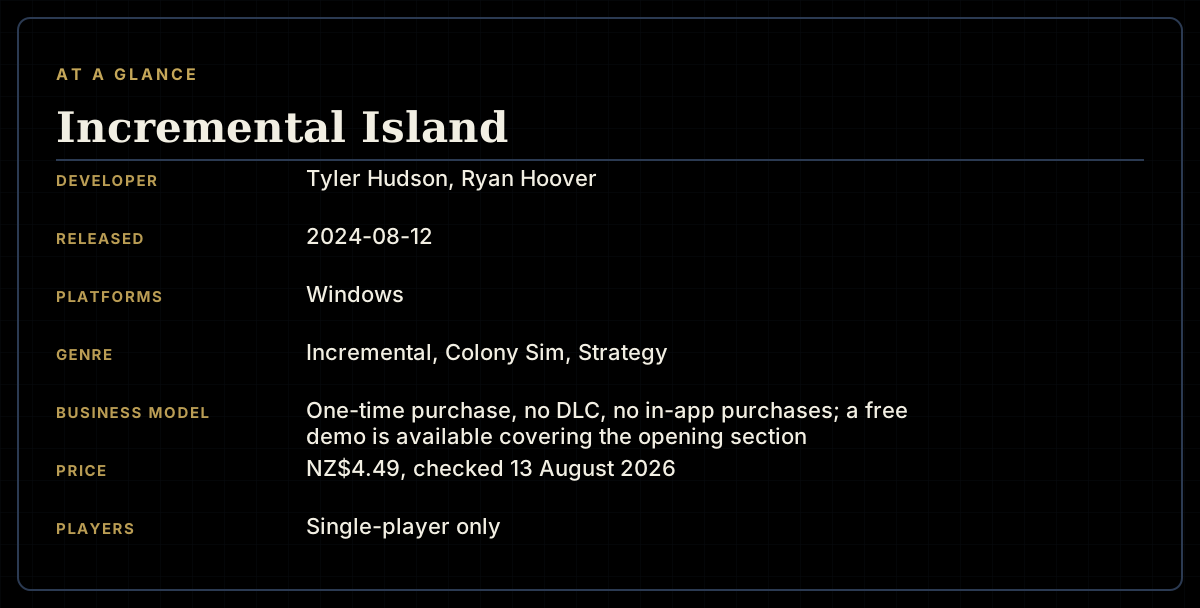
The essentials at a glanceWanderer Editorial -
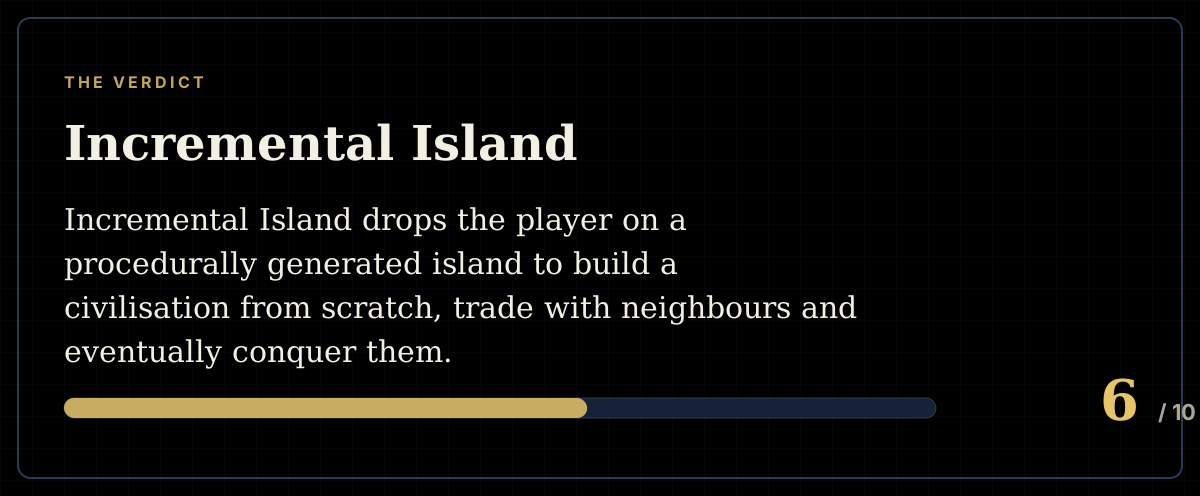
The short versionWanderer Editorial