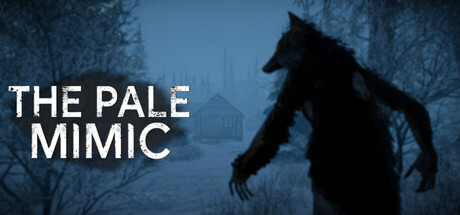
Game review
The Pale Mimic
6.4 / 10
- Developer
- Dark Snow Games
- Publisher
- Dark Snow Games
- Released
- 17 August 2026
- Platforms
- [Windows]
- Genre
- Horror
- Monetisation
- Paid
- Players
- Single-player only
The short version
The Pale Mimic is a short, moody survival-horror story about a fugitive holed up in the Alaskan wilderness with his dog, hunted by something that isn't quite an animal. Reviewers are consistently won over by its atmosphere, sound design, and — almost unanimously — its dog companion, and there's real affection here for a clearly personal solo-developer passion project. But a large, equally consistent share of reviewers describe the actual play loop as a repetitive, tightly scripted routine with very little real agency or danger, more narrated experience than survival game. At a low price and a two-hour runtime, it's an easy game to forgive for reaching further than it grasps.
Biggest strengths
- Strong, consistently praised sound design and atmosphere that reviewers say does most of the work in making the isolated setting feel oppressive
- A well-loved dog companion that draws near-universal affection across the review base, including from reviewers otherwise critical of the gameplay
- Solid presentation for a solo-developer project, with reviewers repeatedly noting the game punches above its budget in graphics and audio direction
Biggest weaknesses
- A repetitive daily loop — hunt an animal, return to the cabin, wait, repeat — that several reviewers say pads the runtime without adding meaningful variety
- Creature encounters that are almost entirely scripted rather than reactive, which a large share of reviewers say removes any real sense of danger once the pattern becomes clear
- Little to no player agency in how the story unfolds, with reviewers describing it as closer to a guided narrative experience than a survival game with real choices
Who it's for: Fans of short, atmospheric narrative horror in the vein of Firewatch or similar "walk and observe" experiences, who prioritise mood and story over active survival mechanics or genuine stalker-AI tension.
Our recommendation: Worth it at this price for a short, atmospheric horror story, especially for dog lovers — go in expecting a guided narrative experience rather than a systemic survival-horror game.
6.4 / 10
A Fugitive, a Dog, and Something in the Snow
The Pale Mimic is a short, first-person horror game from solo Alaskan-set developer Dark Snow Games, casting the player as a high-profile fugitive hiding out in an isolated cabin in the wilderness with only a dog for company. The daily routine is simple on paper: venture out to hunt for food, manage a cabin, and survive — until something that isn't a wolf starts taking an unwelcome interest. It's built around mood rather than mechanical depth, and reviewers consistently describe the experience in those terms: a slow-burn, narrative-forward horror story rather than a systems-driven survival game.
That framing matters, because it's also the central fault line running through the entire review base. One of the more detailed positive reviews called it "a really cool short horror game," praising the sound design as "nearly perfect" at creating the feeling of isolation, and noted that "you can practically feel the stinging northern cold." A number of reviewers reach for a specific, recurring comparison point: Firewatch, cited independently across multiple reviews as the closest touchstone for the game's slow-paced, walk-and-observe structure and oppressive quiet.
The Dog Is the Real Main Character
If there's one thing nearly every reviewer agrees on, positive or negative, it's the dog. Reviewers across the entire spectrum of opinion single out the ability to pet, play fetch with, and generally look after the companion animal as a genuine highlight — one otherwise critical review admitted "any game with a 'Meat shed' is recommended in my book. Plus, you can pet dat dawg." Another reviewer described the developer making the game as a tribute to their own dog, calling it "heartwarming in and of itself," and wrote that they made a point of looking after the in-game companion "with love and respect" throughout their playthrough. One review even connected the character to a personal loss, writing that the dog's design brought back memories of their own pet that had passed away. It's a rare case where a single design decision draws consistent, specific praise from reviewers who otherwise disagree on almost everything else about the game.
Presentation more broadly earns solid marks too. Reviewers repeatedly note that the graphics and atmosphere are impressive "for a solo dev," and several specifically call out the environmental detail and lighting as punching above the game's modest price and small team. Sound design draws the most consistent praise of all — the wind, the ambient wilderness noise, and the creature's vocalisations are cited repeatedly as doing the heavy lifting in building dread, even by reviewers who found the creature itself underwhelming once actually encountered.
The Hunting Loop Is Where Reviews Split Hard
Set against that praise is an equally consistent and detailed thread of criticism aimed squarely at the core gameplay loop. One negative review put it bluntly: "the game is incredibly repetitive... it is a walking simulator with an occasional point and click with the gun. Even the monster in it you click once and then it fades to black to get away." Another described the daily structure even more specifically: "Follow the Dog, Shoot the Animal, Follow the Map Home," arguing that a more open, less tightly scripted structure — animals scattered for the player to seek out, rather than always guided to a fixed point — would have made the routine feel far less mechanical.
The scripted nature of the creature encounters draws the single most repeated specific complaint in the sample. Multiple reviewers say the "stalker" premise promised on the store page doesn't really materialise in play — the monster shows up on a fixed schedule rather than reacting dynamically to player behaviour, meaning tension drops sharply once the pattern is understood. One reviewer described it as "a glorified escort quest where all the encounters are hard-scripted," adding that "every playthrough is essentially the same, with no meaningful choices to make." Another was more direct still, calling the central "skinwalker" premise boring because ultimately "nothing happens" beyond a short, cutscene-driven confrontation at the end.
Writing and story quality draw more mixed reactions than the atmosphere or gameplay design. Several reviewers who otherwise enjoyed their time called the story "goofy" or found the dialogue weak, though most add that the overall arc still lands emotionally by the end, particularly around the dog and the game's low-key twist regarding what the mimic actually is. A handful of reviewers also flagged unused or underexplained story items — a voice recorder and torn flight suit are mentioned by name in more than one review as collected but never meaningfully explained or used.
Short, Cheap, and Honest About What It Is
At NZ$12.49 for a roughly two-hour experience, value assessments in the sample are largely favourable, with several reviewers explicitly framing the low price as forgiving the game's mechanical shortcomings. A true or "secret" ending, unlocked by finding specific story items during a playthrough, gives completionist-minded players a reason to run through a second time, and more than one reviewer specifically recommends looking up a guide to catch everything on a first attempt given how easy some of the required items are to miss.
For players specifically drawn to mood-first, narratively-led horror — closer to a guided ghost story with light survival trappings than an open systemic survival game — the reception here suggests The Pale Mimic delivers a solid, if brief, experience for the price. Players looking for the active-threat, reactive-AI stalker horror the marketing gestures toward should temper expectations accordingly, based on how consistently that specific promise draws criticism across the sample.
Verdict
The Pale Mimic is a clear case of a small, personal project succeeding at atmosphere and falling short on the systems needed to back it up. Its sound design, presentation, and above all its dog companion earn real, specific affection across a large and detailed review base, and for a two-hour game at a low price, that's a solid foundation. But the hunting loop that structures most of the playtime is repetitive by design, and the creature encounters that are supposed to generate real tension are scripted closely enough that a meaningful share of reviewers say the fear drains out once the pattern is clear. If short, mood-driven horror with a beloved dog and modest expectations for interactivity sounds appealing, it's an easy, inexpensive recommendation — just don't go in expecting a reactive stalker-horror survival game, because that's the promise reviewers say it doesn't quite keep.
Pros and cons
Pros
- Strong, consistently praised sound design and atmosphere that reviewers say does most of the work in making the isolated setting feel oppressive
- A well-loved dog companion that draws near-universal affection across the review base, including from reviewers otherwise critical of the gameplay
- Solid presentation for a solo-developer project, with reviewers repeatedly noting the game punches above its budget in graphics and audio direction
- A short, focused runtime (roughly two hours) that several reviewers say suits the story being told without overstaying its welcome
- A hidden true ending and collectible story fragments that reward a second, more thorough playthrough
Cons
- A repetitive daily loop — hunt an animal, return to the cabin, wait, repeat — that several reviewers say pads the runtime without adding meaningful variety
- Creature encounters that are almost entirely scripted rather than reactive, which a large share of reviewers say removes any real sense of danger once the pattern becomes clear
- Little to no player agency in how the story unfolds, with reviewers describing it as closer to a guided narrative experience than a survival game with real choices
- Writing and story delivery that a number of reviewers found underwhelming or "goofy," even among players who otherwise enjoyed the game
Screenshots
-
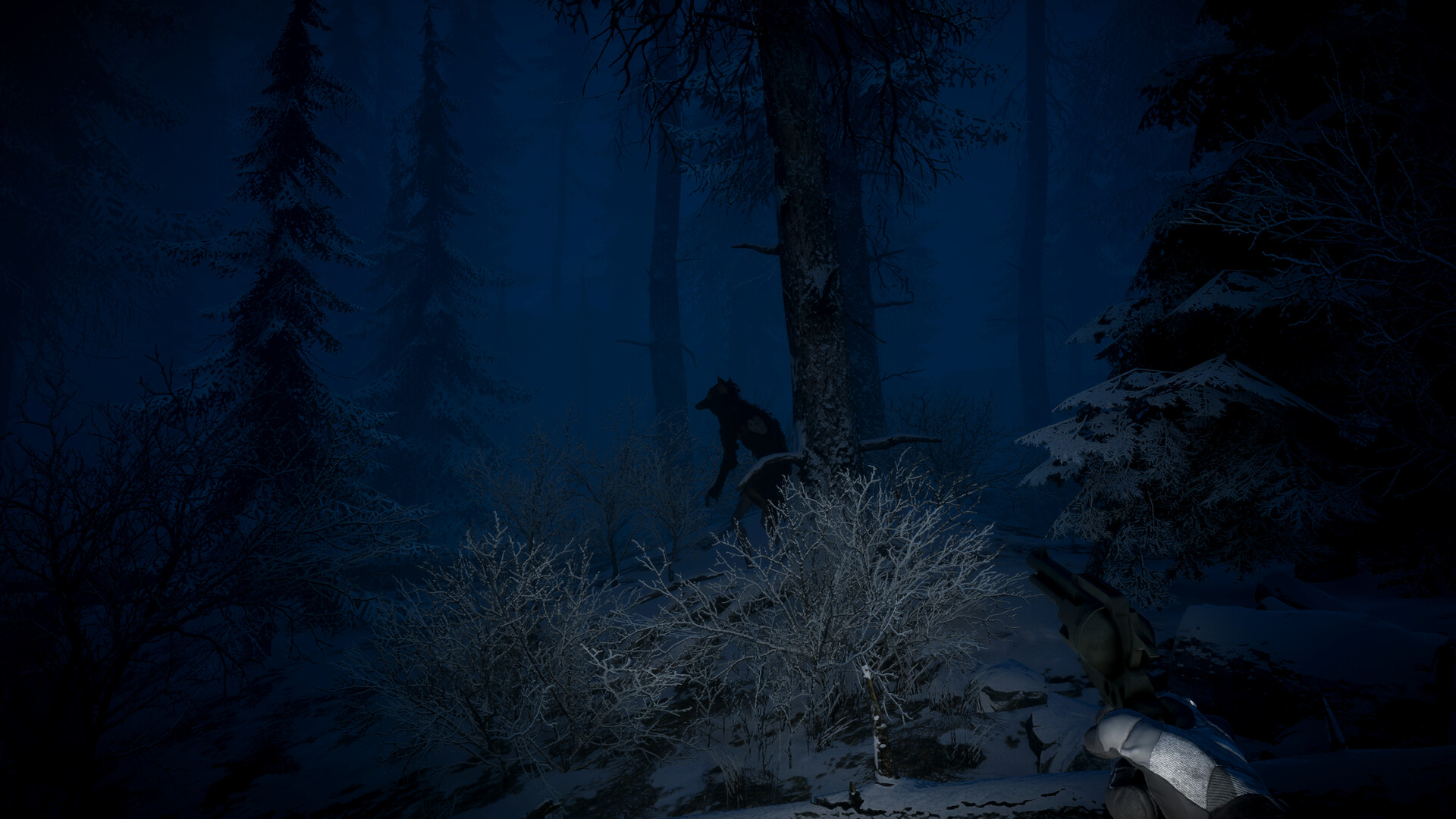
The mimic as it's usually seen in play — a distant silhouette in the fog rather than a direct threatDark Snow Games -
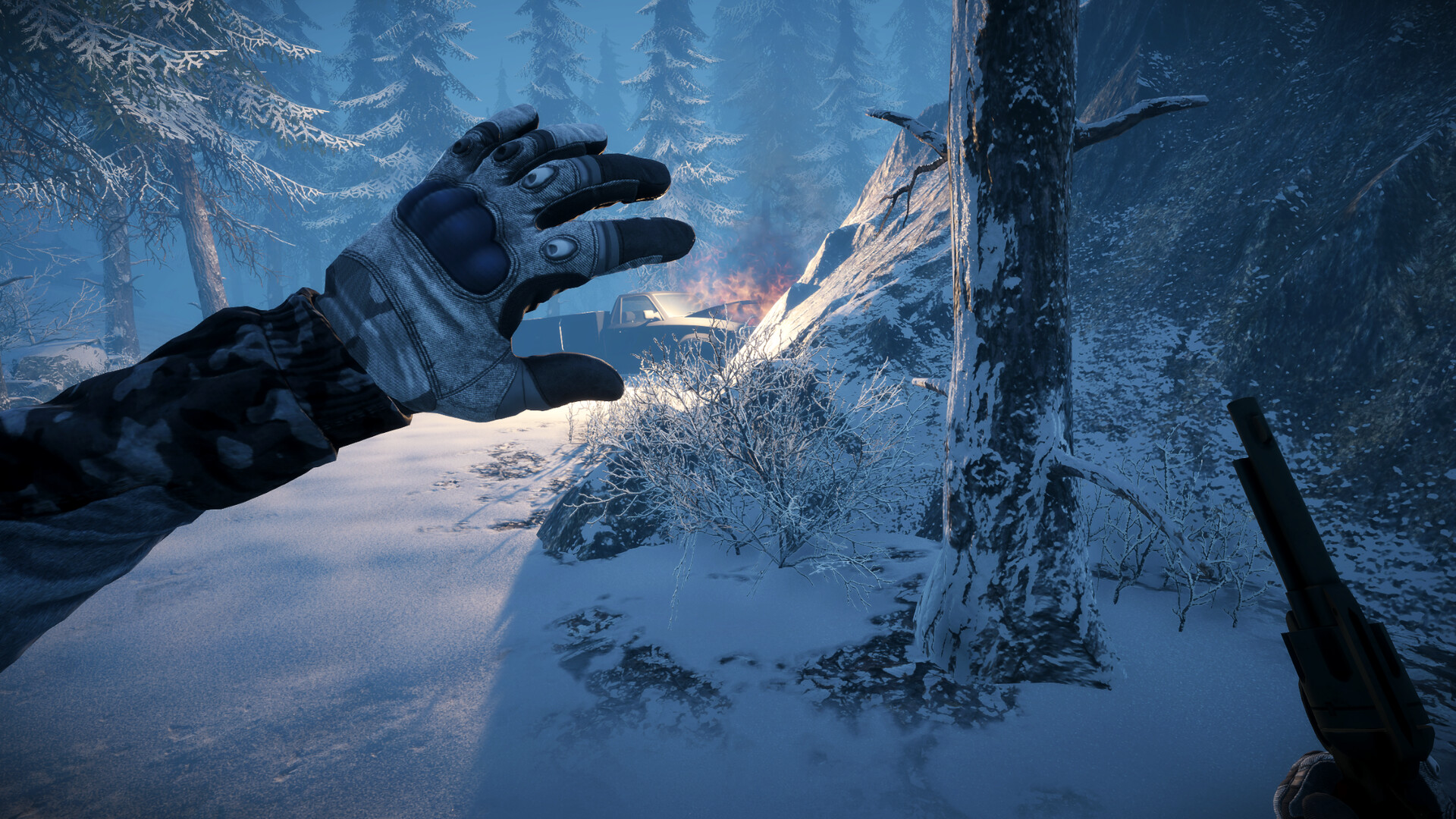
The fugitive's wilderness backdrop, praised repeatedly for its atmosphere and sound designDark Snow Games -
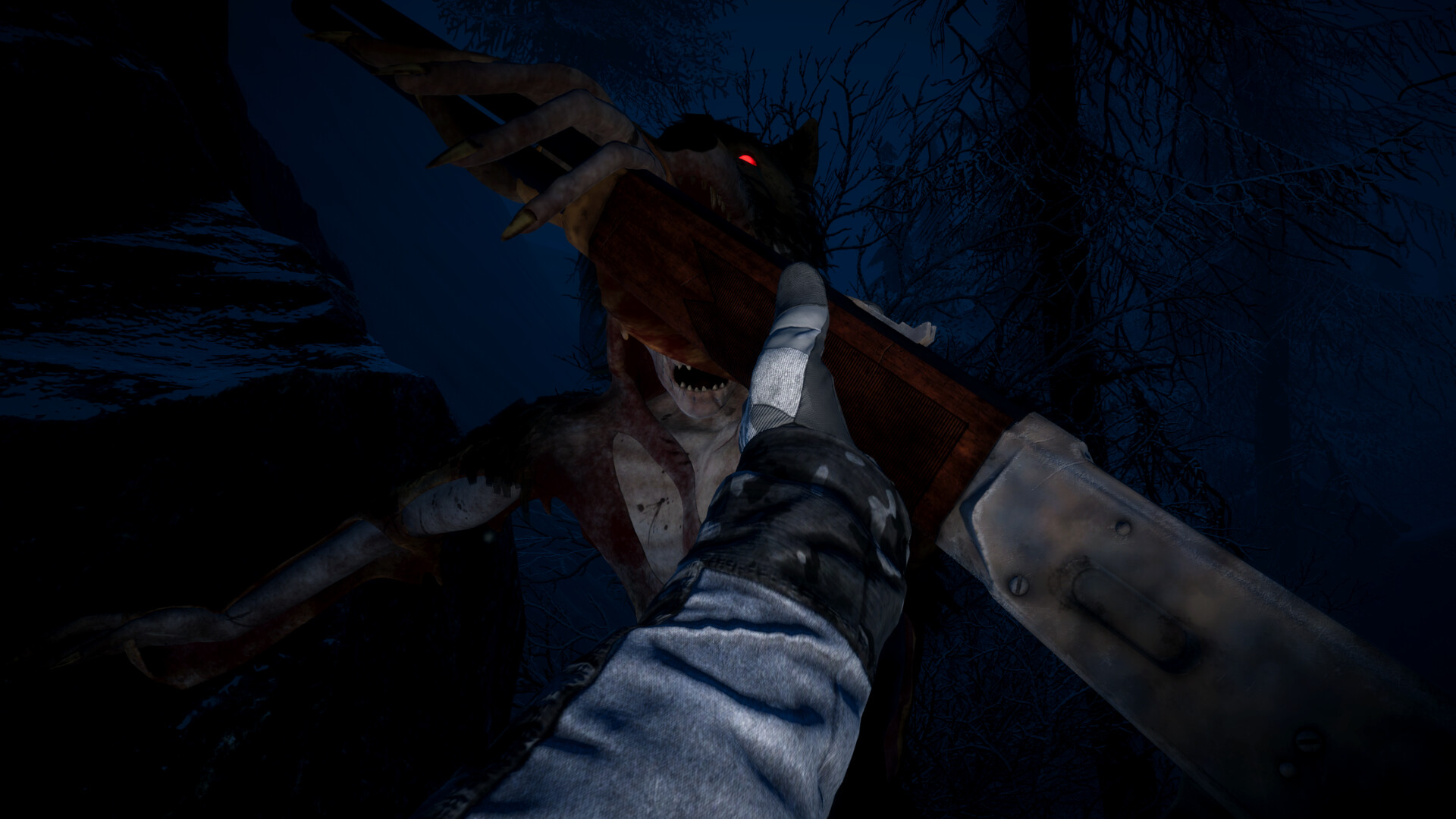
One of the game's scripted creature encounters, the specific moment most reviewers point to when criticising the lack of real agencyDark Snow Games -
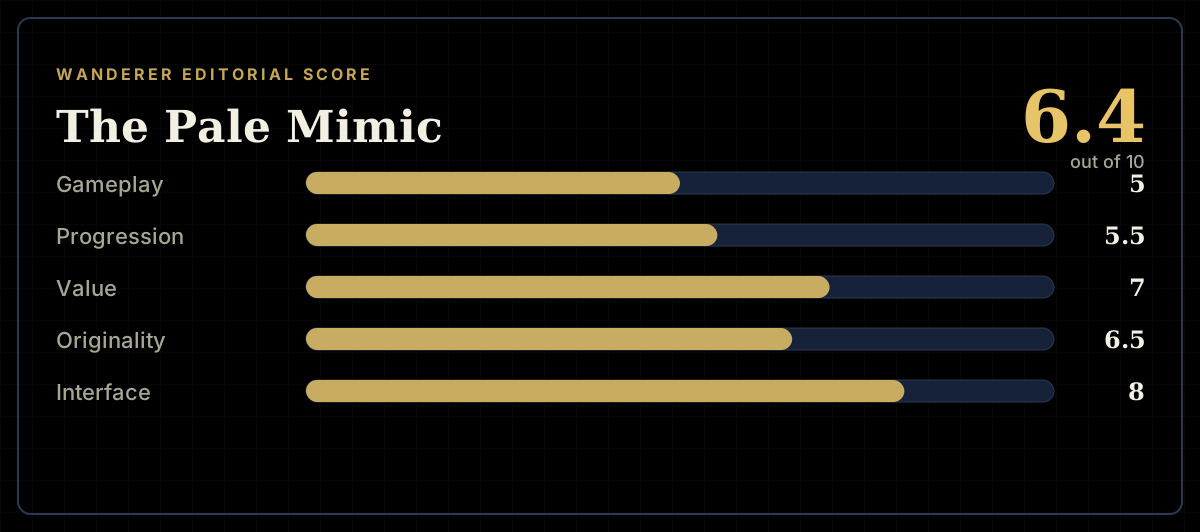
How the review scores each part of the gameWanderer Editorial -
The short versionWanderer Editorial