
Game review
The Last Gas Station Review
6.8 / 10
- Developer
- Alawar
- Publisher
- Alawar
- Released
- 28 April 2026
- Platforms
- ["Windows"]
- Genre
- Simulation
The short version
Biggest strengths
- A genuinely fresh hook: running a roadside gas station in a world that's moved on to electric cars, laced with a cryptid-conspiracy mystery
- Charming, readable pixel art and a soundtrack that shifts mood between cozy daytime routine and spooky nighttime events
- Satisfying early-to-mid-game progression as new stations, upgrades, and decorations unlock
Biggest weaknesses
- The automation systems that reward progression eventually remove most of the actual gameplay, turning the late game into an idle-clicker with nothing left to do
- Full completion and achievement hunting demands a lot of repetitive grinding, especially around RNG-gated fishing and mastery quests
- The central mystery and its cast of NPCs stay thin, with most characters offering only one or two lines before going static
6.8 / 10
Running the Last Station on Earth
Alawar's The Last Gas Station takes a genre that's usually about spreadsheets and turns it into something stranger: you inherit a rundown roadside station in a near-future where electric cars have all but replaced gasoline, in an isolated town wrapped in cryptid folklore straight out of The X-Files. Bigfoot, UFOs, lake monsters, and a string of local conspiracy theorists all orbit your station as you clean it up, restock its shelves, and slowly turn it into a going concern again. It's a cozy management sim at its core, but the premise, an obsolete business kept alive on the edge of a town that may or may not be hiding something supernatural, gives it a stronger identity than most of its genre neighbors, and reviewers consistently single it out as the game's biggest draw.
A Cozy Loop That Eventually Runs Out of Gas
The day-to-day gameplay loop is straightforward and, for a good stretch, genuinely satisfying: pump fuel, stock shelves, price goods, run the register, and juggle side stations like the car wash and repair bay as they unlock. Early and mid-game, players describe a pleasant rhythm of managing several simultaneous tasks without ever feeling overwhelmed, helped along by simple, forgiving minigames for refueling, oil changes, and tire pressure. The catch, and it's the single most repeated complaint across the game's review base, is what happens once every system gets automated. As stations, staff, and buyers get upgraded to their final tiers, the game increasingly plays itself: shelves restock automatically, customers get served without input, and by the endgame many players report simply watching the clock run out with nothing left to do. It's a strange design choice for a game built around the satisfaction of hands-on work, since the reward for playing well is, functionally, the removal of the thing that made it fun. A late addition lets players manually revert some automated tasks for extra tips, which helps, but doesn't fully solve the pacing problem in the back half of a playthrough. It's a familiar tension for the genre, most management sims eventually let players "solve" their systems, but here it arrives earlier than expected, with players regularly reaching full automation well before the story itself has wrapped up, leaving a stretch of hours where there's more game left to sit through than there is game left to actually play.
Cryptids, Conspiracies, and an Underbaked Mystery
The supernatural mystery wrapped around the management sim is the game's hook, but its execution draws mixed reactions. Players enjoy discovering the town's various legends (Bigfoot, lake monsters, alien abductions, secretive government testing) largely through overheard dialogue, collectible audio tapes, and decor choices that let a station lean into one myth or another. The trouble is depth: many reviewers note that NPCs typically offer only a line or two of dialogue before becoming static fixtures, and that the story itself is delivered in scattered fragments spread across long in-game stretches, which can make it feel thin rather than mysterious. The ending system, four or five outcomes gated by a "civilization versus mystery" balance that isn't clearly explained, is a particular sticking point; a number of players say they didn't understand what was steering them toward a given ending until well after the fact. A recurring subplot about the decline of gasoline cars in favor of electric vehicles, voiced through a couple of specific NPCs, also strikes some players as an oddly pointed piece of writing dropped into an otherwise easygoing cozy game, though the developers have said the opinions belong to the characters rather than the studio.
Presentation, Content, and the Completionist Grind
Where The Last Gas Station is least divisive is its presentation. The pixel art is repeatedly praised for being detailed enough to feel lived-in while staying easy to read at a glance, and the soundtrack gets similar praise for setting a relaxed tone by day and building tension at night. A fishing minigame, car-photography collection, and a wide range of decor themed around each local legend give players plenty to chase beyond the core loop, and the multiple-ending structure means a full run doesn't require replaying the whole game from scratch to see different outcomes. That said, going for 100% completion is where the experience sours most: several reviewers describe RNG-gated mastery quests (needing a specific number of a rare task, like battery charges, that only shows up occasionally) as a source of real frustration, and fishing for rare catches can eat hours of otherwise finished playtime. A handful of quality-of-life gaps (no toggle-to-run option, limited remapping, unclear instructions for tasks like the oil change minigame) also show up often enough in reviews to be worth flagging, though none of it stopped most players from finishing the story at least once. Alawar has kept up a steady cadence of post-launch patches and content drops since release, including a co-op mode added months after launch, which several reviewers note as a genuinely encouraging sign for a small cozy-sim studio, even if a couple of players grumbled when one update introduced a new electricity-management mechanic that forced them to rebalance stations they'd already automated.
Verdict
The Last Gas Station succeeds on the strength of its premise and its first several hours: there's real charm in restoring a forgotten gas station at the edge of a town that clearly has secrets, and the pixel art and soundtrack carry that atmosphere well throughout. Where it stumbles is in exactly the area a management sim needs to stick the landing, its own progression: the automation that rewards good play also strips away the moment-to-moment activity that made the loop fun in the first place, leaving a late game that a lot of players describe as an idle clicker rather than a management sim. The mystery is intriguing in concept but thinner than its premise promises, and full completion asks for more grinding than the game's cozy framing suggests it should. It's still an easy recommendation for anyone who wants a relaxed, novel take on the shopkeeper-sim formula, especially at a discount, but go in expecting a strong opening act rather than a game that sustains its hook all the way through.
Pros and cons
Pros
- A genuinely fresh hook: running a roadside gas station in a world that's moved on to electric cars, laced with a cryptid-conspiracy mystery
- Charming, readable pixel art and a soundtrack that shifts mood between cozy daytime routine and spooky nighttime events
- Satisfying early-to-mid-game progression as new stations, upgrades, and decorations unlock
- Multiple endings tied to how you balance the town's competing myths, with light replay value for completionists
Cons
- The automation systems that reward progression eventually remove most of the actual gameplay, turning the late game into an idle-clicker with nothing left to do
- Full completion and achievement hunting demands a lot of repetitive grinding, especially around RNG-gated fishing and mastery quests
- The central mystery and its cast of NPCs stay thin, with most characters offering only one or two lines before going static
- A handful of quality-of-life gaps (no run toggle, limited keybinding, unclear task instructions) make the early hours rougher than they need to be
Screenshots
-
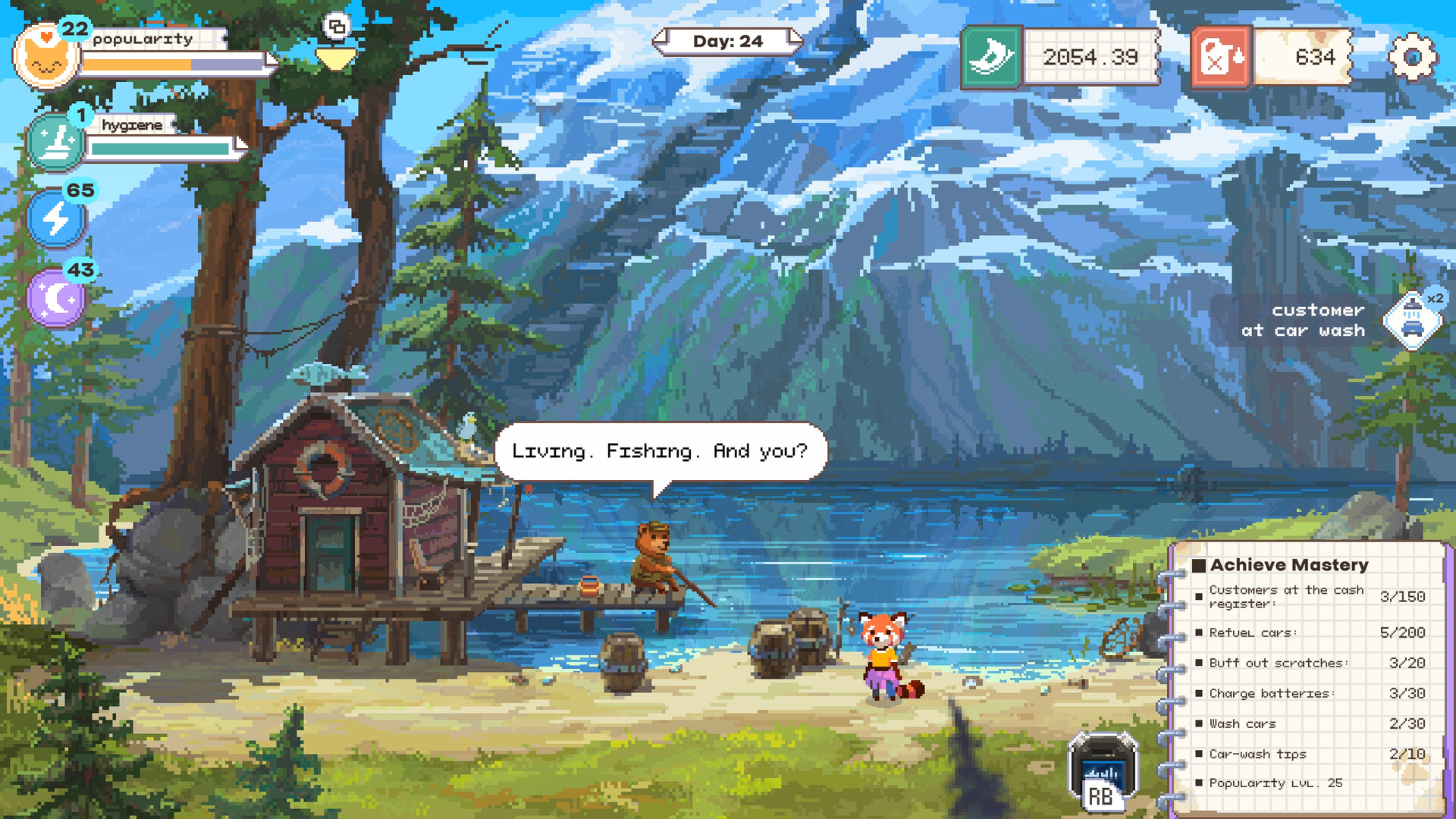
Mastery quests track progress toward unlocking the next tier of station upgradesImage: Alawar -
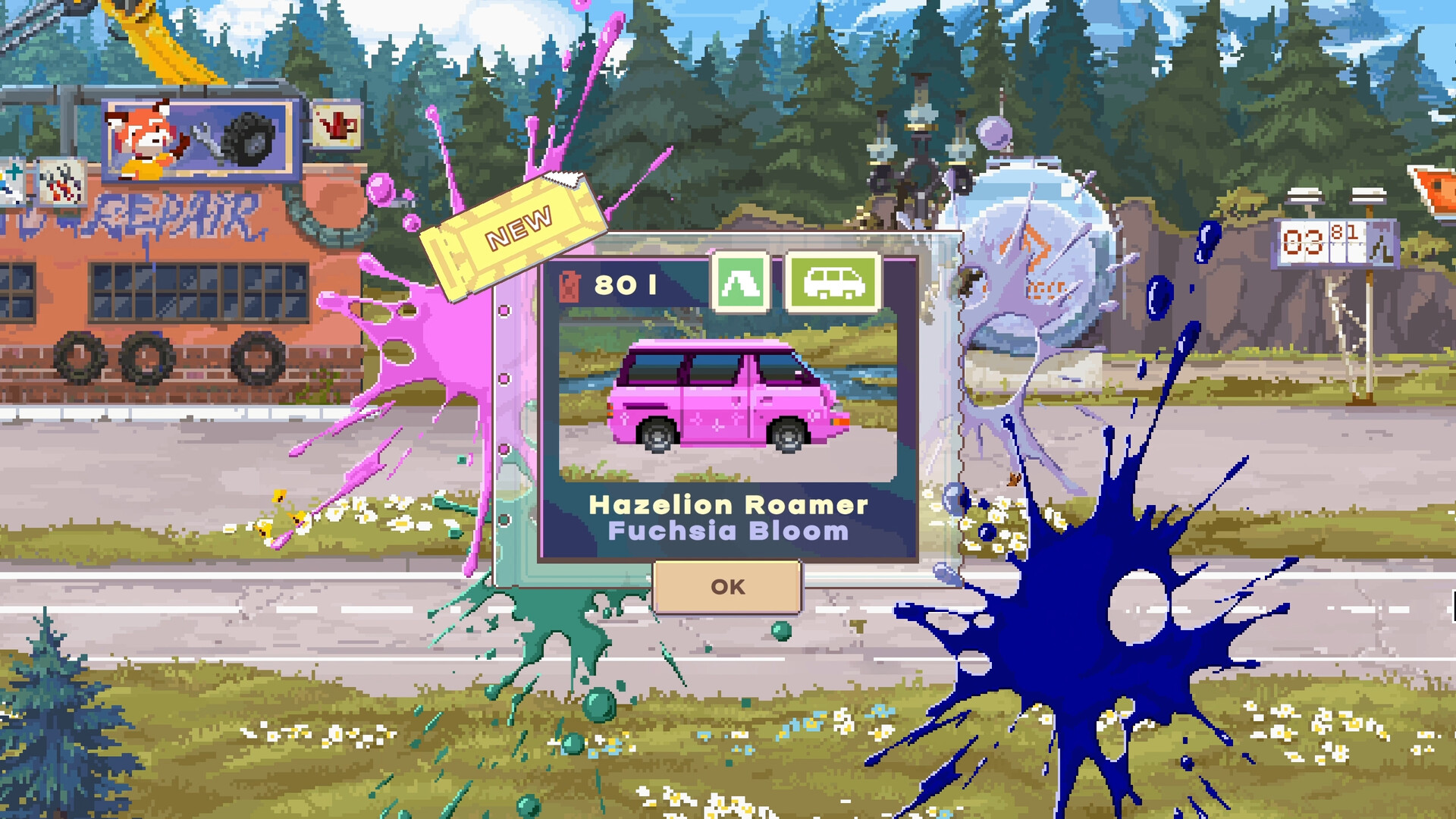
Customers and their cars can be customized with a wide range of colors and add-onsImage: Alawar -
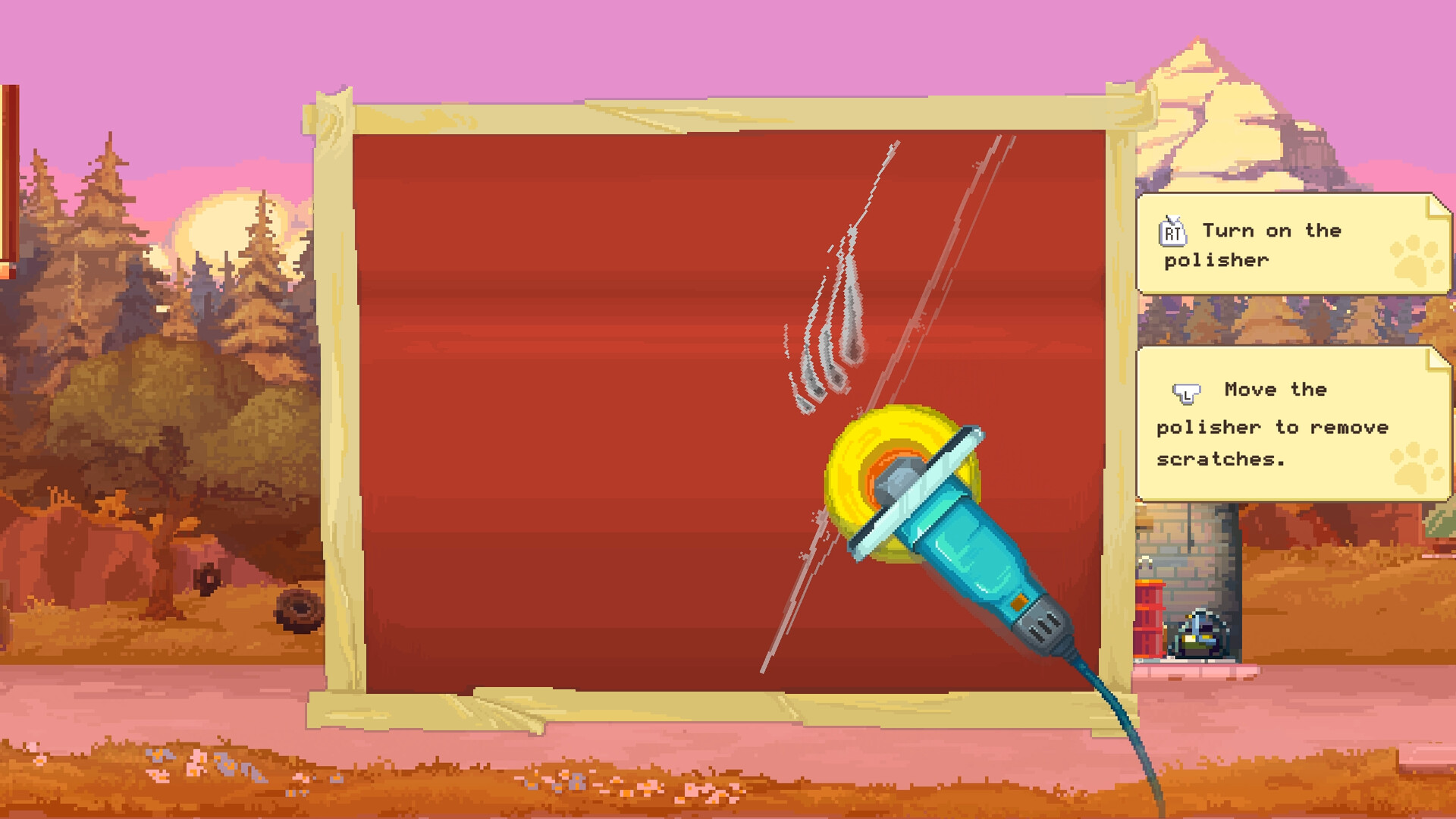
Repair tasks like scratch-buffing are handled through simple, forgiving minigamesImage: Alawar -
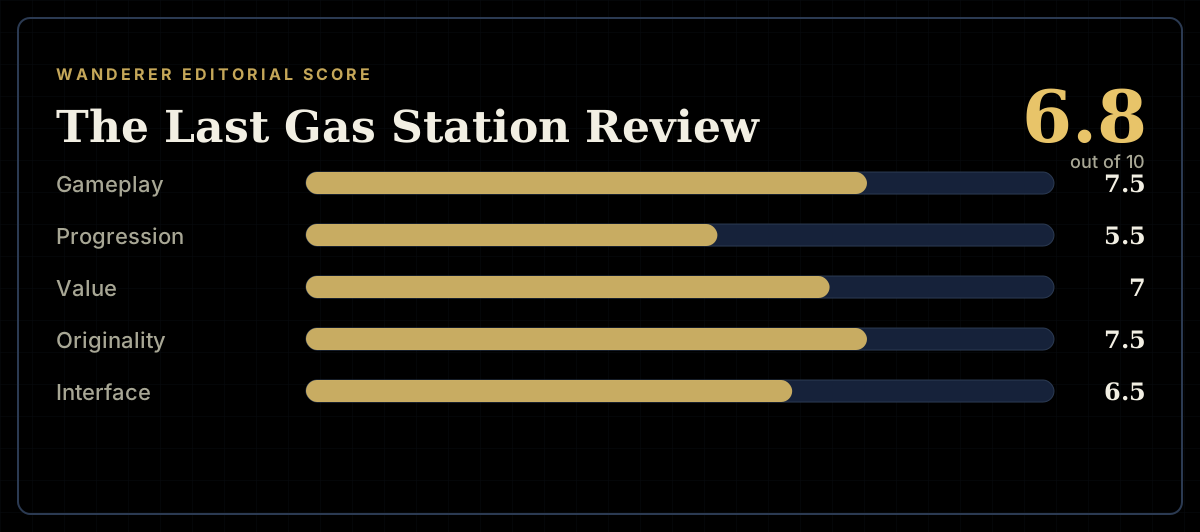
How the review scores each part of the gameWanderer Editorial -
The short versionWanderer Editorial