Game review
THE DEEPEST CASTLE
7 / 10
- Developer
- Sergey Bobrov
- Publisher
- Sergey Bobrov
- Released
- 23 July 2026
- Platforms
- Windows
- Genre
- Roguelike
- Monetisation
- One-time purchase (NZ$7.39); no in-game store, no IAP
- Players
- None; fully single-player
The short version
THE DEEPEST CASTLE is a first-person melee roguelike about timing shield blocks and sword strikes against knights who've spent centuries honing theirs, built by a solo developer who wrote his own CPU-based software renderer for it rather than reaching for an existing engine. It's a specific, unfashionable technical choice, and it draws exactly the kind of player who appreciates that specificity: one reviewer calls it "another worthy heir to King's Field, the best first-person melee combat simulation in video games."
Two weeks after launch, 14 of its 17 reviewers agree closely enough, and a striking number of them write like returning fans rather than first-time buyers — several address the developer directly by name and reference his previous work. The complaints that do surface are specific and largely convergent: more than one reviewer, independently, asks for the same missing thing — music — suggesting the game's most fixable gap is also its most commonly felt.
Biggest strengths
- A genuinely distinctive first-person melee combat system built around shield timing and strike windows, drawing direct, credible comparisons to King's Field from reviewers who know the genre well
- An unusual and specific technical achievement — a custom, hand-written CPU software renderer — that the developer discloses openly and that fans specifically credit as part of the project's character
- Roguelike structure with real stakes: die and the fortress resets, but discovered weapons and artifacts carry forward between attempts
Biggest weaknesses
- The single most repeated complaint across the review sample, independently and in multiple languages, is the absence of any music — several reviewers specifically ask for it during boss fights
- One detailed negative review describes the visuals as muted and the environments as lacking colour, arguing the game's standout destructible-environment feature isn't enough on its own to carry the experience
- Balance complaints recur around resource scarcity — limited healing and stamina flasks against enemies, including crossbow-wielding foes reported to fire without any cooldown, that scale sharply in difficulty past the early levels
Who it's for: Fans of old-school first-person dungeon crawlers — King's Field, Legend of Grimrock, Lands of Lore — who value a distinctive technical approach and don't mind supporting a small solo project with minimal post-launch infrastructure so far.
Our recommendation: A cheap, easy recommendation for genre fans specifically drawn to first-person melee timing over hack-and-slash spectacle — just don't expect a soundtrack, an interface built for comfort, or much in the way of post-launch support yet.
7 / 10
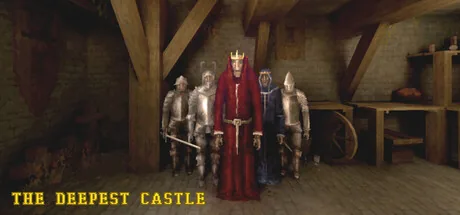
Every so often a Steam listing reveals more about its developer than the usual marketing copy allows, and THE DEEPEST CASTLE's store page does exactly that. Alongside the pitch — a knight descending into a necromancer-held fortress, fighting champion warriors who've had centuries to perfect their swordplay — the developer, Sergey Bobrov, discloses a specific technical choice most players will never think to ask about: the game's engine is a custom software renderer, written in C++, doing all its image rendering on the CPU rather than leaning on a GPU pipeline the way nearly every modern game does. It's an unusual, deliberately old-fashioned approach, and it turns out to be exactly the kind of detail that draws a small, discerning audience — several of whom show up in the reviews not as first-time buyers, but as returning fans checking in on the latest release from someone whose work they already know.
Timing, not spectacle
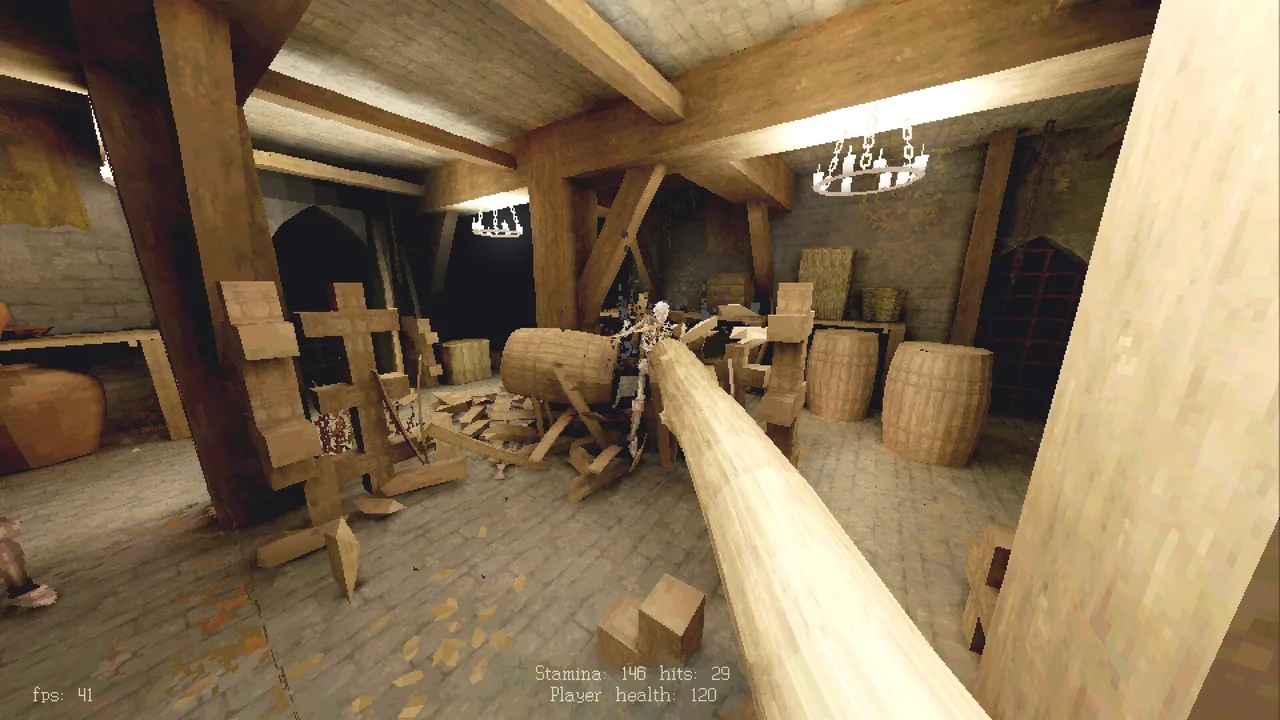
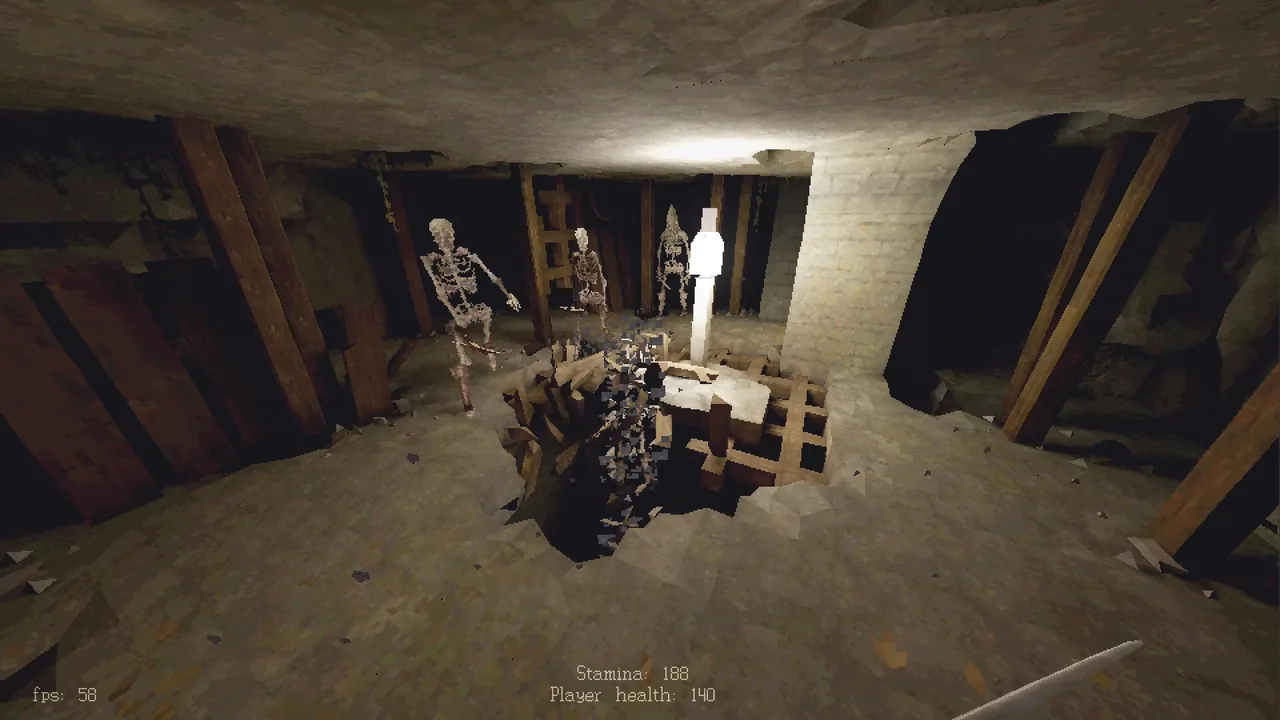
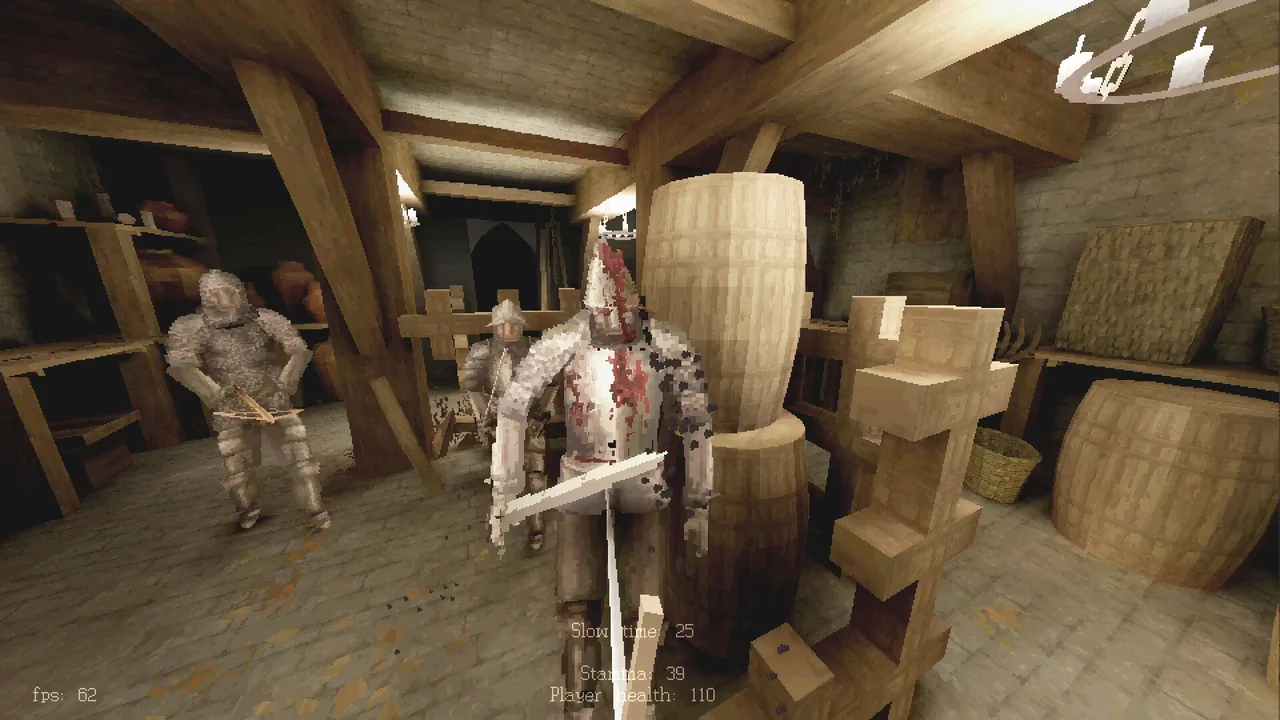
The combat is built around a simple premise executed with real precision: block or strike, and get the timing wrong at your own risk. One reviewer, a self-described fan of the genre, calls it "the best first-person melee combat simulation in video games," placing it directly in the lineage of King's Field — praise that carries real weight given how specifically it's aimed. Another describes the game's own onboarding advice, that a missed block is the player's own fault rather than the game's, as something that genuinely reframed how frustrating deaths felt once internalised. Roguelike structure sits underneath the combat: die, and the fortress's layout resets along with its enemy and boss placement, but any weapons and artifacts already discovered carry forward, giving failed runs a reason to matter. Reviewers describe hidden corridors and secret rooms with real affection — one simply writes "10 out of 10 non-Euclidean spaces and psycho rooms" after stumbling into an oddly geometric secret area — and destructible environments add a small, consistently-mentioned layer of physical satisfaction to combat encounters.
What almost everyone wants added
If there's a single fix that would move the needle on THE DEEPEST CASTLE's reception, the reviews make it unusually clear: music. Multiple reviewers, independently and without prompting each other, ask for a soundtrack specifically during boss encounters — one otherwise glowing review puts it plainly, wishing there'd been music while fighting the game's champions, and closes by saying they'd wait for updates or the developer's next project regardless. A separate reviewer frames a full, generous score around exactly one missing element: "Serega, this is genuinely brilliant — throw in some sound and it's a 10 out of 10, as is it's a 9 out of 10." That's about as clean a piece of actionable feedback as a small developer could ask for, repeated often enough across the sample to read as the single clearest opportunity for improvement.
The complaints that go deeper than sound
Not every criticism is that easy to fix. One detailed negative review argues the visuals read as muted and the environments as lacking colour, and that the destructible-environment hook — the game's most distinctive feature by its own reviewers' account — isn't enough on its own to overcome that. The same review specifically flags the stamina system's regeneration rate as the game's biggest structural problem. A separate, more pointed negative review, in Russian, describes crossbow-wielding enemies firing with no cooldown between shots, scarce healing and stamina flasks, and a sharp difficulty spike past roughly the sixth level where ordinary enemies start fighting like mini-bosses — concluding, memorably, by questioning why a knight-champion built around swordplay is armed with slow-casting sorcery on top of it. A third negative review is blunter still, describing the game in its current state as rough, with "terrible ballistics" and occasional stuck-in-geometry bugs, while noting the game's relative simplicity will read as a strength to some players and a weakness to others.
A small following, and a developer they're rooting for
What stands out reading through THE DEEPEST CASTLE's small review sample isn't just the specific feedback — it's the tone. Reviewers reference "the author" and his "previous games" as though addressing someone they've followed for a while, one recommending readers seek out his back catalogue implicitly by praising how "the quality of this dev's games increases with every release," and requesting, half-jokingly, "more wagon driving" — a callback that only makes sense to someone who's played what came before. A Chinese-language review, structured like a curated recommendation post, describes the developer as working independently and self-publishing, framing the whole project in exactly those hobbyist-auteur terms. This is a game built by one person, for an audience that already trusts what that person makes, and the reviews read accordingly — patient with rough edges, specific about what would make the next release better, and already looking forward to it.
Final verdict
THE DEEPEST CASTLE is a small, technically distinctive first-person melee roguelike that earns real, specific praise for its combat timing and its unusual custom engine, sold at a price that makes trying it close to risk-free. The most commonly requested fix — music, especially during boss fights — is about as clear and actionable as feedback gets, and the harder complaints about balance, visual muteness, and rough edges are real enough to note without overshadowing what's clearly a well-loved project within its own small circle.
For genre fans who value a distinctive first-person melee system over modern production polish, this is an easy, cheap recommendation — go in aware you're supporting a solo developer's ongoing work rather than buying a fully finished, fully supported release.
Players who want that same first-person sense of danger and discovery, sustained across a persistent world with room to keep returning rather than a single roguelike fortress, may also want to look at Wanderer.
Pros and cons
Pros
- A genuinely distinctive first-person melee combat system built around shield timing and strike windows, drawing direct, credible comparisons to King's Field from reviewers who know the genre well
- An unusual and specific technical achievement — a custom, hand-written CPU software renderer — that the developer discloses openly and that fans specifically credit as part of the project's character
- Roguelike structure with real stakes: die and the fortress resets, but discovered weapons and artifacts carry forward between attempts
- A small but clearly devoted following, with multiple returning reviewers referencing the developer's prior games and explicitly waiting for his next project
- Extremely cheap, with several reviewers independently calling it worth the price regardless of its rough edges
Cons
- The single most repeated complaint across the review sample, independently and in multiple languages, is the absence of any music — several reviewers specifically ask for it during boss fights
- One detailed negative review describes the visuals as muted and the environments as lacking colour, arguing the game's standout destructible-environment feature isn't enough on its own to carry the experience
- Balance complaints recur around resource scarcity — limited healing and stamina flasks against enemies, including crossbow-wielding foes reported to fire without any cooldown, that scale sharply in difficulty past the early levels
- At least one reviewer reports getting stuck in level geometry, and a harsher review separately describes the projectile physics as "terrible"
- No patches and no achievements exist as of this review, and the interface is described by more than one reviewer as rough, with a request for basic difficulty options among the specific suggestions raised
Screenshots
-
THE DEEPEST CASTLEImage: Sergey Bobrov via Steam -
THE DEEPEST CASTLEImage: Sergey Bobrov via Steam -
THE DEEPEST CASTLEImage: Sergey Bobrov via Steam -
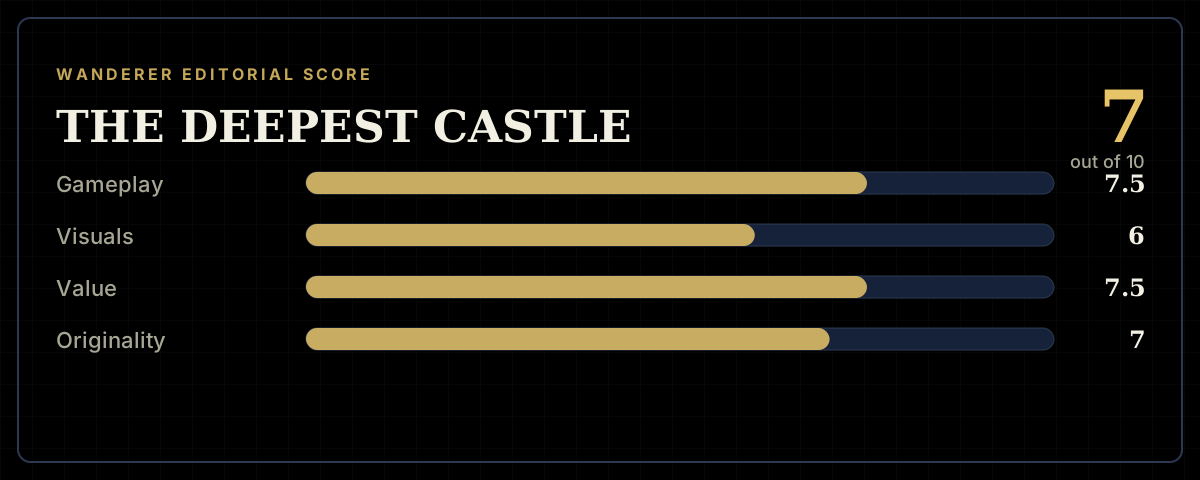
How the review scores each part of the gameWanderer Editorial -
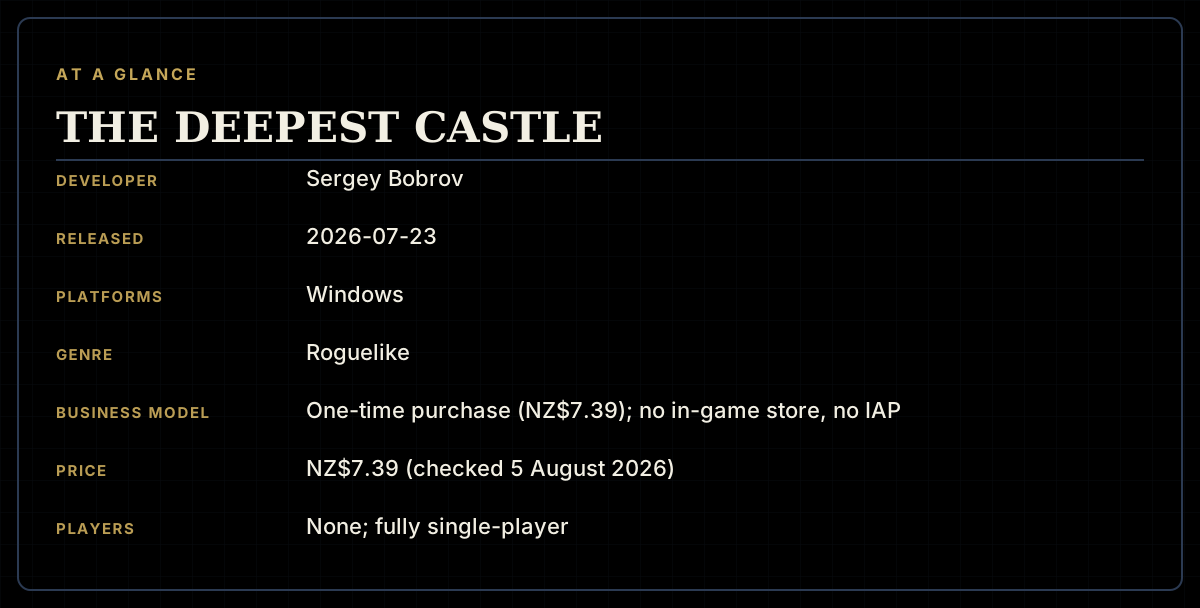
The game at a glanceWanderer Editorial -
The short versionWanderer Editorial