Game review
Iratus: Lord of the Dead
7.8 / 10
- Developer
- Unfrozen
- Publisher
- Daedalic Entertainment
- Released
- 23 April 2020
- Platforms
- Windows, macOS, Linux
- Genre
- Turn-Based Tactical Roguelike RPG
- Monetisation
- Premium, one-off purchase — one paid content expansion (Wrath of the Necromancer) plus a Supporter Pack and three cosmetic skin-set DLCs; no microtransactions or energy systems
- Players
- Single-player
The short version
Iratus: Lord of the Dead takes the Darkest Dungeon formula and flips the camera to the other side of the torch: you're not sending a party of the desperate into a haunted dungeon, you're the thing living at the bottom of it, stitching skeletons and banshees together from whatever your last victims left on the floor. That inversion, plus a genuinely deep four-tree talent system and a minion-crafting loop with real teeth, makes the first thirty or so hours some of the sharper tactical roguelike design on Steam.
It doesn't sustain that sharpness all the way to the credits. A meaningful share of the playerbase — including many who recommend the game — describe a midgame plateau where your best builds solidify early and the run stops asking new questions of you, followed by a late and DLC-era difficulty spike several reviewers call unbalanced rather than hard. It's a genuinely good roguelike that runs out of new ideas before it runs out of floors.
Biggest strengths
- Playing the necromancer instead of the party is a real structural inversion of the genre, not just a reskin — you build the monsters, not the heroes fighting them
- Minions are crafted from body parts harvested off slain enemies, across 19 servant types and nearly a hundred abilities, which makes army-building feel like a resource puzzle rather than a shop screen
- Four talent trees (Alchemy, Magic, Ire, Destruction) push genuinely different lair builds rather than one obvious optimal path
Biggest weaknesses
- A significant and recurring theme in player reviews is that strategies and team compositions solidify within the first floor or two and then repeat for the rest of the run, with several 2023-2025 reviews describing the mid-to-late game as "devolving" or "repetitive"
- The difficulty curve on higher floors and in the Wrath of the Necromancer expansion is widely reported as spiky rather than fair — reviewers describe sudden high-damage party wipes and specific fights (the Inventor boss and flamethrower-wielding enemies come up repeatedly) as unbalanced rather than hard
- Because minions that die are gone for good and the game autosaves constantly, a single misjudged fight can undo hours of careful minion investment with no way back
Who it's for: Darkest Dungeon players curious what the genre looks like from the monster's side of the dungeon gate, and anyone who wants their roguelike's permadeath softened by a persistent crafting and research layer rather than eliminated outright. A weaker fit for players who want a game that keeps escalating in complexity for its full runtime rather than settling into a groove by hour twenty.
Our recommendation: Buy the base game — at NZ$42.99 it holds up as one of the more distinctive Darkest Dungeon-adjacent roguelikes on the market, and the first stretch of runs is genuinely excellent. Treat Wrath of the Necromancer as a purchase for players who've already cleared the base campaign and want its difficulty spike on purpose, not as an automatic add-on. Skip the cosmetic skin packs unless you specifically want the palette swaps.
7.8 / 10
Most dungeon-crawling roguelikes cast you as the party knocking on the crypt door. Iratus: Lord of the Dead casts you as the reason the crypt needed a door in the first place. You play the titular necromancer, freshly dug out of a millennia-long imprisonment by a mining crew who immediately regret it, and your job for the rest of the campaign is to rebuild an army of the dead, expand a lair full of the freshly deceased, and claw your way to the surface to finish a grudge against the living world that's had a very long time to fester. Developer Unfrozen and publisher Daedalic Entertainment spent the better part of a year in Early Access — from 24 July 2019 to a 1.0 release on 23 April 2020 — sharpening exactly that pitch, and the comparison every review reaches for immediately is Darkest Dungeon. It's not wrong. It's also not the whole story.
You're the boss monster, not the party
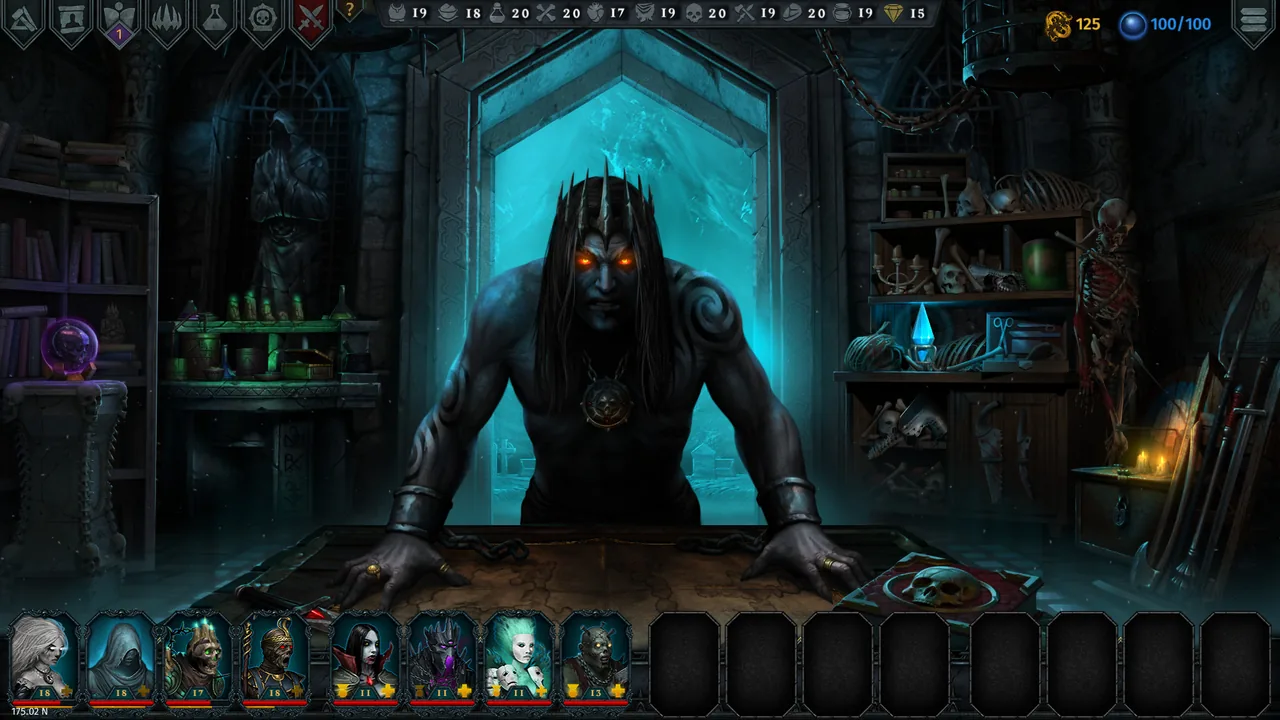
The structural swap is Iratus's best idea and the thing that separates it from being a simple reskin of Red Hook's formula. Where Darkest Dungeon puts you in charge of fragile heroes raiding a hostile dungeon, Iratus puts you in charge of the dungeon. Your minions — skeletons, zombies, banshees, vampires and fifteen other unliving troop types — aren't recruited from a tavern, they're built. Every enemy your army kills on an expedition leaves behind harvestable parts, and those parts are the raw material for new or upgraded servants back at the lair. A run isn't just about surviving a floor; it's about deciding whether that floor was worth raiding for its ingredients as much as its loot. It reframes a genre that's usually about resource attrition into one that's also about resource harvesting, and that's a genuinely different set of decisions to be making turn to turn.
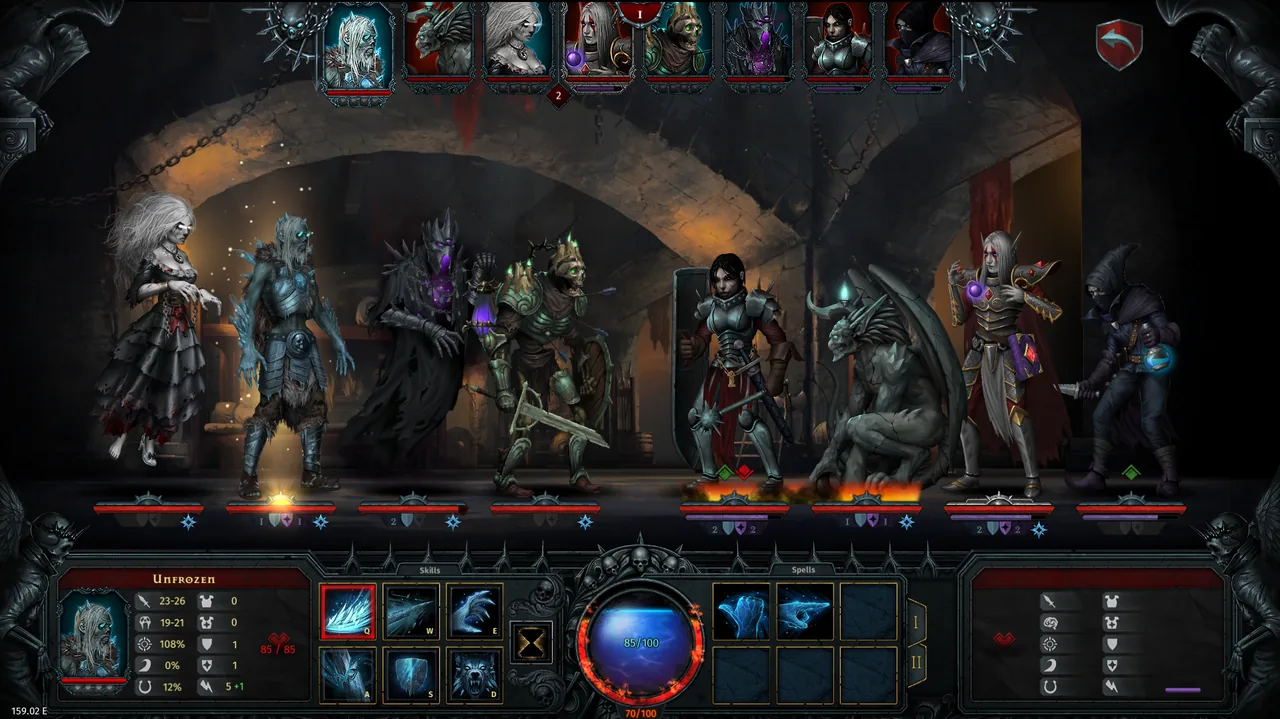
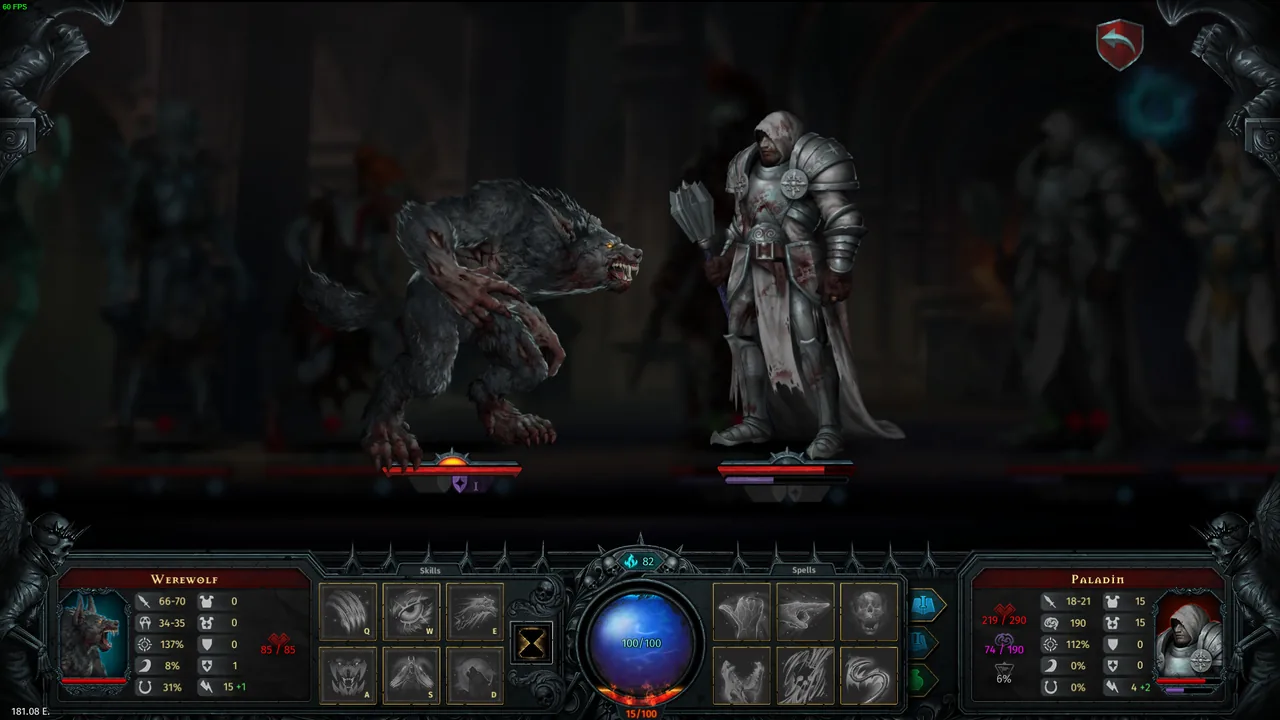
Combat itself runs turn-based, minion-versus-monster, and rewards the same kind of formation and matchup thinking the genre's best entries demand — knowing which of your zombies tank, which banshees control the backline, and which enemy resistances make a fight unwinnable with the wrong loadout. Steam's own feature list counts 19 servant types across roughly a hundred distinct abilities, and while raw numbers like that always undersell how many of them end up viable, the early and mid campaign genuinely does reward experimenting with more than one or two "solved" compositions — which is more than a lot of tactical roguelikes can claim.
Four talent trees, one lair, real choices
Iratus himself levels up alongside his army through four talent trees — Alchemy, Magic, Ire and Destruction — each nudging the whole campaign toward a different playstyle rather than just adding flat stat bonuses. Leaning into Alchemy pushes toward crafting and resource efficiency; Destruction and Ire push toward Iratus fighting more directly rather than hanging back behind his minions. It's a meaningful branch point rather than a cosmetic one, and it's part of why the opening stretch of the game holds up so well under scrutiny: two players who both call themselves Iratus fans can describe genuinely different lairs and genuinely different core strategies.
The lair itself is the other half of the loop. Souls earned on expeditions fund graveyard buildings back home — structures that boost experience gain, restore minion health between runs, or unlock new crafting options — and that persistent investment is what keeps permadeath from feeling purely punitive. Losing a minion you'd spent several runs upgrading still stings, in the same way losing a veteran hero stings in Darkest Dungeon, but the souls economy means a bad run never resets the whole campaign to zero. It's a smart middle ground between roguelike stakes and roguelite persistence, and reviewers who've put a hundred-plus hours in consistently cite the crafting-and-research loop as the reason they kept coming back.
Where the difficulty curve stops being fun
The complaint that shows up most consistently across Iratus's Steam reviews — including a noticeable number of positive ones, people recommending the game while flagging this directly — is that the campaign's difficulty doesn't scale smoothly. Early and mid-game floors are well-tuned: challenging, legible, the kind of hard that teaches you something when you lose. Later floors, and particularly the content added by the Wrath of the Necromancer expansion, draw a different kind of complaint. Specific fights — the Inventor boss and flamethrower-wielding enemies come up by name repeatedly — get described as producing sudden, high-damage party wipes that reviewers say don't feel earned so much as arbitrary. "Unbalanced to the point of broken in one or two fights" is a fair summary of a pattern that recurs across reviews written years apart, from 2021 through 2024, which suggests it's a structural issue rather than something later patches fully resolved.
Layered on top of that is a separate, more common complaint: that the interesting decisions run out well before the campaign does. Several reviews — including a detailed one written at the hundred-hour mark in 2024 — describe reaching a point within the first floor or two where a winning team composition and talent build have already solidified, after which the rest of the run becomes executing the same plan repeatedly rather than adapting to new problems. That's a different failure mode from Darkest Dungeon's much-discussed hit-rate frustration; it's less "the dice feel rigged" and more "the game stopped asking me anything new." Steam's global achievement data backs up how many players this affects in practice: the single easiest achievement sits at 89% completion, while several of the late-campaign ones sit under 1% — a steeper drop-off than a simple "hard game" would produce on its own, and consistent with a meaningful share of the audience losing momentum rather than losing outright.
Stefan Weyte gives the villain a voice worth hearing
Iratus is voiced throughout by Stefan Weyte, best known to a certain generation of PC gamers as Caleb from the Blood series, and casting him as a necromancer with a millennia of grudges to work through is a smart bit of stunt casting that actually pays off. Iratus talks through his own plans, mocks the mercenaries sent after him, and generally behaves like a character with opinions rather than a silent avatar for the player's decisions — a welcome bit of personality in a genre that often leaves its protagonist as blank as the heroes it's willing to lose. The 2D art around him is detailed and consistently gloomy without leaning on jump-scare horror, closer in spirit to a grim illustrated bestiary than to outright shock value, though it doesn't reach for the same painterly ambition as Darkest Dungeon's animated-etching style.
Wrath of the Necromancer and the smaller DLC
Wrath of the Necromancer, Unfrozen's sole content expansion, released on 26 October 2020 at NZ$21.99 and adds new minions, bosses, enemies and story content on top of the base campaign. It's worth being clear-eyed about it going in: it's also the content most commonly named in the difficulty-spike complaints above, so it's better suited to players who've already finished the base game and specifically want more resistance than to anyone still finding their footing. Beyond that, Iratus's DLC ledger is short and mostly beside the point — a Supporter Pack (NZ$14.75, live since the Early Access launch) and three cosmetic skin sets for Summer, Halloween and Holidays (NZ$4.49 each) that change minion appearance without touching mechanics. None of it is microtransaction-shaped; it's a premium game with a conventional, modestly sized expansion ladder, which is worth noting favourably in a genre that doesn't always resist worse habits.
Iratus versus Darkest Dungeon
Every review of this game ends up here eventually, so it's worth being direct about it. The two share a turn-based structure, a permadeath-adjacent stakes system and a dark fantasy tone, and Iratus doesn't try to hide the family resemblance. Where they diverge is instructive: Darkest Dungeon's stress-and-affliction system makes psychological collapse the core mechanic, while Iratus's core mechanic is logistics — harvesting, crafting and slotting together an army from whatever the last fight left behind. Players who've played both tend to describe Iratus as less RNG-dependent and less punishing about early mistakes, which several call a genuine improvement, and as lacking Darkest Dungeon's narration and art direction, which several call a real step down. Neither read is wrong. They're different enough games wearing similar clothes that "better than" is the wrong question; "which kind of difficult do you actually enjoy" is the right one.
Value
At NZ$42.99 for a base campaign that reviewers routinely report clearing sixty to a hundred hours into before writing their verdict, Iratus prices itself fairly for a genre where a single long-term investment is the norm rather than the exception. The Wrath of the Necromancer expansion adds another chunk of content at roughly half the base price, and the Supporter Pack and cosmetic skin sets are optional in every sense — none of them touch a system the base game doesn't already have covered. There's no live-service pressure here, no energy system, no premium currency; it's a complete premium purchase that asks to be judged once and left alone, which is increasingly rare enough on its own to be worth a mention.
Verdict
Iratus: Lord of the Dead earns its "Very Positive" standing honestly. The idea of playing the necromancer building the dungeon's monsters, rather than the party sent to survive them, is a genuinely fresh angle on a well-worn genre, and the minion-crafting and talent-tree systems that support it have real depth — enough that the opening thirty-odd hours stand comfortably alongside the best of this style of tactical roguelike. Stefan Weyte's performance as Iratus gives the whole campaign a personality most genre peers don't bother with, and the souls-funded meta-progression strikes a fair balance between roguelike stakes and roguelite persistence.
It loses ground in exactly the place a game this systems-driven can least afford to: its own second half. A recurring, multi-year pattern in player feedback describes builds solidifying too early and a difficulty curve — sharpened further by the Wrath of the Necromancer expansion — that spikes into fights several reviewers call unbalanced rather than hard, and the achievement data backs up that a large share of the audience doesn't see the campaign through. None of that erases what the first stretch gets right. It does mean this is a roguelike best recommended with an honest caveat: come for one of the more original ideas the genre has produced recently, and don't expect the back half to keep pace with the front.
Price, DLC lineup and the Steam review summary checked 11 August 2026.
Pros and cons
Pros
- Playing the necromancer instead of the party is a real structural inversion of the genre, not just a reskin — you build the monsters, not the heroes fighting them
- Minions are crafted from body parts harvested off slain enemies, across 19 servant types and nearly a hundred abilities, which makes army-building feel like a resource puzzle rather than a shop screen
- Four talent trees (Alchemy, Magic, Ire, Destruction) push genuinely different lair builds rather than one obvious optimal path
- Souls-funded graveyard buildings give permadeath a persistent meta-progression layer to soften into, without removing the sting of losing a minion you'd invested in
- Stefan Weyte — the voice of Caleb from the Blood series — plays Iratus himself, and gives the villain-protagonist genuine personality across the campaign
- The core turn-based combat rewards planning around minion strengths and weaknesses rather than raw stat-stacking
Cons
- A significant and recurring theme in player reviews is that strategies and team compositions solidify within the first floor or two and then repeat for the rest of the run, with several 2023-2025 reviews describing the mid-to-late game as "devolving" or "repetitive"
- The difficulty curve on higher floors and in the Wrath of the Necromancer expansion is widely reported as spiky rather than fair — reviewers describe sudden high-damage party wipes and specific fights (the Inventor boss and flamethrower-wielding enemies come up repeatedly) as unbalanced rather than hard
- Because minions that die are gone for good and the game autosaves constantly, a single misjudged fight can undo hours of careful minion investment with no way back
- Steam's global achievement data shows the same shape the reviews describe: the easiest achievement sits at 89% while several late-game ones sit under 1%, meaning most players who start a campaign never see its harder half
- Three cosmetic skin-set DLCs (Summer, Halloween, Holidays) at NZ$4.49 each are minor, but add clutter to the store page for a game that otherwise keeps its monetisation clean
- No listed controller support, which is a fair trade for a game this menu- and precision-click-heavy but worth knowing going in
Screenshots
-
Iratus: Lord of the DeadImage: Daedalic Entertainment via Steam -
Iratus: Lord of the DeadImage: Daedalic Entertainment via Steam -
Iratus: Lord of the DeadImage: Daedalic Entertainment via Steam -
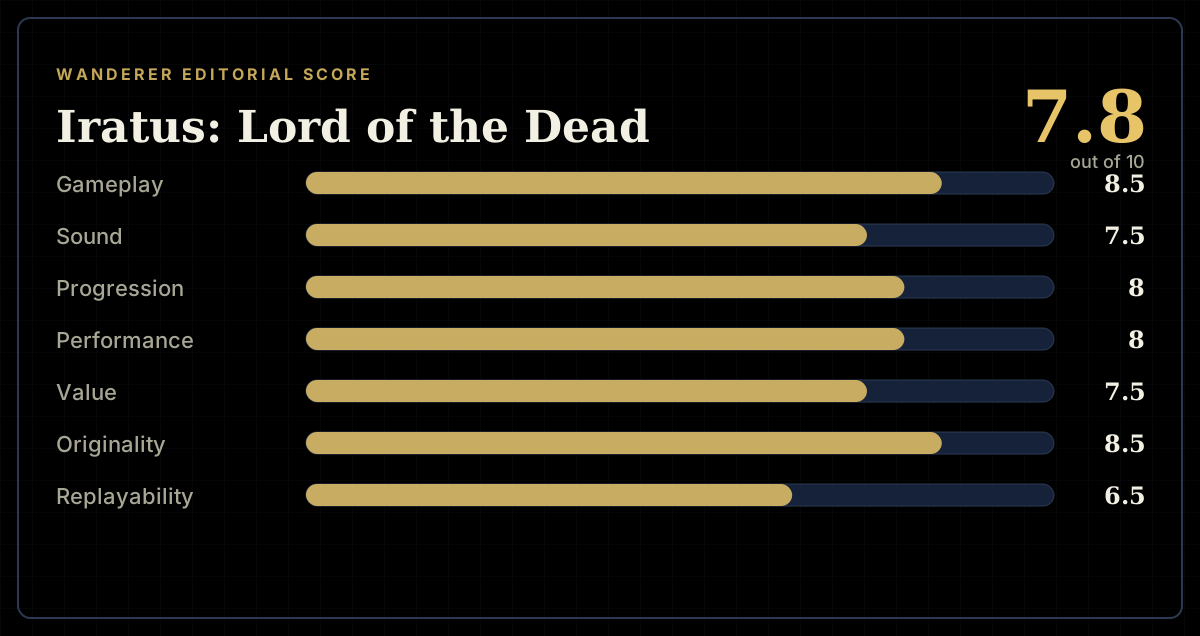
How the review scores each part of the gameWanderer Editorial -
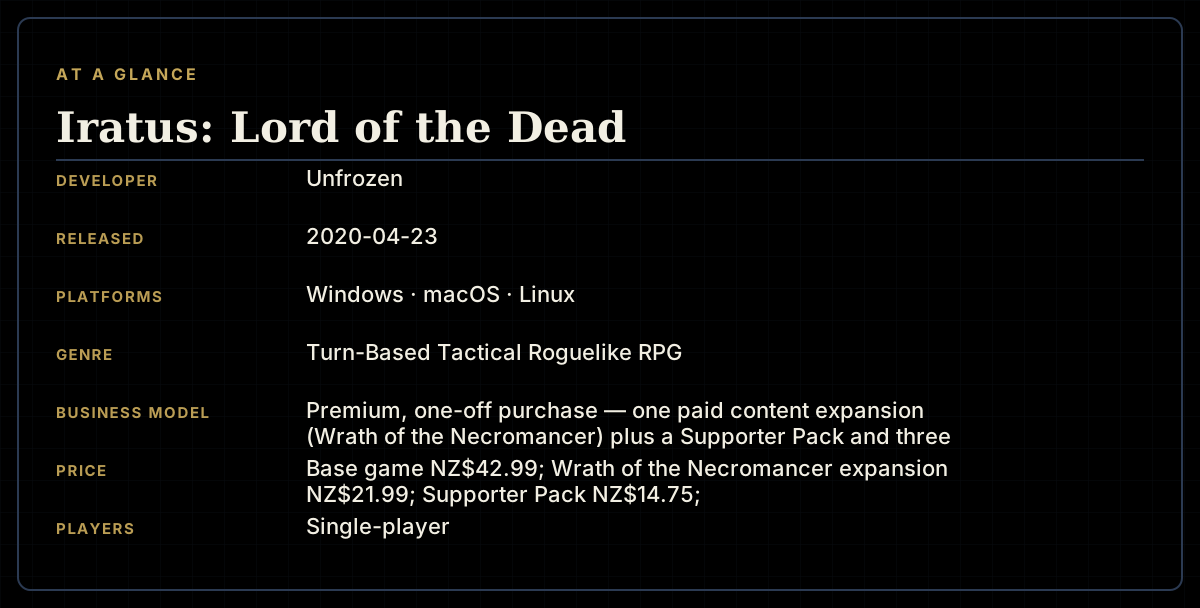
The facts at a glanceWanderer Editorial -
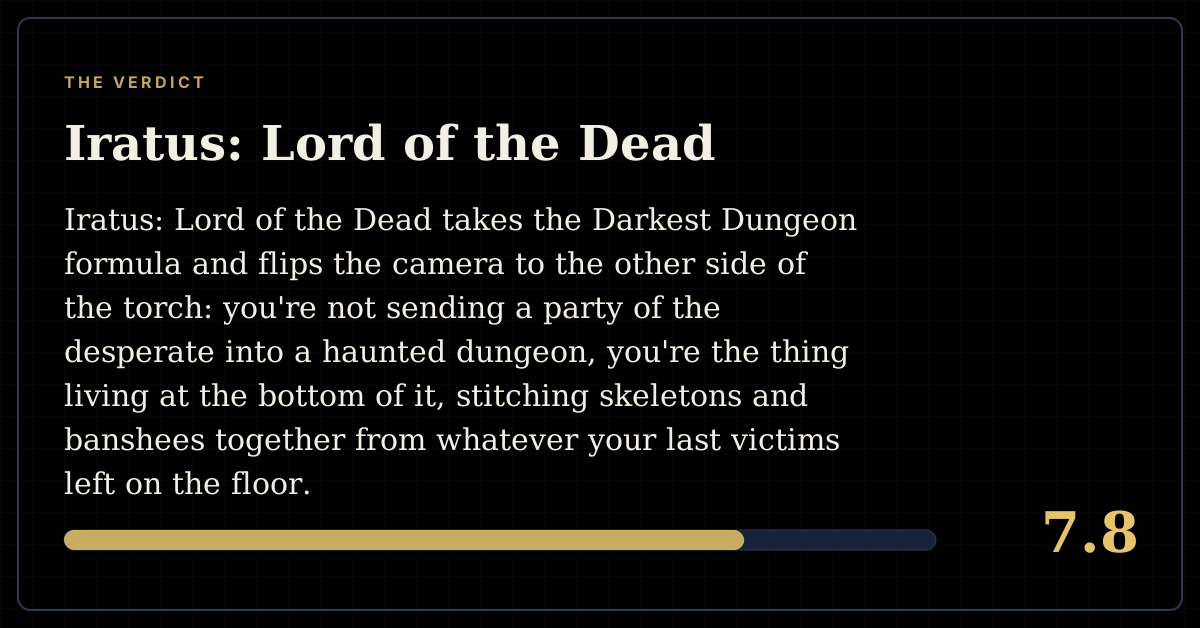
The short versionWanderer Editorial